Rules vs. Regulations: How to Communicate Clearly With Park Visitors
 Why distinguishing between quick-glance rules and detailed regulations matters for visitor compliance and trust
When a family pulls into Yellowstone National Park for their first visit, they encounter dozens of signs, handouts, and posted notices within the first few minutes of their arrival. They’re immediately processing information about camping restrictions, wildlife viewing distances, speed limits, fire regulations, and dozens of other requirements. The overwhelming challenge for park managers across the United States is presenting this critical information in a way that visitors actually read, understand, remember, and most importantly, follow throughout their entire visit.
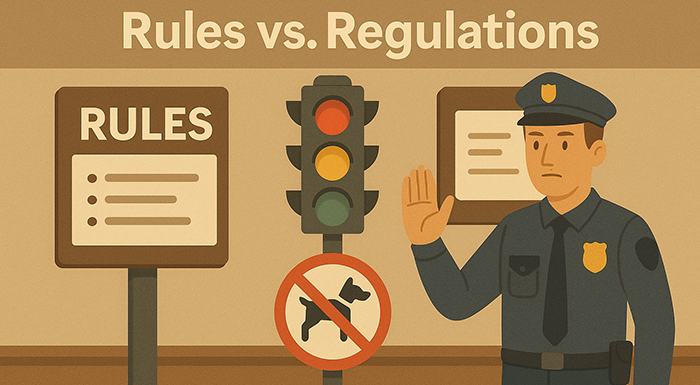
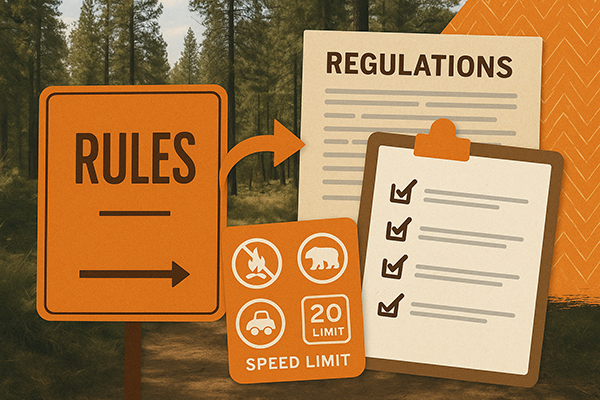
The solution to this communication challenge lies in understanding the fundamental difference between rules and regulations, and then strategically communicating each type of information appropriately to different audiences at different times during their park experience.
Understanding the Critical Distinction Between Rules and Regulations
Rules represent immediate, actionable directives that visitors need to understand and implement right now, in this moment, to ensure their safety and protect park resources. These are your front-line communication tools that answer the urgent question every visitor has: “What do I need to do or avoid doing in the next few minutes to have a safe and legal experience?” Rules serve as the essential information gateway that keeps visitors safe and protects irreplaceable natural and cultural resources during their visit.
Regulations, in contrast, represent the comprehensive legal framework that governs all park operations and visitor activities. These detailed documents provide the complete context, specific penalties, legal exceptions, enforcement procedures, and regulatory authority that supports every rule visitors encounter. Regulations answer the deeper questions that some visitors have: “What’s the complete legal requirement behind this rule, why does this restriction exist, what happens if I don’t comply, and what legal authority does this agency have to enforce these requirements?”
Consider this practical example that illustrates the difference. A rule posted at a trailhead might state: “Stay 25 yards from bison at all times.” The underlying regulation, however, contains much more comprehensive information: “Title 36 CFR 2.2(a)(2) prohibits approaching, touching, feeding, or intentionally disturbing wildlife in national parks. Visitors must maintain a minimum distance of 25 yards from bison and elk, and 100 yards from bears and wolves, except when safely inside a vehicle or approved structure. This regulation applies to all park visitors regardless of photographic intent, educational purpose, or previous wildlife experience. Violations are punishable by fines up to $5,000 and imprisonment up to six months under federal law.”
Both pieces of information serve essential but different purposes in the visitor experience and park management strategy.
Why This Communication Strategy Matters Specifically for Government Agencies
Federal agencies including the National Park Service, U.S. Forest Service, Bureau of Land Management, U.S. Fish and Wildlife Service, and other land management organizations, face unique and complex challenges in visitor communication that private businesses simply don’t encounter. These same challenges are faced by Parks, Recreation, Outdoors, and Wildlife agencies at the state, county, and municipal levels—including state Departments of Natural Resources, county park districts, and city recreation and park systems. While the federal agencies oversee nationally significant lands and waters, the thousands of state and local PROW agencies collectively manage a far greater number of parks, trails, wildlife areas, and recreation facilities. They are often the frontline stewards engaging residents in their everyday outdoor experiences—whether it’s posting seasonal closures on a county trail, running invasive species prevention at a state boat launch, or promoting a city-run youth sports league.
For these agencies, effective communication is not only about protecting natural resources but also about maintaining strong community trust, ensuring equitable access, and fostering lasting stewardship across diverse local audiences. Unlike private companies that can ask non-compliant customers to leave their property immediately, government agencies operating public lands must navigate a much more complex landscape of responsibilities and legal requirements. These agencies must ensure equal access to public resources while simultaneously maintaining visitor safety and protecting irreplaceable natural and cultural resources for future generations. They must demonstrate complete transparency in how rules are established, modified, and enforced, often facing scrutiny from multiple stakeholder groups including environmental organizations, local communities, tourism operators, and political oversight bodies.
Building and maintaining public trust through clear, consistent, and helpful messaging becomes absolutely critical for these agencies because their funding, political support, and operational authority depend directly on public perception and support. They must accommodate incredibly diverse audiences with vastly different levels of outdoor experience, from first-time visitors who have never seen wildlife to experienced outdoor enthusiasts who may challenge agency authority based on their own expertise.
Additionally, government agencies face strict legal requirements for public notification of regulations, public comment periods for regulatory changes, and consistent enforcement across all demographic groups and geographic regions. When agencies blur the line between immediate rules and comprehensive regulations in their communication strategy, they frequently overwhelm visitors with far too much information at inappropriate times, leading to poor compliance rates, frustrated enforcement officers, and decreased visitor satisfaction scores.
The Complex Psychology Behind Visitor Compliance in Public Lands
Extensive research in environmental psychology, conducted across multiple national parks and public lands over several decades, demonstrates that visitors are most likely to comply with park guidelines and regulations when several psychological conditions are met simultaneously. Visitors must understand the immediate relevance of the rule to their personal safety or their overall park experience. They must trust the authority providing the information, viewing the agency as legitimate, competent, and acting in their best interests rather than arbitrarily restricting their activities.
Visitors must also feel genuinely capable of following the guidance provided, meaning the rule must be specific, achievable, and clearly explained without requiring specialized knowledge or equipment they don’t possess. Finally, social proof plays a crucial role, as visitors need to see others around them modeling the desired behavior, creating a social norm that supports compliance rather than resistance.
Quick-glance rules effectively support all four of these psychological factors when properly designed and strategically placed. They demonstrate immediate relevance by addressing situations visitors are currently facing. They come from a clearly identified, trusted authority that visitors recognize as legitimate. They provide specific, achievable action steps that don’t require extensive interpretation or specialized knowledge. Most importantly, they can be easily understood and shared among visitor groups, creating positive social dynamics that reinforce compliance.
Detailed regulations, while absolutely necessary from legal and operational perspectives, can actually undermine visitor compliance when presented at inappropriate times or locations. A visitor trying to quickly understand whether they can have a campfire tonight and how to build it safely doesn’t need to read through the complete legal framework governing fire restrictions, including penalty structures, appeal processes, and regulatory history. They need immediate, actionable information that helps them make a quick decision and move forward with their evening plans.
Comprehensive Best Practices for Effective Rules Communication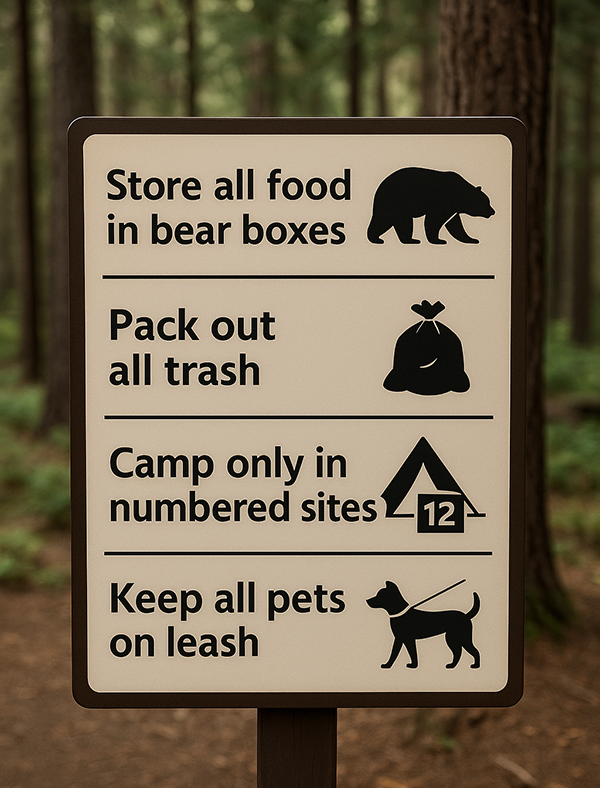
Creating truly effective rules communication requires a strategic approach that considers visitor psychology, information design principles, and the unique constraints of outdoor environments. Rules must be designed for scannability and memorability, using active voice construction that immediately identifies the required action. Instead of passive construction like “Food storage in bear-resistant containers is required by federal regulation,” effective rules use direct language: “Store all food in bear boxes provided at each campsite.”
The most successful rules lead with the specific action required rather than extensive background information or regulatory justification. “Pack out all trash including organic waste” communicates much more effectively than “Visitors are reminded that Leave No Trace principles and federal regulations require proper waste disposal to protect wildlife and maintain the natural character of park environments.” Specific numbers and measurements eliminate ambiguity and make rules much easier to follow. “Camp only in numbered campsites” provides clearer guidance than “Camping restrictions apply throughout the park.”
Rules must be designed specifically for quick decision-making by visitors who may be tired, distracted, or dealing with challenging outdoor conditions. This means placing rules at critical decision points including trailheads, campground entrances, visitor centers, and anywhere visitors must choose between different courses of action. Visual hierarchy becomes essential, using typography, color, and spacing to highlight the most critical information while ensuring secondary details remain easily accessible.
Universal design principles suggest including icons, symbols, or pictographs that communicate essential information to non-English speakers and visitors with different literacy levels. However, these visual elements must supplement rather than replace clear text, as cultural interpretation of symbols can vary significantly among diverse visitor populations.
Environmental integration represents another crucial consideration for government agencies operating in natural settings. Rules must remain clearly visible and easily readable without overwhelming or detracting from the natural environment that visitors came to experience. This often requires careful balance between visibility and aesthetic integration, using materials, colors, and designs that serve their communication function while respecting the surrounding landscape.
Continuous improvement processes become essential for maintaining effective rules communication over time. This involves systematically observing visitor behavior at rule posting locations to identify common compliance problems or confusion patterns. Park rangers and other staff members who interact directly with visitors provide invaluable feedback about which rules generate the most questions or misunderstandings from the public.
Regular visitor surveys focusing specifically on message clarity and information recall help identify communication problems before they become major compliance issues. Most importantly, agencies must be willing to update and revise rule language based on evidence of common misunderstandings or changing visitor demographics and expectations.
Strategic Best Practices for Comprehensive Regulations Communication
While rules focus on immediate visitor decision-making, regulations serve entirely different communication purposes and require distinctly different strategies for effective presentation. Regulations must be readily accessible when visitors specifically need detailed information, legal context, or comprehensive understanding of agency policies and procedures.
The most effective approach involves making detailed regulations easily available in visitor centers, park websites, and other locations where visitors actively seek comprehensive information rather than quick guidance for immediate decisions. Creating clear, intuitive pathways from posted rules to underlying regulations allows interested visitors to access additional detail without overwhelming those who simply need basic guidance.
Plain language principles become absolutely essential when presenting complex regulatory information to public audiences. This means providing clear, jargon-free summaries alongside technical legal text, ensuring that interested visitors can understand both the practical implications and legal framework of park regulations without requiring legal expertise or specialized vocabulary.
Multiple format availability supports diverse visitor needs and accessibility requirements. Some visitors prefer detailed print materials they can study carefully, while others need digital formats they can access on mobile devices or search for specific topics. Audio formats become essential for visitors with visual impairments or reading difficulties, while multilingual options serve increasingly diverse park visitor populations.
Effective regulations communication requires clearly linking posted rules to their underlying regulatory authority and rationale. This involves providing brief but clear explanations of why specific rules exist, helping visitors understand the connection between immediate restrictions and broader conservation or safety goals. When appropriate, including specific regulatory citations helps visitors understand the legal foundation for agency authority while supporting enforcement efforts when compliance issues arise.
Educational context proves essential for building long-term visitor support for park management goals. Connecting local rules to broader conservation objectives helps visitors understand their role in protecting resources that extend far beyond their immediate park experience. This broader perspective often transforms temporary compliance into lasting conservation ethic that visitors carry to other parks and outdoor experiences.
Supporting Effective Enforcement Through Clear Regulatory Documentation
Successful enforcement of park rules requires comprehensive regulatory documentation that supports both agency staff and the visiting public. Regulations must remain current and consistently applied across all park areas and visitor interactions. This requires regular review and updating processes that ensure regulatory language reflects current conditions, scientific understanding, and legal requirements.
Staff training becomes absolutely critical for effective enforcement, as rangers and other personnel must understand not only the specific rules they’re enforcing but also the complete regulatory framework that provides their authority. This includes understanding the public input processes that shaped current regulations, the scientific or safety rationale behind specific restrictions, and the proper procedures for explaining regulatory basis to visitors who question agency authority.
Clear documentation of rule posting, visitor notification procedures, and public comment processes provides essential legal protection for agencies while demonstrating transparency and accountability to the public. This documentation becomes especially important during legal challenges or when agencies need to modify regulations in response to changing conditions or new scientific understanding.
Consistent application across all demographic groups and geographic areas within agency jurisdiction requires comprehensive training, clear written procedures, and regular supervision to ensure that enforcement actions meet legal requirements and maintain public trust in agency fairness and competence.
Building Sustainable Long-Term Visitor Trust and Conservation Support
The most successful park communication strategies recognize that rules and regulations serve fundamentally different but complementary purposes in building strong, lasting relationships with the visiting public. Well-designed rules create immediate compliance and positive visitor experiences by providing clear, helpful guidance that enhances rather than restricts visitor enjoyment. Comprehensive regulations demonstrate agency accountability, legal authority, and commitment to transparent decision-making processes that serve long-term conservation goals.
When visitors consistently encounter reasonable, clearly communicated rules that are fairly and consistently enforced, they develop trust in the agency’s broader regulatory mission and conservation objectives. This trust becomes absolutely essential for long-term conservation success, especially as agencies face unprecedented challenges including dramatically increasing visitation levels, accelerating climate change impacts, and increasingly complex resource management decisions.
Visitors who understand and willingly follow park rules become powerful advocates for protection of public lands and agency conservation missions. They return to their home communities with positive stories about their park experiences and genuine respect for the agencies managing these irreplaceable resources. They support political candidates who prioritize funding for parks and conservation programs. They vote for ballot measures that protect natural areas and support environmental education. Most importantly, they model responsible outdoor behavior for their children, friends, and community members, creating the next generation of conservation-minded park visitors.
This advocacy extends far beyond individual park visits to create lasting political and financial support for agency missions. Satisfied park visitors become the constituency that supports congressional appropriations, defends agency budgets during political transitions, and provides the public support necessary for agencies to implement sometimes unpopular but scientifically necessary conservation measures.
Implementing Systematic Communication Improvements in Government Agencies
Government agencies seeking to improve visitor communication effectiveness should begin with comprehensive audits of existing messaging through the rules-versus-regulations framework. This systematic approach requires examining every piece of visitor communication currently in use, from roadside signs and trailhead kiosks to website content and printed materials distributed at visitor centers.
The audit process should focus on several critical questions that reveal communication effectiveness and identify improvement opportunities. Agencies must determine whether they are consistently presenting the right type of information at appropriate times and locations in the visitor experience. They should evaluate whether current signs and handouts actually help visitors make immediate decisions or instead overwhelm them with unnecessary detail at inappropriate times.
Accessibility of detailed information represents another crucial evaluation area. Visitors who want comprehensive information about regulations, penalties, or agency decision-making processes should be able to find this material easily, but it shouldn’t interfere with basic rule communication for visitors who simply need quick guidance.
Trust-building through communication requires ongoing evaluation of message tone, clarity, and perceived helpfulness. Agencies should regularly assess whether their communication style demonstrates respect for visitor intelligence while providing genuinely useful guidance, or whether it comes across as condescending, overly bureaucratic, or focused more on agency liability protection than visitor service.
The implementation process should include systematic testing of new communication approaches using controlled trials in specific park areas or with particular visitor populations. This allows agencies to measure communication effectiveness objectively rather than relying solely on staff opinions or visitor complaints.
Staff training represents a crucial implementation component, as frontline personnel must understand both the communication strategy and the underlying rationale for distinguishing between rules and regulations. Rangers and other visitor-facing staff need skills in explaining rules clearly while directing interested visitors to appropriate sources for detailed regulatory information.
Technology integration offers significant opportunities for improving both rules and regulations communication. Mobile apps can provide location-specific rules while linking to comprehensive regulatory databases. QR codes on posted signs can connect visitors to multilingual content or additional detail without cluttering physical signage. Digital platforms allow agencies to update information quickly and track which content visitors access most frequently.
Measuring Success and Continuous Improvement
Effective communication strategy requires ongoing measurement and refinement based on objective evidence of visitor behavior and satisfaction. Compliance rates provide one important metric, but agencies should also track visitor satisfaction scores, staff efficiency in addressing visitor questions, and the frequency of rule-related incidents or conflicts.
Visitor feedback collection should focus specifically on communication effectiveness rather than general park satisfaction. This involves asking targeted questions about whether visitors found rules clear and helpful, whether they could easily access additional information when needed, and whether they felt agency communication enhanced or detracted from their park experience.
Long-term success measurement should include indicators of visitor advocacy and support for agency missions. This might involve tracking social media mentions, participation in public comment processes, or visitor willingness to recommend parks to others based on their communication and enforcement experiences.
The Future of Park Communication
As park visitation continues to grow and visitor demographics become increasingly diverse, the importance of strategic communication will only increase. Agencies that master the distinction between rules and regulations, and implement communication strategies that serve both immediate visitor needs and long-term conservation goals, will be best positioned to fulfill their mandates while maintaining essential public support.
The goal of this communication framework is not to eliminate regulations or oversimplify complex conservation challenges. Instead, it creates a systematic approach that serves both immediate visitor needs and long-term agency missions effectively. When implemented successfully, this approach protects irreplaceable natural and cultural resources, enhances visitor experiences and satisfaction, and builds the sustained public support that America’s parks and public lands need to thrive in an era of unprecedented challenges and opportunities.
Clear, strategic communication represents far more than good customer service for government agencies managing public lands. It constitutes essential stewardship that directly impacts conservation outcomes. Every well-crafted rule and thoughtfully presented regulation contributes measurably to the preservation of our shared natural and cultural heritage while building the informed, engaged citizenry necessary for long-term conservation success.
Ready to Elevate Your Agency’s Public Communication?
We understand the unique challenges state and local government agencies face—from complex issues to diverse community needs. Our comprehensive approach can help you transform the way you connect with constituents, improve transparency, and highlight the valuable work your agency does every day.
Interested in learning more? Reach out to us today for a consultation. We’d love to discuss how our services can support your goals and help you build lasting trust with the communities you serve.