QR Codes in the Wild: Making Visitor Feedback Fast, Accessible, and Actionable
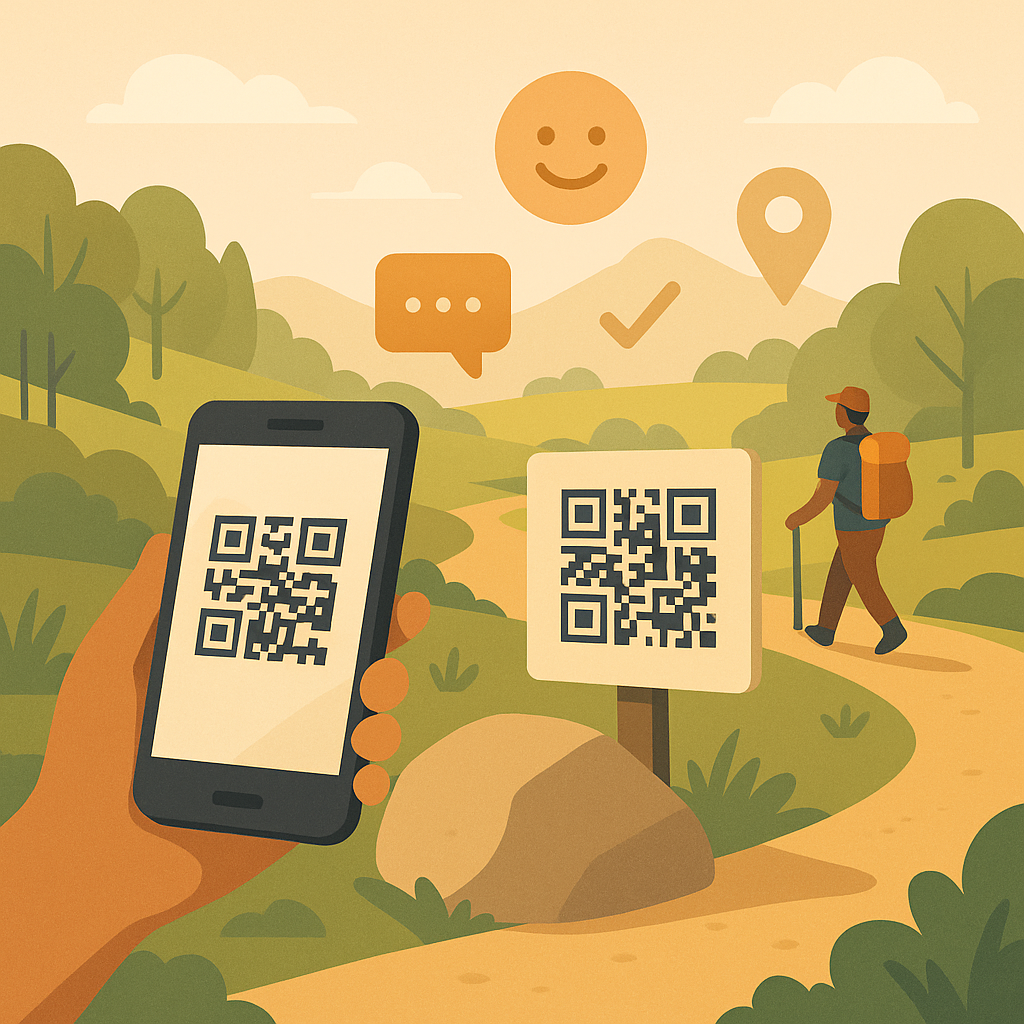 Across parks, recreation areas, wildlife refuges, and outdoor trail systems, agencies rely on visitor feedback to improve operations, understand pain points, strengthen communication efforts, and identify safety concerns. Traditionally, feedback collection depended on kiosks, paper forms, comment boxes, or long post-visit surveys. While these methods provide value, they require staff time, physical infrastructure, and consistent maintenance, and they often fail to capture real time experiences as visitors encounter them.
QR codes changed that dynamic. Portable, inexpensive, and highly adaptable, QR codes give parks and recreation agencies and outdoor recreation departments the ability to gather insights at the exact moment a visitor experiences an issue or forms an impression. With a single scan, feedback becomes immediate instead of delayed. Instead of forgetting the moment, visitors submit comments that reflect real conditions. Wildlife agencies also benefit because QR codes reveal patterns and location specific challenges that may never appear in end-of-season reporting.
Yet QR codes are more than a digital upgrade to comment cards. Their impact depends on how they are placed, how visitors interpret them, and how the agency responds. The psychology behind scanning a QR code matters as much as the technology itself. When designed intentionally, QR code systems help organizations collect meaningful, actionable feedback. When designed poorly, they blend into the environment and contribute little to communication.
For agencies seeking fast, useful, and low burden ways to understand visitor expectations while maintaining positive relationships, QR codes offer a strategic opportunity to modernize communication without overwhelming staff or visitors.
Why QR Codes Work: Understanding Visitor Behavior
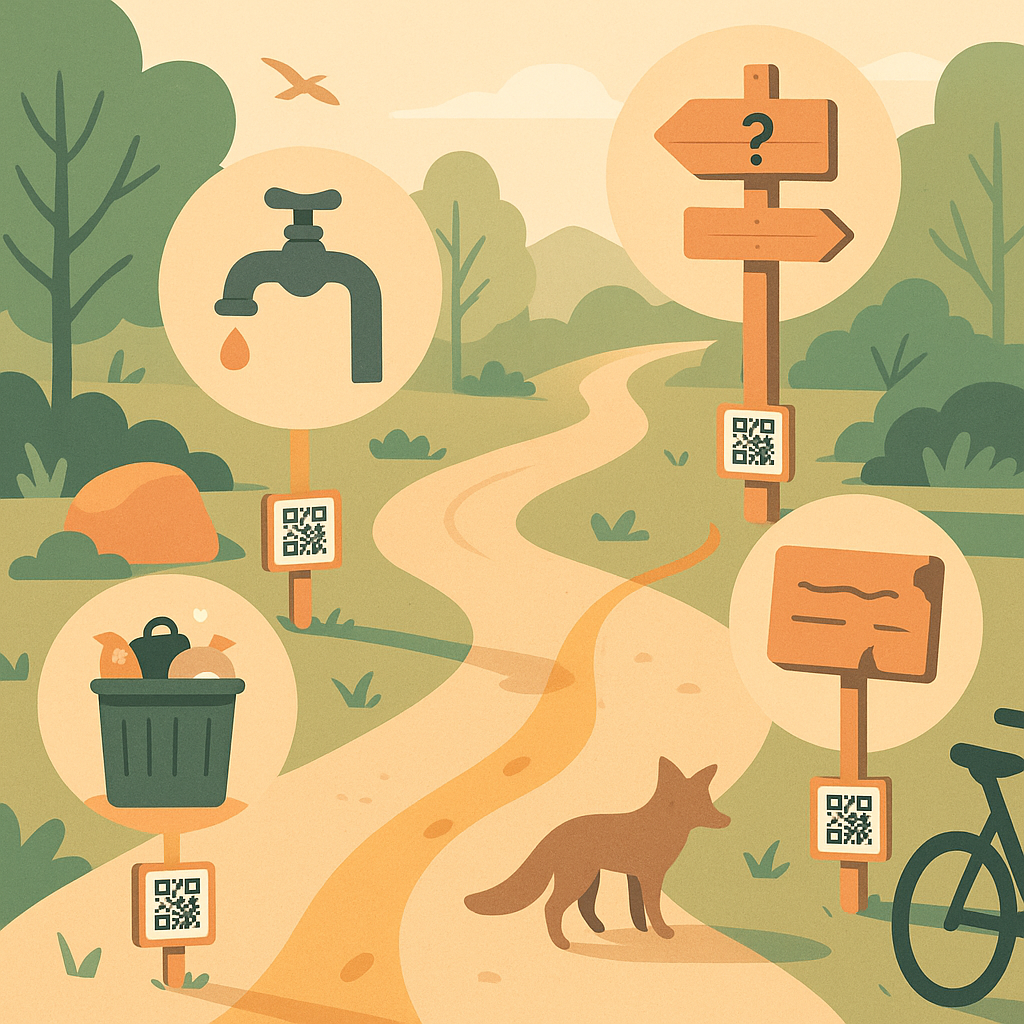 QR codes succeed because they match real visitor behavior in outdoor settings. People often notice problems the moment they occur, whether it is an overflowing trash bin, a confusing junction, a malfunctioning faucet, or a misleading sign. However, they rarely remember to report these issues later. When a QR code sits directly beside the issue, the gap between noticing and reporting disappears. Outdoor recreation departments and park districts see dramatic improvements in both response volume and response quality when feedback becomes instantaneous.
Visitor psychology is another factor. People naturally prefer low effort tasks, especially during leisure experiences where they do not want to navigate long forms or search for contact information. Scanning a QR code is quick, familiar, and requires almost no cognitive load. Visitors also feel a sense of agency when the communication channel is simple. When wildlife agencies place QR codes in high value locations, visitors interpret the gesture as an invitation to participate in site stewardship rather than a complaint process.
Real time convenience reduces frustration. Instead of silently accepting a negative experience or expressing it only to other visitors, families and individuals have a constructive outlet. They can report a hazard or confusion point immediately. This often improves the tone of interactions because the solution feels within reach.
QR codes also align with modern expectations. Smartphones are constant companions used for navigation, photography, program booking, and fitness tracking. Adding QR codes to the communication ecosystem feels natural, especially for younger visitors who view them as intuitive and accessible. When QR codes fit seamlessly into the visitor journey, they convert fleeting attention into valuable information.
From Trails to Tweets: Effective Communication Strategies for Parks, Recreation, Outdoors, and Wildlife Agencies
This article is part of our series on strategic communication for Parks, Recreation, Outdoors, and Wildlife agencies. To learn more and to see the parent article, which links to other content just like this, click the button below.
Designing QR Codes That Visitors Will Actually Use
A QR code is only effective if visitors notice it, trust it, and understand what it leads to. Parks and recreation agencies and wildlife agencies therefore need to design QR code interactions intentionally.
Visibility is the first priority. QR codes should appear where visitors naturally pause, such as trailheads, rest areas, visitor centers, or near facilities where issues are likely to be observed. A code intended for trail feedback belongs in a place where visitors can comfortably stop and scan, not buried behind vegetation or positioned at an awkward angle. Similarly, a QR code intended to collect feedback about cleanliness is far more effective near restrooms or water stations than on a distant bulletin board.
Size communicates importance. A QR code that is too small suggests the agency does not expect it to be used. A code that is disproportionately large may distort or feel intrusive. Park districts often find success with a size that can be comfortably scanned from an arm’s length away, while outdoor recreation departments sometimes adjust sizing based on the material or location.
Clarity of purpose matters even more. A QR code with no explanation is ambiguous. A QR code with a vague label such as “More Information” leaves visitors uncertain about what awaits them. Clear phrasing such as “Tell us how your visit is going,” “Report a trail issue instantly,” or “Help us improve this facility” sets expectations and makes the visitor’s role obvious. Wildlife agencies often see higher engagement when the language feels supportive and participatory rather than corrective.
Durability is another consideration. Outdoor environments expose signs to sun, rain, wind, humidity, and temperature extremes. QR codes must remain scannable, which requires UV resistant ink, weatherproof laminating, and secure mounting. A faded or damaged QR code can send unintended messages about agency maintenance.
When thoughtfully designed, QR codes feel like natural extensions of an agency’s communication strategy and become dependable entry points for real time feedback.
The Importance of Placement: Location Shapes Engagement
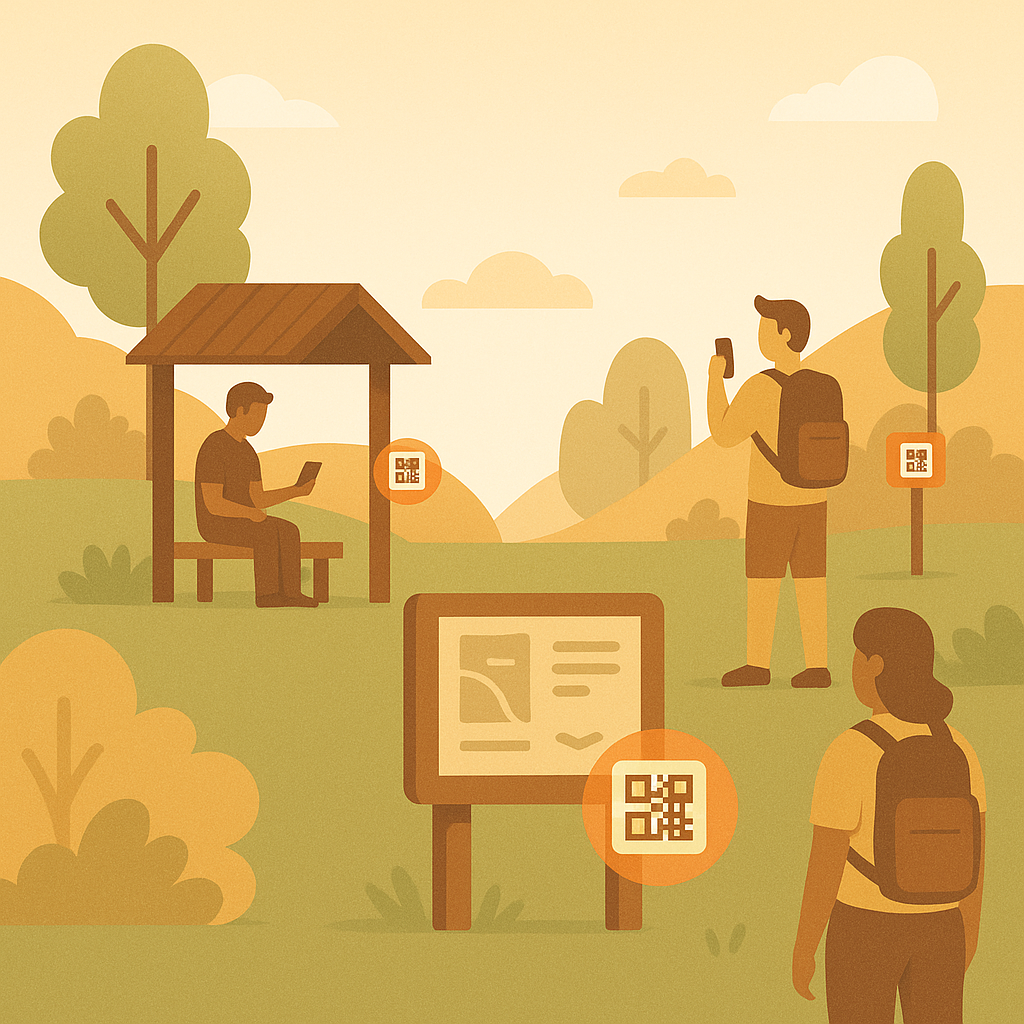 Placement determines whether QR codes are noticed at the right moment. QR codes placed too early in a visitor’s experience may feel irrelevant. Codes placed too late may miss the insight entirely. QR codes placed in stressful or high traffic zones, such as narrow trail corridors or crowded intersections, rarely receive scans because visitors lack the cognitive space to stop and engage.
Wildlife agencies, outdoor recreation departments, and parks and recreation organizations are most effective when they intentionally identify and leverage “natural pause points” within the visitor experience. These pause points include trailheads, scenic lookouts, shelters, restrooms, parking areas, water stations, and interpretive stops. At these locations, visitors are already slowing down to reorient themselves, rest, hydrate, or take in their surroundings. Because attention is not fully consumed by movement or navigation, visitors are more mentally available and receptive, making these moments especially well suited for inviting them to reflect and submit feedback.
Placement should also reflect the intended purpose. A code for reporting issues belongs where issues occur. A code for general experience feedback belongs near exit areas where visitors form overall impressions. A code for educational content pairs well with interpretive panels or wildlife viewing zones. A code for program evaluation is most effective near gathering points such as amphitheaters, campfire circles, or tour check in spots.
Some park districts and outdoor recreation departments use layered placement strategies. For instance, a trail system may place one QR code at the trailhead asking about expectations, another partway along the trail inviting issue reporting, and a final code near the exit collecting overall impressions. This layering distinguishes immediate operational feedback from broader evaluative feedback.
Finally, placement must reflect inclusive design. QR codes positioned too high may be inaccessible to children or wheelchair users. Codes placed too low may be overlooked or obscured. Wildlife agencies that operate multilingual or universally designed systems often ensure that QR codes are reachable, readable, and thoughtfully integrated into the visual landscape.
What a QR Code Should Lead To: Simplicity Is Essential
When a visitor scans a QR code, the content they land on determines whether they complete the intended action or abandon it. A QR code must lead to an experience that is simple, fast, and mobile-friendly.
The first rule is that the landing page should open immediately without requiring logins or app downloads. Anything that increases friction decreases completion rates. The second rule is clarity. Visitors should instantly understand what the page is asking. A cluttered landing page with multiple links, small text, or complex explanations increases cognitive burden.
For example, a trail issue reporting form should include:
- A short sentence of purpose (example: “Help us quickly identify and fix this trail issue.”)
- A dropdown with issue categories
- A space for optional text
- An optional photo upload
- A submit button
It should not include:
- Lengthy explanations
- Additional navigation menus
- Unrelated links
- Fields requiring personal information
Similarly, a general visitor feedback form should use scaled responses or checkboxes rather than long free-text fields. Visitors are more likely to tap responses than type paragraphs on the trail.
Accessibility is also key. The landing page should support screen readers, have sufficient color contrast, and use plain, readable fonts.
Simplicity increases the likelihood that feedback becomes actionable data rather than abandoned intent.
Building Trust Through Transparency
Visitors are far more willing to submit feedback when they believe it will be used meaningfully. QR code systems only succeed when parks and recreation agencies and outdoor recreation departments demonstrate transparency about what happens after feedback is submitted. Transparency builds trust by showing visitors that their time and input matter.
This transparency can appear in several subtle but powerful ways. Some agencies explain directly how feedback will be used, describing whether it informs trail maintenance, staffing decisions, or communication improvements. Others strengthen trust by sharing examples of enhancements made because of visitor input, such as adding new waste bins, repairing trail washouts, or replacing confusing signage. A simple thank you message also helps visitors feel appreciated, while noting expected response windows sets realistic expectations for how urgent issues will be handled. Wildlife agencies often clarify which types of problems require immediate staff intervention, which prevents confusion and ensures that emergency concerns are routed appropriately.
Even a brief line on a QR code landing page can make a noticeable difference. A message such as, “Your feedback helps us respond faster, maintain trails, and improve your visitor experience” reassures visitors that their time is valued and their input is actively used. Clear communication about the process reduces uncertainty and encourages consistent participation.
Issue reporting pages may also include important reminders. A gentle note like, “If this issue involves an immediate safety concern, please notify staff at the visitor center or call the posted emergency number,” helps visitors navigate urgent situations responsibly while signaling that the agency takes safety management seriously.
Some park districts and outdoor recreation departments post monthly updates summarizing key actions taken because of visitor feedback. Statements such as, “This month, based on visitor input, we repaired several drainage problems, replaced multiple signs, and added new water access points,” show that QR code submissions lead to real outcomes. When visitors see direct results, they shift from passive observers to active partners in site stewardship, increasing both participation and goodwill.
Ensuring Accessibility and Digital Equity
Not all visitors engage with technology in the same way. Some have older phones, limited data plans, visual or mobility impairments, or little familiarity with QR codes. Wildlife agencies, parks and recreation agencies, and outdoor recreation departments must design QR systems that accommodate these differences to ensure that feedback collection is equitable and inclusive.
Accessibility starts with providing alternative methods of communication. Even when QR codes are widely available, visitors should have the option to offer feedback through a phone number, a staffed visitor center, or a simple paper form. Digital tools should enhance communication, not become the exclusive pathway.
Visual clarity also matters. QR codes with large size, high contrast patterns, and clear instructional text make scanning easier for visitors of all ages and abilities. A phrase such as “Scan with your smartphone camera” is more universally understood than “Scan here,” especially for those unfamiliar with QR technology. Outdoor recreation departments that operate multilingual parks may also add short instructional lines in additional languages or pair QR codes with recognizable iconography.
Physical accessibility should not be overlooked. QR codes positioned only at tall heights or in constrained areas unintentionally exclude wheelchair users, children, and others who scan from different vantage points. Park districts that consistently place QR codes at reachable, predictable heights reduce barriers and increase engagement.
Digital accessibility is equally important. Feedback forms should comply with accessibility standards, including screen reader compatibility, simple navigation pathways, descriptive labels, high contrast visual design, and minimal keyboard entry requirements. When forms are easy to use, more visitors participate. Agencies that prioritize digital equity signal that feedback is welcomed from the entire community, not only those who are tech savvy.
Turning Feedback Into Actionable Data
Collecting feedback is only the first step. Parks and recreation agencies, wildlife agencies, and park districts must convert raw comments into actionable insights that guide real operational decisions. QR code systems can yield a wide spectrum of useful information, including reports about trail conditions, sanitation concerns, crowding, accessibility issues, program satisfaction, and overall visitor experience. The key is creating a workflow that organizes this information and prevents staff from becoming overwhelmed.
Effective data workflows often begin with thoughtful categorization. When QR code landing pages guide visitors to categorize their comments, such as identifying a maintenance issue, reporting a safety concern, or sharing general impressions, agencies save time during review. Photos, when permitted, add clarity and reduce guesswork for staff evaluating trail damage, facility issues, or signage confusion.
Regular review cycles are essential for maintaining trust and operational efficiency. Wildlife agencies may review safety related issues daily, outdoor recreation departments may assess maintenance feedback weekly, and park districts may examine broader visitor trends monthly to support planning and budgeting. Tracking geographic patterns also helps departments determine which areas generate frequent feedback and whether certain sites require additional staffing, signage, or infrastructure.
For feedback to be actionable, agencies must also match their response capacity to the volume of data they collect. When submissions increase but staff capacity does not, trust erodes. Visitors feel unheard if their input appears to disappear into a void. Departments that commit to consistent follow through, such as closing maintenance loops, communicating updates, or refining programs, show visitors that the system works.
Actionable data depends on consistency, responsiveness, and a willingness to adapt. When agencies treat QR feedback as a central component of operational planning, rather than an optional add on, they gain deeper insight into visitor needs and make more informed decisions that improve the overall experience.
Integrating QR Codes Into a Larger Communication Ecosystem
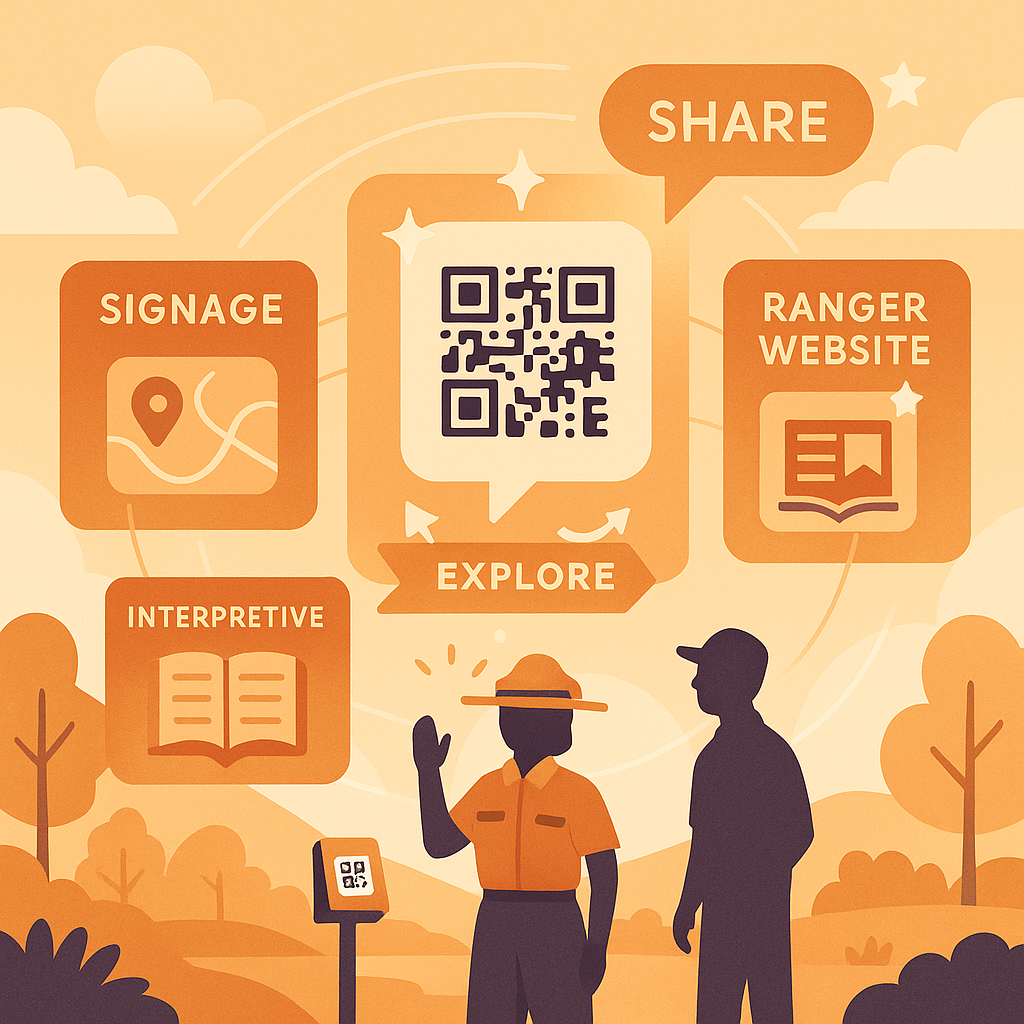 QR codes achieve their full potential only when they are integrated into a broader communication ecosystem that includes signage, staff engagement, digital content, and interpretive storytelling. Wildlife agencies, parks and recreation agencies, and outdoor recreation departments strengthen visitor communication when QR codes reinforce, rather than replace, other communication touchpoints.
A unified communication ecosystem begins with clear goals. Agencies must decide whether QR codes are intended to support operational improvement, visitor engagement, safety awareness, or educational outreach. Once goals are defined, placement strategies follow naturally. For example, a department seeking real time trail conditions will position QR codes at trailheads and intersections. An agency focusing on overall visitor satisfaction will place them prominently near exit areas or visitor centers.
Consistency matters across channels. The visual language of QR codes, including fonts, colors, icons, and phrasing, should match physical signs, ranger messaging, websites, and social media content. When materials look and sound cohesive, visitors understand that QR codes are part of an intentional communication strategy rather than a scattered set of tools.
Cross channel reinforcement improves engagement. Outdoor recreation departments often include QR codes in reservation confirmations, seasonal brochures, or program descriptions. Park districts may add QR codes to trail maps, campground signage, or event banners. Wildlife agencies sometimes incorporate QR codes into interpretive panels that link to species information or conservation videos. Each channel strengthens the others and helps visitors encounter the system multiple times.
When QR codes align with physical signage, interpretive communication, and staff interaction, visitors experience a communication network that feels seamless and reliable. Instead of isolated touchpoints, they encounter a structured system that supports clarity, convenience, and sustained engagement.
Encouraging Visitor Participation Through Design Psychology
Encouraging visitors to scan QR codes requires more than just visibility. It involves understanding the psychology behind attention, motivation, and decision-making. Visitors tend to act when cues are clear, benefits are obvious, and effort is minimal.
A central principle is call-to-action visibility. Phrases grounded in action verbs are significantly more engaging than generic labels like “Scan here” or “Feedback.” Effective examples of this type of language include:
“Share your experience in 30 seconds.”
“Help us improve this spot.”
“Tell us what you think.”
“Report an issue instantly.”
Color contrast also matters. A QR code bordered with a high-contrast color, such as yellow or bright blue, stands out in natural environments without appearing disruptive. A small visual border communicates importance and context.
Another psychological factor is perceived impact. Visitors are more willing to scan QR codes when they believe their input matters. Agencies can increase perceived impact by adding small statements such as:
“Your feedback helps us improve trail safety.”
“We review every submission.”
“Thanks to visitor input, we updated this facility.”
These messages reassure visitors that their time is valued.
Motivation increases when the scanning process feels quick, simple, and predictable. Visitors are less likely to hesitate when the prompt tells them exactly what to expect. Effective examples include:
“Scan to submit a quick, three-question survey.”
“Scan to report maintenance concerns with one photo.”
Clear explanations like these reduce uncertainty and support informed, confident decision-making. These psychological considerations transform QR codes from passive tools into active engagement drivers.
Using QR Codes to Support Safety Communication
Safety communication benefits significantly from QR code technology when implemented responsibly. QR codes can deliver real-time information about:
- Trail closures
- Wildlife alerts
- Flash flood risks
- Fire restrictions
- Weather advisories
- Water quality updates
- Boat ramp closures
Because conditions in parks and outdoor spaces change rapidly, QR codes allow agencies to provide updated information without replacing physical signage. Visitors can access dynamic information at the moment they need it.
However, safety communication requires careful design. QR codes should never replace essential on-site warnings. Instead, they should enhance situational awareness by offering supplemental context. For example, a sign might read:
“Warning: Mountain lion activity reported in this area. Scan for safety tips and updates.”
The physical sign communicates the immediate message. The QR code provides additional depth, such as how to respond during a sighting, which areas to avoid, or how long the alert is active.
Timing and tone matter. Safety-focused QR codes must be clear and straightforward. They should not rely on long paragraphs or dense information. Visitors under stress or urgency will only absorb concise, actionable instructions.
Safety communication also benefits from post-event messaging. If a trail reopens after a hazard, a QR code can provide visitors with restoration updates or explain what precautions the agency took. This transparency reinforces the agency’s commitment to safety and education.
QR codes used in safety communication strengthen trust, reduce uncertainty, and improve decision-making.
Capturing Micro-Feedback: Small Moments, Big Insights
Micro-feedback refers to small, quick observations submitted by visitors during their experience. These insights often capture details that staff may not see during routine inspections. Examples include:
- A broken faucet
- Graffiti on a sign
- An unclear trail marker
- Overflowing trash bins
- A damaged picnic table
- Mudholes at a trail junction
- Slippery steps near a creek crossing
Micro-feedback is valuable because it reflects real-time conditions. It allows agencies to respond quickly, maintain facilities, and improve visitor satisfaction. QR codes are ideal for collecting micro-feedback because they offer immediate access to reporting tools without requiring visitors to locate a staff member or return to a visitor center.
The key is simplicity. Micro-feedback forms should use checkboxes, short statements, and optional photo uploads. Visitors are more likely to participate when the process takes less than a minute.
Agencies benefit from analyzing micro-feedback patterns. If multiple visitors report the same issue in a single week, it signals a systemic problem rather than an isolated incident. Micro-feedback also helps agencies prioritize resources by identifying areas with the highest maintenance needs.
Micro-feedback collection is one of the most powerful, yet underutilized, strengths of QR codes.
Using QR Codes to Enhance Interpretive Experiences
QR codes are not limited to operational feedback. They can also support interpretive and educational goals. When placed next to historical sites, natural features, sculptures, or wildlife viewing areas, QR codes can lead to:
- Short educational videos
- Audio tours
- Interactive maps
- Species identification guides
- Cultural history explanations
- Behind-the-scenes conservation stories
- Geology deep dives
- Local partner organization spotlights
These experiences enrich visitor understanding without requiring large physical signs. QR codes allow agencies to present complex information while preserving natural aesthetics.
Interpretive QR codes also benefit multilingual visitors. A single QR code can lead to multiple language options, ensuring more inclusive engagement. This reduces reliance on multi-language printed signage, which can be bulky or visually cluttered.
Agencies must ensure that interpretive QR codes enhance rather than disrupt the visitor experience. The goal is to offer optional depth without overwhelming those seeking a quiet or unplugged visit.
By supporting both education and optional engagement, QR codes strengthen the relationship between visitors and the landscape.
Addressing Visitor Concerns About Privacy and Data Use
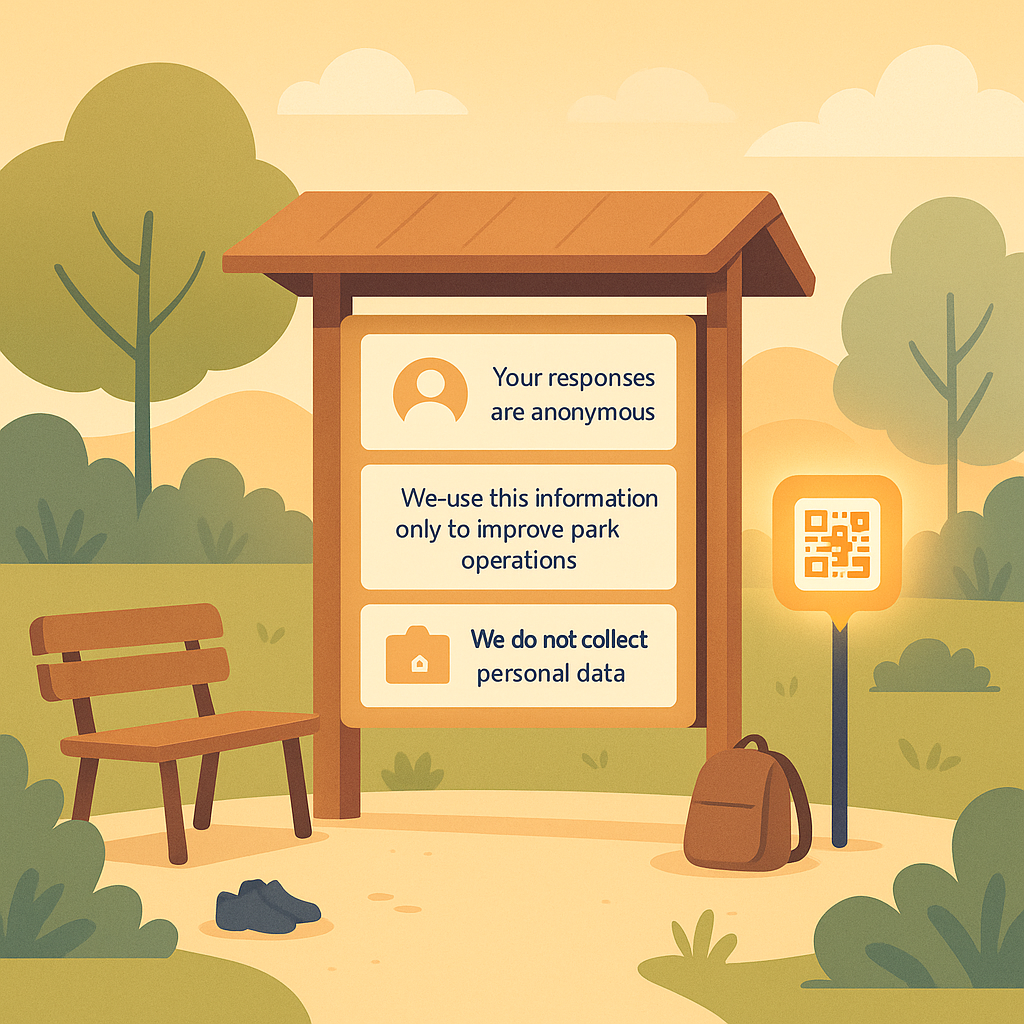 As QR code usage increases, some visitors may hesitate to scan due to concerns about privacy, tracking, or data sharing. Agencies must address these concerns proactively to maintain trust.
Transparency is essential. QR code landing pages should provide clear statements such as:
“We do not collect personal data unless voluntarily provided.”
“Your responses are anonymous.”
“We use this information only to improve park operations.”
Visitors appreciate knowing what data is collected and how it will be used.
Agencies should avoid asking for unnecessary personal details. Fields like name, email, and phone number should only appear when absolutely needed, such as for follow-up on a report requiring clarification.
Additionally, agencies should avoid linking QR codes to external websites with advertisements or unrelated content. This undermines trust and may expose visitors to third-party tracking. Keeping QR code data within the agency’s official domain provides assurance and reliability.
Clear, upfront communication about privacy strengthens visitor willingness to participate.
Managing Visitor Expectations Through QR Code Messaging
Managing expectations plays a central role in building credibility for QR code systems. Visitors participate because they believe their input will be acknowledged, and credibility erodes quickly if follow-through is inconsistent.
Agencies can avoid this by sharing explicit timelines and processes. Effective examples include:
“We review reports weekly.”
“Urgent issues are assessed within 24 hours.”
“General feedback is used in seasonal planning.”
Providing this kind of clarity helps visitors feel informed and reinforces trust in the feedback system.
In some cases, automated confirmation messages can reassure visitors that their feedback was received. Simple acknowledgements such as “Thank you for helping us improve this space” leave visitors feeling heard.
Agencies can also use QR codes to communicate what actions are not possible. For example:
“Due to the protected status of this area, trail rerouting is limited.”
or
“We are aware of recurring flooding here and are working on long-term solutions.”
This transparency reduces frustration and fosters partnership.
Managing expectations is not about limiting feedback, it is about guiding visitor understanding in a clear and honest way.
Supporting Staff Workflows With QR Code Systems
QR codes not only benefit visitors but also support staff in managing workload, prioritizing issues, and improving internal communication. Staff often spend significant time gathering information from the field, monitoring facilities, and responding to visitor concerns. A well-designed QR code system streamlines this process.
When feedback arrives with categorization and location details, staff can respond more efficiently. Photos reduce the need for staff to physically verify certain issues before scheduling repairs. Timestamped submissions help agencies understand when problems occur and allow them to allocate resources during peak times.
Staff dashboards can further improve efficiency. If QR code submissions feed into a centralized tracking system, staff can view reports by:
- Location
- Issue type
- Severity
- Frequency
- Date range
This helps agencies prioritize work orders, respond to safety concerns faster, and reduce operational blind spots.
QR code data also supports long-term planning. By analyzing patterns, staff can identify where visitor communication is unclear, where infrastructure is failing, or where additional resources are needed. This shifts the agency’s approach from reactive to proactive.
When QR code systems support staff rather than overwhelm them with data, they become powerful tools for enhancing operations.
Integrating Feedback Into Planning and Policy
QR code systems provide agencies with granular, real-time data that can inform planning decisions, funding allocation, and policy development. Instead of relying solely on year-end reports or broad surveys, agencies gain insight into specific needs and challenges as they emerge.
For example:
- If many visitors report confusion at a trail junction, signage may need improvement.
- If a high volume of feedback concerns restrooms, maintenance schedules may require adjustment.
- If visitors consistently report unsafe conditions in a particular area, enforcement or design interventions may be needed.
Over time, QR code data creates a detailed map of visitor experiences. Agencies can assess which areas generate the most feedback and why. This information can support grant applications, budget requests, or strategic planning documents.
QR codes also allow agencies to test new programs or interventions. For example, after redesigning a trailhead sign, agencies can place a QR code nearby asking visitors whether the new sign improved clarity. This allows rapid evaluation without waiting months for survey cycles.
Policy development also benefits. When decision-makers have access to consistent, location-specific feedback, policies can be shaped around real visitor needs rather than assumptions. QR code data helps agencies make informed, evidence-based decisions.
Improving Visitor Satisfaction Through Quick Wins
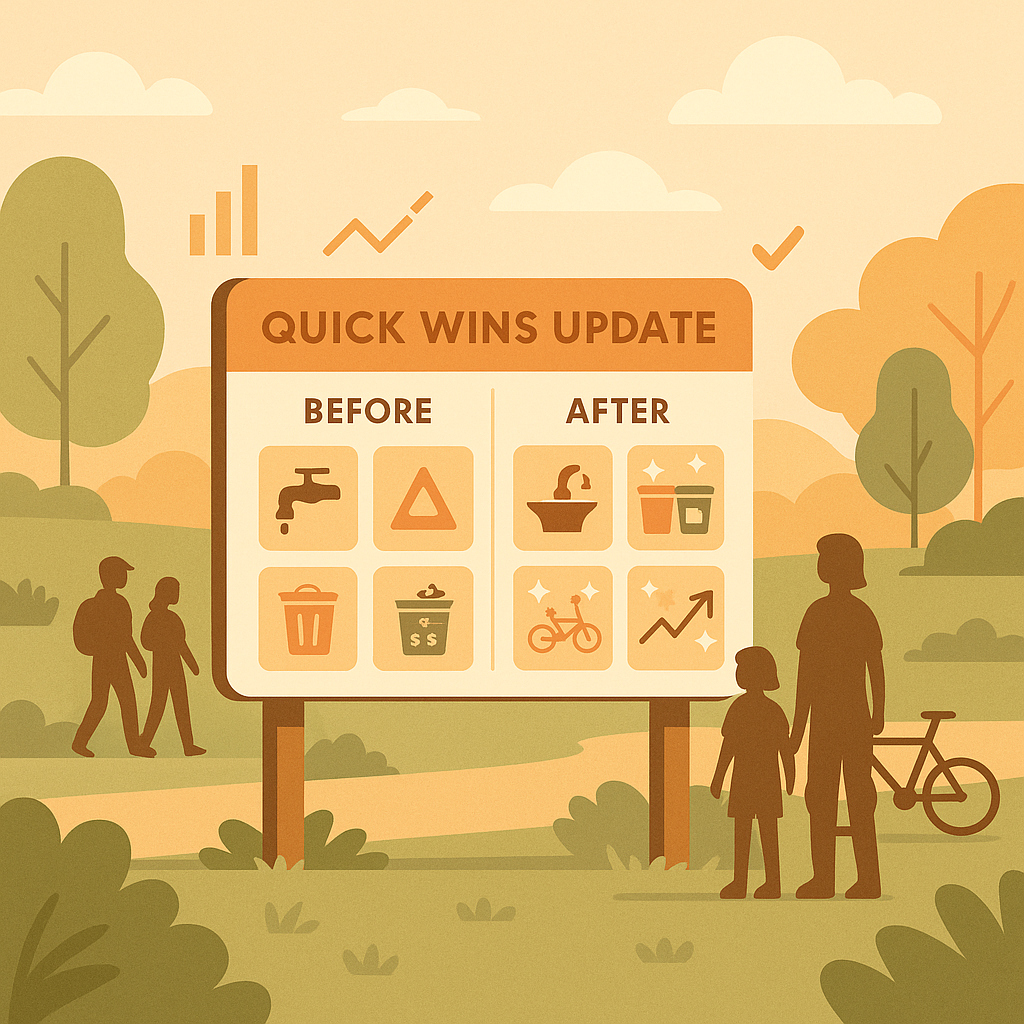 One of the advantages of QR code feedback is the ability to implement “quick wins”, small improvements that make a noticeable difference. Quick wins signal that the agency listens and cares about visitor experiences.
Examples include:
- Fixing a broken water fountain
- Replacing a faded trail marker
- Clearing trash from overflow areas
- Repairing a loose board on a bridge
- Adding temporary signage during high-use periods
When visitors see improvements shortly after reporting issues, it strengthens the relationship between the agency and the public. Visitors perceive the agency as responsive, engaged, and committed to quality.
Agencies can amplify quick wins by posting updates on social media or on visitor boards such as:
- “Thanks to visitor feedback, we repaired the trail bridge this week.”
- “We added new recycling bins after multiple requests. Thank you for your input.”
Transparent celebration of quick wins reinforces engagement and encourages even more participation.
Evaluating the Effectiveness of QR Code Systems
A QR code program is only successful if agencies understand whether it actually enhances communication and improves operations. Evaluating effectiveness requires both quantitative and qualitative review. Quantitative indicators may include scan rates, form completion rates, issue resolution times, and geographic distribution of feedback. These metrics offer insight into engagement patterns and reveal which QR code placements work best.
Qualitative feedback is equally valuable. Agencies may identify recurring themes in visitor comments that point to underlying issues. For example, multiple requests for clearer trail signage at specific junctions may indicate a broader orientation challenge. Similarly, repeated comments about restroom cleanliness at certain times might reflect maintenance staffing gaps. This qualitative information provides context that numbers alone cannot.
Agencies can also use QR codes to evaluate visitor awareness. Short polls that ask questions like “Did you know this area is part of a restoration zone?” or “Do you feel confident navigating the trails today?” help agencies assess whether educational messaging is effective.
Importantly, effectiveness should be reviewed over time. Engagement may start high and taper off, indicating novelty effects. Or engagement may increase as visitors learn to trust the system. Reviewing patterns quarterly or seasonally helps agencies refine placements, wording, visual design, and form structure.
An iterative approach ensures QR code systems remain relevant, accessible, and impactful.
Aligning QR Code Systems With Visitor Expectations
Visitors enter parks with different expectations depending on the type of environment, level of development, and cultural context. In a highly developed urban park, visitors may expect more digital conveniences, including QR codes. In remote wilderness areas, QR codes may seem less intuitive unless framed as essential to safety or stewardship.
Agencies must match QR code usage to the environment’s character. Over-reliance on digital tools in a primitive backcountry setting may feel intrusive or inappropriate, while insufficient digital tools in a dense recreation area may leave visitors feeling unsupported. Finding the right balance reinforces the agency’s identity and maintains authenticity.
Agencies should also consider expectations across age groups, experience levels, and cultural backgrounds. Experienced outdoor recreationists may appreciate QR codes for safety updates but may not want interpretive content delivered digitally. Families with children may prefer quick educational snippets over long explanatory text. International visitors often rely on mobile translation tools, making QR codes especially valuable for multilingual accessibility.
By aligning QR code usage with reasonable visitor expectations, agencies maintain relevance and respect the essence of outdoor experiences.
QR Codes as Tools for Community Engagement
Beyond individual feedback, QR codes can strengthen community relationships. Agencies can use them to gather insight on larger planning initiatives, facility redesigns, volunteer interest, environmental stewardship programs, or community events. QR codes place community involvement at the fingertips of visitors who might otherwise feel disconnected from formal planning processes.
For example, a QR code at a trailhead might link to a short form asking visitors for input on future trail improvements. A QR code in a visitor center might invite participants to join volunteer restoration days. QR codes near wildlife viewing areas might link to citizen science surveys.
These tools expand the agency’s reach beyond traditional public meetings and comment periods, which often capture only a small group of stakeholders. QR codes reach broader, more diverse audiences, including individuals who may not self-identify as community participants but are willing to share insights when prompted during a visit.
This type of community engagement supports democratic participation, strengthens public trust, and increases the quality of planning decisions.
Avoiding Overuse: Finding the Right Frequency
Despite their usefulness, QR codes can be overused. Too many QR codes in a single area can overwhelm visitors, creating visual clutter or “QR fatigue”. Visitors may become desensitized or ignore QR codes entirely.
To avoid overuse, agencies should consider:
- The purpose of each QR code
- The visitor’s mental load at that moment
- Whether the QR code duplicates information already available
- Whether the benefit justifies asking for attention
High-use areas may justify multiple QR codes if each serves a distinct purpose, such as safety updates, facility feedback, or interpretive content. However, agencies should avoid placing multiple QR codes on a single sign face or at a single decision point.
Establishing internal guidelines helps prevent QR code proliferation. These guidelines might specify:
- Maximum number of QR codes per trailhead
- Minimum spacing between QR code placements
- Design consistency requirements
- Clear justification for each QR code
A thoughtful approach ensures QR codes feel purposeful rather than distracting.
Preparing Staff to Support QR Code Engagement
Staff readiness is essential for successful QR code implementation. Rangers, maintenance crews, volunteers, and visitor center staff all play roles in introducing QR codes, answering questions, and supporting accessibility.
Training should cover:
- How QR codes work
- How visitors might respond
- How to troubleshoot common issues
- How to explain the purpose of QR code initiatives
- How to refer visitors to alternative feedback options
- How to use QR code data in operational decisions
Staff should feel confident discussing QR code systems and encouraging participation. Their comfort and enthusiasm influence visitor willingness to engage.
Staff should also be trained to identify when QR code usage might create barriers, such as for visitors with limited digital access. Offering alternative options, such as paper forms or verbal comment collection, maintains equity and trust.
Putting staff at the center of QR code communication reinforces a human connection that complements the digital system.
Case-Free but Insight-Driven: Patterns Seen Across Agencies
Although this article avoids specific case studies (per your boss’s preference), numerous patterns have emerged across parks, wildlife agencies, and recreation departments that have adopted QR code systems.
Common challenges include:
- Low initial scan rates due to unclear wording
- QR codes placed too low or too high
- Damage from weather or vandalism
- Landing pages that require too many steps
- Forms that take too long to complete
- Inconsistent internal review of submissions
Common successes include:
- High engagement when QR codes are linked to specific issues
- Quick identification of maintenance hotspots
- More accurate understanding of visitor flow patterns
- Higher-quality feedback due to on-the-spot submissions
- Increased trust when agencies respond visibly to input
- Better alignment between visitor needs and agency priorities
By studying these patterns, agencies can anticipate challenges and design more resilient communication systems.
Building a Long-Term Digital Feedback Strategy
To maximize the benefits of QR codes, agencies must build a long-term strategy rather than rely on ad hoc implementation. A digital feedback strategy should include:
- Clear goals
- Defined roles and workflows
- Integrated data systems
- Consistent visual and tonal standards
- Evaluation timelines
- Visitor communication benchmarks
QR codes should evolve with visitor behavior and agency capacity. Over time, agencies may refine their QR code placements, adjust form questions, shorten surveys, add language options, expand interpretive uses, or integrate QR codes with other digital tools such as mobile apps or GIS systems.
A long-term strategy helps agencies adapt proactively rather than reactively. As technology continues to evolve and visitor expectations shift, QR codes can serve as flexible tools that support continuous communication and operational improvement.
The Future of Visitor Feedback in Outdoor Spaces
The future of visitor feedback likely involves deeper integration between physical and digital environments. QR codes will continue to play a role, but they may evolve alongside new technologies such as:
- Smart signage
- Beacon-based alerts
- Mobile-friendly geofencing
- Interactive maps
- AI-assisted visitor support
- Voice-based feedback tools
In this landscape, QR codes remain valuable because they are:
- Low-cost
- Dependable
- Easy to deploy
- Universally accessible
- Compatible with any smartphone
Their simplicity ensures longevity even as more sophisticated tools emerge. QR codes will increasingly serve as bridges between traditional park infrastructure and future-facing digital communication systems.
The future of feedback is not about replacing human connection, it is about enhancing communication so visitors feel supported, heard, and respected throughout their experiences.
Strategic Communication Support for Your Parks and Recreation Agency
 Many outdoor agencies recognize that digital feedback tools like QR codes are most effective when integrated into a thoughtful, well-aligned communication system. When messaging, workflows, or internal processes are inconsistent, even the best technology fails to deliver meaningful results. Because of these challenges, agencies often choose to partner with external resources like Stegmeier Consulting Group (SCG) to help bring structure, clarity, and alignment to their communication strategies.
SCG supports parks, recreation, wildlife, and outdoor agencies by strengthening their organizational communication frameworks. This includes developing consistent visitor-facing messaging, improving cross-department collaboration, and helping teams implement communication tools, such as QR code systems, in a way that aligns with both operational needs and visitor expectations.
SCG helps agencies clarify their internal processes so staff feel empowered, workflows run smoothly, and communication with the public becomes more effective. By aligning tone, priorities, and decision-making across the organization, SCG enables agencies to create communication experiences that feel intentional, trustworthy, and supportive.
For agencies looking to modernize their visitor engagement strategies, QR codes represent a powerful tool. SCG helps ensure they are implemented within a communication system that truly enhances visitor satisfaction and operational efficiency.
Conclusion
QR codes have emerged as a versatile and effective tool for gathering visitor feedback, enhancing communication, and strengthening the connection between agencies and the public. When implemented thoughtfully, QR codes help visitors feel heard, support staff decision-making, and provide real-time insights that improve operations. They offer a bridge between physical experiences and digital communication in a way that preserves the integrity of outdoor spaces while embracing modern expectations.
The success of QR codes depends on clarity, accessibility, placement, design, workflow integration, and organizational alignment. When these elements come together, QR codes become more than a digital shortcut, they become a communication asset that fosters trust, responsiveness, and shared stewardship.
In the end, QR codes contribute not only to problem-solving but to building a culture of collaboration between agencies and the communities they serve. By making feedback fast, accessible, and actionable, agencies strengthen relationships and improve the visitor experience in meaningful and lasting ways.
SCG’s Strategic Approach to Communication Systems
Align your agency’s messaging, processes, and public engagement strategies
Agencies that communicate effectively build stronger trust with staff, stakeholders, and the public. Whether you are implementing QR code systems, improving internal communication workflows, or strengthening agency-wide alignment, SCG can help you develop a communication system that supports consistent decision-making and long-term organizational success. Use the form below to connect with our team and explore how a strategic communication framework can elevate your agency’s impact.