Messaging that Moves People: The Communication Strategy Behind Boulder’s County, Colorado Vote Early Day
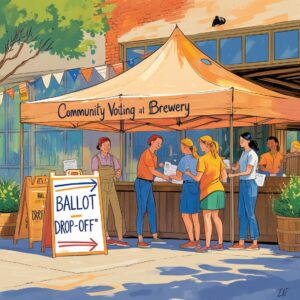
In the 2022 midterm cycle, the Boulder County Clerk & Recorder’s Office transformed civic participation into something far more vibrant than a routine civic duty, it became a cultural event. Timed strategically with the national Vote Early Day initiative, the County’s October 28 campaign brought together community partnerships, highly visible and trusted public venues, and clear, hyper-accessible messaging to amplify awareness of early voting options and encourage broader public engagement.
By offering in-person voter registration, maintaining a network of 24/7 ballot drop boxes, and integrating community-minded elements such as food drive tie-ins, the initiative reframed voting as an experience that was not only accessible but also communal, informal, and welcoming. The campaign invited residents to participate in an environment that felt familiar, supportive, and reflective of local values.
This case study examines how Boulder County used strategic partnerships, thoughtful atmosphere design, and culturally resonant touchpoints to reach a diverse range of voters, and how these approaches can inform future efforts to strengthen civic participation at the local level.
The Initiative: Vote Early Day in Boulder County
Led by Boulder County Elections Division, the initiative brought together civic institutions and beloved local venues to maximize turnout and foster community connection.
Key Partners:
- Avery Brewing Company – A high-traffic, socially vibrant venue in the Gunbarrel community.
- Emergency Family Assistance Association (EFAA) – A trusted resource hub for food security and social services in Boulder.
- Regional Transportation District (RTD) – Provided zero-fare travel to improve voter access.
Together, these partners created a two-site, single-day outreach campaign that combined essential services with celebratory spirit.
Communication-Centered Program Activities
1. Multi-Channel Messaging Grounded in Trust and Timing
Boulder County’s communications strategy for Vote Early Day 2022 was anchored in trust-building, timing, and tone. Recognizing that many voters feel alienated by government messaging—especially in an era of political polarization—the County emphasized clear, welcoming, and action-oriented language, distributed through channels voters already use and trust.
Press and Media Outreach: Strategic Timing for Maximum Visibility
Two formal press releases—issued on October 21 and October 26—laid the foundation for broad awareness just ahead of the Friday, October 28 event. These releases were crafted and distributed by County Communication and included:
- Specific details on drop box locations, event times, and available services (registration help, voter education, food donation). Quotes from three trusted messengers—public official, nonprofit leader, and business owner—offering nonpartisan, values-based endorsements of the event.
- Clear alignment with the national Vote Early Day initiative to create momentum and media relevance.
These press communications were sent to a combination of:
- Local print and digital outlets, including Boulder Reporting Lab, Daily Camera, and Colorado Newsline.
- Community event calendars, such as the Boulder Library and the Boulder County government homepages.
- Community newsletter syndicates allowing neighborhood associations and civic groups to amplify the message.
This staggered approach to earned media ensured coverage during the final week of early voting, while still giving the public adequate time to plan and participate.
Digital and Social Media Campaigns: Local Tone, Visual Emphasis
On social media, Boulder County’s posts emphasized visual clarity, warmth, and accessibility. Content was published across official government channels (Twitter/X, Facebook, Instagram) with:
- Photos of ballot boxes, voting sites, and staff preparing materials.
- Infographics outlining the voting process, ID requirements, and what to expect at each venue.
- Multilingual captions and alt-text, ensuring ADA and LEP compliance.
- Shareable graphics for Vote Early Day, branded with county and national logos, helping signal legitimacy and cohesion.
Each post used non-bureaucratic, human-first language, e.g., “Ballots, BBQ, and good vibes. Drop your ballot at Avery Brewing this Friday and grab a sticker while you’re at it!”
This tone struck a balance between encouragement and clarity, appealing especially to younger voters, new registrants, and those turned off by traditional civic rhetoric.
Localized, Partner-Aided Amplification
Boulder County did not act alone. The communication strategy activated its partners as message multipliers:
- Avery Brewing promoted the event via its social channels, email list, and in-house signage—targeting their loyal customer base with the message: “Civic pride meets craft beer—vote early this Friday at the taproom.”
- Emergency Family Assistance Association (EFAA) integrated voting promotion into its existing communications with low-income families, donors, and volunteers.
- Local influencers and community leaders (including food bloggers, neighborhood organizers, and school groups) reposted or translated materials into Spanish, Nepali, and other local languages.
This distributed approach allowed Boulder County to reach into different community segments authentically, using the credibility and cultural fluency of partner voices.
Tone and Framing: Reframing Voting as Social, Local, and Actionable
One of the most effective elements of the campaign was its intentional framing of voting as a socially rooted, everyday activity. Rather than relying on abstract calls to civic duty, Boulder County used frames such as:
- Voting as service: “Drop your ballot. Donate a can. Strengthen your community.”
- Voting as social experience: “Bring a friend. Grab a pint. Make your voice heard.”
- Voting as informal, easy, and local: “You don’t need an appointment. Just show up and vote.”
This rhetorical strategy especially resonated with first-time voters, infrequent voters, and young adults, who often cite intimidation or lack of connection as reasons for disengagement.
Why It Works
- Consistent tone across channels creates cohesion. Whether via print, social media, or partner posts, the messaging felt unified and familiar.
- Hyperlocal framing overcomes voter apathy. Talking about neighborhoods, local leaders, and nearby venues made voting feel relevant and reachable.
- Message timing aligned with voter decision points. Communications were concentrated in the week leading up to the event, a critical window when many voters finalize how they’ll vote.
2. Onsite Messaging and Signage: Clarity at the Point of Action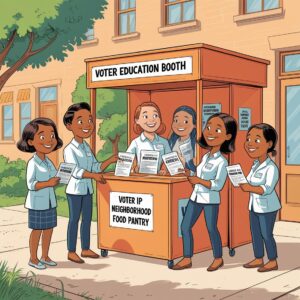
Both Vote Early Day locations—Avery Brewing and EFAA—were carefully prepared to support live, in-person communication and wayfinding.
Visual Cues and Branded Signage
- Branded pop-up tents and feather flags labeled “Vote Early Here” and “Ballot Drop-Off” were highly visible from surrounding streets.
- Large, easy-to-read bilingual signage offered step-by-step instructions for ballot submission and registration.
- Stickers, buttons, and swag created visibility and encouraged social sharing—acting as both reward and signal.
The design strategy borrowed from event marketing best practices: bright, clear, and celebratory.
Trained Staff and Volunteers as Live Communicators
Perhaps the most valuable communication assets at the event were the county election staff and partner organization volunteers, who:
- Answered questions about ID requirements, mail ballots, and registration deadlines.
- Helped attendees complete registration or updates on-site via tablets and forms.
- Distributed official guides and resource flyers (including information about post-election result tracking and next election dates).
This face-to-face engagement strategy ensured that messaging wasn’t just static or one-directional. It became a conversation.
Why It Works
- Voters trust people more than pamphlets. Having trained staff on hand humanized the process and added confidence to decision-making.
- Visible branding and signage make action easy. Voters didn’t have to guess where to go or what to do—every step was reinforced visually.
- Celebratory elements (stickers, swag, high-fives) turned civic action into a shared, positive experience.
3. Accessibility and Inclusion in All Messaging Layers
Accessibility wasn’t an afterthought—it was baked into the strategy:
Transportation Messaging
- All materials highlighted that RTD offered zero-fare transit countywide on October 28.
- Posts included bus stop locations and maps near each event site.
- Public bulletins included reminders about early voting deadlines for those unable to attend in person.
Language Access
- Spanish translations were available for most print and digital materials.
- Volunteers and staff at EFAA were trained to support LEP voters and could provide interpretation or printed materials in multiple languages.
Tone of Welcome
- Nothing about the communications required formal RSVP, dress codes, or gatekeeping language.
- Events were described as “come-as-you-are, open to all”—a critical approach for engaging voters who may be undocumented, formerly incarcerated, or otherwise marginalized.
Why It Works
- Accessibility is a trust signal. When voters see that events have been designed with their needs in mind, participation feels safer and more possible.
- Practical supports (like free transit) remove invisible barriers. For many working-class or older voters, getting to the polls is the biggest obstacle.
- Inclusion is expressed not just through language but in tone, presence, and invitation.
Outcomes and Communication Impact
While formal ballot drop or engagement metrics were not publicly released, qualitative feedback and media coverage indicated:
1. High Engagement Across Demographics
- Both sites saw steady attendance throughout the day.
- Voters engaged beyond drop-off: asking questions, registering, and interacting with staff.
2. Expanded Civic Participation in Nontraditional Spaces
- Voters turned out at a brewery, proving that informal, social settings can complement official civic functions.
- Events drew both frequent voters and casual participants new to early voting or food drives.
3. Reinforced Trust Through Visibility and Presence
- The presence of real election officials—answering questions live—helped demystify the voting process.
- Local media framed the event as inclusive and celebratory, supporting long-term trust in election processes.
 Takeaways: Lessons from Boulder County’s Early Voting Engagement
- Place-Based Strategy Expands Reach Pairing civic services with trusted local venues makes voting more convenient, visible, and socially supported.
- Informality Can Increase Participation Events don’t need formality to be effective. Pints, stickers, and conversations can create serious civic outcomes.
- Inclusivity Means Meeting Multiple Needs Food drives, transportation support, and culturally competent messaging help voters feel seen and supported.
- Staffed Access Matters Having knowledgeable, friendly staff onsite elevates confidence, reduces confusion, and personalizes the voting experience.
Conclusion: Civic Culture at Street Level
Boulder County’s Vote Early Day initiative proved that democracy thrives in familiar spaces. Whether at a brewery or a food assistance center, early voting became more than a transaction—it became an invitation to connect with community.
By combining strategic timing, local partnerships, and a commitment to inclusion, Boulder County offers a compelling model for how elections can be made more welcoming, accessible, and meaningful.
Ready to Elevate Your Agency’s Public Communication?
We understand the unique challenges state and local government agencies face—from complex issues to diverse community needs. Our comprehensive approach can help you transform the way you connect with constituents, improve transparency, and highlight the valuable work your agency does every day.
Interested in learning more? Reach out to us today for a consultation. We’d love to discuss how our services can support your goals and help you build lasting trust with the communities you serve.