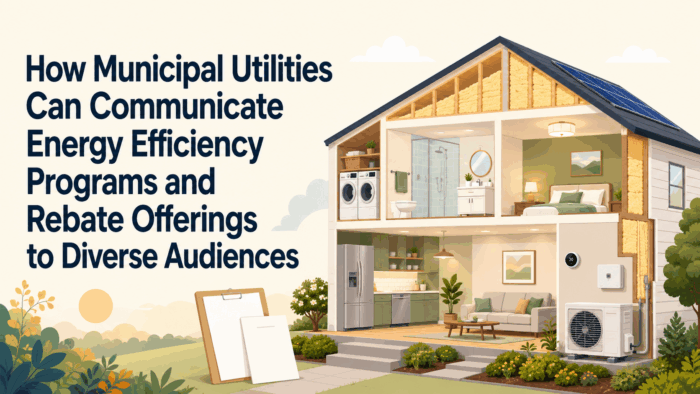
How Municipal Utilities Can Communicate Energy Efficiency Programs and Rebate Offerings to Diverse Audiences
 Energy efficiency programs are among the most consistently underperforming communication challenges in public utility management. The programs themselves are well-designed, genuinely beneficial, and directly responsive to the interests of the ratepayers they serve. The rebate offerings are real money, reducing the cost of equipment that ratepayers were going to purchase anyway. The efficiency improvements are measurable, appearing in every subsequent utility bill as lower costs for the same level of service. And yet participation rates in most utility energy efficiency programs remain far below what the programs’ designers projected, and well below the rates that would justify the utility’s investment in program design and administration. The gap between program quality and program participation is almost entirely a communication failure.
The communication failures that produce low participation in energy efficiency programs are distinctive. They are not primarily failures of channel reach, though many programs do have notification gaps that leave significant portions of the ratepayer base unaware that the programs exist. They are failures of translation and relevance. A program that exists to serve ratepayers but communicates about itself in the language of energy policy rather than in the language of household finance will be ignored by most of the ratepayers it could help, not because those ratepayers are disinterested in saving money, but because the communication does not reach them where they are. The ratepayer who would enthusiastically participate in a rebate program that saves them money on a refrigerator they need to replace does not see the connection between their immediate consumer decision and the utility communication that arrived months ago about an efficiency program they do not think of as relevant to their situation.
Diversity in the ratepayer base creates communication challenges that are specific to energy efficiency programs in ways that are less pronounced for other utility communication. Rate change notifications reach all ratepayers, regardless of their housing situation, digital access, language, or income level, because they appear on a bill that every ratepayer receives. Energy efficiency program communication must actively reach ratepayers who have never sought out the program, who may face structural barriers to participation even if they are aware of it, and who may be exactly the ratepayers whose energy cost burden would most benefit from the program’s offerings. That active reach requires a communication strategy that is designed around the specific circumstances of different ratepayer populations rather than a single general-audience approach.
This article examines how municipal utilities can design and execute energy efficiency program communication that reaches diverse ratepayer audiences effectively, translates program offerings into terms that connect with the specific financial and practical circumstances of different audience groups, addresses the structural barriers that prevent some ratepayers from participating even when they are aware of the program, and builds the sustained awareness that keeps efficiency programs visible between their initial launch and the moments when ratepayers are actually positioned to participate.
Understanding Why Energy Efficiency Programs Are Underutilized
The underutilization of energy efficiency programs is not a single problem with a single cause. It is a cluster of overlapping communication and accessibility failures that reinforce each other in ways that make each one harder to address in isolation. Understanding the full picture of why eligible ratepayers do not participate is the prerequisite for designing communication that addresses the actual barriers rather than the imagined ones.
Awareness is the most fundamental barrier. Ratepayers who do not know that an energy efficiency program exists cannot participate in it. Awareness gaps are not randomly distributed across the ratepayer base. They are concentrated in the populations that utility standard communication channels reach least effectively: low-income ratepayers who may not regularly interact with utility billing or digital communication, non-English-speaking households who receive communications they cannot fully process, renters who may not follow utility communications directed at account holders rather than residents, and elderly ratepayers who may not use the digital channels through which many utilities now primarily communicate their efficiency programs.
Comprehension is a second distinct barrier. Ratepayers who are aware that an energy efficiency program exists but do not understand what it covers, how much it pays, or what the application process involves face a practical barrier that awareness alone does not overcome. Program descriptions that use technical or administrative language, that present eligibility requirements in ways that are difficult to evaluate without specific knowledge of the ratepayer’s own situation, or that direct ratepayers to multi-step application processes without clear guidance at each step produce high dropout rates at precisely the points where a more accessible communication design would sustain participation.
Relevance is a third barrier that communication addresses less frequently than awareness and comprehension. A ratepayer who is aware of and understands an energy efficiency program but does not see it as relevant to their current situation will not participate. Relevance is partly a timing issue: efficiency programs are most valuable to ratepayers at the specific moment when they are making purchasing decisions about qualifying equipment. A utility that communicates about its appliance rebate program to all ratepayers simultaneously will reach many of them at moments when the communication is irrelevant because they are not in the market for the qualifying appliance. Relevance is also partly a framing issue: programs described in terms of energy policy objectives rather than household financial benefits will be less relevant to ratepayers whose primary concern is their monthly budget than those described in terms of the specific dollar savings available on specific purchases.
From Fragmentation to Coordination: Communication Strategies for Councils of Governments, Metropolitan Planning Organizations, and Regional Planning Agencies
This case study is part of SCG’s series on communication for councils of governments, metropolitan planning organizations, and regional planning agencies. To learn more and to see the parent article, which links to other content just like this, click the button below.
Segmenting Energy Efficiency Communication by Customer Type and Housing Situation
The Homeowner Audience
Homeowners who occupy their own homes represent the audience for whom most energy efficiency programs are most straightforwardly accessible. They control their own equipment purchasing decisions, they receive the direct financial benefit of efficiency improvements in their own utility bills, and they have the stable housing tenure that allows long-term efficiency investments to pay back. Communication for this audience can focus directly on the financial case for participation: the rebate amount available for specific equipment categories, the estimated monthly savings from efficiency improvements, the simple payback period that makes the investment case clear, and the straightforward application process that allows participation with minimal friction.
Even for homeowners, communication effectiveness depends on timing and channel alignment with actual purchasing decisions. Homeowners who receive a general communication about appliance efficiency rebates at a time when none of their major appliances are approaching end of life will not act on the communication. The most effective efficiency communication for homeowners integrates program awareness into the purchasing decision moment through partnerships with retailers, contractors, and home improvement channels where ratepayers are actively making decisions about qualifying equipment. A rebate program that is visible at the point of purchase, through retailer signage, contractor recommendation, or retailer-integrated application processes, reaches homeowners in the moment of maximum relevance.
For major home systems, including HVAC, water heating, and building envelope improvements, the contractor relationship is the most important communication channel for homeowners. Homeowners who are replacing a failing HVAC system are overwhelmingly relying on the advice of the contractor they have engaged to make the replacement. A utility that has built a strong contractor engagement program, ensuring that contractors who work in its service area are knowledgeable about efficiency rebate programs and routinely recommend qualifying equipment to their customers, has created a communication channel that reaches homeowners at exactly the right moment with a recommendation from a trusted source.
The Renter Audience
Renters face structural barriers to energy efficiency program participation that homeowners do not. The most fundamental is the split incentive problem: renters pay utility bills but do not make the capital equipment decisions that determine energy consumption. A renter who would benefit financially from an efficient HVAC system cannot unilaterally install one without the landlord’s approval and investment. A renter who would benefit from better insulation cannot improve their building’s envelope. The standard energy efficiency program model, which rebates the purchaser of qualifying equipment, does not reach renters in most cases because renters are not the purchasers of the equipment whose efficiency determines their bills.
Communicating to renters about energy efficiency programs that do not address the split incentive problem is largely futile. The communication that actually serves the renter audience is communication about the programs that are accessible to renters: direct-install programs that provide efficiency improvements at no cost to the renter or landlord, portable efficiency measures such as advanced power strips and efficient lighting that renters can control and take with them when they move, and behavioral efficiency programs that help renters reduce energy consumption without capital investment. Communication for the renter audience should be specific about which program offerings are actually accessible to renters, rather than presenting the full efficiency program portfolio as though it were equally available to all ratepayer types.
Engaging landlords as an intermediary channel for renter-accessible efficiency programs creates communication leverage that direct-to-renter outreach cannot achieve. A landlord who understands that energy efficiency improvements to rental properties can reduce tenant energy costs and improve tenant retention, and who knows specifically what programs are available to support those improvements, has both the authority and the incentive to make improvements that benefit renters. Communication that reaches landlords, through rental property owner associations, through property management companies, or through direct outreach to large rental property owners in the service area, can unlock efficiency improvements that renter-directed communication alone cannot accomplish.
Low-Income Ratepayers and the Equity Dimension
Low-income ratepayers spend a disproportionate share of their household income on energy and have the most to gain from efficiency improvements that reduce energy costs. They are also the audience least likely to be reached by standard utility efficiency program communication and most likely to face barriers to participation even when they are aware of the program. The gap between potential benefit and actual participation for low-income ratepayers is the equity dimension of efficiency program communication that utilities most consistently fail to address.
The barriers that low-income ratepayers face in accessing efficiency programs are multiple and overlapping. They are more likely to be renters facing the split incentive problem. They are more likely to be in housing with older, less efficient equipment that they cannot replace unilaterally. They are more likely to face capital access barriers even when rebates are available, because the rebate model requires upfront purchase of qualifying equipment that the ratepayer may not be able to afford even with the rebate. They are more likely to face language and literacy barriers in accessing program information. And they are least likely to be reached through the digital communication channels that utilities increasingly rely on for efficiency program communication.
Low-income specific efficiency programs, which provide direct installation of efficiency measures at no cost to the ratepayer, address the capital access barrier directly and are the most effective model for delivering efficiency benefits to the ratepayer population with the greatest need. Communication for these programs requires channels, messengers, and materials that reach low-income households where they are: through community organizations, social service agencies, food banks, community health centers, and faith communities that have established relationships with low-income households that utility communication channels do not. A utility that partners with these organizations to deliver low-income efficiency program information is extending its reach into exactly the communities where efficiency benefits would be most significant.
Communicating in Plain Language About Rebates and Applications
 Rebate programs that are genuinely accessible to eligible ratepayers communicate in terms that allow any eligible ratepayer to quickly determine whether they qualify, how much they can receive, and how to complete the application. Programs that fail on any of these dimensions will have participation rates far below what their eligibility criteria would suggest, because the communication complexity becomes a barrier that rational ratepayers do not bother to overcome for a benefit that may or may not actually be available to them.
The eligibility question is the first communication hurdle. Ratepayers who cannot quickly determine whether they are eligible for a rebate program will not invest the time required to navigate the application process to find out. Eligibility communication should be expressed in terms that a ratepayer can apply to their own situation without specialized knowledge. Equipment categories should be described by the type of equipment rather than by technical efficiency standards that require a product research step before the eligibility question can even be answered. Income thresholds for income-qualified programs should be expressed in terms of the annual or monthly income figure that eligible households would recognize as describing their situation.
The rebate amount question is the second critical communication element. A ratepayer who knows they are eligible and wants to understand the financial value of participation needs a clear, specific answer to how much money they will receive. Programs that provide rebate amounts only as a percentage of equipment cost, or that require the ratepayer to look up a specific equipment model’s efficiency rating before calculating the rebate, are creating information barriers that reduce participation. Fixed rebate amounts for specific equipment categories that eligible ratepayers can immediately evaluate against the cost of participation are the most accessible communication design for rebate programs.
Application process communication is the third critical element. A ratepayer who is eligible and understands the financial value of participation will not complete the application if the process is unclear, burdensome, or requires documentation they are uncertain how to obtain. Application communication should walk through the process step by step in plain language, identify exactly what documentation is required, provide clear guidance on how to obtain any documentation that might not be immediately available, and set clear expectations about the timeline from application to rebate payment. Programs that offer online application with minimal documentation requirements will have higher participation rates than those that require paper forms, extensive documentation, and multiple interaction steps with utility staff.
Reaching Diverse Audiences Through Multiple Channels
Energy efficiency program communication that relies on a single channel to reach all ratepayers will systematically miss the portions of the ratepayer base that do not use that channel. A program that communicates exclusively through the utility’s digital channels, including email, website, and social media, will reach digitally connected ratepayers effectively but will miss elderly ratepayers, low-income ratepayers with limited digital access, and non-English-speaking ratepayers who are not following English-language digital channels. A program that communicates exclusively through bill inserts will reach all ratepayers but will communicate at a level of detail that is insufficient to drive participation without follow-up engagement.
Bill inserts remain the most universal channel for efficiency program communication because they reach every ratepayer regardless of digital access, language preference, or engagement level with utility channels. The constraint is that bill inserts cannot provide the depth of program information that drives participation. They are most effective as awareness builders that direct ratepayers to more detailed information through the channel that is most accessible to the specific ratepayer. A bill insert that announces a rebate program and provides multiple pathways for learning more, including a website, a phone number, and a QR code that leads to a mobile-optimized program page, serves the full range of ratepayer digital access levels.
Community partner channels are particularly important for reaching the ratepayer populations that standard utility communication misses. Organizations that serve low-income households, non-English-speaking communities, elderly ratepayers, and renters have established relationships with those populations that utility communication cannot replicate. Providing these organizations with accurate, translated program information and the capacity to help their clients navigate the application process extends the efficiency program’s reach into communities that the utility’s own channels do not effectively serve.
Timing Communication With Decision Points
The most effective efficiency program communication reaches ratepayers at the moment when they are making the purchasing decisions that determine whether they will buy qualifying equipment. That moment is different for different ratepayer segments and different equipment categories, and understanding it is key to designing communication that is relevant rather than merely informative.
Seasonal decision points create communication opportunities for certain program categories. Air conditioning season, which motivates homeowner attention to cooling system efficiency and operating cost, is a natural window for communication about cooling equipment rebates and smart thermostat programs. The period before winter heating season creates similar opportunities for heating system efficiency communication. Utilities that plan their efficiency program communication calendars around these seasonal decision points, rather than communicating uniformly throughout the year, are aligning their outreach with the moments when ratepayer attention to energy-related purchases is naturally elevated.
Equipment replacement events create the most powerful individual-level communication opportunity, because they represent the moment when a ratepayer is definitely making a purchasing decision about qualifying equipment. Utilities that can identify ratepayers who have recently called to report a failed appliance or who have recently requested a home energy audit are identifying ratepayers at the peak of their efficiency program relevance. Targeted outreach to these ratepayers, providing specific information about the rebates available for the equipment categories they are replacing, reaches them at exactly the right moment and with communication that is immediately relevant to their specific situation.
Using Bill Inserts, Digital Channels, and Community Partners
A comprehensive efficiency program communication strategy integrates bill inserts, digital channels, and community partner relationships in a coordinated approach that uses each channel’s specific strengths to reach the portions of the ratepayer base for which it is best suited. This integration requires planning, not improvisation, because the channels must be coordinated to deliver consistent information at consistent times rather than operating independently and producing an inconsistent or redundant communication experience.
Digital channels, including the utility’s website, email program, social media, and mobile applications, are best suited for providing the detailed program information, interactive tools, and direct application access that ratepayers need once they have decided to explore participation. A well-designed efficiency program website allows ratepayers to quickly determine their eligibility, calculate their potential rebate, understand the application process, and begin or complete the application in a single visit. Social media channels can sustain ongoing awareness of efficiency programs between peak communication moments and can be used to share success stories, seasonal reminders, and program updates that keep the program visible to engaged ratepayers.
The integration of these channels into a coordinated communication strategy requires establishing consistent program information across all channels, ensuring that ratepayers who encounter the program through one channel and seek more information through another find consistent and complete information at each step. Inconsistencies between what the bill insert says, what the website says, and what a community partner representative communicates create confusion that reduces participation. Consistency creates confidence that the program is well-organized and that the information ratepayers receive is reliable.
How Energy Efficiency Communication Compares With Other Utility Communication Challenges
Energy efficiency program communication is distinctive among utility communication challenges because it is entirely opt-in. Rate change communication must reach all ratepayers because the change affects everyone regardless of whether they sought the information. Crisis communication must reach all ratepayers in an affected area because the disruption affects everyone in the area. Energy efficiency program communication must persuade ratepayers to take a specific action that they have no obligation to take and that requires effort on their part to complete. The persuasion dimension of efficiency communication makes it more similar to consumer marketing than to the institutional transparency functions that dominate most utility communication.
This persuasion dimension also means that efficiency program communication is more sensitive to relevance, timing, and message framing than most other utility communication. A rate announcement that is dry, technical, and delivered at the wrong time still communicates the rate change effectively to every ratepayer it reaches, because the change is happening regardless of whether the ratepayer engages with the communication. An efficiency program communication that is dry, technical, and delivered at the wrong time will not produce participation, even from ratepayers who would benefit significantly from the program, because participation requires a positive decision that the communication must motivate.
Tying It All Together
Energy efficiency program communication serves multiple utility objectives simultaneously: it helps ratepayers reduce their energy costs, it advances the utility’s demand management and carbon reduction goals, it demonstrates institutional commitment to ratepayer financial wellbeing, and it builds the kind of practical value relationship between utility and ratepayer that rate increases and service disruptions erode. A utility that communicates its efficiency programs effectively is providing tangible financial benefit to its ratepayers while achieving its own operational objectives, which is exactly the alignment of interests that public utility governance is meant to produce.
The communication investment required to achieve high participation rates in energy efficiency programs is not trivial. It requires multi-channel outreach coordinated with decision-point timing, specialized communication for different ratepayer segments including renters, low-income households, and non-English-speaking communities, community partner engagement that extends the program’s reach into communities that standard utility channels miss, and a sustained communication presence that keeps the program visible across the periods between major launches and seasonal campaigns.
But the investment is justified by the outcomes it produces: energy bills reduced for the ratepayers who most need relief, energy systems that operate more efficiently and reliably, and a utility-ratepayer relationship that is strengthened by the practical experience of a utility that delivers real financial value, not only explanations of why costs are rising. That relationship is the most important long-term asset that effective efficiency communication builds.
Measuring Energy Efficiency Program Communication Effectiveness
Energy efficiency program communication that cannot be evaluated cannot be improved. Unlike many utility communication functions where outcomes are measured in terms of public awareness or ratepayer understanding, efficiency program communication has a direct and measurable outcome: participation rates among eligible ratepayers. The gap between eligible ratepayer population and actual program participants is the primary metric that communication effectiveness determines, and tracking it systematically across different ratepayer segments, geographic areas, and program categories reveals where the communication is working and where it is not.
Participation rate tracking by ratepayer segment is the most actionable form of efficiency program communication measurement, because it identifies the specific populations where participation is below what the eligible population would support. A program with strong overall participation rates but very low participation among renters, or very low participation among non-English-speaking households, or very low participation in specific geographic areas of the service area, has a communication effectiveness problem that segment-specific measurement can identify and communication improvements can address.
Application dropout rates provide complementary information about where the participation process is breaking down for ratepayers who have been motivated enough to begin the process. A program with high application initiation rates but low completion rates has a process communication problem at the application stage rather than a program awareness problem at the outreach stage. Tracking where in the application process ratepayers disengage identifies the specific information or process barriers that are preventing completion and points to the specific communication improvements that would reduce dropout.
Pre- and post-campaign awareness surveys, conducted before and after major communication efforts, measure the extent to which specific communication investments have moved program awareness among target populations. These surveys do not need to be large or expensive to be useful. A modest survey of ratepayers in the service area before and after a targeted outreach campaign, asking whether they are aware of the program and whether they understand how to access it, measures the communication campaign’s awareness impact in terms that can be compared against the investment in the campaign and against the participation rates that followed the awareness change.
Program Design Communication and the Application Experience
Efficiency program communication does not end when a ratepayer decides to participate. The application experience itself is a communication experience that shapes the ratepayer’s assessment of the program and, by extension, their assessment of the utility. An application process that is clear, efficient, and responsive produces a positive communication experience that ratepayers are likely to share with others and that reinforces their positive assessment of the utility. An application process that is confusing, burdensome, or unresponsive produces a negative communication experience that can generate complaints, reduce referrals, and damage the utility’s relationship with the ratepayer who struggled through it.
The application communication design should anticipate the questions that ratepayers are most likely to have at each step of the process and provide clear answers before those questions become barriers. At the eligibility determination step, clear guidance on which products qualify and how to confirm that a specific product meets the requirements prevents the ratepayer from abandoning the process because they cannot determine whether their purchase qualifies. At the documentation step, specific guidance on what documentation is acceptable and how to obtain it prevents abandonment by ratepayers who are unsure whether their available documentation will be accepted.
Post-application communication is an underappreciated component of the efficiency program experience. A ratepayer who submits an application and then hears nothing for three weeks does not know whether their application was received, whether it is being processed, or whether there is a problem they need to address. Confirmation emails that acknowledge receipt, status updates that inform the ratepayer of their application’s progress, and clear timelines for when the rebate will be issued all contribute to a post-application communication experience that reinforces the positive impression of a well-run program.
Rebate payment communication is the final and most satisfying element of the program experience. A payment notification that confirms the amount, explains how the payment was calculated, and connects the payment to the energy efficiency improvement that qualified for it closes the program experience loop in a way that is genuinely satisfying to the ratepayer and that creates a positive association with the utility that influences future engagement. A utility that sends a personal rebate notification letter is communicating in a way that is more memorable and more relationship-building than one that simply processes a check or account credit without explanation.
Sustaining Long-Term Efficiency Program Awareness
Energy efficiency programs that are communicated intensively at launch and then retreat to background awareness levels will experience the participation decay that follows when the launch communication wears off without being replaced by sustained outreach. The ratepayers who were reached by the launch communication and were positioned to participate at that moment will participate. Those who were reached but not positioned to participate, and those who were not reached at all, will not maintain awareness of the program over time without ongoing communication that keeps it present.
Sustaining program awareness requires a different communication approach than launch communication. Rather than broad, intensive outreach that maximizes reach at a specific moment, sustained awareness communication uses regular, lower-intensity touchpoints that keep the program visible to ratepayers across the periods between decision points. Quarterly bill inserts that highlight the most relevant program offering for the season, monthly social media posts that share success stories and remind followers of program availability, and annual program spotlight communications that provide a comprehensive review of what the program offers create a consistent presence that prevents the program from disappearing from ratepayer awareness between major outreach moments.
Success story communication is a particularly effective sustained awareness tool because it makes the program real to ratepayers who have not yet participated by showing them the experience of ratepayers who have. A brief account of a household that replaced an aging water heater with a heat pump model, received a rebate that significantly reduced the net cost, and saw a measurable reduction in their energy bill, is more compelling than any description of program features and financial benefits. Success stories communicate relevance, accessibility, and tangible value in a way that program descriptions cannot, and they reach ratepayers at any point in the participation consideration process rather than only those who are actively researching the program.
Working With Contractors and Retailers as Communication Partners
The contractors and retailers who interact with ratepayers at the moment of equipment purchasing decisions are among the most effective efficiency program communication channels available to utilities, and they are systematically underutilized by most utility efficiency communication programs. A homeowner who is working with an HVAC contractor to replace a failing furnace is at the peak of their efficiency program relevance: they are making a purchasing decision right now about equipment that qualifies for a rebate. A contractor who knows the utility’s efficiency rebate programs, recommends qualifying equipment, and helps the homeowner understand how to access the rebate is performing a communication function that reaches the ratepayer at exactly the right moment with a recommendation from a trusted professional.
Building contractor engagement programs requires investment in the contractor relationship before the communication benefit is realized. Contractors who receive training from the utility on efficiency program offerings, who are included in program updates when rebate amounts or qualifying equipment categories change, and who are given tools to help their customers navigate the rebate application process have both the knowledge and the motivation to serve as efficiency program communication partners. Contractors whose customers successfully receive rebates for qualifying equipment they recommended develop a professional interest in continuing to recommend that equipment, creating a self-reinforcing communication channel.
Retailer partnerships for high-volume efficiency program categories, including lighting, smart thermostats, and energy-efficient appliances, can extend efficiency program communication to the point-of-sale environment where purchasing decisions are made. Retailers who display utility rebate program information alongside qualifying products, who train their sales staff to mention rebate availability when customers ask about energy-efficient options, and who participate in utility-sponsored promotional events during peak program communication periods are communicating efficiency program value to ratepayers in a retail environment that the utility’s own channels cannot replicate.
Managing contractor and retailer communication partnerships requires ongoing relationship maintenance, including regular updates on program changes, quality assurance monitoring to ensure that partners are communicating program information accurately, and recognition of high-performing partners who generate significant program referrals. These management functions require sustained staff commitment that goes beyond program administration, but they produce communication leverage that multiplies the reach of the utility’s own efficiency program outreach in ways that justify the investment.
Communicating Efficiency Programs to Commercial and Industrial Ratepayers
Commercial and industrial ratepayers represent a significant share of most utility energy sales and a major opportunity for efficiency improvement, but they are audiences that many utility efficiency communication programs reach less effectively than residential ratepayers. Large commercial and industrial customers often have sophisticated energy management functions that are well aware of efficiency program offerings and that evaluate them as part of their routine capital investment decision-making. Smaller commercial ratepayers, including small businesses, nonprofits, and small institutional customers, often lack dedicated energy management resources and are less systematically aware of efficiency opportunities than either large commercial customers or well-served residential ratepayers.
Efficiency communication for small commercial ratepayers requires a different approach than residential communication because the decision context is different. Small business owners are making equipment decisions in the context of their business operations and finances rather than their household budgets. The financial framing of efficiency program communication for this audience should reflect business financial considerations: the impact of efficiency improvements on operating costs, the payback period in business financial terms, the potential competitive advantage of lower operating costs relative to competitors with higher energy bills, and the available financing options that allow efficiency investments to be cash-flow positive from the start.
Trade associations, chambers of commerce, and small business support organizations are important community partner channels for reaching small commercial ratepayers with efficiency program communication. These organizations have established relationships with the small business community and provide communication channels that reach small business owners in contexts where they are thinking about business improvement rather than responding to utility communications. A utility that partners with the local chamber of commerce to promote its small business efficiency rebate program at chamber events, in chamber publications, and through chamber communication channels is reaching small business owners through a trusted institutional intermediary.
Large commercial and industrial customer efficiency communication is a relationship management function as much as a communication function. These customers have account representatives or customer service contacts at the utility, and the efficiency program communication that reaches them most effectively is the communication that comes through those relationships. An account representative who proactively discusses efficiency program opportunities with large commercial customers as part of regular account management conversations is providing personalized efficiency program communication that generic outreach cannot replicate. Building efficiency program knowledge into the account management function ensures that large commercial customers are informed about program opportunities at the moments when those opportunities are most relevant to their business planning.
Digital Tools and Data-Driven Efficiency Communication
Digital tools are creating new opportunities for efficiency program communication that were not available a decade ago, and utilities that invest in these tools are finding that they produce participation increases that justify the investment. Online home energy reports that show individual ratepayers how their consumption compares with similar homes, identify the largest sources of energy waste in their usage pattern, and connect specific efficiency program offerings to the specific efficiency opportunities they reveal are among the most effective digital tools for efficiency program engagement because they provide personalized, actionable information rather than generic program promotion.
My-account portals that integrate efficiency program information with the ratepayer’s own energy consumption data allow ratepayers to see which efficiency program offerings are most relevant to their specific situation. A ratepayer whose portal shows that their heating energy consumption is significantly higher than comparable homes, alongside information about the utility’s HVAC rebate program and a link to a simple rebate calculator, is receiving efficiency program communication that is directly relevant to their own situation rather than to a generic ratepayer profile. This kind of personalized communication produces significantly higher engagement rates than broadcast efficiency program promotion.
Behavioral economics principles are informing a new generation of digital efficiency communication tools. Peer comparison information that shows ratepayers how their consumption compares with their neighbors leverages social norms to motivate efficiency behavior in ways that financial incentives alone do not. Consumption trend notifications that alert ratepayers when their usage is trending higher than their typical pattern prompt attention to potential efficiency opportunities at the moment when the ratepayer’s own data makes the relevance concrete. These digital communication tools are most effective when they are integrated with the utility’s efficiency program offerings, so that the ratepayer who is motivated by a peer comparison report or a consumption trend alert can immediately access the program resources that address the efficiency gap the tool has identified.
Integrating Efficiency Communication With Rate and Bill Information
Energy efficiency program communication that is integrated with the rate and bill information that ratepayers already receive has a relevance advantage over efficiency communication that arrives in separate channels. A bill insert that shows the ratepayer their current month’s consumption, notes how it compares with the same month in the previous year, and connects any increase to the efficiency program offerings that could address it is communicating efficiency program information in a context of direct personal relevance. A utility website that presents efficiency program information alongside the ratepayer’s own account data, allowing them to see the estimated bill savings from the programs available to them, is creating the kind of personalized connection that generic program promotion cannot achieve.
The integration of efficiency and bill communication also creates a natural timing mechanism for efficiency program outreach. Bill delivery is the most regular communication touchpoint between utilities and ratepayers, and it occurs at a moment when ratepayers are already thinking about their energy costs. An efficiency program mention in the bill delivery communication, particularly one that is triggered by consumption data that makes the program specifically relevant to the ratepayer’s situation, reaches the ratepayer at the highest-relevance moment in their regular utility communication cycle.
Rate increase notifications present a particularly powerful opportunity for integrating efficiency program communication. A ratepayer who has just learned that their utility rate is increasing is at peak attention to any information about how to reduce their energy costs. Rate increase communication that includes specific information about efficiency programs that can help ratepayers offset the rate impact on their bills is not only helpful to ratepayers but is also a demonstration of the utility’s regard for their financial wellbeing that softens the impact of the rate announcement. The utility that says ‘here is what we are doing to make energy more expensive, and here is what we are doing to help you use less of it’ is communicating institutional accountability in both directions simultaneously.
Bill analysis tools that allow ratepayers to explore how different efficiency improvements would affect their bills are among the most effective digital integration points for efficiency program communication. A ratepayer who can use a bill calculator on the utility’s website to see how upgrading their HVAC system, adding insulation, or switching to a heat pump water heater would change their monthly bill has a concrete, personally relevant basis for evaluating the efficiency program offerings available to them. These tools do not need to be highly sophisticated to be effective; they need to be accurate, accessible, and connected to the actual program offerings that would enable the improvements they model.
Evaluating and Improving Efficiency Communication Over Time
Efficiency program communication that is not evaluated against clear performance standards will not improve over time. Most utilities track program participation rates and total program expenditure, but fewer systematically track the communication performance that drives those outcomes. Understanding whether participation rates are low because of awareness gaps, comprehension barriers, relevance failures, or process friction requires tracking communication performance metrics that go beyond aggregate participation counts.
Awareness measurement, conducted through periodic surveys of the ratepayer base, reveals the extent to which the communication program is generating awareness of the efficiency program among different ratepayer segments. A survey that asks respondents whether they are aware of the utility’s appliance rebate program, whether they know how to access the program, and whether they believe they might be eligible provides a baseline awareness measurement that can be tracked over time and across communication investments. Awareness surveys conducted before and after major outreach campaigns measure the campaign’s contribution to awareness change in ways that allow the utility to evaluate the return on its communication investment.
A/B testing of efficiency program communication materials is a discipline that is common in commercial marketing but underutilized in utility efficiency communication. Varying specific elements of program communication, such as the emphasis on financial savings versus environmental benefits, the use of social norms versus individual benefit framing, or the prominence of the rebate amount versus the application process description, allows utilities to learn what specific communication choices produce the highest engagement rates among specific ratepayer segments. The learning from systematic A/B testing can be applied to improve future efficiency program communication in ways that are grounded in actual ratepayer response data rather than in communication staff assumptions about what ratepayers find compelling.
Peer utility benchmarking for efficiency program participation rates provides context for evaluating whether the utility’s participation performance reflects the quality of its communication program or other factors such as program design, service area demographics, or competitive market conditions. A utility whose efficiency program participation rates are significantly below those of comparable utilities operating similar programs in similar service areas has stronger evidence that its communication program has room for improvement than one whose rates are comparable or above those of its peers. Participation rate benchmarking does not distinguish between communication performance and program design performance, but it provides the external reference point that internal performance tracking alone cannot supply.
Communicating Efficiency Program Changes and Updates
Energy efficiency programs change over time as technology evolves, as funding levels shift, as rebate amounts are adjusted, and as qualifying equipment categories are expanded or contracted. Each change creates a communication challenge: ratepayers who were aware of the program under its previous terms may not be aware of the changes, and those who were not participating because the previous program did not meet their needs may be eligible under the new terms. A communication discipline that treats program changes as communication moments, actively notifying the ratepayer base of what has changed and why, prevents the awareness gaps that program changes otherwise create.
Rebate amount changes, which occur when program funding levels are adjusted or when equipment cost trajectories change the appropriate rebate calibration, require communication to ratepayers who may have been planning a qualifying purchase based on the previous rebate structure. A ratepayer who was waiting for a specific equipment replacement decision, knowing that a rebate was available, and who encounters the purchase opportunity only to find that the rebate amount has changed without notification, has received a communication failure that damages both their immediate financial planning and their trust in the program’s reliability as a financial planning tool. Advance notice of rebate amount changes, particularly reductions, is a communication courtesy that the most ratepayer-centered utilities provide regardless of whether it is administratively required.
New program categories, which expand the range of efficiency measures that qualify for rebate support, represent communication opportunities that are often underutilized. A utility that adds heat pump water heaters to its rebate program, or that expands its commercial lighting rebate to include additional fixture categories, or that launches a new program for electric vehicle charging equipment, has created a new reason for ratepayers who were not previously eligible for any program offering to become participants. Communication that specifically announces new program categories, with clear explanation of what qualifies and how to access the rebate, reaches exactly the ratepayers for whom the expansion was designed.
Program suspension or termination communication deserves particular care because it affects ratepayers who may have been planning participation based on program availability. When program funding is exhausted before the period’s end, or when a program is suspended while its design is revised, ratepayers who learn about the suspension only when they attempt to access the program have received an avoidable communication failure. Proactive notification when programs are nearing funding limits, communicated with enough advance notice for ratepayers who were planning to participate to accelerate their applications, is a communication practice that the most responsive utilities maintain even when it requires active monitoring of program funding levels relative to participation rates.
Strategic Communication Support for Energy Efficiency Programs
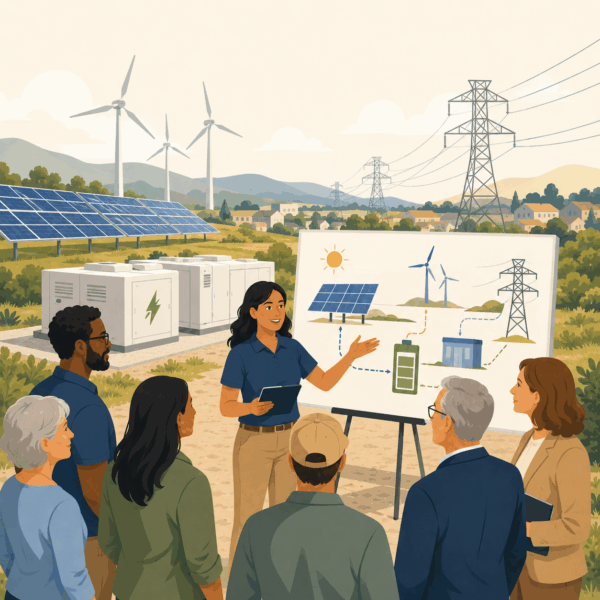 Developing the audience segmentation strategies, channel integration plans, community partner networks, and plain-language communication materials that effective energy efficiency program outreach requires is more than most utility communication teams can accomplish alongside their routine responsibilities. The diversity of the ratepayer audience, the complexity of the multi-channel coordination, and the sustained communication effort required to maintain program awareness across the full program cycle make external communication expertise a productive investment.
Stegmeier Consulting Group (SCG) works with municipal utilities to develop energy efficiency program communication strategies that reach diverse ratepayer audiences, address the structural barriers that prevent some ratepayers from participating even when they are aware of the program, and produce participation rates that justify the utility’s investment in program design and administration. This includes developing ratepayer segmentation frameworks that guide audience-specific communication design, creating plain-language program materials for different audience groups, establishing community partner engagement programs, and designing multi-channel outreach strategies that align communication timing with ratepayer decision points.
SCG also provides support for the evaluation of existing efficiency program communication, identifying the specific participation gaps that indicate communication failures and the specific communication improvements that would address them. Many utilities with strong efficiency programs and low participation rates have a communication problem rather than a program design problem, and targeted communication improvements can produce significant participation increases without requiring changes to the program structure itself.
Future Trends in Energy Efficiency Program Communication
The communication landscape for energy efficiency programs is being reshaped by several converging trends that utilities need to anticipate. The electrification of residential heating, transportation, and cooking is creating a new generation of efficiency program opportunities centered on the transition from fossil fuels to electric equipment, including heat pumps, electric vehicle charging infrastructure, and induction cooking. These program categories require communication that is specifically designed for the electrification audience, addressing concerns about upfront costs, performance uncertainty, and the reliability of electric alternatives that ratepayers who have used fossil fuel equipment for decades may have.
Data-driven personalization is creating new opportunities for reaching ratepayers with efficiency program communication that is specifically relevant to their own energy consumption patterns, equipment age, and housing characteristics. Utilities that use billing data to identify ratepayers who are likely to benefit most from specific efficiency measures can deliver targeted communications that are far more relevant than general program announcements. A ratepayer who receives a communication noting that their energy consumption is twenty percent higher than comparable homes and offering a free home energy audit as a starting point for addressing it is receiving information that is immediately relevant to their specific situation.
The integration of smart home technology and connected appliances is also creating new communication channels for efficiency programs. Utilities that have deployed smart meters and that are developing connected device programs have access to real-time consumption data that can support more precise and more timely efficiency program communication. A program that notifies ratepayers when their smart meter data suggests that a specific appliance is operating inefficiently and offers a targeted rebate for replacement reaches ratepayers at exactly the right moment with communication that is grounded in their own specific situation.
Conclusion
Energy efficiency programs represent one of the clearest expressions of a public utility’s commitment to its ratepayers’ financial wellbeing. When they work as intended, they reduce the energy costs of the households and businesses that participate while advancing the utility’s operational and environmental objectives. When they underperform due to communication failures, they represent a significant missed opportunity, both for the ratepayers who would have benefited from participation and for the utility whose investment in program design and administration is not generating the participation rates that would justify it.
The communication discipline that high-performing efficiency programs require is fundamentally different from the institutional transparency communication that dominates most utility communication functions. It is active, audience-specific, relevance-driven, and timed to decision moments rather than to the utility’s administrative calendar. It reaches into communities that standard utility channels do not effectively serve. It speaks in the language of household finance rather than energy policy. And it makes participation as easy as possible by removing the information and process barriers that prevent eligible ratepayers from completing the application.
A utility that masters this communication discipline will find that its efficiency programs perform as their designers intended, delivering genuine financial benefit to ratepayers across the full spectrum of the service area. That performance is the most powerful demonstration of institutional value that a utility can offer: not an explanation of why costs are going up, but a practical tool for bringing costs down.
Stegmeier Consulting Group’s Strategic Approach to Communication Systems
Build energy efficiency program communication around audience segmentation, decision-point timing, and the community partnerships that reach ratepayers standard channels miss.
Municipal utilities that communicate energy efficiency programs effectively build ratepayer relationships grounded in practical financial value rather than institutional obligation. Stegmeier Consulting Group (SCG) helps utilities develop the audience segmentation strategies, plain-language program materials, community partner networks, and multi-channel outreach plans that transform efficiency programs from underutilized offerings into high-participation ratepayer services.
Use the form below to connect with our team and explore how strategic communication support can strengthen your utility’s energy efficiency program reach and impact.