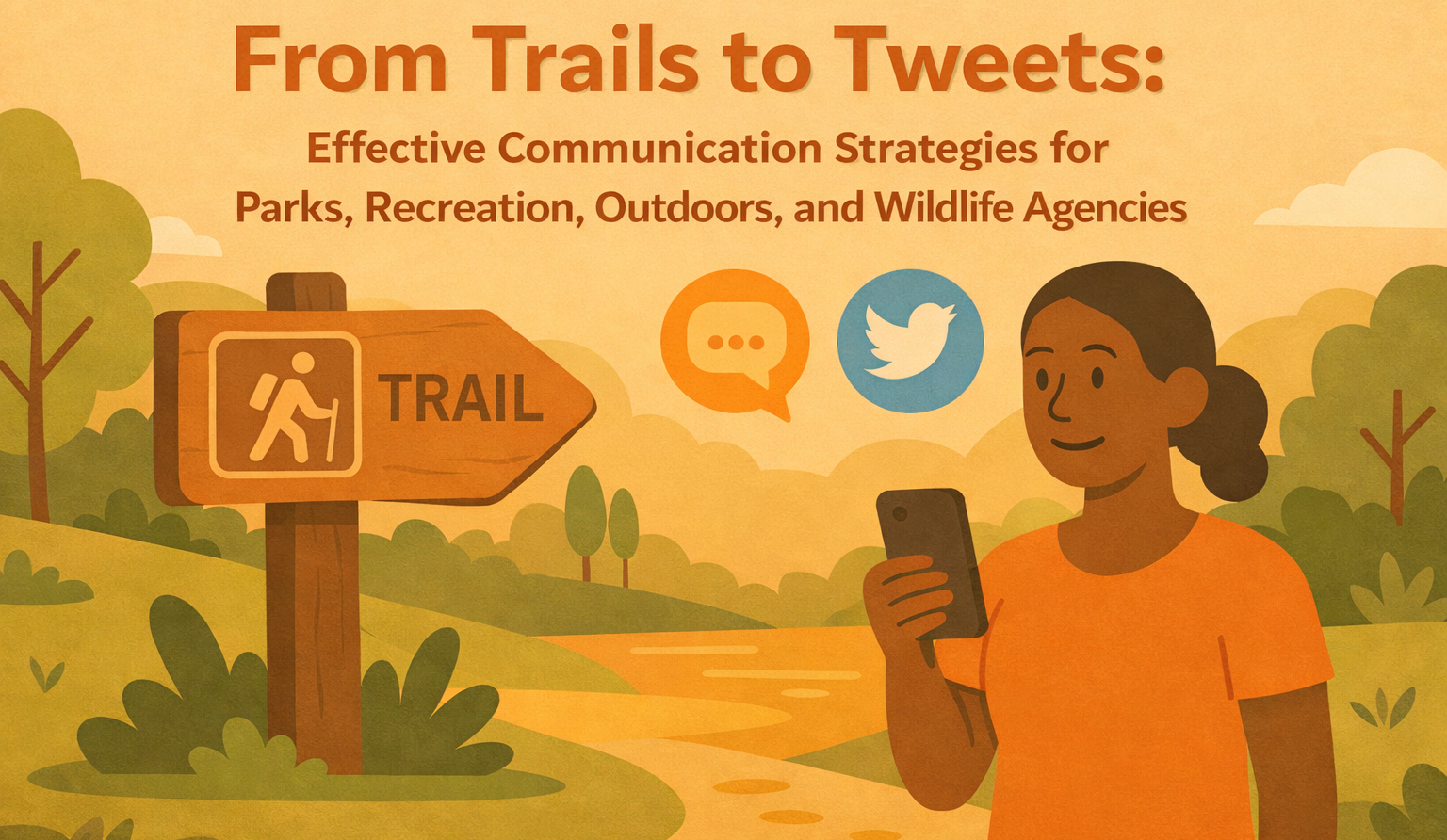
From Trails to Tweets: Effective Communication Strategies for Parks, Recreation, Outdoors, and Wildlife Agencies
 Communication Challenges and Opportunities for State and Local Government Parks, Recreation, Outdoors, and Wildlife Agencies
Public parks, recreation departments, outdoor adventure organizations, and wildlife conservation agencies all share a common challenge: how to effectively connect with the public in today’s fast-paced, information-saturated world. Whether it’s a city parks department promoting its summer programs, a state wildlife agency educating people on conservation, or a national park updating visitors on safety guidelines, communication in the Parks, Recreation, Outdoors, and Wildlife (PROW) agencies is pivotal. These organizations manage beloved public spaces and resources – from urban playgrounds to remote wilderness – and their success often hinges on how well they engage communities, convey important information, and inspire action.
In outdoor and conservation settings, communication needs and opportunities are as diverse as the audiences they serve.
Why is public communication so important in this realm? First, it builds awareness and support: effective outreach can turn a casual park-goer into a passionate advocate for preservation. Second, it enhances visitor experience and safety: clear messages about rules, facilities, and hazards help people enjoy parks responsibly. Third, it fosters inclusivity and trust: when messaging reflects everyone in the community – across different ages, cultures, and abilities – more people feel welcome and involved. From leveraging social media trends to partnering with health or tourism agencies, modern public lands communicators are finding creative ways to broaden their reach. In short, great communication is not a “nice to have” – it is mission-critical for public lands and recreation organizations looking to boost awareness, engagement, and overall satisfaction with their offerings.
On-Site Communication: Best Practices for Parks, Recreation, Outdoors, and Wildlife Agencies
Once visitors arrive at a park, trail, recreation center, or wildlife refuge, on-site communication becomes the front line of public engagement. It’s not just about delivering information—it’s about creating meaningful, inclusive, and actionable experiences that support both visitor satisfaction and agency goals. Whether promoting a community fitness class, issuing a wildfire alert, educating about species protection, or encouraging responsible trail use, effective communication in physical spaces helps agencies connect deeply with the public and reinforce their mission. Below are some best practices that Parks, Recreation, Outdoors, and Wildlife agencies have identified for signage, outreach, and environmental messaging:
Make Signage Clear and Multilingual
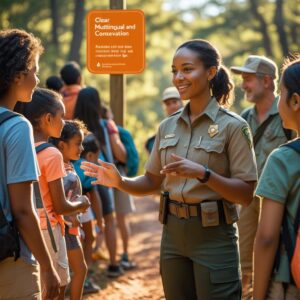
Signage is a primary tool for reaching visitors on-site – whether it’s a trailhead, gymnasium, wildlife observation area, or campground. Signs should be highly visible, easy to understand, and culturally relevant. Use bold, simple language with clear typography and internationally recognized symbols. Including multiple languages or pictograms helps engage visitors who don’t speak English or who are unfamiliar with specific safety conventions. For example, a recreation center might use pictogram-based pool rules, while a wildlife refuge might post “No Feeding Animals” warnings in English and Spanish.
A sign that says “Danger” in multiple languages, uses attention-grabbing colors, and includes the universal “no” symbol can convey critical warnings at a glance – whether it’s for a slippery pool deck, unstable trail, or wildlife area with bear activity. Thoughtful sign design isn’t just aesthetic – it’s a vital part of risk management across all Parks, Recreation, Outdoors, and Wildlife settings.
Limit Information Overload
Whether in a community rec hall or a backcountry trail junction, visitors can be overwhelmed if faced with too many rules, reminders, or notices in one spot. Limit the number of messages per sign and use visual aids to support key points.
For instance, instead of listing a dozen park regulations on a single board, a trail might include one small sign focused on pet etiquette (“Keep Dogs Leashed – Protect Wildlife & Other Visitors”), while a nearby nature center uses icons and bullet points to explain recycling rules and trail courtesy. Recreation facilities might rotate digital screens or poster displays by theme (safety, health tips, upcoming events) to keep messaging fresh and digestible.
By spreading information across different signs and communication tools – such as printed brochures, digital apps, or staff interaction – Parks, Recreation, Outdoors, and Wildlife agencies can ensure the most important messages don’t get lost in the clutter.
Reinforce Messages Across Multiple Channels
Consistency and repetition are essential for public communication to be retained and acted upon. Communications professionals often refer to the “rule of seven” – that people need to encounter a message several times before taking action.
In practice, a state wildlife agency might remind visitors to “Stay on the Trail” via:
- Printed brochures at visitor centers
- Trailhead signage
- Interpretive talks
- In-app push notifications
- Social media posts
- Guided hike introductions
Similarly, a city recreation department may promote water safety by pairing poolside signage with social media campaigns, lifeguard announcements, email newsletters, and youth program handouts. By aligning signage, staff scripts, emails, and digital content around the same core points, the public receives a coherent, reinforced message – whether they’re on a bike path, at a nature camp, or checking a center’s website.
Engage Through Personal Interaction
Not all communication is written – staff and volunteers are frontline communicators who humanize the message and build trust. Across the Parks, Recreation, Outdoors, and Wildlife agencies, trained personnel help visitors connect to both logistics and mission.
In recreation settings, instructors and coaches can share important safety and behavior reminders during classes. In wildlife refuges, naturalists may explain the importance of keeping distance from nesting birds or avoiding certain trails during migration season. Outdoor adventure staff can answer questions about gear, weather, and safe conduct during paddle trips or snowshoe tours.
Personal interaction allows for two-way communication. Staff can clarify confusing rules, provide context, and listen to concerns – helping reinforce the message and deepen visitor understanding. For example, a ranger might explain trail erosion in the morning and respond to visitor comments on the refuge’s Facebook page that evening – all reinforcing the same conservation principle.
Ensure Accessibility and Inclusivity
A strong communication strategy ensures that all people – regardless of language, age, culture, or ability – can access and understand information. This includes not only ADA compliance, but also proactive inclusion through thoughtful design.
Across Parks, Recreation, Outdoors, and Wildlife settings:
- Recreation centers can ensure announcements and event flyers are available in large print or audio formats.
- Wildlife agencies might use QR codes linking to video guides with captions and sign language interpretation. Outdoor programs can provide information in multiple languages and use symbols where literacy barriers exist.
- Parks and trails can incorporate tactile maps, braille signs, and high-contrast visual cues to accommodate visitors with visual or cognitive impairments.
Inclusivity also means reflecting diversity in marketing materials, hiring multilingual staff, and designing programming that resonates with underrepresented groups. When visitors see that their needs are considered and their communities are welcomed, they are more likely to engage, return, and become advocates for the space or program.
Sustainability and Awareness Campaigns for Parks, Recreation, Outdoors, and Wildlife Agencies
Communicating about sustainability, safety, and environmental stewardship is a major part of the mission for parks, recreation, and wildlife agencies. Whether the goal is to prevent wildfires, protect wildlife, reduce waste, or encourage healthy outdoor activity, these agencies run public awareness campaigns to inspire people to care for the environment and their communities.
A common mantra seen in many parks sums up the ethos: “Take only memories and pictures, leave only footprints.” This simple saying – posted on trailhead signs, campground bulletin boards, and recreation center walls – reminds visitors to minimize their impact. By reinforcing messages like this across various touchpoints, agencies hope to turn basic awareness into lasting, responsible habits.
Below are several approaches parks and conservation organizations use to promote sustainability and safe practices:
Embracing Core Stewardship Principles
Many outdoor agencies actively promote established ethics such as Leave No Trace principles, which encourage low-impact enjoyment of natural areas. These are reinforced through trailhead signage, ranger talks, educational materials, and youth programs that instill stewardship early. Over time, embracing shared principles like LNT helps create a common language of care that visitors adopt as second nature.
Creative Campaigns to Promote Responsible Behavior
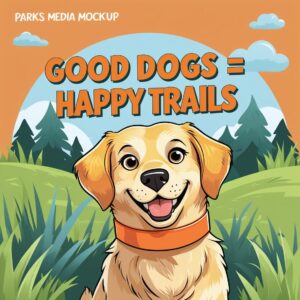
Successful public awareness campaigns often use catchy slogans and visuals to grab attention and make messages memorable. Examples include “Trash Free Park” initiatives, “Don’t Feed the Wildlife” messaging with humor or striking visuals, and zero-waste events at community centers. Trail etiquette campaigns like “Leash Up – It’s the Law” also use relatable tone and imagery to reinforce good habits.
Safety as Part of Stewardship
Sustainability messaging often overlaps with safety communication, especially in natural and adventurous settings. Campaigns like the National Park Service’s “Different Road, Different Ride” encourage responsible recreation by linking environmental awareness with personal well-being. Framing safety as respect—for self, others, and nature—builds buy-in and promotes shared responsibility.
Conservation Campaigns and Public Participation
Agencies also use storytelling and events to engage the public in conservation issues like climate change, invasive species, or habitat restoration. Examples include “Climate Awareness Week,” “Invasive Species Awareness Month,” and community BioBlitz events. These activities transform learning into direct participation and connect local communities to global environmental causes.
Storytelling and Positive Framing: Making It Relatable
Research shows that people respond best to positive, relatable messages. Agencies increasingly use storytelling, humor, and real examples to make advice memorable—whether through anecdotes about wildlife encounters, success stories from stewardship programs, or humor-infused signage that shifts behavior. Empathy and relevance drive retention far better than scolding or fear appeals.
 Marketing and Public Campaign Case Studies from the Parks, Recreation, Outdoors, and Wildlife Agencies
Real-world examples demonstrate how strategic communication can yield impressive results. The following case studies highlight how agencies leveraged creative strategies—from witty social media posts to health-focused campaigns—to engage their audiences.
Oklahoma Department of Wildlife Conservation: Social Media as a Conservation Tool
Humor became a strategic tool for the Oklahoma Department of Wildlife Conservation (ODWC), which uses witty, relatable posts to deliver conservation messages. Posts like “YOU are cold. They have fur. Do not let inside.” earned viral attention while educating about wildlife boundaries—proving that humor can drive engagement and respect for nature.
Cleveland Metroparks: “Explore Your Park” for Community Health
Cleveland Metroparks tied park usage to health outcomes, launching “Explore Your Park” to promote outdoor activity as a wellness strategy. By partnering with healthcare institutions and focusing on mental and physical health benefits, the campaign reframed parks as essential community wellness resources—expanding visitation and engagement.
Los Angeles Department of Recreation and Parks: Empowering Young Women Through Sports
Through its “Girls Play LA” initiative, Los Angeles transformed recreation access for girls. Combining inclusive branding, economic accessibility, and partnerships with professional women’s sports teams, the campaign increased enrollment and visibility for girls in youth sports, reframing public recreation as a space for gender equity and empowerment.
West Virginia State Parks: Boosting Visitation with Strategic Marketing
West Virginia’s “Explore West Virginia State Parks” campaign used targeted digital and print messaging to boost visitation and reservations. By highlighting adventure, natural beauty, and family experiences, the system achieved measurable attendance growth and increased revenue—showing the ROI of cohesive marketing for public lands.
 Embracing Technology for Outreach and Education in Parks, Recreation, Outdoors, and Wildlife Agencies
Digital tools have revolutionized outreach. From mobile apps to real-time alerts, technology enhances visitor safety, access, and engagement. The key is to use these tools thoughtfully so they complement—not replace—personal, on-the-ground communication.
Mobile Apps and Smart Tools
Apps like the National Park Service App, iNaturalist, and Avenza Maps deliver real-time maps, alerts, and citizen science opportunities. Local platforms such as Texas State Parks or California’s “CalScape” enrich visitor planning with localized safety and nature content.
Interactive Websites for Trip Planning
Agency websites like Florida Fish and Wildlife or NYC Parks have evolved into interactive visitor centers—providing maps, activity finders, and accessibility features for inclusive digital experiences that encourage participation.
Social Media Engagement
Platforms like Instagram and TikTok allow agencies to deliver fast, creative outreach. Zion National Park’s viral safety videos and Oklahoma’s wildlife humor are prime examples. Engagement turns educational messages into shareable content that reaches younger, more diverse audiences.
Real-Time Alerts and Digital Kiosks
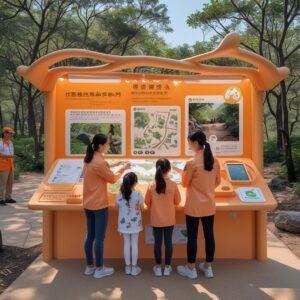
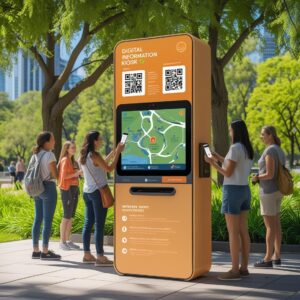
Opt-in text alerts and digital message boards enable dynamic communication during emergencies or events. States like Colorado use SMS to notify hikers of conditions, while visitor centers display digital kiosks for updated maps, schedules, and warnings.
Blending Digital and On-the-Ground Communication
Technology expands reach but doesn’t replace human connection. The best agencies pair apps, social content, and alerts with trained staff and interpersonal touchpoints, ensuring accessibility, accuracy, and empathy in every interaction.
 Community & Stakeholder Engagement
Parks, recreation facilities, outdoor programs, and wildlife areas do not exist in isolation – they are part of larger communities and ecosystems of stakeholders. Effective communication, therefore, extends beyond just visitor-facing messages on-site or online. It also involves engaging residents, program participants, community leaders, partner organizations, and advocacy groups in meaningful two-way dialogue. By actively involving these stakeholders, agencies ensure they remain responsive to public needs, culturally relevant, and supported by the communities they serve. Below are key focus areas for community and stakeholder engagement:
Centering Equity and Inclusion in Outreach
A core principle for park and recreation professionals is that all people should feel welcome and represented in public spaces and programming. Achieving true equity in participation requires proactive communication and listening, especially with groups who historically have been marginalized or excluded. In practice, this can mean:
- Hosting public listening sessions or town-hall style meetings in diverse neighborhoods, not just at the main park office or nature center. By going to community centers, libraries, or schools across different parts of town, agencies hear from residents who might not otherwise voice their opinions.
- Providing interpretation services and translated materials in the primary languages spoken in the community. If a city’s population has a significant Spanish-, Mandarin-, or Arabic-speaking contingent, for example, important announcements and surveys should be made available in those languages.
- Acknowledging historical barriers or grievances that might affect trust. Some communities have past experiences of exclusion, land displacement, or neglect by public authorities. Recognizing these realities in communications – and apologizing or addressing them when relevant – helps validate community members’ feelings and opens the door to better relationships.
- Creating advisory councils or working groups that include voices from a broad spectrum: Indigenous leaders, youth representatives, cultural organizations, disability advocates, conservation groups, etc. These councils can guide outreach strategies and ensure new initiatives consider multiple perspectives from the start.
For example, a city parks department planning improvements to a playground might involve local parents and even high school students in the design discussions to make sure the upgrades meet real needs. Or a wildlife refuge developing a new land management plan might hold meetings with nearby tribal communities and birdwatching clubs to align on cultural and ecological priorities. When diverse voices are invited into the planning process early and often, the resulting decisions tend to reflect genuine community values – and those community members feel a sense of ownership and pride in the outcome. Better yet, when ideas from the public are visibly incorporated (say, adding shade structures at a park after hearing from older residents, or adjusting trail hours to accommodate both early-bird hikers and those avoiding wildlife feeding times), trust grows and support for the agency deepens.
Building Partnerships to Extend Reach
Collaboration with other organizations is a hallmark of successful outreach in the parks and conservation space. By partnering with fellow government agencies, nonprofits, schools, and even private businesses, park communicators can amplify their messages and coordinate on shared goals. Such partnerships create a win-win: each partner brings its own audience and expertise, so together they reach more people than any one entity could alone. Some examples include:
- Municipal parks and recreation departments partnering with public health agencies to promote outdoor fitness and wellness programs in underserved areas. (The health department helps message the benefits of exercise; the parks department provides the venues and activities.)
- State or provincial wildlife agencies working with land trusts, hiking clubs, or even outdoor gear retailers to spread Leave No Trace ethics. A local outfitter might include a flyer about trail etiquette with every tent sale, reinforcing the agency’s conservation message.
- Outdoor education nonprofits co-hosting events like tree-planting days or river clean-ups with city forestry programs and school districts. These joint events not only get more hands on the project but also blend environmental messaging with community service and education.
- Tour operators, hotels, and adventure outfitters teaming up with park authorities to incorporate safety and conservation tips into their pre-trip communications. For instance, a kayaking tour company might help relay a national park’s alert about invasive species (“Please wash your boats to protect our waters”) or a resort might share news of a shuttle service to a popular trailhead to reduce traffic.
Everyone benefits when communication isn’t siloed. By equipping partners to act as ambassadors for shared values like safety, conservation, accessibility, and recreation for all, agencies extend their reach well beyond their own follower lists or mailing lists. A coordinated approach ensures that whether someone hears about an outdoor opportunity from their local YMCA, their favorite camping store, or the park agency itself, the message is consistent and mutually reinforcing. In short, community partnerships greatly magnify the impact of outreach efforts and build a broader base of support for public lands and programs.
Fostering Volunteerism and Grassroots Support
Some of the most passionate advocates for parks and conservation areas are the volunteers and “friends” groups that devote time and energy to these places. Cultivating a strong volunteer community is a two-way street: volunteers give back to the spaces they love, and in return they often become powerful champions who spread the word and rally others. Agencies can encourage this virtuous cycle by providing good communication channels and support for volunteer initiatives. Consider a few common scenarios:
- Recreation centers often rely on volunteer coaches, mentors, or event staff to run programs. Those volunteers, in turn, frequently promote the programs in their own neighborhoods, invite friends to join, or even serve on advisory boards to shape future offerings. Their firsthand experience makes them credible messengers in the community.
- Wildlife refuges and nature preserves engage volunteers in activities like habitat restoration, bird counts, invasive species removal, and leading educational walks. These volunteers essentially become extensions of the staff, multiplying the agency’s capacity to do outreach. At the same time, by working side-by-side on stewardship projects, they internalize the park’s values and are likely to talk about them with neighbors and friends.
- Outdoor trail associations and park “friends” groups often have their own newsletters, social media pages, and community events. When these groups have a good relationship with the managing agency, they routinely echo the agency’s messaging (about trail etiquette, upcoming events, fundraising needs, etc.) through their own channels. In effect, they serve as trusted grassroots communicators, reaching audiences the agency might not reach on its own.
To nurture this dynamic, successful agencies keep their volunteer networks well-informed and engaged. This might involve regular volunteer newsletters or group chats to share insider updates, special briefing sessions or trainings so volunteers understand the latest policies and can answer public questions, and occasional appreciation events or behind-the-scenes tours to thank volunteers and deepen their knowledge. When volunteers are kept in the loop, they can help correct public misunderstandings (imagine a volunteer at a community meeting explaining why a controlled burn was necessary, reinforcing the agency’s earlier press release) and they carry key messages into conversations the agency staff may never be part of.
Over time, the individuals who volunteer – the person who helped plant trees along the river, or the family that joined a community science project tagging butterflies – often develop a personal stake in the park’s success. These are the folks who will show up at city council or park board meetings to advocate for funding, speak proudly about the park’s mission in other civic groups, and model positive behaviors to other visitors. In sum, by investing in good communication with volunteers, agencies sow the seeds for broader community support that grows from the ground up.
 Comparison with Other Agency Types
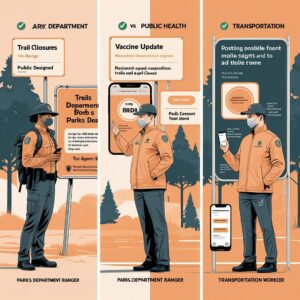
While parks and recreation departments, wildlife conservation agencies, and outdoor education providers have distinct missions, many of the communication strategies that work for these organizations are broadly applicable to other public-sector agencies. Whether in natural resource management, public health, transportation, or municipal governance, effective communication is critical for building trust, conveying timely information, and boosting community engagement.
Parks, as governmental or public entities, face similar challenges to other agencies – multiple stakeholder groups with varying needs, sometimes complex policies or rules to explain, and often tight budgets that demand cost-effective outreach. The strategies that work in parks align closely with those used by cities, counties, and other government departments, as discussed in A Comprehensive Guide to Public Communications for State and Local Government Agencies.
For example, one core principle in government communications is to develop a clear, strategic communication plan with defined messages and audiences. Parks also benefit from this approach. Just as a city might identify key messages to promote a new public health initiative or transit service, a park will define key messages around its conservation mission or upcoming programs. A wildlife agency sharing updates about seasonal habitat closures, a recreation department promoting new programs, and a public health office launching a vaccination campaign all benefit from audience mapping, tailored messaging, and consistent delivery. Success hinges on knowing your audiences (stakeholder mapping) and tailoring messages to them.
Another parallel is the careful selection of communication channels to reach different demographics. Smart government communicators recognize that younger constituents may prefer getting information via text alerts or Instagram, while older residents might rely on printed newsletters, community bulletin boards, or attending town hall meetings. A parks department announcing summer events, a wildlife refuge publicizing trail restrictions, and a transportation agency updating detour routes may each use a mix of Facebook posts, posters, email newsletters, and community outreach to cover all bases. The key is maintaining consistency across all platforms to ensure that the public receives a clear and unified message.
Inclusivity and accessibility in communications are common threads across public agencies as well. Government offices are increasingly focused on making sure their outreach materials accommodate speakers of different languages and people of all abilities – by providing translations, interpreter services at meetings, websites that meet ADA accessibility standards, and more. Whether it’s a county parks department offering multilingual signage, a state wildlife agency publishing accessible web content, or a city housing office providing interpretation services at public meetings, the goal is the same: ensure that every resident—regardless of language, ability, or background—can understand and engage with public information.
Internally, public agencies benefit from strong internal communication alignment before launching external campaigns. For example, before a parks department rolls out a new reservation system or fee structure, frontline staff should be briefed and equipped to answer public questions. Similarly, public works departments, health offices, or school districts should ensure that all employees—from call centers to leadership—understand new policies before communicating them externally. This internal alignment strengthens credibility and ensures a smoother public rollout.
Measuring and adapting communication efforts is another area where park agencies mirror other public agencies. A city communications office might track metrics like attendance at community meetings, website hits, or social media engagement to gauge how well their message is getting across – and then adjust tactics if needed. Parks and recreation departments do the same with their outreach: they look at indicators such as visitor feedback surveys, changes in visitor behavior, attendance numbers at events, and social media comments to evaluate impact. Continuous improvement is the mantra in both cases; communication strategies are refined over time based on what the data and the public are telling the agency.
In essence, park communications are a specialized branch of public communications that share the same foundational best practices as any other government outreach. The park setting might make the content more colorful – after all, few city agencies get to tweet about bison jams or post videos of rock climbers – but the communication principles (clarity, consistency, audience engagement, transparency, inclusivity) are universal. Parks and recreation professionals can certainly learn from innovations in other sectors, whether it’s a new emergency alert system a city rolled out or a customer service training program from public transit that teaches employees how to handle conflicts. Those ideas can often be adapted to park contexts – for example, improving a park’s emergency communication protocols for wildfires by borrowing from a county’s reverse-911 system playbook, or training park staff in de-escalation techniques that police or transit staff use, to better manage tense visitor situations.
For readers interested in exploring these cross-agency strategies further, a Comprehensive Guide to Public Communications for State and Local Government Agencies delves into many of these principles in detail. It’s fascinating to see how the communications challenges of a parks department overlap with those of, say, a public works department – and how solutions can often be shared for mutual benefit.
Strengthening Communications with Expert Support
Managing public communication—whether for a city recreation department, a state wildlife agency, or a regional outdoor access initiative—requires thoughtful coordination, clear messaging, and a deep understanding of community needs. Many agencies successfully manage this work in-house by leveraging the expertise of program staff, frontline communicators, and community partners. Internal teams bring valuable institutional knowledge, local context, and trusted relationships that are critical for effective outreach. With the right tools, training, and cross-functional support, many organizations can build strong communication capacity from within.
At the same time, some agencies find that partnering with external experts—such as communications consultants or engagement specialists—can provide helpful perspective, additional bandwidth, or specialized skills for high-priority efforts. Whether it’s developing a campaign to support a major park improvement, refining messaging during a crisis, or introducing new digital engagement strategies, outside support can complement internal strengths. The key is finding the right balance: aligning communication approaches with your agency’s mission, culture, and available resources. Whether managed internally or in partnership, the most successful strategies are those rooted in trust, inclusion, and a clear understanding of who you’re trying to reach—and why.
Ready to Strengthen Public Communication for Your Parks, Recreation, Outdoors, and Wildlife Agency?
From managing seasonal park access and launching new recreation programs to protecting fragile habitats and engaging outdoor enthusiasts, we understand the communication challenges your agency faces: limited staff capacity, changing public expectations, and the need to promote your mission while staying responsive and inclusive.
At Stegmeier Consulting Group, we help public sector agencies like yours develop clear, effective communication strategies—internally and externally. Whether you’re announcing a habitat closure, promoting new amenities, or collecting feedback on park use or trail conditions, we’ll help you:
- Clarify your message for different audiences—residents, visitors, volunteers, and policymakers
- Design campaigns that inform, inspire action, and build community support
- Streamline outreach across signs, websites, social media, and QR-code-enabled materials
- Gather public input through simple, mobile-friendly survey tools that inform future decisions
- Train internal teams to communicate consistently and confidently in alignment with your mission
- Highlight your impact with clear storytelling and performance reporting for funders and the public
Whether you manage a regional trail system, lead a recreation and parks department, or steward wildlife areas, our work is grounded in the same mission as yours: strengthening the public’s connection to nature, health, and community.
Reach out today for a consultation—we’d love to explore how we can help you tell your story, engage your stakeholders, and increase the visibility and value of the work you do.