From Flyers to Instagram: Meeting Residents Where They Are With Health Messaging
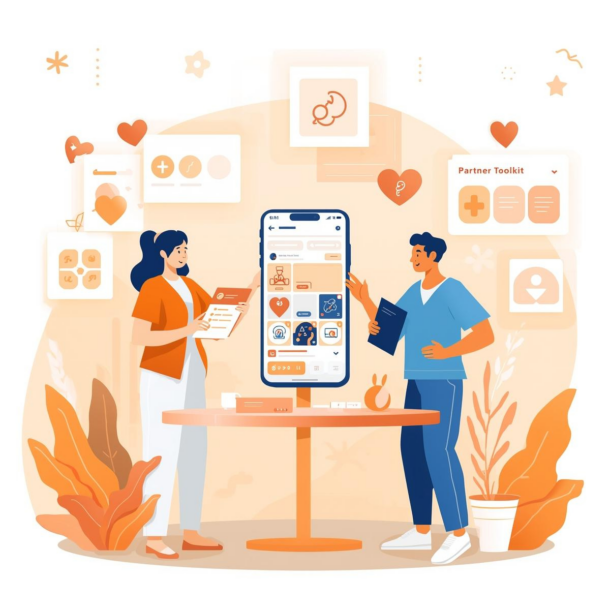 Public health departments are operating in a mixed-media reality where some residents still trust paper flyers on a community board, while others rely on Instagram stories, neighborhood group chats, or short videos for updates. Health agencies are expected to communicate across that full range, often with the same small team, the same limited time window, and the same need for accuracy. When messaging does not translate well across formats, residents experience it as inconsistency. They may miss a deadline, misunderstand eligibility, or assume the agency is changing direction.
Health authorities and public health organizations also face a second challenge that makes multi-channel communication harder. People encounter information in fragments, and those fragments travel. A photo of a flyer gets posted online without the back page. A screenshot of an Instagram graphic circulates without the caption that contained the clarifying details. A printed mailer is tossed, but the household remembers one number, and repeats it to neighbors. In this environment, communication is not only about producing content. It is about designing messages so the essential meaning survives when context gets stripped away.
Meeting residents where they are does not mean trying to be everywhere at once. It means understanding how different channels shape attention, trust, and action, then building a system that adapts a consistent message into formats that people actually use. For public health departments, that system reduces confusion, improves follow-through, and protects credibility, especially when guidance changes or when programs require residents to complete multiple steps.
The sections that follow provide a practical framework for translating health messaging across print, in-person settings, and social channels like Instagram, while keeping meaning stable. The focus stays on what helps residents take the right next step, and what helps health agencies deliver communication at scale without creating extra rework.
Why Meet Residents Where They Are Is Really About Behavior, Not Platforms
It is tempting to treat channels as a checklist. Post to Instagram, send a flyer, update the website, email partners. The problem is that channels are not neutral containers. Each one shapes how people interpret urgency, credibility, and relevance. A flyer in a clinic waiting room reaches people who are already thinking about health services, and they are more likely to read carefully. A scroll on Instagram reaches people in motion, and they are more likely to remember a headline than a nuance. A notice posted at a library reaches residents who may be seeking community resources, but it also competes with everything else on the board.
For health agencies, meeting residents where they are starts with defining the behavior the message is trying to create. Is the goal to encourage awareness of a program. Is it to drive registration. Is it to prompt a same-day protective action. Is it to prepare residents for a change in service hours. Different behaviors require different levels of detail, and different channels support those behaviors differently.
This is where many public health organizations get stuck. They attempt to make every channel do everything, which produces content that is either too long for social or too thin for print. The outcome is predictable. Instagram posts generate questions the agency already answered on the website, because the post did not signal where to find details. Flyers are ignored because they look like general information rather than an immediate action. Staff then spend time responding one-on-one, which reduces capacity for program delivery.
A more effective approach is to treat each channel as having a primary job. A printed flyer often performs best as a credibility tool and an action prompt for people who are already in public spaces. Instagram often performs best as an attention tool that drives people to a reliable source of truth. Community partners often perform best as trust multipliers who can reach specific audiences in language and context that feels familiar. When health authorities design messages with those roles in mind, the system becomes more coherent.
Designing for behavior also helps public health departments decide what not to do. Not every program needs a full campaign. Not every update needs an Instagram reel. Some messages are better served by focused distribution in the places where the audience already expects the information, such as schools, clinics, senior centers, transit hubs, or community events. Meeting residents where they are includes meeting them in the moments when they are most likely to act.
Finally, meeting residents where they are requires accepting that attention comes in small windows. Residents often give public information only seconds before deciding whether to keep reading. That means the opening line, the headline, and the first visual cue matter more than agencies sometimes assume. When a public health department leads with internal program names or bureaucratic language, the message can lose the audience before it starts. When it leads with a clear statement of what this is about, what to do, and who it is for, residents are more likely to continue.
From Data to Action: Effective Communication Strategies for Public Health Agencies
This article is part of our series on strategic communication for state and local government Public Health Agencies. To learn more and to see the parent article, which links to other content just like this, click the button below.
Start With the Resident Journey, Then Build the Channel Mix
Health agencies communicate most effectively when they start with the resident journey, not the channel plan. The journey is the sequence of steps a person must take to complete the intended action, including the points where confusion or friction can cause drop-off. A channel plan that ignores that journey often creates content that looks busy but does not move people through the steps.
A simple way for public health departments to think about resident journeys is to focus on three moments. The first moment is discovery, where residents first learn that something exists or that something has changed. The second moment is decision, where residents determine whether the information applies to them and whether they trust it enough to act. The third moment is follow-through, where residents complete the action, such as signing up, showing up, isolating, testing, or seeking services.
Different channels support different moments. Flyers and posters often support discovery in physical spaces. Instagram supports discovery and early decision, but it rarely supports follow-through unless the next step is extremely simple. Websites, phone lines, and partner referrals support follow-through because they can hold more detail. When health authorities map a campaign or update to these moments, they can assign each channel a clear role, then design content that fits.
This approach also improves consistency. When a public health organization knows the journey, it can decide what the message must always include, regardless of channel. It can also decide what details belong only in deeper formats. That reduces the risk that a short-form channel accidentally changes meaning by omitting a critical qualifier.
For example, if the resident journey includes eligibility checks, then the message system must consistently answer who qualifies and how to confirm eligibility. If the journey includes a deadline, then the system must consistently display the deadline in a way that is hard to miss. If the journey includes a high-stakes decision, such as when to seek urgent care, then the system must clearly indicate warning signs and where to go.
Public health departments can also use the journey to choose distribution points that reflect real life. A flyer posted in a building only helps the people who enter that building. If the target audience is more likely to encounter information through a school newsletter or a faith-based partner, then the agency should prioritize those routes. Instagram can complement that plan, but it should not replace it. Health agencies often see the best results when digital and physical distribution reinforce each other, and when partners help fill the gaps.
A final benefit is that resident-journey planning helps prevent burnout on the communications team. When everything is treated as a multi-channel push, the workload becomes unsustainable. When only the most important actions get full multi-channel support, and other messages use lighter distribution, the system becomes manageable without sacrificing impact.
Build a Message Spine That Holds Up Everywhere
Multi-channel health messaging breaks down when each channel invents its own wording. A flyer says one thing, an Instagram graphic says another, and a partner post shortens the message in a way that changes meaning. Residents then compare versions and assume the organization is inconsistent, even when the program itself is stable. Public health departments can avoid this by building a message spine before producing channel content.
A message spine is a small set of sentences that must remain consistent across formats. It is not the full script. It is the core meaning that should survive when context is stripped away. Health agencies can treat the spine as the anchor that every channel version pulls from, whether the format is a printed handout, a short caption, or a quick partner post.
A strong spine stays plain and repeatable. It should state the bottom line in one sentence, clarify who it applies to, name the action step, explain the practical reason, and point to the easiest path for details or support. When a health authority uses that same spine across web, print, and social, residents learn what to look for, and staff spend less time correcting confusion.
Layering helps the spine travel. The shortest layer is a headline or first line that combines the bottom line and the action. The next layer adds who and why in a few sentences. The deepest layer lives on the source page, where eligibility, timelines, steps, and support options can be explained without distortion. This layered approach helps public health organizations avoid cramming detail into short formats, while still protecting meaning.
Translate the Same Meaning Across Flyers, Instagram, and Everything In Between
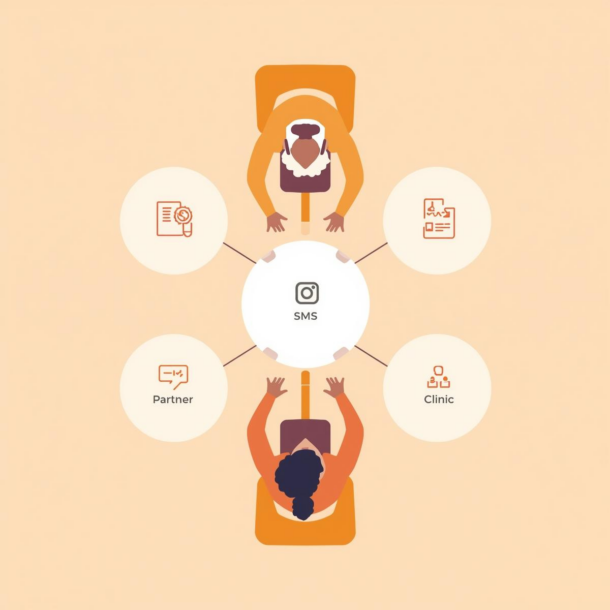 Different channels demand different shapes, but the meaning should remain stable. Public health departments get better results when they design channel versions that match how people actually use each format, instead of copying and pasting the same block of text everywhere. Consistency comes from preserving the spine, then adapting the wrapper.
Flyers and one-page handouts
These work best in clinics, schools, community centers, and events where residents have a moment to read. A clear flyer leads with the action, then quickly states who it is for, the top steps, and any deadline or timing detail that could cause someone to miss the opportunity. It should also make help easy to access, especially for residents who cannot follow the default pathway.
Posters and bulletin board notices
Posters are strongest when they do one job. Get attention and point to the next step. A short headline, one key action, and a QR code or short URL usually outperforms a dense block of text. When posters try to teach eligibility rules, people often skip them entirely.
Instagram feed posts
Instagram is often an attention channel for public health organizations. The first line needs to carry the core action and a quick cue about who it applies to. The post should then direct residents to a reliable source of truth, and it should do so in a way that is easy to follow. If the link path is unclear, people will ask questions in comments, and the agency can end up repeating the same answers repeatedly.
Instagram stories
Stories work well for reminders, deadline nudges, and single-step prompts. They tend to fail when they try to carry complex eligibility or multi-step instructions. Health agencies can use stories to reinforce the spine, then point residents to the source page for full details.
Short videos and reels
Video builds trust when it focuses on one idea at a time, such as one barrier, one myth, or one step that residents commonly misunderstand. The on-screen wording and the caption should match so viewers do not receive mixed signals. Health authorities can also use video to humanize the message, while keeping the action step concrete and consistent.
SMS and text alerts
Text alerts succeed when they are brief and urgent, with one action and a direct link path. They work best for time-sensitive updates, appointment availability, closures, or immediate protective actions. If a text includes multiple topics, comprehension drops and opt-outs rise.
Email newsletters
Email supports multi-step guidance when it is structured for scanning. Short headings, clear calls to action, and a direct route to the source page help residents take the next step without getting lost. Public health departments often get better results when the email summarizes the spine, then routes deeper detail to the website rather than embedding everything in the message.
Partner toolkits
Partners extend reach because they carry trust. Toolkits work best when they give partners ready-to-use language that preserves meaning, plus a short set of clarifiers about who the message is for and where to send questions. If partners have to rewrite from scratch, terminology drifts, and residents hear different stories from different sources.
This translation approach works best when public health organizations commit to a single source page for details, then treat other channels as structured ways to drive residents to that page or to a clear help pathway. It reduces confusion for residents, and it reduces rework for health agencies that are trying to communicate quickly and consistently.
Design Messages That Still Make Sense When They Get Stripped of Context
Health messaging rarely stays where you put it. A flyer gets photographed and shared without the fine print. An Instagram graphic gets reposted without the caption. A partner copies only the first paragraph of a web update into a newsletter. Public health departments can plan for this reality by designing every message so the essential meaning survives even when context disappears.
A practical way to do this is to treat the first line and the first visual as context-proof. If a resident only sees that slice, they should still understand what the message is about and what action is being asked. Health agencies can make that first slice clearer by using concrete language, avoiding internal program titles, and stating the action up front instead of leading with background.
This is also where consistency becomes protective. When health authorities use the same labels and phrasing for common message types, such as program announcements, service changes, and deadline reminders, residents learn the pattern. That pattern reduces the chance that someone interprets a screenshot as a new policy or a rumor. It also reduces the work staff spend responding to preventable confusion.
Another context risk is mixed strength language. A flyer might sound urgent while an Instagram post sounds casual, even though both describe the same situation. Public health organizations can avoid this drift by aligning tone to the same importance level across channels, then making urgency explicit in plain language. Residents should not have to guess whether something is informational, time-sensitive, or action-required.
Finally, context-proof design includes clear ownership and a clear route to verification. A resident who sees a repost should immediately be able to recognize the source and confirm the details. That often means including the department name and a short URL or QR code on print materials, and using consistent profile naming, link paths, and update timestamps online.
Make Channel Choices Based on Trust, Not Only Reach
Public health organizations often default to channels based on what feels modern or what seems most visible. Reach matters, but trust often matters more. A channel that reaches fewer people can still drive more action if residents treat it as reliable and relevant.
Flyers and posters can carry strong credibility in spaces where people already expect health information, such as clinics, pharmacies, schools, libraries, and community centers. For many residents, especially those with limited internet access or those who prefer tangible information, print is not outdated. It is dependable. Health agencies can build on that trust by keeping print materials simple, scannable, and action-oriented, then using QR codes and short URLs to connect people to deeper details.
Instagram and other social platforms often serve a different trust function. They can make a public health department feel present and responsive, especially when posts acknowledge common questions, clarify changes, and provide quick reminders. At the same time, social platforms can amplify skepticism if messaging feels inconsistent, overly polished, or detached from local realities. Health authorities can increase trust on social by using plain language, being clear about what is known versus what is being monitored, and making updates predictable with consistent formatting and timing.
Trust also flows through messengers. Community partners, faith-based organizations, schools, and local employers can be more persuasive than official channels for certain audiences. That does not mean the agency should hand off responsibility for accuracy. It means a public health organization should make it easy for trusted partners to share accurate content without rewriting it. When partners have to improvise, terminology drifts, and residents end up hearing different stories from different sources.
Channel choice should also reflect the setting where action happens. If a message aims to drive clinic appointments, then clinic-adjacent distribution matters, including patient portals, appointment reminders, and front desk signage. If a message aims to reach parents, then illustrating the next step through school channels and community hubs may outperform a broad social push. When health agencies tie channels to the places where residents are already making decisions, follow-through improves.
This is where a system mindset helps. Instead of asking whether to do a flyer or Instagram, public health departments can ask where the moment of decision is happening, and which channel is most trusted at that moment. That question tends to produce a smarter mix, less noise, and better outcomes.
Make Health Messaging Accessible and Usable Across Languages, Literacy Levels, and Devices
Meeting residents where they are also means meeting them with materials they can actually use. Public health departments serve communities with different reading levels, different preferred languages, different levels of digital access, and different experiences navigating government systems. When health messaging is designed primarily for confident readers on a desktop, it can unintentionally exclude people who rely on mobile phones, need translation, or are reading quickly under stress.
Accessibility is also a multi-channel issue. A flyer might be readable in a clinic, then become unreadable when photographed and shared online. An Instagram graphic might look clear on one phone, then become confusing on another because the text is too small. A caption might contain essential details, but many people will not expand it. Health agencies can reduce these risks by designing every channel version with a few consistent clarity rules, then applying them the same way across programs.
Below are practical practices health authorities can adopt without turning every message into a heavy production cycle.
-
Write for mobile first, even for print, because residents will often see content as a photo or screenshot. Use short sentences, avoid dense blocks of text, and keep the key action near the top.
-
Treat graphics as headlines, not full explanations. Use visuals to signal the core action and the timing, then route details to a source page or help line.
-
Avoid small text in images. If a detail matters, put it in the caption and on the source page, and keep the image focused on the one point you want residents to remember.
-
Make language access obvious. Add a simple line that signals translated versions, with a clear link path so residents do not have to hunt.
-
Use consistent labels for important concepts, especially for eligibility, deadlines, and next steps, so partial content is less likely to be misinterpreted.
-
Plan for audio and video accessibility. Add captions, keep spoken language plain, and ensure the on-screen call to action matches the caption so residents receive one consistent instruction.
Accessibility also includes emotional accessibility. Health agencies can be direct without sounding punitive or judgmental. Messages land better when the tone respects constraints and offers realistic paths for action, especially for residents who cannot follow the default option.
When public health departments treat accessibility as a design standard rather than a special project, they reduce confusion, improve follow-through, and make partner sharing safer because the content remains usable even when the format changes.
Build a Sustainable Workflow So Multi-Channel Messaging Does Not Become Chaos
Multi-channel communication often fails for an operational reason, not a creative one. Public health organizations know what they want to say, but they do not have a repeatable process for saying it consistently across formats. The result is predictable. One team updates the website, another posts to social media, a partner receives an older version, and residents experience mismatched instructions.
A sustainable workflow begins with a clear source of truth. Most health agencies choose a single web page or landing page as the authoritative version, then treat print and social as structured adaptations that point back to it. That structure reduces debate about where details belong, and it makes updates less painful because the team knows what must be changed first.
From there, consistency depends on roles. A public health department benefits from deciding who owns the message spine, who checks plain language and accessibility, and who approves changes that affect eligibility, timelines, or service availability. When those roles are unclear, teams either slow down with endless review loops, or they publish quickly in ways that create drift.
It also helps to separate message decisions from formatting decisions. Align on the spine and the essential meaning first, then produce channel versions that fit each format. When teams reverse that order, they often argue about layout while the meaning remains unsettled. A spine-first workflow prevents that pattern and reduces rework.
Update discipline matters too. Residents notice when content changes without explanation. Even a simple updated on line on the source page can reduce confusion, because it signals that the agency is actively maintaining the information. For departments that frequently update guidance or program details, a short what changed note can further reduce rumor cycles, especially when screenshots circulate.
Finally, sustainability depends on reusable templates. Flyers, posters, Instagram graphics, captions, and partner blurbs should not be reinvented each time. When public health departments build a small library of repeatable formats tied to common message types, such as deadlines, service changes, event promotions, and eligibility clarifications, staff can publish faster without sacrificing clarity.
Measure What Works Across Channels Without Overcomplicating the Data
Health agencies often measure reach because it is easy to count. Views, impressions, likes, and clicks are visible. The more important question is whether residents understood the message and took the next step. Public health departments can get closer to that answer without building a complicated analytics program, especially if they focus on a small set of signals that reflect comprehension and follow-through.
A practical measurement approach connects channels to the resident journey. Discovery metrics matter early, but decision and follow-through metrics matter more if the goal is sign-ups, appointments, testing, or behavior change. Public health organizations can also use operational signals, such as call volume and common questions, as real-time feedback about where messages are unclear.
Here are high-value measures many public health departments can track with minimal overhead.
-
Source page performance, including visits, time on page, and clicks to the key action, such as registration or resource links.
-
Conversion indicators, such as appointment bookings, form submissions, event registrations, or downloads that reflect real follow-through.
-
Call and email signals, including the most common questions, the most common misinterpretations, and whether those patterns shift after a message update.
-
Partner feedback about what questions they are hearing and whether they feel confident sharing without rewriting.
-
Equity indicators, such as language page usage, geographic distribution of engagement, and whether access pathways are being used evenly across the community.
Measurement should also inform content choices. If Instagram generates attention but residents still miss the deadline, the issue may be that the call to action is unclear or the link path is too hard. If flyers drive calls but the calls reveal repeated confusion, the issue may be that eligibility rules are buried or the next step is not concrete. When health agencies use measurement as a clarity tool rather than a performance contest, improvement becomes faster and less political.
These signals also help public health organizations decide where to invest. Not every message deserves a full campaign. The data can show which program types benefit most from multi-channel reinforcement and which updates can be handled with lighter distribution.
Promoting Long-Term Public Health Outcomes Through Communication
Multi-channel messaging is not only a way to increase awareness. It is a way to support long-term outcomes by reducing the friction between information and action. When residents can consistently find, understand, and use health messaging across the formats they actually encounter, follow-through improves. Over time, that consistency strengthens prevention behaviors, increases program participation, and supports earlier engagement with services.
Public health departments often focus on campaigns during urgent moments, but long-term outcomes depend on steady communication infrastructure. The infrastructure is the system that keeps meaning consistent across print, social, web, and partner channels, even when staff change and program details evolve. When a health agency builds that infrastructure, residents learn what to expect. They learn where to look for updates. They learn how to confirm details. That predictability reduces rumor cycles and helps the community respond with less confusion when conditions change.
Long-term outcomes also improve when health authorities treat communication as part of program design rather than a final step. If a program requires multiple steps, such as eligibility checks, documents, scheduling, and follow-up, then messaging must guide residents through those steps in plain language across the channels that support each moment. When the system is designed this way, fewer residents drop off after initial awareness, and staff spend less time doing one-on-one troubleshooting.
Trust is also a long-term outcome driver. When public health organizations communicate consistently across flyers, Instagram, partner toolkits, and web updates, residents experience the agency as stable and credible. Even when a resident prefers one channel, they benefit from seeing the same essential message repeated through other sources. Repetition across trusted messengers also reduces the chance that misinformation fills a gap created by silence or inconsistent wording.
Equity outcomes improve when multi-channel planning intentionally includes the channels and settings that serve residents who are less connected to digital platforms. Print distribution through clinics, schools, libraries, and community centers can complement social channels and help ensure that outreach is not limited to residents who follow the department online. Language access also becomes more effective when the source of truth is clearly signposted and translation pathways are easy to find, rather than hidden behind multiple clicks.
Over time, meeting residents where they are becomes less about doing more and more about doing the right things consistently. When the message spine is stable, the source page is maintained, partners have ready-to-use content, and staff can publish without reinventing the wheel, public health agencies can sustain communication that supports healthier behavior and stronger community resilience.
Strategic Communication Support for Your Health Agency
 Health agencies are expected to deliver accurate information quickly, translate that information into multiple formats, and keep it consistent across channels that behave very differently. Public health departments also have to coordinate with partners who may share content in their own voice and their own templates. Without a system, multi-channel messaging can become a cycle of rework, clarifications, and inconsistent updates that weaken trust and increase staff burden.
That is why agencies often choose to partner with an external resource like Stegmeier Consulting Group (SCG) to strengthen communication systems. An outside partner can help health authorities design a repeatable approach that makes multi-channel messaging easier to manage and easier for residents to follow. The goal is not to flood the community with content. The goal is to build a consistent system that helps essential meaning survive across flyers, social posts, screenshots, partner reposts, and evolving program details.
SCG supports public health organizations by helping teams define the message spine, map messaging to the resident journey, and align channel roles so each format does what it is best at doing. This work often includes developing templates that protect clarity and reduce drift, improving workflows so drafting and review are fast but reliable, and supporting partner alignment so trusted messengers can share accurate content without rewriting. For county or regional health departments that operate across multiple programs and jurisdictions, a system approach can also reduce internal inconsistency by establishing shared terminology, standard update practices, and simple governance that keeps the source of truth current.
When communication functions as a system, residents experience fewer contradictions and fewer dead ends. Staff spend less time answering preventable questions and more time supporting program delivery. Partners share more confidently because the content is ready to use and clearly labeled. Over time, the organization builds a more durable relationship with the community, because people know where to look, what to trust, and what to do next.
Conclusion
Meeting residents where they are requires more than choosing the right platform. It requires designing health messaging so meaning stays consistent as content moves from flyers to Instagram and through partner networks. When public health departments build a message spine, map content to the resident journey, and assign clear roles to each channel, residents are more likely to understand what applies to them and take the right next step. This reduces confusion, protects trust, and improves follow-through.
Health agencies that invest in accessibility, sustainable workflows, and simple measurement practices also create long-term benefits. They reduce rework, strengthen partner alignment, and build communication infrastructure that supports both routine programs and high-pressure events. Over time, consistent multi-channel communication becomes part of how a public health organization delivers outcomes, not just how it shares information.
SCG’s Strategic Approach to Communication Systems
Align your agency’s messaging, processes, and public engagement strategies
Agencies that communicate effectively build stronger trust with staff, stakeholders, and the public. Whether you are improving health communication campaigns, strengthening internal workflows, or aligning agency-wide messaging, SCG can help you develop a communication system that supports consistent decision-making and long-term organizational success. Use the form below to connect with our team and explore how a strategic communication framework can elevate your agency’s impact.