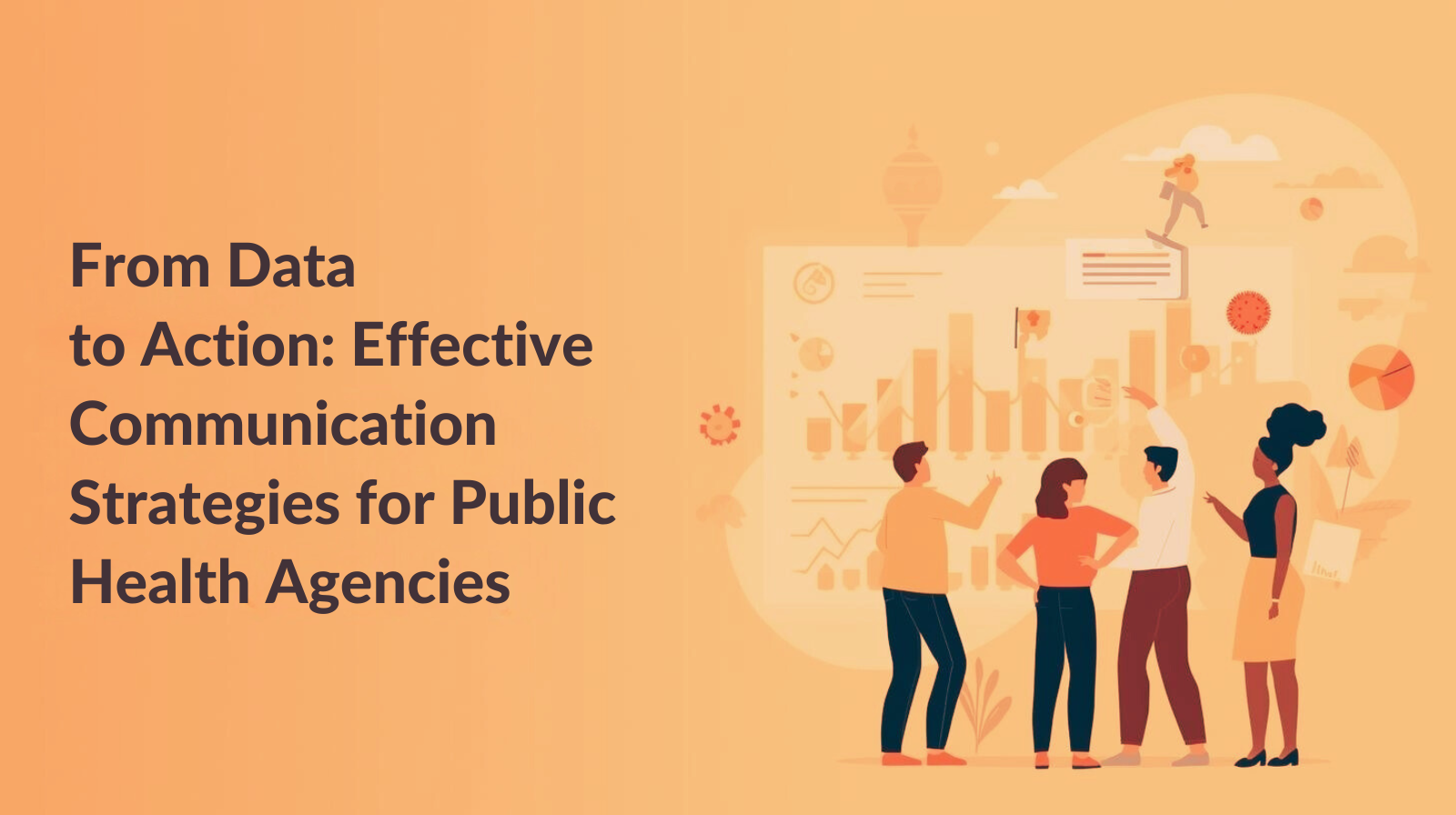
From Data to Action: Effective Communication Strategies for Public Health Agencies
Communication Challenges and Opportunities for State and Local Government Public Health Agencies
Public health agencies at all levels, including county health departments, state health offices, municipal public health bureaus, and specialized health programs, share a common challenge: how to effectively communicate critical health information in a way that informs, motivates, and drives real behavior change. Whether it’s a county health department promoting vaccination campaigns, a state agency addressing maternal health disparities, or a city program tackling food insecurity, communication in public health is not just about sharing information. It is about saving lives and improving community well-being.
Why is public communication so vital in public health? First, it builds awareness and understanding. Effective health communication can transform complex medical information into actionable guidance that communities can understand and apply. Second, it drives behavior change. Clear, culturally relevant messaging can motivate people to adopt healthier habits, seek preventive care, and access available services. Third, it fosters trust and equity. When health messaging reflects and respects the diversity of communities across different races, languages, income levels, and cultural backgrounds, more people engage with health programs and feel empowered to improve their health outcomes.
From leveraging social media for wellness campaigns to partnering with community organizations to reach underserved populations, modern public health communicators are finding innovative ways to bridge health equity gaps. In short, strategic communication is mission-critical for public health agencies looking to improve population health, reduce disparities, and build healthier communities for all.
Core Communication Principles for Public Health
Effective public health communication requires thoughtful attention to several fundamental principles that ensure messages reach, resonate with, and motivate the intended audiences. Below are essential best practices that health agencies have identified for outreach, education, and community engagement:
Use Clear, Accessible Language
Health information is often laden with medical jargon, technical terms, and complex concepts that can create barriers to understanding. Public health communicators must translate scientific and clinical information into plain language that diverse audiences can grasp and act upon.
Messages should be written at an appropriate literacy level (typically 6th–8th grade reading level for general audiences), avoiding acronyms and medical terminology unless absolutely necessary. When technical terms must be used, they should be clearly defined. For example, instead of “hypertension management,” say “controlling high blood pressure.” Instead of “BMI,” explain “body mass index, which is a measure of body fat based on height and weight.”
Visual aids, infographics, and simple charts can help communicate health statistics and guidelines more effectively than dense text. Icons and images that represent concepts universally—like a heart for cardiovascular health or a plate for nutrition—help reinforce messages across literacy levels.
Tailor Messages to Specific Audiences
Not all health messages work for all audiences. Effective health communication requires understanding the unique characteristics, needs, concerns, and cultural contexts of different population groups.
Demographic segmentation helps agencies craft messages that resonate with specific groups. A campaign promoting prenatal care for young mothers will look and sound very different from one targeting older adults about fall prevention. Messages for teens about mental health should use language, channels, and cultural references that speak to that age group.
Cultural competence is crucial. Health agencies must recognize that cultural beliefs, traditions, language preferences, and community norms all influence how health messages are received and acted upon. Materials should be available in multiple languages, and imagery should reflect the diversity of the community being served. For instance, a nutrition campaign in a predominantly Latino community might feature traditional foods prepared in healthier ways, while one in an Asian community might do the same with culturally relevant cuisine.
Understanding social determinants of health, such as income, education, housing stability, transportation access, and food security, also shapes messaging. A campaign encouraging regular doctor visits must acknowledge and address barriers like lack of insurance, transportation challenges, or work schedule conflicts that prevent some communities from accessing care.
Build Trust Through Consistent, Transparent Communication
Trust is the foundation of effective public health communication. Communities are more likely to follow health guidance from sources they perceive as credible, honest, and genuinely concerned about their well-being.
Consistency in messaging across all channels and over time builds credibility. When agencies send mixed messages, for example, different departments giving conflicting advice about a health issue, public trust erodes. All staff, partners, and spokespeople should be aligned on key messages and talking points.
Transparency about what is known and unknown is equally important. During public health emergencies or when addressing emerging health issues, admitting uncertainty while explaining what steps are being taken to learn more demonstrates honesty and expertise. People generally respect and trust communicators who acknowledge limitations rather than overpromising or appearing to hide information.
Source credibility matters immensely. Health departments can boost trust by partnering with respected community figures, such as local physicians, faith leaders, school principals, or neighborhood advocates, who can amplify messages within their own networks. When trusted voices validate health information, community members are more likely to believe and act on it.
Reinforce Messages Across Multiple Channels
People need to encounter health messages multiple times and through different mediums before they internalize and act on them. The principle of repetition and reach is central to effective public health campaigns.
Integrated, multi-channel approaches ensure that health messages reach people where they are. This might include:
- Traditional media: Press releases, radio spots, TV public service announcements, and newspaper ads that reach broad audiences, including those less engaged with digital platforms
- Digital and social media: Facebook, Instagram, Twitter, TikTok, YouTube, and agency websites to engage with younger, tech-savvy audiences and provide interactive content
- Community outreach: Tabling at community events, presentations at schools and senior centers, health fairs, and door-to-door canvassing in targeted neighborhoods
- Healthcare settings: Posters, brochures, and videos in clinics, hospitals, and pharmacies where people are already thinking about health
- Partner networks: Leveraging community-based organizations, schools, faith-based institutions, and businesses to distribute materials and echo messages
- Direct communication: Text alerts, email newsletters, robocalls, and mailings that deliver information directly to individuals
By strategically combining these channels and repeating core messages, health agencies increase the likelihood that their target audiences will see, remember, and act on critical health information.
Make Information Actionable and Empowering
Health messages are most effective when they clearly tell people what to do and make them feel capable of doing it. Vague advice like “be healthier” is far less powerful than specific, actionable guidance such as “walk for 30 minutes five days a week” or “schedule your flu shot at your local pharmacy this week.”
Behavioral calls to action should be specific. Rather than saying “monitor your health,” a better message is “Get screened for diabetes if you’re over 45.” Actions should be realistic, breaking large behavior changes into small, manageable steps. They should also be timely, providing information about when and where to take action, such as “Free mammograms available every Saturday in October at County Health Center.” Most importantly, messages should be empowering and frame advice in ways that build self-efficacy, which is the belief that one can successfully change behavior.
For example, instead of simply warning about the dangers of smoking, an effective campaign might say: “You can quit smoking. Call our free quit line at [number] for support, tips, and nicotine replacement therapy.” This message acknowledges the challenge, provides a concrete step, and offers resources to help, making people feel they can succeed.
Positive framing, emphasizing benefits rather than only threats, also increases motivation. “Getting vaccinated protects you, your family, and your neighbors” is more empowering than “Not getting vaccinated puts everyone at risk.”
Ensure Accessibility and Inclusivity
An equitable public health communication strategy ensures that all community members, regardless of language, literacy, ability, income, or location, can access and understand health information.
Linguistic accessibility means providing materials in the languages spoken by the community, not just English and Spanish but also languages like Mandarin, Vietnamese, Somali, Arabic, or others as needed. Professional translation (not just machine translation) ensures accuracy, and culturally adapted messaging ensures relevance.
For individuals with disabilities, health information should be available in multiple formats:
- Large print or Braille materials for those with visual impairments
- Closed captions and sign language interpretation for video content
- Audio versions of written materials
- Websites and digital content that comply with accessibility standards (such as WCAG) so screen readers can navigate them
Health literacy considerations are also crucial. Not everyone can understand complex health concepts or navigate healthcare systems easily. Using plain language, visual aids, and “teach-back” methods, where people demonstrate their understanding, helps ensure comprehension.
Finally, inclusivity in imagery and examples is important. Marketing materials should show diverse individuals and families so that everyone sees themselves represented. This signals that the health program or message is for them, not just for a narrow demographic.
Health Education and Behavior Change Public Campaigns
 At the heart of public health work is the challenge of changing individual and community behaviors to prevent disease and promote wellness. Effective behavior change campaigns use evidence-based communication strategies to motivate people to adopt healthier habits and make better health decisions.
Grounding Campaigns in Health Behavior Theory
The most successful public health campaigns are rooted in behavioral science and health communication theories. These frameworks help agencies understand why people behave the way they do and how to design messages that effectively promote change.
Common models include:
- Health Belief Model: People are more likely to take action if they perceive a health threat as serious, believe they are personally susceptible, and feel that the benefits of action outweigh the barriers. Campaigns using this model emphasize perceived risk (“Diabetes affects 1 in 3 adults in our county”) and promote self-efficacy (“You can prevent it with simple lifestyle changes”).
- Social Cognitive Theory: People learn behaviors by observing others, especially role models they admire or identify with. Campaigns leverage this by featuring testimonials from community members, showcasing peer success stories, and using trusted influencers.
- Transtheoretical Model (Stages of Change): People move through stages, precontemplation, contemplation, preparation, action, and maintenance, when changing behavior. Effective messaging meets people where they are: those not yet thinking about change need awareness messages, while those ready to act need specific how-to guidance.
Understanding the target audience’s current knowledge, attitudes, and readiness to change allows agencies to design campaigns that nudge people toward healthier behaviors in realistic, incremental ways.
Using Data and Storytelling Together
Effective health campaigns balance data with human stories. Statistics establish credibility and convey the scope of a health issue, while personal narratives make the issue relatable and emotionally compelling.
For example, a campaign to increase colorectal cancer screening might lead with the fact that “Colorectal cancer is the second leading cause of cancer deaths in the U.S., but it’s highly preventable with early screening.” This data point gets attention. The campaign could then share the story of a local community member who discovered a precancerous polyp through routine screening and avoided cancer, a narrative that personalizes the data and shows the tangible benefit of action.
Testimonials from real people, not actors, build authenticity and trust. When a community member who looks like, talks like, and shares experiences with the target audience explains how they successfully changed a behavior, it increases others’ belief that they can do the same.
Addressing Barriers and Providing Solutions
One reason people don’t follow health advice is because they face real or perceived barriers. Effective campaigns acknowledge these obstacles and offer solutions.
For instance, if promoting regular exercise, a campaign should address common barriers. For the time barrier, suggest “Even 10-minute activity breaks add up. Try taking the stairs or walking during lunch.” For cost concerns, respond with “You don’t need a gym membership. Walk in your neighborhood, follow free workout videos online, or join our free community fitness classes at the library.” For safety issues, offer “Our parks department offers free group walking programs so you can exercise with others in a safe, social setting.”
By anticipating and addressing barriers directly in messaging, agencies show understanding of people’s real lives and make recommended behaviors feel more achievable.
Leveraging Social Norms and Community Influence
People are influenced by what they believe others in their community are doing. Public health campaigns can harness this by highlighting positive social norms.
Instead of saying “Many people in our community don’t exercise enough,” which reinforces inaction as the norm, frame it positively: “More and more families in our neighborhood are choosing to walk to school and play at the park together.” This suggests that healthy behavior is common and desirable.
Community-based participatory approaches, where community members are involved in designing and delivering campaigns, increase relevance and trust. Peer educators, community health workers, and neighborhood champions who share demographic and cultural backgrounds with target audiences can be powerful messengers.
Creating Memorable, Creative Campaigns
Health campaigns compete for attention in a crowded information environment. Creative, memorable messaging cuts through the noise.
This might involve:
- Catchy slogans: Simple, memorable phrases that stick in people’s minds, such as “Move Your Way,” “5 a Day,” or “Cover Your Cough.”
- Visual branding: Consistent logos, colors, and design elements that make a campaign instantly recognizable.
- Engaging multimedia: Videos, animations, podcasts, and interactive websites that entertain while educating.
- Humor and emotion: Appropriate use of humor or emotional appeals can make messages more engaging, as long as they don’t trivialize serious health issues.
For example, a campaign to reduce sugary drink consumption among teens might use humorous social media videos showing exaggerated “sugar crashes” alongside tips for healthier alternatives, making the message engaging and shareable.
Evaluating and Adapting Campaigns
Good communication is iterative. Health agencies should continuously monitor campaign performance and adjust strategies based on what’s working.
Important metrics to track include reach and engagement, measuring how many people are seeing messages and whether they’re sharing, commenting, or clicking. Knowledge and attitudes can be assessed through pre- and post-campaign surveys to determine whether awareness and beliefs have shifted. Behavioral outcomes track whether more people are getting screened, vaccinated, or adopting healthier habits. Equity indicators help determine if the campaign is reaching and impacting all intended subgroups, or if certain populations are being left behind.
Feedback from the community, through surveys, focus groups, or direct conversations, provides valuable insights for refinement. If a message isn’t landing with a certain group, agencies can pivot, test new approaches, and learn what works better.
Addressing Health Disparities Through Communication
Health disparities, preventable differences in health outcomes and access to care among different population groups, are a central concern for public health agencies. Strategic communication plays a vital role in identifying, addressing, and ultimately eliminating these disparities.
Recognizing the Root Causes
Health disparities are driven by social determinants of health, conditions in which people are born, grow, live, work, and age. These include factors like poverty, racism, inadequate education, housing instability, and lack of access to quality healthcare. Effective communication about health disparities must acknowledge these systemic issues, not just individual choices.
For example, rather than simply telling low-income communities to “eat more fruits and vegetables,” agencies should recognize and communicate about barriers like food deserts, high costs of fresh produce, and time constraints faced by people working multiple jobs. Messaging that acknowledges these realities feels more honest and respectful, and is more likely to engage the community in solutions.
Culturally and Linguistically Tailored Communication
One-size-fits-all messaging rarely works when addressing disparities. Different populations experience and respond to health issues in distinct ways based on cultural beliefs, language, historical experiences with healthcare systems, and levels of trust in institutions.
Culturally tailored communication involves more than translation. It means:
- Understanding cultural health beliefs: Some communities may have traditional healing practices or beliefs about illness causation that should be respected and incorporated into messaging, not dismissed.
- Using trusted messengers: In communities with historical mistrust of government or medical institutions, partnering with respected community leaders, such as elders, faith leaders, or community health workers, can be essential.
- Reflecting cultural values: Messaging that emphasizes family, community, faith, or other core values of a culture will resonate more than generic health advice.
- Choosing appropriate channels: Different communities consume information differently. For some, radio and community newspapers are key. For others, social media or WhatsApp groups are primary.
For instance, a campaign promoting maternal health in African American communities might highlight the issue of Black maternal mortality rates and partner with Black doulas, midwives, and birthing advocacy groups to deliver empowering messages rooted in community strengths.
Amplifying Community Voices
Rather than having health departments be the sole voice on health issues, effective disparity-reduction strategies elevate the voices of those most affected. This approach, often called “nothing about us without us,” ensures that communication is not paternalistic but collaborative.
Community advisory boards, focus groups, and participatory design processes bring people with lived experience into the planning and execution of health campaigns. This not only makes messaging more relevant but also builds community ownership and trust.
For example, if designing a campaign to reduce diabetes in a Latino community, involve community members in creating materials, choosing language, and deciding where to distribute information. They know best what will resonate and what channels will reach their neighbors.
Addressing Mistrust and Historical Trauma
Many communities, particularly communities of color, have legitimate reasons to distrust public health and medical institutions because of historical abuses and ongoing discrimination in healthcare. Effective communication must acknowledge this history and work to rebuild trust.
Strategies include transparency, being open about how decisions are made, how programs are funded, and what data inform recommendations. When appropriate, agencies should offer apology and accountability, acknowledging past wrongs and demonstrating a commitment to doing better. Consistency and presence also matter, showing up consistently in communities not only during crises or campaign seasons helps build long-term relationships. Empowering communities by supporting community-led health initiatives rather than imposing top-down solutions also strengthens trust.
For instance, during the COVID-19 pandemic, many health departments worked to address vaccine hesitancy in Black and Latino communities by partnering with trusted local organizations, holding listening sessions to understand concerns, and featuring community members and local doctors in vaccine promotion campaigns.
Measuring and Communicating About Progress
Agencies should regularly measure and publicly report on health disparities and progress toward equity goals. Transparent communication about disparities, why they exist, and what is being done to address them helps build accountability and keeps equity central to public health work.
Data dashboards, community reports, and regular updates show that the agency is committed to tracking and closing gaps. Importantly, these communications should not only highlight problems but also celebrate successes and spotlight effective strategies that are reducing disparities.
Marketing and Public Campaign Case Studies from Public Health Agencies
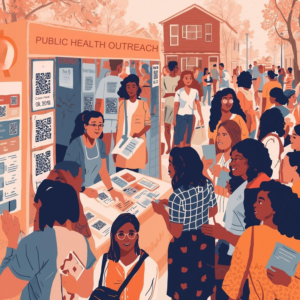 Real-world examples demonstrate how strategic communication can yield measurable results in public health. The following case studies highlight how different agencies used creative strategies, from physical activity promotion to maternal health equity and food access, to engage their communities. Each story offers lessons that other public health communicators can adapt to their own outreach efforts.
Mississippi State Department of Health: Moving Communities Toward Better Health
Movement became a behavior change challenge, so the Mississippi State Department of Health translated the Physical Activity Guidelines into simple, culturally relevant, doable steps for low-income families and African American residents. The team reinforced that all types of movement count and amplified the message through trusted community partners, listening sessions, and local events. Momentum continued through #MoveYourWayJackson videos, geo-targeted ads, and weekly SMS and email reminders, proving that practical, community-led messaging can turn physical activity into an everyday habit.
Dayton & Montgomery County: Using Communication to Drive Minority Health Equity
The Local Office on Minority Health treats communication as a direct driver of health equity, not just awareness. Through culturally tailored education, data-informed storytelling, and partnerships with trusted organizations and local media, the office makes complex health topics feel relevant and actionable for underrepresented populations. The approach shows how communication can move people from information to action by meeting them where they are, in language and channels they already trust.
Baltimore City Health Department: Expanding Access Through the Virtual Supermarket Program
Access became a communications challenge in Baltimore’s Healthy Food Priority Areas. Baltimarket reframed grocery shopping as a supported public service. Residents ordered groceries online, received help from trained Neighborhood Food Advocates, and picked up deliveries at trusted community sites like libraries, schools, and senior housing. The model reduced transportation barriers, built confidence with the process, and helped normalize healthy purchasing habits, showing how a simple, supported system can expand both food access and community trust.
Los Angeles County Department of Public Health: Culturally Affirming Messaging as a Maternal Health Equity Tool
Los Angeles County’s Black Infant Health Program treats communication as an intervention. It uses culturally affirming, strength-based messaging to build trust, drive enrollment, and sustain engagement through pregnancy and postpartum. By pairing targeted outreach and community partnerships with supportive group sessions and one-on-one case management, the program transforms health guidance into belonging, empowerment, and measurable behavior change for Black mothers and families.
Embracing Technology for Public Health Outreach and Education
Digital tools and technology have revolutionized how public health agencies communicate, educate, and engage with their communities. From mobile health apps and telehealth platforms to social media and real-time alert systems, technology now plays a vital role in enhancing health literacy, improving access to services, and promoting wellness. The key is to use these tools thoughtfully so they complement, and never completely replace, traditional community engagement and personal interaction.
Mobile apps and digital health tools
Mobile applications put health information and services directly into people’s pockets. Health departments and public health organizations have developed apps for a wide range of purposes:
- Health tracking and self-management: Apps that help users track physical activity, monitor blood sugar or blood pressure, log food intake, or manage chronic conditions. These tools empower individuals to take an active role in their health.
- Vaccination and appointment reminders: Apps and text message systems that remind people of upcoming immunizations, screenings, or medical appointments, helping reduce missed appointments and improve preventive care uptake.
- Symptom checkers and triage tools: Apps that help users assess symptoms and decide whether they need to see a doctor, go to urgent care, or manage at home. These tools can reduce unnecessary emergency room visits while ensuring people get appropriate care.
- Resource locators: Apps that help users find nearby health services, such as HIV testing sites, mental health clinics, food pantries, or pharmacies offering free or low-cost services.
For example, the CDC’s mobile app provides disease outbreak alerts, travel health information, and guidance on various health topics, all accessible offline for users in areas with limited internet access. Public health agencies should ensure that digital health tools are designed with accessibility and equity in mind. This includes making apps available in multiple languages, ensuring compatibility with older or lower-cost smartphones, and providing alternative access methods for those without mobile devices.
Telehealth and virtual care communication
Telehealth, delivering health services and education remotely via video, phone, or online platforms, has expanded dramatically, particularly since the COVID-19 pandemic. Public health agencies use telehealth to extend their reach and provide services to people who face barriers to in-person care. Virtual consultations allow health educators, nurses, and counselors to provide guidance on topics like nutrition, mental health, smoking cessation, and chronic disease management from a distance. This is especially valuable for rural communities, homebound individuals, and those with transportation or mobility challenges.
Public health agencies communicate about telehealth through multiple channels:
- Educational campaigns: Explaining what telehealth is, how to access it, and what services are available.
- Step-by-step guides: Providing clear instructions and video tutorials on how to join a telehealth visit, what technology is needed, and what to expect.
- Technical support: Offering phone or chat support to help users troubleshoot issues and access virtual care successfully.
By normalizing and demystifying telehealth, public health communicators can help more people take advantage of these convenient services.
Social media engagement: fast, creative, far-reaching
Social media platforms have become essential tools for public health communication. Agencies use Facebook, Twitter, Instagram, TikTok, LinkedIn, and YouTube to share health information, respond to community questions, and engage with the public in real time.
Advantages of social media for public health:
- Rapid dissemination: Health alerts, disease outbreak updates, and urgent safety information can be shared instantly with thousands or millions of people.
- Two-way interaction: Unlike one-way communication through traditional media, social media allows agencies to engage in dialogue, answer questions, address concerns, and receive feedback.
- Targeted messaging: Platforms offer sophisticated targeting options so agencies can tailor messages to specific demographic groups, geographic areas, or interest-based audiences.
- Visual and multimedia content: Infographics, videos, memes, GIFs, and live streams make health information more engaging and shareable.
- Amplification through networks: When users share, like, or comment on health content, it reaches their personal networks, extending the message far beyond the agency’s direct followers.
Examples of effective social media public health communication include health departments using Twitter for real-time outbreak updates, Instagram and TikTok for youth engagement, and Facebook Live for Q&A sessions. User-generated content campaigns, such as encouraging people to share their stories using campaign hashtags, also foster authenticity and community ownership. However, social media presents challenges: misinformation spreads quickly, and negative comments can undermine trust. Public health agencies must monitor their channels actively, respond to misinformation with accurate information, and engage respectfully even with critics.
Websites and online portals
A well-designed, user-friendly website is a foundational tool for public health communication. It serves as a central hub where community members, healthcare providers, media, and partners can access reliable health information, find services, and learn about programs.
Effective public health websites include the following characteristics:
- Organize information clearly: Use intuitive navigation, search functions, and clearly labeled sections so users can quickly find what they need.
- Provide multilingual content: Offer information in the languages spoken in the community.
- Are mobile-friendly: Most people access websites from smartphones, so responsive design is essential.
- Include multimedia resources: Videos, infographics, downloadable fact sheets, and interactive tools (like symptom checkers or risk assessments) engage users and meet different learning preferences.
- Offer service directories: Searchable databases of clinics, testing sites, support groups, and other health resources help people connect to care.
- Are accessible: Compliance with web accessibility standards (WCAG) ensures that people with disabilities can access information using assistive technologies like screen readers.
Many health departments have also developed online portals where residents can schedule appointments, view test results, access their immunization records, or complete health risk assessments. These features make health management more convenient and empowering for individuals and families alike.
Text alerts and push notifications
SMS text messages and push notifications from apps are highly effective for time-sensitive public health communication. These direct, personal messages have high open rates and can prompt immediate action.
Common uses include the following:
- Appointment reminders: Reducing no-shows for vaccinations, screenings, or follow-up visits.
- Medication reminders: Helping people adhere to treatment regimens for chronic conditions like hypertension or HIV.
- Health alerts: Notifying residents about disease outbreaks, air quality warnings, heat waves, or water quality issues.
- Behavior change nudges: Sending motivational messages, tips, or prompts to support healthy habits (for example, “Don’t forget to take a walk today! Even 10 minutes counts.”).
For example, many health departments offer text alert systems where residents can opt in to receive notifications about flu shot availability, COVID-19 testing sites, or emergency health warnings. These real-time messages keep people informed and engaged, especially during rapidly evolving public health situations.
Data visualization and interactive tools
Presenting health data in engaging, understandable ways helps the public and policymakers grasp complex issues and track progress. Interactive data dashboards, maps, and visualizations make statistics come alive and encourage exploration.
Examples include the following:
- COVID-19 dashboards: During the pandemic, many health departments created public dashboards showing case counts, hospitalizations, testing rates, and vaccination progress by neighborhood or demographic group, updated daily.
- Health equity maps: Interactive maps that show disparities in health outcomes, life expectancy, or access to care across different communities, highlighting where intervention is most needed.
- Risk calculators: Online tools where individuals can input personal information to assess their risk for conditions like heart disease, diabetes, or certain cancers, along with personalized recommendations.
These tools empower individuals and communities to understand their health landscape, recognize disparities, and make informed decisions. They also provide agencies with a powerful means to communicate progress transparently and foster data-driven policy discussions.
Blending digital and traditional communication
While technology offers tremendous opportunities, it is crucial to recognize that not everyone has equal access to digital tools. The digital divide, characterized by gaps in internet access, device ownership, and digital literacy, means that relying solely on digital communication can exclude vulnerable populations, including low-income individuals, seniors, people in rural areas, and those with limited education.
Effective public health agencies use a blended approach to reach the widest possible audience:
- Maintain traditional channels: Continue using print materials, community meetings, phone hotlines, radio, and TV to reach those less digitally connected.
- Provide digital access points: Offer computer and internet access at libraries, community centers, and health clinics for those without home internet.
- Offer digital literacy support: Provide training and one-on-one assistance to help people learn to use apps, websites, and telehealth platforms.
- Use multiple formats: For every campaign, have both digital and non-digital options so no one is left out.
By thoughtfully integrating technology into public health communication while maintaining traditional methods, agencies can maximize reach, enhance engagement, and ensure that all community members, regardless of their digital access, can receive and act on vital health information.
Community and Stakeholder Engagement in Public Health
Public health agencies do not operate in isolation, they are embedded within communities and networks of partners. Effective communication extends beyond public-facing campaigns to include meaningful engagement with community members, healthcare providers, schools, nonprofits, businesses, policymakers, and other stakeholders. By actively involving these partners in dialogue and collaboration, health agencies remain responsive to community needs, culturally relevant, and supported by a broad coalition working toward shared health goals.
Centering community voices in public health planning
The most effective and equitable public health initiatives are those co-created with the communities they serve. This participatory approach, often called community-based participatory research (CBPR) or community-engaged public health, involves community members as equal partners in identifying health priorities, designing interventions, and evaluating outcomes.
In practice, this might mean:
- Community health assessments: Rather than health departments solely determining what the community’s health needs are, agencies conduct listening sessions, surveys, and focus groups where residents identify their own priorities and concerns.
- Advisory boards and coalitions: Establishing groups that include diverse community representatives, residents, neighborhood leaders, youth, and people with lived experience of health issues, who provide ongoing guidance on programs and policies.
- Co-design of interventions: Inviting community members to help design health campaigns, choose messaging, and decide how resources should be allocated. For example, if developing a campaign to reduce teen pregnancy, involve young people in creating the materials and messaging so it is relevant and credible.
When communities have a genuine voice in public health decision-making, programs are more culturally appropriate, better meet real needs, and build community ownership and trust.
Building strong partnerships across agencies
Health outcomes are influenced by factors far beyond healthcare, including education, housing, employment, transportation, and food access. Effective public health communication and action require partnerships across many agencies.
Key partnerships include:
- Healthcare providers and systems: Hospitals, clinics, physicians, nurses, and pharmacists are essential partners in delivering health information and services. Health departments can provide them with educational materials, data, and training to support consistent messaging.
- Schools and universities: Schools are critical access points for children and families. Partnerships with school districts allow health departments to provide health education, screening programs, vaccination clinics, and mental health support.
- Community-based organizations (CBOs): Nonprofits serving specific populations, such as immigrant services organizations, senior centers, housing agencies, or food banks, are trusted by their clients and can help disseminate health information and connect people to services.
- Faith-based institutions: Churches, mosques, temples, and other religious organizations often have deep community roots and trusted leaders who can be powerful health messengers.
- Businesses and employers: Worksite wellness programs, partnerships with employers to offer health screenings or insurance navigation, and collaboration with local businesses to promote healthy policies, such as offering healthier food options, extend public health reach.
- Policymakers and government agencies: Communicating with city councils, county commissioners, state legislators, and other government entities is crucial for securing funding, passing health-supporting policies, and ensuring health is prioritized in community planning.
Collaborative communication, regular meetings, shared data, joint campaigns, and aligned messaging ensure that all partners are working toward common goals and reinforcing each other’s efforts.
Engaging healthcare providers as communication partners
Healthcare providers are on the front lines of health communication. Patients often trust and follow advice from their doctors, nurses, and other clinicians more than any other source. Public health agencies can amplify their messages by equipping providers with accurate information, talking points, and resources to share with patients.
Strategies include:
- Provider education and training: Offering continuing education sessions, webinars, or lunch-and-learns where public health staff update providers on current health threats, new guidelines, or available community resources.
- Toolkits and resources: Providing clinics with posters, brochures, prescription pads with health tips, and scripts for discussing topics like vaccinations, smoking cessation, or healthy eating with patients.
- Clinical decision support: Sharing data and alerts with providers about disease trends, outbreaks, or high-risk patients who may need additional outreach.
For example, during flu season, a health department might send regular updates to providers about flu activity in the area, along with materials to encourage patients to get vaccinated and information on how to refer uninsured patients to free vaccine clinics.
Mobilizing community health workers and peer educators
Community health workers (CHWs), sometimes called promotores, peer educators, or lay health advisors, are trusted members of the communities they serve who provide health education, social support, and navigation assistance. They are invaluable communication bridges between formal health systems and communities, especially those facing barriers to care.
CHWs are effective because they:
- Share cultural and linguistic backgrounds with the community.
- Understand local contexts, norms, and challenges.
- Build trust through relationships and lived experience.
- Can meet people where they are, in homes, community centers, or informal settings.
Public health agencies can train, support, and deploy CHWs to:
- Conduct outreach and education on health topics.
- Help people navigate healthcare and social service systems.
- Provide social support and advocacy.
- Collect community feedback and insights to inform program improvements.
For instance, a health department working to improve diabetes management in a Latino community might train bilingual CHWs to lead diabetes education workshops, accompany patients to medical appointments, and connect families to resources like food assistance or exercise programs.
Fostering grassroots advocacy and civic engagement
Public health is inherently political, it involves decisions about how resources are allocated, what policies are enacted, and whose voices are heard. Agencies that empower community members to become advocates for their own health and well-being strengthen both public health outcomes and democracy.
This can involve:
- Educating the public about health policy: Explaining how policies like zoning laws, tax policies, or healthcare regulations affect health, and how community members can engage in decision-making processes.
- Supporting resident-led advocacy: Providing training, data, and platforms for community members to speak at city council meetings, testify at hearings, or organize campaigns for health-supporting policies.
- Amplifying marginalized voices: Ensuring that those most affected by health inequities, including low-income residents, communities of color, immigrants, and people with disabilities, have opportunities and support to share their stories and advocate for change.
For example, a health department might support a coalition of parents and residents advocating for safe sidewalks and crosswalks in a neighborhood with high pedestrian injury rates, providing data on injuries and connecting the group with transportation planners.
When community members feel informed, empowered, and supported to advocate for their health, it creates a more engaged, resilient, and equitable public health system.
 Comparison with Other Agency Types
While public health agencies have a distinct mission focused on community health and disease prevention, many of the communication strategies that work in this agency are broadly applicable to other public-agency agencies. Whether in transportation, environmental services, social services, or municipal administration, effective communication is critical for building trust, conveying important information, and fostering community engagement.
Public health agencies, like all government entities, face similar challenges: diverse stakeholder groups with varying needs, complex policies and regulations to explain, competing for public attention in a crowded information landscape, and often limited budgets for outreach. The strategies that work in public health align closely with those used by cities, counties, states, and other government departments, as discussed in
A Comprehensive Guide to Public Communications for State and Local Government Agencies.
Shared core principles
Effective government communication rests on strategic planning that applies equally across all public agency agencies. Whether a health department is orchestrating a vaccination campaign, a transit agency is preparing to announce major service changes, or a social services department is designing outreach for benefit enrollment, the foundational approach remains consistent. Each initiative requires clearly defined objectives that articulate what the communication aims to achieve, careful identification of target audiences who need to receive the message, development of key messages that resonate with those audiences, strategic selection of communication channels that will reach people where they are, and establishment of meaningful metrics to evaluate success. This systematic approach to communication planning ensures that government agencies do not simply broadcast information but instead engage in purposeful dialogue designed to inform, persuade, or motivate specific actions among specific populations.
Understanding that different audiences require different approaches is another principle that transcends agency boundaries through audience segmentation and tailoring. The way a health department crafts smoking cessation messages for teenagers, perhaps emphasizing immediate social benefits and athletic performance, differs dramatically from messages aimed at pregnant women, which might focus on fetal health and long-term family wellbeing. This same principle of audience segmentation applies when a parks department promotes recreation programs, tailoring family-focused messages around convenience and child development while emphasizing social connection and wellness for seniors. Effective government communicators invest time in understanding the distinct needs, values, cultural contexts, information preferences, and barriers faced by different segments of their audience. This understanding allows them to move beyond one-size-fits-all messaging toward communication that truly connects with people’s lived experiences and motivations.
The reality of modern information consumption demands that government agencies embrace multi-channel approaches. Public health campaigns have long recognized that comprehensive reach requires layering social media outreach with community events, print materials, earned media coverage, and direct engagement. This same multi-channel imperative applies when transportation agencies announce new routes and need to reach both regular transit users and potential new riders, when environmental agencies promote recycling programs across diverse neighborhoods, or when elections offices work to ensure all eligible voters understand registration processes and voting options. Different people access information through different means—some primarily through social media, others through community organizations, still others through traditional news sources or direct mail. By strategically deploying messages across multiple touchpoints, government agencies increase the likelihood that critical information reaches everyone who needs it, often requiring multiple exposures before a message truly registers and prompts action.
Perhaps no principle is more universally important than the commitment to plain language and accessibility. Government services and information are meant to serve everyone, yet the complexity of policies, procedures, and requirements often creates barriers to understanding and access. Whether explaining eligibility requirements for a health program, providing instructions for paying a utility bill, or outlining steps to apply for a building permit, government communicators must work diligently to translate technical and bureaucratic language into clear, straightforward communication that people can understand and act upon. Accessibility extends beyond simplifying language—it encompasses providing information in multiple languages to serve diverse communities, offering content in various formats such as print, audio, and video to accommodate different learning preferences and abilities, and ensuring materials are appropriate for varying reading levels. When government communication fails to be accessible, it effectively excludes people from services and opportunities they have every right to access, undermining the fundamental purpose of public service.
Finally, trust and transparency form the bedrock upon which all effective government communication must be built. Public trust is indeed the currency that enables government to function effectively. Without it, even the most well-crafted messages fall flat and important initiatives fail to gain traction. Health departments understand that building and maintaining trust requires transparent sharing of data, honest acknowledgment of what is known and unknown, consistent messaging even when information evolves, and admission of mistakes when they occur. This same imperative applies to police departments seeking to build or rebuild community trust through transparency in use-of-force data and accountability measures, city halls working to demonstrate fiscal responsibility through open budget processes and accessible financial information, and regulatory agencies explaining their decision-making processes. When government agencies communicate with transparency, acknowledge limitations and uncertainties, follow through on commitments, and demonstrate that they value public input, they build reservoirs of trust that prove invaluable during crises, controversial decisions, or times when they must ask for public cooperation or behavior change. Conversely, opacity, inconsistency, or perceived dishonesty can rapidly erode trust that took years to establish, making transparency not just an ethical obligation but a practical necessity for effective governance.
For readers interested in exploring these strategies further, a Comprehensive Guide to Public Communications for State and Local Government Agencies delves into many of these principles in detail. Many of the communication challenges health agencies face, from building trust to reaching diverse audiences, closely mirror those in other public agency settings, which means effective approaches can often be adapted and shared across agencies.
Crisis and emergency communication
Both public health agencies and other government entities must be prepared to communicate during emergencies. Whether it is a disease outbreak, a natural disaster, a chemical spill, or a public safety threat, the principles of effective crisis communication are consistent:
- Be first, be right, be credible: Share information as quickly as possible, ensure accuracy, and cite credible sources.
- Provide actionable guidance: Tell people what they should do to protect themselves.
- Update regularly: As situations evolve, provide frequent updates to maintain public confidence.
- Coordinate across agencies: Ensure all relevant departments, elected officials, and partners are aligned on messaging.
- Address emotions and concerns: Acknowledge public fears and uncertainties, and provide reassurance where appropriate.
A health department managing a foodborne illness outbreak uses similar communication tactics as a public works department responding to a water main break. Both need to quickly inform affected residents, explain what is being done, provide instructions, and update as the situation develops.
Engagement and participatory governance
Increasingly, government agencies across all agencies are recognizing the value of two-way communication and community engagement. Just as health departments conduct community health needs assessments and form advisory boards, transportation agencies hold public hearings on proposed projects, planning departments conduct community visioning sessions, and social services agencies seek client feedback on program design.
This shift from top-down communication, where government tells the public, to collaborative communication, where government and community co-create solutions, is transforming public agency work. The skills and strategies public health agencies use to engage communities, facilitate inclusive meetings, conduct surveys, partner with trusted community organizations, and use participatory design methods, are applicable across government functions.
Measuring impact and continuous improvement
Whether evaluating the reach of a health campaign, tracking the effectiveness of a public information campaign about new city services, or assessing community satisfaction with government responsiveness, the practice of measuring communication effectiveness is universal.
Common metrics across agencies include:
- Reach and awareness: How many people saw or heard the message? Measured through media tracking, social media analytics, website traffic, event attendance, and related indicators.
- Understanding and knowledge: Did people comprehend the information? Assessed through surveys, focus groups, or quizzes.
- Attitudes and perceptions: Did the communication shift how people think or feel about the issue or agency? Measured through pre- and post-surveys or sentiment analysis.
- Behavior and action: Did people take the desired action? Measured through program enrollment, service utilization, compliance rates, or participation metrics.
Continuous improvement, using data and feedback to refine messaging, adjust tactics, and better meet community needs, is as important in public health as in any other government communication effort.
Cross-agency learning opportunities
Public health communicators can learn from innovations in other agencies, and vice versa:
- Transportation agencies’ use of real-time alerts and digital signage to update commuters can inform how health departments communicate during fast-changing situations like disease outbreaks or air quality emergencies.
- Social services agencies’ emphasis on trauma-informed communication and meeting people with dignity can enrich how health departments communicate with vulnerable populations.
- Environmental agencies’ success in behavior change campaigns, such as encouraging recycling or water conservation, can offer lessons for health behavior change efforts.
- Parks and recreation departments’ community engagement strategies, such as participatory design of playgrounds or programming, can inform health departments’ community engagement in program planning.
The underlying truth is that effective government communication, whether from a health department, a library, a police force, or a utility, rests on the same foundation: clarity, empathy, cultural responsiveness, accessibility, consistency, and a genuine commitment to serving and engaging the public.
Strengthening Communications with Expert Support
Managing public health communication, whether for a county health department, a state health office, or a specialized health program, requires thoughtful coordination, clear messaging, and a deep understanding of community needs. Many agencies successfully manage this work in-house by leveraging the expertise of epidemiologists, health educators, community health workers, and communications staff. Internal teams bring invaluable institutional knowledge, local context, and trusted relationships that are critical for effective outreach. With the right training, tools, and support, many organizations can build strong communication capacity from within.
At the same time, some agencies find that partnering with external experts, such as public health communication consultants, health marketing specialists, or community engagement facilitators, can provide helpful perspective, additional bandwidth, or specialized skills for high-priority efforts. Whether it is developing a comprehensive health equity campaign, refining crisis communication protocols, introducing new digital engagement strategies, or conducting a community health needs assessment with robust communication components, outside support can complement internal strengths.
The key is finding the right balance: aligning communication approaches with your agency’s mission, culture, community context, and available resources. Whether managed internally or in partnership with external consultants, the most successful strategies are those rooted in trust, cultural humility, community engagement, and a clear understanding of who you are trying to reach and why.
Ready to Strengthen Public Health Communication for Your Agency?
From managing disease outbreaks and promoting preventive care to addressing health disparities and engaging diverse communities, we understand the communication challenges your health agency faces: limited staff capacity, rapidly changing health information, and the need to reach and motivate diverse populations with varying levels of health literacy and trust in institutions.
At Stegmeier Consulting Group, we help public health agencies like yours develop clear, effective, and equitable communication strategies, internally and externally. Whether you are launching a vaccination campaign, addressing maternal health disparities, communicating about environmental health risks, or collecting community input on health priorities, we will help you:
- Clarify your message for different audiences, including healthcare providers, community members, policymakers, and media.
- Design campaigns that inform, motivate action, and drive measurable health behavior change.
- Ensure equity and inclusion in all communications so that marginalized and underserved communities are reached and engaged.
- Streamline outreach across traditional media, digital platforms, community partnerships, and direct engagement.
- Gather community input through surveys, focus groups, and participatory methods that inform program design and build trust.
- Train internal teams to communicate consistently, confidently, and compassionately in alignment with public health values.
- Measure and communicate impact with clear data and storytelling that demonstrate your agency’s value to funders, policymakers, and the public.
Whether you lead a rural county health department, manage a state public health office, or run a specialized program addressing maternal health, chronic disease, or health equity, our work is grounded in the same mission as yours: improving population health, reducing disparities, and empowering communities to thrive.
Reach out today for a consultation. We would love to explore how we can help you communicate more effectively, engage your stakeholders, and amplify the vital work you do to protect and promote health in your community.