
From Complaints to Community Support: Using Communication to Turn Critics Into Advocates
 Every outdoor environment, from busy trail networks to quiet wildlife corridors, relies on effective communication to guide, educate, and support visitors. Yet even strong communication systems face criticism when expectations go unmet or when visitors feel unheard. Parks and recreation agencies, wildlife agencies, outdoor recreation departments, and park districts all experience moments when residents express frustration, submit complaints, or question decisions. These interactions can create tension if handled reactively, but they also present an opportunity. When agencies respond with thoughtful communication, transparency, and empathy, critics can become some of the strongest advocates for community spaces.
Criticism often emerges not because residents oppose the mission of outdoor agencies but because they deeply value these places. They want their experiences to feel safe, clear, and enjoyable. They want their voices to matter. When communication breaks down, criticism fills the void. Agencies that understand the emotional roots of complaints can transform these moments into meaningful conversations that strengthen community trust.
Turning critics into advocates requires more than quick responses. It requires communication systems that listen, acknowledge, clarify, and close the loop with sincerity. When visitors feel seen and valued, their frustration softens. When agencies share context, explain decisions, and invite participation, skepticism shifts toward understanding. Over time, one complaint can become the beginning of a more connected and engaged relationship between the public and the organizations that steward outdoor spaces.
This article explores how outdoor agencies can approach complaints not as disruptions but as communication opportunities. It offers strategies for interpreting criticism, responding constructively, and shaping a community culture that supports shared stewardship and mutual respect.
Why Complaints Offer Valuable Insight
Complaints may feel discouraging, yet they contain information that agencies might not receive through surveys or casual interactions. Criticism often highlights gaps in communication, unmet expectations, or misunderstandings that visitors might never express unless something feels wrong. Parks and recreation agencies often discover that complaints align with communication breakdowns such as unclear signage, confusing rules, or wayfinding gaps. Wildlife agencies find that many complaints stem from fear or uncertainty when visitors encounter unexpected species behavior or misunderstood safety instructions. Outdoor recreation departments frequently receive concerns related to trail conditions, program logistics, or digital messaging.
A complaint reveals an emotional response. That emotion communicates something about the visitor experience. When agencies treat complaints as data points rather than disruptions, they gain access to authentic insight that reflects real community needs. Even a highly frustrated comment can illuminate a blind spot. For example, if visitors misunderstand winter trail closures, the complaint may signal that signage placement or digital alerts need refinement. If residents feel excluded from decision making about a new facility, the complaint may indicate a need for clearer public engagement communication.
Critics are often deeply invested users. Their willingness to speak up reflects their belief that the park experience matters. Agencies that listen can uncover trends that might otherwise remain invisible.
From Trails to Tweets: Effective Communication Strategies for Parks, Recreation, Outdoors, and Wildlife Agencies
This article is part of our series on strategic communication for Parks, Recreation, Outdoors, and Wildlife agencies. To learn more and to see the parent article, which links to other content just like this, click the button below.
Understanding the Emotional Triggers Behind Criticism
People rarely complain about something that feels minor. Complaints surface when emotions rise above a certain threshold. Understanding these emotional triggers helps agencies respond with more empathy and clarity.
A visitor may feel confused when arriving at a trailhead where multiple paths intersect without clear signage. Another visitor may feel unsafe after encountering wildlife without adequate guidance. Families may feel stressed when program instructions are unclear or when facilities do not match expectations outlined online. Residents may feel disappointed if they perceive a lack of transparency in agency decisions.
These emotional states drive communication behavior. Visitors who feel embarrassed, overwhelmed, or ignored may express their concerns in ways that sound sharper than intended. Agencies that recognize this emotional context can respond without defensiveness. A calm, empathetic response can de-escalate frustration and begin building trust.
Emotion also influences how visitors interpret messages. If someone arrives already stressed from traffic or weather conditions, even a neutral rule can feel harsh. When agencies understand the emotional landscape of visitor experiences, they can refine communication systems to prevent unnecessary tension.
Criticism is rarely about a single moment. It reflects an emotional journey. Effective communication acknowledges that journey and responds thoughtfully.
Why Listening Is the First Step Toward Turning Critics Into Advocates
Visitors want to feel heard. When someone submits a complaint, they are expressing a desire for acknowledgement. Listening does not mean agreeing with every concern, but it does mean approaching feedback with openness rather than defensiveness.
Listening builds the foundation for trust. When agencies respond quickly, acknowledge the concern, and express appreciation for the feedback, visitors interpret this as respect. Parks and recreation agencies often discover that even brief acknowledgment messages significantly reduce frustration. Wildlife agencies find that when they take the time to explain animal behavior or safety context in response to a concern, residents feel more informed and less fearful. Outdoor recreation departments that listen actively often notice that recurring critics begin to soften once they realize their input influences real decisions.
Listening also reveals deeper patterns. A single complaint may point to several underlying issues. Agencies that listen actively can identify whether the concern stems from communication, facilities, safety, signage, misunderstanding, or something else entirely. This understanding allows agencies to respond more effectively and refine communication systems accordingly.
Visitors forgive misunderstandings when they feel heard. They resist communication when they feel dismissed.
How Communication Breakdowns Lead to Public Frustration
Many complaints stem from communication breakdowns rather than operational failures. When communication does not match visitor expectations, clarity suffers. When clarity suffers, emotions rise. For example, a sign that appears too late may leave visitors feeling misled. A website that lacks updated program details may cause families to arrive unprepared. Wildlife agencies sometimes receive complaints from visitors who missed safety notices buried in dense text. Outdoor recreation departments may discover that unclear trail maps lead newcomers to take routes they did not intend.
Communication breakdowns create cognitive strain. Visitors rely on communication to understand what is happening, what rules apply, and what choices are available. When information is incomplete or confusing, visitors must solve under stress. This emotional load often transforms into frustration that manifests as a complaint.
Criticism rooted in communication breakdowns is an opportunity. It highlights where messages, channels, or timing require refinement. Agencies that approach complaints with curiosity rather than defensiveness can uncover patterns that improve safety, clarity, and visitor confidence.
Building Communication Systems That Prevent Complaints Before They Begin
Strong communication systems reduce confusion, eliminate avoidable frustration, and give visitors the confidence they need to interpret outdoor environments effectively. Parks and recreation agencies, wildlife agencies, outdoor recreation departments, and park districts all benefit when they take proactive steps to anticipate visitor needs before misunderstandings turn into criticism. Preventative communication requires consistency, clarity, and attention to how visitors think and move within shared outdoor spaces.
When agencies design communication systems that answer questions before they arise, visitors feel supported instead of overwhelmed. The result is a smoother experience and fewer moments where frustration escalates into complaints.
Identifying High-Risk Communication Gaps Early
Preventative communication begins with knowing where misunderstandings are most likely to occur. These communication “pressure points” often appear at moments of transition or decision making. Entrances, trailheads, wildlife viewing corridors, parking lots, and program registration pages are common locations where visitors rely heavily on clear guidance. If messaging is not straightforward at these points, frustration rises quickly.
Outdoor recreation departments often identify high-risk gaps after observing repeated confusion at complex trail junctions. Wildlife agencies frequently encounter gaps when safety guidance appears too late in a visitor’s journey or is presented in language that feels overly technical. Park districts may uncover gaps when families arrive at programs unsure about equipment requirements, timing, or age suitability.
Once high-risk communication gaps are identified, agencies can strengthen messaging where it matters most. Clear guidance at these critical moments prevents small misunderstandings from escalating.
Coordinating Internal Teams to Maintain Consistent Messaging
 Communication weakens when staff, signage, digital platforms, and printed materials do not align. Visitors may receive different messages depending on which staff member they speak with or which platform they consult. This inconsistency creates doubt, which often leads to complaints.
Agencies can prevent this by coordinating internal teams around shared communication standards. Parks and recreation agencies often adopt message frameworks that outline preferred tone, phrasing, and terminology. Wildlife agencies may use centralized safety messaging templates to ensure consistency across rangers, educators, and digital teams. Outdoor recreation departments sometimes provide seasonal briefings so all staff communicate the same details about closures, trail conditions, or capacity limits. Park districts frequently rely on internal communication checklists to ensure that program descriptions match information shared through social media or community boards.
When communication is internally consistent, visitors experience a unified, trustworthy system. Fewer contradictions mean fewer complaints.
Updating Communication Systems During Peak Seasons
Seasonal changes affect visitor behavior, environmental conditions, staffing levels, and safety expectations. Agencies that do not update communication systems accordingly often experience a surge in complaints. For example, signs that work well in spring may become irrelevant during summer crowds. Digital messages that support winter recreation may confuse visitors in fall shoulder seasons.
Outdoor recreation departments refine messaging during peak trail use so visitors understand congestion patterns, parking expectations, and alternate routes. Wildlife agencies adjust communication during migration seasons or periods of heightened animal activity. Park districts update program calendars, fee structures, or safety notices during school breaks or holiday periods.
Seasonal updates also prevent outdated information from circulating. When communication reflects current conditions, visitors feel the agency is attentive and prepared. This reduces uncertainty and strengthens trust.
Designing Communication That Supports First-Time Visitors
First-time visitors experience outdoor spaces differently from returning users. They may not understand local terminology, trail color systems, wildlife advisories, or recreation etiquette. When communication assumes prior knowledge, newcomers feel lost and frustrated. Many complaints arise not from the difficulty of the environment but from the difficulty of interpreting communication intended for experienced users.
Parks and recreation agencies can prevent this by designing messages that support first-time visitors without overwhelming others. This may involve adding simple orientation prompts near entrances, using approachable tone in digital descriptions, or clarifying rules with universal symbols. Wildlife agencies often highlight introductory guidance for safe wildlife viewing. Outdoor recreation departments may offer quick reference maps or short videos explaining how to interpret trail ratings. Park districts can use clear language in program materials so families know what to expect.
When first-time visitors feel supported, they return. When they feel ignored, they complain. Supporting newcomers is a powerful way to reduce avoidable frustration.
Anticipating Visitor Emotions in Communication Design
Visitors make decisions differently depending on their emotional state. A visitor who arrives excited and relaxed interprets signage differently from someone who arrives stressed, rushed, or overwhelmed. Agencies that consider these emotional dynamics when designing communication can reduce friction before it occurs.
For example, complex information near parking areas may overwhelm visitors who are already navigating traffic or managing children. Wildlife agencies may simplify safety advisories near high-stress points, such as areas with frequent sightings. Outdoor recreation departments may provide a gentle, encouraging tone at trailheads to reduce decision anxiety. Park districts may highlight welcoming language at entrances to family areas, helping caregivers feel confident navigating new spaces.
Anticipating emotional states allows agencies to design communication that reassures rather than pressures visitors. This reduces the likelihood of negative reactions.
Strengthening Communication at Physical and Cognitive Decision Points
Visitors experience “decision points” as moments where clear guidance is essential. These include choosing a trail, determining whether to enter a wildlife-sensitive area, deciding which facility entrance to use, or interpreting program check-in instructions. When communication at these points is ambiguous, visitors feel responsible for solving a puzzle the agency should have solved for them. This feeling often drives complaints.
Agencies can identify decision points through observation, surveys, and staff feedback. Parks and recreation agencies may discover that signage lacks clarity at trail forks. Wildlife agencies may see confusion where visitors decide how close they can safely approach a viewing area. Outdoor recreation departments may update wayfinding where multiple amenities converge. Park districts may clarify instructions where families transition from parking lots to program sites.
Improving communication at decision points reduces cognitive strain and improves visitor flow. When visitors experience fewer moments of uncertainty, they express fewer complaints.
Designing Digital and Onsite Messages as a Unified System
Visitors use a combination of digital tools and onsite cues to navigate outdoor spaces. Complaints often arise when these systems contradict one another. A map that looks different online and onsite undermines trust. A program update posted digitally but not reflected on signage leads to confusion. A wildlife advisory announced on social media but missing from onsite materials creates uncertainty.
Agencies can prevent this by integrating digital and onsite communication into a unified system. Parks and recreation agencies often adopt consistent icon sets and language across platforms. Wildlife agencies may share the same safety phrasing online and on onsite signage so the message feels cohesive. Outdoor recreation departments use real-time digital alerts paired with physical markers at trail entrances. Park districts align online program descriptions with printed brochures to avoid conflicting information.
When digital and physical communication reinforce each other, visitors experience clarity rather than contradiction. This dramatically reduces avoidable complaints.
Using Clear Expectations to Reduce Visitor Confusion
Expectations shape visitor experience long before they step foot on a trail or enter a facility. Many complaints arise when what visitors expect does not match what they encounter. Agencies can reduce these friction points by communicating expectations clearly, consistently, and early in the visitor journey.
Outdoor recreation departments can prevent confusion by sharing trail closures, weather advisories, parking limitations, or program capacity updates on their websites and at entrance points. Wildlife agencies can communicate seasonal behavior patterns so visitors understand what species they may encounter and how to respond. Park districts can clarify program details, facility rules, and accessibility information so families can plan effectively.
Clear expectations reduce emotional strain. When visitors know what to expect, they feel prepared. When communication fails to set expectations, visitors often assume the agency is unresponsive or disorganized. Complaints fill the gap left by missing information.
Providing clear expectations early is a simple but powerful way to reduce criticism.
Designing Signage That Calms Rather Than Provokes
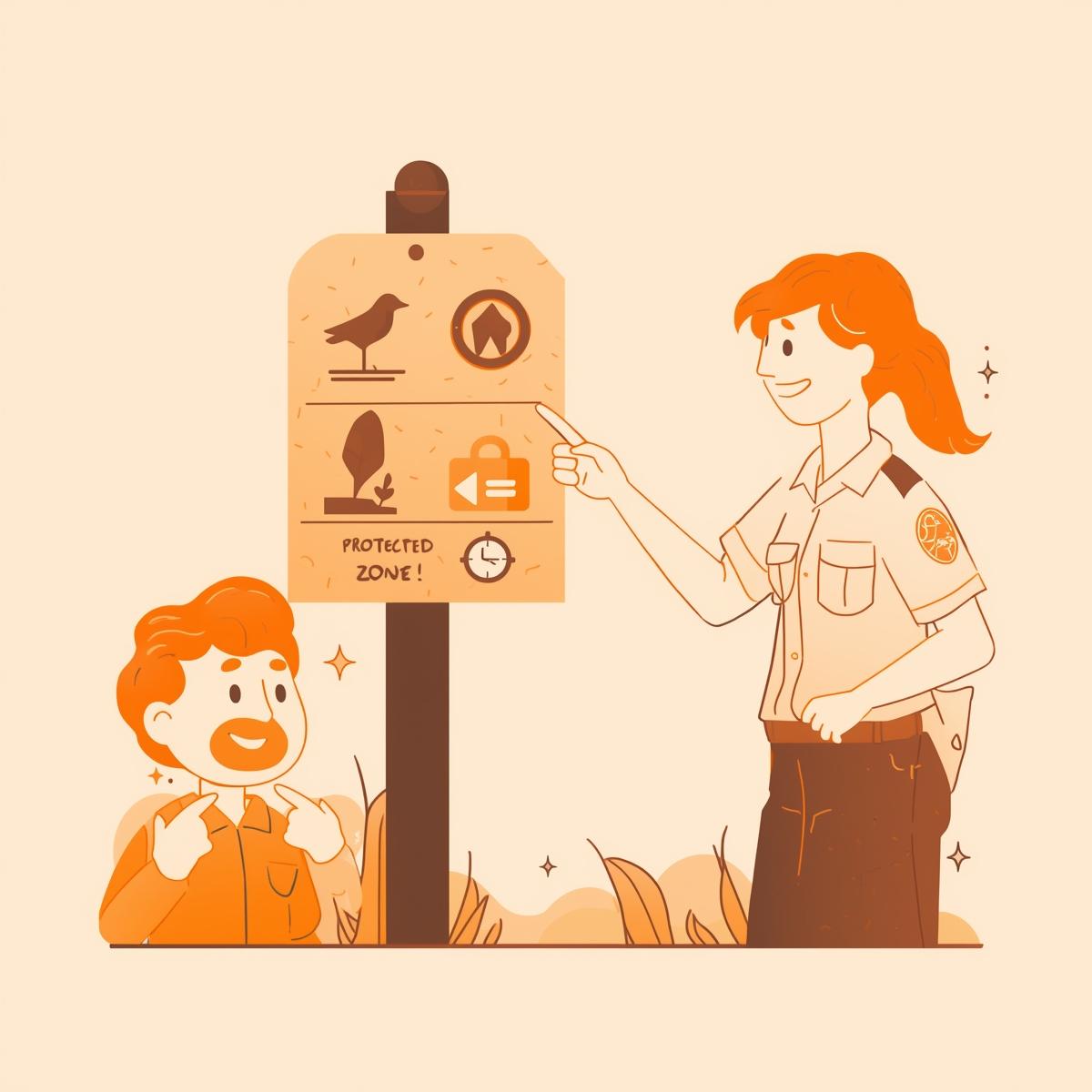
Signage, when thoughtfully designed, is one of the most effective tools for reducing visitor frustration. Poorly designed signage, however, can make confusion worse. Tone, placement, and clarity all shape whether visitors interpret signage as supportive or confrontational.
Visitors who encounter unclear signs feel vulnerable. They may blame themselves for misunderstanding, or they may blame the agency for not providing enough guidance. In both cases, frustration increases. Wildlife agencies often learn that overly technical wording about species behavior creates fear or irritation. Outdoor recreation departments discover that outdated trail maps or inconsistent design language at intersections cause visitors to lose trust in the communication system. Park districts sometimes find that parents misinterpret playground or pool rules when signs appear crowded, confusing, or visually uninviting.
Signage that calms uses approachable language, intentional spacing, and accessible symbols. It does not rely on punitive phrasing. It does not overwhelm visitors with long paragraphs of text. It does not compete visually with surrounding elements. Instead, it gently guides visitors by presenting information clearly and respectfully.
Calming signage reduces anxiety, which reduces complaints.
Addressing Digital Communication Gaps
Visitors rely on digital information more than ever. They check trail maps on their phones, register for programs online, review wildlife advisories on agency websites, and follow social media updates. When digital communication is unclear or inconsistent, complaints escalate quickly.
Common digital issues include outdated information, broken links, unclear navigation menus, inaccessible PDFs, missing translations, and confusing program descriptions. Wildlife agencies sometimes field complaints when species advisories on social media contradict website details. Outdoor recreation departments may receive criticism when digital maps display outdated routes or omit seasonal closures. Park districts often hear from families who struggled to register for programs because instructions were unclear or mobile formatting did not function correctly.
Digital communication must be maintained as actively as physical signage. Information needs regular updates. Tone and style need consistency. Pathways must be intuitive. Agencies that audit their digital platforms using feedback from surveys, complaints, and user behavior patterns can significantly reduce avoidable frustration.
A strong digital communication system is one of the most effective ways to prevent complaints before they arise.
Recognizing When Complaints Signal Deeper Communication Problems
Some complaints reflect small, isolated misunderstandings. Others reveal deeper system-level issues. Agencies need the ability to distinguish between the two.
A single complaint about unclear map symbols may point to a localized issue. A steady pattern of complaints about navigation, however, suggests larger communication problems. Wildlife agencies may notice frequent complaints about safety rules, which could signal that the rules are not explained clearly enough across platforms. Outdoor recreation departments may see recurring frustration about parking, wayfinding, or program logistics, which may indicate the need for a comprehensive communication audit. Park districts may hear repeated concerns about event instructions or youth program expectations, showing that communication processes need refinement.
Recognizing deeper issues early prevents frustration from accumulating. Critics become more entrenched when the same problems persist over time. A consistent pattern of similar complaints signals an opportunity for agencies to address underlying communication gaps proactively rather than reactively.
Patterns point toward deeper stories. Agencies that listen to those stories improve both communication and community trust.
Turning Criticism Into Constructive Dialogue
Complaints become meaningful only when they lead to conversation. Outdoor agencies that view criticism as the start of a dialogue rather than the end of an interaction can build stronger relationships with their communities. Parks and recreation agencies, wildlife agencies, outdoor recreation departments, and park districts all benefit when they treat criticism as an invitation to communicate more openly, more consistently, and with more empathy.
Constructive dialogue relies on two essential actions. First, agencies must acknowledge the concern quickly and respectfully. Second, they must respond with clarity that helps the visitor understand what happened, why, and what will happen next. When visitors feel included in the conversation, frustration softens. When agencies respond with empathy and information, visitors shift from skepticism to curiosity.
Dialogue transforms an isolated complaint into a collaborative moment. Over time, this collaboration helps turn critics into supporters who understand the agency’s mission and challenges more deeply.
Acknowledging Frustration With Empathy
The tone of an agency’s first response has enormous influence on the direction of a conversation. When a visitor expresses frustration, they are communicating both a problem and a feeling. If agencies respond only to the problem and ignore the emotion, visitors may feel dismissed. If agencies respond only to the emotion and ignore the issue, visitors may feel patronized. Balancing both is key.
Acknowledgment begins with empathy. A simple recognition of the visitor’s experience helps create common ground. Wildlife agencies often use empathetic openings when responding to concerns about wildlife encounters. Outdoor recreation departments rely on it when addressing navigation or congestion issues. Park districts apply empathy when responding to family concerns about programs or facilities.
Empathy does not assign blame. It does not commit the agency to changes it cannot make. It simply validates the visitor’s feelings and signals that the agency cares about the community’s experience. When visitors feel understood, they become more receptive to explanations, context, or next steps.
Empathy is the first step in transforming a complaint into a constructive conversation.
Explaining the “Why” Behind Decisions
Many complaints arise because visitors do not understand the reasons behind agency decisions. When agencies communicate only the rule and not the rationale, visitors may assume the decision is arbitrary, overly restrictive, or poorly planned. Clear explanations help visitors interpret decisions as thoughtful rather than controlling.
For example, wildlife agencies that explain why certain areas close during nesting seasons often see fewer complaints. When visitors learn that closures protect sensitive species or reduce stress on animals, they become more cooperative. Outdoor recreation departments that explain why certain trails rotate between user groups, such as hikers and mountain bikers, often receive more understanding and less pushback. Park districts that describe the reasoning behind program capacity limits help families manage expectations more easily.
Visitors may not always agree with an agency’s decisions, but they appreciate understanding the rationale. Transparency helps visitors interpret decisions through the lens of shared stewardship rather than restriction. When people understand “why,” they become more open to discussion and more willing to support the agency’s goals.
Providing Clarity Without Overwhelming Visitors
When responding to complaints, agencies must strike a careful balance. Too little information leaves visitors feeling dismissed. Too much information overwhelms them and may escalate confusion. Clear communication focuses on what the visitor needs to know to understand the situation, interpret the context, and feel respected.
Outdoor recreation departments sometimes receive complaints about trail maintenance delays. A clear response might explain how storms, seasonal staffing, or equipment availability influence maintenance timelines. Wildlife agencies may respond to concerns about animal presence by offering explanations about natural behavior patterns and steps the agency is taking to ensure safety. Park districts may address complaints about program changes by clarifying scheduling constraints or resource limitations.
Clarity works best when it is direct, kind, and free of jargon. When visitors understand the situation without feeling overloaded, the interaction becomes more productive. Clarity fosters trust and reduces the likelihood of repeated frustration.
Correcting Misconceptions Without Creating Conflict
Not every complaint reflects an accurate understanding of the situation. Misconceptions happen easily in outdoor environments, especially when information is incomplete or outdated. Agencies must correct inaccuracies in ways that inform visitors without making them feel embarrassed or wrong.
The most effective approach frames corrections as shared problem solving rather than contradiction. For example, if a visitor believes a wildlife sighting indicates mismanagement, wildlife agencies can clarify natural behavior cycles while emphasizing ongoing safety protocols. If a visitor misinterprets a trail map, outdoor recreation departments can explain the intended route and highlight upcoming improvements. If families misread program descriptions, park districts can clarify requirements while noting where communication materials will be updated.
Correcting misconceptions is delicate work. The goal is not simply to deliver accurate information but to do so in a way that protects the visitor’s dignity and keeps the conversation open. When agencies correct respectfully, critics often shift from defensiveness to appreciation.
Inviting Visitors Into the Problem-Solving Process
One of the strongest ways to turn critics into advocates is to invite them into the solution. When agencies ask visitors for ideas, input, or feedback about potential improvements, the conversation shifts from complaint to collaboration. This fosters a sense of partnership that strengthens community ties.
Outdoor recreation departments may invite critics to join trail advisory groups or accessibility feedback sessions. Wildlife agencies may ask visitors to share observations that help monitor species behavior. Park districts may ask families for input on program schedules, facility designs, or communication formats.
When visitors feel they have a voice, they often shift from criticizing to contributing. The act of being included can transform frustration into engagement. Critics who once felt unheard become advocates who help inform agency decisions and share communication updates with peers.
Collaboration turns communication into a community asset rather than an agency task.
Using Transparency to Build Trust and Reduce Future Complaints
Transparency is one of the most powerful tools available to parks and recreation agencies, wildlife agencies, outdoor recreation departments, and park districts when managing criticism. When agencies openly share how decisions are made, how concerns are evaluated, and how improvements occur, visitors interpret this transparency as proof of accountability. Even if visitors still disagree with an outcome, they are less likely to escalate frustration when they can see the reasoning behind agency actions.
Transparency also dispels assumptions. In the absence of information, visitors often fill the gaps with speculation. They may assume a trail closure is arbitrary, a program change reflects poor planning, or a wildlife advisory contradicts reality. Clear and proactive communication prevents misinformation from taking root. It also reassures visitors that their concerns are taken seriously.
When agencies adopt a culture of transparency, complaints decrease not because problems disappear but because trust increases. Visitors become more patient, more understanding, and more willing to ask questions rather than issue criticism. Over time, transparency transforms agency-community relationships by fostering shared understanding and shared responsibility.
Closing the Loop With Visitors After Complaints Are Addressed
One of the most overlooked steps in complaint management is closing the loop. When visitors take the time to express a concern, they want to know the outcome. If agencies do not follow up, visitors often assume their input was ignored. This assumption breeds frustration and can fuel long term distrust.
Closing the loop does not require extensive detail. It simply requires letting the visitor know what the agency learned, what actions were taken, or what future steps are planned. Parks and recreation agencies often send short follow up messages explaining completed maintenance or updated signage. Wildlife agencies may share that a safety advisory has been revised based on visitor insight. Outdoor recreation departments might inform a visitor that a confusing map has been redesigned or that temporary markers have been added at a problematic trail junction. Park districts may follow up with families after program changes to explain adjustments made for clarity or safety.
When visitors see their feedback lead to real improvements, their relationship with the agency changes. The next time they see an issue, they offer suggestions rather than complaints. They share successes with their community. They become advocates for the agency’s responsiveness and integrity.
Closing the loop is not a courtesy. It is a strategic act of trust building.
Turning Critics Into Community Messengers
Visitors who once criticized an agency can become its strongest supporters when communication honors their input. These individuals often share their experiences with friends, family, or online communities. When they describe how their concern was handled respectfully and resolved thoughtfully, they reinforce public confidence in the agency.
Critics who become advocates often carry messages farther than traditional communication channels. They speak from personal experience, which carries emotional credibility. Outdoor recreation departments frequently see this when vocal trail users shift from complaining about conditions to posting updates about improvements. Wildlife agencies benefit when former critics share accurate safety information within community groups. Park districts gain support when residents who once felt excluded become ambassadors for new programs or communication initiatives.
This transformation does not happen automatically. It happens when agencies demonstrate consistency, responsiveness, and humanity. If the communication experience feels sincere, critics naturally evolve into community messengers who reinforce shared stewardship and community participation.
Agencies that nurture these relationships strengthen both their communication ecosystem and their community resilience.
Using Surveys and Feedback Tools to Track Shifts in Community Perceptions
Once agencies address a complaint or a pattern of criticism, it is important to measure how perceptions have changed. Surveys, focus groups, QR code feedback points, and digital listening tools reveal whether communication improvements are achieving the intended outcomes.
Parks and recreation agencies may use short follow up surveys to evaluate whether a newly redesigned sign reduces confusion. Wildlife agencies can assess whether revised safety messages are better understood. Outdoor recreation departments might track whether real time alerts or program updates reduce logistical complaints. Park districts can evaluate whether updated program descriptions or multilingual materials improve family preparedness.
Tracking perception shifts helps agencies determine whether they resolved the root issue or only addressed a surface level symptom. It also ensures continuous improvement. When agencies demonstrate they are monitoring outcomes, visitors recognize that communication is a priority, not an afterthought.
Ongoing measurement supports transparency, reinforces trust, and allows agencies to refine communication proactively rather than waiting for new complaints.
Documenting Improvements Internally to Strengthen Communication Consistency
Internal alignment ensures that communication improvements stick. Agencies must document updates clearly so staff across all levels understand new protocols, message frameworks, and engagement expectations. Without documentation, improvements may be inconsistently applied or forgotten over time.
Outdoor recreation departments often maintain internal communication manuals that outline tone, style, terminology, and signage standards. Wildlife agencies may keep centralized safety messaging guides to ensure consistency across field staff, digital teams, and visitor center personnel. Park districts frequently adopt communication checklists so programs maintain clarity in registration forms, digital posts, and onsite materials.
When agencies document communication standards and updates, they improve internal coordination. Staff feel more confident delivering consistent information, which reduces confusion and future complaints. Internal clarity strengthens external clarity.
A well documented communication system becomes a long term asset for the agency and the community it serves.
Strategic Communication Support for Your Parks and Recreation Agency
 Transforming complaints into meaningful community relationships requires communication systems that are intentional, transparent, and aligned across platforms. Stegmeier Consulting Group (SCG) supports agencies in building these systems so critics become contributors and residents feel invited into ongoing dialogue. People at parks and recreation agencies, wildlife agencies, outdoor recreation departments, and park districts often choose to partner with an external resource like SCG when they want to strengthen their communication foundations, clarify engagement expectations, and respond more effectively to community concerns.
SCG helps agencies review their entire communication ecosystem, from signage and digital messages to staff interactions and internal workflows. This systems based approach creates consistency that reduces friction and prevents misunderstandings before they occur. SCG also supports agencies in developing message frameworks that guide tone, timing, and response strategies, ensuring that complaints are managed thoughtfully rather than reactively.
This partnership is not about adding more communication. It is about improving clarity and alignment so every message supports trust. Whether agencies seek help refining visitor feedback loops, improving public engagement processes, or training staff in empathetic communication, SCG brings structure and expertise to help agencies communicate with confidence.
When agencies strengthen their communication systems, they reduce unnecessary conflict, respond more effectively to concerns, and create an environment where residents feel respected, heard, and valued. This is how critics become advocates, and community relationships grow stronger over time.
Conclusion
Complaints are not signs of failure. They are signals of care, curiosity, and unmet expectations. When parks and recreation agencies, wildlife agencies, outdoor recreation departments, and park districts treat criticism as an opportunity rather than an interruption, communication improves and trust deepens.
Effective communication helps agencies uncover the emotions behind complaints, clarify misunderstandings, and share the rationale behind decisions. It helps visitors feel acknowledged rather than dismissed. When agencies respond with transparency, empathy, and clarity, the conversation shifts from confrontation to collaboration.
Over time, strong communication transforms critics into partners. Visitors who once felt frustrated begin to support agency initiatives, share accurate information with others, and contribute thoughtful feedback. These advocates help extend the agency’s reach and strengthen its connection with the community.
Turning criticism into community support is an ongoing process that demands commitment, reflection, and consistency. Agencies that invest in communication systems not only reduce complaints but also create a culture where residents feel connected to the land, to each other, and to the organizations that steward their outdoor spaces.
SCG’s Strategic Approach to Communication Systems
Align your agency’s messaging, processes, and public engagement strategies
Agencies that communicate effectively build stronger trust with staff, stakeholders, and the public. Whether you are implementing QR code systems, improving internal communication workflows, or strengthening agency wide alignment, SCG can help you develop a communication system that supports consistent decision making and long term organizational success. Use the form below to connect with our team and explore how a strategic communication framework can elevate your agency’s impact.