
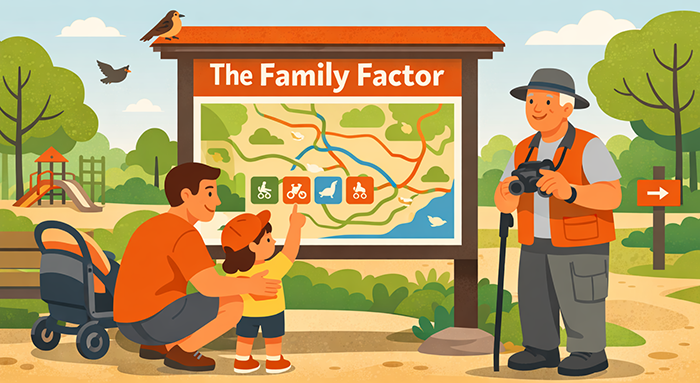
The Family Factor: Designing Park Communications That Reach Parents, Kids, and Multigenerational Groups
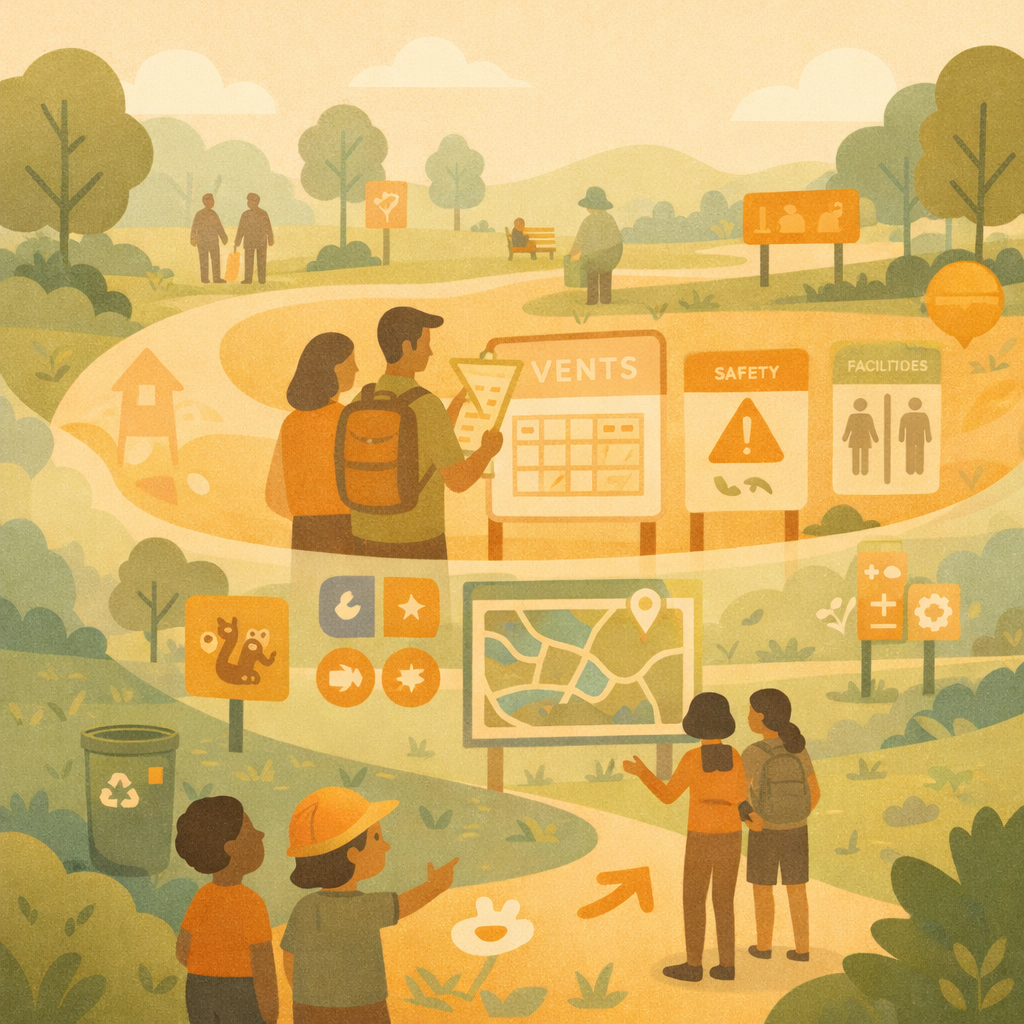 Families interact with parks and recreation spaces in ways that differ from solo visitors, organized groups, or specialized user communities. Parents seek safety information and clear logistics. Kids respond to visuals, straightforward directions, and engaging prompts. Older adults value ease of navigation and confidence in wayfinding. When outdoor recreation departments, wildlife agencies, and park districts understand these differing needs, they can design communication systems that reach families more effectively. Clear and thoughtful communication gives families a sense of belonging, which increases repeat visitation and deepens stewardship behaviors over time.
As parks and recreation organizations expand their programming, trail networks, wildlife education initiatives, and family-focused activities, the challenge is to communicate with multigenerational audiences through messages that feel accessible and relevant. Families are often the largest share of park visitors. They arrive with varied expectations, different levels of familiarity with the outdoors, and different comfort levels with navigating complex natural spaces. When agencies build communication strategies around the realities of how families gather, travel, and make decisions, they strengthen public trust and reduce friction for staff and visitors alike.
The Rise of Multigenerational Use in Outdoor Spaces
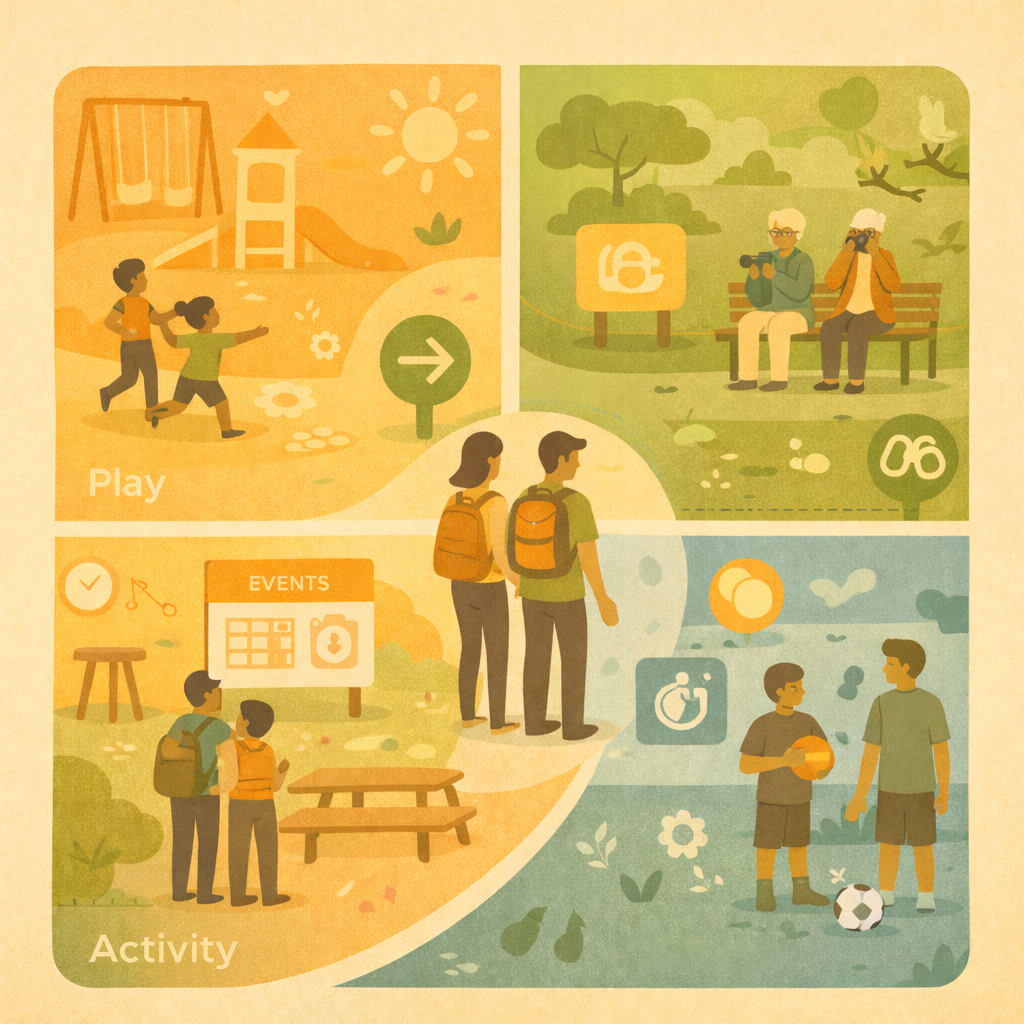 In many communities, parks, trails, nature preserves, waterfronts, and wildlife viewing areas have become central hubs for family activity. Parents bring young children for play. Grandparents join for low impact walking, birdwatching, or outdoor learning programs. Teenagers gravitate toward sports fields, biking routes, or nature based activities. Because these visitors often arrive together as multigenerational groups, parks and recreation agencies and outdoor recreation departments must design communication systems that support collective decision making rather than individual exploration.
Families rarely move through a park in a linear way. They pause frequently, split up temporarily, renegotiate preferences, and adjust plans based on the needs of children and older adults. Wildlife agencies notice similar patterns in natural habitat areas where families navigate trails with strollers, binoculars, guidebooks, or mobility aids. These varied rhythms influence how messaging is absorbed. Families rely on rapid orientation cues because their attention is divided among children, gear, and environmental conditions. When park districts design intuitive touchpoints that anticipate these challenges, families experience less stress and more enjoyment.
Several trends underscore why communication must evolve to support these patterns. In many outdoor recreation areas, the use of trails by strollers, scooters, and mobility devices continues to grow. Weekends and school breaks create surges in family programming participation. Nature play zones and wildlife education activities attract increasing interest as families look for hands-on learning opportunities. Digital expectations are rising as parents seek real time updates on conditions, closures, and capacity. Older adults also express a growing need for clear accessibility information, predictable navigation markers, and reliable surface condition updates. These overlapping needs make communication design a core operational function rather than a supplemental task.
Across these trends, the common thread is clear. Families rely on communication that anticipates their movement, clarifies expectations, and supports decision making at every step. When outdoor recreation departments, wildlife agencies, and parks and recreation organizations invest in systems that reflect multigenerational use patterns, they not only improve visitor satisfaction but also build long term trust with the communities they serve.
From Trails to Tweets: Effective Communication Strategies for Parks, Recreation, Outdoors, and Wildlife Agencies
This article is part of our series on strategic communication for Parks, Recreation, Outdoors, and Wildlife agencies. To learn more and to see the parent article, which links to other content just like this, click the button below.
Understanding the Family Communication Mindset
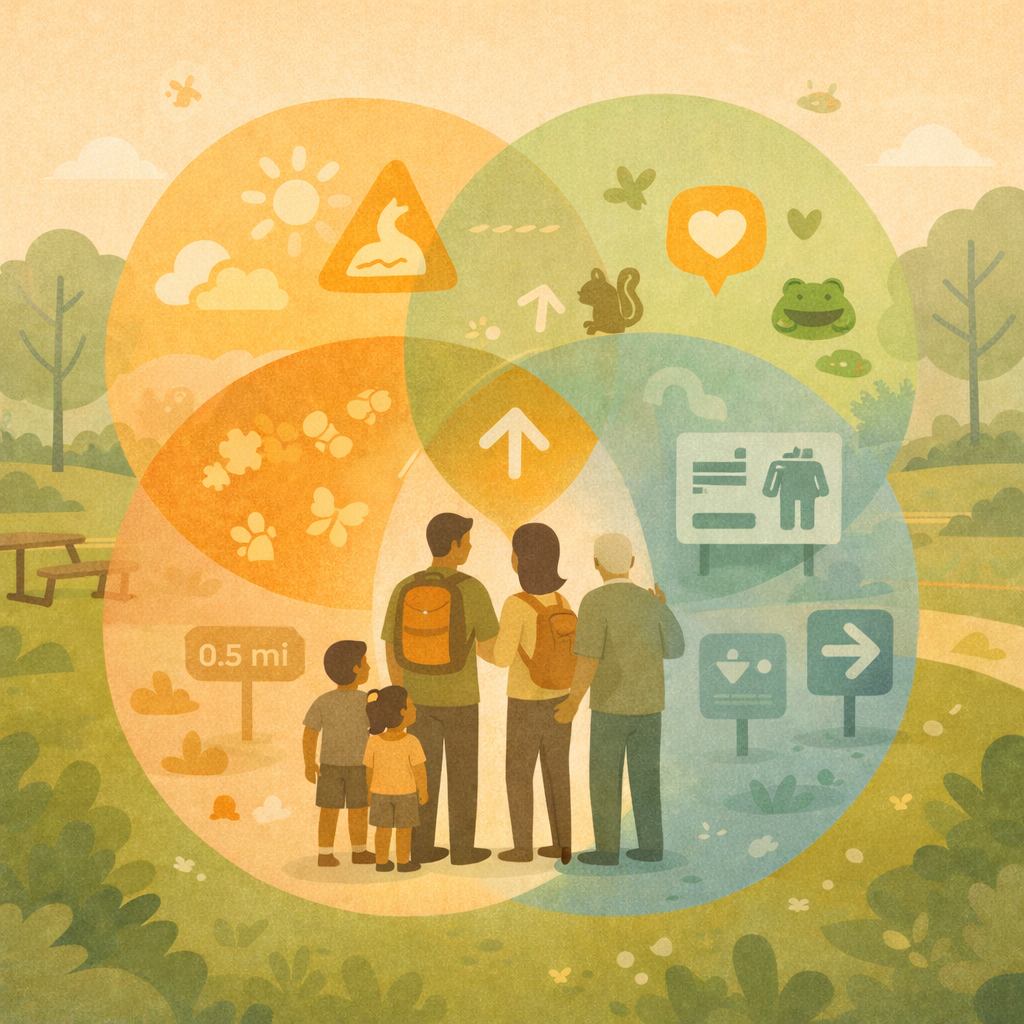 Designing communication for families requires careful attention to the emotional, cognitive, and logistical realities that shape how parents, kids, and grandparents make choices in outdoor environments. Families experience parks as shared spaces rather than individual outings. This means communication must support group decision making, help families identify options, manage risk, set expectations, and understand what is and is not available across the landscape. Parks and recreation agencies, wildlife agencies, and outdoor recreation departments all play a role in providing these cues in ways that feel intuitive for multigenerational visitors.
Parents often focus on the elements that create a sense of safety and predictability. They want clear guidance about trail conditions, wildlife interaction guidelines, and temporary closures. They look for wayfinding cues that reduce uncertainty and appreciate having information available both for advance planning and on the spot adjustments once children’s needs shift. When this information is communicated consistently, families feel more confident navigating an unfamiliar trail or planning a full day in a nature play area.
Kids interpret communication differently. They respond most strongly to simple language, color cues, recognizable symbols, and interactive prompts. Many wildlife agencies have seen how a well designed interpretive sign, a short QR linked video, or a playful icon near a trail crossing becomes an invitation for kids to slow down and engage. Children are less motivated by rules and more inspired by curiosity, so communication that sparks their interest tends to be far more effective than communication that simply instructs them.
Grandparents and older adults bring another set of needs to the experience. They look for reliable information about surface conditions, distances, and route descriptions. They notice whether rest areas are visible and whether navigation markers are easy to read. For many older adults, clear wayfinding reduces anxiety and allows them to participate fully in family outings. Park districts and outdoor recreation departments that prioritize these cues create spaces where older adults feel comfortable contributing to decision making.
When agencies understand these different generational needs and communicate accordingly, they create systems that support families as cohesive units. Parents feel informed, kids feel engaged, and older adults feel confident. The result is a more seamless experience where families can move together with ease and where communication quietly reinforces safety, enjoyment, and shared discovery.
Why Families Interpret Park Information Differently
Families process information in a shared context. The messages that reach them must therefore reflect their unique rhythms. Individual visitors may read a map and immediately begin their journey. A multigenerational group might approach the same map while juggling backpacks, strollers, excitement, and questions from children. Their focus shifts rapidly between environmental cues, social needs, and group logistics. This is why agencies must approach communication design with the realities of family dynamics in mind.
The reasons families interpret communication differently include:
- Cognitive load. Parents and caregivers are monitoring safety while also trying to interpret signage.
- Group coordination. Groups often negotiate choices out loud which means messaging must be instantly clear.
- Varying literacy levels. Young children and older adults may need simplified language or more visual cues.
- Emotional drivers. Awe, excitement, or anxiety influence how information is received.
- Time constraints. Families often operate on tight schedules shaped by naps, meals, or mobility considerations.
These factors shift communication from an informational task to an experience design challenge. Agencies can create more effective communication by layering messages that address the needs of multiple age groups without overwhelming any of them.
When outdoor recreation departments approach communication from this perspective, visitors experience less confusion and more autonomy. They understand what is expected of them, where they can safely travel, and how to participate in activities. This builds trust and strengthens relationships between communities and their local parks and recreation agencies.
Building Accessible and Family Friendly Signage Systems
Signage is one of the most visible and influential communication tools in any park environment. For families, signage must serve as both an orientation device and a behavioral guide. It must bridge literacy levels, include clear symbols, and anticipate the questions families have before they ask them.
Signage that effectively supports families often includes:
- Simple language that avoids jargon.
- Icons or illustrations that help children and multilingual users understand content.
- Distance indicators that show how long a trail or walk might take.
- Color coded routes that offer clear structure.
- Safety messages that are direct and calm without overwhelming visitors.
Families also benefit when signs are placed at moments where decisions occur. These decision points include parking lots, trail intersections, nature play entrances, wildlife viewing platforms, and restrooms. The placement and height of signs can support readability for both adults and kids.
Agencies can improve clarity by arranging information in predictable sequences. A well structured sign might begin with orientation information, then safety information, then regulatory information. Families absorb content more easily when structure is consistent.
Signage also serves as an educational tool for stewardship. A brief message about protecting wildlife habitat or staying on designated trails helps kids learn responsible outdoor behavior. If the message is visually engaging, families are more likely to read it together and discuss it.
Digital Tools That Help Families Plan, Navigate, and Participate
Digital communication has become essential for families visiting parks, trails, and wildlife areas. Parents increasingly rely on quick access to accurate information. Outdoor recreation departments and parks and recreation agencies can use digital tools to support planning before the visit and decision making during the visit. Families with children benefit from knowing what to expect in advance because it reduces stress and improves safety.
Strong digital ecosystems usually include:
- Easy to navigate websites with up to date operating hours, closures, seasonal advisories, and trail conditions.
- QR code systems placed at entrances, kiosks, and trailheads that offer maps, safety guidance, and program registration.
- Mobile friendly design that loads quickly in areas with limited connectivity.
- Geolocation based alerts for weather changes, wildlife advisories, or high visitation periods.
- Interactive maps showing restroom locations, shaded rest areas, accessible routes, and play zones.
Many wildlife agencies already use digital tools to communicate habitat alerts or migration cycles. When combined with clear family friendly messaging, these tools become even more valuable. Simple reminders about staying on designated paths or how to observe wildlife safely help parents teach responsible behavior in real time. If the digital interface uses icons and short phrases, kids can participate in reading the information.
Digital tools can also enhance program participation. Families can register for nature programs, interpretive walks, beginner fishing workshops, or outdoor skills classes on the spot. When agencies structure content by age group and ability level, parents can quickly determine which programs fit their children.
Outdoor recreation departments may also integrate crowding information into digital platforms. Families are more comfortable visiting spaces when they know what conditions to expect. Alerts that indicate full parking lots, temporary closures, or high trail traffic help families make informed decisions. These tools reduce frustration and improve visitor flow.
Digital communication becomes most powerful when it anticipates how families search for information. Parents often type queries like “easy hiking trails for kids,” “accessible nature walk,” or “family friendly picnic areas near me.” Agencies that structure their online content around these user needs reach more families and support better experiences.
Safety Messaging That Reaches All Ages Without Creating Alarm
Safety communication is one of the most important responsibilities of agencies managing parks, recreation areas, and wildlife habitats. Families depend on accurate information that is calm, clear, and actionable. Safety messages must be easy for caregivers to interpret quickly while still accessible to older adults and kids.
Effective family directed safety communication focuses on:
- Plain language that avoids jargon or technical terms.
- Tone that is confident and reassuring rather than alarming.
- Steps visitors should take rather than focusing solely on risks.
- Visual cues or icons that reinforce safety actions.
- Messages tailored to specific environments such as water areas, trail corridors, or wildlife zones.
For example, a sign near a wildlife feeding area might explain how distance protects both animals and visitors. The message should emphasize stewardship and curiosity rather than fear. When agencies frame safety within a learning context, kids internalize positive habits instead of reacting with fear or uncertainty.
Safety communication can also help families prepare before arriving. Outdoor recreation departments often post seasonal advisories, heat safety reminders, or water quality updates. Families planning a visit can use this information to pack appropriately, adjust timing, or select alternative routes.
Another important element is layered communication. Some messages should appear at the digital planning stage. Others should appear on trailheads or at program check in points. Additional reminders may appear during the experience. Consistency across each layer builds trust and helps families understand that safety is a shared responsibility.
Parks and recreation agencies often need to communicate about temporary hazards, construction work, or trail rerouting. Families respond best when this information is clear, brief, and visually distinct from permanent signage. This helps families adapt their plans without confusion.
Wayfinding Strategies That Support Multigenerational Movement
Wayfinding is more than directional signage. It is a complete system of cues that guide movement. Families need clear structure because they often juggle different walking speeds, interests, and abilities. Wayfinding must make it easy for visitors to orient themselves instantly.
Strong wayfinding systems typically include:
- A consistent color palette that matches digital maps, printed maps, and on site markers.
- Symbols or icons that help children recognize their route.
- Clear indicators of distances and estimated walking times.
- Maps are placed at regular intervals so families can regroup with confidence.
- Markers that are readable for both adults and children.
Agencies should consider how different age groups navigate. Adults usually scan for major landmarks or directional arrows. Children often look for symbols or characters that are easier to interpret. Older adults may need larger text or high contrast colors. By accommodating all three, the system becomes intuitive.
Another way to improve family friendly wayfinding is to integrate rest point information. Families often plan their movement around restrooms, water fountains, benches, or shade. If wayfinding maps highlight these features, families can make decisions more comfortably.
Outdoor recreation departments may also use wayfinding to communicate levels of difficulty for trails or activity zones. Families appreciate knowing which routes are suitable for strollers, wheelchairs, or young children. This reduces uncertainty and improves safety outcomes. When difficulty levels are communicated with simple icons or short phrases, parents can make informed decisions at a glance.
Wayfinding design also influences how families interact with natural areas. Clear boundaries help protect habitats. When markers indicate sensitive areas or wildlife corridors, families understand where they should avoid walking or playing. This supports conservation goals while giving families a sense of purpose in contributing to stewardship.
Program Promotion That Resonates Across Generations
Family focused programming has become a major priority for parks and recreation agencies, outdoor recreation departments, and wildlife organizations. Programs introduce visitors to new skills, spark curiosity, and strengthen community identity. To reach multigenerational audiences, communication must highlight relevance for each age group without overwhelming any specific audience.
Successful family program promotion often includes:
- Clear descriptions of age ranges and abilities.
- Visual icons that show program type such as nature play, guided walk, wildlife education, or outdoor skills.
- Concise summaries of what families will experience.
- Registration instructions that are simple and mobile friendly.
- Realistic expectations for weather, distance, or terrain.
Families often decide on programs based on perceived value for children. If communication emphasizes learning, exploration, or creativity, parents are more likely to participate. Messaging that highlights how different generations can enjoy the experience together also strengthens appeal.
Agencies can reinforce participation by linking programs to stewardship messaging. A program might include a short segment on habitat care or trail etiquette. When these elements appear in communication, families understand that the experience has purpose beyond recreation. This encourages long term engagement.
Program promotion becomes more effective when communication matches the rhythm of family life. Parents plan around school schedules, seasonal changes, and holidays. Agencies can use these rhythms to sequence their messaging and schedule relevant programs. For example, short guided walks may attract families in spring while longer outdoor skills workshops might appeal during summer.
Positioning programs as accessible also opens doors for families who may feel less confident in outdoor settings. When promotion clarifies what gear is needed, how long the activity lasts, and how staff support participants, families are more likely to try new experiences.
Creating Communication Spaces That Welcome Parents, Kids, and Older Adults
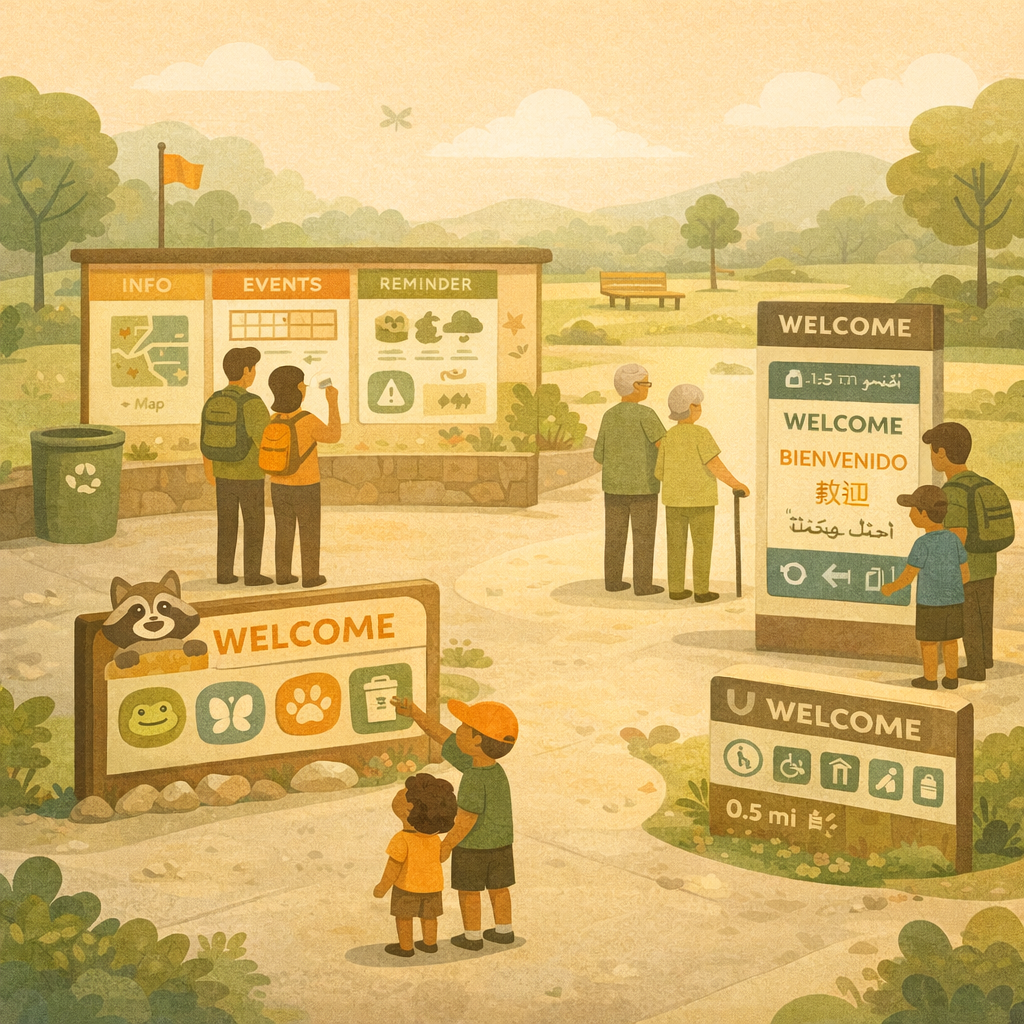 Families notice immediately whether a park environment feels welcoming. Communication plays a major role in shaping that perception. Welcoming communication signals safety, inclusivity, and clarity. Parks and recreation agencies that invest in physical and digital communication spaces cultivate trust and make it easier for families to navigate park systems.
Welcoming communication environments often include:
- Bulletin boards that present information in clean, organized layouts.
- Printed materials that use large fonts, readable contrast, and icons that support comprehension for kids and multilingual visitors.
- Staff messages that highlight helpful tips, seasonal reminders, or activity suggestions.
- Materials placed at heights accessible to adults and children.
- Visitor centers that group family friendly information together for quick access.
A welcoming communication environment respects the varied experiences that families bring with them. Parents may visit regularly and understand the layout well. Grandparents may be unfamiliar with the site and want more orientation support. Children may be eager to explore without understanding boundaries. Communication that accommodates these differences improves safety and visitor satisfaction.
Another important factor is consistency. Families rely on predictable message structures across signs, kiosks, websites, and brochures. When agencies maintain similar color palettes, icon styles, and tone across channels, families interpret information more easily. Consistency reduces cognitive load and increases confidence. Outdoor recreation departments that maintain unified communication systems reduce confusion during peak visitation periods, which helps staff and visitors alike.
Communication spaces also support cultural inclusivity. Many families speak languages other than English at home. Materials that include multilingual content or QR codes linked to translated resources help families feel seen and respected. Wildlife agencies sometimes incorporate cultural stories or indigenous ecological knowledge into educational materials to deepen visitor connection. When presented clearly, these elements enrich the family experience and broaden understanding of natural landscapes.
Finally, the physical placement of communication materials influences accessibility. Families benefit when materials are located near common gathering points such as trailheads, picnic areas, nature play zones, and parking lots. Good placement patterns reduce bottlenecks and help families understand expectations before they enter sensitive or high traffic zones.
Designing Communication That Reduces Conflict and Supports Positive Family Behavior
Families often visit parks with excitement. That excitement sometimes leads to behaviors that accidentally create friction. Running on trails, feeding wildlife, wandering off designated routes, or leaving litter behind can occur when families misunderstand expectations. Communication that anticipates these patterns reduces conflict and encourages positive behavior.
Conflict prevention communication usually emphasizes:
- Clear rules and expectations written in friendly and direct language.
- Positive reinforcement messages that highlight recommended actions rather than focusing solely on prohibitions.
- Behavior modeling through visuals or simple illustrations.
- Proactive reminders placed before decision points rather than after issues arise.
When parks and recreation agencies frame expectations positively, families respond more openly. Instead of a sign that says “Do not touch wildlife,” a sign might read “Give wildlife space to thrive” with an illustration of a family observing from a respectful distance. This reframing encourages curiosity and stewardship. It also supports teaching moments between caregivers and children.
Outdoor recreation departments can also reduce conflict by explaining the reasons behind rules. Parents often respond well to brief explanations such as why dogs must remain on leashes or why certain areas close seasonally. When families understand that rules protect wildlife, prevent erosion, or support public safety, compliance increases.
Children benefit from behavioral reminders that use playful visual cues. Simple characters, footprints, or trail mascots can help kids remember to stay on paths or pack out trash. These messages create continuity between trail signs, visitor centers, and digital materials. A consistent character or visual motif helps children build familiarity with rules across the entire park system.
Another strategy is to tailor communication according to different park zones. Quiet wildlife observation areas may require more nuanced reminders. High activity play spaces may need bold icons and short instructions. By adjusting tone and presentation, agencies meet families where they are rather than expecting one communication style to work universally.
Communicating Across the Full Arc of a Family Visit
Families experience parks in phases. Each phase presents a communication opportunity that supports safety, enjoyment, and stewardship. When wildlife agencies, park districts, and outdoor recreation departments design communication around the full arc of a family visit, they strengthen satisfaction and reduce unnecessary confusion. Each step families take, from deciding to visit to heading back home, is shaped in part by how clearly the agency communicates expectations.
Phase 1. Pre Visit Planning
Before they ever set foot in a park or trail, families search for practical information. They want to know operating hours, parking options, trail difficulty, weather considerations, and whether programs are available for different age groups. Agencies support this phase most effectively when their websites are mobile friendly, their alerts for closures or high visitation are updated in real time, and their programming pages clearly identify age ranges or accessibility notes. Thoughtful communication during this stage helps families set expectations. If information is missing or difficult to find, parents arrive feeling rushed or unprepared which sets a stressful tone for the rest of the visit.
Phase 2. Arrival and Orientation
Arrival is the moment when families form their first impressions about whether the space feels welcoming and manageable. Clear parking signs reduce confusion before visitors even leave their vehicles. Trailhead kiosks with large, readable maps allow families to orient themselves quickly, especially when children are energetic and ready to explore. Indicators for restrooms, water sources, and shaded areas also make a meaningful difference, as do staff or volunteers positioned near busy entry points during peak times. When orientation feels orderly and intuitive, families begin their visit with confidence instead of uncertainty.
Phase 3. Exploration and Engagement
Once families begin exploring, communication shifts from preparation to active guidance. Wayfinding markers placed at predictable intervals help families maintain direction even when moving at different speeds. Safety reminders positioned before higher risk areas allow caregivers to set clear expectations with children. Interpretive signs spark curiosity and encourage families to learn about plants, wildlife, or local history as they move. Digital updates about weather changes, temporary reroutes, or trail closures add a layer of real time decision support. This phase carries the highest cognitive load for families, so the clarity and timing of communication have a direct impact on their experience.
Phase 4. Program Participation
When families join guided walks, wildlife workshops, or outdoor skills programs, communication becomes a tool for building trust and comfort. A simple reminder sent by email or text before the program reassures families that they are prepared. Check in processes that are brief and predictable reduce anxiety, especially for parents managing young children. Friendly greetings from staff help multigenerational groups feel immediately welcomed. When communication throughout the program is steady and clear, families are more inclined to return for future offerings because they associate programming with a smooth and enjoyable experience.
Phase 5. Exit and Reflection
As families prepare to leave, communication has one final role. Exit points provide an opportunity to reinforce stewardship behaviors, whether through well placed signs or brief digital follow ups. These messages can encourage families to reflect on their visit, share feedback, or participate in upcoming seasonal activities. This closing phase completes the visitor arc and influences whether families see the agency as a trusted partner in their outdoor experiences.
By understanding and communicating across each phase of the family visit, agencies support a journey that feels coherent from beginning to end. When families encounter clarity at each step, their confidence grows and their likelihood of returning increases. Over time, this consistent clarity builds long term loyalty and strengthens the relationship between communities and their local parks, recreation areas, and wildlife habitats.
Supporting Inclusive Family Experiences Through Communication
Inclusive communication ensures that all families, regardless of age, ability, cultural background, or familiarity with outdoor spaces, can access and enjoy parks. Inclusive design is not simply an accessibility requirement. It is a communication strategy that recognizes the diverse social realities of visiting families.
Inclusive communication systems often include:
- Large print maps and materials for low vision visitors.
- Braille or tactile markers on trail posts.
- Visual icons and multilingual text for diverse communities.
- Clear descriptions of accessible routes, surface types, and slope conditions.
- Videos that demonstrate how to navigate facilities or equipment.
Parks and recreation agencies that adopt inclusive communication help families plan confidently. Parents of children with mobility devices, sensory needs, or anxiety rely on accurate information to set expectations and choose appropriate activities. Communication that provides this support expands access and reduces discomfort.
Another layer of inclusive communication relates to cultural diversity. Families interpret park behaviors through their cultural norms. Some may be unfamiliar with wildlife etiquette or trail protocols. When agencies explain expectations clearly and with cultural sensitivity, families feel respected. This improves compliance and fosters community connection.
Inclusive communication also supports equitable participation in programs. If registration materials, fees, schedules, or requirements are unclear, families from marginalized backgrounds may opt out. Simple, direct communication reduces these barriers.
Wildlife agencies sometimes incorporate inclusive interpretation methods by offering programs that use storytelling, hands-on activities, or visual demonstrations. These approaches reach families who learn differently and make education more memorable.
Long-Term Stewardship Through Communication
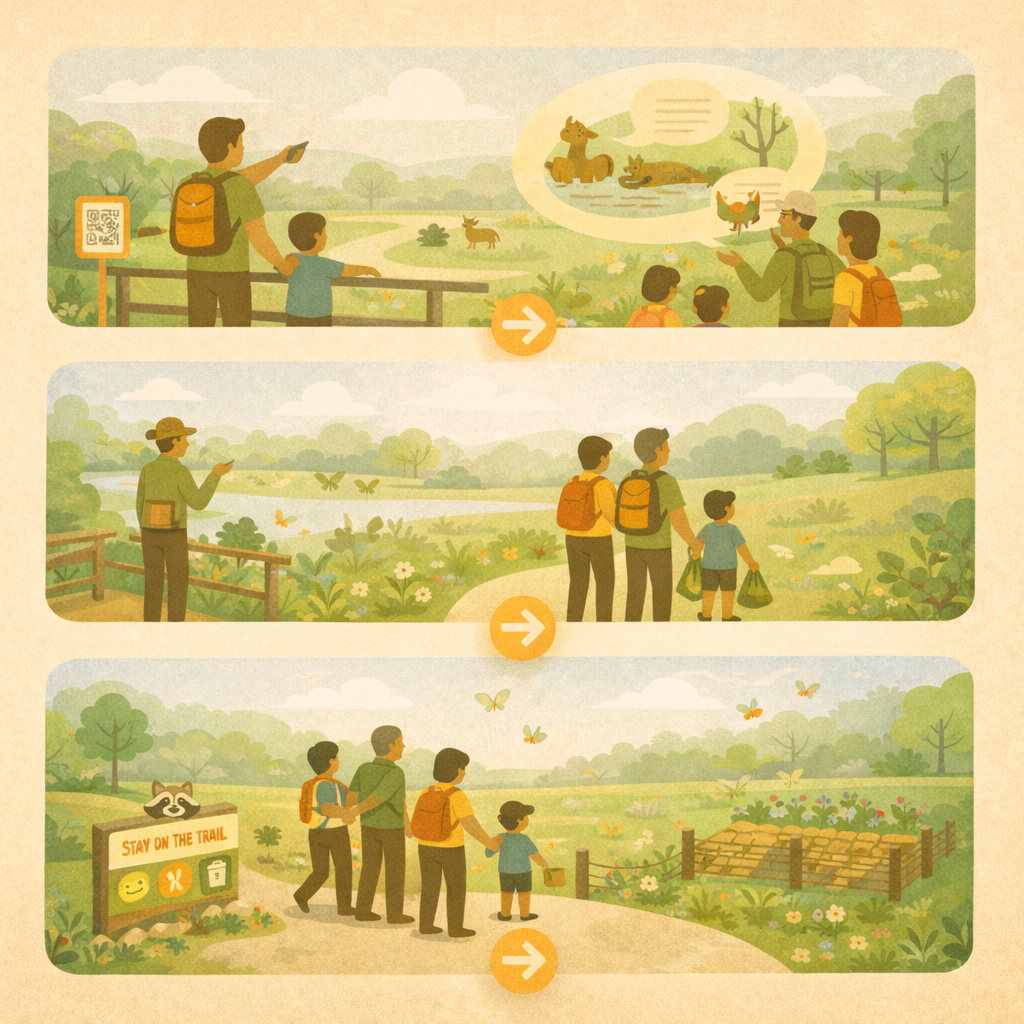 Stewardship emerges when visitors understand the value of natural environments and feel a sense of responsibility toward them. Families play a particularly influential role in long term stewardship because they model behavior for children and shape the next generation of outdoor users. Communication that encourages stewardship does not need to be complicated. It works best when it is clear, consistent, and embedded throughout the entire visitor experience.
Stewardship messages are most effective when they appear in several different formats and at various touchpoints along the family’s visit. Interpretive signs can introduce families to the ecological functions of wetlands, forests, or riparian zones. QR codes placed at trailheads or viewing platforms can link to short videos that explain how to protect sensitive habitats or observe wildlife safely. Program materials often reinforce conservation themes through hands-on activities for kids or brief discussions led by staff. Even trail markers help by indicating fragile areas where visitors should stay on designated paths. Digital follow up messages sent after a visit can encourage families to stay engaged, learn more, or return for volunteer opportunities.
Families respond strongly to stewardship messages that emphasize shared responsibility. When parks and recreation agencies use language such as “help us protect this space for future generations,” parents often take the opportunity to talk with their children about care, respect, and the importance of preserving natural areas. These messages become small teaching moments that deepen emotional connection to the outdoors.
Storytelling also strengthens stewardship. Narratives about local wildlife, historical landscapes, indigenous ecological knowledge, or restoration projects help families understand why certain rules exist and how their actions make a difference. Story based communication feels more personal than strict instruction. It helps children and adults alike internalize the significance of their choices, from staying on designated trails to observing wildlife from a respectful distance.
Stewardship communication is most powerful when it gives families specific actions they can take. Instead of broad appeals like “protect nature,” families benefit from concise guidance on how to enjoy natural spaces responsibly. Examples include directions to stay on marked trails to prevent erosion, reminders to observe wildlife without approaching too closely, encouragement to pack out trash and leave areas cleaner than they found them, or invitations to join community volunteer days. These types of messages translate conservation values into practical, achievable behaviors.
When stewardship communication is presented in a clear and welcoming manner, families see conservation as an accessible and meaningful part of their visit rather than an obligation. Over time, these messages cultivate a generation of visitors who feel connected to the land, understand their role in protecting it, and return to parks and recreation areas not only for recreation but also to contribute to the wellbeing of shared natural spaces.
Strategic Communication Support for Your Parks and Recreation Agency
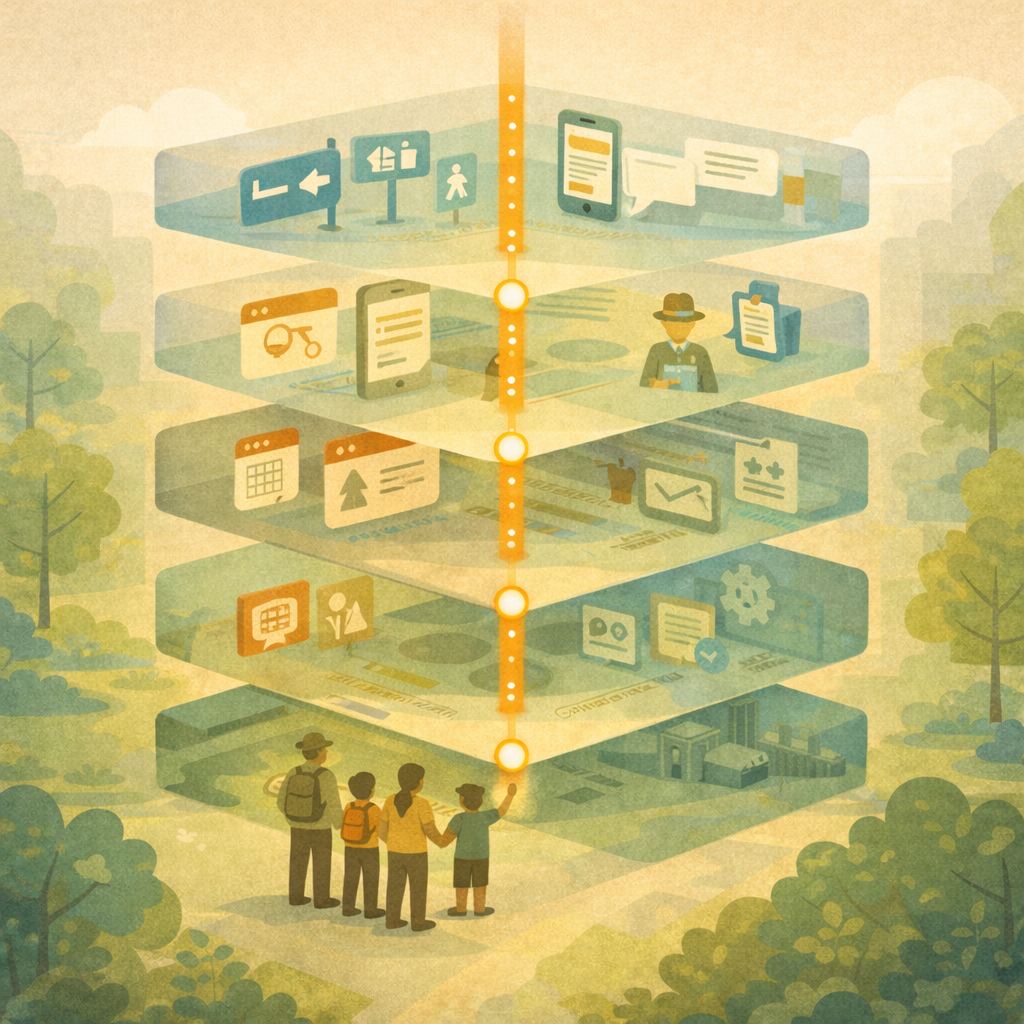 Stegmeier Consulting Group (SCG) helps public sector organizations strengthen communication systems across digital platforms, visitor experiences, and internal workflows. Parks and recreation agencies, outdoor recreation departments, and wildlife organizations often juggle complex responsibilities including safety messaging, wayfinding, programming, staffing, and public engagement. Many leaders discover that improving communication touchpoints across these systems requires dedicated expertise and capacity that internal teams may not always have available. This is why agencies frequently partner with an external resource like SCG. An outside perspective brings structure, clarity, and strategic alignment to communication systems that serve multigenerational visitors.
SCG assists agencies in several ways. Teams can analyze current communication workflows, identify bottlenecks, and recommend more streamlined systems that fit each agency’s operational reality. SCG also supports development of signage strategies, multi generational communication plans, and staff training materials to improve message clarity and consistency. Agencies benefit when digital and on site communication reflect the same structure and tone. SCG helps organizations build alignment across websites, mobile tools, printed materials, and program messaging. This reduces confusion for families and strengthens visitor satisfaction.
Another core element of SCG’s work is communication change management. Agencies operate in environments shaped by budget constraints, seasonal staffing fluctuations, and shifting public expectations. SCG guides organizations through these transitions by helping them design communication systems that remain effective even as operational conditions evolve. Agencies that embrace this approach improve safety outcomes, increase program participation, and build deeper connections with families and local communities.
Conclusion
Families form one of the most influential visitor groups in parks, recreation areas, and wildlife habitats. Their needs are diverse, dynamic, and shaped by the realities of multigenerational decision making. Agencies that acknowledge the family factor and design communication systems around it create safer, more inclusive, and more memorable experiences.
Communication influences every part of a family visit. It shapes how families plan, navigate, participate, and reflect. It helps parents make informed decisions. It supports children as they learn about nature. It gives older adults confidence as they move through outdoor environments. Most importantly, clear and thoughtful communication fosters long term stewardship.
By building communication strategies that serve families across all phases of their visit, agencies strengthen community trust and expand access. Parks become places where families grow, explore, and build shared memories. Wildlife areas become classrooms for future stewards. Outdoor recreation departments earn reputations for clarity and inclusivity. Communication becomes a cornerstone of public service and a catalyst for generational connection to natural spaces.
SCG’s Strategic Approach to Communication Systems
Align your agency’s messaging, processes, and public engagement strategies
Agencies that communicate effectively build stronger trust with staff, stakeholders, and the public. Whether you are implementing QR code systems, improving internal communication workflows, or strengthening agency wide alignment, SCG can help you develop a communication system that supports consistent decision making and long term organizational success. Use the form below to connect with our team and explore how a strategic communication framework can elevate your agency’s impact.