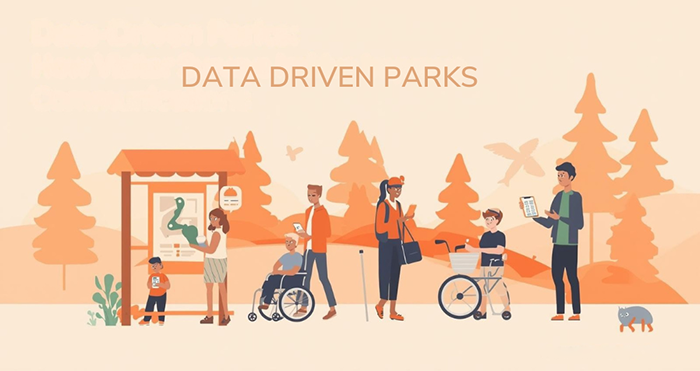
Data-Driven Parks: How Visitor Surveys Improve Communications Strategy
 Across parks and recreation systems, wildlife agencies, outdoor recreation departments, and park districts, communication plays a central role in visitor safety, clarity, satisfaction, and long term stewardship. These agencies work hard to inform the public about trail conditions, program offerings, wildlife behavior, safety expectations, and seasonal changes, yet many still struggle with a persistent challenge. Communication strategies often rely on assumptions rather than verified insights. When agencies do not fully understand what visitors see, interpret, misunderstand, or value, even the most well intentioned messages can fall short.
Visitor surveys bridge this gap. They provide direct insight into what people experience, what confuses them, what motivates them, and what helps them make decisions in outdoor spaces. Surveys allow agencies to replace guesswork with evidence. They reveal patterns that staff may sense intuitively but cannot quantify. They help departments connect communication strategies to real behaviors rather than relying solely on anecdotal staff experience or occasional complaints from the public. When parks become data driven, communication becomes more effective, more inclusive, and more trusted.
Outdoor recreation environments evolve constantly. Visitor demographics shift. Seasonal pressures fluctuate. Safety expectations grow more complex. Wildlife presence becomes more dynamic. As these changes occur, agencies must adapt communication systems accordingly. Visitor surveys offer a structured way to monitor these shifts over time. The result is a communication strategy that is not static but flexible, informed, and responsive to community needs.
This article explores how visitor surveys strengthen communication across public lands and recreation systems. It outlines survey types, key insights, design principles, and ways agencies can turn raw data into actionable improvements. It also discusses how surveys support stewardship, transparency, and two way communication between agencies and the communities they serve.
Why Visitor Surveys Matter for Communication Strategy
Visitor surveys matter because they illuminate how people actually perceive and interact with communication systems. Agencies are often surprised to learn that messages they believe are clear may be confusing, overlooked, or interpreted differently across age groups, cultural backgrounds, or experience levels. Surveys help agencies understand these patterns so they can design communication that informs visitors rather than overwhelming or frustrating them.
Surveys reveal where communication breaks down. They show which signs visitors miss, which rules they find unclear, which maps they cannot interpret, and which digital platforms they rely on most. This helps parks and recreation agencies refine message placement, tone, structure, and timing. Wildlife agencies often discover that some visitors misunderstand safety guidance related to animal behavior. Outdoor recreation departments sometimes learn that returning visitors interpret maps differently than newcomers. Park districts occasionally uncover that families with young children have entirely different communication needs than adult recreation groups.
Visitor surveys also help agencies identify communication strengths. When visitors share that certain messages reduce confusion, support confidence, or improve safety, agencies can replicate those successful elements across other locations. Surveys affirm what works and clarify what needs refinement.
Finally, surveys create a steady flow of feedback. Instead of relying on occasional complaints or anecdotal insights, agencies gain access to consistent data that reflects broader community patterns. This transforms communication strategy from a reactive process into a proactive system grounded in real visitor experience.
From Trails to Tweets: Effective Communication Strategies for Parks, Recreation, Outdoors, and Wildlife Agencies
This article is part of our series on strategic communication for Parks, Recreation, Outdoors, and Wildlife agencies. To learn more and to see the parent article, which links to other content just like this, click the button below.
How Surveys Reveal Hidden Communication Gaps
One reason visitor surveys are so powerful is that they uncover issues visitors rarely express directly. Many people navigate confusing or unclear communication without reporting their experience. They may figure it out eventually, ask another visitor, or simply avoid certain areas altogether. Without structured feedback, agencies may never realize these challenges exist.
Surveys expose these hidden gaps. For example, a steep drop in program attendance might seem like a scheduling issue when in reality the promotional messaging was unclear. A pattern of off trail hiking could appear to be disregard for rules when, in fact, visitors misunderstood the trail map. Increased wildlife encounters might initially seem like rising animal activity but could instead reflect visitors misinterpreting signage about safe distances.
Surveys help agencies see how visitors think. They reveal whether messages are reaching the intended audience, whether terminology is accessible, whether icons and color schemes convey meaning, and whether tone influences willingness to participate. For wildlife agencies, a single misunderstood phrase about safety can significantly influence behavior around animals. Outdoor recreation departments often learn that visitors interpret color coded trail difficulty differently depending on their cultural or outdoor background. Park districts might discover that multilingual families are missing key safety information because translations appear only at entrances rather than throughout the park.
By identifying these hidden communication gaps, surveys give agencies the ability to intervene before misunderstandings turn into safety risks or frustrations.
Different Types of Visitor Surveys and What They Reveal
Visitor surveys come in many forms, and each type reveals different insights. Agencies that rely on only one format miss opportunities to understand the full visitor experience. A combination of survey types offers the most comprehensive perspective.
Onsite intercept surveys capture real time experiences. Staff or volunteers approach visitors during or immediately after an activity. These surveys reveal how communication supports or confuses visitors in the moment, which signs they recall, and whether they could navigate the environment easily.
Post visit digital surveys gather reflective insights. Visitors share what they remember most, what they struggled with, and what could improve. These surveys often reveal emotional responses such as feeling anxious, safe, overwhelmed, or welcomed.
Program evaluation surveys help agencies assess whether communication supports learning, clarity, and preparedness during guided activities. Outdoor recreation departments use these surveys to understand if instructions before programs are sufficient. Wildlife agencies rely on them to improve the clarity of safety briefings or interpretive messaging.
Seasonal surveys capture how communication needs shift across summer crowds, hunting season, or winter recreation. Park districts often use these surveys to monitor how families interpret signage across different weather conditions or visitation patterns.
Specialty topic surveys help agencies explore targeted themes such as accessibility, wildlife conflict prevention, or wayfinding. These surveys reveal how specific communication elements influence visitor understanding and behavior.
Together, these survey formats help agencies build a data driven picture of visitor needs and communication effectiveness.
Designing Surveys That Produce Meaningful Communication Insights
Effective surveys are communication tools in themselves. They help parks and recreation agencies, wildlife agencies, outdoor recreation departments, and park districts understand how visitors truly experience outdoor spaces. Strong survey design leads to data that is accurate, actionable, and aligned with real communication needs rather than assumptions.
Below are newly added subsections that deepen the guidance for agencies seeking to develop meaningful, insight-rich surveys.
Clarifying the Purpose Before Designing the Questions
Many surveys fall short because agencies begin writing questions before identifying what they actually need to learn. Clarity of purpose ensures that every question contributes to a decision the agency must make. It also helps agencies avoid gathering data they do not intend to use.
For example, outdoor recreation departments may want to understand whether visitors feel confident navigating complex trail systems. Wildlife agencies may want to know whether safety messages about animal encounters are interpreted correctly. Park districts may want insights into how families decide which programs to attend. Each objective leads to different types of questions, different audiences, and different distribution methods.
A clear purpose also prevents survey fatigue. Visitors appreciate brevity, and a focused survey respects their time. When visitors understand why their input is needed, their responses become more thoughtful and relevant. Purpose-driven design transforms surveys from generic tools into targeted instruments that directly support communication strategy.
Identifying the Visitor Groups Whose Insights Are Most Needed
Outdoor spaces serve a wide spectrum of visitors, and communication challenges often vary across groups. Families interpret messages differently than experienced hikers. Newcomers may need more clarity than long term residents. Multilingual visitors may rely more on symbols than text. Visitors with disabilities may have completely different navigation needs.
Before finalizing survey questions, agencies must identify which visitor groups they need insight from and why. Parks and recreation agencies may target new visitors to understand how well introductory signage supports orientation. Wildlife agencies may focus on visitors who frequently use high risk areas to evaluate safety messaging. Park districts may seek input from families who attend seasonal programs to refine registration and promotional communication.
Understanding the audience ensures survey questions reflect lived experience rather than assumptions about it. This improves the relevance of the data and helps agencies design communication systems that support a wide range of visitor needs.
Selecting Survey Formats That Match Visitor Behavior
Survey formats must align with how visitors move through parks and how much time they are willing to invest. Onsite intercepts work well when agencies want immediate reactions at trailheads, rest areas, and viewpoints. Post visit surveys are ideal when agencies want reflective insights after the experience feels complete. QR code prompts placed near decision points help capture impressions that would otherwise go unreported.
Wildlife agencies may place surveys along wildlife viewing corridors to understand how people interpret behavior advisories. Outdoor recreation departments may distribute surveys via email to capture perceptions of map clarity or digital navigation tools used during the visit. Park districts might integrate surveys into program sign ups or wrap up messages so families can reflect on communication quality.
Matching format to context reduces barriers to participation and increases the accuracy of the insights gathered.
Designing Survey Language That Reduces Cognitive Load
Visitors should not have to work hard to interpret survey questions. Cognitive load increases when surveys use technical language, long sentences, ambiguous phrasing, or complicated instructions. When cognitive load rises, visitors provide rushed or incomplete responses that limit the usefulness of the data.
To reduce cognitive load, agencies should structure questions so they are easy to read, quick to process, and clear in intention. Wildlife agencies often simplify species-related questions by using familiar terms rather than scientific ones. Outdoor recreation departments benefit from avoiding jargon related to geographic information systems or trail classifications. Park districts serving multilingual communities may use short sentences and familiar vocabulary so translations remain accurate and accessible.
Reducing cognitive load leads to higher participation and more precise communication insights.
Avoiding Bias and Leading Questions
Visitors respond most authentically when they do not feel guided toward a particular answer. Leading questions, emotionally loaded language, or statements that imply the “correct” response all compromise data quality and distort how agencies interpret communication needs.
For example, asking “Did you find our new trail map clear and easy to use?” presumes a positive experience and pressures visitors to agree. A neutral question such as “How easy or difficult was it to understand the trail map?” invites a more accurate assessment. Similarly, wildlife agencies should avoid questions that downplay risk or exaggerate danger, since both can skew how visitors describe their understanding of safety messaging.
Unbiased questions help agencies see communication gaps as they truly exist. This honesty leads to better decisions, clearer messaging, and fewer missed opportunities to support visitor understanding.
Ensuring Surveys Reflect the Full Visitor Journey
Visitor communication needs to shift as they move through an outdoor space. A survey that focuses only on planning or only on onsite navigation misses important nuances. Agencies must design surveys that reflect the entire visitor journey, including planning, arrival, wayfinding, program participation, and departure.
Parks and recreation agencies may learn that visitors felt well informed during planning but confused once they arrived at the parking area. Wildlife agencies may discover that safety messages were noticed at entrances but forgotten deeper in the environment. Outdoor recreation departments might learn that digital tools supported planning but failed when cell service was unreliable on the trail.
Mapping survey questions across the visitor journey creates a complete picture of communication performance. This helps agencies prioritize improvements at the points where clarity matters most.
Pilot Testing Surveys Before Launch
A survey that seems clear to agency staff may not be clear to visitors. Pilot testing exposes gaps, confusing phrasing, and technical issues before the survey reaches the broader public.
Pilot groups may include frequent visitors, multilingual residents, families, older adults, or individuals with disabilities. Their feedback reveals whether the survey flows logically, whether questions feel intuitive, and whether participants understand how their input will be used. Outdoor recreation departments often run pilots with volunteer trail stewards. Wildlife agencies may use conservation program participants. Park districts can test surveys with community advisory groups.
Pilot testing increases the credibility of survey results and ensures the data aligns with real communication needs rather than assumptions.
Crafting Questions That Reveal How Visitors Interpret Messages
Many agencies focus on what information visitors remember, but the more important question is how visitors interpret that information. Interpretation drives behavior. Visitor surveys can uncover these deeper layers when questions are crafted carefully.
Agencies often start by asking whether visitors saw a particular sign, map, or message. However, simply seeing a message does not guarantee understanding. Strong survey questions ask visitors to describe how they interpreted the message or how it influenced their decisions. This helps agencies understand whether tone, clarity, or placement shaped behavior as intended.
For instance, wildlife agencies may ask visitors to explain how they would respond if they encountered a particular species. The answer reveals whether safety messages were clear. Outdoor recreation departments may ask visitors how confident they felt navigating a complex trail junction. Their response illuminates whether map and wayfinding communication succeeded. Park districts might ask caregivers how easy it was to interpret program instructions or playground signage. Their responses can reveal whether communication supports family decision making.
Open ended questions help uncover nuances. They allow visitors to express confusion, emotional reactions, or barriers that agencies may not anticipate. Structured questions provide measurable data that reveals patterns across large groups. When combined, these question types produce insights that are both detailed and statistically meaningful.
Agencies that craft questions with interpretation in mind produce survey data that directly informs communication improvements.
Balancing Open-Ended vs. Structured Questions
The strength of a survey often depends on the balance between open ended and structured questions. Each type serves a different purpose, and together they create a more complete picture.
Structured questions help agencies quantify patterns. They reveal how many visitors recall a message, how many felt confused by a sign, or how many relied on digital maps rather than print materials. Structured data is especially helpful for outdoor recreation departments that need to track large scale trends or changes across seasons. Wildlife agencies may use structured questions to quantify how many visitors understand safe viewing distances or species identification.
Open ended questions provide depth. Visitors can describe what confused them, what tone felt unwelcoming, or what information would have helped them feel safer or more confident. Park districts often rely on these insights to understand how families interpret safety information or how new visitors experience program materials.
A survey with only structured questions may miss important context. A survey with only open ended questions may produce insights that are difficult to quantify or compare. Agencies that blend both types gain a full spectrum of understanding: the measurable trends and the human stories behind them.
Balancing these formats allows agencies to gather data that is both rich and actionable.
Choosing the Right Timing for Surveys
Timing influences whether visitors participate and how accurately they remember their experience. Surveys conducted at the wrong moment may produce incomplete or inaccurate insights.
Onsite surveys capture details that visitors forget within minutes or hours. These surveys help parks and recreation agencies understand how well communication works in real time. They reveal whether visitors notice signage, interpret maps correctly, or understand safety instructions when they need them. They also help wildlife agencies monitor reactions to immediate environmental conditions or wildlife sightings.
Post visit surveys offer different advantages. They help agencies understand which messages remain memorable and how the overall communication system shapes long term perceptions. Outdoor recreation departments often use post visit surveys to evaluate whether families felt welcomed, whether navigation felt intuitive, or whether rules were easy to interpret. Because visitors reflect on their full experience, these surveys reveal communication patterns that play out across the entire visit.
Seasonal timing also matters. Surveys conducted during summer crowds, hunting season, or winter recreation may reveal communication challenges that do not appear during quieter periods. Park districts often run seasonal surveys to understand how weather, group size, and visitor demographics influence the clarity of communication.
Agencies that choose timing strategically gain clearer insights into how their communication systems perform under real conditions.
Ensuring Surveys Are Accessible to All Visitors
Visitor surveys must be accessible across languages, abilities, ages, and comfort levels with technology. If only certain groups can participate, survey results will reflect only a narrow portion of the community. Parks and recreation agencies, wildlife agencies, outdoor recreation departments, and park districts must design surveys that support equitable participation.
Accessibility begins with language. Surveys should be translated into the languages most commonly spoken in the community. Translation must be clear, culturally appropriate, and aligned with how visitors naturally speak. Wildlife agencies often discover that multilingual visitors interpret safety guidance differently unless survey questions reflect accurate cultural phrasing.
Accessibility also involves format. Digital surveys must load quickly, function on mobile devices, and minimize typing. Older adults or visitors with limited data plans may prefer paper surveys or feedback stations located near entrances or rest areas. Families may appreciate brief, visually guided surveys that children can help complete.
Surveys must also account for physical accessibility. QR codes should be placed at heights reachable from wheelchairs. Paper surveys should use high contrast text and large fonts. Digital tools should support screen readers and simple navigation.
An accessible survey ensures that communication strategy is informed by the full community, not only the most vocal or most connected visitors.
Interpreting Survey Data to Strengthen Communication Systems
 Collecting survey responses is only the beginning. The deeper value emerges when parks and recreation agencies, wildlife agencies, outdoor recreation departments, and park districts interpret the data in ways that clarify how communication supports or hinders visitor experience. Interpretation requires patience, curiosity, and the ability to see patterns that are not immediately obvious. When agencies interpret data well, communication evolves from a set of individual messages into a more strategic, integrated system.
Survey interpretation begins by identifying what visitors experienced at each stage of their journey. Visitors move from planning a trip, to arriving onsite, to navigating trails or facilities, to participating in programs, and finally to reflecting after they leave. If communication falters at any of these stages, surveys reveal it. If communication succeeds, visitors report it clearly. Each data point corresponds to a moment in the visitor journey where communication either supported confidence or introduced uncertainty.
Surveys help agencies see communication as a system rather than a collection of unrelated parts. A visitor who misses a sign at the entrance may also misunderstand a safety message deeper in the park. A family who struggles with wayfinding might also report frustration with digital maps. A newcomer who misses an event announcement may also feel disconnected from broader community activities. Survey data reveals these cross-connections and highlights the need for communication strategies that work cohesively across touchpoints.
When agencies interpret survey data with a systems mindset, they uncover insights that lead to long term improvements rather than isolated fixes.
Identifying Communication Patterns and Trends
Survey data becomes meaningful when agencies examine trends over time. A single response may indicate an isolated concern. A repeated pattern indicates a systemic issue. Patterns help agencies identify communication gaps, adjust messaging, refine language, and redesign the physical or digital environments that influence visitor behavior.
For example, wildlife agencies often track patterns in visitor misunderstanding around species behavior or safe viewing distances. When multiple respondents misinterpret the same safety message, this signals a deeper issue with tone, placement, language, or visual design. Outdoor recreation departments may notice recurring comments about unclear trail intersections or confusing route markers. Park districts might identify a trend where families consistently seek more clarity about program instructions or park hours.
Patterns also reveal how communication performs across visitor groups. Newcomers often interpret signs differently than experienced hikers. Multilingual families may have different digital access patterns than other visitors. Older adults may find QR code systems difficult unless supported by printed materials. Residents with disabilities may highlight communication barriers that able-bodied visitors never notice.
When agencies identify these trends, they can update communication tools in ways that support a broader range of visitors. Over time, this creates a more inclusive system that earns public trust.
Using Data to Strengthen Signage and Wayfinding
Survey data often reveals how visitors interact with signs, maps, and wayfinding cues. Small details such as text size, symbol clarity, placement, or color contrast can significantly influence safety and confidence. Sometimes visitors walk past a sign without noticing it. Sometimes they misinterpret a symbol because of cultural differences. Sometimes they understand the text but still feel unsure because the tone feels too formal or too vague.
Visitor surveys capture these experiences directly. When visitors explain where they felt lost, where instructions were unclear, or where they second-guessed their understanding, agencies gain insight into how to redesign communication. Surveys frequently uncover issues that staff may not observe. For example, parents might report difficulty interpreting playground rules because text appears too small or lacks visual cues for children. Wildlife agencies sometimes learn that visitors misunderstand hazard warnings unless accompanied by simple illustrations. Outdoor recreation departments often discover that visitors rely more on landmarks than color coded markers when navigating complex trail networks.
Once agencies identify these issues, they can adapt signage to be more intuitive. This might include adjusting color palettes for visibility, simplifying phrasing, increasing consistency across locations, or redesigning maps to emphasize decision points more clearly. Survey data is essential for validating which improvements matter most to visitors.
When signage and wayfinding improve, visitor confidence increases. This reduces reliance on staff for routine questions and supports safer, smoother movement across outdoor spaces.
Improving Safety Messaging Through Visitor Feedback
Safety messaging is one of the most critical components of outdoor communication. Surveys help agencies understand whether visitors interpret safety instructions correctly and whether the tone encourages cooperation rather than fear or resistance. Misinterpretation can lead to dangerous situations, especially in areas with wildlife, unstable terrain, variable weather, or high seasonal traffic.
For wildlife agencies, surveys often reveal how clearly visitors understand species behavior or risk factors. If visitors report uncertainty about safe viewing distances or how to respond to an animal encounter, agencies know where to refine language. Outdoor recreation departments frequently collect feedback about slippery surfaces, steep grades, or weather hazards. Visitors may report that safety signage felt too subtle or too technical to be helpful. Park districts often learn whether parents feel confident supervising children in water play areas or playgrounds based on available safety communication.
Safety communication is effective when visitors understand the reason behind a rule, feel respected in the message tone, and know how to act. Survey feedback reveals whether these conditions exist. If visitors report confusion, hesitation, or incomplete understanding, agencies can adjust the tone, placement, or clarity of messages.
Surveys transform safety communication from a one sided directive into a collaborative effort that protects both visitors and natural resources.
Enhancing Digital Communication Based on Data
Visitors increasingly rely on digital tools to navigate parks, interpret rules, learn about wildlife, and participate in programs. Surveys help agencies determine whether digital communication supports these needs effectively.
Outdoor recreation departments often use survey data to refine real time trail apps or digital maps. Visitors may report that load times are slow, icons are unclear, or weather alerts arrive too late. Park districts depend on survey feedback to improve their event calendars or registration systems. Families frequently report difficulties finding age-specific program details or multilingual options. Wildlife agencies may rely on survey data to adjust online educational materials or clarify seasonal wildlife advisories.
Surveys also reveal digital access gaps. Some visitors have limited cell service, older devices, or minimal data plans. Others prefer printed materials due to comfort or accessibility needs. When agencies understand these barriers, they can design hybrid communication systems that serve the full community rather than assuming universal digital access.
Digital communication becomes stronger when supported by real visitor insight. Surveys show which tools help and which frustrate visitors. This creates a clearer roadmap for digital improvements that support navigation, safety, and engagement.
Transforming Survey Insights Into Actionable Improvements
Visitor surveys are only powerful when agencies turn insights into action. Parks and recreation agencies, wildlife agencies, outdoor recreation departments, and park districts often discover many useful patterns in the data but struggle with prioritizing next steps. Action requires clarity, planning, and alignment across staff and operational systems. When agencies implement improvements thoughtfully, communication becomes more consistent, visitor trust grows, and safety outcomes improve over time.
The first step in transforming data into action is identifying which communication challenges carry the greatest impact. Agencies may find that certain misunderstandings occur repeatedly, that confusion arises at the same physical locations, or that specific demographics struggle disproportionately with clarity. These patterns guide decision making. Agencies can then determine which changes would create the greatest benefits for the largest number of visitors.
Another important step is establishing communication standards. Agencies sometimes implement improvements piecemeal, but surveys reveal the advantages of system wide consistency. When tone, visual style, terminology, and message structure remain predictable, visitors feel more confident interpreting signs, digital tools, or staff instructions. Survey data helps agencies create or refine communication guidelines that align staff across departments and reduce unintentional variation.
The most successful agencies treat survey insights not as isolated feedback but as catalysts for strengthening the entire communication ecosystem.
Prioritizing Improvements Based on Visitor Needs
Survey data often points to more issues than an agency can address immediately. Prioritization is essential. Agencies must determine which improvements most directly affect safety, prevent confusion, support inclusivity, or enhance the visitor experience.
Safety related communication deserves top priority. If surveys indicate that visitors misunderstand wildlife guidance, weather alerts, trail hazards, or emergency procedures, agencies should intervene quickly. Wildlife agencies may refine species behavior messages or add more intuitive icons. Outdoor recreation departments may enhance wayfinding at hazardous intersections or clarify winter conditions. Park districts may adjust rules signage near playgrounds or water features to better support families.
Navigation improvements often come next. Surveys frequently reveal that visitors feel lost at specific trail junctions, parking lot exits, or facility transitions. Addressing these locations can dramatically improve visitor comfort. This might involve adding an extra sign, simplifying a map, or adopting universally understood symbols.
Inclusivity also plays a major role in prioritization. If multilingual visitors consistently report confusion due to lack of translated materials, agencies know where to allocate resources first. If visitors with disabilities highlight barriers in digital surveys, communication upgrades should reflect those accessibility needs.
Prioritization becomes easier when agencies use survey data to understand urgency, frequency, and impact. This helps direct resources toward improvements that create the most meaningful outcomes.
Adjusting Tone and Message Structure to Increase Clarity
Tone shapes how visitors interpret rules, safety instructions, and educational content. Survey responses often reveal emotional reactions such as feeling overwhelmed, confused, reassured, or respected. Agencies can use these insights to adjust tone so messages support rather than hinder visitor experience.
For example, if visitors report that a rule feels strict or punitive, parks and recreation agencies may soften the language to emphasize shared responsibility. Wildlife agencies might adjust phrasing so visitors understand the purpose behind safe viewing distances rather than feeling scolded. Outdoor recreation departments may revise maps or safety cards to use more conversational language that supports confidence.
Survey data also highlights when messages are too long or too technical. Visitors may report difficulty interpreting complex trail descriptions, regulatory notices, or wildlife advisories. When agencies simplify language, reorganize information, or remove jargon, communication becomes more intuitive.
Tone improvements can have profound effects on behavior. Visitors comply more readily with rules when the message feels respectful and clear. Families feel more welcomed when instructions are easy to understand. Newcomers feel more confident when they interpret messages without hesitation. Survey data gives agencies the insight they need to refine tone so communication becomes both informative and supportive.
Aligning Survey Results With Staff Communication Practices
Staff play a central role in communication. Their interactions with visitors help reinforce or clarify messages delivered through signs, maps, digital tools, and program materials. Survey data reveals whether staff communication aligns with visitor expectations and whether internal communication processes support consistent outreach.
For example, visitors may report receiving different explanations of a rule depending on which staff member they approached. They may describe inconsistent guidance about trail conditions or confusion about program requirements. These discrepancies often result from staff lacking shared communication guidelines or receiving uneven training.
Agencies can use survey results to identify where staff communication needs reinforcement. Parks and recreation agencies may develop scripts or talking points that align with signage and digital messaging. Wildlife agencies sometimes train staff to use consistent phrasing when discussing safety or species behavior. Outdoor recreation departments may introduce staff briefings that outline communication priorities for the season.
By aligning staff communication with visitor insights, agencies create a unified system where each message reinforces the next. This brings clarity to the visitor experience and reduces opportunities for misinterpretation.
Building Feedback Loops That Sustain Long-Term Improvement
Visitor surveys are most effective when agencies view them as part of an ongoing feedback loop rather than a one time project. Communication needs shift as communities evolve, seasons change, and new recreation trends emerge. Agencies that conduct surveys regularly develop a rhythm of listening, adjusting, and improving that strengthens communication year after year.
Feedback loops also build trust. When agencies publish summaries of survey findings or share examples of improvements made based on visitor input, residents see that their voices matter. Park districts sometimes display small updates on community boards or digital screens. Wildlife agencies may share seasonal safety message updates driven by survey data. Outdoor recreation departments often highlight new wayfinding features or map improvements supported by visitor feedback.
Over time, feedback loops help agencies make communication decisions based on evidence rather than assumption. They also encourage visitors to participate more actively in surveys because they understand their insights lead to meaningful changes.
A strong feedback loop creates a communication culture built on transparency, responsiveness, and shared ownership of park experiences.
Promoting Long-Term Stewardship Through Communication
Stewardship develops when visitors feel informed, respected, and connected to the land. Visitor surveys support this process by helping parks and recreation agencies, wildlife agencies, outdoor recreation departments, and park districts understand what shapes visitor awareness and motivation. When agencies learn what visitors value, what they misunderstand, and what prompts them to act responsibly, communication becomes a tool for cultivating shared responsibility.
Survey insights reveal whether visitors understand why certain rules exist, whether messages about habitat sensitivity resonate, and whether stewardship prompts feel realistic and achievable. Visitors often express a desire to care for natural spaces but may not always know how. Agencies can use survey results to clarify these actions in ways that feel empowering rather than overwhelming.
For example, if surveys show that visitors are unsure how their behavior influences erosion or wildlife stress, agencies can focus communication on simple explanations that connect actions to outcomes. If surveys reveal that families want more opportunities to teach children about stewardship, agencies can integrate educational touchpoints into playgrounds, picnic areas, or trail entrances. If residents express interest in participating in community cleanups or habitat restoration, agencies can tailor outreach accordingly.
Stewardship grows when communication meets visitors where they are and acknowledges their potential as partners. Surveys help agencies refine that communication so people feel confident contributing to the long term wellbeing of shared outdoor spaces.
Strategic Communication Support for Your Parks and Recreation Agency
 Stegmeier Consulting Group (SCG) supports agencies in creating communication systems that are grounded in evidence rather than assumption. People at parks and recreation agencies, wildlife agencies, outdoor recreation departments, and park districts often choose to partner with an external resource like SCG when they want to strengthen how they collect, interpret, and apply visitor feedback. This includes establishing survey frameworks, clarifying communication goals, and designing workflows that transform raw data into actionable improvements.
SCG helps organizations evaluate their current communication tools, identify gaps, and develop message systems that align across signage, digital platforms, staff interactions, and community outreach. This systems based approach ensures communication becomes predictable, inclusive, and supportive of diverse visitor groups.
Partnership with SCG is not about adding more messages but about designing clearer, more strategic communication pathways. Whether agencies want to improve safety messaging, refine map design, strengthen visitor engagement, or build a sustainable feedback loop, SCG provides the structure and insight needed to support long term communication clarity.
When agencies use visitor data to inform communication improvements, they create environments where residents feel heard, welcomed, and capable. SCG equips organizations with the tools to build communication systems that strengthen trust and elevate visitor experience.
Conclusion
Visitor surveys are powerful tools that help agencies understand how communication shapes visitor experience across planning, arrival, navigation, safety, and reflection. When parks and recreation agencies, wildlife agencies, outdoor recreation departments, and park districts rely on data rather than assumptions, communication becomes more accurate, more inclusive, and more responsive.
Surveys reveal the emotional, cognitive, and behavioral dimensions of visitor experience. They highlight where communication succeeds, where it fails, and where visitors need more clarity or support. By interpreting these patterns, agencies improve safety, reduce confusion, strengthen accessibility, and create communication environments that reflect real visitor needs.
Data driven communication also strengthens public trust. Visitors feel valued when their perspectives influence change. They respond positively when agencies explain how survey insights guided updates to signage, digital tools, or program materials. Over time, surveys help agencies create communication systems that adapt to changing conditions and evolving community expectations.
When agencies commit to ongoing inquiry, communication becomes a living system that grows alongside the community it serves. This approach deepens stewardship, enhances visitor satisfaction, and reinforces the essential role of public lands in community life.
SCG’s Strategic Approach to Communication Systems
Align your agency’s messaging, processes, and public engagement strategies
Agencies that communicate effectively build stronger trust with staff, stakeholders, and the public. Whether you are implementing QR code systems, improving internal communication workflows, or strengthening agency wide alignment, SCG can help you develop a communication system that supports consistent decision making and long term organizational success. Use the form below to connect with our team and explore how a strategic communication framework can elevate your agency’s impact.