
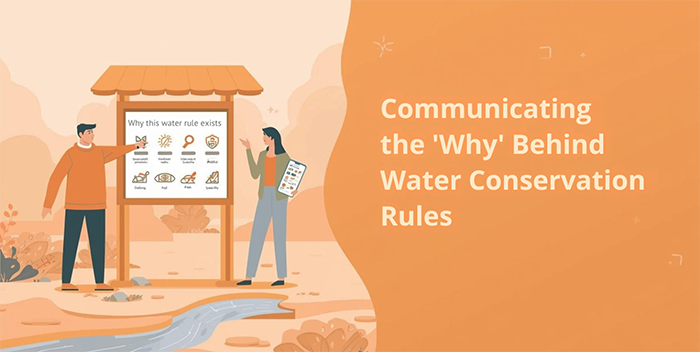
Communicating the “Why” Behind Water Conservation Rules
 Water conservation rules often make perfect sense to the agencies that create them, yet they can feel unclear or even arbitrary to visitors who do not see the ecological pressures behind each decision. People arrive expecting flowing streams, accessible water features, and familiar recreation experiences. When they encounter limits on rinsing gear, accessing certain areas, or using water in designated zones, they naturally want to understand the reasoning. Parks and recreation agencies, wildlife agencies, outdoor recreation departments, and park districts all face the challenge of helping visitors connect these rules to the realities of changing water systems.
Confusion arises when rules are presented without context. A restriction that seems simple to staff may be interpreted very differently by someone seeing it for the first time. Visitors may comply reluctantly, question the necessity, or disregard the rule entirely if the purpose is not communicated clearly. When agencies take the time to explain how water scarcity develops, how habitats depend on stable conditions, or how contamination spreads, visitors begin to understand that these rules are not arbitrary but protective. Communication moves beyond enforcement and becomes a tool for shared problem solving.
Connecting visitors to the “why” behind conservation rules transforms compliance into cooperation. As climate variability intensifies and visitation increases, agencies need communication systems that build this understanding consistently. When visitors recognize how their choices shape ecological resilience and recreational access, they participate more willingly in conservation. This not only supports healthier water systems but also strengthens public trust and long term stewardship.
Why Visitors Need More Than Rules: The Psychology of Understanding
Visitors rarely respond strongly to rules when those rules feel arbitrary or disconnected from their experience. Cognitive psychology shows that people comply more consistently when they understand the underlying purpose behind a directive. Parks and recreation agencies see this frequently when visitors hesitate to follow restrictions around washing equipment or limiting water use. Wildlife agencies experience pushback when closing access to streams or ponds to protect breeding grounds. Outdoor recreation departments often hear complaints about rinsing stations or gear cleaning requirements. Park districts face challenges when communicating water limitations at community facilities. In each case, visitors interpret rules more favorably when they understand the rationale.
Understanding shapes behavior because it reduces perceived inconvenience. A person who recognizes that rinsing their boots prevents invasive species spread is more likely to view the rule as meaningful rather than burdensome. Similarly, visitors who understand how small water sources sustain wildlife become more willing to follow restrictions around swimming or wading in sensitive areas. Agencies can use this behavioral insight to shift communication from directive language toward purposeful explanation.
When the “why” is missing, visitors often default to their own assumptions about risk, effort, or environmental impact. These assumptions may be inaccurate, which leads to inconsistent behavior and lower trust. Clear communication that connects rules to real consequences helps visitors feel like informed participants in conservation rather than passive recipients of instruction. Agencies that emphasize the purpose behind rules build stronger alignment with the public and create more supportive conservation cultures.
From Trails to Tweets: Effective Communication Strategies for Parks, Recreation, Outdoors, and Wildlife Agencies
This article is part of our series on strategic communication for Parks, Recreation, Outdoors, and Wildlife agencies. To learn more and to see the parent article, which links to other content just like this, click the button below.
Connecting Rules to Real Environmental Consequences
Visitors who spend time in natural areas may not always see the immediate effects of their actions on water systems. Parks and recreation agencies often oversee fragile wetlands, reservoirs, or streams that respond slowly to human impact. Wildlife agencies manage habitats where even small disturbances can alter migration, breeding, or food access. Outdoor recreation departments maintain trail systems where erosion and runoff directly influence water quality. Park districts steward ponds, lakes, and recreational water features that require careful balance to remain safe and sustainable.
Communicating these impacts helps visitors understand the stakes. When a visitor wades into a shallow stream, it may appear harmless, but even minimal disturbance can damage spawning beds, disrupt insect populations, or increase sedimentation. When someone chooses not to use a cleaning station, they risk transporting invasive species that could devastate local ecosystems. When visitors assume water is abundant, they may overlook the long term effects of drought or seasonal scarcity. Agencies that illustrate these consequences through simple, relatable examples help visitors understand why rules matter.
Showing real environmental outcomes also strengthens credibility. When agencies explain how water quality declined due to contamination, or how wildlife populations suffered due to habitat disturbance, visitors begin to see conservation rules as preventative rather than restrictive. Clear communication that links daily decisions to ecological outcomes creates a more informed public and supports long term resource protection.
Framing Water Conservation Rules Through Shared Responsibility
Visitors respond better to conservation guidance when it is framed in ways that acknowledge their desire to act responsibly. Shared responsibility messaging invites visitors to participate in protecting the environment rather than viewing rules as limitations imposed upon them. Parks and recreation agencies often use cooperative phrasing to help visitors connect personal actions to collective outcomes. Wildlife agencies rely on messaging that reinforces the idea that everyone plays a part in maintaining healthy water sources for animals. Outdoor recreation departments emphasize the role of visitors in reducing runoff, contamination, or erosion. Park districts highlight how community participation keeps recreational water features safe and sustainable.
Shared responsibility helps reduce resistance because it emphasizes collaboration rather than authority. Visitors tend to be more receptive when they feel respected and included in the problem solving process. Agencies can reinforce this tone by using simple prompts that highlight partnership, such as:
-
“Help protect this habitat by rinsing your gear.”
-
“Your actions keep water sources healthy for wildlife.”
These concise statements make expectations clear while reinforcing the visitor’s role in conservation.
Framing messages in this way helps agencies move beyond rules and toward a culture where visitors view conservation as part of the outdoor experience. When visitors internalize that their choices matter, compliance rises naturally, and interactions between staff and the public become less confrontational. Shared responsibility ultimately creates a stronger bridge between agency goals and visitor behavior.
How On Site Communication Brings the “Why” Into Focus
On site communication gives visitors real time context that digital messaging cannot always provide. Parks and recreation agencies often use interpretive panels near streams or lakes to illustrate how water sources support local ecosystems. Wildlife agencies place educational signage near sensitive areas to show how disturbances affect breeding cycles or migration patterns. Outdoor recreation departments use trailhead maps, QR codes, and kiosks to explain why closures or cleaning stations are necessary. Park districts rely on posters, decals, and staff explanations at community facilities to help families understand why water restrictions exist.
On site messages work best when they connect rules to what visitors can directly see. A sign placed beside a shallow stream feels more meaningful when it points out nearby spawning beds or delicate plant communities. A cleaning station feels less burdensome when signage shows which invasive species it helps prevent. These visual anchors strengthen comprehension and help visitors link their actions to real world outcomes.
Timing also matters. Visitors often interpret rules differently when they receive information at the moment of decision. A visitor may read about a water restriction online but feel disconnected from it until they see a dry creek bed or observe wildlife drinking from a limited source. On site communication grounds the “why” in lived experience, making conservation messages more memorable, meaningful, and relevant.
Making Conservation Messages Relevant to Daily Visitor Behavior
For many visitors, water conservation feels abstract until communication connects it to their immediate actions. Parks and recreation agencies often find that visitors assume small behaviors such as rinsing a bottle, washing a dog, or stepping into a shallow stream have little impact. Wildlife agencies face similar challenges when helping visitors understand how noise, movement, or human presence influences animals that rely on fragile water sources. Outdoor recreation departments see confusion about how erosion from foot traffic affects sediment levels and water clarity. Park districts experience difficulty explaining why community splash pads, decorative ponds, or swimming areas may restrict use during drought. These misunderstandings persist when visitors do not recognize the direct connection between individual behavior and larger environmental outcomes.
To make conservation messages relevant, agencies must translate scientific or regulatory concepts into accessible language that reflects the visitor’s perspective. Instead of focusing solely on the rule, agencies can highlight how visitor choices influence the health of the landscape. For example, explaining that mud particles stirred up by wading can suffocate fish eggs or disrupt aquatic insects gives visitors a reason to care. Communicating that a single invasive species carried on boots can spread rapidly across interconnected water systems helps visitors understand the stakes. Making the “why” relatable shifts conservation from a distant idea to something visitors feel personally responsible for.
Relevance is also shaped by context and timing. Providing explanatory messages at trailheads, boat launches, fishing zones, and community water features ensures visitors see the relationship between their behavior and the environment at the precise moment decisions are made. When communication reaches visitors at the right time and in the right place, rules begin to feel meaningful rather than arbitrary. This shift encourages more consistent stewardship behavior across varied visitor groups.
Balancing Simplicity and Accuracy in Conservation Messaging
Agencies must strike a balance between providing enough detail to explain a rule and avoiding overly complex messaging that overwhelms visitors. Parks and recreation agencies often simplify explanations to ensure visitors grasp the core idea quickly, especially when signs must compete with movement and distractions. Wildlife agencies face unique challenges when communicating complex ecological processes such as breeding cycles, water temperature sensitivity, or predator prey dynamics. Outdoor recreation departments must convey technical concepts related to erosion, runoff, or sedimentation in ways that first time visitors can understand. Park districts work to simplify operational or regulatory explanations without diluting essential information.
Simplicity supports clarity. Visitors rarely pause for long to read dense paragraphs or scientific terminology. Short, purposeful statements can communicate the heart of the “why” while keeping the message approachable. However, oversimplification can undermine credibility if it leaves visitors with unanswered questions. Agencies must therefore choose which details matter most for the visitor to understand the purpose behind a conservation rule.
Accuracy reinforces trust. Visitors are more likely to comply when they believe the explanation is grounded in real environmental impact. Agencies can maintain accuracy by providing optional depth, such as linking QR codes to expanded content or offering brochures that explain conservation issues in more detail. This layered communication approach allows visitors to engage at the level of information that suits them. By balancing simplicity and accuracy, agencies support both immediate understanding and long term learning.
Using Storytelling to Strengthen Conservation Understanding
Storytelling helps visitors internalize conservation messages by placing rules in meaningful context. Parks and recreation agencies frequently share stories about how local streams have changed over time or how drought affected recreation access. Wildlife agencies use storytelling to explain how specific species rely on clean water, stable temperatures, or undisturbed riparian zones. Outdoor recreation departments often highlight past erosion events, restoration efforts, or community stewardship successes. Park districts share stories about how water conservation supports equitable access to recreational water features for families and communities.
Stories make rules relatable. When visitors hear how a small wetland once supported vibrant wildlife but declined due to contamination, they understand why water sources now carry stricter protections. Narratives help visitors connect emotionally with the environment, which strengthens their willingness to follow rules that may require extra time or effort. Emotional resonance often leads to longer lasting behavioral change than rule statements alone.
Agencies can use storytelling across multiple communication channels. On site interpretive signs, QR linked videos, social media posts, and volunteer led programs all provide opportunities to share conservation narratives. When agencies anchor rules in stories rather than directives, visitors feel part of something larger than themselves. This sense of connection transforms compliance from an obligation into a shared commitment to protecting public lands and waters.
Using Comparisons and Visual Aids to Explain Water Impacts
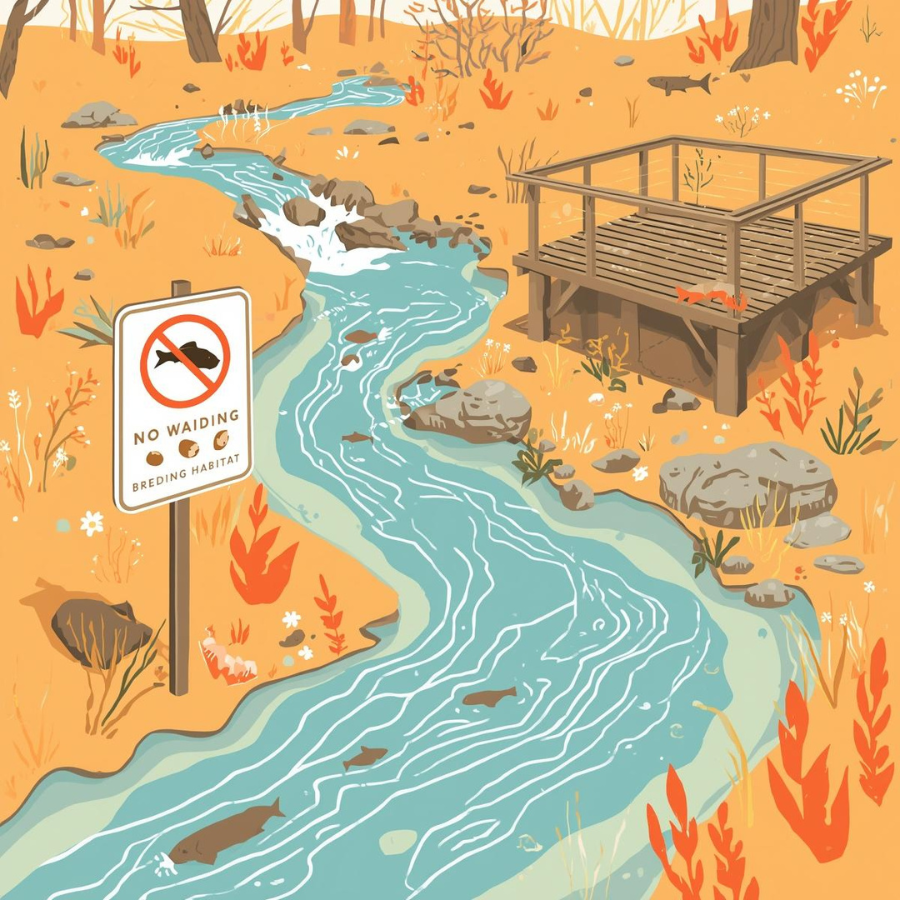 Many visitors understand concepts better when they can visualize the consequences of their actions. Parks and recreation agencies use illustrations or diagrams to show how sediment moves through streams. Wildlife agencies often display images of species affected by disturbance or contamination. Outdoor recreation departments use before and after photos of trail erosion or water turbidity to highlight changes over time. Park districts rely on charts, icons, or color coded indicators to explain drought stages or water restrictions at facilities.
Comparisons also simplify complex ideas. Agencies can explain that a small stream may hold only a fraction of the water volume visitors assume, or that one visible disturbance can take weeks or months to recover. Simple comparisons such as “one scoop of mud can cloud this entire pool” or “this cleaning station prevents spread across dozens of miles of trails” help visitors conceptualize scale and impact. These analogies bridge the gap between scientific detail and everyday understanding.
Visual tools become even more powerful when paired with short verbal or written explanations. When visitors can see the differences, they no longer rely solely on abstract concepts. Visual clarity strengthens emotional engagement by helping visitors grasp how delicate water systems really are. This increases the likelihood that they will follow conservation rules designed to protect these environments.
Supporting Conservation Through Digital Messaging and On Site Reinforcement
Digital platforms help agencies communicate conservation messages long before visitors encounter water sources on the ground. Parks and recreation agencies use websites, mobile apps, and reservation systems to share drought updates, gear cleaning requirements, or riparian restrictions. Wildlife agencies rely on digital alerts to reference migration timing, sensitive habitat closures, or seasonal protections that influence water access. Outdoor recreation departments use dynamic condition updates to warn visitors when rain, runoff, or flooding may impact water quality. Park districts inform community members about temporary water reductions at splash pads, pools, or irrigation systems. These digital tools establish expectations early and help visitors understand what rules they might encounter later.
However, digital messaging alone is not enough to shift behavior. Visitors need physical confirmation to connect digital expectations with on site realities. A rule described online gains credibility when reinforced by a sign at a stream crossing, a staff explanation at a trailhead, or a volunteer conversation near a restoration zone. When the same message appears across platforms, visitors experience a unified communication system. This decreases doubt and increases willingness to comply with conservation rules that may at first seem inconvenient.
Digital and physical communication also complement each other emotionally. Some visitors respond best to structured digital information that prepares them ahead of time. Others feel more reassured by an in person explanation that acknowledges their questions or concerns. Agencies that combine both forms of communication create a stronger foundation for public understanding. The more consistently visitors hear the purpose behind a rule, the more likely they are to follow it without resistance.
How Agency Staff and Volunteers Influence Visitor Understanding
Staff and volunteers play a pivotal role in explaining water conservation rules because they provide nuance that signs or websites cannot capture. Parks and recreation agencies rely on frontline staff who interact directly with hikers, families, and casual visitors. Wildlife agencies depend on volunteers who help visitors understand how human behavior influences animal access to water sources. Outdoor recreation departments rely on trail ambassadors and rangers who explain stream crossings, closure boundaries, or sediment sensitive areas. Park districts often use staff and volunteers to describe water related restrictions at community programs or facilities. In these interactions, the “why” behind a rule becomes clearer because communication is personal and adaptive.
Visitors often trust human explanations more than text. A conversation allows staff or volunteers to interpret the rule in plain language, assess the visitor’s emotional state, and answer follow up questions. Someone who hesitates to believe a digital alert may change their mind when they hear a staff member explain the ecological consequences. A family who does not initially understand a stream closure may become more supportive after a volunteer shares how disturbance affects nearby wildlife. Human interaction strengthens the sense of shared responsibility and reinforces the agency’s credibility.
Because staff and volunteers shape public perception, they must have accurate, up to date information. Agencies that invest in internal briefings, communication training, and ongoing support build stronger conservation messaging systems. When staff and volunteers speak consistently and confidently about the “why,” visitors experience clearer guidance and demonstrate higher compliance. A strong human communication network ensures that conservation rules resonate across diverse visitor groups.
Avoiding Overly Technical Explanations That Lose Visitor Attention
Agencies must communicate essential details without overwhelming visitors with scientific terms or regulatory jargon. Parks and recreation agencies often find that visitors lose interest when messages become too technical. Wildlife agencies face similar challenges when explaining complex ecological relationships such as dissolved oxygen levels, thermal tolerance, or nutrient balance. Outdoor recreation departments sometimes rely on technical language related to hydrology or erosion that visitors may not fully grasp. Park districts must avoid overly administrative explanations about municipal restrictions or state requirements, which can feel disconnected from the visitor experience.
Technical accuracy is important, but clarity matters more in most on site communication. Visitors often interpret information while moving, managing children, adjusting gear, or scanning their surroundings. Lengthy explanations reduce comprehension and may even decrease compliance. Agencies must prioritize the simplest language possible while still conveying the essential reasoning behind a rule. Messages that are direct and easy to process quickly are more likely to influence behavior at moments when visitors must make fast decisions.
However, simplicity does not require sacrificing depth entirely. Agencies can pair concise on site messaging with optional deeper content through QR codes, brochures, or digital resources. This layered communication approach supports both casual visitors and those who want more detailed explanations. Avoiding overly technical language preserves attention, strengthens visitor understanding, and increases the likelihood that conservation rules will be followed consistently.
The Role of Social Norms in Encouraging Conservation Behavior
Visitors often look to others when deciding how strictly to follow rules. Social norms shape behavior subconsciously, and agencies can use this insight to strengthen conservation compliance. Parks and recreation agencies frequently observe that when one group washes their gear at a cleaning station, others are more likely to do the same. Wildlife agencies see that when visitors respect distance barriers or avoid restricted water zones, nearby groups tend to follow. Outdoor recreation departments notice that when volunteers demonstrate proper cleaning techniques or route adjustment, visitors model the behavior. Park districts rely on social cues during community programs, where families often adopt the norms modeled by staff or other participants.
Agencies can reinforce positive norms by showcasing examples of responsible visitor behavior. Simple visuals such as photos of hikers rinsing boots, anglers cleaning equipment, or families staying on designated paths help normalize the conservation actions agencies want to promote. When visitors believe that others care about protecting water sources, they feel more motivated to act responsibly themselves. Social norms are therefore a powerful communication tool that complements rules and reinforces the “why” behind water conservation efforts.
Explaining How Small Actions Scale Into Major Ecological Outcomes
Many of the most critical water conservation rules focus on actions that seem small on their own. Visitors may question why single steps matter, such as brushing dirt off shoes, using designated access points, or avoiding shallow pools during dry seasons. Parks and recreation agencies must help visitors see how individual actions accumulate. Wildlife agencies emphasize that minor disturbances can have compounding effects on feeding patterns, migration, or nesting around water sources. Outdoor recreation departments show how small amounts of sediment or contamination spread through watersheds. Park districts highlight how community water use patterns shape long term resource availability.
Explaining scale helps visitors connect daily decisions to broader ecological patterns. A single visitor stepping into a sensitive stream might not cause permanent damage, but hundreds of visitors doing the same thing across a season can alter hydrology and degrade habitat. One kayak launched without rinsing might pose small risk, but dozens of boats transporting microorganisms can introduce damaging invasive species. Communicating these cumulative impacts helps visitors grasp why rules exist even when consequences are not immediately visible.
Agencies that illustrate scaling effects through comparisons, visuals, or stories help visitors overcome the misconception that their actions do not matter. When visitors understand that they are part of a larger collective impact, they become more willing to follow rules that protect water systems. Reinforcing the idea that small responsible actions add up to significant ecological benefits strengthens stewardship and creates a more engaged public.
Connecting Conservation Rules to Community Values
Water conservation becomes more meaningful when visitors recognize how rules protect shared community resources. Parks and recreation agencies often emphasize that healthy waterways support not only wildlife but also local recreation, family gatherings, and educational programs. Wildlife agencies highlight the importance of water for species that communities care deeply about, such as amphibians, shorebirds, or fish populations that have cultural significance. Outdoor recreation departments link conservation rules to maintaining safe trail experiences, preventing erosion, and reducing long term maintenance costs. Park districts frame water conservation through the lens of ensuring fair access to community water features such as spray grounds or public pools, particularly during drought.
Visitors respond well when agencies tie conservation expectations to broader social values such as fairness, responsibility, and long term community health. This approach transforms rules into commitments residents make to each other rather than simply directives imposed by an authority. When conservation is framed as a shared community ethic, visitors are more likely to follow rules voluntarily because they feel connected to a greater purpose. They are not complying to avoid penalties but participating in collective care for the landscapes they enjoy.
Agencies can reinforce these values through public storytelling and repeated community wide messaging. Sharing examples of how conservation behaviors helped restore a stream, reduce operational strain, or protect a beloved species strengthens the social meaning behind rules. When communities see success in action, they are more likely to internalize conservation principles and support future initiatives. This helps build a long lasting culture of stewardship that extends far beyond any single sign or regulation.
Addressing Visitor Confusion About Water Availability
Confusion about water availability is one of the most common reasons visitors question conservation rules. Parks and recreation agencies often encounter visitors who assume natural water sources are abundant simply because they appear full. Wildlife agencies face questions from families who do not understand why a seemingly healthy pond is off limits during sensitive breeding seasons. Outdoor recreation departments hear concerns from hikers about why water access points are restricted even when rain has been recent. Park districts field complaints about community facilities reducing hours or closing features that seem unaffected by drought.
These misunderstandings often stem from a lack of visibility into the ecological, structural, or regulatory factors guiding agency decisions. Natural water bodies may appear stable while experiencing significant ecological stress beneath the surface. Infrastructure dependent water features may require restrictions because supply levels cannot meet demand even when water appears present. Seasonal timing may dictate closures regardless of short term weather patterns. When visitors do not understand these complexities, they may interpret rules as unnecessary, inconsistent, or overly cautious.
Clear communication about water availability, even when simplified, helps reduce frustration. Agencies can explain that visual indicators alone cannot reveal water quality, temperature stability, breeding timing, or drought forecasting. Providing simple context reduces misinformation and helps visitors recognize the importance of precautionary rules. When people better understand what conditions influence water availability, they are more likely to trust agency decisions and comply with protective measures.
When Enforcement Becomes Necessary
While most water conservation communication focuses on education and voluntary compliance, enforcement sometimes becomes necessary to protect sensitive resources. Parks and recreation agencies may need to intervene when visitors repeatedly enter closed riparian zones or disregard posted restrictions. Wildlife agencies must respond when individuals disturb active breeding areas or handle water dependent species. Outdoor recreation departments often encounter violations related to unauthorized stream crossings, uncleaned gear, or off trail travel. Park districts may need to enforce usage limits or closures at community water features during drought.
Enforcement should always follow a communication first approach. Most visitors respond positively when agencies take time to explain why rules matter. A friendly reminder or educational conversation can resolve most situations without escalating to stricter measures. Visitors sometimes violate rules unintentionally due to unclear signage, distraction, or unfamiliarity with the environment. In these cases, enforcement becomes an opportunity to strengthen understanding rather than simply correct behavior.
However, intentional or repeated disregard for conservation rules requires firmer action to protect ecosystems and ensure fairness for all visitors. Enforcement serves as a boundary that reinforces the seriousness of certain actions, especially those with immediate or irreversible ecological consequences. Agencies that apply enforcement consistently and transparently build credibility with the public. Visitors learn that rules exist for a purpose and that protecting water resources is a shared responsibility with real consequences for non compliance.
Helping Visitors Connect Emotionally to Water Systems
Emotional connection increases the likelihood that visitors will support and follow water conservation rules. People care more deeply about places when they feel a sense of personal attachment or appreciation. Parks and recreation agencies often cultivate these emotional ties by highlighting the beauty, history, or cultural significance of local rivers, lakes, or wetlands. Wildlife agencies strengthen emotional engagement by sharing stories about species that rely on clean and stable water sources. Outdoor recreation departments connect visitors to natural systems by illustrating how water shapes landscapes, supports plant communities, and creates the environments people love to explore.
These emotional connections create a foundation for communication that feels inspiring rather than punitive. When visitors see water not as a backdrop but as part of a living system worth protecting, they become more receptive to rules and more invested in stewardship. Emotion does not replace information, but it enhances the meaning behind conservation expectations. Agencies that tap into this emotional dimension create communication systems that resonate far beyond a single visit.
Supporting Water Conservation Through Interpretive Programming
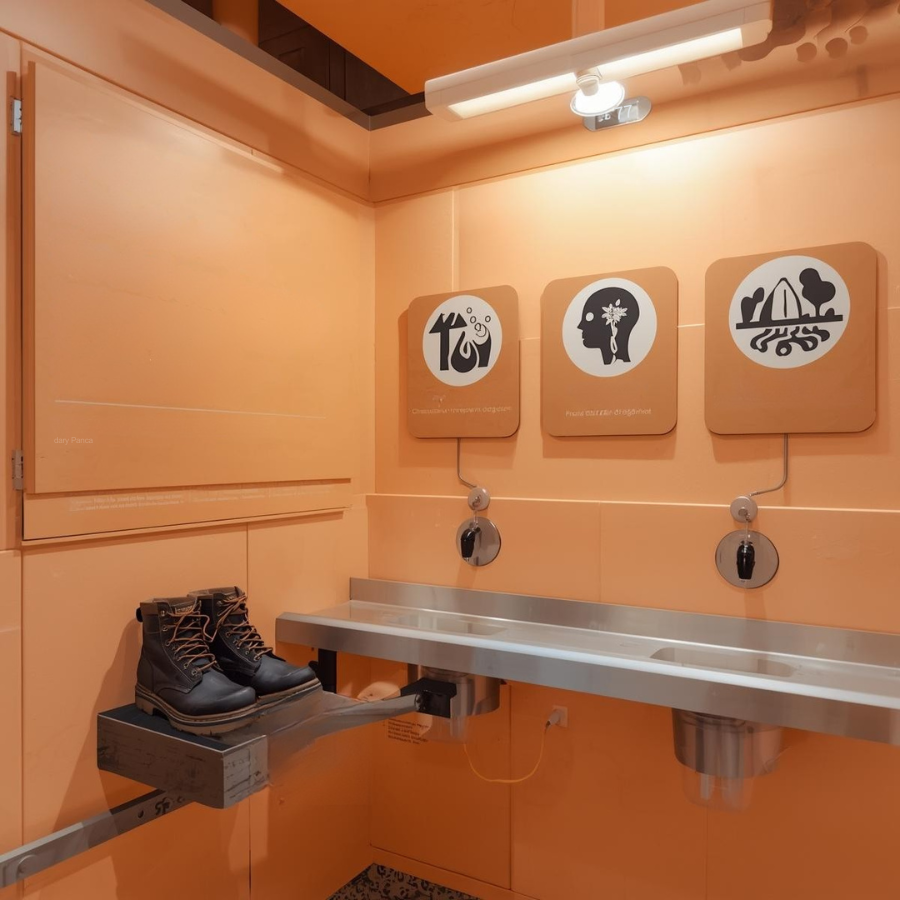 Interpretive programming provides agencies with opportunities to communicate complex conservation ideas in ways that are interactive, memorable, and personally meaningful. Parks and recreation agencies frequently host guided walks or hands on workshops focused on stream ecology or watershed protection. Wildlife agencies offer educational programs about species that rely on clean, stable water conditions. Outdoor recreation departments incorporate conservation themes into trail talks, youth programs, or seasonal events. Park districts often run community based learning opportunities that introduce residents to local water sources, infrastructure, and drought response strategies.
Interpretive programs allow visitors to ask questions, observe natural systems up close, and deepen their understanding of why rules exist. When visitors experience firsthand how delicate aquatic ecosystems can be, conservation expectations feel more reasonable and necessary. These programs also help correct misconceptions about water systems by giving participants direct access to experts and knowledgeable staff. Understanding becomes more experiential and less abstract.
Programming strengthens the connection between visitors and conservation goals over time. Repeat participants begin to see themselves as part of a community of stewards. Families share what they learn, and children carry conservation values into future behaviors. Interpretive education therefore extends far beyond the program itself. It builds a long term, multi generational foundation for understanding water conservation rules and supporting agency efforts.
Strategic Communication Support for Your Parks and Recreation Agency
Water conservation rules are more effective when agencies communicate the reasoning behind them with clarity, empathy, and consistency. Parks and recreation agencies often recognize that their internal communication systems were not built to handle ongoing public education about conservation, resource limits, and environmental risk. Wildlife agencies frequently need more structured messaging tools to explain scientific or seasonal processes to visitors who may struggle to understand the ecological stakes. Outdoor recreation departments sometimes lack unified communication workflows across field staff, digital channels, and physical signage. Park districts must balance community expectations with seasonal or drought based operational constraints, which requires clear, credible, and proactive messaging.
People at these agencies often choose to partner with an external resource like Stegmeier Consulting Group (SCG) because communicating the “why” behind rules requires a purposeful structure rather than reactive messaging. SCG helps agencies build communication systems that support long term conservation goals, reduce visitor confusion, and create more aligned internal processes. Instead of focusing only on outward messaging, SCG works with your team to create internal clarity so that staff, volunteers, and leadership communicate consistently across all communication channels.
SCG’s approach is grounded in systems thinking. Strong conservation communication depends on more than well written signs or digital updates. It requires coordinated workflows, staff support, message alignment, expectations management, and well timed reinforcement. By examining how information flows across the organization, SCG helps agencies identify gaps that weaken public understanding. Through this structured approach, agencies develop communication strategies that make conservation rules clearer, more meaningful, and more sustainable over time.
SCG also supports agencies in communicating sensitive topics such as drought limitations, ecological decline, or regulatory changes. These topics require thoughtful framing to maintain visitor trust and prevent frustration. With careful planning and message design, agencies can present these realities in ways that encourage cooperation rather than resistance. SCG helps teams build frameworks that deliver difficult messages with transparency and confidence. The result is a more resilient communication ecosystem that prepares both staff and visitors to participate in conservation with greater understanding and purpose.
Conclusion
Communicating the “why” behind water conservation rules is one of the most important responsibilities for modern parks and recreation agencies, wildlife agencies, outdoor recreation departments, and park districts. These organizations serve visitors with varying levels of ecological knowledge, outdoor experience, and cultural expectations. Clear explanations bridge the gap between agency intent and public understanding. When visitors grasp the reasoning behind rules, they become more receptive, more cooperative, and more engaged in stewardship. Rules no longer feel arbitrary. They transform into shared commitments that support healthy ecosystems and positive visitor experiences.
Effective communication relies on more than delivering information. It depends on timing, tone, emotional connection, and consistency across every channel. Agencies that explain the purpose behind rules encourage visitors to see themselves as active contributors to conservation rather than passive recipients of directives. These deeper forms of engagement create stronger, more durable patterns of responsible behavior. Over time, communication fosters a culture of awareness and participation that extends far beyond any single sign, digital alert, or conversation.
By investing in communication systems that emphasize clarity, relevance, and empathy, agencies reduce conflict, protect fragile landscapes, and strengthen relationships with the communities they serve. Water conservation rules become easier to follow when visitors understand their impact. Through thoughtful communication strategies, agencies help safeguard water resources for current and future generations, ensuring that natural spaces thrive and remain accessible to all.
SCG’s Strategic Approach to Communication Systems
Align your agency’s messaging, processes, and public engagement strategies
Agencies that communicate effectively build stronger trust with staff, stakeholders, and the public. Whether you are implementing QR code systems, improving internal communication workflows, or strengthening agency-wide alignment, SCG can help you develop a communication system that supports consistent decision-making and long-term organizational success. Use the form below to connect with our team and explore how a strategic communication framework can elevate your agency’s impact.