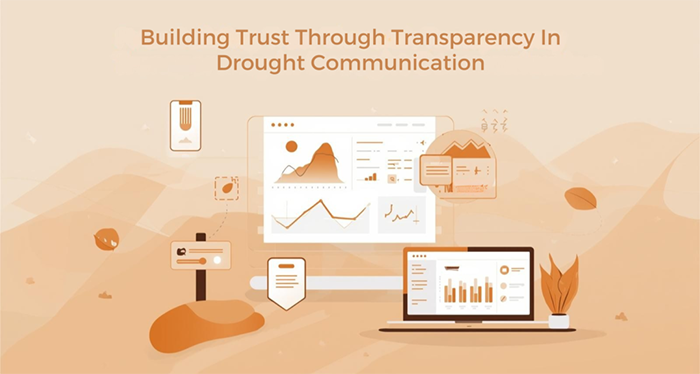
Building Trust Through Transparency in Drought Communication
 Drought conditions increasingly shape how water conservation districts communicate with the public. Residents and water users experience the consequences of drought through tightening water restrictions, dry landscapes, changing reservoir conditions, and new rules designed to protect limited supplies and maintain system stability. When districts communicate these changes clearly and transparently, trust grows. When communication feels incomplete or reactive, frustration and confusion rise quickly. Transparent drought communication provides people with the context they need to understand not only what changes are occurring but why those changes are necessary for long term sustainability.
Across many regions, people now expect water conditions to shift throughout the year. They look for timely updates, accessible explanations, and messages that help them make informed choices about household use, landscaping, irrigation timing, and community expectations. Transparency becomes essential in this environment because conditions often evolve faster than people anticipate. Residents want to feel informed, respected, and included in how a community responds to scarcity. By sharing the reasoning behind drought updates, water conservation districts reinforce credibility and reduce resistance to necessary restrictions.
Effective drought communication also changes how communities engage with conservation. When people understand the operational and environmental pressures driving decisions, they are more likely to comply voluntarily, support mitigation efforts, and participate in water saving behaviors. Transparency strengthens stewardship because it connects individual actions to broader outcomes such as protecting supply reliability, reducing peak demand, and supporting long term resilience. Water conservation districts that commit to open, timely communication establish a foundation of trust that carries through even the most challenging drought periods.
Why Transparency Matters During Drought
Transparency is not an optional feature of drought communication. It is the basis of public confidence. People accept difficult decisions more readily when they understand how those decisions were made and what factors influenced them. Water conservation districts rely on transparency to explain drought stage declarations, watering schedule changes, enforcement thresholds, and program adjustments that support demand reduction. Clear communication about what is changing, when it takes effect, and what actions residents should take reduces uncertainty and helps the public respond quickly and consistently.
A transparent approach also helps buffer districts from public criticism. When communication is vague or delayed, residents may assume the worst or fill gaps with their own assumptions. Transparency removes mystery from the process by making data, rationale, and anticipated timelines visible. This level of openness invites understanding rather than suspicion. Even if residents disagree with a decision, they can see the reasoning behind it, which softens conflict and reduces emotional pushback.
Transparency also acknowledges the emotional dimension of drought. People feel a sense of loss when lawns decline, community landscapes change, or familiar water uses become restricted. Clear communication validates these experiences by showing that the district recognizes what residents are seeing and is working responsibly to manage scarcity. This relational aspect of honesty helps water conservation districts maintain positive relationships even when they must deliver difficult news.
From Scarcity to Sustainability: Effective Communication Strategies for Water Conservation Agencies
This article is part of our series on strategic communication for Water Conservation Special Districts and Public Water and Sewer Utilities. To learn more and to see the parent article, which links to other content just like this, click the button below.
Communicating Ecological Realities Without Overwhelming the Public
Drought is a complex ecological phenomenon involving soil moisture, groundwater recharge, streamflow, snowpack decline, evaporation, and plant stress across the watershed. Water conservation districts must translate this complexity into communication residents can understand in a matter of seconds. That means distilling technical conditions into simple, accurate statements that connect directly to daily decisions. The goal is to help people understand what is changing in local water conditions and why those changes matter for supply reliability, system stability, and long term resilience.
The key is clarity without oversimplification. People do not need jargon, but they do need meaning. Districts can explain that groundwater levels are declining, that streamflows are reduced, that outdoor demand is driving peak strain, or that recovery will take time even after rainfall. These explanations help residents see cause and effect. When people understand the logic behind drought response, restrictions feel like protection rather than punishment.
Avoiding overwhelm is equally important. Too much scientific detail can confuse the public or bury the core message. Too little detail can feel dismissive. Water conservation districts strike the right balance by offering concise explanations supported by visuals, plain-language comparisons, and optional links for deeper context. When ecological realities are communicated clearly, the public feels informed rather than intimidated, and trust in district decisions grows stronger.
Setting Expectations Clearly and Consistently
Setting expectations is one of the most important components of drought communication. Residents need to know what will change, when those changes will occur, and how long they may last. Water conservation districts can reduce uncertainty by communicating early in the season, repeating key dates, and clarifying what triggers additional restrictions. When people can plan around predictable updates, they make faster adjustments and experience fewer surprises.
Clear expectations reduce frustration because they eliminate ambiguity. People who feel unprepared may perceive drought decisions as arbitrary even when the reasoning is sound. When districts outline timelines, thresholds, and decision triggers, the public understands what to expect and why. This helps households adapt more smoothly and reduces the frequency of conflict in customer service interactions, community meetings, and online comment threads.
Consistency is equally important. Districts that communicate proactively rather than reactively establish a sense of reliability. When updates follow a predictable cadence, residents trust the information they receive and are more likely to check guidance before making decisions. Transparency becomes a habit rather than an emergency response. Over time, this builds a communication culture in which districts and communities feel aligned during drought periods.
Designing Drought Messages That Reduce Confusion
Effective drought messaging depends on clarity. People cannot follow guidance they do not fully understand, and vague or technical language often leads to confusion. Water conservation districts face this challenge when drought stages shift, when watering schedules change, or when guidance moves from voluntary reductions to mandatory restrictions. Confusion rises quickly when residents see inconsistent rules, unclear exceptions, or unexplained enforcement language.
Reducing confusion begins with using plain, direct language that eliminates guesswork. Residents should be able to read an update and understand immediately what actions they must take and why those actions matter. This means presenting essential messages early, then offering optional depth for audiences who want to learn more. A layered approach serves casual readers and highly engaged community members at the same time, without forcing everyone through the same level of detail.
Districts also reduce confusion by ensuring message consistency across all platforms. A resident who reads a drought update on a website should see matching information on social media, email alerts, mailers, customer service scripts, and any community signage. When content aligns across channels, people feel confident the information is accurate and reliable. Consistency is especially critical during rapidly changing drought stages, when small discrepancies can trigger unnecessary conflict or misinformation.
Emphasizing the “Why” Behind Restrictions
People are far more likely to comply with drought restrictions when they understand the reasoning behind them. Water conservation districts can explain that reductions protect system stability, preserve storage for critical needs, reduce peak demand during heat events, and support long term reliability across the service area. When districts connect restrictions to clear outcomes, the guidance feels purposeful and grounded.
Explaining the reasoning behind restrictions also reduces emotional resistance. Residents may initially respond with frustration when routines are disrupted or landscapes change. When districts explain how drought conditions strain recharge, reduce supply margins, increase wildfire risk in dry seasons, or limit recovery even after rainfall, people see that the changes protect something of value rather than impose arbitrary inconvenience. This connection turns communication from a directive into an invitation for shared stewardship.
The “why” also empowers residents to make better decisions on their own. When people understand underlying conditions, they begin recognizing which behaviors reduce strain and which actions accelerate recovery. Over time, this supports a community culture that values water awareness and proactive conservation. Transparency in the reasoning process builds long term trust that benefits both the district and the people it serves.
Using Real Time Data to Support Transparency
 Sharing real time data is one of the strongest tools water conservation districts have for building trust during drought conditions. Districts can provide current updates on reservoir storage, groundwater indicators, streamflow benchmarks, temperature-driven demand spikes, and drought stage thresholds so residents can see the situation for themselves. When data is visible, communication feels less like a mandate and more like a transparent explanation of shared conditions.
Real time data enhances transparency because it removes speculation. Instead of relying on assumptions, residents see a clear representation of current conditions, which strengthens credibility. The district becomes a translator of public-facing information that people can access, understand, and reference. This visibility supports a calmer public response, especially when restrictions tighten quickly.
Data also fosters accountability. When districts present clear thresholds that guide action, residents can follow along as conditions evolve. This reinforces the perception that decisions are responsible and consistent. Because drought conditions can change quickly, real time updates help people adjust expectations before frustration escalates. When communication reflects the pace of environmental change, trust becomes easier to sustain.
Communicating Drought Stages as Predictable Frameworks
Many regions use tiered drought stages to describe water conditions and guide public behavior. These systems work best when water conservation districts communicate them clearly and consistently. A simple, recognizable framework helps residents understand what each stage means, what actions are required, and how conditions are trending over time.
Predictable frameworks help people prepare mentally and practically. When residents know that Stage 2 indicates moderate restrictions and Stage 3 signals severe drought, they can anticipate changes rather than feeling blindsided. This predictability reduces stress and increases compliance because the system feels logical rather than unpredictable.
Districts strengthen these frameworks by explaining the thresholds that move the community from one stage to another. When people understand that storage levels, demand patterns, recharge indicators, and watershed conditions determine each shift, drought staging feels transparent rather than administrative. Predictability combined with transparency creates a communication system residents can rely on during prolonged drought conditions.
Being Honest About Uncertainty
Drought conditions evolve rapidly, and water conservation districts cannot always predict when storage will stabilize or when recovery will occur. Being transparent about uncertainty helps residents develop realistic expectations. People become frustrated when updates imply certainty that later changes. Honest communication sets expectations that conditions may shift, restrictions may tighten or loosen, and recovery timelines depend on variables outside local control.
Honesty about what is known and what remains unknown fosters trust. Residents understand drought is inherently unpredictable, but they lose confidence when communication sounds overly confident or vague. By openly communicating uncertainty, districts demonstrate humility and transparency. This helps the public prepare for possible changes and reduces emotional intensity when decisions shift.
When uncertainty is framed thoughtfully, residents interpret it as responsible communication rather than indecision. Districts can explain the range of possible outcomes, the indicators they monitor, and the thresholds that guide next steps. This turns uncertainty into a shared reality with clear signposts, not a source of confusion.
Building Trust Through Consistency Across Channels
Residents encounter drought communication through multiple sources, including websites, social media, email alerts, SMS notifications, bill inserts, mailers, public meetings, and customer service interactions. Consistency across these channels is essential because discrepancies undermine confidence quickly. If one platform lists a watering schedule that differs from another, residents assume the system is unreliable and may ignore guidance entirely.
Consistency builds trust because it signals organizational alignment. People should not see one drought stage online and hear a different stage on a hotline recording. They should not receive a restriction notice in an email that conflicts with a printed mailer. These mismatches create confusion and frustration, and they make the district appear disorganized even when decision making is sound. Clear internal workflows prevent these issues by ensuring every channel reflects the most recent information.
Districts that maintain consistency typically rely on structured communication systems that define ownership, update timing, approvals, and distribution steps. This clarity supports staff, reduces errors, and ensures residents receive reliable guidance. When communication appears unified, the public feels more confident in the district’s drought response.
Using Empathy as a Foundation for Drought Messaging
Transparency is most effective when paired with empathy. Drought affects residents emotionally and practically. People may feel disappointment when landscapes change, anxiety about wildfire risk, or frustration when routines must shift. Water conservation districts can acknowledge these emotions without weakening the message. Empathy communicates respect, and respect increases cooperation.
Empathy does not mean avoiding difficult decisions. It helps soften the impact of necessary restrictions. When districts communicate with understanding, residents feel supported rather than dismissed. This emotional grounding makes people more receptive to guidance and more willing to adopt conservation behaviors. Transparency delivered with empathy turns a difficult message into a shared responsibility.
Tone matters. Messages that sound accusatory or overly technical can alienate the public. Messages that acknowledge inconvenience, explain reasoning, and validate emotional reactions are more effective. Empathy helps districts stay connected to the community, especially during long drought cycles that test patience and resources.
Preparing Frontline Staff to Support Transparent Communication
Frontline staff play a critical role in drought communication. Customer service representatives, conservation specialists, field inspectors, and outreach staff are often the first point of contact when residents have questions or concerns. Staff can only support transparency if they receive consistent, timely information and have clear guidance on how to explain decisions.
Districts support staff by providing talking points, brief scripts, quick-reference summaries, and standardized FAQs that reflect the latest rules and rationale. Internal briefings help ensure that everyone communicates the same information with the same tone. This alignment protects trust because residents hear consistent explanations regardless of who they contact.
Staff also need space to bring empathy into conversations. Residents often express frustration directly to the people answering phones or working in the field. Staff who feel prepared and supported can respond with patience, clarify misunderstandings, and de-escalate tension. Transparent communication begins internally. When staff feel confident, the public feels confident.
Designing Visual Tools That Make Drought Information Easier to Understand
Clear visuals strengthen transparency by turning complex indicators into information residents can absorb at a glance. Water conservation districts often rely on drought stage graphics, simple reservoir trend charts, watering schedule calendars, and “what changed” summaries that show the public exactly how guidance is evolving. Visual tools reduce cognitive effort, especially when people are scanning updates quickly on mobile devices.
Visual cues also support multilingual communities because symbols and color systems require less translation than dense text. When districts pair visuals with short explanations, communication becomes both accessible and trustworthy. The combination of a clear graphic plus a plain-language statement helps residents understand what to do next without confusion.
Visual consistency is essential. A drought stage graphic should look the same on websites, social media, mailers, and any community signage. When visuals remain stable across platforms, residents perceive the system as organized and reliable. This stability becomes especially important during rapid drought escalation, when people look for clear signals that indicate how conditions are changing.
Choosing the Right Visual Formats for Different Audiences
Different audiences interpret graphics differently, so districts should select formats that match the channel and the decision being influenced. A simple infographic may work best for social media. A watering schedule calendar may work best as a mailer or bill insert. A trend chart may work best on a website page that residents can reference repeatedly. When visual formats match user needs, people spend less time interpreting information and more time acting on it.
Making Data More Relatable Through Context and Storytelling
Visuals become more powerful when districts add context that helps residents interpret what they are seeing. Showing historical averages, comparing current conditions to the same week in prior years, or explaining what a storage change means for the community helps people grasp why decisions are necessary. Context turns a graphic into guidance. It helps residents understand not only what is happening, but what it means for their choices today.
Ensuring Visual Accessibility Across Physical and Digital Spaces
Accessibility must be part of visual design. Districts serve residents with different abilities, technology access, and comfort levels with data. Digital visuals should include alt text and work well on mobile devices. Printed visuals should use readable font sizes and clear contrast. When drought information is accessible, transparency becomes equitable. Residents should not have to work harder than necessary to stay informed.
Clarifying What Districts Can and Cannot Control
Transparency requires honesty about drought conditions and about the limits of district authority. Residents sometimes assume the district controls every water-related decision across a region. In reality, conditions are shaped by weather, watershed dynamics, regulatory requirements, and infrastructure constraints that no single organization controls. When responsibilities are unclear, frustration deepens quickly.
Districts reduce tension by explaining their scope in clear, non-defensive terms. Clarifying the difference between district restrictions, municipal ordinances, state drought declarations, or reservoir operator decisions helps residents understand where rules originate and why. This also helps direct questions and feedback appropriately, rather than escalating conflict toward the wrong audience.
Honesty about limitations reinforces trust. When districts are clear about what they can influence, they become more credible. They can focus messaging on areas where they do have impact, such as conservation guidance, program support, enforcement thresholds, and public education. Clear boundaries keep expectations realistic and grounded.
Maintaining Transparency During Prolonged or Multi-Year Drought
Short-term drought communication differs from communication required during multi-year drought cycles. Over extended periods, residents experience fatigue and uncertainty. Water conservation districts must balance ongoing conservation messaging with the risk of overwhelming the public. Transparency becomes even more important during long droughts because people feel cumulative impacts more intensely.
Districts maintain trust by providing periodic updates that reflect both progress and ongoing challenges. They can offer historical context that shows how current conditions compare to past drought cycles. This helps residents understand that recovery can be gradual, and that restrictions may remain necessary even after short-term improvements.
Long-term transparency supports public resilience. When residents understand that drought recovery takes time, they adjust expectations and adapt more steadily. Clear, honest, steady communication across seasons builds trust that persists beyond any single drought stage.
Coordinating Communication With Partner Agencies and Local Governments
Drought rarely affects only one organization. Water conservation districts often coordinate with municipalities, utilities, irrigation partners, emergency management, fire districts, watershed organizations, and state agencies. Coordination is essential for maintaining public trust. When partners share information inconsistently, residents receive mixed signals that create confusion and skepticism.
Coordinated messaging prevents contradictions. Shared terminology, aligned drought stage frameworks, and synchronized update timing help residents interpret conditions across jurisdictions. A consistent approach also reduces workload because partners can share templates, graphics, and approved language rather than creating competing versions of the same message.
Coordination strengthens credibility. When residents see aligned updates across trusted local sources, decisions feel collaborative and well supported. This transparency reduces skepticism and increases compliance, especially during rapid changes when misinformation spreads easily.
Strategic Communication Support for Your Water Conservation District
 Transparent drought communication becomes far more effective when supported by a strong internal system. Many water conservation districts understand local conditions deeply, but they do not always have the time or structure to translate complex indicators into public messaging that stays clear, consistent, and trustworthy across channels. Transparent communication requires repeatable workflows, aligned approvals, and templates that reduce strain on staff while improving public understanding.
This is often why districts choose to partner with an external resource like Stegmeier Consulting Group (SCG). Transparent communication depends on predictable rhythms for updates, message alignment across teams, and clear guidance that can be deployed quickly as conditions change. SCG helps districts build these systems by identifying communication gaps, mapping decision triggers, developing update protocols, and designing messaging frameworks that support timely outreach without sacrificing clarity.
With stronger systems in place, districts can reduce public confusion, improve staff confidence, and sustain trust during prolonged drought cycles. When communication is proactive and coordinated, transparency becomes an organizational strength that supports long term stewardship and community resilience.
Conclusion
Drought communication is more than a series of updates. It is a relationship between water conservation districts and the communities they serve. Transparency is the foundation that makes cooperation possible. When residents understand why restrictions change, why drought stages shift, and why conservation practices intensify, they respond with greater understanding and shared responsibility.
Transparent communication strengthens trust by showing the public not only what decisions were made but how and why those decisions were made. When districts communicate openly about ecological realities, uncertainty, thresholds for action, and long term planning, residents feel included rather than surprised. This shared understanding reduces misinformation, lowers conflict, and improves compliance during stressful periods.
As drought cycles become more frequent or severe, districts that prioritize transparency will be better positioned to navigate public expectations and resource limitations. Clear communication does not eliminate drought, but it changes how communities experience it. With transparency at the core, water conservation districts can build understanding, strengthen stewardship, and preserve public confidence through the most challenging conditions.
SCG’s Strategic Approach to Communication Systems
Align your district’s messaging, processes, and public engagement strategies
Agencies that communicate effectively build stronger trust with staff, stakeholders, and the public. Whether you are implementing QR code systems, improving internal communication workflows, or strengthening agency-wide alignment, SCG can help you develop a communication system that supports consistent decision-making and long-term organizational success. Use the form below to connect with our team and explore how a strategic communication framework can elevate your agency’s impact.