How to Communicate Local Government Rate and Fee Increases
Nothing tests the relationship between a local government and its residents quite like a rate or fee increase. Utility rates, waste collection charges, permit fees, recreation costs, and property assessments all touch residents where they are most sensitive: in their pockets. When those charges increase, residents want to know why. They want to know who decided. They want to know whether the increase was necessary or whether it reflects poor management. And they want to be told directly and honestly, not in the dense language of a rate study or through a new number on a bill that arrives without explanation.
The communication challenge with rate and fee increases is not that the increases are inherently indefensible. Most of the time, the factors driving a local government rate or fee increase are legitimate and understandable: inflation in materials and labor costs, aging infrastructure that requires investment, regulatory requirements that add compliance costs, changes in service demand, or the correction of rates that were held artificially low for years at the expense of system sustainability. These are reasons residents can evaluate and accept, even if they would prefer rates to stay flat. The problem is that agencies often communicate the number without the reasons, which leaves residents to fill the explanatory gap with their own assumptions, and those assumptions are rarely charitable.
This article addresses how local governments can communicate rate and fee increases in ways that give residents the context they need to evaluate the change fairly, the information they need to understand its impact on their household, and the confidence that the governing body took the decision seriously and did not arrive at it arbitrarily. It covers what information a rate increase communication must contain, how to frame cost drivers honestly, how to address assistance programs for residents who face hardship, how to compare rates to comparable agencies in ways that are fair and meaningful, and how to time and distribute the communication so it reaches residents before the new charges appear on their bills.
The communication principles in this article apply to all categories of local government rate and fee increases, from water and sewer utility rates to solid waste collection charges, stormwater fees, recreation fees, permit and inspection fees, and any other charge where the local government has set the amount and is responsible for explaining a change to residents who will pay it. While the specific content of any individual rate communication will depend on what is driving the increase and what the local context is, the structural elements of effective rate communication are consistent across these categories.
Why Rate Increase Communication So Often Falls Short
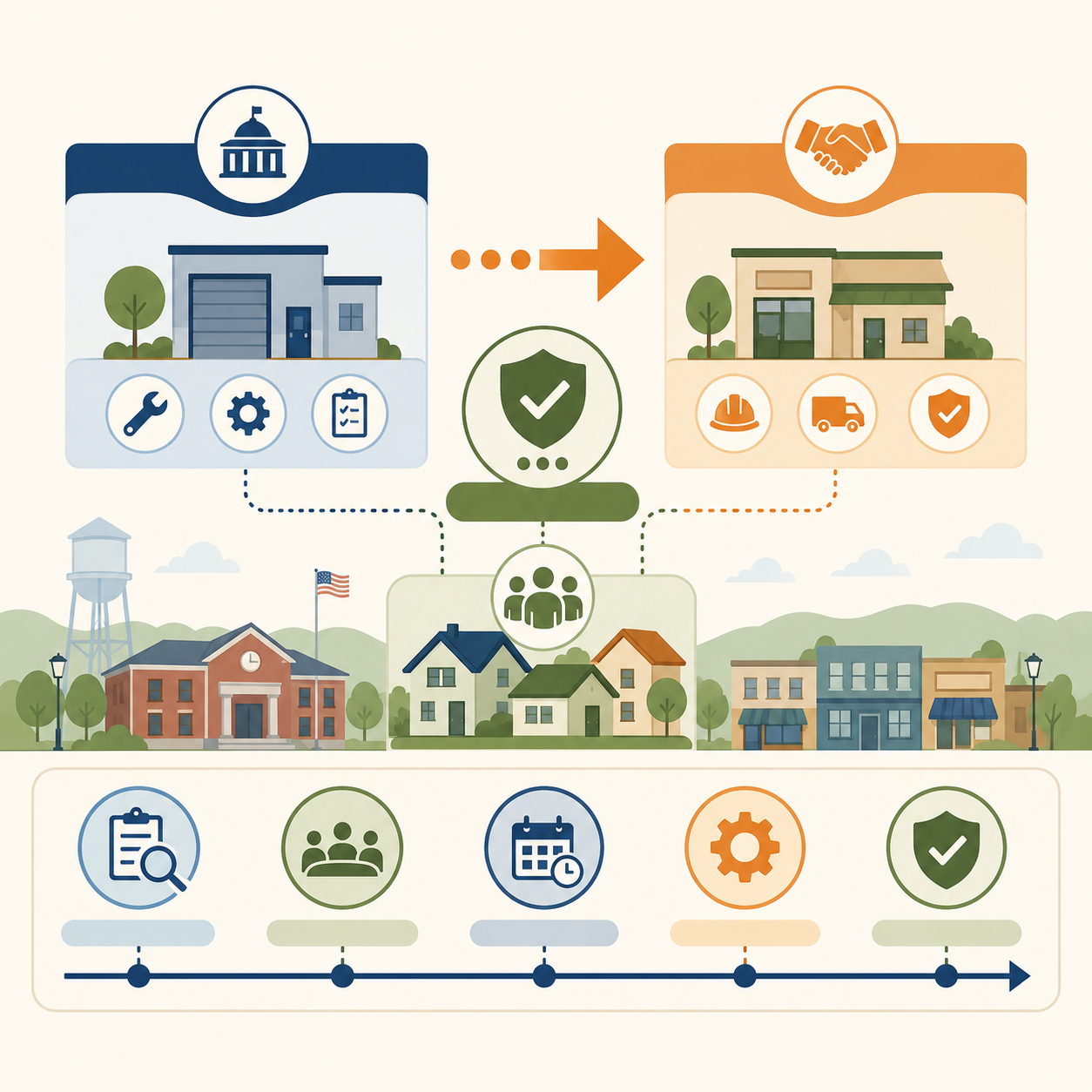 Most local government rate increase communication follows a pattern that produces predictably poor resident reception. The new rate is announced, often through the bill itself or through a brief notice on the website. The announcement may include the effective date and the new amount. It may mention that the change was approved by the governing body at a recent meeting. It typically does not explain the reasons for the increase, the factors that drove its size, the alternatives the governing body considered, or the consequences of not increasing the rate.
That pattern fails because it treats the rate increase as a transaction to be announced rather than a decision to be explained. Residents who receive a higher bill without explanation experience it as something done to them without their knowledge or consent, even when the governing body held public hearings, considered alternatives, and made a responsible decision. The process was open, but the communication about it did not give residents access to the reasoning. And without access to the reasoning, there is nothing for a resident to evaluate except whether they are paying more, which they are, and whether they were told why, which they were not.
The consequences of poor rate increase communication compounds over time. Residents who do not understand why rates increased may attribute the increase to mismanagement, waste, or political favoritism rather than to the legitimate cost drivers that actually produced it. Those attributions, once formed, are difficult to correct. They shape how residents vote on future levies and rate approvals, how they respond to future agency communications, and how they talk about the agency to neighbors and community members. A pattern of unexplained rate increases builds a reservoir of generalized distrust that affects the agency’s ability to operate effectively long after the specific rate increases have been forgotten.
Effective rate communication is not a public relations exercise designed to make residents feel good about paying more. It is an honest explanation of a financial reality that gives residents the information they need to form accurate views. Residents who receive accurate, complete information about a rate increase may still be frustrated by having to pay more. But they are frustrated about a real situation rather than about an unexplained one, and their frustration is directed at the circumstances rather than at the agency for failing to communicate with them.
Engaged & Connected: Communication Strategies for Small Towns, Villages, Townships, and Rural Communities
This article is part of our series on strategic communication for Small Towns, Villages, Townships, and Rural Local Governments. To learn more and to see the parent article, which links to other content just like this, click the button below.
The Essential Elements of a Rate Increase Communication
A complete rate increase communication answers a specific set of questions that residents will have, in an order that reflects how residents process information about financial changes. Missing any of these questions leaves a gap that residents will fill with assumption, which is almost always worse than honest explanation.
What Is Changing and When
The communication should state clearly what rate or fee is changing, what the current amount is, what the new amount will be, and when the change takes effect. These facts should appear early in the communication, before any explanatory context, because residents need them to assess their own situation before they can process any explanation. A resident who does not yet know whether the change affects their bill, or what the financial impact will be, cannot engage meaningfully with the reasons for it.
For changes that involve a tiered rate structure or that affect different customer classes differently, the communication should explain the full picture of who pays what under the new structure, with specific examples that allow residents to identify which tier or class applies to them. A utility rate increase that is larger for high-usage customers than for low-usage customers has a different impact on different households, and the communication should make those differences explicit rather than presenting only the average or the standard rate.
For phased increases that are planned to take effect over multiple years, the communication should present the full phasing schedule. Residents who know that rates will increase by a specific amount in year one, another amount in year two, and a final amount in year three can plan accordingly. Residents who are told about only the first-year increase and then discover subsequent increases may feel that the agency was not forthcoming about the full scope of the change.
The Service the Charge Funds
Rate and fee communications frequently omit a piece of information that seems obvious to agency staff but is not obvious to residents: what exactly does this charge pay for? A water rate communication should explain what the water rate covers: the treatment process, the distribution infrastructure, the metering and billing system, the emergency response capacity, and the personnel who operate and maintain the system. A stormwater fee communication should explain what stormwater management involves: the detention basins, outfall structures, drainage channels, and maintenance activities that collect and manage runoff to prevent flooding.
Connecting the charge to the service grounds the rate increase conversation in something tangible. When residents understand what the money pays for, they can evaluate whether the service is worth the charge and whether the increase is proportionate to the value they receive. Without that connection, residents are evaluating an abstract number, which is a much less productive basis for assessment and acceptance.
What Is Driving the Increase
The reasons for a rate increase are the most important content of the communication, and they deserve the most detailed and honest treatment. The most common cost drivers for local government rate and fee increases fall into several categories, each of which has a different character and warrants a different explanation.
Inflation in operational costs, including materials, energy, chemicals, and contractor rates, is a legitimate and generally understandable driver. Residents who understand that the cost of treating water, maintaining roads, or operating facilities has increased because the inputs to those processes have become more expensive can evaluate that explanation against their own experience of cost inflation. The communication should be specific about which cost categories have increased and by how much, if that level of detail is available, rather than citing general inflation as an undifferentiated driver.
Infrastructure investment requirements are another common driver that is more difficult to communicate because it is forward-looking rather than immediately visible. A rate increase that funds the replacement of an aging water main, the rehabilitation of a deteriorating pump station, or the upgrade of a treatment system to meet new regulatory standards is paying for something residents may not see directly. The communication should describe the specific infrastructure being addressed, why it needs to be addressed now, what would happen if it were not, and how the project will be funded including whether the rate increase alone covers the full cost or whether borrowing or other financing is also involved.
Regulatory compliance costs, including requirements imposed by state or federal environmental, health, or safety regulations, are often underappreciated drivers of local government rate increases because residents may not know that local agencies operate under significant external regulatory requirements. A communication that explains a rate increase as necessary to comply with a new state water quality standard gives residents context that connects the local charge to a broader regulatory framework. That context is important for residents who might otherwise attribute the increase to local management decisions rather than to external requirements over which the agency has limited discretion.
Catch-up increases that correct a history of rates held below cost-of-service levels require the most careful explanation. An agency that is raising rates significantly because prior rates were insufficient to cover full costs must explain both why the rates were insufficient and why the correction is being made now. The explanation should be honest about the history without assigning blame in ways that are politically divisive, and should focus on the path forward rather than on relitigating past decisions.
What Alternatives Were Considered
Residents reasonably want to know whether the governing body considered other approaches before arriving at a rate increase. Did the agency look at operational efficiencies that could reduce costs? Did it consider a smaller increase phased over a longer period? Did it explore grant funding, regional cooperation, or other financing alternatives? Did it evaluate service-level reductions that could avoid or reduce the rate increase?
The communication should address these questions honestly, including acknowledging the alternatives that were genuinely considered, explaining why each was insufficient to meet the need, and being clear about which alternatives were not feasible or were rejected and why. This transparency about the decision process demonstrates that the governing body approached the rate increase as a serious decision requiring deliberate consideration rather than as an automatic or convenient response to financial pressure.
When a service-level reduction was considered as an alternative and rejected, the communication should explain what level of service reduction would have been necessary and why the governing body determined that the reduction was not acceptable to the community. That explanation grounds the rate increase in a specific trade-off that residents can evaluate: we chose to maintain the current service level rather than reduce it in this specific way, and the rate increase is what that choice costs.
Household Impact in Concrete Terms
Every rate increase communication should tell residents specifically what the change will cost the typical household. The percentage increase is much less useful than the dollar amount, and the rate per unit is much less useful than the change in the monthly or annual bill for a typical customer. A water rate increase that translates to a specific additional monthly cost for a household using a typical volume of water is information residents can immediately integrate into their household financial planning. The percentage and the rate per unit are useful supplementary information but should not be the lead.
For agencies serving communities with significant income diversity, the communication should acknowledge that the impact of a given rate increase is not equal across all households, and should describe any assistance programs that are available for residents who face genuine hardship in meeting the new charge. Describing the hardship program in the same communication as the rate increase signals that the agency considered affordability as part of its deliberation, which is both accurate if it did so and appropriate regardless.
Framing the Communication Honestly
The language of rate increase communication matters as much as its content. An increase that is described as a modest adjustment to address rising costs will be read differently by a resident whose water bill has increased significantly than by a resident who has not noticed the change. An increase that is framed as a strategic investment in long-term service quality may be received positively by residents who trust the agency but skeptically by those who do not. The most effective framing is simply honest: here is what is changing, here is why, here is what it means for you.
Several specific framing choices consistently improve the reception of rate increase communications. Using concrete numbers rather than percentages or vague references to cost increases. Stating the problem directly rather than burying it in positive framing about service quality. Acknowledging the impact on residents rather than minimizing it. Using the same plain language the agency uses in all other communications rather than formal or legalistic language that creates distance between the agency and the residents it serves.
The framing should also reflect the appropriate institutional tone: professional, direct, and respectful. Rate increase communications that are apologetic to the point of self-deprecation may suggest that the agency does not believe its own decision was sound. Communications that are defensive or that preemptively dismiss resident concerns come across as dismissive. The right tone is that of a trusted service provider explaining a necessary price change honestly: here is the situation, here is why it requires a rate adjustment, here is what we are doing to manage the impact, and here is how to reach us with questions.
Addressing Assistance Programs and Affordability
Rate and fee increases have unequal impacts across the income spectrum of any community. A rate increase that is a minor inconvenience for a household with comfortable finances may represent a genuine hardship for a household living on a fixed income, managing significant debt, or experiencing employment instability. Local governments that acknowledge this reality and communicate about assistance programs in the context of rate increase announcements demonstrate a commitment to equitable service that goes beyond the financial transaction.
Not all agencies have formal assistance programs, and not all assistance programs are entirely within local control. But many agencies do have programs, whether locally funded, state-assisted, or federally supported, that provide bill credits, payment plans, rate reductions, or other forms of relief to eligible households. The rate increase communication should describe any such programs, identify who is eligible, explain how to apply, and provide a contact for residents who want to learn more about whether they qualify.
For agencies that do not currently have formal assistance programs, a rate increase that is expected to create genuine hardship for a portion of the customer base is an appropriate occasion to consider whether such a program should be developed. That consideration can be referenced in the communication as part of the governing body’s ongoing attention to affordability, which signals to affected residents that the agency is aware of the equity dimension of rate decisions even if a formal program is not yet in place.
Payment plan options are an underutilized affordability tool for many agencies. When a significant rate increase or a bill that has accumulated during a payment difficulty exceeds what a household can pay in a single billing cycle, a structured payment plan can allow the customer to meet their obligation over time while the agency recovers the full amount owed. Describing payment plan availability in the rate increase communication, including the process for requesting one, provides a practical alternative that may prevent service disconnections and the associated costs for both the customer and the agency.
Using Comparisons Fairly and Effectively
Comparative information, showing how a local government’s rates compare to those of neighboring or comparable agencies, can be a valuable element of rate increase communication when it is accurate, relevant, and honestly presented. It can also be misleading or counterproductive when it is cherry-picked to make a proposed increase look more modest than it actually is, or when the comparators are not genuinely comparable to the local situation.
Effective use of comparisons requires choosing comparators that are genuinely similar in relevant ways. Comparable communities for a water rate comparison should be similar in population size, geographic context, system scale, source water quality, treatment requirements, and infrastructure age. Comparing a small rural water system with aging infrastructure and significant regulatory requirements to a large urban system with newer infrastructure and economies of scale may produce a favorable comparison but will not be meaningful to residents who understand the local system’s specific circumstances.
The comparison should include enough context to be interpretable. A statement that the proposed rate is lower than the average rate for comparable systems in the region is more useful if it also explains what range of rates exists among those systems, how the local system’s cost structure compares to the typical system in the comparison group, and what specific factors might explain any significant deviation from the comparison group average. A comparison presented without that context invites the resident to form their own interpretation, which may or may not be accurate.
Agencies should avoid using comparisons primarily as a rhetorical device to deflect resident concern about an increase. If a rate increase is necessary and its drivers are legitimate, that case should stand on its own merits. Comparisons that are offered primarily to make the increase look moderate rather than to provide genuine context may be perceived by residents as evasive, particularly if those residents are already skeptical of the agency’s communication.
Timing and Distribution of Rate Increase Communication
 The timing of rate increase communication significantly affects how it is received. A notice that arrives with the bill that reflects the new higher rate is too late: the resident has already experienced the increase before receiving any explanation for it. A notice that arrives simultaneously with the bill is marginally better but still does not give residents time to ask questions, adjust their budgets, or seek assistance before the first charge at the new rate. The most effective rate increase communication arrives well in advance of the first bill at the new rate, giving residents time to understand the change, respond to it, and reach the agency with any questions before they see the impact in their statement.
A practical approach is to communicate the approved rate increase immediately after the governing body votes, through all of the agency’s primary channels, and to follow that initial communication with a reminder approximately thirty days before the new rate takes effect. The initial communication gives residents the full explanation. The reminder serves residents who missed the initial communication or who need a prompt to take action, such as applying for an assistance program or setting up a payment plan.
The initial communication should appear on the agency’s website, in any email newsletter or subscriber distribution, on social media, and in any direct mail or utility bill insert that can reach the full customer or ratepayer population. For rate changes with significant household impact, the communication may also warrant distribution through community partners, local media, and any other channels that extend the agency’s reach to residents who are not regularly in contact with official agency communications.
Physical mail remains the most reliable way to reach every household in a service area with a specific important communication, but it is also the most expensive. For significant rate increases, particularly those involving utility services where every household is a customer, the investment in a direct mail notice is typically justified. The mailing should be designed clearly enough that residents understand from the envelope or the first line that it contains important billing information they need to read, rather than being designed in a way that might cause residents to treat it as a routine mailing they can set aside.
Responding to Resident Questions and Concerns
Rate increase communications generate questions and concerns from residents, and the agency’s response to those contacts matters as much as the initial communication. A resident who calls the office with a question about the rate increase and receives a patient, informative, non-defensive response leaves the conversation with a better impression of the agency than they arrived with. A resident who receives a dismissive, bureaucratic, or uninformed response leaves the conversation with a worse impression, regardless of how well the written communication was designed.
Staff who handle incoming contacts about a rate increase should be briefed on the key facts before the communication goes out, not after. They should know the specific drivers of the increase, the effective date and the amount, the assistance programs available, the payment plan process, and the answers to the most common questions the communication is likely to generate. They should also know where to direct residents who have questions the staff member cannot answer, and they should follow through on referrals rather than leaving residents without a response.
A dedicated rate increase FAQ, posted to the website and linked from the initial communication, can reduce the volume of incoming contacts by anticipating and answering the most common questions before residents need to call or email. The FAQ should be written in the same plain language as the communication, should be updated if new questions consistently arise that it does not address, and should be prominently available from any page on the website related to the rate change.
Social media comments about a rate increase deserve a consistent response approach. The agency should acknowledge comments that raise legitimate concerns, provide accurate information in response to factual questions or corrections, and avoid engaging with comments that are primarily expressions of frustration rather than questions requiring an answer. The response approach should be calm, professional, and focused on providing accurate information rather than on defending the decision or debating its merits in a social media thread.
Rate Communication After the Decision Is Made Versus Before
There is a meaningful difference between communicating about a rate increase that is being proposed and communicating about one that has already been adopted. Both types of communication are necessary, but they serve different purposes and should be structured differently. Pre-decision communication is designed to inform and invite engagement. Post-decision communication is designed to explain and facilitate compliance. Conflating the two, or producing only one when both are needed, leaves residents without important information at one or both stages.
Pre-decision communication should describe the proposed increase, explain the reasoning being presented to the governing body, identify the public hearing and comment opportunities, and clarify that the decision has not yet been made. This communication invites residents to engage before the outcome is determined. It gives the governing body the opportunity to hear from residents while options are still genuinely open, which is the only form of engagement that is meaningfully participatory.
Post-decision communication should state clearly that the governing body has made a decision, describe the decision including the specific rate that was adopted, explain when it takes effect, and provide the full explanation of cost drivers and household impact that allows residents to understand and prepare for the change. This communication should not imply that the decision is still being deliberated. Residents who believe a decision is still open when it has been made may invest time in advocacy that can no longer affect the outcome, which produces frustration rather than genuine engagement.
For significant rate changes, both stages of communication deserve the same level of care and investment. An agency that does thorough pre-decision communication but then issues only a brief post-decision notice has missed the opportunity to give residents the complete information they need after the decision. An agency that invests heavily in post-decision communication but does not communicate effectively before the hearing may find that residents who wanted to influence the decision did not know the opportunity existed until it had passed.
Communicating Rate Stability as Well as Rate Increases
Rate and fee communication does not only need to happen when charges are increasing. Communicating when rates are stable, or when an expected increase has been reduced or avoided through operational efficiency or other measures, is an equally important form of financial transparency. Residents who only hear from the agency about rates when those rates are going up may develop the impression that the agency views them primarily as sources of revenue rather than as customers and community members whose financial situation the agency takes seriously.
Annual budget communication that includes a statement about rate stability, explaining that rates are not changing in the coming year and briefly noting the factors that make that stability possible, builds the context for future rate discussions. Residents who have heard for several consecutive years that the agency has been able to hold rates stable because of specific operational efficiencies or favorable material costs will be better prepared to understand a communication explaining that those factors have changed and a rate increase is now necessary.
When an agency avoids a rate increase through a specific operational decision, such as a shared services arrangement that reduces costs, a renegotiated contract with a service provider, or a grant that funds an infrastructure investment that would otherwise require a rate increase, communicating that decision and its financial consequence gives residents a concrete example of the governing body’s stewardship of the rate base. That kind of proactive financial transparency builds the credibility that makes future rate increase communications more likely to be received with trust.
Rate stability communication is also useful for setting expectations about the sustainability of current charges. An agency that communicates honestly that the current rate is temporarily supported by a reserve draw or a one-time grant, and that a rate adjustment will be necessary in a specific number of years when those temporary supports are exhausted, is giving residents a more accurate financial picture than an agency that communicates only current stability without the forward-looking context. That honest forward-looking communication prevents the rate increase, when it comes, from feeling like a surprise that the agency could have anticipated but chose not to disclose.
Multi-Year Rate Plans and Long-Range Financial Planning Communication
The most effective rate communication is embedded in a long-range financial planning framework that gives residents a multi-year picture of where rates are headed and why. An agency that presents a five-year financial forecast, showing projected revenues, expenditures, capital needs, and the rate adjustments required to sustain the system over that period, is providing residents with a qualitatively different kind of financial information than an agency that communicates only about the current year’s rate.
Long-range financial planning communication helps residents understand that rate decisions are not made in isolation but are part of a deliberate strategy for sustaining local services over time. It shows that the agency is planning ahead rather than reacting to immediate financial pressure. It gives residents a basis for evaluating current rate proposals in the context of the agency’s broader financial direction. And it allows residents to raise concerns about the long-range plan before specific rate decisions are made, which is a more constructive form of engagement than raising concerns after specific increases have been announced.
Presenting a multi-year rate plan is also a form of transparency about the difficulty of the agency’s financial situation. A plan that projects significant rate increases over a multi-year period, driven by aging infrastructure replacement, regulatory compliance costs, or rising personnel costs, honestly describes a situation that residents need to understand before they can evaluate whether the agency is managing it well. A governing body that presents that plan, explains the assumptions behind it, and invites community input on how to address it is demonstrating the kind of open and accountable governance that residents can trust.
For agencies that do not currently conduct or communicate long-range financial planning, developing that capability is a meaningful investment in both financial management and community relations. The planning discipline required to produce an honest multi-year financial forecast also tends to improve operational decision-making by making the long-term financial consequences of current decisions more visible to both staff and elected officials. And the communication of that plan to residents, even in a simplified format, builds the community financial literacy that makes rate discussions more productive for everyone involved.
Building Public Confidence Through Consistent Rate Communication Over Time
No single rate increase communication, however well designed, can fully substitute for a track record of consistent and honest financial communication over multiple years. Agencies that communicate regularly about their financial situation, including both the pressures they face and the steps they are taking to manage them, build a reservoir of public understanding that makes each individual rate communication more effective. Residents who have been receiving honest, clear financial information for several years approach a rate increase announcement with a foundation of understanding that residents who encounter that information only in the context of a rate announcement do not have.
Building that track record requires incorporating financial transparency into the agency’s regular communication rather than treating it as a special event that occurs only when rates change. Annual budget summaries that explain what the agency spent and on what. Service reports that connect expenditures to outcomes. Capital project updates that report on costs relative to the original estimate. Mid-year financial updates that report on how revenues and expenses are tracking against the budget. Each of these routine financial communications is also a rate communication in a broader sense, because it gives residents the context for evaluating whether the agency’s financial management justifies confidence in its rate decisions.
Agencies with a strong track record of financial transparency will also find that rate increase communications generate a qualitatively different response from residents than those from agencies whose residents have little prior context. Residents who have been following an agency’s financial communication and who understand the cost pressures it faces are more likely to evaluate a rate increase proposal on the merits than residents who are encountering the agency’s financial situation for the first time in the context of a proposed increase. That difference in baseline understanding is worth building, and the only way to build it is through consistent communication over time.
Strategic Communication Support for Small and Rural Governments
 Rate and fee increases are among the most challenging communication situations small governments face, because they involve a combination of complex financial information, emotional sensitivity around household costs, and the need for institutional credibility that only clear, honest communication can build. The agencies that navigate rate increases most successfully are those that have built strong communication practices before the rate increase is announced, so that residents enter the conversation already trusting the agency’s reliability as an information source.
For agencies that are facing a significant rate increase and that want to ensure their communication is as effective as possible, outside support can help with structuring the explanation, reviewing the language for clarity and accessibility, designing the FAQ, preparing staff for resident contacts, and coordinating distribution across the multiple channels that are needed to reach the full ratepayer population. The investment in communication support for a significant rate change is modest compared to the relationship cost of communicating it poorly.
Stegmeier Consulting Group (SCG) helps small and rural governments develop rate and fee increase communication that gives residents the complete, honest, accessible information they need to understand and accept necessary financial changes. That work includes communication structure design, plain language review, FAQ development, distribution strategy, and staff briefing preparation. Whether your agency is announcing a routine annual rate adjustment or a significant multi-year rate restructuring, SCG can help you develop the communication approach that serves residents well and maintains the institutional trust on which the agency depends.
Future Trends in Rate and Fee Communication
The expectations residents have for rate and fee communication are likely to increase in the coming years, driven by broader trends in government transparency, digital information access, and the growing expectation that public agencies will explain their financial decisions clearly and proactively rather than waiting for residents to seek out information on their own.
Online rate calculators and personalized rate impact tools are becoming more common in local government utility communication. A tool that allows a customer to enter their typical usage and see exactly what their bill will be under the new rate structure is significantly more useful than a general rate table, because it gives residents precise information about their personal situation rather than requiring them to calculate the impact themselves. As these tools become more accessible and easier to implement, their adoption by small governments will likely expand.
Cost of service studies and rate studies conducted by outside consultants are increasingly being shared in accessible, plain-language summaries rather than only as full technical reports. The rate study that documents the need for a rate increase contains the detailed analytical support for the decision, but it is rarely accessible to a general resident audience. A plain-language executive summary of the study’s key findings, prepared as part of the communication package rather than as an afterthought, gives interested residents access to the analytical foundation for the rate decision without requiring them to interpret a technical document.
Equity analysis in rate setting and rate communication is becoming a more prominent expectation. The distributional impact of rate structures, including who pays more and who pays less under different rate design approaches, is increasingly being considered as part of the rate-setting process. Local governments that proactively address equity in their rate communication, describing how the chosen rate structure affects customers at different usage levels and income levels, will be ahead of expectations that are likely to become more explicit as the connection between utility affordability and community economic health receives more attention.
Conclusion
Rate and fee increases are a fact of local government life. The costs of providing services increase over time, infrastructure ages and requires investment, regulatory requirements evolve, and the financial sustainability of service systems requires periodic rate adjustments. None of that is likely to change, and the communication challenge that accompanies each rate increase will remain a recurring feature of local government operations for the foreseeable future.
What can change is how well agencies prepare residents for those increases, how clearly they explain the reasons, and how effectively they give residents the information they need to make sense of the change from their own household perspective. Agencies that communicate rate increases honestly and completely will find that resident response, while not uniformly positive, is substantively different from the response generated by unexplained bills and inadequate notices. Residents who understand why a rate is increasing can evaluate the explanation, raise legitimate concerns about it, and form views based on the actual situation rather than on assumptions shaped by the communication gap.
That kind of informed resident engagement is the foundation of the relationship that makes local government work. It does not guarantee agreement. It does not prevent frustration. But it treats residents as adults who deserve honest information about the decisions that affect them, and that respect for residents is among the most important things a small local government can express through the quality of its communication.
Stegmeier Consulting Group’s Strategic Approach to Communication Systems
Align your agency’s rate communication with the transparency and honesty residents deserve.
Small and rural governments need rate and fee increase communication that gives residents complete, accessible information about what is changing, why, and what it means for their household. Building that communication requires more than a billing notice or a brief announcement. It requires honest explanation of cost drivers, fair presentation of alternatives considered, concrete household impact figures, and the distribution strategy that ensures the communication reaches residents before the new charges appear on their bills.
SCG helps public agencies develop rate and fee increase communication that builds resident understanding and maintains institutional trust through necessary financial changes. Whether your agency is navigating a routine annual rate adjustment or a significant restructuring with major household impact, SCG can help you develop the communication approach that treats residents fairly and explains difficult financial realities with the clarity and honesty they deserve.
Use the form below to connect with our team and explore how thoughtful rate increase communication can help your agency manage necessary financial changes while maintaining the resident trust that effective local service delivery requires.