

How to Write a Local Government Meeting Recap Residents Will Read
The public meeting has ended. The board has made decisions, heard public comment, discussed complex issues, and approved the next steps on several items that matter to the community. Staff members who attended the meeting know what happened. The board members who sat through it know what happened. A handful of residents who were present know what happened. Everyone else, meaning most of the people who live in the township, village, or district, knows nothing about what happened at a meeting that was open to them and that may have produced decisions affecting their services, their taxes, or their property.
This is the gap that the meeting recap is designed to close. Not the formal minutes, which are a legal record of what was done at the meeting and which are often not available for public review until weeks after the meeting occurred. The recap is a timely, readable, plain-language account of what the board discussed, what it decided, what was tabled or continued, and what residents can expect to happen next. It answers the question that most residents who did not attend would ask if they knew to ask it: What happened at last night’s meeting?
Meeting recaps are less common in small local governments than they should be, partly because they require some additional work after a meeting that staff are ready to put behind them, and partly because there is often an assumption that the formal minutes serve the same function. They do not. Minutes are a legal record organized around procedural requirements, not a communication document organized around resident understanding. They record what was moved, seconded, and voted on. They do not explain why a decision was made, what the practical implications are for residents, or what the next steps will be. The recap does all of those things, and doing them well requires a different approach than formal minutes require.
This article explains how to write meeting recaps that residents actually read and find useful. It covers what a good recap contains, how it should be organized, how to handle different types of meeting outcomes including votes, discussions, public comments, and tabled items, how to maintain the neutrality appropriate for a government communication while still making the recap genuinely informative, and how to build recap production into the post-meeting workflow without creating unmanageable additional burden. The goal is a recap that serves residents who care about their local government but who cannot attend every meeting, and that does so consistently enough to become a communication resource residents come to depend on.
Why Meeting Recaps Serve a Different Purpose Than Minutes
 The distinction between minutes and recaps is worth understanding clearly, both to avoid duplication and to ensure that the recap does what it is designed to do rather than inadvertently becoming a shorter version of the minutes. The two documents have different audiences, different purposes, different timing requirements, and different standards for what they should contain.
Minutes are a legal record of the governing body’s formal actions. They record who was present, what motions were made and by whom, what the vote was on each motion, and any other actions required by statute or by the body’s own procedures. Minutes are an official document that may be referenced in legal proceedings, audits, or reviews of the agency’s decision-making process. They must be accurate and complete as a record, and they are approved by the governing body as a formal action at a subsequent meeting. The primary audience for minutes is the governing body itself, attorneys and auditors who need to review the official record, and any member of the public who needs to verify the formal outcome of a specific decision.
Recaps are a communication document designed for general residents who want to understand what their local government did without reading a formal legal record. They are not approved by the governing body and do not carry the official status of minutes. They can be published immediately after a meeting rather than waiting for the next meeting’s approval cycle. They can summarize rather than enumerate, explain rather than record, and organize information around what residents need to understand rather than around what the formal record requires. The primary audience is residents who follow local government at a general level and who want to know what happened without having to attend every meeting or interpret formal legal language.
Because they serve different purposes, minutes and recaps can coexist without either replacing the other. Agencies that produce both are providing residents with two genuinely different resources: a formal record for those who need it, and a plain-language account for those who want it. The cost of producing both is modest, because the recap can be assembled from the same meeting notes that support the minutes, with the additional step of translating the procedural record into plain-language narrative.
Engaged & Connected: Communication Strategies for Small Towns, Villages, Townships, and Rural Communities
This article is part of our series on strategic communication for Small Towns, Villages, Townships, and Rural Local Governments. To learn more and to see the parent article, which links to other content just like this, click the button below.
What a Useful Meeting Recap Contains
Meeting Overview
Every recap should open with a brief meeting overview that confirms the basic facts of the meeting: when and where it was held, which board or council members were present, and approximately how long it lasted. This opening grounds the recap in the specific meeting and distinguishes it from recaps of other meetings. It also serves the practical function of confirming whether a quorum was present, which some residents may want to verify before relying on the decisions described in the recap.
The meeting overview does not need to be long. Two or three sentences that confirm the date, location, attendance, and overall duration are sufficient. The overview is a header that orients the reader before they proceed to the substance of the recap.
Summary of Each Significant Item
The core of the recap is a summary of each significant item the board addressed. Like the meeting preview, the recap should prioritize items with direct resident impact and give those items more detailed treatment than routine or administrative matters. Consent agenda items approved as a group can be noted briefly as a group rather than enumerated individually.
For each significant item, the recap should explain what the item was about in plain language, what the board did with it, and what the outcome means for residents. The explanation of what the item was about provides context for readers who may not have been following the issue. The description of what the board did tells readers whether a decision was made, a discussion was held without a vote, a vote was postponed, or a matter was referred for further study. The explanation of what the outcome means translates the formal action into practical implications: what will change for residents, what the next step is, and when residents should expect to see or experience the effects of the decision.
The recap should not reproduce the text of resolutions or ordinances. It should describe what they do in plain language. A recap that says the board approved an ordinance requiring property owners to connect to the public sewer system within 24 months of connection availability, with provisions for hardship exceptions and an appeal process, tells residents what they need to know. Reproducing the full text of the ordinance in the recap makes the recap inaccessible without providing additional useful information.
Votes and Outcomes
When the board took a vote, the recap should record the outcome: whether the vote was unanimous or divided, and if divided, the breakdown if it is material to understanding the decision. Readers who want to know whether their representative voted for or against a measure should be able to find that information in the recap. Votes on significant items should always include the numerical outcome at minimum, and votes where dissents were expressed may benefit from a brief note about the basis for dissent if board members articulated one during the meeting.
The recap should distinguish between final votes and preliminary or procedural votes. A vote to continue a public hearing is not the same as a vote to approve the underlying matter. A vote to refer an item to a committee is not the same as a vote on the item itself. The recap should make these distinctions clear so that readers understand what stage of the decision-making process each item is in rather than concluding that a vote in one direction means the matter is resolved.
When there was no vote because an item was discussed without action or continued to a future meeting, the recap should say that explicitly rather than leaving readers to guess whether a vote occurred and was not recorded, or whether the item was not voted on. The reason for the continuation, if one was stated, helps readers understand whether additional public engagement opportunities remain.
Public Comment
If the meeting included public comment, the recap should note that and provide a brief, neutral summary of the main themes or concerns that residents raised. It should not identify individual commenters by name unless they specifically commented in their capacity as an official representative of an organization or entity. Personal identifying information of private residents who commented at a public meeting should not appear in a publicly distributed recap.
The summary of public comment should represent the range of views expressed rather than emphasizing the views that align with the board’s eventual decision. If most commenters expressed concern about a proposal and the board approved it anyway, the recap should reflect both the nature of the public comment and the board’s action, without editorially framing either as correct or incorrect. The recap is describing what happened, not evaluating whether the right thing happened.
When the board responded to public comments during the meeting, either by addressing specific concerns, by making modifications to a proposal in response to comments, or by explaining the rationale for a decision in light of the comments received, that response should be noted in the recap. Residents who commented at the meeting deserve to know whether and how their input was acknowledged, and residents who did not attend but whose neighbors did comment deserve to know whether the comment period produced any observable effect.
Tabled, Continued, and Postponed Items
Not everything on a meeting agenda gets resolved at that meeting. Items may be tabled for later consideration, continued to a future meeting, referred to a committee or staff for additional analysis, or withdrawn from consideration entirely. The recap should identify these outcomes clearly and, where known, indicate when the item is expected to return for further consideration.
Tabled and continued items are important for residents to know about because they represent unfinished business that may be consequential. A proposed ordinance that was continued to the next meeting because of public concern may still be adopted at that meeting. A capital project that was referred for additional study may come back with a significantly different scope. Residents who are following a specific issue need to know when it will next be before the board so they can decide whether to attend that meeting or submit comments in advance.
Organizing the Recap for Maximum Clarity
The organization of a meeting recap significantly affects whether residents read it and whether they find it useful. Several organizational principles consistently produce more accessible recaps.
Most Important First
The recap should not simply follow the meeting agenda in order. The most significant items, those with the greatest direct impact on residents or those that generated the most discussion and attention, should be summarized earlier in the recap rather than buried in the middle of a long list. A reader who opens a recap and immediately encounters a description of the item they heard about from a neighbor is far more likely to keep reading than a reader who has to scroll through four routine items before reaching the matter they care about.
Within each item summary, the most important information should also come first. What did the board decide? comes before the background explanation of why the item was before the board. The practical implications for residents come before the procedural history of how the item got to this meeting. Front-loading the most important information serves readers who may not read every recap from beginning to end and who instead scan for the information most relevant to them.
Separating Discussion from Decision
One of the most common clarity failures in meeting recaps is conflating discussion with decision. A board may discuss a proposed fee change at length and reach no conclusion. A board may vote on a routine item with no discussion at all. The recap should clearly distinguish between items where a formal action was taken and items where only discussion occurred, and between items where the discussion reflected genuine deliberation and items where discussion was merely informational.
Readers who do not attend meetings may not know that a governing body can discuss an issue extensively without voting on it, or that a matter discussed one month may be voted on at a future meeting. The recap should make these dynamics explicit in plain language rather than assuming that readers understand how local government meetings work. A brief orienting phrase such as the board discussed the proposal but took no vote, and will return to the matter at its next regular meeting is more informative than simply summarizing the discussion without noting that it was inconclusive.
Next Steps and Follow-Up Information
Every significant item in the recap should end with a next-steps note that tells readers what happens from here. Was this a final decision, or is there more process to come? When will residents next hear about this matter? Is there an opportunity for resident input that has not yet occurred? Is there an action residents need to take in response to the decision? Next-steps information gives readers a complete picture rather than leaving them with the board’s action described in isolation from what follows it.
For items that involve actions residents need to take, the next-steps note should be specific. If a new ordinance requires property owners to apply for an exemption within 90 days, the recap should say that and provide the contact information or process for applying. If a rate change will take effect on a specific date, the recap should note it. If the decision will be implemented by a contractor whose work residents will see in a specific area, the recap should indicate that. Practical specificity in next-steps information is what converts the recap from an interesting account of what happened into a useful guide for residents who need to respond to what happened.
Timing and Distribution of the Recap
The value of a meeting recap is directly related to how quickly it reaches residents after the meeting. A recap published the evening of the meeting or the following morning is far more useful than one published two weeks later. Residents who heard something about the meeting from a neighbor, who saw a reference to it on social media, or who simply want to know what their local government decided last night need a timely answer. A recap that arrives weeks later, after residents have already formed impressions from informal accounts, has missed its best opportunity to serve as the authoritative version of what happened.
The ideal timeline for a meeting recap is within 24 to 48 hours of the meeting. This timeline is achievable if the person responsible for writing the recap attends the meeting with the specific purpose of taking notes for the recap, rather than relying entirely on notes taken for other purposes. Meeting notes specifically structured for the recap are more efficient than repurposing minutes notes, because they capture the plain-language explanations and resident-impact observations that the minutes process does not require.
Distributing the recap through multiple channels maximizes its reach. The full recap should be posted on the agency’s website. A summary of the most significant items should be posted to social media with a link to the full recap on the website. Where an email newsletter or subscriber list exists, the recap or a summary of it should be distributed by email within the same 24 to 48 hour window. For particularly significant meetings where the outcomes are likely to generate widespread resident interest, a direct notification through any resident alert platform the agency maintains may also be appropriate.
Maintaining Neutrality and Accuracy
 The meeting recap, like the meeting preview, must be a neutral document that describes what happened without advocating for any position or outcome. This neutrality is particularly challenging to maintain when the meeting included contentious public comment, a divided board vote, or a decision that staff members personally supported or opposed. The recap writer’s own views about what the board should have decided are irrelevant to the recap, and allowing those views to color the language of the recap undermines the document’s credibility and the agency’s trustworthiness.
Neutrality in a recap means describing board decisions without language that characterizes them as wise or unwise, as popular or unpopular with residents as a whole when only a subset of residents commented, or as final and settled when they remain subject to appeal or further deliberation. It means describing public comment as reflecting the views of those who commented without implying that those views represent the community at large. It means reporting the vote outcome, including any dissents, without suggesting which side was correct.
Accuracy in a recap means describing what actually happened at the meeting rather than what staff expected to happen, what the agency hoped would happen, or what would make the agency look most favorable. If the board voted in a direction that was different from the staff recommendation, the recap should report what the board decided without editorial comment about the deviation. If a board member made a motion that failed, the recap should note that the motion failed. If public comment was overwhelmingly critical of a proposal that the board approved anyway, the recap should reflect both of those facts.
Accuracy also requires that the recap be reviewed by someone who attended the meeting before it is published, to confirm that the summaries are correct and that no significant item was omitted or mischaracterized. A recap writer working from notes alone may miss a nuance or misremember an outcome. A brief review by the clerk, administrator, or another meeting attendee can catch those errors before the recap goes out. That review does not need to be extended. A ten-minute read-through to confirm accuracy is usually sufficient.
Building the Recap Into the Post-Meeting Workflow
The practical challenge of meeting recap production is finding the time and process to produce a quality recap consistently without creating unmanageable additional burden on staff who have full workloads. The answer is integration: building recap production into the meeting workflow rather than treating it as an entirely separate task that begins after the meeting is over.
The most effective approach is to designate a specific person to take notes during the meeting with the explicit purpose of producing the recap, using a notes template that mirrors the recap structure. The notes template should have a section for each significant agenda item with prompts for the information the recap will need: what was the item about, what did the board discuss, what was the vote or outcome, what were the main themes of public comment, and what are the next steps. Notes taken with this structure in mind produce a draft recap much more efficiently than repurposing general meeting notes.
After the meeting, the designated recap writer uses the structured notes to draft the recap, translating the meeting notes into the plain-language narrative format. With good notes and a familiar format, this step typically takes 30 to 60 minutes for a standard meeting with three to five significant items. Meetings with more complex or numerous items may take longer, but the structure of the process remains the same.
A brief review, publication to the website, and distribution to social media and email subscribers completes the post-meeting workflow. The entire process, from notes to published recap, should be achievable within the 24 to 48 hour window from the meeting’s end. Agencies that find this timeline difficult to meet consistently should examine which steps in the process are taking the most time and whether any can be simplified, delegated, or templated more effectively.
Adapting the Recap for Different Governing Bodies and Meeting Types
Meeting recaps are not one-size-fits-all documents. The format and emphasis that work best for a monthly village council meeting may not work as well for a quarterly park district board meeting, a planning commission session, or an annual budget hearing. Adapting the recap format to the specific governing body and meeting type produces more useful documents than applying a single template mechanically across all contexts.
For governing bodies that meet monthly or more frequently, the recap can be relatively concise because residents who follow local government regularly will have context from previous recaps. A standing format that covers the same basic elements in the same order becomes familiar over time and allows regular readers to navigate the recap efficiently. For governing bodies that meet quarterly or less frequently, the recap should provide more background context for each item because readers may not have a fresh sense of the issues from a recent prior recap.
Planning commission and board of zoning appeals recaps have specific characteristics worth noting. These bodies often act on items with significant implications for specific property owners or neighborhoods, and residents who are affected by a specific decision want clear information about the outcome and any conditions attached to it. Recaps for these bodies should be especially specific about the exact nature of each approval, denial, or conditional approval, and should identify the affected property or area clearly enough that residents who are not sure whether a decision affects them can make that determination from the recap.
Budget workshop recaps serve a different function than regular meeting recaps because budget workshops typically involve extensive discussion without final votes. The purpose of a budget workshop recap is to help residents understand what the governing body is considering, what the major decision points are, what information is still being gathered, and when the final budget decisions will be made. A budget workshop recap that clearly maps the decision timeline and identifies the most significant unresolved questions gives residents who want to engage with the budget process a useful guide to where and when their input would be most effective.
Annual meeting recaps for agencies that hold one annual meeting rather than regular monthly meetings require the most comprehensive treatment because a year’s worth of significant decisions may be addressed at a single session. These recaps should be organized thematically rather than in agenda order, grouping related decisions together so readers can see the full scope of what was decided about a particular service area or issue. A table of contents or navigational headings allows readers to go directly to the topics most relevant to them in a long recap.
Handling Controversy and Contested Decisions in the Recap
Some meetings produce decisions that a significant number of residents oppose, that generated contentious debate on the board or among community members, or that involve politically sensitive topics. Writing an accurate and neutral recap of a contentious meeting is one of the more challenging communication tasks in local government, because the pressure to either soften the description of the controversy or emphasize it beyond what accuracy requires can come from multiple directions simultaneously.
The accurate and neutral approach is to describe what happened without amplifying the controversy and without minimizing it. If the vote was divided, the recap says the vote was divided and records the outcome. If public comment was substantial and predominantly in opposition, the recap notes that. If board members made statements during the meeting that explained their reasoning on a contested issue, the recap can briefly summarize those explanations without endorsing them. The recap neither celebrates the decision nor mourns it. It describes it.
Contested decisions often attract more informal community communication, including social media commentary, neighborhood conversation, and informal accounts that may diverge from the actual outcome. A recap that reaches residents quickly and that accurately describes what happened is one of the most effective tools for reducing the spread of inaccurate accounts of contested decisions. Residents who read the recap before they read social media commentary are better positioned to evaluate subsequent accounts accurately. Residents who encounter social media commentary before they have seen an official account are more likely to accept framing that may not accurately reflect what occurred.
For meetings that produced decisions likely to face appeal, legal challenge, or further deliberation, the recap should note that explicitly. A decision that has been made by the board but that a stakeholder has indicated will be challenged through a formal appeal process is not a closed matter, and the recap should reflect that. Providing residents with accurate information about the status of a contested decision, including the pathways for further review, is part of the recap’s responsibility to give residents a complete picture of what is happening rather than an artificially resolved one.
Connecting the Recap to the Preview and Creating a Communication Loop
The meeting preview and the meeting recap are most powerful when they function as a connected pair rather than as isolated documents. A preview sets resident expectations and provides context before the meeting. The recap fulfills those expectations by reporting on what actually happened. When the two documents reference each other explicitly, and when residents come to expect both as part of the agency’s regular meeting communication cycle, they create a communication loop that keeps residents consistently oriented to the agency’s work.
The recap can reference the preview by noting, for items that generated significant public interest, that the issue was described in the meeting preview and directing readers back to the preview for background context. This is particularly useful for items where the recap can be brief because the preview already provided the context, and for readers who are encountering the issue for the first time in the recap and need the background the preview contained.
The preview can reference past recaps for items that have appeared before the board multiple times, directing readers to the recap of the previous meeting where the item was first discussed or where an important preliminary decision was made. This cross-referencing approach treats the preview-recap pair as a continuous public record of the governing body’s work on specific issues, giving residents who follow those issues a coherent narrative rather than a series of isolated communications that require the reader to supply the connective tissue.
Agencies that maintain an archive of both previews and recaps create a searchable public history of their governance that is significantly more accessible than the formal minutes archive. A resident who wants to understand how a particular issue developed over eighteen months of board deliberations can trace it through the previews and recaps without needing specialized knowledge of government records or legal documents. That accessibility is a genuine contribution to community knowledge and civic engagement that extends well beyond the individual residents who read each document at the time of publication.
Using the Recap to Build Institutional Memory
Over time, consistently produced meeting recaps accumulate into a significant body of plain-language institutional memory. This accumulated record serves functions beyond informing residents about individual meetings. It documents the governing body’s reasoning over time, traces the development of complex issues across multiple meetings, and provides an accessible reference for staff, elected officials, and community members who need to understand the history of a particular decision or policy.
New board members and new staff members are among the most immediate beneficiaries of a well-maintained recap archive. A new trustee who wants to understand the history of a controversial infrastructure project can read the recaps from the past two years rather than trying to interpret formal minutes or relying on oral accounts from colleagues whose memories may not be fully accurate. A new administrator who wants to understand why the agency’s approach to a particular issue evolved the way it did can trace that evolution through the plain-language account the recaps provide.
Community researchers, journalists, and engaged residents who want to understand local governance decisions in depth find recap archives far more accessible than formal minutes archives. A local historian documenting the community’s response to a regional economic change, a journalist investigating a particular decision’s origins, or an advocacy group trying to understand the history of a zoning policy can navigate a recap archive much more efficiently than a minutes archive because the recaps organize information around what happened rather than around what was formally moved and seconded.
The recap archive also serves a continuity function during periods of significant leadership change. When a governing body experiences turnover of several members in a short period, the recap archive allows incoming members to orient themselves to the work the body has been doing without requiring current members to reconstruct oral histories that may be incomplete or colored by individual perspectives. A comprehensive archive of meeting recaps is, in effect, a public record of the governing body’s work in a form that any member of the community can access and use.
Maintaining a useful archive requires basic indexing so that readers can find recaps by date, by topic, or by specific agenda items of interest. The simplest archive is a chronological list of past recaps with links to each one, which allows readers to navigate by date. A more useful archive includes brief topic tags or keywords for each recap that allow residents to search for all recaps that addressed a specific issue, such as a road project, a rate change, or a particular ordinance. Building that indexing into the recap publication process from the beginning is far less work than retrofitting it to an existing archive later.
When to Supplement the Recap With Additional Communication
The standard meeting recap covers what the board did at a meeting and what comes next. But some meeting outcomes warrant communication that goes beyond the recap format, either because the stakes are high enough to require more direct outreach, because the decision requires resident action, or because the board’s decision was sufficiently complex to warrant a separate explanatory document.
When a meeting produces a decision that directly requires residents to take action, such as applying for a permit, registering for a program, or complying with a new ordinance requirement by a specific deadline, the recap should link to or include that practical guidance. But for decisions with significant compliance requirements, a separate targeted communication, such as a direct notice to affected property owners or a dedicated FAQ page on the website, may be more effective than relying on the recap alone to reach everyone who needs to act. The recap describes the decision; the targeted communication tells affected residents what they need to do.
When a meeting includes a major decision that generates immediate community discussion, such as a significant rate increase, a controversial land use decision, or a service elimination, the agency may need to supplement the recap with direct leadership communication. A brief statement from the administrator or board chair that provides the rationale for the decision, in more direct terms than the neutral recap can appropriately offer, gives residents who are trying to understand why the board decided as it did a more complete explanation than the recap alone provides. That leadership statement should be honest, respectful of the community’s concerns, and focused on the reasoning behind the decision rather than on defending the agency’s competence or the board’s intelligence.
When a series of meetings has produced a significant policy shift or the completion of a major project, a summary communication that puts the whole arc of the decision-making in context may serve residents better than any individual recap. A single document that explains how a multi-year infrastructure project progressed from initial study to completed construction, linking to the relevant recaps along the way, gives residents a complete picture that no individual recap could provide. These synthesis documents require more effort than individual recaps, but they serve a genuine communication need for significant long-running issues.
Strategic Communication Support for Small and Rural Governments
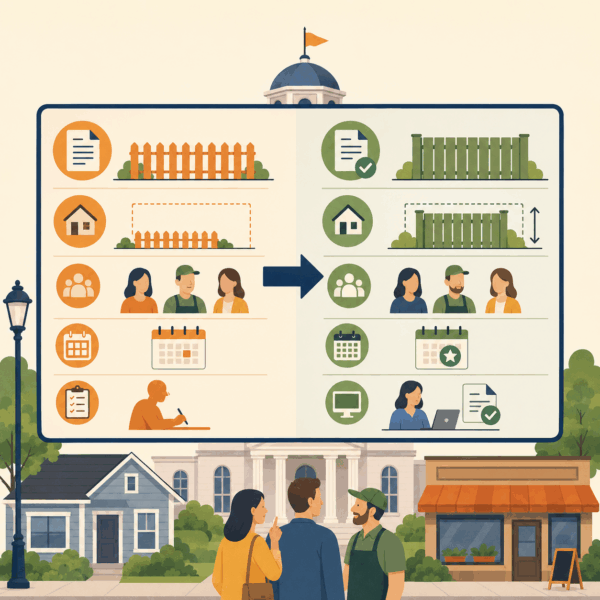 The meeting recap is the communication link between the governing body’s formal actions and the residents who are affected by those actions but cannot attend every meeting. Without the recap, most residents are effectively excluded from understanding how their local government operates, not because the meetings are closed to them but because the formal record of those meetings is inaccessible. With a well-produced, consistently distributed recap, the agency transforms public meetings from events that happen in front of a handful of attendees into transparent governance that the entire community can follow.
Building a consistent recap practice requires a template, a workflow, a designated writer, and a distribution process. Each of those elements is achievable for any small government, but designing them together in a way that fits the agency’s specific structure and staffing is where outside support can add significant value. A well-designed recap system should be in place and functioning before a significant controversy or a consequential decision cycle arrives, because those are the moments when the recap matters most and when building the system from scratch under pressure is hardest.
Stegmeier Consulting Group (SCG) helps small and rural governments develop meeting communication systems that serve residents effectively, including meeting recap templates, workflow design, plain language guidance, and distribution strategy. Whether your agency has never produced a meeting recap or is producing them inconsistently and wants to improve, SCG can help you build a system that makes the governing body’s work genuinely accessible to the full community it serves.
Future Trends in Meeting Transparency and Recap Communication
Public expectations for meeting transparency are evolving in ways that make the meeting recap increasingly important as a communication practice. Several trends are shaping how residents expect to be kept informed about local government decisions.
Video recording and live streaming of public meetings is becoming more common, and some residents are beginning to expect that they can watch a recorded meeting rather than read a recap. Video and recaps serve different audiences and purposes, and agencies that offer both will reach the widest audience. Residents who want a quick summary of what happened will read the recap. Residents who want to hear a specific discussion or public comment in full can watch the relevant portion of the recording. The recap can link to specific timestamps in the meeting recording for readers who want more context on a particular item, creating a more integrated meeting communication package than either document provides alone.
Accessibility of meeting communication is also becoming a more prominent expectation. Meeting recaps that are written in plain language but distributed only as dense text documents may not serve residents with visual impairments, residents with lower literacy levels, or residents who primarily consume information in languages other than English. Audio versions, simplified summaries, translated versions for significant decisions, and accessible document formatting are all elements that some agencies are beginning to include in their meeting communication toolkit.
The expectation of rapid publication is also increasing. Residents who follow local government communication through social media are accustomed to near-immediate information, and a meeting recap published three days after the meeting may feel outdated to a resident who has already seen secondhand accounts circulating on social media. Agencies that invest in streamlined recap production workflows to reduce the time between meeting and publication will be better positioned to serve residents whose information expectations are shaped by the speed of digital communication.
Conclusion
The meeting recap is a direct expression of an agency’s commitment to transparent governance. It says, in practice rather than in principle, that the agency believes residents have a right to know what their governing body is doing even when they cannot attend every meeting. It treats residents as participants in local governance rather than observers who need to seek out formal records to understand what their government has decided. And it builds, over time, the informed and engaged public that makes local democracy function as it is intended to.
Writing recaps consistently and well is not complicated, but it requires commitment to a process that does not come naturally to agencies accustomed to relying on formal minutes as their primary post-meeting communication. The commitment is worth making, because the return, in resident understanding, trust, and engagement, is significant and compounds over time as residents learn to rely on the recap as a consistent source of accessible information about their local government.
Small governments that produce meeting recaps that residents actually read are communicating something important beyond the specific information each recap contains. They are communicating that they take seriously their obligation to keep residents informed. That signal, repeated meeting after meeting over months and years, is one of the most powerful ways a local government builds the reservoir of public trust that sustains it through difficult decisions, tight budgets, and the inevitable controversies that all governing bodies eventually face.
Stegmeier Consulting Group’s Strategic Approach to Communication Systems
Align your agency’s meeting recaps, public records, and resident communication.
Small and rural governments need meeting communication that bridges the gap between formal records and resident understanding. A plain-language meeting recap, consistently produced and promptly distributed, makes local governance genuinely accessible to the community it serves. Building that practice requires a clear format, a workable post-meeting workflow, and the distribution strategy that ensures the recap reaches residents who need it.
SCG helps public agencies develop meeting communication practices that serve residents effectively and build the public understanding on which accountable local governance depends. Whether your agency needs to establish a meeting recap practice for the first time or improve a practice that is not working as well as it should, SCG can help you design and implement a system that consistently gives residents the post-meeting information they need.
Use the form below to connect with our team and explore how a consistent, resident-centered meeting recap practice can strengthen your agency’s transparency, build public trust, and make local governance genuinely accessible to the community you serve.