Public Meeting and Community Engagement Communication for City Economic Development Agencies
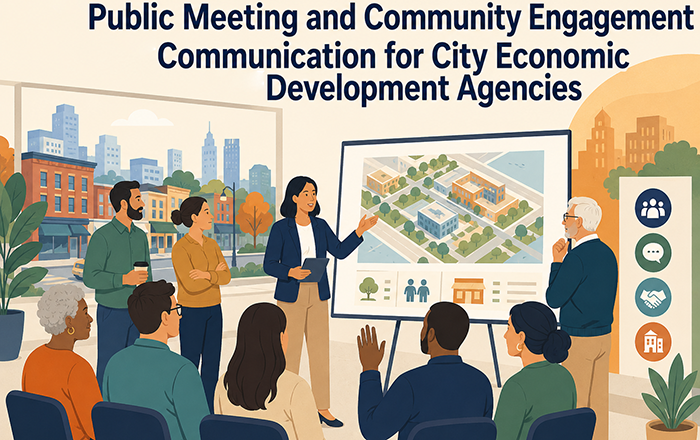
A public meeting about a proposed economic development project or neighborhood investment plan is one of the most revealing tests of an agency’s actual commitment to community engagement, because the difference between genuine engagement and procedural compliance becomes visible in almost everything about the meeting: the location selected, the time of day, the format of the presentation, the language in which materials are available, the amount of time allotted for community questions versus staff presentation, what happens with what is heard, and whether any of it changes anything about the decision being made. Residents who have attended multiple public meetings for proposed developments in their neighborhoods have typically become sophisticated evaluators of which meetings are genuine attempts at community partnership and which are professionally produced check-the-box exercises in notification rather than engagement.
City economic development agencies face a specific public meeting and community engagement challenge that is distinct from the general challenge of public participation in government, because the decisions they are facilitating, development approvals, corridor investment plans, incentive packages, site dispositions, tend to be both highly consequential for specific neighborhoods and highly technical in their structure and implications. The resident who cares deeply about what happens in their neighborhood may not have the background to evaluate a financial pro forma, a traffic study, or a tax increment financing calculation, but they do have the most direct stake in the project’s outcomes, and the meeting format that treats technical expertise as the primary qualification for meaningful input has already excluded the most directly affected voices before the meeting begins.
Getting public meetings and community engagement right for economic development decisions requires an agency to make choices about format, language, timing, facilitation, and follow-through that are often more demanding than the procedural minimum and that require the agency to act as though it believes community input can genuinely shape decisions rather than merely complete the regulatory record. This article examines how city economic development agencies can design and conduct public meetings and community engagement processes that give residents and stakeholders a genuine opportunity to understand what is proposed, what decisions are being made, and how to participate meaningfully, addressing the specific communication and facilitation choices that distinguish genuine engagement from procedural compliance.
What Community Members Actually Need to Know to Engage Meaningfully
 The starting point for effective community engagement communication is an honest answer to the question of what community members need to know in order to participate in a meaningful way in the decision being made about something that affects them. Most public meeting presentations for economic development projects do not answer this question well, because they are organized around the developer’s or the agency’s understanding of the project rather than around what a community member needs to understand in order to evaluate the project’s implications for their neighborhood and for themselves.
Community members engaging with a proposed development project or neighborhood investment plan need to understand, at minimum, five things: what is being proposed and where, described in terms of the physical reality that will exist if the proposal is approved; what decisions are being made and by whom, including what level of the government is making the decision, what the decision-making timeline is, and what the community’s formal and informal influence over the outcome is; what will change if the proposal is approved, including both the changes the developer or agency is emphasizing and the changes they may not be emphasizing, such as displacement risk, traffic changes, changes to neighborhood character, or changes to the fiscal position of local public services; what community benefit provisions are included and what the enforcement mechanisms are; and how to participate in the decision-making process, including not only the formal comment process but the informal advocacy and decision-maker engagement that residents may find more practically effective.
Materials prepared for public meetings should be designed to answer these five questions for a general-audience resident who has no prior familiarity with the project, rather than for a planning professional, a developer’s attorney, or a community advocate who has been engaged with the project for months. The test of whether meeting materials are serving community members well is whether a resident who has never heard of the project before, who reads the materials provided at the door, can answer these five questions by the end of the presentation without needing to interrupt the presenter to ask for clarification on basic points. If the materials cannot pass this test, they are not serving the community engagement function they are nominally designed for.
Plain language in public meeting materials is a non-negotiable standard for genuine community engagement, and it is one that most agency meeting materials do not fully meet, not because the agency is trying to obscure information but because the materials are produced by staff and consultants who are immersed in the technical details of the project and have lost the perspective of someone encountering those details for the first time. The vocabulary of planning and development, including terms like mixed-use, FAR, TIF, setbacks, entitlements, and deed restrictions, is second nature to the people producing the materials and a barrier to most of the people who are supposed to be reading them. Plain-language translation of these terms, either through a glossary, through parenthetical explanations the first time each term appears, or through materials written from the ground up in accessible language rather than translated from technical documents, is the communication investment that makes the materials genuinely useful to the community members they are intended to serve.
The Meeting Location and Format as Communication
The choices an agency makes about where and when to hold a public meeting, and how to format that meeting, communicate something about who the meeting is intended for and how seriously the agency takes the engagement. A meeting held at city hall on a Wednesday evening, in a room that requires a bus transfer from the neighborhood being discussed, with a presentation delivered in English to a community with significant Spanish-speaking membership, has communicated its intentions before anyone arrives. A meeting held at a community center in the neighborhood in question, at a time that allows working residents to attend, in the language or languages the community uses, is a different kind of invitation.
The presentation-heavy meeting format that dominates public meetings for development projects, in which a developer or agency staff member presents for thirty to forty-five minutes and community members are then given three minutes each at a microphone to respond, is one of the least effective formats for genuine community engagement, and community members who have attended many of these meetings know it. The format is designed around the developer’s or agency’s narrative rather than around the community’s questions, and it allocates conversational space in inverse proportion to the community’s stake in the outcome. A format that inverts this allocation, beginning with the community’s questions rather than the agency’s presentation, using small group discussions that allow residents to talk with each other and with project representatives rather than only speaking at a microphone, and allocating meaningful time to the community’s concerns rather than only to the agency’s answers, is a format that communicates genuine interest in the community’s perspective.
Growing Places: Communication Strategies for Economic Development and Public Finance Agencies
This article is part of our series on strategic communication for Economic Development organizations, including state and local economic development agencies, regional partnerships, and business attraction initiatives. To learn more and to see the parent article, which links to other content just like this, click the button below.
Explaining What Decisions Are Actually Being Made
One of the most consistent failures in public meeting communication for economic development projects is the failure to explain clearly what decisions are actually being made, what level of government has the authority to make them, and what genuine influence the community has over the outcome. Community members who attend a public meeting without understanding these basics may believe they are participating in a decision they have no practical influence over, or may fail to take the actions that would actually give them influence, such as contacting specific decision-makers or submitting formal comments on a specific record, because the meeting did not explain how the decision-making process works.
The decision-making map, a brief and accessible explanation of what is being decided, who decides it, and what process governs the decision, should be a standard element of every public meeting presentation for economic development projects. For a zoning change required by a development proposal, the decision-making map should explain that the city planning commission will make an advisory recommendation and the city council will make the final decision, that the community can influence both by submitting written comments before the hearing and by speaking at the hearing, that the formal comment record closes on a specific date, and that the council vote is scheduled for a specific date. For a TIF district designation, the map should explain what body approves the designation, what happens between the public meeting and the approval vote, and what the community’s opportunities to influence the outcome are between the meeting and the vote.
Being honest about the limits of community influence is as important as being clear about the genuine opportunities for input. Community members who are told their input is important and then experience a process in which nothing about the project changes in response to their input learn to distrust public engagement processes in general, which is a legitimate response to an agency that overstates community influence to encourage participation and then fails to demonstrate that the participation mattered. The honest version of the engagement communication acknowledges both the genuine opportunities for community influence and the boundaries of that influence: the design elements that can still be changed in response to community input, the elements that are functionally fixed because of prior commitments or regulatory requirements, and the decision-making bodies that the community can engage with versus those whose decisions are already effectively made.
Making Technical Project Information Accessible Without Simplifying It
 Economic development projects involve technical information that is genuinely complex, and the communication challenge of making that information accessible to community members without distorting it or oversimplifying it in ways that produce misunderstanding is one of the hardest in public engagement communication. There is no simple formula for this balance, but there are specific content choices that consistently move in the right direction.
Visual representations of the project are among the most powerful tools for making technical project information accessible, because they allow community members to evaluate the physical reality of a proposed development in a way that a textual description cannot match. Accurate renderings that show what the project will look like from the street level, from the perspectives of the specific blocks that will be most directly affected, and in relation to the existing buildings and landscape that community members know, provide the evaluative basis for community engagement that the abstract technical specifications of height limits, floor area ratios, and setbacks do not. These renderings should be accurate rather than promotional, presenting the realistic visual outcome rather than an idealized version that serves the developer’s marketing purposes, because a community that makes decisions based on a rendering that does not reflect the actual planned project will have legitimate grievances when the actual building is different from what was shown.
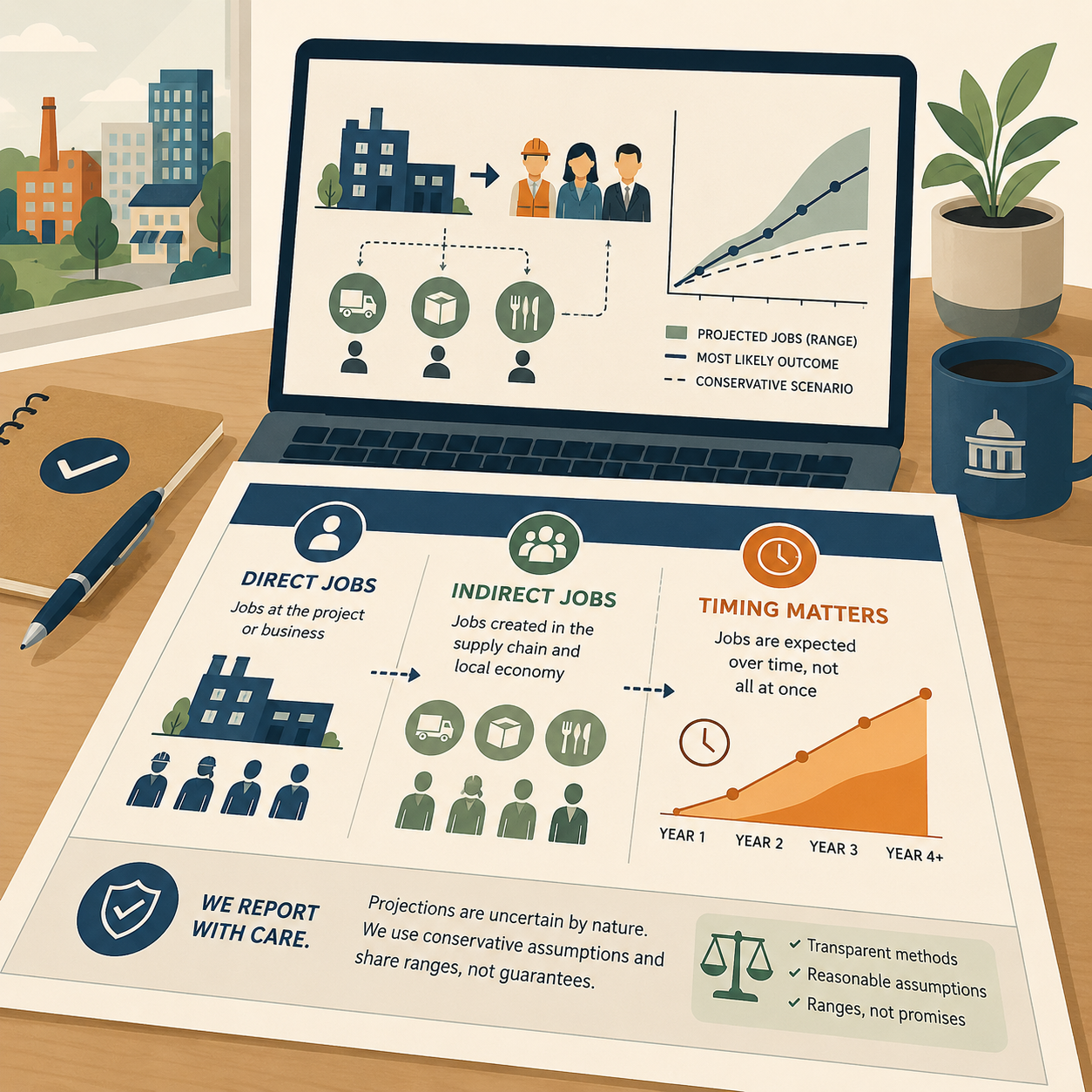
Financial transparency in public meetings for projects that involve public incentives or public financing is a specific and often underdelivered component of accessible technical communication. Community members who are evaluating a project that includes a TIF arrangement, a tax abatement, a below-market city land disposition, or other public financial support deserve a clear, accessible explanation of what the public is providing and what it is receiving in return. This explanation should be at the plain-language project summary level described elsewhere in this content series: what is the public cost, what are the specific commitments the developer has made in return, and how will those commitments be monitored and enforced. A public meeting that presents the financial structure of a project only in the technical language of the financing instruments, without a plain-language explanation of the public cost and benefit, is not giving community members the information they need to evaluate the public deal on its merits.
Community benefit provisions should be described in specific, evaluable terms rather than in the promotional language of partnership and community investment that often substitutes for specific commitment language in project presentations. A presentation that describes affordable housing provisions by stating the specific number of units, the income levels at which they will be affordable, the mechanism that makes them affordable rather than just designated as affordable, and the duration for which the affordability restriction applies, gives community members the information they need to evaluate whether the provision is meaningful. A presentation that describes the project as including affordable housing components without these specifics gives community members a claim they cannot evaluate, which is the form of information that generates suspicion rather than trust.
Community Benefit Negotiations That Community Members Actually Know Are Happening
One of the most significant transparency failures in economic development project community engagement is the community benefit negotiation that occurs outside of the public meeting process, between the developer and city staff or community organizing groups, producing provisions that are then announced at a public meeting as part of the project’s community benefit package. Community members who attend the public meeting learn about the provisions but have not been part of the process that produced them and may not understand what was traded away in exchange for what was gained.
Greater transparency about the community benefit negotiation process, including communicating to community members what provisions have been proposed, what the developer has agreed to, what the agency believes is not feasible given the project’s financial structure, and why, gives community members a more accurate understanding of both the opportunity and the constraints that shape what is achievable. This transparency may reveal limitations that community members would prefer not to see, but it also gives them the basis for evaluating whether the process that produced the provisions was a genuine negotiation or a predetermined outcome, and for engaging with future projects with more accurate expectations about what community benefit negotiations can and cannot achieve.
Follow-Through Communication After the Meeting
The meeting is not the end of the community engagement process. What happens after the meeting, how the agency uses what was heard, how it communicates back to participants about what will happen next, and whether any of what was heard is reflected in changes to the project or the decision, is at least as important to genuine engagement as the meeting itself. Communities that experience consistent disconnects between what is said at public meetings and what happens after them develop exactly the skepticism about public engagement processes that makes future engagement more difficult and more adversarial.
Post-meeting communication should acknowledge what was heard, indicate how it will be considered in the decision-making process, and commit to a specific timeline for communicating back to participants about the outcome. An email or letter to meeting participants that says we heard your concerns and will take them into account is not post-meeting communication in any meaningful sense. A communication that says at the public meeting, the following concerns were raised most frequently, here is how each of those concerns will be addressed in the decision-making process, and here is the timeline by which you will hear about the outcome, is a communication that demonstrates that the meeting produced something more than a public record.
When community input produces changes to a project, those changes should be specifically attributed to the community input that generated them, both to give the community genuine credit for the influence they exercised and to build the record that makes future community engagement meaningful. A developer or agency that modified a project in response to community input and does not say so has wasted the most powerful tool available for building community trust in the engagement process: the evidence that engagement actually changes things.
When community input does not produce changes to a project, because the concerns raised are not within the scope of the decision being made, because they were addressed earlier in the process, or because the decision-maker weighed them and concluded that the project as proposed still warranted approval, the agency should say so specifically rather than allowing the community to infer silence as indifference. A communication that says the concern raised about project X was considered and the decision-maker concluded that the provision already included in the development agreement addresses it sufficiently is more respectful of the community’s engagement than silence, even when the community disagrees with the conclusion.
Corridor Plans and Neighborhood Investment Conversations
Community engagement for corridor investment plans and neighborhood economic development strategies presents a distinct set of communication challenges from project-specific engagement, because the decisions involved are more long-term, more complex in their cumulative effects, and more dependent on the community’s own vision for its future than individual project approvals. A corridor investment planning process that is organized primarily around the agency’s or consultants’ analysis of the corridor’s economic potential is not a community engagement process. It is a technical analysis with a community review step, and the community typically experiences it as such.
Genuine community engagement for corridor planning starts with listening: understanding what businesses and residents in the corridor most want to see, most want to protect, and most want to change about the corridor before any analysis of what is economically feasible or financially supported. This listening phase, conducted through small group conversations, interviews with individual businesses and residents, and community events that create space for people to share their knowledge of the corridor and their visions for its future, produces intelligence about community priorities that no economic analysis can generate, and it produces the community ownership of the eventual plan that technical-led planning cannot create.
The communication of analysis and options in a corridor planning process should present community members with genuine choices rather than a preferred option or a single scenario, because a process that presents one plan and asks for feedback on it has already limited community influence to the margins. A process that presents two or three meaningfully different scenarios reflecting different priority configurations, describes the trade-offs between them in terms the community can evaluate, and invites community members to engage with those trade-offs rather than just validating a predetermined direction, is a process in which community engagement can genuinely shape the outcome.
Strategic Communication Support for City Economic Development Agencies
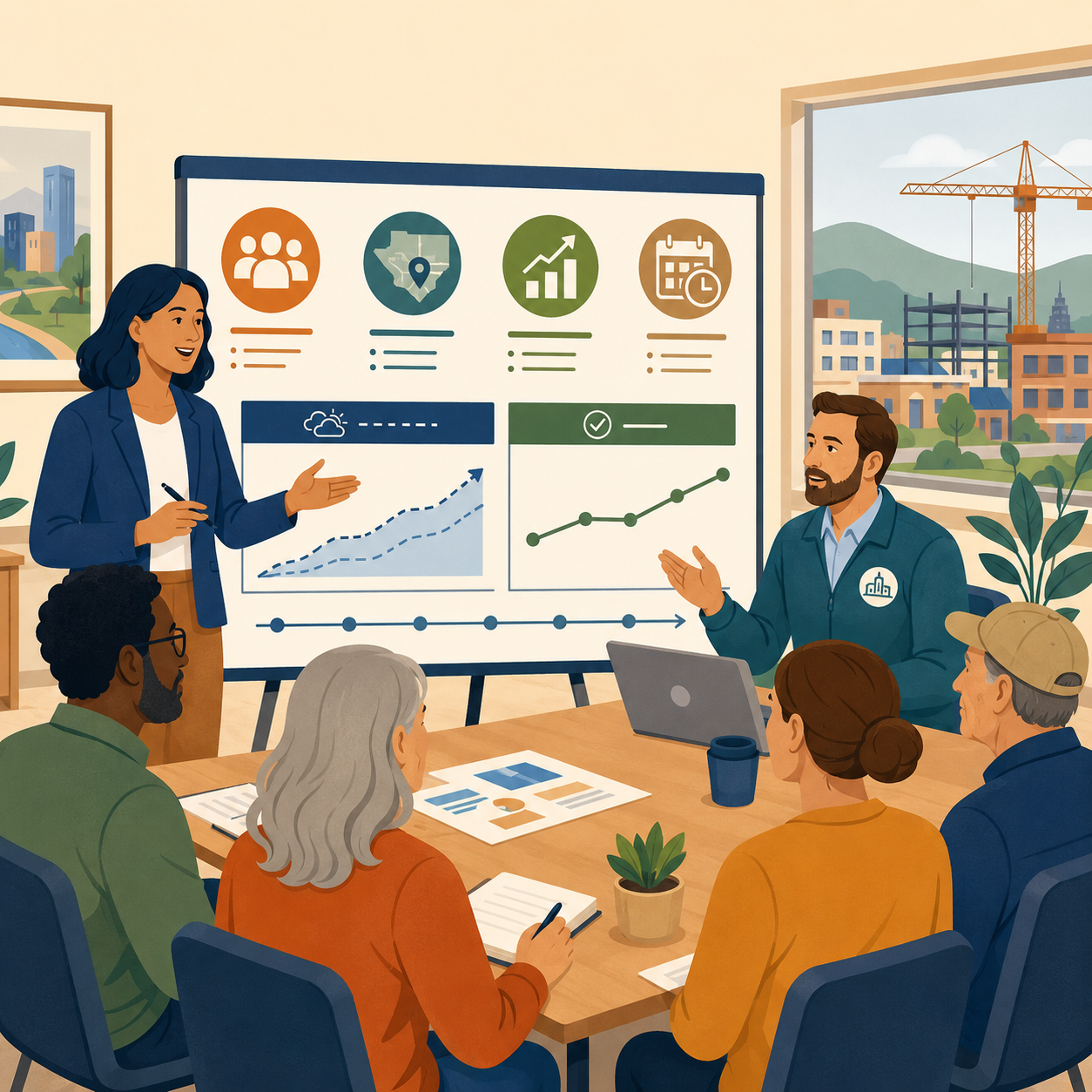 Public meeting and community engagement communication for city economic development agencies sits at the intersection of technical project communication and community relationships, and doing it well requires both the communication design skills that make complex information accessible and the community relationship understanding that makes engagement genuine rather than procedural. Most city agencies have not invested equally in both, typically having more technical communication capacity than community engagement design capacity, which produces the prevalent pattern of technically proficient presentations delivered in ways that do not enable genuine community participation.
Stegmeier Consulting Group (SCG) helps city economic development agencies design and conduct public meetings and community engagement processes that give residents and stakeholders a genuine opportunity to understand what is proposed and to participate meaningfully in decisions that affect them. That support may include meeting format design and facilitation, plain-language project and plan communication materials, decision-making map development, financial transparency communication, community benefit provision communication, post-meeting follow-through communication design, corridor plan engagement process design, and multilingual engagement support for cities serving linguistically diverse communities.
The goal of this work is community engagement that deserves the name: processes that give community members what they need to know, create formats that allow genuine participation, and demonstrate through follow-through that community input actually matters to the decisions being made. That standard is harder to meet than procedural compliance and more valuable in its outcomes for agencies that want to build the community relationships that make economic development work over the long term.
Future Trends in Community Engagement Communication for Economic Development
Community engagement for economic development decisions is evolving in response to changes in community expectations, digital communication tools, and growing recognition that inadequate engagement has been a contributing factor in some of the most visible economic development failures of recent decades, including neighborhood displacement, failed projects, and political backlash that has constrained incentive program authority. Several trends are shaping the direction of that evolution.
Digital engagement tools are expanding the options for community participation beyond the traditional in-person public meeting, allowing residents to participate through online comment platforms, virtual meetings that eliminate transportation barriers, mapping tools that allow residents to indicate priorities and concerns geographically, and interactive survey instruments that collect structured community input at scale. These tools are not substitutes for in-person community engagement, which provides qualitative depth and relationship dimensions that digital tools cannot replicate, but they are valuable complements that expand participation to community members who cannot attend in-person meetings.
Equity and anti-displacement frameworks are becoming more central to how community engagement is designed and evaluated, with growing expectation that engagement processes will specifically reach and meaningfully include the residents most likely to be affected by development decisions, including low-income renters, small businesses with below-market leases, and longtime community members whose presence and community memory the development process should preserve rather than displace. Agencies that design their engagement processes specifically to reach these stakeholders, rather than relying on standard meeting formats that systematically underrepresent them, will be better positioned to meet these rising expectations.
Community benefit agreement practices are maturing, with more community organizations developing the capacity to negotiate enforceable community benefit agreements with developers and agencies, and with more jurisdictions developing structured frameworks for the terms and monitoring of these agreements. The community engagement communication standard is evolving in this context to include greater transparency about the community benefit negotiation process itself, including what the community is asking for, what developers and agencies are agreeing to, and what monitoring and enforcement mechanisms make the commitments real.
Conclusion
Public meetings and community engagement processes that are organized around the agency’s communication needs rather than the community’s information needs produce communities that are notified rather than engaged, that experience economic development as something that happens to them rather than something they participate in shaping. The distinction between notification and engagement is not primarily a matter of good intentions, which most agency staff have in abundance. It is a matter of design: the specific choices about format, language, timing, information access, and follow-through that determine whether community members leave a meeting equipped to participate meaningfully in the decision they just learned about.
City economic development agencies that make the investment in genuine engagement design, that take seriously the question of what community members need to know and how they need to be able to participate, and that demonstrate through follow-through that community input changes things, are building the community relationships that make economic development work over the long term. Those relationships are what allow a community to support a project that is good for it, to push back on a project that is not, and to trust that the engagement process through which that judgment is expressed is one in which their voice actually matters.
SCG’s Strategic Approach to Communication Systems
Align your agency’s messaging, processes, and public engagement strategies.
City economic development agencies need public meeting and community engagement communication that gives residents and stakeholders what they need to understand what is proposed, what decisions are being made and by whom, what the genuine opportunities for influence are, what the specific community benefit provisions are and how they are enforced, and how to participate in ways that actually matter. That means meeting formats that create space for genuine community dialogue rather than passive presentation, plain-language materials that translate technical information without distorting it, accurate visual representations of proposed developments, financial transparency about public costs and benefits, and post-meeting follow-through that demonstrates community input was heard and considered.
SCG helps city economic development agencies design and conduct community engagement processes that deserve the trust of the communities they serve. Whether your agency needs meeting format design and facilitation support, plain-language project communication materials, community benefit provision communication, corridor plan engagement design, or post-meeting follow-through communication, SCG can help you build engagement processes that are genuine rather than procedural.
Use the form below to connect with our team and explore how strategic community engagement communication can help your agency build the community relationships that make economic development decisions durable and the projects they enable genuinely beneficial to the communities in which they occur.