
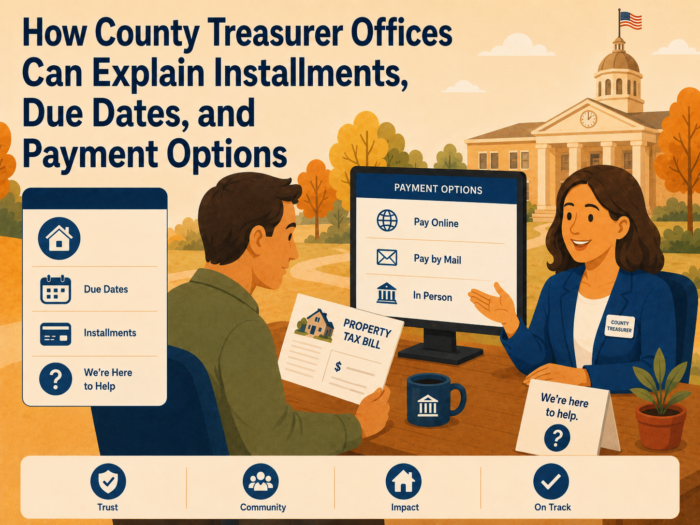
Property Tax Bills Without Confusion: How County Treasurer Offices Can Explain Installments, Due Dates, and Payment Options
The property tax bill is one of the few government documents that arrives in almost every household and almost every business each year, regardless of income level, tax sophistication, or prior experience with government finance. It is also, for a significant portion of the people who receive it, one of the most confusing. Not because the underlying obligation is complicated, but because the document that communicates it is frequently designed around the county’s administrative process rather than the property owner’s practical need to understand what they owe, when they owe it, how to pay it, and what happens if they cannot.
County treasurer offices that administer property tax billing carry a communication responsibility that is easy to underestimate. A property tax bill may arrive twice a year, cover amounts that range from hundreds to tens of thousands of dollars, involve installment schedules that differ by jurisdiction, interact with escrow arrangements that many property owners do not fully understand, and carry delinquency consequences that can ultimately threaten ownership of the property itself. For a homeowner who has never missed a payment, the bill may seem straightforward. For a homeowner who is managing financial stress, who inherited a property, who recently moved, who is elderly or disabled, or who relies on an escrow account that has been miscalculated, the bill can be the beginning of a process they do not understand and cannot navigate without help.
The communication challenge for county treasurer offices is compounded by the fact that property tax billing is deeply local. Installment schedules, due dates, payment methods, penalty structures, exemption interactions, and delinquency processes vary significantly from county to county and from state to state. National guidance about property taxes is rarely specific enough to help a particular homeowner in a particular county understand their specific bill. The communication has to come from the county itself, in language that is specific to its own billing structure, and it has to reach property owners in time for them to act on it before deadlines pass.
This article examines how county treasurer offices can redesign their property tax bill communication to be clearer, more actionable, and more genuinely useful to the full range of property owners they serve. It addresses the structural and language decisions that make bills easier to understand, the specific communication challenges of installment systems and escrow interactions, and the communication strategies that help property owners in financial difficulty find a resolution path before delinquency becomes a crisis.
Why Property Tax Bills Confuse the People Who Receive Them
 Property tax bills confuse property owners for reasons that are structural, not accidental. The bill arrives as a document that reflects the county’s data systems, its billing schedule, its administrative categories, and its legal requirements for what must be included in tax correspondence. It is not typically designed by someone who has asked what a property owner needs to know to understand and act on this document. The result is a bill that contains all of the legally required information but organizes that information in a way that serves the county’s administrative logic rather than the property owner’s comprehension.
A typical property tax bill contains a large number of distinct elements: the assessed value of the property, the taxable value after any exemptions, the tax rates applied by different taxing entities such as the county, the school district, the library district, and the fire district, the gross tax calculated before credits, the credits applied, the net tax due, the installment amounts and due dates, the prior year’s figures for comparison, the property’s parcel number, the legal description, and in many counties a breakdown of how the tax revenue will be distributed among the various taxing entities. Each of these elements is relevant to someone, but presenting all of them with equal visual prominence in a single document makes it genuinely difficult for a property owner to find the three or four pieces of information they actually need to act on the bill: the total amount due, the installment amounts if applicable, the due dates, and the payment methods.
The confusion is amplified when property owners compare their current bill to their prior-year bill and find that amounts have changed without an accompanying explanation. A property tax increase that results from a higher assessed value, a new taxing entity, a rate change, or the expiration of an exemption is a legitimate administrative outcome, but it is experienced by the property owner as a surprise. A bill that includes the prior year’s figures without explaining why the current year’s figures are different leaves the property owner to wonder whether an error was made, whether they lost an exemption they were entitled to, or whether they are being overtaxed, and many of them will call the county to ask rather than simply paying an amount they do not understand.
The Installment Schedule as a Communication Challenge
Many counties offer property owners the option to pay property taxes in installments rather than in a single annual or semi-annual payment. Installment plans may involve two payments, four payments, or monthly payment options depending on the county’s structure and the state’s enabling legislation. The availability of installment options is a genuine service to property owners, particularly those who would find it difficult to make a large lump sum payment but can manage smaller regular payments over the course of a year. But installment options are only useful if they are communicated clearly enough for property owners to understand how they work and what they are actually committing to when they choose one.
The installment schedule creates several specific communication challenges. The first is clarity about what each installment covers. An installment that is described as the first half of the annual tax may not tell the property owner which portion of the total tax it represents, whether it covers property taxes from January through June or some other period, or whether any charges such as special assessments or fees are included in the installment amount or billed separately. The second challenge is clarity about what happens if a payment is late. Many installment systems carry specific penalties for late installment payments that differ from the penalties for delinquency on the full annual amount, and property owners who do not understand these consequences may inadvertently incur penalties by paying installments a few days late without understanding the impact.
The third installment communication challenge is the interaction between installment payments and escrow accounts. A property owner whose mortgage lender pays property taxes through an escrow account may not realize that their lender is paying the installments on a schedule that does not match the dates on the bill they are receiving, or may not understand that the escrow account is responsible for the payment, or may inadvertently make a direct payment to the county while their lender is also making an escrow payment, creating an overpayment situation that requires correction. Clear communication about how installment payments interact with escrow accounts, and who is responsible for making the payment in each situation, is one of the most important and most frequently missing elements of county property tax bill communication.
Clearer Taxpayer Communication: Strategies for State and Local Assessors, Treasurers, Revenue Departments, and Finance Offices
This article is part of our series on strategic communication for State and Local Assessors, Treasurers, Revenue Departments, and Finance Offices. Clear, timely, and accessible taxpayer communication helps government agencies improve compliance, reduce confusion, strengthen public trust, and enhance the citizen experience. To learn more and to see the parent article, which links to additional resources and best practices for taxpayer outreach and engagement, click the button below.
Escrow and Mortgage Company Communication
A substantial proportion of residential property owners do not pay their property taxes directly to the county. Their mortgage lender collects a monthly amount as part of the mortgage payment, holds it in an escrow account, and remits the property tax payment to the county on the property owner’s behalf. This arrangement is designed to protect the lender’s collateral interest by ensuring that property taxes are paid and the property does not become subject to a tax lien. It also benefits many homeowners by spreading the property tax cost across twelve monthly payments rather than requiring a large lump sum payment at the time the bill is due.
The communication problem with escrow arrangements is that the property owner who receives the county’s property tax bill may not clearly understand their role in the payment process. A bill addressed to the property owner that shows a total amount due with a due date may be interpreted by the property owner as a demand for direct payment, even though their lender is already holding escrow funds and will make the payment. Some property owners in this situation make a direct payment to the county while their lender also makes the escrow payment, resulting in a double payment that must be refunded. Others assume the lender will handle everything and do not open or read the bill at all, which means they miss any notices about escrow shortfalls, changes in the tax amount, or exemptions they should be claiming.
The county’s bill should include explicit, prominent language that helps property owners identify whether they are in an escrow situation and, if so, what their role is. A bill that says if your property taxes are paid through a mortgage escrow account, you should forward this bill to your lender or your lender may already have a copy of this bill and will make payment on your behalf. You should review this bill to confirm the amount and contact your lender if the tax amount has changed significantly from the prior year, gives the property owner accurate guidance about what to do with the bill in their specific situation without requiring them to figure it out independently.
County treasurer offices should also maintain relationships with the mortgage servicers and tax service companies that manage escrow payments on behalf of large numbers of property owners. These entities receive property tax bill data electronically in many counties and make payments in bulk. Communication with these entities about changes to billing amounts, payment due dates, installment options, and delinquency processes affects the accuracy and timeliness of a large volume of property tax payments. Maintaining clear, current communication with mortgage servicers is an important but often overlooked component of the county’s overall property tax bill communication strategy.
Escrow Shortage Communication and Its Impact on Property Owners
When a property’s tax amount increases significantly from one year to the next, the property owner’s mortgage lender may find that the escrow account they have been collecting does not have enough funds to cover the new, higher tax amount. The result is an escrow shortage, and the way that shortage is communicated to the property owner is often a source of significant confusion and financial stress. The lender’s escrow shortage notice arrives separately from the county’s property tax bill, may use different terminology, and may come at a different time, leaving the property owner to understand how the two documents relate and what action, if any, they need to take.
While the escrow shortage is primarily a communication responsibility of the mortgage lender rather than the county, the county’s property tax bill communication can reduce escrow shortage confusion by clearly explaining why the tax amount has changed from the prior year. A bill that identifies the specific factors that caused an increase, whether it is a higher assessed value, a rate change, a new special assessment, or the expiration of an exemption, gives the property owner the information they need to understand not only the county’s bill but the lender’s escrow shortage notice that may follow. Property owners who understand why their tax amount changed are better positioned to evaluate whether the change is correct, to communicate with their lender about the escrow adjustment, and to make informed decisions about how to manage the financial impact.
Structuring the Bill for Immediate Clarity
The most direct way county treasurer offices can improve property tax bill communication is by restructuring the bill itself so the information that property owners need most urgently appears first, is presented clearly, and is easy to find on a second reading when the property owner returns to the bill at the time of payment. This does not require eliminating any of the information currently on the bill. It requires reorganizing that information around the property owner’s needs rather than the county’s data structure.
The top portion of the bill, the section a property owner sees first when they open the envelope or view the document online, should contain the most action-critical information: the total amount due for the current period, the due date, and the primary payment options. If the county offers installment payments, the installment amounts and their respective due dates should also appear prominently in this section, with a clear indication of how the property owner can elect to pay in installments if they are not already enrolled. This information should be presented in a visually distinct section that separates it from the supporting detail that explains how the amount was calculated.
The middle section of the bill can then provide the supporting calculation detail: the assessed value, the taxable value after exemptions, the rate breakdown by taxing entity, and the resulting gross and net tax amounts. This section is important for property owners who want to understand how the bill was calculated, who are comparing the current year to the prior year, or who are trying to identify whether an exemption they applied for has been applied correctly. But it should be clearly identified as explanatory detail rather than action-required information, so property owners who simply want to know what to pay and when do not have to read through the entire calculation to find that information.
The bottom section of the bill should address what happens if the property owner cannot pay by the due date, including information about installment options if not already enrolled, late payment penalties and when they apply, delinquency consequences and the timeline that leads to them, and contact information for the county treasurer’s office and any payment assistance programs the county offers. This section should also address the most common property owner questions about the bill, such as what to do if the property owner believes the assessed value is incorrect, how to apply for an exemption that may reduce future bills, and how to update the mailing address if the bill was sent to the wrong location.
Plain Language in Property Tax Bill Communication
Property tax bills are among the most resistant government documents to plain-language redesign because they carry legal requirements about what information must be included and in some cases about how certain information must be presented. These requirements are real and must be respected. But they rarely require the bill to be organized in the way most county bills are organized, or to use the technical vocabulary that most county bills use. The plain-language redesign of a property tax bill is typically about organization and vocabulary choices within the space the legal requirements define, not about eliminating legally required content.
The vocabulary of property tax billing is particularly prone to technical language that general-audience property owners do not recognize. Terms like assessed value, taxable value, net assessed value, millage rate, levy, delinquency date, homestead exemption, and special assessment all have specific meanings in property tax administration that are not intuitive to property owners who have not previously engaged with the property tax system. A bill that uses these terms without defining them requires the property owner to either know what they mean already or look them up before they can fully understand the bill. A bill that uses the terms but provides brief plain-language definitions the first time each one appears, or that replaces the most obscure terms with plain-language equivalents, serves a broader range of property owners more effectively.
The explanation of how the tax amount is calculated is a specific area where plain language can dramatically improve bill clarity. A calculation that shows assessed value minus exemptions equals taxable value, then shows taxable value multiplied by the tax rate equals tax due, presents the same mathematical relationship that a rate-times-base calculation presents but in a step-by-step sequence that a property owner without financial training can follow. Adding a brief description of what each line represents, such as the assessed value is the county’s estimate of your property’s market value, or the homestead exemption reduces the taxable portion of your property’s value if you live there as your primary residence, turns an opaque calculation into a transparent explanation.
Communicating Delinquency Risk Without Creating Panic
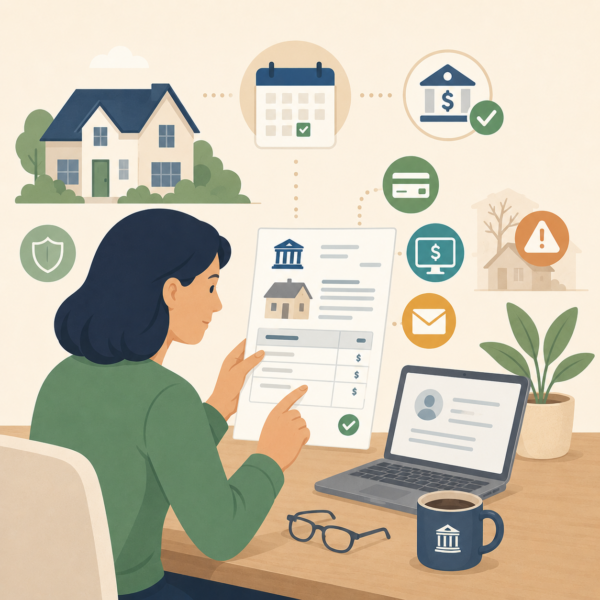 Property tax delinquency carries serious consequences for property owners, including compounding penalties and interest, potential inclusion in a tax lien sale, and in extreme cases the loss of the property itself. These consequences are real and the county has a legitimate interest in communicating them. But the way delinquency consequences are communicated on the property tax bill, and in any follow-up notices, significantly affects whether property owners in financial difficulty seek help early or avoid the situation until it has escalated beyond the point where early intervention options are available.
A bill that leads with delinquency warnings, uses threatening language, or emphasizes enforcement outcomes before explaining the available payment options and assistance programs may deter property owners from engaging with the county at the moment when engagement would be most beneficial. A property owner who reads a bill and concludes that the county views them primarily as a collections target may be less likely to call and ask about payment plans or assistance programs than one who reads a bill that presents the payment options, including installment options and assistance resources, prominently and with a tone that assumes the property owner wants to pay and is looking for the best way to do so.
Delinquency communication should be accurate, specific, and proportionate to the stage of the process. A bill that explains that a ten percent penalty will be applied to unpaid balances after the due date is communicating a consequence accurately. A bill that implies the property owner will immediately face lien proceedings if they are a day late is disproportionate and may cause unnecessary panic that leads to avoidance rather than action. The communication goal is to give property owners a clear and accurate picture of what will happen if they do not pay, while simultaneously making the path to resolution as accessible and inviting as possible.
County treasurer offices that include a dedicated section on their bills about what to do if paying is difficult, with specific information about installment options, hardship programs, exemption programs that may reduce the tax, deferral options available for eligible property owners, and contact information for housing counseling or legal aid organizations that can provide additional help, are communicating in a way that serves their property owners and ultimately serves the county’s collection interests better than a delinquency-focused approach that drives struggling property owners toward avoidance.
Delinquency Notice Communication Beyond the Initial Bill
When a property owner does not pay by the due date, the communication the county sends in the period that follows is critically important. Delinquency notices that clearly identify the amount owed including the penalty and any accrued interest, the current deadline for payment before additional consequences apply, and the specific options available for bringing the account current are more likely to produce payment than notices that emphasize enforcement language without providing accessible resolution paths. A property owner who receives a delinquency notice and sees a specific, accessible option for resolving the balance, whether that is a payment plan, a penalty waiver for first-time delinquency, or a referral to a hardship program, is more likely to act than one who receives a notice that communicates only the consequences of continued non-payment.
The timing and frequency of delinquency communication also matters. A single notice that arrives weeks after the delinquency date, when the penalty has already accrued significantly, gives the property owner limited options for limiting the damage. A series of communications that begins before the due date with a final payment reminder, continues with an early delinquency notice shortly after the missed payment, and follows with progressively specific information about consequences and options as the delinquency continues, gives the property owner multiple opportunities to engage and resolve the situation before it reaches the most serious stages. This multi-touch approach requires more communication investment than a single delinquency notice, but it produces significantly better outcomes for both the property owner and the county.
Payment Options Communication
The availability of multiple payment options is a genuine service to property owners, but those options only reduce barriers for property owners who know about them. Many county treasurer offices accept payment through multiple channels including online payment portals, automatic bank draft, payment by phone, in-person payment at the treasurer’s office or at designated bank locations, and by mail. These options vary in their accessibility for different property owners, with some options serving property owners who are comfortable with online transactions and others serving property owners who prefer to pay in person or by check. Communication about payment options should describe each available method clearly and specifically, including any fees associated with certain payment methods, the cut-off times for online or phone payments to be credited on a particular date, and the mailing address and postmark requirements for mail payments.
Automatic payment enrollment is a specific payment option that deserves prominent communication because it serves property owners well by eliminating the risk of forgetting a payment deadline. An automatic payment arrangement that withdraws installment amounts from a bank account on or before the due date protects the property owner from late penalties and ensures timely payment without requiring them to actively manage the payment schedule. But automatic payment enrollment requires the property owner to understand what they are signing up for, including when the withdrawals will occur, how much each withdrawal will be, what happens if the payment amount changes from year to year, and how to update or cancel the arrangement if their banking information changes.
Payment option communication on the bill should be specific enough that a property owner who decides to use a particular payment method knows exactly what to do without needing to call the county for instructions. A description that says you can pay online that does not include the specific website address, a note about whether the site requires account registration, or information about which payment types the site accepts is less useful than a description that provides all of those specifics. A description that says you can pay by mail that does not specify the correct mailing address for tax payments, note that personal checks are accepted, or clarify the postmark requirements for timely payment leaves the property owner to fill in those gaps on their own.
Strategic Communication Support for County Treasurer Offices

County treasurer offices that administer property tax billing often operate with lean communications staff relative to the volume and complexity of the communication they produce. A large county may mail hundreds of thousands of property tax bills annually, each one carrying a significant communication load for the property owner who receives it. The investment required to redesign those bills for clarity, to develop supporting communication materials for installment options and payment assistance programs, and to build the kind of multi-touch communication sequence that effectively reaches property owners before and during delinquency, can feel substantial relative to the resources available.
The return on that investment, measured in reduced call volume, higher voluntary payment rates, fewer unnecessary delinquencies, lower collections costs, and a stronger relationship between the county and its property owners, consistently justifies the communication design work. A property tax bill that generates five fewer calls per thousand bills mailed translates into significant staff time recovered over the course of a billing cycle. A delinquency notice sequence that improves early resolution rates by even a modest percentage translates into meaningful reductions in the most costly stages of the collections process. Clear installment and escrow communication that reduces double payments and overpayments reduces the administrative burden of processing refunds and correcting account errors.
Stegmeier Consulting Group (SCG) helps county treasurer offices redesign property tax bill communication to be clearer, more actionable, and more accessible to the full range of property owners they serve. That support may include bill layout and content audits, plain-language redesign of bill sections including the calculation explanation, installment schedule, and delinquency information, development of escrow communication guidance, delinquency notice redesign and communication sequencing, payment option communication improvements, multilingual bill communication for counties serving diverse populations, and staff training on plain-language communication principles for property tax correspondence.
The goal is a property tax bill communication system in which every property owner who receives a bill can understand what they owe, when they owe it, how to pay it, and what to do if they cannot, without calling the county for interpretation. That standard is achievable and the benefits of reaching it extend to every stage of the property tax administration process.
Future Trends in Property Tax Bill Communication
Property tax bill communication is evolving along several dimensions that will shape how county treasurer offices reach and inform property owners in the years ahead. Electronic bill delivery is expanding as more property owners opt into digital communication and as counties develop online account systems that allow property owners to view and manage their bills digitally. Electronic bills offer communication advantages that paper bills cannot match, including the ability to include hyperlinks directly to payment systems, embedded explanatory content that can be expanded or collapsed based on the property owner’s interest, and notification systems that alert property owners to new bills and approaching deadlines without requiring them to remember to watch for mailed correspondence.
Personalized communication based on property owner characteristics is becoming more feasible as county data systems become more sophisticated. A bill that is personalized to indicate that the property owner may be eligible for a senior exemption they are not currently claiming, or that notes that their installment payment due date is approaching, or that explains why their specific bill differs from the prior year in a way tailored to their specific account, provides a much more useful communication experience than a standardized bill that treats every property owner identically. As counties invest in modern billing and communications platforms, the technical capability for this kind of personalization will become more widely available.
Mobile-accessible bill communication is becoming increasingly important as more property owners access government information through smartphones. A property tax bill that is designed for 8.5 by 11 paper rendering may be extremely difficult to read on a phone screen, with small type, dense layout, and no responsive formatting. Counties that develop mobile-accessible versions of their bill communication, whether through responsive web formats, downloadable PDF formats optimized for mobile reading, or mobile-specific account notification systems, will serve a growing segment of their property owner population more effectively.
Finally, proactive communication about exemptions and assistance programs at the time of billing is an emerging practice that some counties have adopted. A bill that includes a brief, specific note identifying that the property owner may be eligible for an exemption or payment assistance program based on publicly available characteristics, such as a senior exemption for a property whose owner is of qualifying age, a veteran exemption for a property in a veterans’ preference area, or a hardship assistance program that is available to property owners in financial difficulty, can significantly increase the take-up of programs that are available but underused because property owners do not know about them. This kind of proactive inclusion of eligibility information at the billing stage is one of the highest-equity investments a county can make in its property tax communication.
Conclusion
The property tax bill is a document that every property owner must engage with, and for many of them it is an engagement that produces confusion, anxiety, or both. County treasurer offices that redesign their bill communication to be clearer, more transparent, and more genuinely useful to the property owners who receive it are not simply improving a government document. They are reducing unnecessary calls, reducing unnecessary delinquencies, reducing the administrative burden of collections and penalty processing, and building a more trusting relationship between the county and the people it serves.
The property owner who receives a bill they understand, knows how to pay it, knows what to do if they cannot pay it in full, and knows how to contact the county if they have questions has been well served by the county’s communication system. That experience, repeated across hundreds of thousands of bills annually, is the foundation of a property tax system that works efficiently for both the county and the community it serves. The investment in clear communication produces that foundation more reliably and more cost-effectively than any alternative approach to the inevitable reality that property tax bills will always need to be sent and property owners will always need to understand them.
SCG’s Strategic Approach to Communication Systems
Align your agency’s messaging, processes, and public engagement strategies.
County treasurer offices need property tax bill communication systems that tell property owners exactly what they owe, when it is due, and how to pay it, without requiring them to call the office for interpretation. That means bills structured around action-critical information first, plain-language explanations of the calculation, clear installment schedule and escrow guidance, specific payment option descriptions, and accessible delinquency risk communication that includes resolution paths alongside consequences. It means communication sequences that reach property owners before and during delinquency with specific options rather than only enforcement language.
SCG helps county treasurer offices build property tax bill communication systems that reduce avoidable calls, improve voluntary payment rates, and reach the full range of property owners including those managing financial difficulty, escrow complications, and eligibility for exemptions or assistance programs they may not know about. Whether your office needs a bill redesign, plain-language revisions to delinquency notices, payment option communication improvements, installment schedule clarity enhancements, or multilingual bill communication support, SCG can help you build a communication system that serves your property owner population and your office’s operational goals.
Use the form below to connect with our team and explore how strategic property tax bill communication can help your county reduce confusion, improve compliance, and build a stronger relationship with the property owners you serve.