Renewal Notices People Can Actually Follow: How Human Services Agencies Can Reduce Procedural Benefit Loss
Renewal notices are often treated as routine administrative documents. For human services agencies, public benefits agencies, county social services departments, and state benefits agencies, they are much more than that. A renewal notice is often the moment when a resident learns whether they need to take action to keep food assistance, health coverage, cash assistance, child care support, housing-related help, or another essential benefit. If the notice is confusing, too long, poorly sequenced, or unclear about the next step, the agency may unintentionally create a barrier between eligible people and the services they are still qualified to receive.
That barrier matters because many benefit losses are not caused by a clear determination that someone is no longer eligible. They happen because a form was not returned, a document was missing, a deadline was misunderstood, mail was not received, an online account was difficult to access, or the resident could not tell which action mattered most. In Medicaid, this kind of loss is often discussed as procedural disenrollment, meaning someone loses coverage for procedural reasons rather than because the agency has confirmed they are no longer eligible. Researchers and policy organizations have repeatedly noted that renewal notices can be difficult to understand, and federal Medicaid guidance requires eligibility decision notices to be written in plain language.
For human services and public benefits programs, this is not only a paperwork problem. It is a communication problem, an equity problem, an operational problem, and a trust problem all at once. A notice that technically includes the required information may still fail residents if it does not clearly explain what is happening, what the person must do, when they must do it, how to get help, and what will happen if they miss the step. The question is not simply whether the notice was sent. The question is whether the person receiving it can realistically understand and act on it in time.
That distinction is especially important because benefit renewal often occurs during stressful periods in people’s lives. A resident may be working irregular hours, caring for children, managing a disability, moving between addresses, facing language barriers, using a borrowed phone, or sorting through several notices from different agencies at the same time. They may not know which letter is informational and which letter requires immediate action. They may not understand why they are being asked for information the agency already seems to have. They may be eligible, willing to comply, and still unable to navigate the process successfully.
This is why renewal communication should be designed around the resident’s path to action, not simply around the agency’s documentation requirements. The best renewal notices do not just state a decision or request information. They guide people through the next step in plain language. They make the deadline visible. They separate required action from background explanation. They explain consequences without sounding threatening. They provide help options that match real resident behavior, including phone, online, in-person, mailed, and partner-supported pathways where appropriate.
For public benefit agencies, improving renewal notices can reduce avoidable churn, protect continuity of services, lower call center confusion, reduce rework, and strengthen public trust. When residents lose benefits for procedural reasons, they often come back into the system later through appeals, reapplications, emergency needs, partner referrals, health care access problems, food insecurity, or crisis-driven contacts. That creates hardship for residents and additional burden for staff. Clearer notices cannot solve every eligibility or systems issue, but they can reduce one of the most preventable causes of avoidable loss, confusion at the moment action is required.
Why Renewal Notices Are a Front Door to Program Continuity
 Renewal notices sit at a critical point in the public benefits experience. They are not the beginning of the relationship between a resident and an agency, but they often determine whether that relationship continues without interruption. A person may already have applied, qualified, used benefits appropriately, and relied on those benefits as part of their household stability. Then, at renewal, the process begins again. The resident must understand what is being reviewed, what information the agency needs, what deadline applies, and what actions will preserve the benefit.
This makes the renewal notice a front door to continuity. If the door is clearly marked, easy to open, and supported by helpful guidance, eligible residents are more likely to stay connected to the programs they still need. If the door is hidden inside dense language, conflicting instructions, unclear deadlines, or multiple documents that do not seem connected, residents may fall out of the program even when they are still eligible.
Human services agencies often have strong reasons for including detailed legal, procedural, and program-specific language. Notices must meet requirements, preserve due process, explain rights, and document agency decisions. But residents do not experience the notice as a compliance artifact. They experience it as a set of instructions that may affect whether they can buy food, keep health coverage, pay for child care, maintain income support, or continue receiving other essential services.
That gap between agency intent and resident experience is where many renewal problems begin. The agency may believe it has explained everything because all required content appears somewhere in the notice. The resident may still be left wondering, “What do I need to do now?” A notice can be legally complete and still be practically hard to follow. The strongest renewal communication closes that gap by making the action path visible before the technical details overwhelm the reader.
Procedural Benefit Loss Is Often a Communication Failure Before It Is a Compliance Failure
When a resident misses a renewal step, agencies may describe the result as failure to respond, failure to provide documentation, or failure to complete the process. Those descriptions may be administratively accurate, but they can obscure a more important question. Did the resident understand what was required, why it mattered, and how to complete it?
Procedural benefit loss often occurs in the space between eligibility and action. A person may still meet program requirements but lose access because the process did not successfully carry them from notice to completion. That can happen when the notice does not clearly distinguish required action from general information. It can happen when the deadline is buried. It can happen when the document uses terms such as redetermination, verification, recertification, adverse action, or discontinuance without explaining what they mean in practical terms. It can happen when notices arrive out of sequence or when different channels use different words for the same step.
This does not mean every procedural loss can be prevented by better writing alone. Address changes, technology access, staffing capacity, eligibility system limitations, federal and state rules, documentation requirements, and household circumstances all play a role. But communication is one of the most direct levers agencies can improve. A clearer notice can help residents recognize urgency sooner. It can help them understand which documents are needed. It can help them choose the right completion path. It can help them seek assistance before the deadline has passed.
The communication challenge is especially important because renewal notices often compete with fear and avoidance. Residents may delay opening government mail because they expect bad news. They may assume a long notice is too difficult to handle. They may worry that calling the agency will expose another problem. They may not know that help is available before termination occurs. A notice that leads with clear, calm, action-oriented language can reduce that avoidance. It can signal that the agency is not merely warning the resident, but helping them complete the process correctly.
More Than Just Applications: Human Services and Public Benefits Communication Strategies for State and Local Agencies
This article is part of our series on strategic communication for Human Services Agencies, Public Benefits Agencies, and Health and Human Services departments. To learn more and to see the parent article, which links to other content just like this, click the button below.
The Notice Has to Work for People Under Pressure
A renewal notice should not be written for an ideal reader with uninterrupted time, strong literacy, stable housing, easy internet access, and full familiarity with public benefits terminology. It should be written for real residents navigating real life. That means the notice must work when someone reads it quickly on a kitchen counter, opens it after a long shift, checks it on a phone, translates it with help from a family member, brings it to a community partner, or calls the agency because they are not sure what to do.
This does not require oversimplifying the program or removing necessary detail. It requires better hierarchy. The most important action should appear first. The deadline should be unmistakable. The reason for the notice should be stated plainly. The resident should be able to tell whether the notice is asking for action, confirming information, warning of possible closure, or explaining a decision already made. Help options should be easy to find. Technical and legal information should still be included, but it should not block the resident from seeing the immediate next step.
A resident-centered renewal notice answers the practical questions first. What is this about? Do I need to do something? What exactly do I need to send or complete? By when? How can I do it? What happens if I do not? Who can help me? If the notice does not answer those questions quickly, many residents will not make it to the later pages where the answers may technically appear.
This is where human services agencies can make meaningful progress. Renewal notices do not have to become casual, vague, or incomplete. They need to become navigable. The goal is not to make a complex process look simple when it is not. The goal is to help people move through the process without avoidable confusion.
Why “More Information” Is Not Always Better Communication
When agencies try to improve notices, the first instinct is often to add more detail. More explanations, more program references, more right language, more contact information, more instructions, and more warnings can all seem helpful. But for residents, more information does not always create more clarity. In many cases, it creates more scanning, more uncertainty, and more opportunities to miss the one step that matters most.
The problem is not the presence of detail. The problem is when detail is not organized around decision-making. A resident opening a renewal notice is usually trying to determine what action is required. If the notice gives equal visual weight to every paragraph, the reader has to sort the agency’s priorities on their own. That is a risky design choice because the resident may not know which sentence carries the consequence, which deadline is controlling, or which instruction applies to their household.
Strong renewal communication uses structure to protect attention. It leads with the core message. It separates immediate action from supporting explanation. It uses plain headings that match resident questions. It avoids making residents infer the difference between required and optional steps. It repeats the most important deadline in the places where people are most likely to look. It keeps terminology consistent across the notice, website, call center script, text message, portal, and community partner materials.
This kind of communication helps staff as well. When notices are clearer, call center representatives, eligibility workers, reception staff, navigators, and community partners can point residents to the same action path. The notice becomes part of a larger communication system rather than a standalone document that everyone has to interpret differently.
The Trust Cost of Confusing Renewal Notices
Confusing renewal notices do more than increase missed paperwork. They shape how residents interpret the agency. When someone loses benefits because they did not understand a notice, they may experience the agency as indifferent, punitive, or impossible to navigate, even if staff were following policy and the agency intended to provide proper notice. That perception matters because public benefits programs depend on residents believing that the system is at least understandable enough to engage.
Trust is especially fragile when the resident believes they did what they could. If they tried to call and could not get through, uploaded documents and did not know whether they were accepted, mailed paperwork and received another warning, or received multiple notices that seemed to conflict, the loss of benefits may feel arbitrary. The agency may see a procedural closure. The resident may see a system that did not give them a fair chance.
This is one reason renewal notices should be treated as trust documents, not just administrative documents. They show residents whether the agency understands the pressure they are under. They show whether the agency can explain consequences without creating panic. They show whether residents are being guided toward completion or simply warned about failure.
For human services and public benefits agencies, this is a practical trust issue. Residents who understand the renewal process are more likely to act before benefits are interrupted. Community partners who understand the notice are more likely to help residents complete the right steps. Staff who can rely on clearer notices are better able to answer questions consistently. The public sees an agency that is not lowering standards, but making the process possible to follow.
Clarity Begins With the First Page
The first page of a renewal notice carries more weight than many agencies realize because it is where the resident decides whether the document is understandable enough to keep reading. For human services agencies, public benefits agencies, county social services departments, and state benefits agencies, that first page is not simply an introduction. It is the place where the resident should be able to answer the most basic questions immediately: what is this notice about, do I need to take action, what do I need to do, and when does it need to be completed. If those answers are buried beneath formal program language, legal references, multiple dates, or broad statements about eligibility review, the notice may be technically complete but practically difficult to use.
A stronger first page works like a guide to action. It does not remove required language or ignore the legal and procedural obligations that come with public benefits administration. Instead, it organizes those obligations around the resident’s path to completion. The notice should make the most important action visible before the supporting explanation appears. It should tell residents whether they need to return a form, provide documents, complete an interview, update household information, confirm continued eligibility, or contact the agency. This is especially important when residents receive several notices at once or when multiple programs use similar but slightly different language. The first page should reduce confusion, not add another layer of interpretation.
Lead With the Required Action, Not the Administrative Event
Many renewal notices begin by describing the administrative process. They may tell the resident that the agency is conducting a redetermination, recertification, review, verification, or renewal of eligibility. Those terms may be accurate inside the agency, but they do not always help the resident understand what to do. A notice that leads with “Your benefits are being reviewed” may sound informational, while a notice that says “Complete your renewal form by June 15 to keep your benefits from stopping” gives the resident a clearer action path.
This does not mean agencies should avoid program terminology entirely. Some terms may need to appear because they connect to federal rules, state systems, appeals language, or formal program requirements. But the first message should translate the administrative event into practical resident action. The notice can explain the renewal process after it has first made clear what the resident must do.
Make the Deadline Impossible to Miss
Deadlines are often included in renewal notices, but inclusion is not the same as visibility. A resident may see several dates in one notice, including the mailing date, renewal deadline, benefit end date, interview date, document submission date, hearing request deadline, or appeal deadline. If all of those dates appear with equal weight, the resident may not know which one controls the next step. In renewal communication, the primary action deadline should be unmistakable.
A better notice places the deadline near the top of the first page, states it in plain language, and explains what the deadline means. “Send your renewal by June 15” is clearer when paired with “If we do not receive it by this date, your benefits may stop.” The consequence should be direct without sounding unnecessarily threatening. The goal is to help residents understand urgency while still seeing that there is a path to keep benefits active.
Plain Language Is About Usability, Not Tone Alone
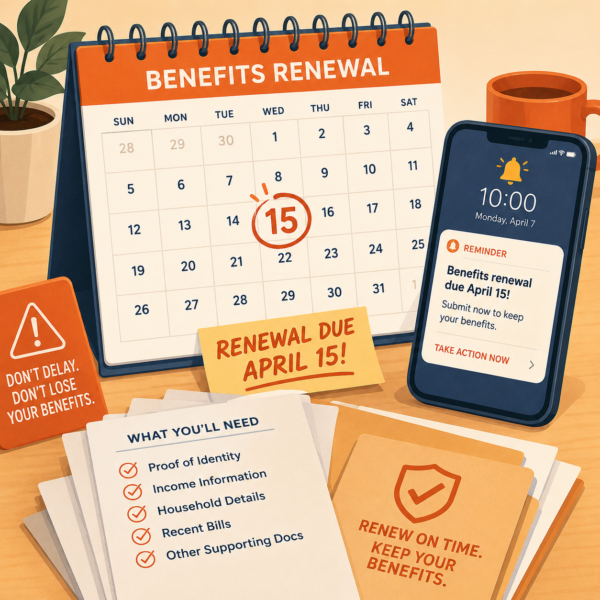 Plain language is sometimes misunderstood as making government communication sound less official or less precise. For renewal notices, plain language is really about usability. A notice can remain formal, accurate, and compliant while still being easier to follow. The issue is not whether the agency sounds friendly enough. The issue is whether the resident can understand the message, make the right decision, and complete the required step without unnecessary confusion. When a notice uses terms such as adverse action, verification, household composition, recertification, authorized representative, discontinuance, ex parte review, or redetermination, the agency may be using familiar internal language, but the resident may be trying to decode what those terms mean for their household, their deadline, and their benefits.
A usable notice does not eliminate complexity. It gives residents a way through it. That means using direct sentences, explaining technical terms when they first appear, placing the action before the explanation, and avoiding unnecessary variation in terms. If the same step is called a renewal in one paragraph, a redetermination in another, a recertification in another, and a review somewhere else, residents may believe they are being asked to complete separate tasks. Consistent language helps residents, staff, call centers, eligibility workers, community partners, and navigators all point to the same next step. Plain language is not a softer version of the notice. It is a more usable version of the notice.
Renewal Notices Should Reduce the Number of Decisions Residents Have to Make
A confusing renewal notice often forces residents to make too many decisions before they can act. They have to determine whether the notice applies to them, whether the deadline is urgent, which form is required, whether documents are needed, whether the agency already has certain information, whether they should use the online portal, whether they need to call, whether they need an interview, whether they should mail paperwork, and whether the notice is warning them about a future closure or informing them of a decision already made. Each decision point adds friction. For residents managing work schedules, caregiving responsibilities, transportation limits, language barriers, disabilities, unstable housing, or limited technology access, too much friction can result in delay, nonresponse, or avoidable benefit loss.
A stronger renewal notice reduces that burden by making the path more specific. It tells the resident what applies to their case, separates required steps from general information, and distinguishes what the agency already has from what it still needs. It should help the resident move from reading to doing without having to interpret the agency’s internal process along the way. This also supports staff because clearer notices reduce the number of calls that begin with “What does this letter mean?” Instead of using staff time to translate basic instructions, agencies can focus more attention on resolving case-specific questions, documentation issues, and eligibility concerns that truly require individualized support.
Notices Should Match the Way Residents Actually Complete Renewals
A renewal notice does not stand alone once it reaches a resident. It becomes part of a larger path that may include an online portal, a mailed packet, a phone call, a lobby visit, a document upload, a community partner conversation, a text reminder, or a follow-up notice. If those pieces do not match, the resident may lose confidence in the process. For example, the notice may tell someone to “complete your renewal,” the portal may call the same step a “redetermination,” the call center may refer to it as “recertification,” and a reminder text may say “submit verification.” Even if all of those words point to related actions, the resident may not know whether they are being asked to complete one task or several separate tasks.
Human services agencies can reduce procedural benefit loss by treating the renewal notice as the anchor for the full communication experience. The same action language should appear across the letter, website, portal, call script, text message, lobby signage, and partner materials. The deadline should be the same everywhere. The help options should be consistent. The status of the case should be described in the same way across channels whenever possible. When residents move from one channel to another, they should feel like they are still following the same set of instructions, not starting over in a different system with different terms.
Reminder Communication Should Reinforce the Action, Not Repeat the Confusion
Many agencies use reminder notices, text messages, robocalls, emails, or portal alerts to encourage residents to complete renewals before benefits are interrupted. These reminders can be extremely useful, but only if they clarify the action. A reminder that simply says a renewal is due may not be enough if the resident still does not know what is missing, where to send it, or what deadline matters. Repetition alone does not solve confusion. A reminder should make the next step easier to act on than it was before.
The strongest reminder communication is short, specific, and tied to the same language used in the original notice. It should tell the resident what is still needed, when it is due, and where to go for help. If the agency can personalize the reminder, it should identify the missing step rather than sending a generic warning. If personalization is limited, the reminder can still point residents back to a source-of-truth page, phone number, office location, or renewal portal using the same wording as the mailed notice. The goal is not to overwhelm residents with repeated alerts. The goal is to make each reminder useful enough to move someone closer to completion.
Help Options Need to Be Visible Before the Deadline Becomes a Crisis
Renewal notices often include help information, but it may appear too late in the document or be described too generically. A resident should not have to search several pages to find out whether they can call, visit an office, complete the renewal online, mail documents, use a drop box, request language assistance, ask for disability-related help, or work with an authorized representative. Help options should be visible early because many residents need support before the deadline is close. If they wait until the final days to seek help, call volumes may be high, documents may take time to process, and the resident may have fewer practical options left.
For public benefits agencies, visible help options also show that the renewal process is meant to be completed, not merely enforced. This matters for trust. Residents may be more likely to act when the notice communicates that the agency expects questions and has provided ways to answer them. Help language should be specific enough to guide behavior. Instead of saying only “contact us if you have questions,” the notice can explain when to call, what information to have ready, where to upload documents, how to request assistance in another language, and what to do if the resident cannot meet the deadline. Clear help pathways can prevent small points of confusion from becoming benefit interruptions.
Community Partners Can Help Only If the Notice Is Easy for Them to Interpret
Many residents do not navigate renewal alone. They may ask for help from family members, clinics, schools, food banks, legal aid organizations, housing providers, libraries, community-based organizations, faith-based groups, or case managers. These partners often become informal interpreters of agency communication. If the notice is difficult for a trained partner to quickly understand, it will be even harder for a resident under pressure. This is why renewal notices should be designed not only for direct recipients, but also for the support networks that help people complete the process.
Human services agencies can strengthen partner-supported renewal by giving community partners the same message structure residents see in the notice. Partner materials should not introduce new terminology or different explanations unless the difference is necessary. They should reinforce the same action, deadline, document requirements, and help pathways. When partners can look at a notice and quickly identify what the resident needs to do, they can provide more accurate help and reduce avoidable back-and-forth. This is especially important for programs where procedural loss has consequences beyond the individual case, including health coverage gaps, food insecurity, child care instability, missed work, or increased demand for emergency support.
Renewal Communication Should Prepare Staff Before Residents Start Calling
A notice launch should not be treated as complete once the document is mailed or posted. Staff need to be prepared for the questions the notice will generate. Call center representatives, eligibility workers, reception staff, supervisors, navigators, and public-facing teams should understand the notice language, the resident action path, the most likely points of confusion, and the approved way to explain deadlines and consequences. If staff are not aligned, residents may receive different explanations depending on who answers the phone or which office they contact.
Internal preparation is especially important when notices have been revised, when program rules have changed, when renewal volumes are high, or when agencies are trying to reduce procedural closures. Staff should have a simple message guide that mirrors the notice: what the resident received, what action may be required, where the deadline appears, how residents can complete the step, and what to do if information is missing. This does not need to be complicated. It needs to be consistent. When staff and notices speak the same language, residents are more likely to understand the process and complete it before benefits are interrupted.
Testing Renewal Notices Before They Are Sent at Scale
Human services agencies can learn a great deal about a renewal notice before it reaches thousands of households. A notice may look clear to program staff, attorneys, eligibility specialists, or system administrators because they already understand the process behind it. Residents do not have that same context. They read the notice from the outside, often with limited time, limited confidence, and a very practical concern about whether their benefits will continue. Testing a notice before broad use helps agencies identify where residents may hesitate, misread a deadline, misunderstand a term, overlook a required step, or assume that a warning means their benefits have already ended.
Testing does not have to be complicated to be useful. Agencies can review sample notices with frontline staff, call center teams, community partners, navigators, and residents with lived experience using public benefits programs. The goal is not to create a perfect document that answers every possible question. The goal is to find the places where the notice creates avoidable confusion. If several reviewers cannot quickly identify the required action, the deadline, the documents needed, and the help pathway, the notice is not ready. That kind of review can prevent confusion before it becomes call volume, missed paperwork, benefit interruption, or public frustration.
Use Resident-Facing Review Questions
A strong notice review should focus on the questions a resident is likely to ask while reading. What is this notice about? Do I need to do something? What exactly do I need to do? What date matters most? What happens if I miss it? How do I complete the renewal? Where do I go if I need help? These questions are simple, but they reveal whether the notice is structured around resident action or agency process.
Human services agencies should also ask reviewers to point to where they found each answer. If the answer exists somewhere in the notice but is hard to locate, the notice may still fail in practice. A resident under pressure should not have to search several pages to understand the next step. Testing should focus on whether the answer is visible, understandable, and placed where people are most likely to look first.
Track What Residents Ask After the Notice Goes Out
Even after a notice is sent, agencies can use resident questions to improve future renewal communication. Call center questions, lobby questions, partner feedback, appeal themes, returned mail patterns, portal abandonment points, and repeated document errors can all reveal where the notice is not doing enough communication work. If many residents call to ask whether they need to respond, the action statement may not be clear. If many people submit the wrong document, the checklist may be too vague. If residents miss the deadline even after receiving reminders, the timeline or urgency language may need revision.
This kind of feedback loop helps agencies treat renewal notices as living communication tools rather than fixed administrative templates. The agency does not need to wait for a major system change to improve clarity. It can refine language, adjust hierarchy, strengthen reminders, align staff scripts, and improve partner materials based on what residents are actually asking. Over time, that creates a more responsive communication system and reduces the likelihood that eligible residents lose benefits because the process was difficult to understand.
Measuring Procedural Loss as a Communication Signal
Procedural benefit loss should not be viewed only as an eligibility operations metric. It is also a communication signal. When residents lose benefits because a renewal was incomplete, late, missing documents, or never returned, agencies should ask where communication may have broken down along the path. Did the notice reach the resident? Did the resident understand that action was required? Did the reminder make the missing step clearer? Did the online portal use the same language as the notice? Did staff and partners have a consistent explanation? Did the resident know how to get help before the deadline passed?
This does not mean every procedural closure is caused by a bad notice. Some residents move, some do not respond, some face barriers outside the agency’s control, and some cases involve complex eligibility issues. But if procedural losses are high, concentrated in certain programs, recurring after specific notices, or especially common among certain populations, agencies should treat that pattern as a reason to review the communication system. The notice, reminders, portal language, call scripts, partner guidance, and deadline sequencing may all need to be examined together.
Digital Tools Should Support the Notice, Not Replace It
Online portals, document upload tools, text reminders, automated calls, chatbots, and account alerts can all make renewal easier, but they cannot compensate for a notice that residents do not understand. Digital tools work best when they reinforce the same action path the notice has already made clear. If the letter tells residents to complete a renewal, the portal should use the same words. If the notice lists required documents, the upload tool should organize documents in a way that matches that list. If a text reminder tells residents to act, it should point them to the same deadline and completion method described in the notice.
This alignment matters because many residents move between paper and digital channels during the same renewal process. Someone may receive a paper notice, scan a QR code, log into a portal, upload a document, call the agency to confirm receipt, and then receive a follow-up message. If each channel uses different terms or provides different levels of detail, the resident may not know whether they completed the renewal successfully. Digital communication should reduce uncertainty by confirming status, reinforcing the next step, and helping residents understand what remains unresolved.
Renewal Communication Should Account for Mail, Mobility, and Access Barriers
Many procedural benefit losses begin before a resident ever reads the notice. Mail may go to an old address, arrive late, be discarded by mistake, or never reach someone who is moving between housing situations. Residents may have changed phone numbers, lost access to an email account, or stopped using an online portal because they forgot a password. Some may rely on family members, case managers, shelters, clinics, schools, or community partners to help them receive and interpret information. A renewal communication system that assumes stable mail, stable technology, and immediate attention will miss many of the residents most at risk of interruption.
Human services agencies can reduce that risk by making contact information updates easier to understand, reinforcing address and phone updates before renewal periods, and using multiple channels where rules and capacity allow. The notice itself should also explain what residents should do if their address has changed, if they did not receive earlier mail, if they need information in another language, or if they need help because of a disability. These access points should not feel like secondary details. They are part of the renewal path, especially for residents whose life circumstances make procedural deadlines harder to manage.
Clear Notices Strengthen Both Resident Access and Agency Operations
Improving renewal notices is often framed as a resident service improvement, and it is. But it is also an operational improvement. When notices are clearer, residents are more likely to return the right information, use the correct channel, meet the deadline, and ask more specific questions when they need help. That can reduce avoidable call volume, duplicate document submissions, repeated notices, case rework, partner confusion, appeals, and reinstatement activity. The benefit is not only that the notice looks better. The benefit is that the renewal process becomes easier to complete and easier to administer.
This is why notice clarity should be treated as part of program performance. A renewal notice is one of the most important operational interfaces between the agency and the public. It connects policy, eligibility systems, staff workflows, resident behavior, and public trust. When that interface is confusing, the burden spreads across the entire system. When it is clear, the agency gives eligible residents a better chance to stay connected and gives staff a stronger foundation for managing renewals consistently.
Strategic Communication Support for Human Services Agencies
 Renewal notices are not just forms, letters, or system-generated outputs. They are public-facing decision points that can determine whether eligible residents remain connected to essential support. For human services agencies, public benefits agencies, county social services departments, and state benefits agencies, this makes renewal communication a program integrity issue, a resident access issue, and a trust issue. When notices are clear, residents are more likely to understand what is required, complete the right step, and seek help before benefits are interrupted. When notices are confusing, agencies may see higher procedural closures, more call volume, more rework, more partner confusion, and more frustration from residents who believed they were trying to comply.
Because renewal communication sits at the intersection of policy, eligibility systems, legal requirements, resident behavior, and frontline operations, many agencies find that improving notices requires more than editing a few paragraphs. It often requires an external partner that can help teams step outside internal terminology, review the resident journey, identify where confusion is occurring, and create a clearer communication system across notices, reminders, scripts, websites, portals, and partner materials. Agencies may choose to work with an external partner because internal teams are already managing heavy caseloads, system constraints, rule changes, staffing pressures, compliance requirements, and urgent resident needs. Specialized communication support can provide added capacity, structured analysis, and an objective outside perspective on a process that has real consequences for residents.
Stegmeier Consulting Group (SCG) helps human services and public benefits agencies strengthen communication systems that residents can actually follow. That support may include reviewing renewal notices for clarity and action hierarchy, developing plain-language message frameworks, aligning notice language with call center scripts and partner materials, creating resident-facing FAQs, strengthening source-of-truth pages, and helping agencies build reminder communication that reinforces the same action path. The goal is not to make complex programs seem simple. The goal is to help residents understand the process well enough to complete required steps, preserve benefits when they remain eligible, and know where to turn when they need help.
This support is especially valuable because procedural benefit loss is rarely caused by one communication failure alone. A resident may miss a notice, misunderstand a term, struggle with a portal, submit the wrong document, receive inconsistent guidance, or wait too long to ask for help. Stronger renewal communication looks at those points together. It helps agencies create a more consistent path from notice to action, so residents, staff, and community partners are all working from the same explanation.
Future Trends in Renewal Communication for Public Benefits Programs
Human services agencies are likely to place greater emphasis on resident-centered renewal communication as benefits programs continue to rely on periodic eligibility review, digital portals, mailed notices, automated reminders, and multi-channel resident support. As agencies look for ways to reduce avoidable benefit interruption, renewal notices will increasingly be evaluated not only for technical compliance, but also for whether residents can understand and act on them. That shift matters because a notice that satisfies formal requirements may still produce confusion if the action path is difficult to follow.
Another likely trend is stronger integration between notices, reminders, portals, and staff scripts. Agencies will need to reduce the gap between what residents read in a letter, what they see online, what they hear from a call center, and what community partners tell them. This will push more agencies toward common message frameworks, shared terminology, and clearer source-of-truth communication. The renewal notice will remain important, but it will increasingly need to function as one part of a connected communication system rather than as a standalone document.
Agencies may also rely more heavily on feedback loops to understand where procedural losses are occurring. Call center questions, document rejection patterns, portal drop-off points, returned mail, partner feedback, appeal reasons, and renewal completion trends can all help identify where residents are getting stuck. Over time, agencies that connect these signals to notice design and reminder communication will be better positioned to reduce preventable churn and improve continuity for eligible residents.
Conclusion
Renewal notices are one of the most important communication tools in public benefits administration because they appear at the exact moment when residents must understand and act. A confusing notice can turn continued eligibility into an interrupted benefit. A clearer notice can help residents recognize the deadline, complete the required step, provide the right information, and seek help before the process becomes a crisis. That difference matters for families, for staff, for community partners, and for the credibility of the agency.
Reducing procedural benefit loss does not mean removing rules, weakening eligibility standards, or ignoring program requirements. It means making the process easier to navigate for people who are still eligible and willing to respond. Human services agencies can do that by leading with action, making deadlines visible, using plain language, reducing unnecessary decision burden, aligning channels, preparing staff, supporting partners, and testing communication before confusion spreads at scale.
In the end, the strongest renewal notices do something simple but important. They help residents answer the question that matters most: what do I need to do now to keep my benefits from stopping? When agencies design notices around that question, renewal communication becomes more than a required mailing. It becomes a practical tool for continuity, access, operational efficiency, and public trust.
SCG’s Strategic Approach to Communication Systems
Align your agency’s messaging, processes, and public engagement strategies.
Human services and public benefits agencies need communication systems that help residents understand what is happening, what action is required, and where to get help before essential support is interrupted. Whether your agency is improving renewal notices, reducing procedural benefit loss, aligning call center scripts, strengthening partner communication, or creating clearer source-of-truth guidance for residents, SCG can help you build a communication framework that supports access, consistency, and trust. Use the form below to connect with our team and explore how a strategic communication system can strengthen renewal communication and reduce avoidable benefit interruptions.