How Election Offices Can Roll Out New Voting Systems Without Undermining Voter Trust
Introducing a new voting system is not just a technology project. It is a public trust project.
When election offices replace scanners, ballot marking devices, or check-in tools, voters do not evaluate the change the same way election administrators do. Most voters are not thinking about procurement, certification, or system standards. They are paying attention to what they can see. Does the equipment look unfamiliar? Do poll workers seem confident? Does the process feel clear? Does the office appear prepared?
That is why communication matters so much during a rollout. Even a well-tested, well-managed system can create doubt if voters do not understand what is changing and why. If the office explains the change clearly, voters are more likely to see the new system as a sign of preparation and improvement. If the office stays too technical or too vague, the same change can feel uncertain or risky.
Election offices need to treat a voting system rollout as a transition that voters must be guided through. People want to know what is new, what stays the same, what safeguards are in place, and what they should expect when they vote. They also want reassurance that the change was planned carefully and not rushed.
This article outlines a practical communication approach for election offices rolling out new voting systems. It focuses on how to explain change clearly, reduce confusion, and protect voter confidence from the first announcement through Election Day.
Voters Judge Change by What They Experience
 Election offices usually think about a new voting system in operational terms. They look at testing, security, accessibility, certification, training, and performance. Voters usually look at it very differently. They judge the change through what they can see and feel.
They notice whether the machine looks different from last time. They notice whether the poll worker explains the process smoothly or hesitates. They notice whether the line slows down. They notice whether the paper record makes sense to them. They notice whether the office seems ready for questions.
This gap matters. A rollout can be technically successful and still create public doubt if the voter experience feels unfamiliar or poorly explained.
For example, a county may replace older scanners with newer equipment that is faster and easier to maintain. From an administrative standpoint, that may be a smart and necessary decision. But if voters arrive and see equipment they do not recognize, and nobody has explained what changed, some will immediately wonder whether the process is less secure or less reliable. The issue is not the equipment itself. The issue is the lack of clear public context.
That is why election offices need to think beyond technical readiness. They also need voter-facing readiness. Voters should hear a simple explanation before they ever encounter the new system in person. They should know why the office made the change, how the system was prepared, and what their experience will look like at the polling place.
This is especially important because new systems change the atmosphere of the polling place. Poll workers need a new language. Observers may watch more closely. Reporters may focus on delays or unfamiliar steps. Voters may compare what they see to previous elections and assume that any difference signals a problem. In this environment, silence creates room for speculation.
Clear communication reduces that risk. When the office explains the rollout in plain language, it gives voters something solid to hold onto. Instead of thinking, “Something feels different, and I do not know why,” they are more likely to think, “The office updated the system, prepared for it, and told me what to expect.”
That shift is critical. Trust during a rollout does not come from asking people to accept change blindly. It comes from helping them understand the change before uncertainty turns into suspicion.
Beyond the Ballot: Election Office Communication Strategies for County Clerks, Secretaries of State, and Boards of Election
This article is part of our series on strategic communication for Election Offices, Election Administration Agencies, and Boards of Elections. To learn more and to see the parent article, which links to other content just like this, click the button below.
Treat the Rollout as a Trust-Building Effort, Not Just a Technology Change
Election offices communicate more effectively about new voting systems when they treat the rollout as a public confidence effort, not just an equipment replacement.
That mindset changes the message. Instead of focusing only on what the office purchased or installed, the communication focuses on what voters need to understand in practical terms. The public needs to know why the change was made, how the system was prepared, what voters will notice on Election Day, and what protections remain in place. When offices frame the rollout this way, they make the transition easier to understand and easier to trust.
This matters because most voters are not looking for a technical explanation. They want practical reassurance. They want to know that the new system was selected carefully, tested thoroughly, and introduced with voter needs in mind. They also want to know that the basic principles they care about most have not changed. Their ballot will still be handled securely. The election will still follow established rules. The office will still use safeguards, oversight, and documented procedures.
That is where many system rollouts lose momentum. Election offices sometimes describe the change as an upgrade, a modernization effort, or a technology improvement and assume that those phrases will build support on their own. In many public settings, that language might be enough. In elections, it often is not. Newness can create caution faster than enthusiasm. Voters tend to respond better to language about reliability, accessibility, usability, preparation, and transparency than to language that sounds like a product launch.
A stronger public message makes the change feel grounded rather than flashy. It explains that the office made the decision for clear operational reasons, prepared for the transition carefully, and built the rollout around a stable voting process. It tells voters that the system may look different, but the office has planned for that difference and is ready to help them through it. That kind of message lowers the risk that people will interpret unfamiliarity as instability.
It is also important to communicate continuity alongside change. Voters should hear what is new, but they should also hear what remains steady. The rules for voting do not suddenly disappear because the scanner changed. Ballot security does not depend on whether the screen looks new. Poll worker support does not become optional because the equipment is more advanced. In most rollouts, the strongest trust-building message is that the office updated one part of the process while preserving the larger system of safeguards and accountability that voters already expect.
This is especially important when the new system changes the voter’s physical experience. A ballot marking device may create a different flow at the polling place. A new scanner may produce a different visual interaction. A new check-in process may feel unfamiliar even if it works well. If the office does not explain those differences early, voters may fill in the blanks on their own. That is where doubt often begins. Clear communication prevents the public from having to interpret normal change without context.
Timing matters as much as wording. Voters should not first learn about the new system when they enter the polling place. By that point, even a good explanation can feel reactive. A stronger approach introduces the change ahead of time through the channels voters already use. The website, social media, local media outreach, voter guides, public demonstrations, community presentations, and poll worker language should all reinforce the same core message. The office made a careful change, tested it thoroughly, and prepared the public to use it with confidence.
The most effective rollout messages usually do three things well. They explain why the office made the change. They show that the new system was tested and prepared before public use. They tell voters what to expect in plain language. When those three elements are clear, the office gives the public a reason to feel informed instead of uncertain.
This approach also helps inside the organization. When leadership, communications staff, election workers, and poll workers are all working from the same trust-centered message, the office is less likely to sound fragmented. One part of the team is not talking about modernization while another is talking about security and another is talking only about logistics. The public hears one consistent explanation. That consistency is one of the clearest signs that the rollout is being managed well.
In the end, a successful voting system rollout is not only about whether the equipment performs correctly. It is also about whether the public believes the office handled the change responsibly. That belief is shaped by what voters hear before they vote, what they see when they arrive, and whether the office makes the transition feel deliberate, understandable, and well managed.
Explain Testing, Certification, and Security in Plain Language
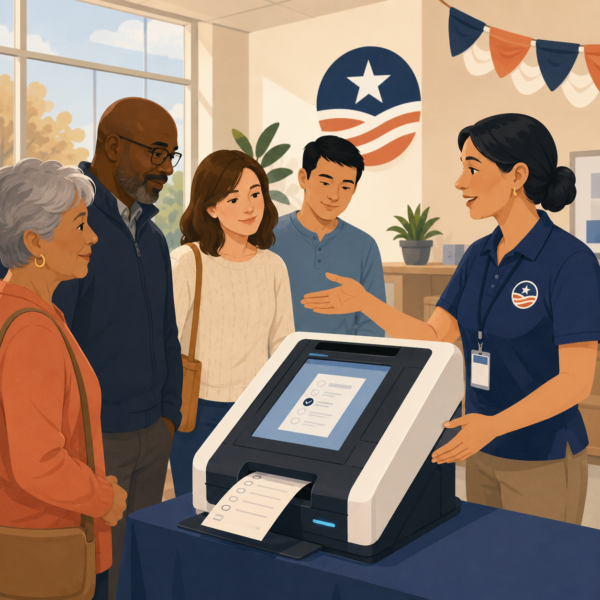 Election offices often lose voter attention when they explain a new voting system the way they explain it internally. Certification manuals, procurement records, testing vocabulary, and technical specifications may matter to administrators, but they do not help most voters understand why the office trusts the system. A better approach is to translate that work into plain public meaning. The office should explain that the system was not chosen casually, that it was tested before use, and that it sits inside a larger set of security and accountability procedures. Federal election guidance supports this approach by encouraging officials to explain how elections are administered and secured in clear public language.
This is where many offices become too abstract. Saying that a system is certified may be accurate, but it is not always enough on its own. Voters need a brief explanation of what that means. At the federal level, an EAC-certified system has been tested by a federally accredited laboratory against federal standards, and the EAC issues certification after the required steps are completed. That fact matters, but the office should present it in a way that sounds understandable rather than bureaucratic. It should feel like evidence of preparation, not like a term voters are expected to decode on their own.
The same principle applies to security language. Voters do not need a long technical inventory in order to feel reassured. They need a clear explanation of the protections that surround the system. Election security resources commonly point to measures such as locks, tamper-evident seals, security cameras, testing before and after elections, audits, and access controls. These are useful public trust signals because they are concrete. They help voters picture the safeguards instead of being asked to trust an invisible process.
This kind of explanation is especially important when the new system changes something visible in the voting experience. If the machine looks different, produces a different printed output, or changes the flow at the polling place, the office should not assume voters will separate appearance from security. Many people will judge the new system first by what feels different. Plain-language communication helps bridge that gap by showing that the visible change is backed by structured testing, review, and security procedures. Election officials are encouraged to build these explanations into voter education rather than waiting for confusion to surface after rollout.
Tell Voters What the Office Did, Not Just What the System Is
One of the most effective ways to explain a new system is to focus on what the office did to prepare it for use. That keeps the communication grounded in action rather than in jargon. Voters are more likely to trust a process they can picture than a label they have never heard before.
The public explanation should make clear that the office did work before the first voter arrived. That work may include testing, training, setup checks, security procedures, and public education. When framed this way, the rollout sounds deliberate and managed. It does not sound like the office simply bought something new and hoped it would go smoothly. The EAC’s communication and voter education materials support this kind of proactive explanation because they treat voter understanding as part of successful election administration.
Focus on the Small Set of Facts Voters Actually Need
Most voters do not need a full technical overview. They need a short set of facts that help them understand why the office is confident in the system and what that means for their experience. A useful explanation usually includes these points:
-
The office selected the system through a structured process.
-
The system was tested before it was put in front of voters.
-
Poll workers and staff were trained on how to use it.
-
Security and accountability measures remain in place around the equipment.
-
The voter will still move through a clear, supervised voting process.
This kind of list works because it turns a complicated rollout into a few understandable trust cues. It gives voters a practical reason to feel that the office is prepared for the change rather than simply announcing it. Federal election security and certification resources support this kind of public explanation by tying system use to testing, procedures, and layered safeguards.
Show the Public What Will Change and What Will Stay the Same
A new voting system creates less anxiety when the office explains both sides of the transition. Voters need to know what will look different, but they also need to hear what remains stable. Offices often focus heavily on the new feature or the new device and forget that continuity is one of the strongest trust-building messages available. If voters understand that the process still includes oversight, security controls, voter review, and documented procedures, the visible difference is less likely to feel like a deeper disruption. Public communication guidance for election officials supports this kind of structured expectation-setting because it helps reduce misconceptions before they harden.
This is especially important because people often interpret visible change broadly. A different screen, a different scanner, or a different printed record can lead some voters to assume that the whole process has changed in ways they do not understand. The office should respond to that instinct directly. It should say what the voter will notice and then explain what remains familiar. The ballot is still reviewed by the voter. The office still follows chain-of-custody and security procedures. The site is still staffed and supervised. The process still includes testing and official oversight. That kind of contrast helps the public separate appearance from administration.
A practical rollout message can also describe the voter experience in sequence. The office can explain what the voter will do when arriving, checking in, using the system, reviewing the ballot, and finishing the process. This approach works well because it reduces uncertainty through familiarity. It gives people a simple mental model of the new experience before they arrive. The EAC’s toolkit for communicating election and post-election processes is built around making election procedures understandable to voters and observers, which supports this step-by-step style of public explanation.
Offices should also be careful not to oversell the change. A rollout message that sounds promotional can create more skepticism than confidence. The stronger tone is calm and matter-of-fact. The office made a change for clear reasons, prepared for it carefully, and is helping voters know what to expect. That tone is more credible because it keeps the focus on readiness and voter support rather than on novelty. Election communication guidance consistently points officials toward clear, steady public explanation rather than hype.
Explain the Visible Differences Before Voters Encounter Them in Person
One of the simplest ways to reduce uncertainty is to describe the visible change before the voter walks into the polling place. If the scanner looks different, if the check-in process uses a different device, or if the ballot marking experience has changed, the office should say so directly in advance. This helps voters interpret the difference as expected rather than unexpected. A voter who has already heard that the equipment will look different is less likely to treat that visual change as a warning sign.
This explanation works best when it stays concrete. Voters do not need a technical overview. They need a short description of what they are likely to notice and what that means for their experience. A clear pre-election explanation helps the office control the first impression instead of leaving that impression to the voter’s guesswork in the moment.
Reinforce the Safeguards That Stay in Place
Continuity is one of the most important trust messages during a rollout. Even when the equipment changes, voters need to hear that the larger election process still includes the same safeguards they already expect. The office still uses testing, oversight, documented procedures, poll worker support, and security controls around the system. That message helps voters understand that the new equipment fits داخل a stable process rather than replacing it with something unfamiliar or less reliable.
This kind of communication is especially useful because it shifts the focus away from novelty alone. Instead of asking voters to trust newness, the office is showing that the visible update sits inside a familiar framework of accountability. That makes the change easier to accept because it feels managed, supervised, and connected to the same election standards voters already recognize.
Describe the Voting Experience in a Simple Step-by-Step Way
Voters often feel more confident when they can picture the process before they arrive. A short step-by-step explanation can make a new system feel much more manageable. The office can explain what will happen at check-in, what the voter will do with the new equipment, how the ballot will be reviewed, and what the final step will look like. This gives the public a usable mental model of the experience instead of leaving them to imagine a vague or overly technical process.
This approach also helps the office communicate change without sounding promotional. The message stays practical and voter-centered. It focuses on what the voter will do, what the voter will see, and how the process will move from one step to the next. That kind of explanation is easier to trust because it feels like guidance, not marketing.
Promoting Long-Term Election and Voter Confidence Through Stronger Rollout Communication
A well-managed voting system rollout can improve more than one election cycle. It can strengthen the public’s long-term confidence that the election office handles change carefully, explains complex processes clearly, and prepares voters before unfamiliarity turns into doubt. The U.S. Election Assistance Commission has emphasized that voter education is a growing part of local election administration and that offices increasingly use websites, social media, partnerships, and prepared materials to inform voters and build trust.
This kind of communication also reduces repeat confusion. When voters hear the same clear explanation before Election Day, at the polling place, and through official follow-up materials, they are less likely to treat each visible difference as a new problem. Communication guidance for election officials stresses consistent messaging, proactive planning, and explaining how elections are administered so the public does not have to fill information gaps on its own.
Operationally, stronger rollout communication can reduce avoidable pressure on poll workers, supervisors, and voter service teams. If voters already understand what the new system is, why it was introduced, and what their experience will look like, front-line staff spend less time improvising explanations and more time helping voters move through the process smoothly. That matters because poll workers are the frontline election workers who check in voters, answer questions, assist with equipment, and troubleshoot problems at polling locations.
There is also a transparency benefit. Election offices often worry that explaining too much about testing, certification, and security will overwhelm voters. In practice, the bigger risk is often the opposite. When the office provides no plain-language explanation, the public may treat the new system as a black box. EAC resources on certified voting systems, the Voluntary Voting System Guidelines, and secure election communications all support the idea that public confidence grows when election officials explain safeguards, testing, and oversight in understandable terms rather than leaving them buried in technical process.
This is especially important for accessibility and usability. A new voting system may offer important benefits, but those benefits only build trust if voters understand how to use the system and believe the office is prepared to support them. The EAC’s accessibility resources and design guidance both reinforce that voter-facing election materials and processes should be clear, understandable, accessible, and usable, which means rollout communication should help all voters know what to expect, not just the most experienced voters.
Over time, a good rollout also strengthens the office’s credibility for future changes. Voters remember whether the office introduced new equipment in a calm, transparent, and organized way. If the office communicates clearly during one major transition, it becomes easier for the public to trust the office when later changes involve polling place procedures, post-election explanations, or updated voter materials. Election communication and process toolkits are built around this same logic: public understanding is strongest when officials explain change before confusion hardens into suspicion.
Strategic Communication Support for Election Offices and Voter Services Teams
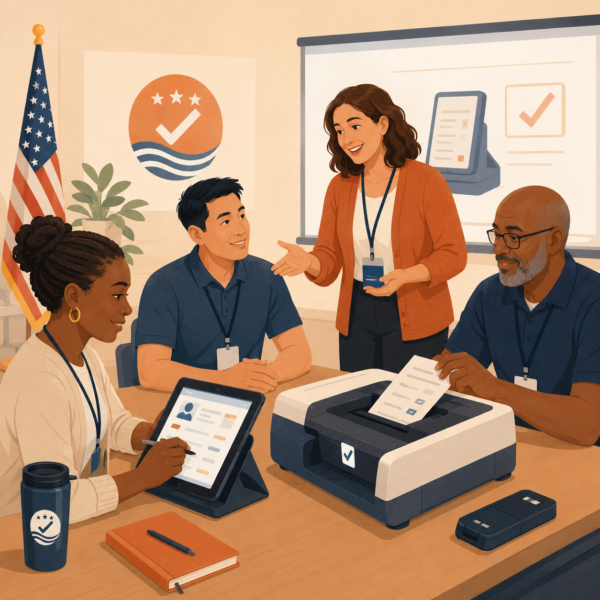 Election offices often manage the operational side of a voting system rollout well, but the public-facing side can still lag behind. The equipment may be tested, secured, and ready, while voter explanations remain too technical, too late, or too fragmented across channels. Federal election guidance consistently points toward prepared communication plans, clear public materials, poll worker support, and voter education resources because trust depends on more than technical readiness alone.
That is why agencies often choose to partner with an external resource like Stegmeier Consulting Group (SCG) to strengthen communication systems. Stegmeier Consulting Group supports election offices, boards of elections, clerks, and voter services teams by helping them build rollout message frameworks, public explanation materials, poll worker support language, source-of-truth webpages, community-facing education content, and cross-channel communication plans that keep the transition clear from first announcement through Election Day.
SCG can also help offices identify where voter uncertainty is most likely to build, simplify technical explanations without weakening accuracy, and connect testing, security, accessibility, and voter experience into one coherent public message. These practices help reduce repeat confusion, lower avoidable staff burden, and make a new voting system feel like a carefully managed public transition rather than a sudden technological disruption.
Future Trends in Voting System Rollouts
The future of voting system rollouts will depend as much on communication as on the technology itself. Election offices are moving into an environment where voters expect more visibility into how changes are introduced, tested, and explained. That means future rollouts will likely place greater emphasis on public demonstrations, short instructional videos, sample ballot walkthroughs, and plain-language webpages that show voters exactly what to expect before they arrive to vote.
Another important shift is the growing expectation that election offices explain not only what changed, but why the change matters in practical terms. Voters are less interested in technical specifications than in whether the new system is easier to use, more accessible, more reliable, and better supported by trained staff. Offices that can connect system improvements to the actual voter experience will be better positioned to build trust during future transitions.
Election communication around new systems is also likely to become more visual and more scenario-based. Instead of relying mainly on text-heavy notices, offices will increasingly need simple graphics, side-by-side comparisons, short process explainers, and mock voting demonstrations that reduce uncertainty quickly. Voters tend to trust what they can picture and understand. A rollout that feels visible and understandable is much less likely to generate suspicion than one that remains abstract.
Poll worker preparation will also play a larger role. As voting systems change, workers will need more than procedural training. They will need language for explaining new steps, answering recurring questions, and calming uncertainty at the point of use. Future-ready offices will treat poll worker communication as part of the rollout itself rather than as a separate training detail.
Another trend is the rise of faster public explanation during the rollout period. As more information moves through social media, local news, and community networks in real time, election offices will need stronger source-of-truth pages, faster myth-correction workflows, and clearer public updates when questions arise. The most effective offices will not wait for confusion to build. They will prepare explanation materials in advance and use them early.
Accessibility and usability will also become even more central. Future rollouts will be judged not just by whether systems meet technical requirements, but by whether voters across different abilities, language needs, and experience levels can use them confidently. That means system rollout communication will need to show how the office is supporting all voters, not just the average voter.
Over time, the strongest election offices will treat voting system change as an ongoing public trust process rather than a one-time implementation event. They will communicate before the rollout, during the rollout, and after the rollout in a way that reinforces consistency, readiness, and transparency. In that environment, trust will come less from the promise of new technology and more from the office’s ability to explain change clearly and manage it well.
Conclusion
A new voting system does not earn trust simply because it works correctly behind the scenes. It earns trust when voters can see that the election office prepared carefully, explained the change clearly, and guided people through the transition with confidence. That is what turns a system rollout from a technical change into a successful public transition.
Clear rollout communication matters because unfamiliarity creates its own risk. Voters notice when equipment looks different, when the process changes, or when poll workers use new language. If the office does not explain those changes early and consistently, people fill in the blanks on their own. That is where doubt often begins. When the office leads with plain language, visible preparation, and steady public guidance, it gives voters a reason to interpret change as a sign of readiness rather than a sign of instability.
The goal is not simply to announce that a new system is in place. The goal is to help voters understand why the change happened, what to expect, and why the office is confident in the process. Election offices that do this well reduce confusion, lower avoidable pressure on poll workers and supervisors, and strengthen public confidence in both the new system and the people responsible for running it.
SCG’s Strategic Approach to Communication Systems
Align your agency’s messaging, processes, and public engagement strategies
Stegmeier Consulting Group (SCG) helps election offices build communication systems that make major operational changes easier for the public to understand and trust. For voting system rollouts, that can include public message frameworks, plain-language explanations of testing and safeguards, voter education materials, poll worker support language, source-of-truth webpages, community-facing rollout content, and cross-channel communication plans that keep the transition clear from first announcement through Election Day.
SCG also supports governance and operational coordination so websites, FAQs, media responses, voter notices, poll worker scripts, demonstrations, and public updates work together as one coherent public information system. Use the form below to connect with our team and explore how a strategic communication framework can elevate your agency’s impact.