The Future of Public Health Communication: AI, Apps, and Digital Tools
Public health departments and health agencies are entering a period where digital expectations are rising faster than most communication teams can scale. Residents increasingly expect timely updates, easy-to-follow steps, and support that fits mobile habits, not lengthy explanations buried on a web page. When public information is hard to find or hard to interpret, people turn to informal sources, and small gaps quickly become confused.
Health authorities and public health organizations are also being asked to do more with the same resources. Campaign calendars are fuller, crises are more complex, and misinformation spreads quickly. AI, apps, and digital tools can help, but only when they are implemented as part of a communication system that protects clarity, equity, privacy, and trust. The future is not just adopting new technology. It is designing how information moves from the organization to the community in a way people can actually use.
This article outlines a practical approach for public health organizations that want to modernize without creating new barriers. It focuses on how AI can support content operations, how apps and portals can reduce friction in service navigation, and how digital tools can improve consistency, responsiveness, and long-term public understanding.
Why Digital Health Communication Is Changing, Even for Local Agencies
 Digital communication in public health is changing because the public experience of information has changed. Residents now encounter guidance through short clips, screenshots, notifications, and peer sharing. People often decide whether to trust a message based on how quickly it answers a practical need, such as where to go, what to do, and what to expect. A well-written report can still fail if the next step is unclear or if the information feels outdated.
At the same time, public health departments are communicating in an environment where attention is limited and decisions are time-sensitive. This is true during outbreaks, but it is also true for routine work like immunizations, screenings, environmental health notices, and maternal and child health programs. Digital tools help when they reduce friction between awareness and action. They hurt when they add complexity or create inconsistent messaging across channels.
Modern digital expectations also include personalization. Residents want information that reflects their location, language, and situation. They want to know whether something applies to them, not only that it exists. Health agencies can meet this expectation without crossing privacy lines by using better segmentation, clearer scope language, and tools that help residents self-identify quickly.
Another driver is operational transparency. Communities want proof that health authorities are responding, improving access, and learning from feedback. Dashboards, status pages, and update streams can build trust when they translate data into meaning and connect it to practical guidance. The same tools can also undermine trust when they are hard to interpret or inconsistent with lived experience at service sites.
Digital change is also internal. Many public health organizations are reorganizing content workflows, building shared templates, and reducing duplication across programs. AI tools, content management systems, and standardized asset libraries can reduce rework and improve consistency, but only when governance is clear and staff are trained to use tools responsibly.
From Data to Action: Effective Communication Strategies for Public Health Agencies
This article is part of our series on strategic communication for state and local government Public Health Agencies. To learn more and to see the parent article, which links to other content just like this, click the button below.
AI in Public Health Communication, What It Is Good At and Where It Can Fail
AI can support public health communication, but it needs the right job. The most reliable value comes from tasks that benefit from speed, consistency, and pattern recognition, especially when humans still control meaning, accuracy, and tone. When AI is treated as an assistant rather than an authority, it can reduce workload while improving clarity.
Where AI often fails is in the areas public health cannot afford to get wrong. AI can produce confident language that sounds correct, even when it is inaccurate or missing context. It can also introduce subtle shifts in meaning that create contradictions across channels. For health authorities, these risks are not theoretical. They can drive misinformation, reduce compliance, and create operational strain when residents show up with the wrong understanding of eligibility or timing.
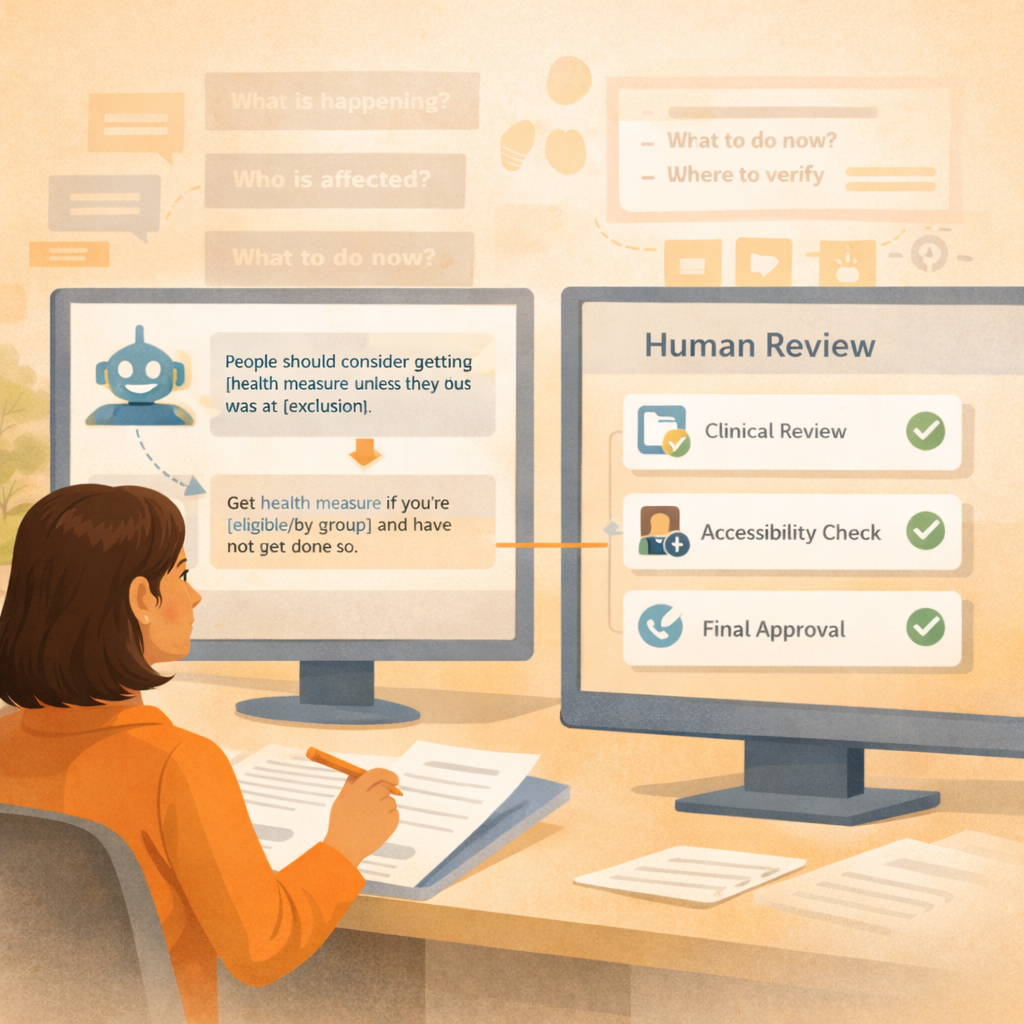
A practical way to think about AI is to separate “drafting support” from “decision making.” AI can help draft, simplify, translate carefully with review, and standardize templates. It should not be the entity deciding what guidance means, what the public should do, or what counts as an official update. Those decisions require accountable human judgment, clinical review, and coordination across the organization.
AI is also most useful when it works inside a defined communication system. That system includes a message spine, approved terminology, a source-of-truth page, and a review workflow that ensures consistency across web, social, partner toolkits, and staff scripts. Without these foundations, AI can increase output while decreasing coherence.
Use AI to Improve Consistency, Not to Increase Volume
Many health agencies are tempted to use AI primarily to produce more content. Volume alone rarely improves outcomes, especially when the public is already overwhelmed. A better use of AI is to improve consistency, such as keeping eligibility language aligned across channels, maintaining a stable tone, and ensuring that the same key definitions are used in every asset.
This approach also protects staff capacity. When consistency improves, call volume and repeated questions often decrease because residents can find the same answer in the same place. AI can support that consistency by generating drafts that follow standard templates, then allowing staff to review and approve content quickly.
Build Human Review Where the Risk Is Highest
Public health organizations should decide in advance where human review is non-negotiable. High-risk areas include clinical guidance interpretation, changes in requirements, changes in eligibility, crisis updates, and anything that could affect safety decisions. In these areas, AI can still help draft, but final language and meaning should be approved through a defined process.
Human review is also essential for equity and accessibility. AI-generated language can inadvertently introduce stigma, cultural mismatch, or unclear instructions for people with limited health literacy. A health authority can reduce these risks by requiring plain-language checks, accessibility checks, and partner-informed reviews for high-impact public-facing materials.
Digital Tools That Reduce Friction, Portals, Apps, and Service Navigation
Public health departments often lose participation not because residents reject guidance, but because the steps are hard to complete. Digital tools can close that gap when they make service navigation easier, reduce uncertainty about eligibility, and provide clear next steps that match real operations. When tools are designed well, they lower call volume, reduce missed appointments, and improve equity by making access clearer for people who do not have time to troubleshoot.
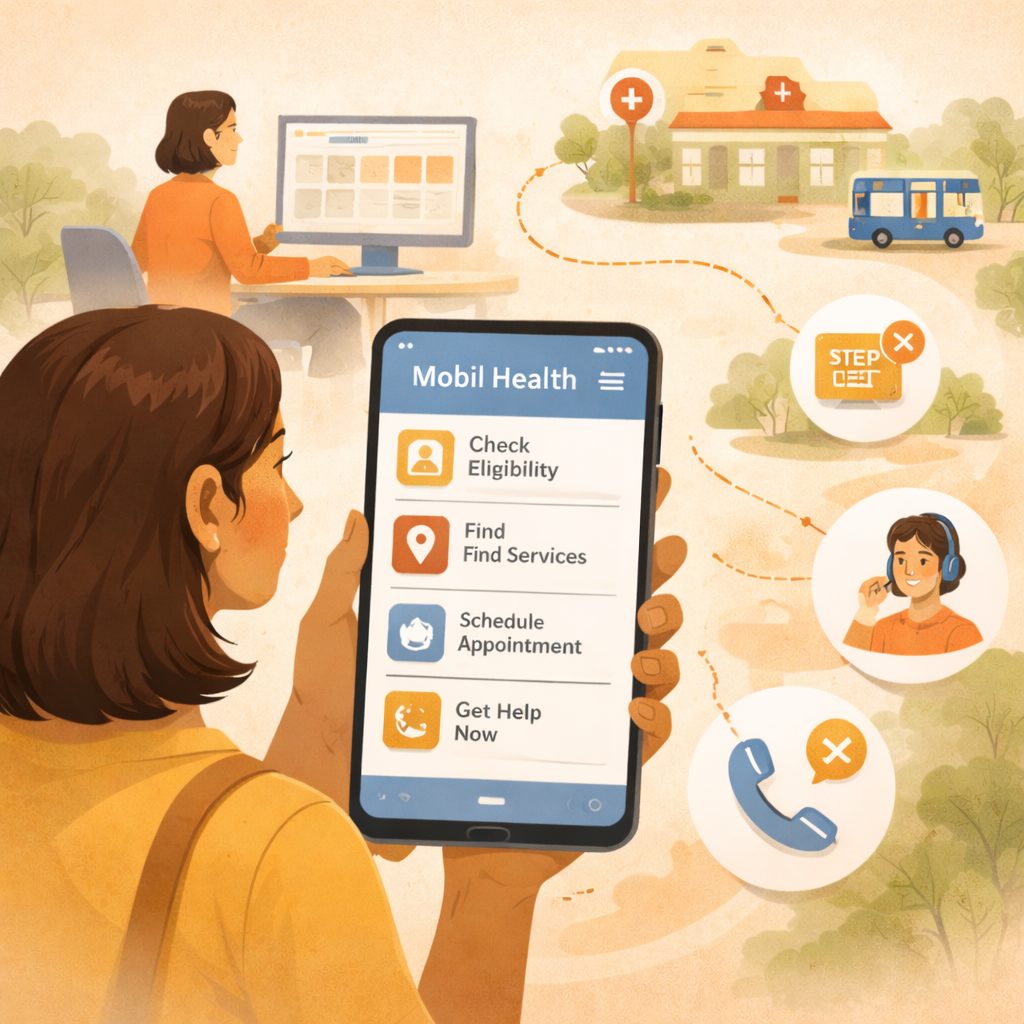
Portals and apps are most effective when they support the resident journey. That means helping residents identify which services apply to them, showing what to do first, and providing a path to complete the action without repeated handoffs. Health agencies can design digital navigation so residents can check eligibility, find nearby locations, understand required documents, and choose between multiple access routes, such as online scheduling, phone scheduling, and walk-in options.
Health authorities also benefit when tools provide proactive communication. Appointment reminders, preparation instructions, follow-up steps, and clear “what happens next” guidance can reduce anxiety and increase completion rates. This is especially important for programs that involve multiple steps, such as screening programs, vaccine series, referrals, or benefits enrollment. When digital tools support these steps, residents are less likely to drop off after the first interaction.
Digital tools also support transparency when they include real-time status updates. If a clinic is out of appointments or a service route changes, residents should see that change quickly. Public health organizations can reduce frustration by linking service information directly to operational systems, then displaying hours, availability, and updates in one consistent place. This reduces the gap between what is published and what residents experience.
Equity and inclusion are central here. An app that assumes high digital literacy or constant internet access can exclude the residents who most need support. Health agencies can build inclusion by making tools mobile-first, minimizing steps, offering multiple language options, and providing alternatives for residents who cannot use an app. A portal should never be the only pathway. It should be one of multiple access routes.
Design for the “One-Minute Use Case”
Many residents will decide whether to engage with a tool in under a minute. Public health departments can increase adoption by designing a home screen or landing experience that answers the essentials quickly. Residents should be able to see what the tool is for, what action to take, and how to get help if they are stuck.
The one-minute use case also supports trust. When residents can find a clear answer quickly, they are less likely to rely on informal summaries. A health authority can reinforce this by keeping the tool’s language consistent with public-facing messaging and by clearly labeling when information was last updated.
Build Multi-Route Access Into Digital Tools
Digital navigation should not funnel everyone into one pathway. Health agencies can support equity by offering multiple access routes within the tool, including phone options, walk-in guidance, partner locations, and language assistance. This is especially important for residents who cannot complete online steps due to disability access needs, limited digital skills, or limited time.
Multi-route design also reduces operational strain. When residents can choose the right pathway based on their situation, fewer people show up unprepared and fewer calls are needed to clarify basic steps. Over time, this improves follow-through and reduces frustration for both residents and staff.
AI for Content Operations, Making Communication Faster Without Creating Drift
Public health organizations often manage large volumes of content across multiple programs, languages, and channels. AI can help by improving content operations, including drafting, simplifying, standardizing, and maintaining consistent language across assets. The key is to use AI within a structured workflow that protects meaning.
One of the strongest AI use cases is template-based drafting. Public health departments can define standard formats for common content types, such as advisories, program announcements, eligibility updates, FAQs, and social captions. AI can then produce drafts that fit those templates quickly, while staff review for accuracy and local specificity. This approach reduces rework and helps maintain consistent structure across programs.
AI can also support plain-language conversion. Health agencies often need to translate technical guidance into everyday language, without oversimplifying. AI can generate a plain-language draft that staff then edit for correctness, tone, and local details. This can reduce time spent on first drafts and allow staff to focus on quality and alignment.
Content maintenance is another valuable use. Many public health organizations struggle with outdated pages and inconsistent wording across channels. AI can help identify inconsistencies, propose standard phrasing, and suggest updates that align content to the current message spine. This is most useful when the organization has defined approved terminology and a source-of-truth structure.
AI can also support internal readiness. Staff scripts and partner toolkits often lag behind public updates. AI can generate aligned versions for internal use, such as hotline scripts and partner copy blocks, using the same core language. When staff and partners receive consistent language quickly, public messaging becomes more coherent.
Use AI to Maintain a Consistent Message Spine Across Channels
A message spine protects meaning. Public health departments can use AI to generate channel-specific versions that preserve the same spine language, rather than rewriting from scratch for each platform. This reduces drift and helps residents receive the same core meaning from the website, social posts, partner materials, and staff scripts.
Consistency also helps reduce misinformation. When residents see the same phrasing repeated across multiple trusted sources, it becomes easier to recognize what is official. AI can support this pattern by accelerating production of aligned assets while humans control the final approval.
Create Guardrails for AI Outputs, Approved Terms, Tone, and Review Steps
AI works best when it is constrained by clear rules. Health agencies can define approved terms, preferred phrasing for key concepts, and tone standards that match the agency’s credibility needs. These guardrails can be embedded in prompts, templates, and review checklists.
Guardrails should also specify review requirements. High-risk content, such as guidance changes, requirements, eligibility shifts, and crisis updates, should always receive human review by designated owners. When guardrails are clear, AI becomes a reliable efficiency tool rather than a source of inconsistent messaging.
Digital Equity and Inclusion, Avoiding New Barriers While Modernizing
 Digital modernization can improve public health communication, but it can also create new barriers if tools assume ideal access. Public health departments and health agencies serve communities with uneven internet access, uneven device availability, uneven digital literacy, and varied disability access needs. If digital tools become the primary pathway, residents who already face barriers can be pushed further away from services and guidance.
Digital equity starts with designing for low-friction access. Tools should be mobile-first, lightweight, and readable without complex navigation. Key information should be visible without requiring multiple clicks, and steps should be clear enough to follow without outside help. Public health organizations can also reduce barriers by minimizing the number of fields in forms, avoiding unnecessary account creation, and offering clear alternatives for residents who cannot complete an online flow.
Language access must be built into digital tools, not added as a separate translation page that is hard to find. Health authorities can improve equity by offering language selection early, maintaining consistent terminology across languages, and ensuring that translated content is updated in parallel with English. When translated pathways lag, residents rely on informal translations and are more likely to receive outdated or incorrect instructions.
Ability inclusion is equally important. Digital tools should support screen readers, readable text sizes, captioned video, and content that does not rely solely on color or images for meaning. Public health departments can also provide text summaries for key visuals and keep critical instructions in accessible text, not embedded in small graphics. These practices support residents with disabilities and also support mobile users who are scanning quickly.
Digital inclusion also depends on multi-route access. Even the best app will not reach everyone. Health agencies can maintain equity by offering phone options, walk-in pathways, partner navigation support, and printable summaries. The goal is not to force a single digital route. The goal is to make digital tools helpful while preserving multiple access paths for residents with different constraints.
Finally, digital equity requires ongoing listening. Public health organizations should use feedback loops to learn where residents are struggling, which steps cause drop-off, and which communities are being missed. When feedback shows that a digital tool is excluding certain residents, the tool should be adjusted. Digital equity is not a one-time design decision. It is continuous improvement.
Design for Low-Connectivity and Low-Literacy Use Cases
Many residents access information through limited data plans, older devices, or shared phones. Public health departments can improve equity by ensuring pages load quickly, key instructions are visible early, and content can be understood without long reading. Plain language, short headings, and clear next steps help reduce cognitive load under stress.
Low-literacy design also benefits the entire community. When guidance is easier to understand, fewer residents need individualized clarification, and staff experience fewer repetitive questions. Over time, a low-friction design standard becomes part of a health agency’s communication capability.
Keep Non-Digital Paths Visible, Not Hidden
Digital tools can become the default in ways that make non-digital routes hard to find. Health agencies can protect inclusion by making phone numbers, walk-in options, and partner support routes visible near the top of pages and within app navigation. Residents should not have to scroll or search to find an alternative path.
Visibility also reduces frustration. When residents see options immediately, they can choose the route that fits their constraints. This supports equitable follow-through and reduces the perception that services are only accessible to people with high digital skills.
Trust, Privacy, and Governance, Keeping Digital Tools Credible
Digital tools only improve public health communication when residents trust them. Trust is shaped by privacy, transparency, and consistency. Public health departments and health agencies must be clear about what data is collected, why it is collected, how it is protected, and how it will not be used. When residents are uncertain about privacy, they are less likely to use tools, especially for sensitive services.
Privacy and governance should be designed before tools launch. Health authorities can establish clear policies for data minimization, meaning only collecting what is necessary. They can also define retention practices, access controls, and security standards. These operational decisions should be summarized publicly in plain language, so residents understand protections without reading a technical policy document.
Trust also depends on accuracy and update discipline. A digital tool that contains outdated hours, inconsistent eligibility language, or unclear steps will lose credibility quickly. Public health organizations can prevent this by maintaining a single source-of-truth structure, defining update owners, and ensuring that changes are synchronized across web, app, and partner materials. Consistency is not only a branding issue. It is a safety issue.
Governance also includes AI use. If AI is part of content operations, residents and partners should still experience human accountability. Health agencies should maintain clear review steps for high-risk content and avoid implying that AI-generated content is authoritative. AI can support speed and consistency, but governance ensures that meaning remains accurate and that the organization remains accountable.
Finally, trust is strengthened when digital tools are transparent about limitations. If data updates weekly, the tool should say so. If availability is limited, the tool should say so and provide alternatives. Residents can accept constraints when they are stated plainly. They lose trust when the tool appears to promise something that the system cannot deliver.
Communicate Privacy Protections in Plain Language
Public health departments can reduce fear and increase adoption by explaining privacy practices clearly. Residents should understand what information is collected, how it is used, and what is optional. A short plain-language summary can appear within the tool and on the source page, reinforcing that the organization values confidentiality.
Plain-language privacy communication is also an equity practice. Residents with prior experiences of institutional harm may be especially sensitive to surveillance concerns. When a health agency communicates privacy protections respectfully and consistently, participation improves and trust becomes easier to sustain.
Establish Clear Owners for Updates, Content, and Data Feeds
Digital tools fail when no one owns maintenance. Health agencies can strengthen credibility by assigning clear owners for content updates, data updates, and operational information such as hours and locations. Owners should have a predictable workflow for reviewing changes and publishing updates, especially during high-attention periods.
Clear ownership also supports staff and partner alignment. When the organization knows who controls what, it can synchronize updates across channels more reliably. This prevents residents from encountering contradictions and reduces the operational burden created by confusion.
Integrating Digital Tools Into Multi-Channel Communication Systems
Digital tools do not replace traditional public health communication. They work best when they are integrated into a broader system that includes websites, social posts, partner networks, staff conversations, printed materials, and community outreach. Public health departments and health agencies can avoid fragmentation by designing digital tools as the resident’s easiest verification and next-step pathway, while allowing other channels to drive awareness and reinforce action.
Integration begins with message discipline. A public health organization should maintain a consistent message spine for each major topic, then ensure that the app, portal, and website present the same core meaning. When a digital tool uses different terms or different instructions than public updates, residents assume the tool is out of date or untrustworthy. Health authorities can prevent this by using the same approved terminology and the same definitions across all channels, including staff scripts and partner toolkits.
A digital tool should also reinforce verification. Residents frequently encounter partial content, such as screenshots, forwarded texts, and paraphrased posts. A tool can serve as the easiest place to confirm what is current if it is clearly branded, clearly time-stamped, and easy to navigate on mobile. When residents learn that the tool is the reliable reference, misinformation loses momentum, and staff spend less time correcting confusion.
Integration also involves channel roles. Social media can push short reminders and direct residents to the tool for steps and updates. Printed materials can include QR codes that route residents to the tool’s relevant page. Partners can share copy-ready messages that link to the same pathways. Staff can reference the tool during calls and clinic interactions as the consistent source. When each channel points to the same place for details, residents experience the system as coordinated.
Finally, integration requires operational synchronization. A tool should reflect real service availability and should update when hours, locations, or eligibility rules change. Public health departments can strengthen trust by updating the source-of-truth system first, then ensuring the tool, web pages, and partner materials refresh within a defined window. When updates are synchronized, residents stop encountering contradictory instructions across channels.
Create a Digital “Source of Truth” With Clear Link Paths
A digital source of truth should be easy to find and easy to share. Health agencies can use consistent page naming, stable URLs, and QR code routing that lands residents on the exact relevant page, not on a generic home screen. Clear paths reduce drop-off because residents do not have to search for the right information.
A strong source page also includes visible timestamps and a brief “what changed” line. Residents often return to confirm whether something is new. When the tool makes that information obvious, residents can verify quickly, and partners can share with more confidence.
Use Templates That Standardize Digital Updates Across Programs
Templates reduce drift and speed up publishing. Public health departments can create standard structures for digital updates, such as advisories, service changes, eligibility updates, and program announcements. When updates follow the same structure, residents learn how to read them quickly and staff spend less time reinventing formats.
Templates also support internal alignment. When communications teams, program teams, and partner teams use the same update structure, the public receives more consistent meaning across channels. Over time, this consistency becomes part of the organization’s credibility during both routine programming and urgent events.
What Comes Next, Practical Steps for Public Health Modernization
The future of public health communication is not defined by a single platform. It is defined by whether public health departments can deliver clear guidance quickly, keep it consistent across channels, and make next steps easy for residents with different constraints. AI, apps, and digital tools can help achieve this, but only when the organization builds the foundations first.
A practical starting point is to define the communication system. Health agencies can establish a message spine approach, approved terminology, and a source-of-truth structure that every channel references. This creates stability. Then the agency can decide where digital tools will add the most value, such as service navigation, appointment reminders, status updates, and simplified follow-up guidance.
Modernization should also prioritize inclusion. Public health organizations can define minimum standards for language access, accessibility, and non-digital alternatives. Digital tools should support multi-route access, not replace it. When inclusion is built into modernization, adoption is broader and trust is stronger.
Governance is another critical step. Health authorities can define who owns content, who owns data feeds, who approves updates, and how AI is used within review workflows. Clear governance prevents drift and reduces the risk of outdated or inconsistent information circulating.
Finally, modernization benefits from feedback loops and iteration. Health agencies can track the questions residents ask, where users drop off, and which pathways produce successful follow-through. These signals help the organization improve tools over time rather than treating a launch as the finish line. A continuous improvement mindset helps digital tools remain useful, relevant, and trusted.
Start With High-Impact Use Cases That Reduce Friction Fast
Public health departments often see the best returns when they modernize around high-friction points, such as eligibility checks, scheduling, follow-up instructions, and urgent status updates. Focusing on these areas produces visible improvements for residents and reduces staff burden quickly.
High-impact use cases also create internal confidence. When staff see that a tool reduces repetitive questions and improves follow-through, support for modernization increases. This helps health agencies expand digital capability in a sustainable way.
Build a Roadmap That Balances Speed, Equity, and Trust
A roadmap helps health organizations modernize without creating unintended consequences. Public health departments can sequence work so that foundations, such as message discipline, privacy standards, and accessibility requirements, are established early. Then new tools can be introduced with clearer governance and better consistency.
A balanced roadmap also keeps equity visible. Health agencies can plan parallel pathways, partner distribution, and accessibility support as part of the tool rollout, not as an afterthought. This approach strengthens adoption and ensures modernization improves public understanding across the whole community.
Promoting Long-Term Public Health Outcomes Through Communication
AI, apps, and digital tools can support long-term public health outcomes when they make guidance easier to understand and easier to act on. Public health departments and health agencies improve prevention and service participation when residents can verify current information quickly, navigate services without confusion, and receive reminders that support follow-through. Over time, these capabilities reduce missed appointments, reduce drop-off in multi-step programs, and improve community readiness during high-attention periods.
Long-term outcomes strengthen when digital tools are integrated into a consistent communication system. A stable message spine, approved terminology, and a clear source of truth reduce meaning drift across channels. When residents see the same core guidance through web pages, apps, partner materials, and staff conversations, trust becomes easier to sustain. This consistency also reduces vulnerability to misinformation because residents have a reliable verification pathway.
Equity outcomes improve when modernization does not create new barriers. Public health organizations support inclusion when tools are mobile-first, language-inclusive, accessible for people with disabilities, and paired with non-digital routes such as phone options, walk-in pathways, and partner navigation support. When multiple routes remain visible and usable, participation becomes less dependent on device access and digital fluency.
Digital modernization also protects organizational capacity. When residents can self-serve basic information and next steps through clear digital pathways, call volume and repetitive questions often decline. Staff can focus more on service delivery and targeted outreach. Feedback loops within tools can also reveal where people are getting stuck, allowing health agencies to refine language, steps, and access routes over time.
Finally, digital tools can strengthen health literacy. When systems model verification habits, explain decision logic in plain language, and provide predictable update rhythms, residents become more confident interpreting guidance across many topics. This confidence supports healthier behavior and more stable community response in future events.
Strategic Communication Support for Your Health Agency
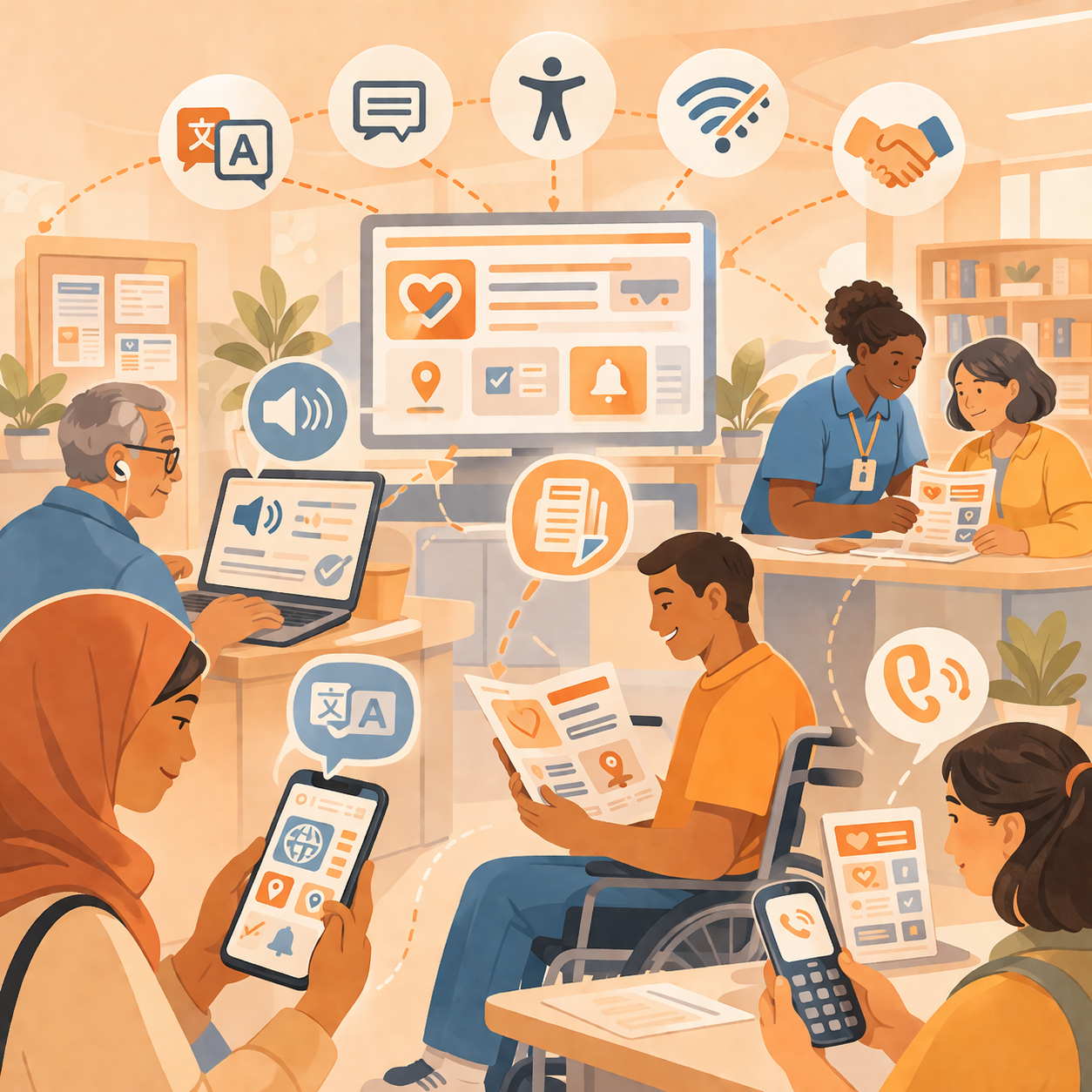 Public health departments and health agencies often feel pressure to modernize quickly, but the toughest challenges are usually not technical. They are the communication decisions that determine whether AI outputs stay accurate, whether apps and portals stay aligned with operations, and whether updates remain consistent across web, social, partners, and frontline staff. Without message discipline and clear ownership, digital tools can unintentionally amplify drift and create new confusion for residents.
That is why people at these agencies often choose to partner with an external resource like Stegmeier Consulting Group (SCG) when modernization needs to move faster than internal capacity allows, or when teams need experienced structure around governance, review tiers, accessibility, and privacy-friendly design. A focused partner can help translate digital ambition into a practical operating model that protects trust while reducing rework.
SCG supports health agencies by helping teams prioritize high-impact digital use cases, build message spine and template systems that plug into apps and web workflows, and establish AI guardrails with clear review steps for high-risk content. This support can also include content audits to reduce outdated pages, partner-ready copy blocks that prevent rewriting, and feedback loop design that reveals where residents get stuck. Over time, these practices help agencies deliver clearer guidance, improve participation, and reduce operational strain created by repetitive questions and inconsistent instructions.
Conclusion
The future of public health communication is not a choice between human trust and digital tools. It is the ability to combine modern channels with disciplined message design, reliable verification pathways, and inclusive access routes. Public health departments and health agencies can use AI to improve consistency and efficiency, use apps and portals to reduce friction in service navigation, and use digital tools to maintain clearer, timelier updates that residents can act on.
Health authorities and public health organizations strengthen outcomes when modernization is approached as a communication system. That system includes clear governance, privacy protections, accessibility standards, language inclusion, partner coordination, and feedback loops that drive improvement over time. When these elements work together, digital tools help residents move from information to action more reliably, supporting stronger long-term public health outcomes.
SCG’s Strategic Approach to Communication Systems
Align your agency’s messaging, processes, and public engagement strategies
Agencies that communicate effectively build stronger trust with staff, stakeholders, and the public. Whether you are improving health communication campaigns, strengthening internal workflows, or aligning agency-wide messaging, SCG can help you develop a communication system that supports consistent decision-making and long-term organizational success. Use the form below to connect with our team and explore how a strategic communication framework can elevate your agency’s impact.