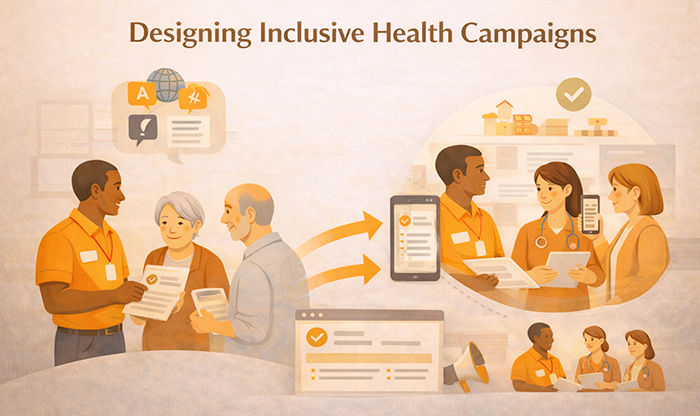
Designing Inclusive Health Campaigns: Communicating Across Language, Ability, and Cultural Differences
Public health departments and health agencies succeed when residents can find, understand, and use guidance in real life. Inclusive health campaigns make that possible for more people, including residents with different languages, disabilities, literacy levels, cultural contexts, and trust histories. When campaigns are not designed for these differences, the result is not just lower engagement. It is unequal access to programs and unequal ability to act on protective guidance.
Health authorities and public health organizations also operate in an environment where information travels quickly and often out of context. A graphic may be shared without a caption, a flyer may be photographed, and a translated summary may circulate without the source page. Inclusive design helps protect meaning as messages move across channels and communities. It also reduces friction for staff and partners who otherwise spend time re-explaining, correcting misunderstandings, and responding to avoidable confusion.
Inclusive communication is not a single tactic. It is a system. It includes audience mapping, language access planning, accessibility standards, culturally respectful framing, trusted messenger coordination, and feedback loops that reveal where people get stuck. This article provides an evergreen framework for public health organizations that want campaigns to reach underserved and at-risk populations more reliably, without sacrificing clarity or operational feasibility.
What Inclusive Campaign Design Means for Public Health
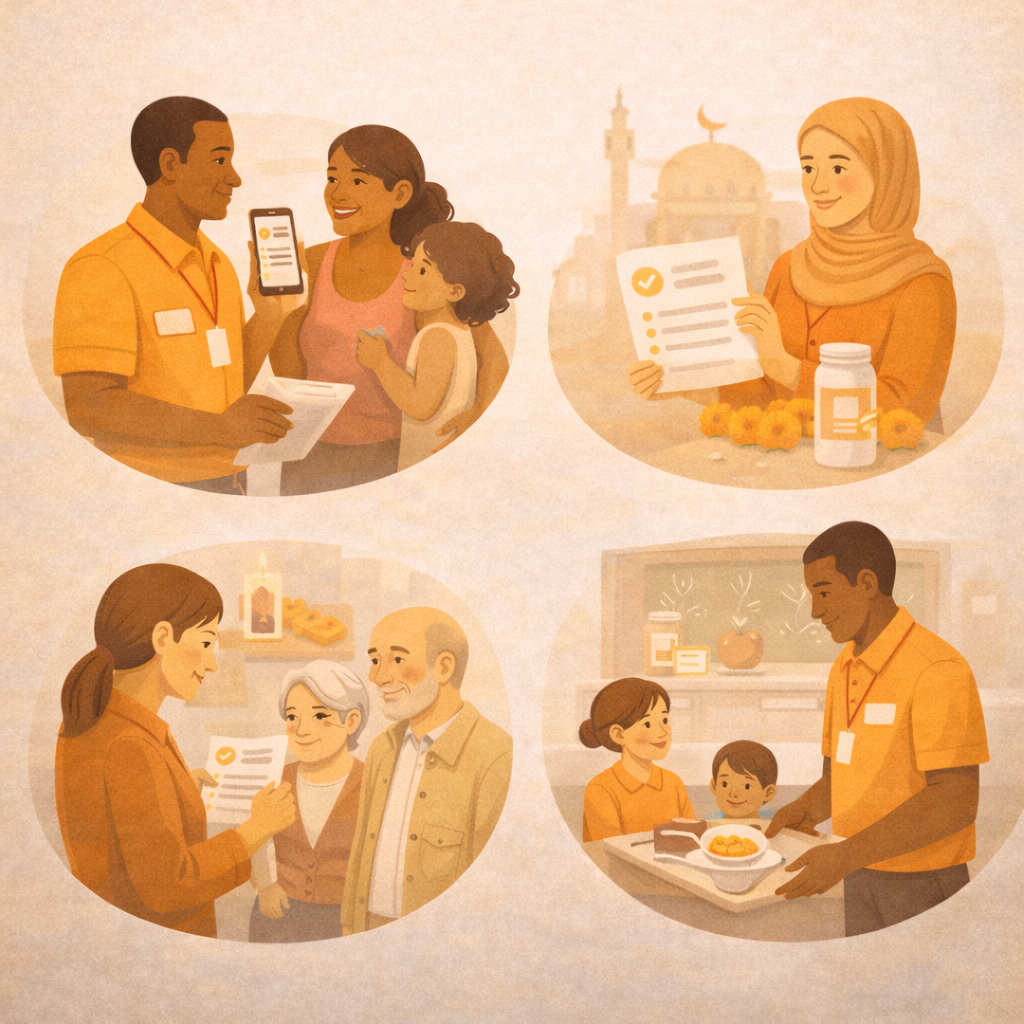 Inclusive campaign design means that communication works across the realities of the community. Residents should be able to understand what the message is, whether it applies to them, what to do next, and how to get help, regardless of language, disability, or cultural context. For public health departments, inclusion is not only an equity goal. It is a performance requirement that improves follow-through and reduces the burden created by confusion.
Inclusion begins with the recognition that “general public” messaging often assumes ideal conditions. It assumes stable internet access, strong reading comprehension, familiarity with health systems, and confidence asking questions. Many residents do not have these conditions. When a public health organization designs campaigns for those realities, it prevents drop-off at the points where people commonly disengage, such as eligibility interpretation, scheduling steps, documentation requirements, and follow-up instructions.
Inclusive design also protects trust. Residents who have experienced stigma, exclusion, or inconsistent treatment often evaluate campaigns through a different lens. Tone, framing, imagery, and messenger choices can signal respect or indifference. Health agencies build inclusion when communication acknowledges barriers without judgment and provides realistic access routes that do not require people to “figure it out” on their own.
Finally, inclusion improves internal consistency. When an agency establishes standards for language access, accessibility, and culturally respectful framing, staff and partners can reuse consistent templates. This reduces message drift and makes multi-channel delivery easier, especially during high-pressure periods.
From Data to Action: Effective Communication Strategies for Public Health Agencies
This article is part of our series on strategic communication for state and local government Public Health Agencies. To learn more and to see the parent article, which links to other content just like this, click the button below.
Start With an Inclusion Map, Not a Generic Audience List
Inclusive campaigns begin with an inclusion map that identifies who is being reached easily and who is likely to be missed. A simple demographic list is not enough. Public health departments can strengthen inclusion by mapping barriers and decision contexts, including language access needs, disability access needs, digital access constraints, work schedules, transportation limitations, caregiving responsibilities, and trust networks.
An inclusion map should also identify which channels and messengers each group relies on. Some residents trust clinic staff and school communications. Others rely on community-based organizations, faith networks, ethnic media, neighborhood group chats, or employer channels. Health authorities can reduce inequity by planning distribution through the channels residents actually use, not only through channels the agency controls.
The map should also highlight high-friction steps. These are the points where residents frequently disengage, such as forms, appointments, documentation, privacy concerns, and follow-up timing. Public health organizations can use the map to design campaign materials that reduce friction at these steps, including clear action paths, alternatives to online-only access, and routing guidance for residents who need assistance.
Inclusive mapping is strongest when it is informed by partner input. Community partners often know which words feel confusing, which messages feel respectful, and which barriers are most common. Health agencies do not need a large research effort to do this well. They need a consistent way to listen and to incorporate what partners and frontline staff are hearing.
Language Inclusion, Translating Meaning, Not Just Words
Inclusive health campaigns treat language access as a core design requirement, not a downstream task. Public health departments and health agencies often lose reach when English content is published first and translated later, because the timing gap becomes a trust gap. Residents in other language communities may rely on informal translations in social networks, which can distort meaning and create inconsistent interpretations of the same guidance.
Language inclusion starts with writing in a way that translates well. Plain language, shorter sentences, and consistent terminology reduce ambiguity and improve translation quality. Health authorities strengthen multilingual clarity when key terms are defined once and then repeated consistently across channels. If a campaign uses terms such as eligible, recommended, required, and available, those words should have approved equivalents in each target language. This prevents different language communities from receiving different interpretations of the same instruction.
Translation also needs a clear publishing system. Public health organizations can reduce confusion by maintaining a stable place for translated materials, using consistent page naming and link paths, and placing update timestamps in every language version. When residents can verify that their language page is current, they are less likely to rely on screenshots or secondhand summaries.
Language inclusion also includes interpretation and navigation support. Some residents will need help completing steps, asking questions, or understanding follow-up requirements. Health agencies can make interpretation options visible through hotlines, clinic signage, and partner materials. When interpretation is easy to find, access becomes more equitable and residents are more likely to complete the next step.
Publish Multilingual “Core Content” in Parallel
Parallel publishing is one of the strongest equity practices health agencies can adopt. The goal is to release the key takeaway, the action step, and the verification path in multiple languages at the same time as English. When residents receive the core message simultaneously, the campaign feels fair and coordinated, and rumors have less space to grow.
Parallel publishing does not require that every technical detail be translated immediately. Public health departments can prioritize the elements that drive behavior, then follow with deeper translated content on a predictable timeline. This approach protects inclusion while still acknowledging real capacity constraints, and it reduces the risk that informal translations become the default source.
Use Community Review to Improve Cultural and Linguistic Fit
Translation accuracy is necessary, but cultural fit improves comprehension and trust. Health authorities can strengthen multilingual content by using community review, such as bilingual staff, trusted partners, or community advisors who understand local phrasing and common misunderstandings. A short review can identify words that feel stigmatizing, confusing, or overly formal.
Community review also improves consistency across channels. When partners and community messengers understand the chosen phrasing, they are less likely to rewrite. This reduces meaning drift and helps residents hear the same message in multiple settings, which increases confidence and follow-through.
Ability Inclusion, Designing Campaigns That Work With Accessibility Needs
Inclusive campaigns must work for residents with disabilities and for residents who rely on different formats to access information. Public health departments can unintentionally exclude people when key information is available only through small-text graphics, audio without captions, PDFs that are difficult to navigate, or websites that are not compatible with assistive technologies. Accessibility is not only compliance. It is a practical communication standard that improves understanding for everyone.
Ability inclusion begins with readable structure. Health agencies can use clear headings, short paragraphs, and plain-language summaries that allow scanning. Important content should not be embedded only in images. Visuals can support understanding, but the meaning should also be stated in text so it is accessible to screen readers and to residents who do not interpret charts easily.
Video content should be captioned and understandable without sound. Many residents watch videos silently, and some rely on captions for accessibility. Health authorities can also ensure that spoken guidance is plain and that on-screen text is large enough to read on mobile devices. This reduces confusion and makes video content more inclusive.
Printed materials and alternative formats remain important. Some residents need large-print materials. Some need easy-to-print one-page summaries. Some need text-only versions that can be shared through partners or read aloud. Public health organizations improve inclusion when they provide a small set of standard alternative formats for each campaign, tied to a consistent source page where updates are maintained.
Ability inclusion also includes access pathways. If a campaign directs residents only to an online form, it may exclude residents with disabilities, limited digital literacy, or limited internet access. Public health departments strengthen inclusion when they provide multiple access routes, such as phone options, in-person options, and partner navigation support, and when they make those routes visible early in the message.
Use Accessible Templates That Staff and Partners Can Reuse
Templates reduce burden and increase consistency. Health agencies can create accessible templates for common campaign assets, such as flyers, social posts, web updates, and FAQs, with built-in plain-language structure and accessibility elements. When staff and partners reuse the same templates, meaning stays consistent and accessibility does not depend on individual design choices.
Accessible templates also support speed during active periods. Public health departments can update the content while keeping structure stable, which helps residents recognize the format and find the next step quickly. Over time, templates become part of the agency’s communication system and reduce avoidable rework.
Provide Text Summaries for Visual Content and Key Updates
Visuals can clarify, but they can also exclude if the meaning is not available in text. Public health organizations can strengthen inclusion by providing short text summaries that state the takeaway and the practical implication. These summaries should be placed near the visual on web pages and included in partner toolkits so the message can be shared accurately.
Text summaries also reduce screenshot confusion. When the key meaning is written plainly, residents are less likely to infer the wrong takeaway from a chart or a graphic. This supports trust and helps residents act appropriately.
Cultural Inclusion, Respectful Framing That Builds Trust and Reduces Stigma
Inclusive campaigns must fit cultural context, not only language and format. Public health departments and health agencies can unintentionally lose trust when messaging assumes shared norms, uses examples that do not reflect community realities, or frames health choices in a way that feels moralizing. Cultural inclusion does not require perfect personalization. It requires respectful framing that recognizes diverse experiences and avoids stigma.
A culturally inclusive campaign begins with a dignity-first tone. Residents are more likely to engage when messaging respects constraints and avoids blame. This is especially important for topics where stigma already reduces follow-through, such as behavioral health, substance use, sexual health, chronic disease management, and housing-related health risks. Public health organizations can be direct about risk and still communicate in a way that preserves dignity.
Cultural inclusion also involves relevance. Messaging lands better when it connects guidance to outcomes residents care about, such as protecting elders, keeping children in school, maintaining the ability to work, and avoiding preventable complications. Health authorities can frame recommendations as practical protection rather than as compliance. This approach often reduces defensiveness and increases willingness to act.
Representation in visuals and examples matters as well. If campaign materials consistently portray one group as the “default” audience, other communities may assume the message is not meant for them. Public health departments can strengthen inclusion by using imagery and scenarios that reflect the diversity of households, ages, and living conditions in the community, without tokenism. The aim is to communicate that the campaign applies broadly and that the agency understands different realities.
Cultural inclusion also means being careful with assumptions about systems. Some residents distrust government communication because of prior harms. Others may distrust healthcare systems because of discrimination or past experiences. Public health organizations can reduce this barrier by being transparent about what the agency is doing, what residents can expect, and what protections exist, especially for privacy and access. Transparency in plain language strengthens credibility and reduces fear.
Finally, cultural inclusion improves when campaigns incorporate trusted messengers. Residents often believe information more readily when it comes through community organizations, faith leaders, ethnic media, school channels, or clinicians who share context. Health agencies can coordinate with these messengers while maintaining consistent meaning, which helps the campaign travel through trusted relationships.
Use Community Co-Design to Improve Fit and Reduce Misinterpretation
Co-design means involving community partners early enough that they can shape messaging choices, not just approve a final draft. Public health departments can use short working sessions or rapid reviews with trusted community organizations to identify confusing terms, unintended stigma, and missing access routes. Even small co-design efforts can improve campaign performance because they reveal how messages land in real contexts.
Co-design also helps agencies anticipate how messages will be shared. Partners can advise which channels communities use and which formats are most practical, such as short audio, printed handouts, or community bulletin language. When health authorities incorporate this input, campaign content becomes easier to distribute and less likely to be rewritten in ways that change meaning.
Frame Recommendations as Practical Protection, Not Moral Judgment
Messaging can create resistance when it implies that people who struggle to comply are irresponsible. Health agencies can avoid this by framing recommendations as tools that help residents protect themselves and their households. A practical protection frame emphasizes realistic steps and acknowledges barriers without blame.
This framing also supports equity. Residents facing higher barriers often need alternative access routes and additional support. When a public health organization clearly names options and routes to help, residents are more likely to follow through. The campaign feels supportive rather than punitive, which strengthens trust and increases participation.
Multi-Channel Inclusion, Delivering the Same Meaning Through Different Formats
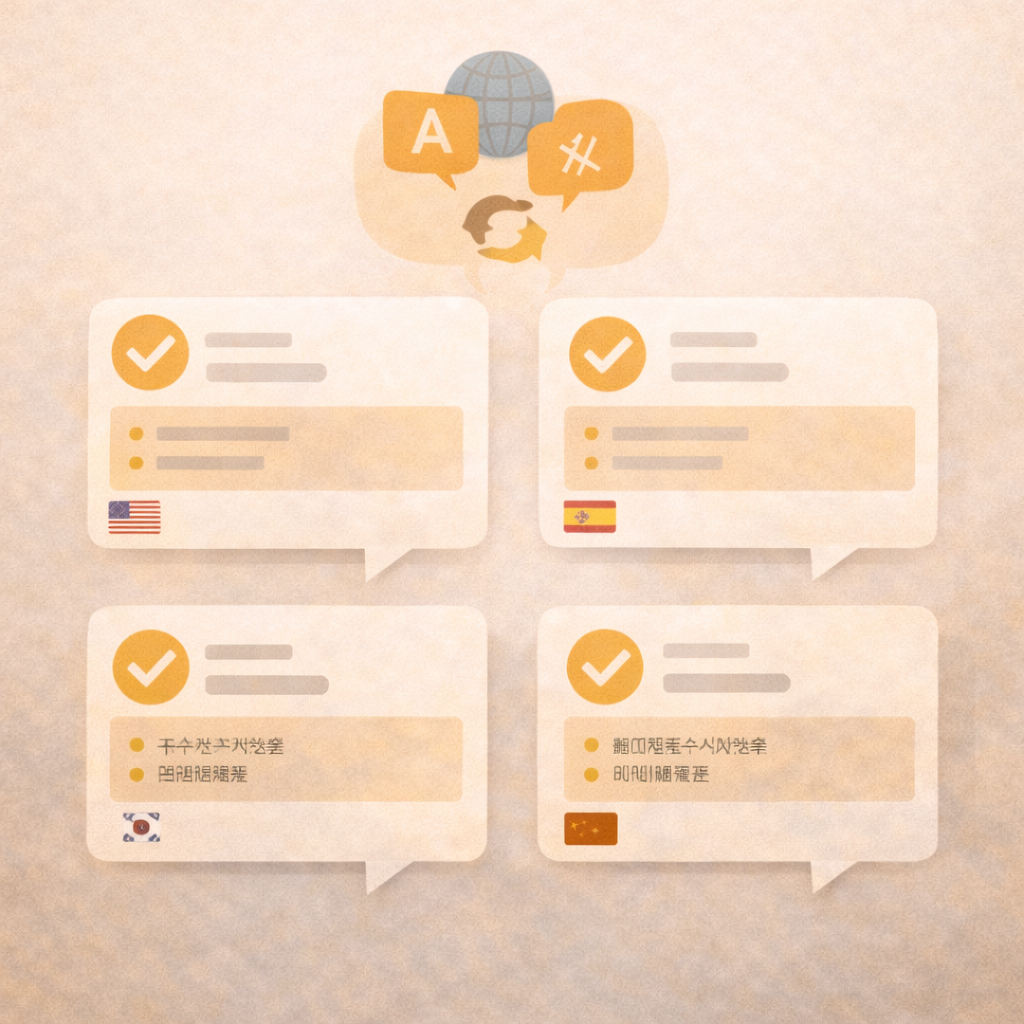 Inclusive campaigns require channel planning that reflects how different communities receive information. Public health departments often rely heavily on websites and social media, but those channels do not reach everyone equally. Health agencies can strengthen inclusion by using a channel mix that includes digital, print, in-person, and partner pathways, while keeping the message spine consistent.
A strong approach begins with a clear source of truth. A public health organization can maintain a mobile-friendly landing page that includes the key takeaway, action steps, access routes, and update timestamps. This page becomes the verification point that partners and staff can reference. It also reduces confusion when content is shared out of context.
Social media can support inclusion when it is used for reminders, trigger-based updates, and short action prompts. The first line of a post should carry the key meaning and the next step. Health authorities should avoid placing essential information only in small text on images. Captions and link paths should make it easy to find details and to verify that information is current.
Print and signage remain essential for reaching residents who have limited digital access or who encounter information in physical spaces. Clinics, schools, libraries, community centers, shelters, and partner sites can distribute one-page action cards and translated summaries. Public health departments can improve consistency by providing standard print templates that partners can reuse and update.
In-person and community-based channels can further strengthen inclusion. Outreach events, community health workers, town halls, and partner briefings create opportunities for two-way communication and clarification. These formats are especially useful when trust is fragile or when instructions are complex. Health agencies can support in-person channels by providing simple scripts and routing guidance that keep messaging consistent.
Finally, inclusion requires that channels reinforce each other rather than contradict each other. When the same core message appears through multiple pathways, residents gain confidence. When different channels carry different terms or different instructions, residents disengage or rely on informal summaries. Consistency across channels is one of the most effective inclusion practices a health authority can adopt.
Use a Single Message Spine and Adapt Length, Not Meaning
A message spine helps campaigns remain consistent across formats. Public health departments can create a one-sentence version for social posts, a one-paragraph version for partner newsletters, and a one-page version for flyers and web pages. The meaning stays stable while the length changes to fit the channel.
This approach also supports staff and partner sharing. When staff and partners have copy-ready language at different lengths, they can communicate quickly without rewriting. This reduces drift and ensures that residents receive the same core guidance regardless of where they encounter it.
Build Verification Into Every Format to Reduce Screenshot Confusion
Residents frequently encounter partial content, especially during high-attention periods. Health agencies can reduce confusion by including dates and a verification path in every format, such as a consistent short URL, a QR code, or a clear landing page name. When residents can confirm what is current quickly, misinformation has less room to spread.
Verification also improves equity. Some communities rely more on forwarded messages and informal sharing. A clear verification path helps residents validate what they received and protects them from outdated instructions. This strengthens trust and supports more consistent community action.
Inclusive Campaign Operations, Making Access Pathways Real and Consistent
Inclusive communication fails when the message is accessible but the service pathway is not. Public health departments and health agencies can design a campaign that reads clearly and still lose trust if residents encounter barriers when they try to act. Inclusion requires operational alignment so the steps described in the message match what residents experience at clinics, hotlines, partner sites, and online portals.
Operational inclusion begins by mapping the resident journey. Health authorities can identify where residents must make decisions, what documents or information they need, what barriers are likely, and what alternatives exist. When this journey is clear internally, campaign messaging can include realistic options, such as phone scheduling, walk-in pathways, partner navigation support, and language assistance. Residents are more likely to follow through when they can see a path that fits their circumstances.
Consistency across staff interactions is also essential. Residents experience inclusion through conversations as much as through printed materials. If a health department’s website says one thing and a staff member says another, residents interpret that as unreliability or exclusion. Public health organizations can reduce this risk by briefing staff with message packs that include the message spine, key definitions, access routes, and the top questions staff will receive. When staff are aligned, the campaign becomes more inclusive because residents receive the same guidance regardless of where they ask.
Inclusion also requires predictable updates. Programs change. Hours change. Eligibility rules can shift based on capacity. Health agencies can protect trust by updating source pages first, time-stamping changes, and distributing updated language to staff and partners quickly. This prevents outdated instructions from circulating, which is especially important for communities that rely on partner channels and forwarded messages.
Finally, inclusive operations should include a feedback loop focused on access friction. Public health departments can track common questions, missed appointment reasons, and partner-reported barriers, then adjust both communication and operations. Over time, the campaign becomes easier to use, not just easier to read.
Offer Multiple Access Routes and Make Them Visible Early
Many residents cannot use the default pathway, especially when the default pathway assumes online access, flexible work hours, or reliable transportation. Health agencies can strengthen inclusion by offering multiple access routes and naming them early in the message, not as an afterthought. A clear set of options reduces drop-off and reduces frustration at service sites.
Visibility matters as much as availability. A public health organization can improve follow-through by placing access options near the top of web pages, on printed action cards, and in partner toolkits. When residents can quickly choose a path that fits their constraints, the campaign becomes practical rather than aspirational.
Align Staff Scripts and Partner Materials to Prevent Unequal Experiences
Inclusion requires consistency across touchpoints. Public health departments can create unequal experiences when different sites or partners communicate different steps, different eligibility interpretations, or different tone. Health authorities can reduce this by providing shared scripts, copy-ready partner language, and a stable verification path.
This alignment also protects partners and staff. When partners have clear routing guidance and staff have clear escalation routes, fewer residents are bounced between sources. Residents experience the system as coordinated, which increases trust and reduces the perception that the program is only accessible to people who already know how to navigate health systems.
Measuring Inclusion, Using Signals That Reveal Who Is Being Missed
Inclusive campaigns improve when health agencies measure more than reach. A post may get views, and a flyer may be distributed widely, yet underserved communities may still not participate if access is unclear or trust is low. Public health departments can strengthen inclusion by tracking signals that reveal whether residents understood the message and whether they could act on it.
Measurement should connect to the resident journey. Health authorities can track where people drop off, such as eligibility checks, appointment scheduling, attendance, follow-up completion, and repeat questions at service points. These signals show where messaging may be unclear or where operational barriers are blocking action. They also reveal whether certain communities face higher friction.
Inclusive measurement also needs segmentation. Public health organizations can examine participation and feedback patterns by geography, language, access pathway, and partner channel. This helps reveal whether the campaign is reaching communities equitably. If one community is hearing the message but not acting, the issue may be access routes, trust, or cultural fit rather than awareness.
Health agencies can also use qualitative signals. Partner feedback, staff debriefs, and resident open-text feedback can reveal confusion and stigma that numbers do not show. These signals are often the fastest way to detect unintended exclusion, such as a term that does not translate well or an instruction that assumes a resource many residents do not have.
Measurement should lead to improvement. Public health departments can treat inclusion metrics as continuous feedback, then adjust messaging, channels, and access supports. Over time, inclusive campaigns become more effective because they learn where residents are being missed and why.
Track Top Questions and Barriers as Inclusion Indicators
The questions residents ask reflect what the campaign did not make clear. Public health organizations can track the most common questions and barriers by site and by channel, then use that information to revise materials and scripts. This is a practical inclusion measure because it shows where residents are being asked to do extra work to understand or access services.
Tracking questions also helps reveal inequities. If certain locations or partner sites report different patterns of confusion, the campaign may need targeted adjustments or additional support. Using questions as indicators keeps inclusion work grounded in real experience.
Use Participation Patterns to Identify Gaps and Adjust Distribution
Participation data can reveal which communities are not being reached or are facing higher barriers. Health agencies can compare participation rates across languages, neighborhoods, and access routes to identify where additional outreach and support are needed. This approach strengthens equity by moving beyond assumptions about who is participating.
Participation patterns also help refine channel strategy. If partner-based outreach drives higher follow-through in certain communities, the campaign can invest more in partner toolkits and in-person channels. If digital channels drive awareness but not action, the campaign can strengthen access pathways and clarify steps. This keeps inclusion work practical and outcome-focused.
Promoting Long-Term Public Health Outcomes Through Communication
Inclusive campaign design supports long-term public health outcomes because it increases the likelihood that residents can understand guidance, trust it, and act on it across diverse life circumstances. Public health departments and health agencies do not improve outcomes when campaigns reach only the most connected and confident residents. Outcomes improve when guidance and access pathways work for people who face higher barriers, higher risk, and lower margins for error.
Long-term outcomes strengthen when language inclusion is built into routine operations. When health authorities publish core content in parallel across key languages and maintain consistent terminology, communities receive guidance at the same time and with the same meaning. This reduces reliance on informal translation, improves participation in programs, and strengthens trust in the public health organization’s fairness and competence over time.
Ability inclusion also supports long-term outcomes by reducing misunderstanding and improving follow-through across formats. Mobile-friendly design, captions, text summaries, and alternative access routes help residents complete steps more reliably. When public health organizations provide multiple pathways for action, such as phone options and partner navigation support, participation becomes more equitable and less dependent on digital fluency.
Cultural inclusion strengthens long-term outcomes by reducing stigma and improving relevance. When campaigns use dignity-first framing and connect guidance to outcomes residents value, such as protecting family members and maintaining daily stability, residents are more likely to engage. Trusted messengers extend this effect, especially when partner networks share consistent language and routing guidance. Over time, repeated respectful communication improves cooperation during both routine programs and urgent events.
Inclusive operations also protect capacity. Clear access routes, consistent staff scripts, and predictable updates reduce repetitive questions and avoidable friction at service sites. When feedback loops are used to detect where residents are getting stuck, campaigns improve across cycles. This continuous improvement becomes part of prevention infrastructure, supporting better outcomes year after year.
Strategic Communication Support for Your Health Agency
 Inclusive campaigns ask agencies to do more than “translate and post.” Teams must make guidance travel intact across languages, formats, partner networks, and service sites. That requires decisions about what content is core, what must publish in parallel, what templates staff and partners will reuse, and how residents will verify what is current when messages circulate out of context.
That is why agencies often choose to partner with an external resource like Stegmeier Consulting Group (SCG) to strengthen communication systems. An outside partner can help turn inclusive intent into production-ready campaign kits, with clear message spines, accessibility-first layouts, translation glossaries, and distribution plans that match how communities actually receive information. This support can also include rapid community review workflows that improve cultural fit and reduce unintentional stigma before materials go live.
SCG supports health agencies by building repeatable campaign operations, not one-off deliverables. That includes aligning communications with real access pathways, equipping partners with copy-ready materials at multiple lengths, and creating measurement signals that show where residents are getting stuck. Over time, agencies gain a durable way to communicate with fairness, clarity, and follow-through, even when programs evolve and updates move quickly.
Conclusion
Designing inclusive health campaigns means communicating across language, ability, and cultural differences in a way that preserves clarity, dignity, and practical action. Public health departments and health agencies can strengthen inclusion by starting with an inclusion map, publishing multilingual core content in parallel, using accessible templates and text summaries, framing recommendations without stigma, and delivering consistent meaning across channels through a stable message spine and verification path.
Health authorities and public health organizations also improve outcomes when inclusion extends beyond messaging into operations, staff scripts, partner coordination, and feedback loops that drive continuous improvement. When inclusive design becomes a system rather than an occasional effort, residents are more likely to understand guidance, access services, and sustain preventive behaviors. That consistency supports long-term public health outcomes and strengthens trust across the community.
SCG’s Strategic Approach to Communication Systems
Align your agency’s messaging, processes, and public engagement strategies
Agencies that communicate effectively build stronger trust with staff, stakeholders, and the public. Whether you are improving health communication campaigns, strengthening internal workflows, or aligning agency-wide messaging, SCG can help you develop a communication system that supports consistent decision-making and long-term organizational success. Use the form below to connect with our team and explore how a strategic communication framework can elevate your agency’s impact.