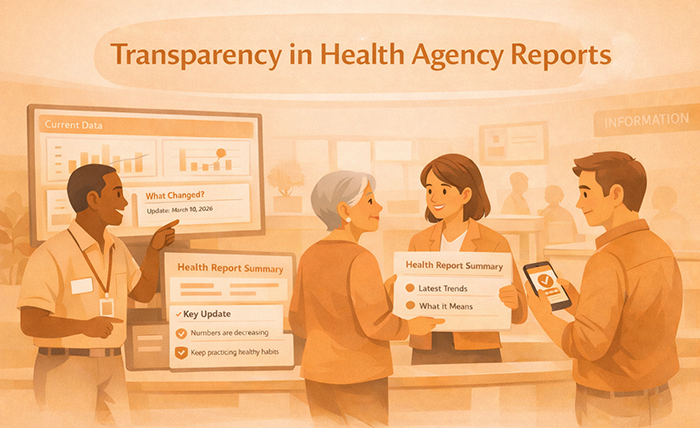
Transparency in Health Agency Reports: Turning Data, Dashboards, and Updates Into Public Understanding
Public health departments and health agencies publish reports, dashboards, and updates to inform residents, guide behavior, and demonstrate accountability. Even when the data is accurate, transparency can fall flat if the public cannot interpret what the numbers mean, how to apply them, or where to verify what is current. In many communities, residents encounter health information in fragments, then fill gaps with assumptions, social commentary, or outdated screenshots.
Health authorities and public health organizations also face a practical reality. Transparency is not a single act of sharing information. It is a communication system that must translate technical detail into meaning, while protecting trust, privacy, and operational credibility. When transparency is designed well, residents understand risk more clearly, participation in programs increases, and fewer misunderstandings drive call volume and frustration at service sites. When transparency is designed poorly, the same data can create confusion, trigger unnecessary fear, or fuel misinformation.
Transparency becomes most effective when reports and dashboards do three things at the same time. They show what is happening in the community, they explain what the information means, and they clarify what residents should do next. This guide provides an evergreen framework for health agencies that want transparency to lead to understanding, not just visibility.
Why Transparency Alone Does Not Create Understanding
 Transparency is often defined as sharing information openly. For public health departments, that can mean publishing case counts, service metrics, inspection results, program participation, or resource availability. The missing step is interpretation. Residents do not automatically know what a trend means, what a rate represents, or whether a change is meaningful. A dashboard that looks clear to analysts can feel confusing to the public, especially when people are stressed, reading quickly, or trying to compare local information to what they heard elsewhere.
Understanding also depends on context. A number becomes meaningful only when the audience knows what it measures, how it was gathered, and how it should be used. For example, a weekly increase can signal rising risk, a reporting lag, or a seasonal fluctuation. A public health organization can prevent misinterpretation by naming the likely meaning and the limits of the data. This kind of transparency builds trust because it demonstrates competence and honesty, even when the data is imperfect.
Another reason transparency does not automatically lead to understanding is that people interpret information through lived experience. Residents who have struggled to access services, faced language barriers, or experienced confusing eligibility rules may interpret the same dashboard very differently than residents who feel well served by the system. Health agencies build understanding when they pair transparency with practical access information, clear definitions, and respectful acknowledgment of barriers that shape what people can do.
Public health departments also face the challenge of information overload. When transparency becomes an ongoing stream of charts, updates, and documents, residents can disengage. They may stop checking official sources and rely on secondary summaries. That is when misinformation thrives, not because the agency withheld information, but because the information was not organized in a way that supported comprehension and action.
Finally, transparency must align with operational reality. If a dashboard suggests a resource is available, but residents encounter closed lines, limited hours, or inconsistent eligibility enforcement, the public interprets that as misleading. Health authorities strengthen understanding when transparency is synchronized with what residents will actually experience, including constraints, alternatives, and clear next steps.
From Data to Action: Effective Communication Strategies for Public Health Agencies
This article is part of our series on strategic communication for state and local government Public Health Agencies. To learn more and to see the parent article, which links to other content just like this, click the button below.
Common Transparency Breakdowns in Public Health Reporting
Most transparency issues are not intentional. They emerge from the way information is created internally and then released externally. Public health organizations often build reports for internal planning or stakeholder oversight, then publish them publicly with minimal adaptation. The result can be technically accurate and still difficult to use.
One common breakdown is undefined terminology. Words such as “eligible,” “probable,” “confirmed,” “recommended,” “high risk,” and “capacity” can be interpreted differently by different audiences. When these terms are not defined consistently across reports, dashboards, and public updates, residents can conclude that guidance is contradictory. Public health departments reduce this risk by maintaining a small set of standard definitions and using them consistently everywhere.
Another frequent issue is unclear scope. Residents need to know what geography, time period, and population a number represents. Without this, people assume the data applies to them personally, or they assume it applies to the entire region when it may represent only one reporting area or program segment. Health agencies strengthen transparency when scope is stated plainly and early, not hidden in footnotes.
Misleading comparisons are also common. Dashboards often invite comparison, such as week-over-week or neighborhood-to-county. Comparisons can help understanding, but only if the dashboard explains why the comparison is appropriate. If the baseline is unusual, if data collection changed, or if the time window is too short, the public can draw the wrong conclusion. A health authority can protect trust by labeling comparisons clearly and explaining what should and should not be inferred.
A fourth breakdown is missing the action bridge. Many reports present data without connecting it to what residents should do. Residents may leave with anxiety, confusion, or complacency depending on how they interpret the trend. Public health departments improve understanding when every public-facing report includes a clear action statement that matches the level of risk and the level of certainty.
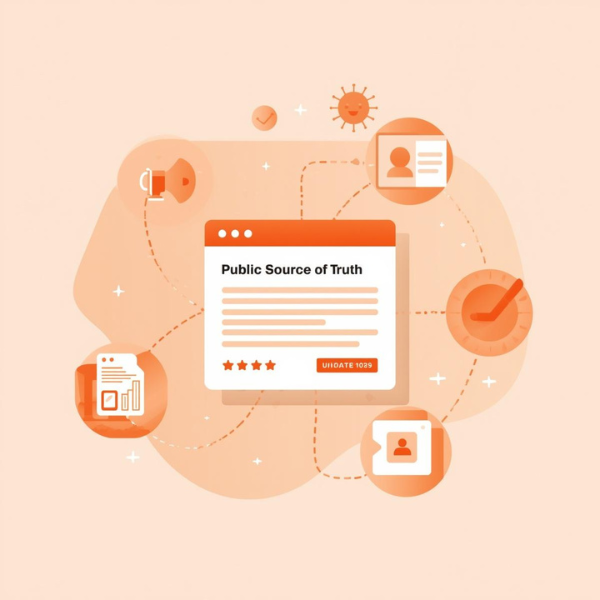
A fifth issue is update inconsistency. When dashboards update on one schedule and public statements update on another, residents are left to reconcile differences on their own. That reconciliation often happens on social media rather than on the agency’s source pages. Public health organizations strengthen transparency when they publish update rhythms, date-stamp content clearly, and maintain a single source-of-truth location that residents can verify quickly.
Finally, transparency can unintentionally violate accessibility or equity principles. Complex visuals, small fonts, jargon-heavy captions, and English-only materials can exclude residents who most need the information. Health agencies build real transparency when reporting is accessible on mobile, readable without specialized knowledge, and available through formats that match the community.
Define the Purpose of Transparency Before You Publish Anything
Transparency works best when public health departments decide what the public is supposed to learn and do with the information. Many dashboards and reports fail not because the data is wrong, but because the purpose is unclear. Residents cannot tell whether a dashboard is meant to guide immediate behavior, explain longer-term trends, show service availability, or demonstrate accountability for investments and outcomes.
Health agencies can clarify purpose by separating three common transparency goals and designing content accordingly. One goal is situational awareness, which helps residents understand what is happening locally and what it means for daily choices. Another goal is service navigation, which helps residents find access routes, confirm eligibility, and understand what to expect. A third goal is accountability and performance, which helps the public understand program progress, resource use, and operational improvements over time.
Health authorities also benefit from being explicit about the decision level the information supports. Some data supports individual decisions, such as whether to take a protective action or where to access services. Some data supports community understanding, such as trends that inform planning and collective behavior. When these are mixed without explanation, residents may overreact to a small change or dismiss a meaningful pattern as background noise.
Audience clarity matters as much as purpose clarity. Public health organizations serve residents with different literacy levels, different language needs, and different comfort with data. A public-facing report should assume a reader who is scanning quickly, reading on a phone, and looking for a clear takeaway. More detailed technical appendices can exist, but they should not be the primary experience.
Purpose and audience should also shape what is emphasized. If a report is designed to support trust, it should highlight what changed, why it changed, and what the public can expect next. If a dashboard is designed to support action, it should lead with the action bridge and the access path, not with a dense chart. When the purpose is clear, the design becomes easier and the public experience becomes calmer.
Use One Stable “Source of Truth” for Each Topic
Residents lose trust when they have to reconcile multiple pages with slightly different numbers or dates. Public health departments can reduce confusion by maintaining one stable source page for each major topic, then routing all updates, dashboards, and reports through that location. A stable source page also helps partners and media share accurate links rather than screenshots.
State the Update Rhythm and Data Limitations in Plain Language
Health agencies can prevent misinterpretation by explaining when the data updates and what might cause delays or revisions. This is not an apology. It is part of transparency. When residents understand that a dashboard updates weekly or that lab reporting can lag, they interpret changes more accurately and are less likely to assume hidden manipulation.
From Data to Meaning, What Reports Must Do Before They Look Polished
Public health departments often begin with visual design decisions, such as which charts to use and how to arrange a dashboard. A more effective starting point is meaning. Meaning is the interpretation residents need to take away so they can understand what is happening and decide what to do next. Without meaning, a report becomes a collection of numbers that can be read in multiple ways.
Health authorities can strengthen meaning by defining the decision each metric supports. If a metric is included, the report should clarify what it indicates and how it should be used. A community trend metric should clarify whether it reflects risk changes, seasonal effects, reporting changes, or program shifts. A performance metric should clarify what improvement looks like and how the agency is measuring progress.
Scope clarity is essential for meaning. Public health organizations should state what geography the data covers, what time period it reflects, and what population it describes. Residents will fill in missing scope with assumptions, which can lead to unnecessary fear or misplaced complacency. Scope also includes definitions, such as what counts as a case, what counts as participation, and what counts as capacity. When these definitions are not visible, residents may compare numbers incorrectly or interpret updates as contradictions.
Meaning also depends on choosing comparisons carefully. Comparisons help people understand whether something is changing and whether the change matters. They can also mislead if the baseline is not explained or if the time window is too short. Health agencies protect trust when they label comparisons clearly, explain why the comparison is useful, and avoid framing that makes routine fluctuation look dramatic.
Another component of meaning is narrative support. A chart should rarely stand alone. A short caption or summary statement should communicate the key takeaway and the practical implication. For public health departments, the caption is often the element residents remember and repeat. That makes it a high-stakes part of transparency. It should be written in plain language, aligned with the data, and consistent with other public statements.
Meaning also includes emotional usability. Data that is presented without context can trigger fear, blame, or resignation. Public health organizations can reduce these reactions by pairing trends with practical guidance and clear access routes. When residents see change, they should also see what they can do and where they can verify what is current.
Translate Technical Measures Into Everyday Interpretation Without Distorting Them
Health agencies do not need to remove technical measures to be transparent. They need to interpret them. If a measure is used because it is more accurate, the report should say so and explain what it represents in everyday terms. This approach preserves credibility while making the information usable for residents who do not work with data regularly.
Make the “So What” Explicit and Stable Across Updates
Residents should not have to infer the takeaway. Public health departments can strengthen transparency by stating the takeaway clearly and keeping that phrasing consistent across weekly updates. When the “so what” remains stable, residents can interpret changes faster and trust the system more.
Building Dashboards Residents Can Actually Use
Dashboards can be one of the most visible transparency tools a public health department maintains. They also create one of the highest risks for misunderstanding because residents may scan quickly, compare numbers without context, or assume that what they see applies directly to their household. Health agencies can make dashboards more usable by designing them for resident decisions and by reducing the amount of interpretation the public must do alone.
A useful dashboard begins with a clear orientation. Residents should be able to tell what the dashboard is about, what geography it covers, what time period it represents, and when it was last updated. These elements should be visible immediately, not buried. When orientation is clear, residents can interpret trends more accurately and can trust that they are looking at current information.
Next, a dashboard should limit its primary metrics. Many health authorities try to include everything, which can overwhelm and reduce comprehension. Public health organizations can improve understanding by choosing a small set of metrics that represent the most important meaning for the public. Additional metrics can exist behind tabs or expandable sections, but the first view should answer the most common questions residents bring to the page.
Dashboards also need a clear narrative layer. A short summary statement can help residents interpret what they are seeing. This summary should state what is changing, what is stable, and what residents should do next. It should also avoid dramatic phrasing that could cause fear. A calm, plain-language summary helps the public interpret data responsibly.
Interactivity can help, but only when it reduces confusion. Filters and tooltips should clarify meaning, not create a puzzle. A public health department should assume many residents will not use filters. The default view should still be understandable. If filters are included, they should be labeled in plain language and should avoid internal terms that residents do not recognize.
Comparisons should be intentional. Week-over-week changes can be useful, but they can also exaggerate small fluctuations. Longer trend views can be more stable and more meaningful. Health agencies can improve trust by explaining what time window is being shown and why that window supports interpretation. When a short-term spike is shown, it should be labeled as short-term and paired with context that prevents overreaction.
Finally, dashboards should include an action bridge. A dashboard that shows a trend without guidance can leave residents anxious or uncertain. Public health departments can include a short, consistent action statement that matches the level of risk and directs residents to specific steps and services.
Design for Mobile First, Because That Is How Most Residents Will View It
Many residents will view dashboards on phones. If the dashboard requires horizontal scrolling, tiny text, or multiple clicks to find meaning, people will disengage and rely on summaries from elsewhere. Public health organizations can strengthen transparency by ensuring that the key takeaway, the update date, and the action bridge are readable on mobile without extra effort.
Include a Clear “What Changed” Line to Reduce Confusion and Rumors
Residents often return to dashboards to see what is new. A simple “what changed since the last update” line can reduce misinterpretation and prevent rumors that the agency is hiding information. This line should be brief, factual, and aligned with the data.
Routine Updates That Do Not Create Panic or Fatigue
 Public health departments often publish routine updates to maintain transparency, but routine updates can cause fatigue if they feel repetitive or confusing. They can also cause unnecessary worry if they highlight fluctuation without context. Health agencies can keep routine updates useful by designing them as predictable, calm communications that reinforce stable meaning over time.
A routine update should begin with the main takeaway. Residents want to know what is different and what it means. The update should avoid long introductions and should state the change plainly. Then it should provide the short explanation of why the change happened, when that is known, and what residents should do. This pattern makes updates easier to scan and easier to share without losing meaning.
Update rhythm matters. Health authorities build trust when updates occur on a predictable schedule. If updates are weekly, the organization should state that clearly. If updates become more frequent during active periods, that shift should be explained. Predictability reduces rumors because residents know when to expect new information and do not assume silence is concealment.
A routine update should also reduce the burden on residents to reconcile differences across sources. Public health organizations can do this by linking directly to the source dashboard, using consistent definitions, and keeping phrasing stable. When residents see the same key phrases repeated across updates and dashboards, they interpret information more confidently.
The tone must remain steady. Routine updates should avoid dramatic language, even when trends are concerning. A calm tone supports trust and reduces social amplification of fear. Public health departments can name seriousness through facts and through practical guidance, not through heightened rhetoric.
Finally, routine updates should respect attention and time. A short update that is consistent and clear often performs better than a long narrative that few people read. For residents who want more detail, the update can include a link to deeper reporting. The main update should remain usable on its own.
Keep Action Guidance Stable So Updates Do Not Feel Like Moving Targets
Residents become frustrated when every update introduces new advice without clear explanation. Health agencies can reduce this by keeping the action guidance stable unless a change is truly necessary. When action guidance does change, the update should explain what changed and why.
Use Plain Language Labels for Data Quality, Delays, or Revisions
Data can change due to reporting delays, revised classifications, or corrected entries. Public health departments can protect trust by labeling these situations in plain language. This helps residents interpret changes accurately and prevents accusations that numbers were manipulated.
Turning Transparency Into Trust With Clear Explanations of Decisions
Transparency can increase trust when it helps residents understand not only what is happening, but how decisions are made. Public health departments and health agencies often publish data, then assume the public will infer the agency’s reasoning. In reality, residents commonly interpret decisions through partial information and social interpretation. When the agency explains decision logic in plain language, transparency becomes more credible and less vulnerable to misinformation.
A useful approach is to connect key metrics to clear decision triggers. Residents respond better when they understand what the agency watches, what thresholds matter, and what kinds of changes prompt a different recommendation. This does not require publishing complex internal decision trees. It requires a short explanation that links the metric to the purpose. When residents can see the logic, guidance changes feel like evidence-based adjustments rather than contradictions.
Decision transparency also includes explaining tradeoffs. Many public health decisions balance competing priorities, such as speed versus precision, individual autonomy versus community protection, or resource allocation across programs. A health authority can build trust by acknowledging that these tradeoffs exist and by describing the agency’s guiding priorities in plain language. This kind of transparency reduces cynicism because residents feel respected and informed.
Another trust-building element is showing what the agency is doing in response to the data. Residents can misinterpret transparency as passive reporting if they do not see action. Public health organizations can include short operational updates, such as improving access routes, expanding partner coordination, increasing outreach, or adjusting resource deployment. When residents see both the data and the response, transparency feels purposeful.
Decision explanations should also match the audience’s needs. Residents do not need every technical detail, but they do need a clear narrative that connects evidence to action. Health agencies can provide deeper technical appendices for specialized audiences, while keeping the public-facing explanation concise and readable. This layered approach supports both accountability and usability
Finally, decision transparency must remain consistent across channels. If a dashboard implies one meaning and a public statement implies another, trust erodes quickly. Public health departments strengthen trust by maintaining a stable source-of-truth page and ensuring that key definitions and trigger explanations match across reports, updates, and partner materials.
Explain What Is Stable and What Is Conditional
Residents accept change more readily when they understand what is stable. Health agencies can clarify which goals remain constant, such as protecting vulnerable populations and maintaining access to services, and which elements are conditional, such as thresholds, availability, and timing. This reduces the sense of whiplash when guidance evolves.
Use Short “Because” Statements That Connect Evidence to Action
A brief “because” explanation can strengthen transparency without overwhelming residents. Public health departments can connect a recommendation to the relevant evidence and the desired outcome in one or two sentences. This approach increases credibility because it shows reasoning rather than relying on authority alone.
Accessibility, Equity, and Privacy, Making Transparency Work for Everyone
Transparency can unintentionally exclude people if reporting formats assume high literacy, strong internet access, or comfort with data. Public health departments and health agencies strengthen transparency when they design reporting for diverse audiences and diverse constraints. This is both an equity practice and a trust practice, because residents who feel excluded often interpret transparency as performative rather than real.
Language access is a core requirement. Public health organizations can prioritize translating key takeaways, action steps, and access routes, rather than translating only technical appendices. Residents most need the meaning and the next step. Health authorities can also ensure that translated materials are published in parallel, not weeks later. Parallel publishing reduces inequity and prevents communities from relying on informal translations that may distort meaning.
Accessibility also includes readability and usability. Dashboards and reports should be mobile-friendly, readable without tiny text, and structured with clear headings and short paragraphs. Visuals should not depend solely on color differences for meaning. Captions should state the takeaway in plain language so residents who do not interpret charts easily can still understand the message. Public health departments can also provide simple printable summaries for distribution through clinics and partners.
Equity also depends on channel diversity. Some residents do not use dashboards, and some do not have stable internet access. Public health organizations can extend transparency through partner toolkits, printed materials, and community briefings that share the same key meaning and action guidance. When the same message reaches people through multiple formats, understanding increases across the community.
Privacy is another essential element. Transparency should never require exposing individual identities or sensitive information. Public health departments often must balance public reporting with confidentiality obligations. Health agencies can build trust by explaining privacy protections in plain language and by clearly stating why certain data is aggregated or withheld. When residents understand that privacy is being protected intentionally, transparency feels more ethical and credible.
Finally, equity requires listening. Public health organizations can use feedback loops to learn where reporting is confusing or inaccessible. If residents repeatedly misunderstand a metric or cannot find a key piece of information, the reporting system should be adjusted. Transparency is not static. It should evolve based on what the community needs to understand.
Publish Short, Accessible Summaries Alongside Full Reports
Many residents will not read full reports. Public health departments can increase understanding by publishing a short summary that highlights the key takeaway, what changed, what it means, and what to do next. This summary should link to the full report for readers who want more detail.
Make Equity Visible in Reporting Without Turning It Into Tokenism
Residents often want to see whether services and outcomes are equitable across communities. Health agencies can report equity metrics responsibly by explaining what is being measured and how it will be used to improve access and outcomes. The focus should remain on understanding and improvement, not on blame or labeling.
Promoting Long-Term Public Health Outcomes Through Communication
Transparency supports long-term public health outcomes when it leads to comprehension and practical action, not just visibility. Public health departments and health agencies strengthen prevention and service participation when residents can interpret trends, understand decision logic, and locate clear access routes without confusion. Over time, this reduces misinformation vulnerability because residents have a reliable reference point and a consistent way to verify what is current.
Long-term outcomes improve when health authorities design reporting as a system. Purpose clarity helps residents understand what the information is for and how to use it. Meaning-first design ensures metrics are interpreted correctly rather than misread as judgment or alarm. Usable dashboards and calm routine updates reduce fatigue and help residents track changes without panic. Decision transparency strengthens trust, especially when guidance evolves. Accessibility, equity, and privacy protections ensure transparency works for the whole community, not only for residents who already have strong digital access and high data comfort.
Transparency also reduces operational strain. When reporting is clear and action guidance is stable, public health organizations often see fewer repetitive questions, fewer misunderstandings about eligibility and timing, and fewer conflicts at points of service. Staff spend less time correcting confusion and more time delivering services. Partner networks also function more effectively when they can share consistent links and summaries instead of improvising explanations.
Equity outcomes strengthen when transparency includes accessible formats, parallel language publication, and clear reporting that acknowledges barriers. Residents who feel included in reporting are more likely to trust the agency’s intentions and more likely to participate in programs. Over time, transparency becomes part of prevention infrastructure because it normalizes verification habits and supports shared understanding across the community.
Finally, transparency enables continuous improvement. When public health departments listen to feedback about what is confusing and adjust the reporting system, they build a reputation for responsiveness. That reputation makes future updates easier to communicate and makes community action more reliable.
Strategic Communication Support for Your Health Agency
 Public health departments and health agencies often want to be transparent, but it can be difficult to convert technical reporting into public understanding at scale. Health authorities must balance accuracy, privacy, equity, and operational readiness, while maintaining consistent meaning across dashboards, reports, and routine updates. Without a deliberate system, transparency can unintentionally create confusion, fatigue, or distrust, especially when numbers shift and residents interpret changes without context.
That is why agencies often choose to partner with an external resource like Stegmeier Consulting Group (SCG) to strengthen communication systems. An outside partner can help public health organizations design transparency as a communication framework, including meaning-first reporting structures, plain-language interpretation layers, consistent definitions, dashboard usability improvements, update rhythms, decision-logic explanations, and partner-ready summaries that reduce meaning drift. This support can also include accessibility and equity review so transparency reaches residents across language, literacy, and access differences.
SCG supports health agencies by helping teams translate data into clear public meaning and practical next steps. That often includes building source-of-truth structures, simplifying reporting narratives, aligning communications with operations, and creating repeatable templates for routine updates that remain calm and credible. Over time, these practices strengthen trust, reduce confusion, and improve participation in programs that depend on timely public action.
Conclusion
Transparency becomes valuable when it helps residents understand what is happening, why it matters, and what to do next. Public health departments and health agencies can strengthen transparency by defining purpose first, designing meaning before visuals, building dashboards that are usable on mobile, publishing calm and predictable updates, explaining decisions in plain language, and ensuring accessibility, equity, and privacy are built into reporting.
Health authorities and public health organizations that treat transparency as a communication system create stronger public understanding and stronger trust. When residents can interpret data responsibly and verify current guidance quickly, community action becomes more reliable, and long-term public health outcomes improve.
SCG’s Strategic Approach to Communication Systems
Align your agency’s messaging, processes, and public engagement strategies
Agencies that communicate effectively build stronger trust with staff, stakeholders, and the public. Whether you are improving health communication campaigns, strengthening internal workflows, or aligning agency-wide messaging, SCG can help you develop a communication system that supports consistent decision-making and long-term organizational success. Use the form below to connect with our team and explore how a strategic communication framework can elevate your agency’s impact.