Health Equity in Communication: Reaching Underserved and At-Risk Populations
Public health departments, health agencies, health authorities, and public health organizations are often judged by the programs they run, but residents experience those programs through communication. The way information is written, translated, delivered, and reinforced can determine whether people understand eligibility, trust the source, and take the next step. In many communities, the gap between a well-designed service and real participation is not motivation. It is clarity, access, and relevance.
Health equity in communication is not a specialized niche. It is the practical work of reaching residents who face higher barriers and higher risk, including people with limited English proficiency, limited access to care, disabilities, low health literacy, unstable housing, limited transportation, and histories of institutional harm. When communication is not designed for those realities, it can unintentionally concentrate benefits among residents who already have more time, more access, and more familiarity with health systems.
Equitable communication also protects operational capacity. When messages are confusing or inaccessible, call centers and frontline staff absorb the friction. When messages do not match how people live, outreach teams spend more time re-explaining basics, and partners hesitate to share because they anticipate misunderstanding. In contrast, health agencies that build equity into message design reduce repeated questions, improve follow-through, and strengthen relationships with community messengers.
This topic is also evergreen because the need does not disappear between crises. Equity-focused communication is essential for routine programs like immunizations, screenings, maternal and child health, chronic disease prevention, behavioral health supports, environmental health guidance, and benefit enrollment. It is just as essential during outbreaks, advisories, and service disruptions, when clarity and trust matter even more.
What Health Equity in Communication Means in Practice
 Health equity in communication means that residents have a fair chance to receive, understand, and use health information, regardless of language, literacy, disability, income, geography, or prior experience with systems. It does not mean every message must be tailored to every individual. It means public health organizations design messages and delivery pathways so barriers are anticipated and reduced, rather than discovered after participation drops.
A useful way to think about equity is to separate “availability” from “access.” Information may be available on a website, but not accessible to someone who relies on a phone with limited data. It may be posted in English and translated later, but not accessible to a resident who needs the information today. It may be technically accurate, but not accessible to a reader who does not recognize the terminology or the steps being requested. For health authorities, equity is the set of design decisions that closes these gaps.
Equity also involves dignity. Messages that are written with assumptions, such as stable housing, flexible schedules, paid leave, or reliable transportation, can feel alienating even when they are well-intended. Public health departments build trust when they acknowledge constraints and offer realistic options without judgment. This is especially important for residents who have experienced stigma related to immigration status, substance use, mental health, disability, incarceration, or poverty.
Equity in communication is also a system issue, not only a writing issue. It includes how decisions about language access are made, how partners receive materials, how updates are synchronized across channels, and how feedback from communities is gathered and used. Health agencies that treat equity as a system practice tend to sustain progress beyond individual campaigns.
From Data to Action: Effective Communication Strategies for Public Health Agencies
This article is part of our series on strategic communication for state and local government Public Health Agencies. To learn more and to see the parent article, which links to other content just like this, click the button below.
Start With a Clear Equity Audience Map, Not a Generic “General Public”
Many public health departments begin with a “general public” audience and then add special outreach for underserved groups. That approach can miss the reality that underserved and at-risk populations are often the people most affected by the health issue being addressed. A stronger approach is to begin with an equity audience map that identifies who faces the highest barriers, who faces the highest risk, and which messengers and channels reach them reliably.
An equity audience map goes beyond demographics. It includes practical barriers that shape behavior, such as internet access, transportation, work schedules, caregiving responsibilities, and comfort navigating health systems. It also includes trust context, such as whether residents rely on community-based organizations, faith communities, ethnic media, school channels, or healthcare providers for credible information. For health agencies, this map becomes a planning tool that informs message format, translation priorities, and channel selection.
Risk and barrier mapping should also distinguish between “high-risk medically” and “high-risk operationally.” A group may face high health risk due to chronic conditions, age, or pregnancy. Another group may face high operational risk because they are less likely to receive the message, less likely to understand it quickly, or less likely to be able to act even when they understand it. Public health organizations improve equity when they plan for both categories and avoid assuming that awareness automatically leads to access.
Public health departments also benefit from identifying “decision points” where residents commonly drop off. Drop-off often happens at eligibility interpretation, documentation requirements, scheduling steps, transportation planning, or follow-up timing. When a health authority knows where drop-off occurs, it can design communication that reduces that friction point directly, using simpler language, clearer steps, and alternative pathways.
An equity audience map becomes more useful when it is updated through partner input. Community partners can often explain why a message is not landing, what questions residents are asking, and which channels are actually being used. Health agencies do not need a long research study to do this well. They need a consistent mechanism for listening and adjusting.
Design Messages for Real-Life Constraints, Not Ideal Conditions
Health equity in communication improves when public health departments write as if residents are balancing competing demands, because many are. Messages that assume unlimited time, stable housing, reliable transportation, and flexible work schedules can unintentionally exclude the very populations an outreach effort is trying to reach. Health agencies support equitable access when they acknowledge constraints and make the path to action realistic.
A practical starting point is to reduce the number of steps required to comply. If the action is to schedule an appointment, the message should provide more than one route, such as phone scheduling, walk-in options, and partner sites. If the action requires documentation, the message should clearly list what is needed and provide alternatives or support for residents who do not have the standard documents. If the program has limited hours, the message should clarify how residents with inflexible schedules can still access services.
Public health organizations also improve equity when they make “what happens next” visible. Residents who have experienced confusing systems often hesitate because they do not know what to expect. Messages that explain the next step, the time commitment, and the follow-up process reduce anxiety and improve follow-through. This is especially important for programs involving sensitive topics, such as behavioral health, substance use services, STI testing, intimate partner violence resources, or immigration-related concerns.
Health authorities can strengthen equity by clearly separating what is required from what is recommended. When residents believe that a suggestion is mandatory, some will avoid services entirely. When residents believe that a requirement is optional, they may waste time arriving unprepared. Clear labeling reduces these outcomes and protects staff capacity.
A final design consideration is that many residents encounter messages in fragments. A public health department should treat the first lines of any message as the “minimum viable clarity.” Those lines should state what the program is, who it is for, and what the next step is. Additional context can follow, but the essential details should be visible early so residents can act even if they do not read everything.
Build “Choice Paths” Into the Message
Choice paths acknowledge that different residents need different ways to access services. A health agency can design a message so the reader can quickly identify the path that fits them.
This can be done with short, simple phrasing that introduces options without turning the message into a complex flowchart. A choice path can also reduce calls and prevent frustration, because residents can self-select the best option.
Use Plain Language That Reduces Cognitive Load Under Stress
Equity-focused messaging should assume that readers may be tired, stressed, or distracted. Public health organizations improve comprehension by using shorter sentences, concrete verbs, and familiar words.
Technical terms should be translated into everyday meaning, and long paragraphs should be avoided when the content includes multiple steps. Clarity is not just a style preference. It is an access requirement.
Language Access, Translation, and Interpretation as Core Communication Functions
Language access is one of the most visible equity needs for health authorities, but it is often treated as a downstream task. When translation happens late, communities receive information after decisions have already been made. That timing gap can become a trust gap. Public health departments can strengthen equity by treating translation and interpretation as core functions that shape planning from the beginning.
Effective language access starts with clear priorities. Health agencies should identify the languages most used in the community and the program areas where time-sensitive decisions are common. Not every document needs translation into every language, but critical health guidance and service access information should be translated quickly and consistently. A public health organization can reduce confusion by maintaining a stable location for translated materials and by using consistent link structures that partners can share.
Translation quality also depends on how the original message is written. Dense writing, idioms, and complex sentence structures are harder to translate accurately. Public health organizations improve translation quality by drafting in plain language first, using shorter sentences, and avoiding culturally specific phrases that do not translate well. This approach helps translators and also improves comprehension in English.
Interpretation is equally important, especially when residents need help navigating complex services. Health agencies can support interpretation through phone lines, in-person support at clinics, and partner-based navigation. Communication should make these supports visible. If interpretation is available, it should be stated plainly and repeated across channels, because many residents will not assume it exists.
Health authorities should also be careful about using machine translation without review. Machine translation can be helpful for speed, but it can create serious errors in health guidance. Public health departments that use machine translation should apply a review process for high-stakes content and should clearly route residents to verified resources.
Publish English and Translated Materials in Parallel
Parallel publishing reduces inequity created by timing. When a health agency publishes English content and translated content together, communities receive guidance at the same time.
This also reduces rumor cycles, because residents are less likely to rely on informal translation in social networks. Parallel publishing requires workflow planning, but it pays off in trust and participation.
Use Community Review to Improve Cultural and Linguistic Fit
Translation is not only language. It has meaning in context. Public health organizations can strengthen clarity by testing key messages with community partners or bilingual staff who understand local phrasing.
A short review can identify words that feel stigmatizing, confusing, or culturally mismatched. This review does not need a slow response. It can be built into template development and planned campaigns so it is ready when urgency increases.
Trusted Messengers and Partner Networks, Equity Moves at the Speed of Relationships
Public health departments rarely reach underserved and at-risk populations through a single channel. Many residents rely on trusted messengers, such as community-based organizations, faith leaders, school staff, community health workers, clinicians, ethnic media, and local service providers. Health agencies improve equity when they treat these partners as part of the communication system, not as an afterthought.
Trusted messenger strategy starts with recognizing that trust is local and earned over time. A county or regional health department may be a credible source for some residents, but a community organization may be the source that people actually listen to and act on. Public health organizations do not need to replace their own voice. They need to make it easier for trusted messengers to carry accurate information in a way that fits their relationship with the community.
A practical equity step is to provide partners with ready-to-use materials that reduce rewriting and prevent meaning drift. When partners have to rewrite messages, the content can unintentionally change, especially when eligibility, deadlines, or risk guidance is involved. Health authorities can support partners by providing plain-language copy blocks, short social captions, flyer text, and a stable link to the official source page. This approach reduces confusion and helps residents receive consistent information across networks.
Equity-focused partnership also benefits from a predictable update routine. If guidance changes, partners need to know quickly and need a clear mechanism for updating what they have shared. Public health departments can support this by maintaining a consistent partner update email list and by using a predictable structure for updates, such as what changed, what residents should do now, and where to find the current materials. Predictability reduces the chance that older guidance remains in circulation.
Partners also help health agencies understand where messaging is not landing. Community organizations can report what questions residents are asking, which barriers are blocking action, and which terms are confusing or stigmatizing. Public health organizations build stronger equity when they treat this feedback as essential input, then adjust messaging and service pathways accordingly.
Provide Partner Toolkits That Include Copy, Context, and Referral Guidance
A partner toolkit should include more than a flyer. It should include short copy that partners can paste, simple context that helps them explain the why, and clear referral guidance so partners know where to send residents for questions or help.
Toolkits also benefit from clear version labeling, so partners can tell whether materials are current. This reduces drift and protects trust when conditions change.
Align on Roles, What Partners Share, and What the Health Department Owns
Partner networks work best when roles are clear. Partners should know what they are expected to share, what questions they can answer, and what questions should be routed back to the health department or clinical providers.
Health agencies can reduce confusion by providing short “routing language,” such as when to call a hotline, when to seek care, and where to verify eligibility. Clear roles protect partners and reduce resident frustration.
Accessibility Beyond Language, Making Communication Work for Disabilities and Different Formats
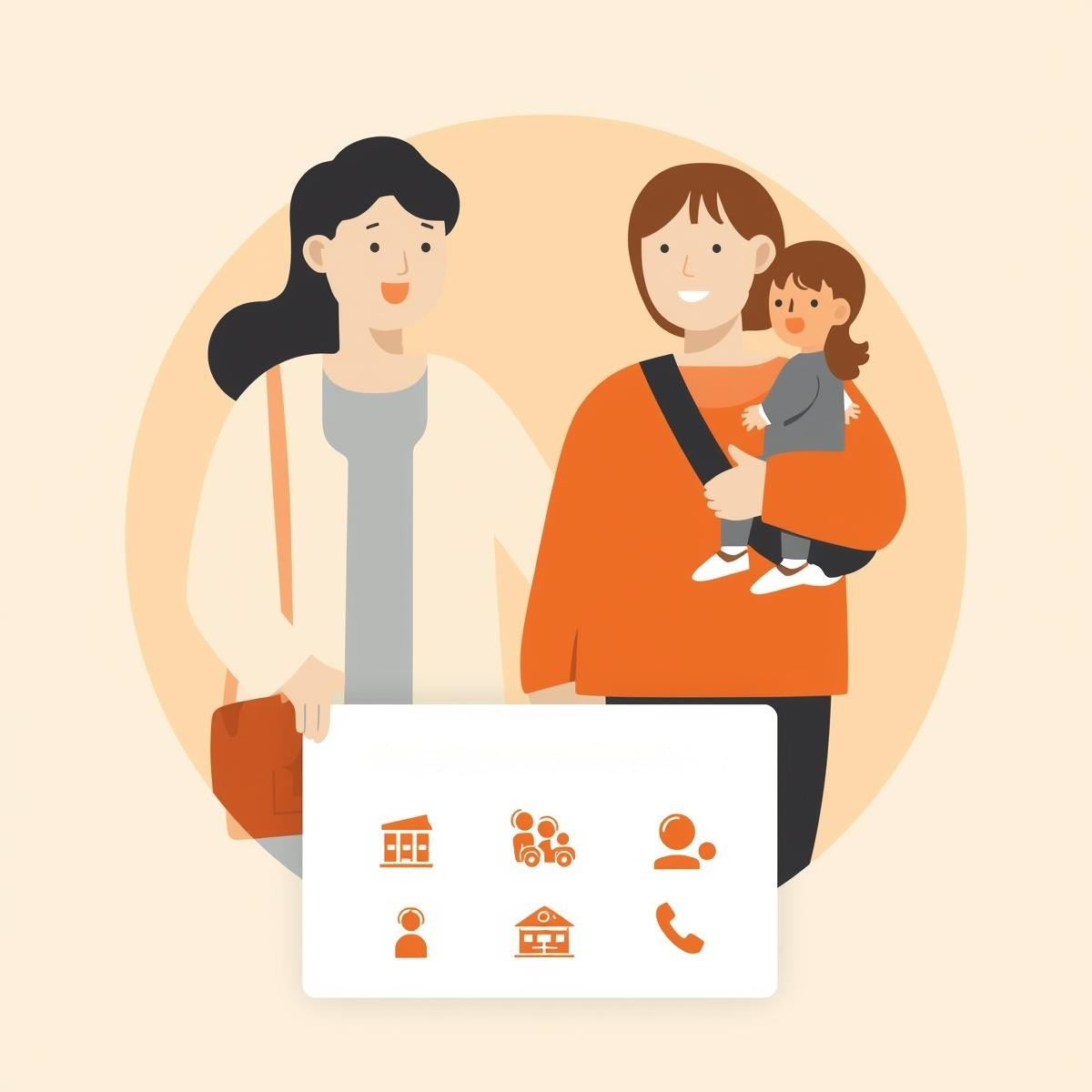 Health equity in communication includes disability access and format access. Many residents rely on screen readers, need larger text, benefit from captions, or require content that can be printed and shared offline. Health agencies improve equity when accessibility is built into content design, not added as a compliance task at the end.
Public health organizations should assume that residents will encounter content in multiple formats. A social post may be read quickly, while a printed handout may be reviewed more carefully. A video may reach audiences who do not read long text, but it must be captioned and designed for comprehension without sound. A website page may be the official source of truth, but it must be structured so assistive technologies can interpret it.
Accessibility also includes readability. Many residents have limited health literacy or limited familiarity with program terminology. Public health departments can improve comprehension by using plain language, short sentences, and clear headings that guide scanning. When steps are required, those steps should be laid out in a simple sequence. When terms are unavoidable, they should be explained in everyday words.
Visual accessibility requires care as well. Graphics that rely on color alone can exclude residents with color vision differences. Dense charts can exclude residents who do not interpret data easily. Health agencies can support inclusion by providing text summaries of key visual takeaways and by ensuring that critical information is not embedded only in an image.
Accessibility also involves the ability to act. A message that points residents only to an online form may not be accessible for residents with limited internet, limited digital literacy, or disability-related barriers. Public health organizations can improve equity by offering phone options, walk-in options, and partner-based navigation support, then making those options visible in the message.
Use Accessible Templates for Common Message Types
Health agencies benefit from creating accessible templates for common message types, such as clinic announcements, eligibility updates, advisories, and program reminders. Templates can standardize readability, support consistent headings, and include built-in accessibility elements like plain-language summaries and clear contact routes.
This reduces staff burden and improves consistency.
Provide Alternative Formats and Plain-Language Summaries
Public health departments can broaden reach by providing alternative formats, such as printable PDFs, one-page summaries, and text-only versions of key visuals. A plain-language summary at the top of a web page helps residents understand the takeaway quickly and helps partners share accurately.
These practices reduce confusion and make content more usable in real community settings.
Reduce Stigma and Build Dignity Into Health Messaging
Health equity efforts can be undermined when communication unintentionally stigmatizes the people it is trying to reach. Stigma can appear through tone, assumptions, labeling, and framing. It can also appear through what is left unsaid, such as failing to acknowledge barriers while still implying that non-participation reflects poor choices. Public health departments protect equity when they communicate in a way that preserves dignity and supports participation without shame.
Stigma often increases when messages use moral language. Words that imply blame can cause residents to disengage, avoid services, or hide information. Health agencies can be direct about risk and protective actions without sounding judgmental. This is especially important for topics connected to behavioral health, substance use, sexual health, intimate partner violence, homelessness, and chronic disease management. Residents are more likely to seek help when they feel respected, not evaluated.
Dignity also depends on assumptions. Messages that assume stable housing, reliable transportation, a primary care relationship, or an ability to take time off work can alienate residents who do not have those conditions. Health authorities can reduce this effect by acknowledging constraints briefly and offering realistic options. When a public health organization states multiple pathways, such as walk-in access, phone support, or community partner navigation, the message becomes more inclusive and more practical.
Stigma can also be reinforced through images and examples. If public communication repeatedly portrays underserved communities only in the context of crisis, deficiency, or risk, it can unintentionally reinforce stereotypes. Public health organizations can choose imagery and examples that reflect agency, resilience, and community strengths, while still being honest about disparities and needs.
Framing matters for how residents interpret disparities. Health agencies sometimes present disparity data without explaining the structural factors that shape outcomes. That absence can cause viewers to attribute differences to individual behavior, which increases stigma. A healthier approach explains that barriers and systemic conditions affect access and risk, then pairs the message with resources and interventions. This keeps the focus on solutions and support.
Use Supportive Language That Encourages Action
Supportive language frames the resident as capable and the agency as a resource. It emphasizes what residents can do and how the agency will help. It avoids labels that reduce people to a condition or a risk category.
It also uses neutral wording for sensitive behaviors and focuses on harm reduction and access.
Frame Disparities as Access and Conditions, Not Individual Fault
Public health departments can discuss disparities responsibly by explaining how access, environment, and systemic conditions shape risk and outcomes. When a visual or statistic is shared, it should be paired with a brief explanation of what the agency and partners are doing to reduce barriers.
This reduces stigma and increases public support for targeted interventions.
Build Two-Way Communication and Feedback Into Equity Work
Health equity in communication improves when public health departments treat residents as partners in understanding what works. One-way messaging can increase reach, but it does not always reveal why people are not acting. Two-way communication, even in simple forms, helps health agencies identify confusion, barriers, and trust concerns, then adjust messaging and service delivery accordingly.
Feedback does not have to be complicated. Health authorities can use partner check-ins, short surveys, hotline question tracking, outreach staff observations, and community listening sessions to understand where messages break down. These signals often reveal that the barrier is not awareness, but a practical issue such as documentation confusion, fear of costs, uncertainty about eligibility, transportation challenges, or concerns about privacy and safety.
Two-way communication also supports cultural fit. Public health organizations can learn which terms feel confusing, which messages feel respectful, and which channels are actually used by different groups. This learning is especially important in multilingual settings where literal translation may not match local phrasing. Community review can improve clarity and reduce unintended stigma.
Public health departments also need a process for acting on feedback. If feedback is collected and then ignored, trust decreases. Health agencies strengthen relationships when they communicate what they learned and what changed as a result. Even small updates, such as clarifying eligibility language, adding a phone option, or changing an appointment instruction, can signal responsiveness.
Two-way communication also benefits internal operations. When common questions are identified early, health agencies can create short clarification content, update scripts, and reduce repetitive staff burden. Over time, this creates a more stable communication system that supports equity and efficiency simultaneously.
Track Questions as Data, Then Use Them to Improve Clarity
Questions reflect friction. A health authority can treat common questions as evidence of where messaging or processes are unclear. Tracking themes helps prioritize updates that reduce confusion.
This approach improves equity because residents who face higher barriers are often the ones most likely to have unanswered questions.
Close the Loop With Communities and Partners
Public health organizations strengthen trust when they show that feedback leads to change. Closing the loop can be as simple as a partner update that notes what was clarified and why, or a short public message that states what changed in response to community input.
This signals respect and helps communities feel heard.
Promoting Long-Term Public Health Outcomes Through Communication
Health equity in communication supports long-term outcomes because it increases the chance that residents receive information in time, understand it on the first read, and can act without unnecessary barriers. When public health departments design messages for real-life constraints, invest in language access, and strengthen trusted messenger networks, participation becomes more evenly distributed across the community. Over time, this improves prevention, early intervention, and program effectiveness.
Long-term outcomes also improve when health agencies use consistent, accessible message structures. Residents learn what to look for, where to verify information, and how to navigate services. That pattern is especially important for communities that have experienced confusing systems or inconsistent guidance in the past. Consistency reduces frustration, reduces drop-off, and supports stronger trust.
Equity-focused communication also strengthens routine public health work. It supports immunization access, screening participation, maternal and child health services, chronic disease management support, behavioral health resources, and environmental health guidance. Public health organizations that invest in clarity and accessibility for underserved communities often see spillover benefits for all residents. When content is easier to understand, everyone benefits.
Partner alignment is another long-term advantage. When health authorities provide partners with copy-ready language, clear referral routes, and predictable update routines, communities receive more consistent guidance. This reduces misinformation and helps residents act based on stable information rather than conflicting interpretations. Strong partner systems also make emergency response more effective, because the network is already in place when urgency rises.
Finally, equity-centered communication protects organizational capacity. Clear, accessible messaging reduces repetitive questions, lowers conflict in frontline interactions, and decreases the need for constant corrections. When staff spend less time re-explaining basics, they can focus more on service delivery and community support, which improves outcomes.
Strategic Communication Support for Your Health Agency
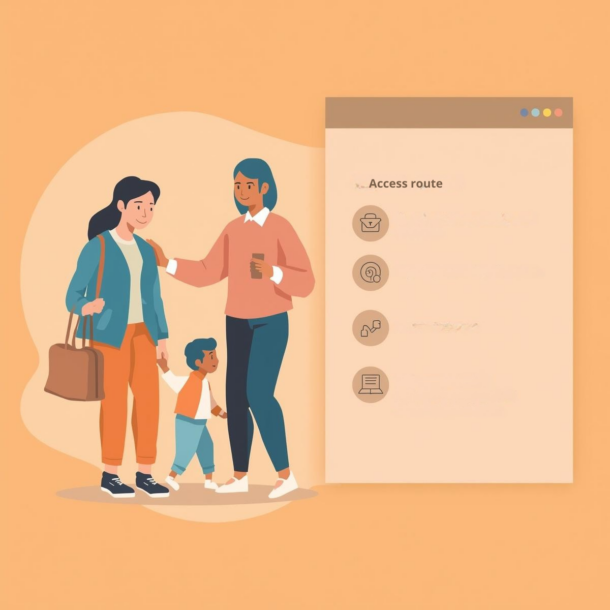 Public health departments often have strong programs and strong intent, but equity can be lost in the mechanics of communication. Health agencies need message design that fits real constraints, language access workflows that publish in parallel, accessibility practices that work across formats, and partner systems that reduce drift. They also need a feedback loop that turns community questions into practical clarity improvements.
That is why agencies often choose to partner with an external resource like Stegmeier Consulting Group (SCG) to strengthen communication systems. An outside partner can help public health organizations develop an equity-focused communication framework that supports consistent decision-making and practical execution. This can include audience mapping, message templates, translation and accessibility workflows, partner toolkits, and source-of-truth structures that reduce confusion across channels.
SCG also supports health authorities by helping teams connect communication to participation. That means designing messages that reduce drop-off, clarifying eligibility and access pathways, strengthening internal alignment so staff communicate consistently, and building simple measurement approaches that track where friction remains. Over time, a stronger communication system helps public health organizations reach underserved and at-risk populations more reliably, without relying on one-off outreach pushes.
Equitable communication is not a separate campaign. It is an operational capability that makes programs more reachable, more trusted, and more effective.
Conclusion
Health equity in communication is the work of making health information understandable and usable for residents who face higher barriers and higher risk. Public health departments and health agencies strengthen equity when they design messages for real constraints, invest in language access, build accessible formats, reduce stigma, and partner with trusted messengers. Two-way feedback loops help messages improve over time and help agencies respond to what communities actually need.
Health authorities and public health organizations do not need to choose between clarity and accuracy. They need systems that make accuracy accessible. When equity is built into communication practices, residents are more likely to understand guidance, participate in services, and trust the organization over the long term. That trust supports healthier behaviors and stronger public health outcomes across programs and crises alike.
SCG’s Strategic Approach to Communication Systems
Align your agency’s messaging, processes, and public engagement strategies
Agencies that communicate effectively build stronger trust with staff, stakeholders, and the public. Whether you are improving health communication campaigns, strengthening internal workflows, or aligning agency-wide messaging, SCG can help you develop a communication system that supports consistent decision-making and long-term organizational success.
Use the form below to connect with our team and explore how a strategic communication framework can elevate your agency’s impact.