Community Health Alerts Without Alarm: Communicating Risk Clearly Without Causing Fear or Confusion
Public health departments and health agencies often need to alert residents quickly, sometimes before all details are confirmed. In those moments, the goal is not to reassure people into inaction or frighten them into panic. The goal is to communicate risk clearly enough that residents understand what is happening, what applies to them, and what to do next.
Health authorities and public health organizations also face a challenging reality about how alerts travel. A notification may be read on a lock screen, repeated in a group chat, summarized by a neighbor, or shared as a screenshot without the clarifying details. When alerts are vague or overly dramatic, they can spark confusion, rumor cycles, and unnecessary demand on clinics, call centers, and emergency services. When alerts are overly technical or cautious to the point of ambiguity, they can cause dangerous delays.
Clear risk communication is a balance of precision and usability. Residents need to know the level of concern and the level of action in plain language, with a steady tone that signals competence and respect. County or regional health departments also need alerts that work across multiple channels, remain consistent as updates are issued, and support community partners who will help amplify the message.
The sections below outline a practical framework for designing community health alerts that are calm, clear, and action-oriented. The focus is on reducing fear and confusion while still communicating urgency when urgency is warranted.
What “Without Alarm” Actually Means in Community Health Alerts
 “Without alarm” does not mean minimizing risk. It means avoiding communication patterns that trigger fear without improving understanding. A public health department can communicate serious risk clearly without using language that feels sensational, absolute, or emotionally charged. Residents often interpret tone as evidence. When the tone sounds panicked, people assume the situation is out of control. When the tone sounds dismissive, people assume officials are hiding information or do not care.
A useful way for health agencies to think about alert tone is to separate urgency from intensity. Urgency is about timing and action. Intensity is about emotional force. Effective alerts increase urgency through clarity, not through heightened intensity. They tell residents what to do, when to do it, and why it matters, using plain language and practical steps.
Public health organizations can also reduce alarm by limiting speculation. When details are uncertain, residents do not need guesses. They need what is known right now, what is being investigated, and what residents should do while the investigation continues. This approach can still feel decisive because it offers a clear decision path. It also prevents an agency from needing to walk back dramatic statements that were based on incomplete information.
Another part of “without alarm” is choosing language that fits the scale of the risk. Not every situation is a community-wide emergency, even if it is important. Health authorities can prevent unnecessary fear by specifying scope clearly. If a situation is limited to a particular neighborhood, setting, or group, the alert should say so early. If the risk is low for most residents but higher for certain groups, the alert should make that distinction visible and easy to understand.
“Without alarm” also includes avoiding hidden urgency. Residents should not have to infer what matters most. If there is an action that should be taken today, the alert should state that plainly. If the message is informational with no immediate action, the alert should state that too. Public health departments build trust when the message matches the level of action being asked.
Finally, calm alerting supports internal operations. When residents receive clear guidance, they are less likely to flood call centers with basic questions, and frontline staff are less likely to face anger driven by confusion. In other words, a steady alert protects the public and the people delivering services.
From Data to Action: Effective Communication Strategies for Public Health Agencies
This article is part of our series on strategic communication for state and local government Public Health Agencies. To learn more and to see the parent article, which links to other content just like this, click the button below.
Risk Clarity Starts With Three Questions Residents Ask Immediately
Even well-crafted alerts fail when they do not match how residents actually read. Most people scan. They want a quick answer to three questions, and if the alert does not provide those answers fast, residents fill in the gaps with assumptions, social media commentary, or anxiety.
The first question is, “What is happening?” Public health departments sometimes lead with institutional language, such as program names, incident classifications, or technical terms. That slows comprehension. A clearer approach is to name the situation in everyday words. If the hazard involves water, air, food, or illness, say that plainly. If the agency is investigating, say so plainly. The goal is to orient the reader immediately.
The second question is, “Does this affect me?” Health agencies can answer this by stating scope early. Scope can be geographic, such as a neighborhood or facility. It can be setting-based, such as schools, shelters, long-term care, or a specific event. It can also be risk-based, such as older adults, pregnant people, immunocompromised residents, or people with specific symptoms. When scope is unclear, residents tend to assume the worst or assume it does not apply to them. Both outcomes are harmful.
The third question is, “What should I do now?” This is where alerts often drift into general advice without clear direction. A community health alert should name the action in concrete terms, then provide the simplest next step, such as where to go for details, what number to call, or what immediate behavior reduces risk. If there is no action, say that clearly and explain what residents should watch for.
Public health organizations also benefit from answering a fourth question when space allows, which is, “Why are you telling me this now?” This does not require a long explanation. It can be one short sentence that connects timing to local conditions, a confirmed finding, a service disruption, or a new protective recommendation. That sentence reduces speculation and helps residents understand the purpose of the alert.
When health authorities design alerts around these questions, the message becomes more usable across channels. A text alert can carry the first and third question, with a link that answers the second in detail. A flyer can answer all three with more context. A partner post can reinforce scope and action without rewriting meaning.
Choose the Right Risk Language, Avoid Words That Inflate Fear or Create False Certainty
Risk communication can fail even when the facts are correct, because certain words trigger fear, ambiguity, or false certainty. Public health departments learned during pandemic messaging that residents react as much to phrasing as to content. Health agencies can improve alert clarity by using risk language that is specific, plain, and proportional to the situation.
One common problem is vague severity. Words like “significant,” “concerning,” or “serious” can sound alarming without telling residents what to do differently. When a health authority needs to communicate elevated risk, it is usually better to explain what the elevation changes are for the public, such as “people in this area should avoid using the water for drinking until further notice” or “people with symptoms should contact a provider today.” Action-linked severity is clearer than emotional severity.
Another problem is false certainty. In fast-moving situations, public health organizations may still be investigating exposure sources, timelines, or the size of affected groups. If an alert speaks too confidently and later updates contradict it, residents interpret the change as incompetence or deception. Health agencies can avoid this by clearly separating what is confirmed from what is being investigated. The tone can still be decisive because the action steps can be clear even when some details are uncertain.
A third problem is medical jargon. Technical terms can be appropriate in clinical guidance, but alerts aimed at the public should translate terminology into everyday meaning. A county health department can reference a pathogen or hazard when needed, but it should also explain what that hazard means for symptoms, transmission, exposure routes, and protective steps in simple language. This reduces misunderstanding and improves compliance, especially for residents reading on a phone.
Health authorities also need to avoid language that invites misinterpretation. For example, “low risk” may cause people to ignore the message even if the risk is low only for some groups. “Rare” can sound like “never.” “Safe” can be interpreted as a guarantee. A more effective approach is to describe who is most at risk and what choices reduce risk, then clarify the level of concern in practical terms. Residents do not need a statistical lecture, but they do need language that matches reality.
Finally, health agencies should avoid language that feels moralizing. Alerts that imply blame can cause residents to disengage or hide information. Calm, respectful language that focuses on practical steps tends to improve cooperation. This is especially important when an alert involves behaviors that people may not want to disclose, such as food handling, substance use, or intimate contact. A public health organization can be direct without sounding judgmental, and that choice supports better public health outcomes.
Structure Alerts So People Can Act, Even If They Only Read the First Screen
Residents often read alerts in fragments. A push notification may show only the first sentence. A social post may be seen as a screenshot without the caption. A partner may summarize the alert in a group message. Public health departments can protect meaning by designing the first screen to carry the essential information.
A practical structure for health agencies is to lead with a clear statement of what is happening, then immediately state who it affects and what action to take. Context and explanation can follow. This approach keeps urgency tied to action rather than emotion. It also reduces the risk that residents misinterpret an alert as broader than it is.
A calm alert also benefits from short paragraphs and clear spacing. Dense blocks of text increase cognitive load, especially under stress. Health authorities can make information easier to scan by using short sentences, concrete nouns, and direct verbs. Even without heavy formatting, the message can be visually readable if the writing is clean and the sequence is predictable.
Public health organizations also need to make scope unmistakable. Scope should appear early, and it should be repeated where residents are likely to skim, such as near the action step. If the alert is limited to a neighborhood, facility, or event, state it clearly. If the alert applies to the whole county, state that clearly. If the risk is higher for certain groups, state that clearly. Scope reduces unnecessary fear among people who are not affected and increases attention among those who are.
Action steps should be concrete and realistic. A health department should avoid vague instructions like “take precautions” or “use caution,” unless those phrases are paired with specific behaviors. If the action is to boil water, explain how long and for what uses. If the action is to avoid a location, specify the location and the timeframe. If the action is to seek care, explain which symptoms require urgent care versus routine contact.
An alert should also provide a clear route to verification. Residents should be able to confirm details quickly through an official website page, a hotline, or a partner channel that is clearly linked back to the health agency. This is an essential safeguard against rumors and impersonation, especially during high-profile events.
Calming Fear Without Minimizing Risk, Tone Choices That Build Trust
Tone is a decision. Public health organizations can choose language that communicates seriousness while still sounding steady and competent. The best crisis alerts avoid dramatic phrasing and instead use clarity to convey urgency. When residents feel oriented, they are less likely to panic and more likely to follow guidance.
A calm tone often starts with plain language and straightforward verbs. It also avoids excessive qualifiers that make the message feel evasive. When uncertainty exists, a health authority can name it briefly and explain what is being done, then return to the action steps residents can take now. This creates stability.
Health agencies can also reduce fear by acknowledging what residents are experiencing without turning the message into a counseling session. One short sentence that recognizes concern can help residents feel respected. After that, the alert should move immediately to practical guidance. Residents often interpret long empathy statements as a substitute for actionable information, so the empathy needs to be brief and paired with clear direction.
Another tone choice is to avoid scolding. Even when residents have made risky choices, public health departments should focus on risk reduction going forward. Scolding language can cause residents to disengage, hide exposure information, or reject guidance out of defensiveness. Calm, respectful language supports cooperation, which is the goal of an alert.
Finally, tone should remain consistent across channels. If the website is calm but a social post is urgent and dramatic, residents perceive contradictions. Health authorities can protect trust by using a shared message spine and a consistent importance level across web, print, social, and partner updates. When the tone matches the requests, residents are more likely to trust the message and act appropriately.
Make Risk Levels Explicit, Then Tie Each Level to a Clear Action
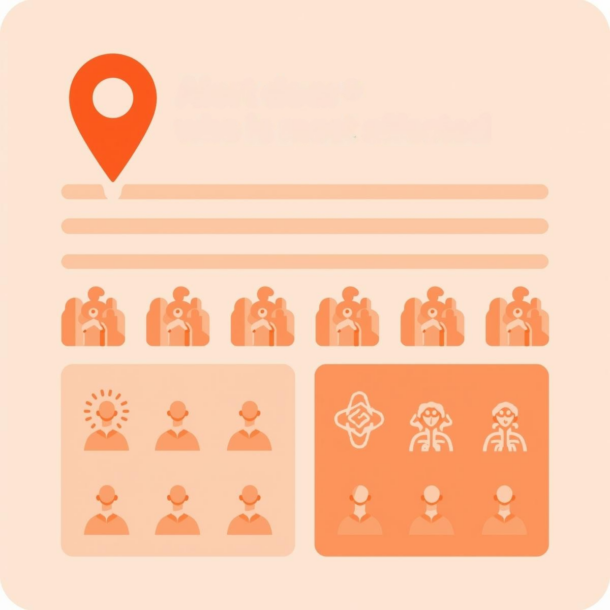 Community health alerts often trigger fear or confusion when residents cannot tell how worried they should be, or what the agency expects them to do. Public health departments can reduce both outcomes by using clear risk levels that match the situation, then pairing each level with an action that is specific and realistic.
A risk level is not a dramatic label. It is a shared shorthand that helps residents interpret urgency. Health agencies can use a simple tier approach that remains consistent across events, such as “Information Update,” “Action Recommended,” and “Action Required.” The exact language can vary by health authority, but the intent should remain the same.
-
Information Update. Residents should be able to read the first lines and immediately know the alert is informational, with clear guidance on what to watch for and where to verify details.
-
Action Recommended. Residents should be able to identify a time-sensitive protective action and the simplest route to follow-through, with scope and timing stated plainly.
-
Action Required. Residents should be able to recognize immediate behavior changes or requirements, with clear cues about what is active now and where to get support.
Consistency matters more than creativity here. A county or regional health department that uses the same tier language across water advisories, air quality alerts, disease exposures, and food safety notices helps residents build pattern recognition. Over time, residents learn how to respond without overreacting. Staff and partners also benefit because they can share alerts with less rewriting and less risk of misinterpretation.
Risk levels also need to be tied to scope. A community-wide alert has a different meaning than a facility-based alert. A health authority can reduce unnecessary alarm by stating scope early and repeating it near the action step. This is especially important when the risk level is elevated for a specific group, such as older adults, pregnant people, infants, or residents with chronic conditions. A public health organization can communicate elevated risk for those groups without implying that the general population faces the same level of danger.
Risk levels should also be grounded in time. Residents often need to know whether an action is needed today, within 24 hours, or before a specific deadline. Health agencies can make timing feel calm and credible by stating it plainly.
If the measure is “until further notice,” the alert should explain what will trigger the next update, such as lab confirmation, environmental testing results, or changes in service availability. When timing is unclear, people fill in the gap with anxiety or rumors.
A final point is that risk levels should not create false comfort. When a public health department communicates “low risk,” it should clarify what that means and who is still at higher risk. A more usable approach is to describe risk as “lower for most residents, higher for these groups,” then provide targeted guidance. This keeps the alert proportionate without minimizing the needs of vulnerable residents.
Use One Decision Path, Not Multiple Competing Instructions
Alerts become confusing when they include too many branches. Health authorities can reduce cognitive load by offering one primary decision path, then a short set of targeted exceptions. For example, a public health organization can state the standard action for most residents, then add a separate line for higher-risk groups or specific settings.
This approach keeps the main message simple while still protecting those who need additional guidance. It also helps residents act quickly without rereading the alert multiple times to figure out which branch applies.
Avoid Mixing Policy Language With Resident Instructions
Public health departments sometimes blend internal policy framing with public-facing steps. That can introduce unnecessary complexity. A clearer approach is to state the resident instruction first in everyday words, then provide policy details, legal references, or technical notes on the source page.
This preserves accuracy while keeping the alert usable at the point of decision. It also reduces the risk that residents confuse internal terminology with the action they are expected to take.
Design Alerts for Multi-Channel Reality, So Meaning Survives Screenshots and Summaries
Health alerts move across channels quickly. Residents see them as push notifications, social posts, text messages, flyers, and partner reposts. Many people will never see the full version that lives on an official web page. Public health departments can plan for that reality by designing alerts as a system, not as single pieces of content.
A practical starting point for health agencies is to write a message spine. The spine is a small set of sentences that must stay consistent across every channel. It should clearly state what is happening, who is affected, what to do now, and where to verify details. When the spine is stable, channel adaptations become safer.
A short text alert can carry the action and the verification link. A social post can carry the action and the scope cue. A flyer can carry the action, scope, and expanded support options.
A strong spine also reduces partner drift. Public health organizations often rely on schools, clinics, community-based organizations, and local media to share alerts quickly. If partners have to rewrite the alert in their own words, meaning can shift. When partners receive spine language that is already plain and ready to share, the message travels farther with less distortion.
Channel design also requires attention to visibility. Many residents read alerts on mobile devices, and many will see only the first screen. A health authority should avoid placing critical qualifiers late in the message. If the alert applies only to a specific location, that location should appear early. If the alert is time-bound, the timeframe should appear early. If the alert includes a key exception, that exception should not be buried.
Visual design can support calm communication when it is used with discipline. Health agencies can use consistent headers, consistent labels, and clear spacing, without turning every alert into a complex graphic. In many cases, the best visual choice is simply a clean structure that makes the message scannable, paired with a single, consistent indicator of alert type. The intent is to help residents orient quickly, not to intensify emotion.
A final multi-channel lesson is to protect the verification pathway. Residents should always be able to confirm whether an alert is real, current, and applicable. Public health departments can strengthen verification by maintaining a consistent alert landing page, using clear update timestamps, and repeating official link paths across channels. This also helps prevent impersonation and rumor amplification during high-visibility events.
Keep the “Source of Truth” Simple and Updated
A source page that is cluttered or outdated can undermine a calm alert. Health authorities can improve resident confidence by ensuring the source page has a clear update date, a short summary of what is active now, and a practical “what to do” section near the top.
When the public can verify quickly, fear decreases and compliance improves. A clean structure also helps partners link accurately without needing to interpret which page is current.
Prepare Short Versions Without Changing Meaning
A public health organization should not rely on last-minute shortening for social or text. Short versions should be designed intentionally, using the same spine language.
This reduces the risk that compression changes meaning, and it reduces staff workload when updates need to move quickly. It also helps protect scope and timing when content is shared as screenshots.
Coordinate Internally So Staff and Partners Do Not Get Surprised by the Alert
A calm, clear alert can still fail if internal teams are not aligned. During urgent events, residents often call, email, or show up in person with questions immediately after an alert goes out. If staff hear about the alert from social media, or if they receive conflicting talking points, the public experiences that as confusion and disorganization. Public health departments reduce this risk when internal coordination is treated as part of alert design, not as a separate task.
Health agencies benefit from a simple internal sequence. First, confirm the message spine and the action steps. Second, update the source page. Third, distribute internal and partner-facing talking points. Fourth, publish to public channels. Even when this sequence is fast, it protects the people who will need to respond in real time. It also prevents staff from improvising answers that unintentionally contradict the alert.
Internal alignment also requires shared definitions. If the alert uses terms like “recommended,” “required,” “watch for symptoms,” or “seek care,” staff need the same interpretation across programs, clinics, and call centers. Health authorities can reduce inconsistency by maintaining a small set of standard definitions and using them repeatedly. This is especially important when multiple agencies or jurisdictions coordinate an alert, because language drift across entities can rapidly undermine public confidence.
Another internal coordination need is escalation. Not every question will fit the script. Public health organizations should define who can answer edge cases, how staff should route unusual questions, and how updates will be communicated back to staff once decisions are made. This helps prevent staff from making individual judgment calls that should be standardized, and it reduces stress for frontline teams.
A final coordination consideration is staff tone. Staff are often under pressure and may face fear, anger, or misinformation during calls and in-person interactions. Internal guidance should support staff with calm, plain language phrasing they can use, and it should emphasize respectful de-escalation approaches. When staff feel prepared, they can deliver clarity without sounding defensive, and that strengthens trust.
Create a Short Internal Brief That Mirrors the Public Message
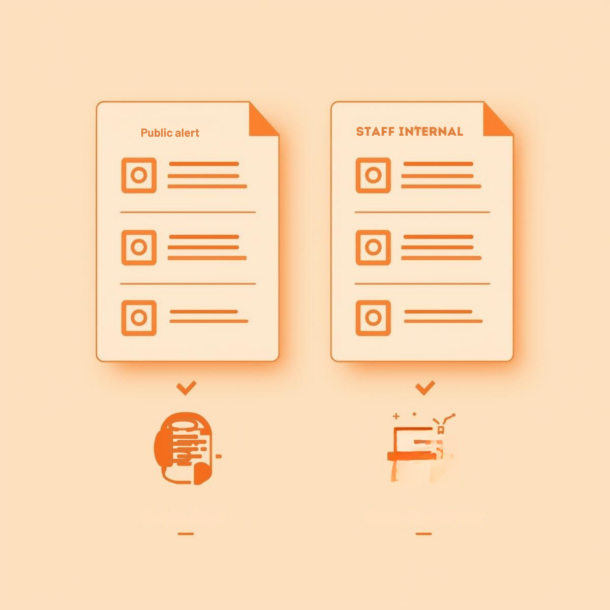
Public health departments can improve consistency by issuing a short internal brief that matches the public alert. The brief should summarize what is happening, who is affected, what staff should tell residents, and where staff can verify details.
It should also include a short list of common questions staff are likely to receive, with plain language answers. This reduces improvisation and helps staff communicate confidently.
Give Partners Ready-to-Use Language and a Clear Update Path
Partners amplify alerts because they reach people through trusted networks. Health agencies support partner alignment by sending copy-ready language that can be pasted into email, social posts, and announcements without rewriting.
Partners also need a clear update path so they know where to find the current guidance and when to refresh their posts. A consistent partner update routine reduces drift and reduces the chance that older alerts continue circulating after circumstances change.
Use Feedback Loops to Reduce Confusion and Avoid Over-Correcting
Alerts can create confusion even when they are well designed, simply because residents interpret risk differently and because information travels in fragments. Public health departments can improve clarity by watching for early signals of misunderstanding, then updating messaging in a way that corrects confusion without escalating fear.
A practical feedback loop starts with monitoring the questions residents are asking. Call center logs, email themes, social comments, and partner feedback often reveal which parts of an alert are unclear. Health agencies can use those signals to determine whether the issue is scope, timing, symptoms, eligibility, or access pathways. This approach prevents the team from guessing, and it helps prioritize the most useful clarifications.
When an update is needed, tone matters. Too many updates can make residents feel that the situation is unstable. Too few updates can make residents feel ignored. Health authorities can use a predictable update pattern, such as an afternoon update time or a daily update time during active events, so residents learn when to expect new information. Predictability reduces anxiety and makes updates easier to follow.
Health agencies should also avoid over-correcting by rewriting the entire alert each time. A better approach is to maintain the same message spine and add targeted clarifications. For example, if residents are unsure whether a notice applies to their neighborhood, the update can restate scope more clearly.
If residents are unsure what symptoms matter, the update can add a short symptom guide with clear decision steps. This preserves continuity and reduces the impression that guidance is shifting dramatically.
Feedback loops also support equity. If certain groups are asking different questions, or if partners in specific communities report confusion, the agency may need targeted versions, additional language access, or different distribution routes. Public health organizations improve outcomes when they treat these signals as a prompt to refine access and clarity, not as a sign that the public is uncooperative.
Address the One or Two Most Common Misunderstandings First
Public health departments can reduce noise by focusing clarifications on the top misunderstandings. A short, plain language clarification often outperforms a long explanation.
The goal is to remove the friction point that is blocking action, not to publish a full technical memo.
Use Calm Myth Correction Techniques Without Amplifying Rumors
If misinformation spreads, health agencies should respond with calm, direct statements of what is true, followed by the action step and the verification path. It is usually better to avoid repeating the rumor in detail, because repetition can strengthen recall.
A clear statement, paired with a stable source page, helps residents verify quickly and share accurate information.
Promoting Long-Term Public Health Outcomes Through Communication
Community health alerts are often treated as one-time messages, but they have long-term effects on trust, compliance, and community readiness. When public health departments communicate risk clearly and calmly, residents learn how to interpret alerts without panic. They also learn how to find accurate information quickly and how to take protective actions when needed. Over time, that pattern strengthens prevention behaviors and improves the community’s ability to respond effectively in future events.
Long-term outcomes improve when health agencies use consistent alert structures and terminology. Residents who repeatedly see the same pattern, such as what is happening, who is affected, what to do now, and where to verify details, become more confident navigating risk information. This reduces the chance that residents rely on rumors or incomplete screenshots for decision-making. It also reduces the strain on clinics and call centers because fewer people need clarification to take the next step.
Calm risk communication also supports equity. When alerts clearly describe scope, risks for higher-risk groups, and realistic action pathways, residents are less likely to disengage or assume the guidance is not meant for them. This is especially important for public health organizations serving communities with varied access to healthcare, language needs, and digital access. Clear alerts, paired with accessible verification routes and partner amplification, help ensure that protective guidance reaches more residents in usable form.
Another long-term benefit is organizational learning. When health authorities use feedback loops to track common misunderstandings and refine alert templates, the system improves over time. Each event becomes an opportunity to strengthen clarity, improve internal alignment, and enhance partner coordination. That learning reduces response friction in the next event and supports quicker, more confident decision-making.
Finally, calm alerts contribute to a stable relationship between residents and their public health organizations. Trust grows when residents experience the agency as consistent, respectful, and practical. That trust is not only helpful in emergencies. It also supports routine public health work, including prevention campaigns, screening programs, vaccination schedules, environmental health guidance, and community health initiatives that depend on long-term cooperation.
Strategic Communication Support for Your Health Agency
 Health agencies often need to communicate risk under tight timeframes, with incomplete information, and across multiple channels that strip context. Public health departments also need to coordinate internally so staff can respond consistently, and they need to align with partners who will amplify alerts through trusted networks. Without a clear communication system, alerts can unintentionally trigger fear, confusion, and unnecessary demand on services, even when the underlying guidance is sound.
That is why agencies often choose to partner with an external resource like Stegmeier Consulting Group (SCG) to strengthen communication systems. An outside partner can help public health organizations design alert frameworks that preserve meaning across channels, maintain calm tone without minimizing risk, and clarify what residents should do next. This kind of support can include developing message spines and templates, strengthening internal workflows and review roles, and building partner-ready materials that reduce rewriting and prevent drift.
SCG also supports health authorities by helping teams design feedback loops that identify where residents get confused, and by translating those insights into improvements that make future alerts clearer and easier to act on. When a health agency has a repeatable approach, staff can move faster with fewer errors, partners can share with more confidence, and residents can respond with less anxiety and more appropriate action.
A strong communication system does not remove uncertainty, but it can reduce preventable confusion. Over time, clear and calm alerting becomes part of public health readiness, and it supports stronger community resilience.
Conclusion
Community health alerts work best when they communicate risk clearly, proportionately, and in plain language that residents can act on immediately. Public health departments and health agencies reduce fear and confusion when they make scope unmistakable, tie risk levels to concrete actions, and maintain a consistent message spine across channels. Calm tone supports trust, and trust supports compliance.
Health authorities and public health organizations also improve outcomes when alerts are supported by internal alignment, partner-ready language, and predictable update patterns. When feedback loops are used to correct misunderstandings quickly and respectfully, the alert system becomes stronger over time. These practices help communities respond effectively in emergencies while also strengthening the long-term relationship between residents and their health agencies.
SCG’s Strategic Approach to Communication Systems
Align your agency’s messaging, processes, and public engagement strategies
Agencies that communicate effectively build stronger trust with staff, stakeholders, and the public. Whether you are improving health communication campaigns, strengthening internal workflows, or aligning agency-wide messaging, SCG can help you develop a communication system that supports consistent decision-making and long-term organizational success.
Use the form below to connect with our team and explore how a strategic communication framework can elevate your agency’s impact.