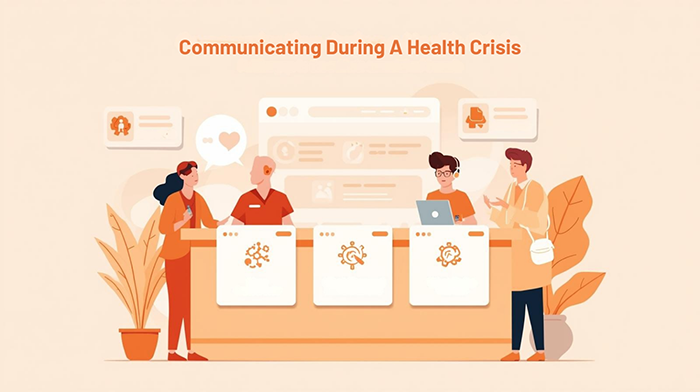
Communicating During a Health Crisis: Lessons Learned From Pandemic Messaging
Public health departments and health agencies communicate under pressure in every crisis, but pandemic-era messaging created a uniquely intense test of clarity, trust, and speed. Health authorities and public health organizations had to explain evolving evidence, issue practical guidance for daily life, and coordinate with partners across healthcare, schools, employers, and community organizations. In many communities, residents were not only asking what to do. They were asking why guidance changed, who it applied to, and whether the information could be trusted.
A crisis also changes how people process information. Stress compresses attention, fear amplifies rumors, and fatigue reduces follow-through. That means the same content that works during routine public health programming can fail during a surge. When messages are dense, inconsistent, or hard to act on, residents do not just feel confused. They make errors, delay critical steps, or disengage entirely.
The pandemic period also revealed something important for health agencies. Communication is not an accessory to response. It is part of the response infrastructure. Messaging influences behavior, demand on services, and the public’s willingness to cooperate with preventive measures. It also shapes morale inside the organization, because staff are the first to feel the impact of confusing guidance and angry pushback.
The lessons below are meant to be evergreen for public health organizations preparing for the next health emergency, whether that emergency involves infectious disease, environmental hazards, foodborne illness, or another fast-moving threat. The intent is not to relive crisis debates. The intent is to name what worked, what broke down, and what health departments can institutionalize so future crisis communication is clearer, faster, and more trusted.
The Pandemic Made One Truth Obvious, Trust Is the Delivery System
 In a crisis, the public does not evaluate messages the way health professionals do. Residents often decide whether to comply before they fully understand the details, because their first question is whether the messenger is credible. Trust becomes the delivery system for guidance, and without it, even accurate information struggles to produce action.
Pandemic messaging showed that trust is built through patterns more than slogans. When a county health department communicated in a consistent voice, acknowledged uncertainty plainly, and explained what would trigger changes, residents had more room to accept updates without feeling manipulated. When communication felt reactive, overly confident, or inconsistent across channels, skepticism grew quickly, and skepticism spread faster than corrections.
Trust is also shaped by empathy and competence working together. Empathy without competence can sound like reassurance without substance. Competence without empathy can sound cold, dismissive, or coercive. Public health agencies that balanced both were more likely to hold attention during long periods of fatigue. They explained what mattered, used plain language, and respected the fact that residents were managing tradeoffs around childcare, work, isolation, finances, and mental health.
Another core trust lesson involved internal alignment. Health authorities can deliver strong public messaging only when staff share a common understanding of terms, thresholds, and policies. During a pandemic, small differences in wording across teams can become large public contradictions. If a website update uses one phrase, a social post uses another, and a call center script uses a third, residents interpret the mismatch as dishonesty or disorganization. Staff then face the consequences in phone calls, emails, and in-person conflict.
Trust also depends on visibility of support. When a public health department asks for behavior change but does not clearly connect that ask to resources, access points, or accommodations, the public can interpret the message as unrealistic. That is especially true in communities where residents have fewer flexible options, such as hourly workers, multigenerational households, people without paid sick leave, or residents with limited healthcare access.
When agencies included clear pathways, such as where to get free testing, how to access vaccines, or how to find isolation support, guidance felt more credible because it was paired with a practical way to comply.
Finally, trust is local. National guidance matters, but residents often look to local health agencies for what applies in their county, their school district, their workplace, and their daily routines. Pandemic messaging reinforced the value of anchoring guidance in local indicators and explaining what those indicators mean. When public health organizations connected recommendations to local conditions and local capacity, residents had a clearer reason to act, even when they were hearing different messages from other sources.
From Data to Action: Effective Communication Strategies for Public Health Agencies
This article is part of our series on strategic communication for state and local government Public Health Agencies. To learn more and to see the parent article, which links to other content just like this, click the button below.
Communicating Uncertainty Without Losing Credibility
Crisis communication forces health agencies to speak before every detail is known. That reality does not have to undermine credibility. In fact, the pandemic demonstrated that transparent uncertainty, when handled well, can strengthen trust because it signals honesty and preparedness.
The first challenge is that the public often hears uncertainty as incompetence. Residents may interpret “we are learning more” as “they have no idea.” Public health departments can counter that interpretation by pairing uncertainty with a clear explanation of what is known right now, what is being monitored, and what people should do in the meantime. The message becomes stable when it provides a decision path even as evidence evolves.
A second challenge is overconfidence. Early in a crisis, it can be tempting to speak in absolutes to prevent panic or to project control. When later updates contradict absolute language, residents may feel misled. Health authorities that used calibrated language, such as describing evidence strength and naming the conditions under which guidance would change, were better positioned to update messaging without triggering backlash.
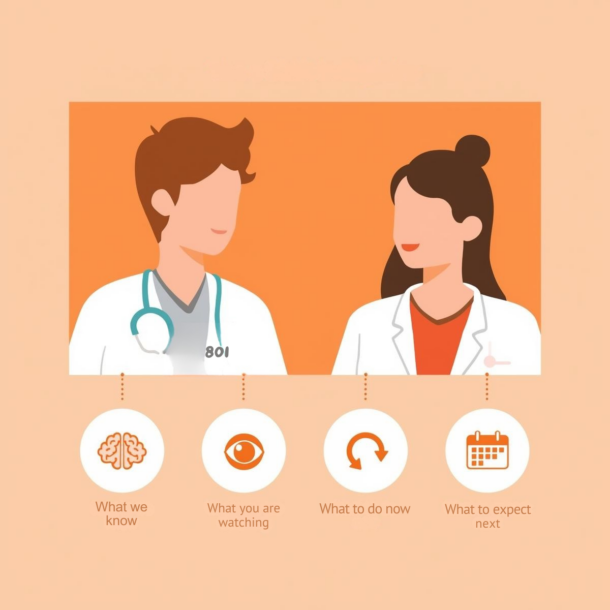
Uncertainty also needs a consistent container. A simple structure helps public health organizations communicate evolving information without sounding like they are improvising. Many departments benefited from repeating a predictable pattern in updates, such as: what we know, what we are watching, what we recommend now, and what to expect next. That pattern reduces cognitive load and makes updates easier to follow across channels.
It also helps to avoid false precision. Residents may latch onto a single number or threshold and treat it as a guarantee. When health agencies describe trends, it is often more useful to explain direction and implication rather than overemphasizing exact values. Clear language about what trends mean for behavior and services supports better decisions than a long list of metrics.
Uncertainty communication improves further when agencies anticipate the emotional response. People want to know whether they are safe, whether their family is safe, and whether the situation is getting worse. Health departments can acknowledge those concerns briefly, then transition to what residents can do. This approach respects emotion without letting emotion dominate the message.
Making Updates Feel Predictable Instead of Chaotic
Health agencies do not lose trust simply because guidance changes. Trust erodes when changes feel random, unexplained, or inconsistently communicated across channels. Pandemic messaging showed that public health departments can protect credibility by creating predictable update patterns that residents come to recognize. Predictability reduces anxiety, lowers rumor velocity, and helps people focus on what to do next.
Use a Consistent Update Frame Every Time
A consistent frame makes complex updates easier to process, especially when residents are tired and scanning quickly. Public health organizations can use the same sequence in every update so the public does not have to relearn how to read it. The frame should make it obvious what is active now, what changed, and what action is expected.
One effective approach is to open with the current status in plain language, then briefly describe what changed, why it changed, and what residents should do today. Even when the details shift, the structure remains stable, which helps residents interpret change as maintenance rather than reversal.
Explain Triggers So Changes Make Sense
Residents often assume updates are driven by politics, pressure, or convenience when they do not understand the trigger. Health authorities can reduce that suspicion by naming the signal that drives the change, then describing what it means in practical terms. The trigger might be local hospitalization trends, clinic capacity, new evidence about transmission, or updated recommendations from credible clinical bodies.
This does not require publishing a full dashboard in every message. It requires a short explanation that connects the trigger to the decision. When a county health department says what it is watching and what would cause another shift, residents gain a clearer decision path and less space remains for speculation.
Separate What Is Required, What Is Recommended, and What Is Optional
During a crisis, many residents struggle to distinguish between legal requirements, strong recommendations, and general guidance. Public health departments can reduce conflict and confusion by labeling the strength of guidance explicitly and using the same labels everywhere. When those labels stay consistent across web, social, and partner communications, residents are less likely to misinterpret a recommendation as an order, or dismiss an order as optional.
Clarity also helps internal teams. When staff share the same definitions and language, they are less likely to contradict each other in public interactions, which protects trust and reduces escalation.
Publish Changes in One Place First, Then Push Everywhere
Consistency becomes easier when health agencies maintain a single source of truth, update it first, and then route all other channels back to it. Pandemic messaging showed how quickly confusion grows when the website says one thing while a social post or partner email says another. A simple “updated on” line and a short note about what changed can also reduce repeated questions, because residents can quickly confirm they are viewing the current guidance.
This approach supports accessibility and equity as well. Public health organizations can maintain translated versions and accessible formats from the same source page, reducing the chance that one audience receives outdated guidance because their version was not updated.
Consistency Across Channels Is Not a Nice-to-Have, It Is a Safety Practice
During a pandemic, residents encounter messages in pieces. A screenshot of a social post might travel without the caption. A headline might travel without the full article. A flyer might be photographed without the contact information. In that environment, consistency is not only about branding. It is about preventing misinterpretation.
Public health organizations learned that a single “source of truth” is essential. When agencies maintained a clearly labeled landing page, updated it consistently, and directed every channel back to it, confusion decreased. Residents might still disagree with guidance, but they could at least find the same answer in the same place. Without that source page, residents searched across posts, news stories, and rumors, and each search increased the chance of encountering conflicting information.
Consistency also requires shared language. Seemingly small choices, such as whether to say “isolation” or “stay home,” can change how people interpret what is expected. Health agencies that developed a limited set of standard terms and used them repeatedly reduced the risk of mixed messages across teams. This mattered for public health departments working with multiple jurisdictions, because terminology drift across counties can create regional confusion and cross-border noncompliance.
A second consistency lesson involves update timing. When the website is updated but social posts lag, residents perceive contradictions. When social posts change but the website remains outdated, residents perceive incompetence. Health authorities that established a simple rhythm for updates, and a clear internal workflow for synchronizing channels, reduced this drift. Even basic practices, such as adding an “updated on” line and a short note about what changed, helped residents interpret changes as maintenance rather than reversal.
The third lesson is that consistency must extend to staff-facing communications. A call center team or clinic partner should never be surprised by a policy update they learn from social media. Pandemic messaging highlighted how staff confidence and public trust are linked. When staff have clear scripts, clear escalation pathways, and clear answers to common questions, public-facing consistency improves organically.
Audience Segmentation and Equity Were Not Optional, They Were Core to Effectiveness
Pandemic-era messaging made it clear that a single message cannot serve every audience equally. Risk differed by age, health status, occupation, living situation, and access to healthcare. Capacity differed by transportation, time, paid leave, internet access, and language access. When health agencies used one-size language, they often unintentionally centered the experiences of residents who already had more flexibility.
Segmentation does not mean creating dozens of campaigns. It means using a shared core message, then adding targeted layers for groups whose risks and constraints are different. For example, a public health department might maintain general guidance for most residents, then provide additional instructions for caregivers, people at higher risk, essential workers, or congregate settings. When segmentation was clear, residents were less likely to assume guidance was irrelevant to them or impossible to follow.
Equity also requires access pathways that match reality. Messaging can explain why a measure matters, but if the next step is unclear or inaccessible, follow-through drops. Public health organizations improved outcomes when they made access visible, such as listing multiple appointment routes, walk-in options, mobile clinics, or community partner locations. This is not only a service detail. It is part of the message, because it determines whether the public can act on guidance.
Language access became a decisive factor. Translation is not a last-minute add-on in a crisis. It is an essential function of reaching residents with accurate guidance. Health agencies that designed content to translate well, using shorter sentences and fewer idioms, improved both translation quality and comprehension. Communities also benefited when public health departments clearly signposted where translated materials lived, rather than forcing residents to hunt.
Segmentation also applies to tone. Different audiences respond to different framing. Some respond to personal protection. Some respond to protecting others. Some respond to keeping schools and services functioning. Health authorities that tested messaging with partners and community feedback loops were better able to choose framing that resonated without sounding moralizing or dismissive.
The Best Pandemic Messages Were Designed for Action, Not for Information
The most effective crisis messages did not try to teach everything at once. They focused on the decision the resident needed to make, the action the resident needed to take, and the simplest path to doing it. This is where many health agencies shifted from “informing” to “enabling,” and that shift improved compliance.
Action-first messaging starts by stating what to do in plain language, then explaining why. Many public health departments instinctively led with context and rationale, especially when the issue was politically charged. Pandemic experience showed that residents often need the action first, then the reasoning. When the message begins with a clear next step, people can orient quickly, even if they do not read the entire update.
Action design also depends on reducing friction. In a crisis, even motivated residents can get stuck if the steps are unclear or burdensome. Public health organizations that paired guidance with practical options reduced drop-off, reduced call volume, and improved equity.
Two action design practices repeatedly helped health agencies.
-
Keeping the action steps short and concrete, with one action per line, so residents could scan and comply quickly.
-
Providing at least one alternative path to follow-through, such as phone support, walk-in options, or partner sites, so compliance was not limited to residents with time, internet, or transportation.
A third practice was making deadlines and triggers unmistakable. If a recommendation changes based on risk level, or if an order changes based on case levels, the public needs clear cues about what is active now and what might change later. Action-ready messages made those cues visible and repeated them across channels.
Action design also improves when the public understands what success looks like. If the message asks people to isolate, what does that mean in practice? If it asks people to test, when should they do it and how do they interpret results? If it asks for vaccination, what should they expect after the appointment? When health authorities provided clear expectations, residents were less likely to abandon the process midway.
Addressing Misinformation Required Speed, Simplicity, and Repetition
 The pandemic highlighted that misinformation spreads quickly because it is emotionally engaging, simple, and easily shared. Public health organizations cannot counter that with dense explanations alone. They need responses that are just as easy to understand and faster to find.
Speed matters because a rumor that circulates for days becomes “common knowledge” in some communities. Health agencies that built monitoring and rapid response routines were better positioned to respond early, when fewer residents had internalized false claims. Speed also requires internal clarity, because teams cannot respond quickly if they are still debating wording and approval steps.
Simplicity matters because residents often want a clear statement of what is true and what to do next. Long explanations may satisfy technical audiences, but they can lose residents who are scanning on a phone. Health authorities strengthened clarity when they stated the correct information plainly, provided a short rationale, and then pointed to a verification source page that was easy to find and consistently updated.
Repetition matters because corrections do not stick after a single exposure. Public health departments that repeated key clarifications across multiple channels, and through partners, reduced the reach of rumors. Repetition also helps residents recognize official information when they see it out of context. That recognition is a trust function, and it becomes more important when content is shared without captions, dates, or links.
Another pandemic lesson is that tone matters in corrections. If an agency sounds mocking or dismissive, skeptical audiences may harden. Corrections that were calm, direct, and respectful tended to travel further and provoke less backlash. It also helped when agencies acknowledged what made the rumor plausible, then explained what the current evidence shows and what residents should do.
Internal Communication Was a Crisis Multiplier for Public Trust
In a pandemic, staff are both messengers and human beings navigating the same uncertainty as the public. When internal communication is weak, staff confidence drops, and public interactions become strained. When internal communication is strong, staff feel prepared, and public trust improves because frontline responses are consistent.
Public health departments learned the value of internal message discipline. Staff need to know what changed, why it changed, and how to explain it in plain language. They also need clear escalation pathways for unusual cases and a way to handle questions they cannot answer immediately. Without those supports, staff may improvise, and improvisation becomes inconsistent.
Internal communication also protects morale. Staff who receive late updates, conflicting instructions, or unclear policies experience preventable stress. Over time, that stress can lead to burnout and turnover, which then weakens the agency’s ability to communicate effectively. Health authorities that treated internal updates as a core response function, not an afterthought, were better positioned to sustain response over long periods.
A key lesson for health agencies is that internal and external messaging should be designed together. If a public update goes live, staff should receive the same message spine and a short set of anticipated questions and answers. This enables consistent public-facing conversations and reduces conflict in high-emotion interactions.
Partner Alignment Worked Best When Agencies Provided Ready-to-Use Language
Public health organizations do not communicate alone during a crisis. Schools, clinics, employers, community-based organizations, faith leaders, and local media all influence what residents hear and believe. Pandemic messaging reinforced that partner alignment is not only a coordination task. It is a communication strategy.
Partner alignment succeeds when health agencies make sharing easy and accurate. Partners are more likely to share what is ready to use than what requires rewriting. When partners rewrite, the meaning can drift, and residents end up hearing multiple versions of the same guidance.
Two partner alignment practices consistently supported public health departments.
-
Providing copy-ready language that partners could paste into newsletters, posts, and announcements without rewriting, using plain language and clear audience cues.
-
Offering a simple update routine, such as a weekly partner brief or a consistent update email, so partners knew where to find the latest information and how to verify changes.
Partner alignment also benefits from clarity about roles. Partners should know when to share, when to route questions back to the health department, and what to do if residents bring concerns or rumors. Health authorities that provided these expectations reduced partner hesitation and improved message consistency across the community.
Building a Crisis Communication Toolkit Before the Next Emergency
Pandemic messaging reinforced a simple reality for public health departments. In a crisis, the biggest communication advantage is preparedness. Teams that had reusable tools, clear roles, and pre-built structures moved faster, stayed more consistent, and spent less time reinventing basic components under pressure. A crisis communication toolkit does not remove uncertainty. It reduces preventable chaos and helps health agencies maintain clarity when stakes are high.
Pre-Write the “Always Needed” Message Types
Many crisis messages repeat across events, even when the details change. Health agencies can reduce drafting time and inconsistency by pre-writing templates for common message types, then updating only the specifics when an event occurs. These templates should be plain language, channel-ready, and structured for quick scanning.
Common pre-written message types for public health organizations include service changes, eligibility updates, protective action guidance, exposure notifications, testing or vaccination access updates, and myth correction statements. When these are pre-built, a public health department can publish faster and spend more time on coordination and support.
Create a Source-of-Truth Structure That Can Scale
A crisis often produces multiple pages, posts, and PDFs that quickly become hard to maintain. Health authorities can avoid that sprawl by designing a source-of-truth landing page structure in advance, with clear sections that can expand as needed. This structure should include an update timestamp, a short “what changed” area, clear action steps, and easy paths for support and language access.
When the structure is consistent, residents know where to look, partners know where to link, and staff know what must be updated first. That predictability reduces misinformation and reduces internal confusion.
Define Roles and Approval Pathways Before Urgency Hits
Crisis speed depends on decision clarity. Public health departments can reduce delays and internal tension by defining who owns technical accuracy, who owns plain language and accessibility, who approves policy-impacting changes, and who publishes to each channel. Even lightweight role clarity prevents bottlenecks and reduces the risk of multiple versions circulating.
Health agencies also benefit from establishing a rapid escalation path for unusual questions and edge cases, so frontline staff and partners know what to do when guidance does not neatly apply.
Build a Partner Distribution System, Not Just Partner Content
Ready-to-use language is necessary, but distribution is what makes it effective. Health agencies can strengthen partner alignment by building a predictable partner update routine and a central place where partners can always find the latest assets. A weekly partner brief, a standing update email list, and a stable toolkit page can all reduce rewriting and reduce drift.
Public health organizations can also identify a small set of high-trust partner categories in advance, such as schools, clinics, community-based organizations, faith networks, and employers, then tailor distribution to those networks when urgency rises.
Practice Through Simple Simulations
A toolkit becomes reliable when it is tested. Health authorities can run short simulations that mimic the pace of a crisis update, such as a sudden guidance change, a service disruption, or a rumor spike. The goal is not perfection. The goal is identifying where the workflow breaks, where terminology drifts, and where the source-of-truth process needs strengthening.
Even a brief quarterly drill can help public health departments build muscle memory and reduce avoidable errors when a real emergency arrives.
Promoting Long-Term Public Health Outcomes Through Communication
Pandemic lessons are most valuable when they are turned into durable systems that strengthen routine public health work. The same practices that support crisis communication, such as plain language, consistent terminology, predictable updates, and action-first design, also improve outcomes for ongoing prevention and health promotion programs.
Long-term outcomes improve when residents learn how to interpret guidance, where to verify it, and what to do next. Consistent patterns reduce the cognitive effort required to engage. Over time, residents become more confident navigating screening programs, vaccination schedules, environmental health alerts, and community health resources. That confidence reduces the friction between awareness and follow-through.
Public health departments also protect long-term outcomes when they invest in internal capacity. Templates, message spines, partner toolkits, and clear review workflows reduce rework and increase speed. Those operational benefits create more time for community engagement, program delivery, and proactive education that prevents crises from escalating.
Long-term trust is also strengthened when health agencies communicate with predictable transparency. If a public health organization explains what it knows, what it is monitoring, and what would cause guidance to change, residents are less likely to interpret updates as contradictions. That stability supports sustained cooperation across multiple health issues, not only the crisis of the moment.
Strategic Communication Support for Your Health Agency
 Health agencies often carry the responsibility of communicating complex, evolving guidance at a pace that outstrips typical public-sector workflows. Public health departments also need to coordinate messages across internal teams, multiple channels, and partner networks that may reinterpret content unless it is packaged clearly. When systems are not defined in advance, crisis communication becomes reactive, inconsistent, and exhausting for staff, even when the underlying public health response is strong.
That is why agencies often choose to partner with an external resource like Stegmeier Consulting Group (SCG) to strengthen communication systems. An outside partner can help a public health organization translate crisis lessons into a repeatable communication infrastructure, including message spines that preserve meaning across channels, templates that enable rapid publishing without drift, and governance workflows that clarify drafting, review, approvals, and updates. This type of support helps health authorities move quickly while keeping language consistent, accessible, and action-oriented.
SCG’s role is often most valuable in the space between strategy and operations. That includes aligning terminology across teams, building channel routines that keep a single source of truth current, and creating partner-ready materials that reduce rewriting and increase consistency across the community. It also includes strengthening internal communication so staff receive clear updates, clear scripts, and clear escalation pathways before public messages go live. Over time, these systems reduce confusion for residents, reduce rework for staff, and support better follow-through on protective actions.
A crisis will always create uncertainty, but a strong communication system can make that uncertainty easier to manage. When messaging patterns are predictable and workflows are clear, public health organizations can focus more energy on services and community support, rather than spending the response period untangling avoidable misunderstandings.
Conclusion
Pandemic messaging provided enduring lessons for public health departments and health agencies about what the public needs during a crisis. Trust proved to be the delivery system for guidance. Consistency across channels became a safety practice. Clear uncertainty communication reduced backlash when evidence evolved. Action-first design improved follow-through, especially when paired with realistic access pathways and respectful tone.
Health authorities and public health organizations can carry these lessons forward by building communication infrastructure before the next emergency arrives. Message spines, clear terminology, a reliable source of truth, partner-ready language, and internal alignment practices are not optional extras. They are practical tools that help residents understand what applies to them and what to do next, even when conditions are changing quickly.
SCG’s Strategic Approach to Communication Systems
Align your agency’s messaging, processes, and public engagement strategies
Agencies that communicate effectively build stronger trust with staff, stakeholders, and the public. Whether you are improving health communication campaigns, strengthening internal workflows, or aligning agency-wide messaging, SCG can help you develop a communication system that supports consistent decision-making and long-term organizational success.
Use the form below to connect with our team and explore how a strategic communication framework can elevate your agency’s impact.