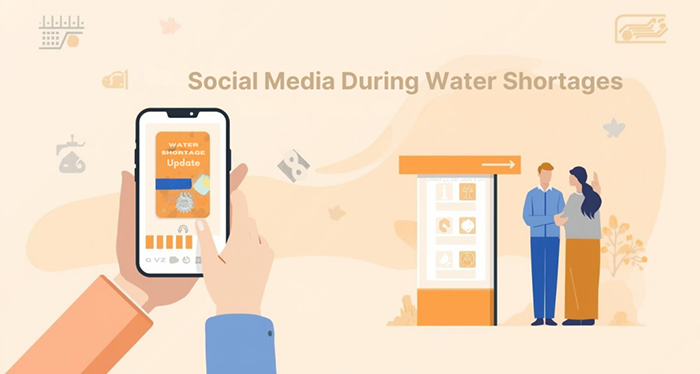
Social Media During Water Shortages: Timely, Clear, and Accurate Updates
During water shortages, communication becomes a critical operational function for water conservation districts. Social media plays an increasingly central role in how the public receives updates, responds to restrictions, and understands changing conditions. Residents often check district channels before making household decisions, when planning irrigation adjustments, or when trying to understand what current drought stages mean for their neighborhood. Clear messaging helps reduce confusion, prevents unnecessary conflict, and builds trust during moments when resources are strained. When communication is inconsistent or delayed, the public may fill information gaps with speculation, frustration, or misinformation.
Many water conservation districts struggle with the pace and volume of updates required during a shortage. Conditions can shift rapidly, community sentiment changes quickly, and staff must balance accuracy with urgency. Social media can amplify clarity when used thoughtfully, but it can also magnify misunderstanding if posts lack context or fail to address common concerns. The challenge is to design communication systems that remain reliable even when the situation becomes stressful. Districts that understand how audiences interpret digital updates can communicate in ways that reduce anxiety and promote partnership.
Water shortages introduce emotional and logistical uncertainty for communities. People worry about drinking water reliability, household watering limits, changing guidelines, and local storage levels that signal how serious conditions have become. Water conservation districts that communicate proactively help residents feel informed rather than surprised. Transparent updates also reinforce credibility, showing that the district acknowledges community concerns and provides timely guidance rooted in real conditions. When social media channels remain steady and predictable, they become essential tools for helping the public navigate the realities of drought and low water years.
Understanding the Role of Social Media in Water Shortage Communication
 Social media has become one of the fastest ways for water conservation districts to inform communities about water conditions that can change daily or even hourly. Residents expect rapid updates delivered in plain language that helps them understand what is happening and what actions are needed. Districts may announce drought stage changes, updates to watering-day schedules, guidance on irrigation timing, and reminders about reporting leaks or waste. When these updates appear reliably on social platforms, the public is more likely to view the district as responsive, engaged, and transparent.
Social media also functions as a listening tool. Water conservation districts can monitor comments, questions, and recurring themes to identify where confusion exists, which rules are being misinterpreted, and what practical obstacles households are facing. This allows districts to tailor future updates based on real concerns rather than assumptions. Direct interaction reinforces the idea that communication is not one directional. It becomes a dialogue where the district and the community interpret conditions together, which increases the likelihood of cooperation with restrictions and conservation measures.
Another benefit is reach. Social media helps water conservation districts communicate consistently to residents, businesses, HOAs, landscapers, and seasonal community members who may not see other channels at the right moment. During water shortages, this matters because misinformation can spread quickly and create unnecessary friction. A single clear post from an authoritative source can counter rumors and provide a shared reference point for the community. When districts maintain accessible, timely content, social media becomes an essential stabilizing force during uncertain times.
From Scarcity to Sustainability: Effective Communication Strategies for Water Conservation Agencies
This article is part of our series on strategic communication for Water conservation agencies. To learn more and to see the parent article, which links to other content just like this, click the button below.
What Communities Need During Water Shortages
Communities navigating water shortages often feel uncertainty about safety, access, and daily routines. They want timely information that helps them understand both current conditions and what may change next. Water conservation districts play a central role in helping residents interpret these changes because they translate drought stages, operational realities, and conservation requirements into guidance people can use immediately. When districts provide steady, accessible updates, they reduce confusion and help communities feel more prepared.
People also need to understand how their actions contribute to broader conservation goals. Individual water use choices may seem small in isolation, but when framed as part of a community-wide effort, they feel more meaningful. Water conservation districts that clearly explain the purpose behind restrictions help people see the connection between daily habits and regional water stability. This increases willingness to participate, even when changes feel inconvenient.
Above all, communities want predictability. They are more likely to trust water shortage updates when water conservation districts post consistently, acknowledge concerns, and offer clear explanations about what to expect next. Predictability brings a sense of stability, which is especially important during prolonged drought or multi-season shortages.
Clear Pathways for Understanding Changing Conditions
When water levels decline, communities immediately look for understandable explanations. Technical reports can overwhelm readers, but well curated social media updates help translate operational changes into everyday language. Water conservation districts can explain how drought stages affect watering-day schedules, landscape irrigation allowances, and the timing of seasonal restrictions. They can also clarify what triggers a shift in stages, what indicators residents will see next, and how local conditions connect to broader supply reliability. These explanations help the public adjust expectations without feeling alarmed.
Clear pathways also reduce the spread of misinformation. When water conservation districts consistently offer accessible updates, the public becomes less reliant on rumors or unverified posts shared in community groups. By making information easy to follow and grounded in observable conditions, districts help residents form accurate understandings of the situation. This leads to fewer misconceptions and a stronger sense of shared responsibility.
Predictability in Posting Schedules and Message Formats
During water shortages, uncertainty becomes one of the biggest stressors for communities. Predictable posting schedules help reduce this stress by creating a sense of rhythm. When the public knows when to expect updates, they check official channels regularly instead of relying on speculation. A consistent cadence also signals that the water conservation district is paying close attention to changing conditions and remains committed to transparency.
Predictability extends to the format of the message as well. When water conservation districts maintain a recognizable structure, readers know where to look for essential points such as watering limits, exemption guidance, leak reporting, or conservation tips. Even simple consistency, such as placing key updates in the first line or summarizing next steps at the end, can make posts significantly easier to process during high-stress periods. Over time, predictable formatting helps the public interpret complex information more efficiently.
Support for Emotional Responses During Scarcity
Water shortages create emotional strain even for people who understand the technical reasons behind them. Families may worry about landscape health, household routines, and the long-term impacts on community livability. Customers may feel anxious about stricter watering limits, enforcement changes, or the cost of adapting irrigation systems. These emotions influence how people interpret updates, which means water conservation districts must approach communication with empathy.
Acknowledging emotional responses does not require lengthy statements. Simple phrasing that validates public concerns helps people feel seen and respected. When water conservation districts express appreciation for community cooperation or recognize the inconvenience of certain restrictions, readers interpret updates more positively. This tone encourages ongoing engagement rather than defensive reactions, strengthening community partnership during challenging periods.
Simple, Actionable Behaviors That Make a Measurable Difference
Even when people understand the severity of a water shortage, they often feel unsure about what actions matter most. Water conservation districts that provide straightforward steps help reduce this uncertainty and empower residents to participate in meaningful conservation. A short list of high-impact behaviors can guide households effectively, such as:
-
Adjusting irrigation schedules to early morning hours.
-
Limiting non-essential water use during peak demand periods.
Actionable guidance also helps unify community behavior. When residents see that others are following the same practices, their willingness to participate increases. Water conservation districts strengthen this effect by explaining how small actions scale up to meaningful conservation outcomes. This reinforces the idea that individual contributions are part of a shared effort toward water stability.
Crafting Social Media Messages That Are Clear and Actionable
 Clear communication during water shortages requires messages that the public can understand instantly while still providing enough context to support responsible decision making. Water conservation districts benefit from writing posts that balance urgency with reassurance. Residents should know what is happening, why it matters, and how they can respond without feeling overwhelmed. When messages feel simple and grounded, they create a strong foundation for trust and cooperation.
Tone is equally important. People engage more readily when districts communicate with empathy and confidence. During resource shortages, the public is often navigating stress or frustration, so messages that respect those emotions can help reduce defensiveness. Actionable content brings the message full circle by showing readers what to do next. When the public receives clear direction, they feel not only informed but also empowered.
Structuring Messages for Instant Comprehension
Short attention spans on social platforms mean that messages must communicate their core point quickly. Water conservation districts can support this by placing the most important information at the beginning of the post. Readers should understand within seconds whether a drought stage changed, whether watering schedules were updated, or whether enforcement expectations shifted. This approach prevents misinterpretation and reduces the cognitive effort required to follow updates during complex drought cycles.
Once the main point is delivered, supporting context can follow. Many residents want to understand the “why,” even if they first focus on the headline. When districts layer information in a predictable pattern, the public begins to anticipate the structure, which strengthens comprehension across multiple posts. A well structured message also reduces the likelihood that fragments of information will be shared out of context by users who only skim the content.
Using Examples That Clarify Required Actions
Actionability improves when messages include simple, concrete examples. People are more likely to comply when they can picture exactly what a behavior looks like. Even one or two carefully chosen examples can reinforce a message without making posts too long. For instance, if a district asks residents to reduce water consumption, examples might include adjusting irrigation timings, repairing a sprinkler leak, or postponing non-essential outdoor washing during peak demand hours.
Examples bring clarity because they translate technical guidance into lived experience. Readers can immediately imagine how the action applies to their day. This reduces uncertainty and encourages follow through. Practical examples also help correct misconceptions. If a rule appears too broad, an example can narrow it. If a message seems abstract, an example makes it tangible.
Matching Tone to Audience Emotions During Shortages
During drought conditions, people may feel worried, frustrated, or confused by shifting restrictions. Messaging that acknowledges this emotional context helps water conservation districts build stronger relationships with their communities. A tone that is calm, supportive, and grounded signals that staff understand the pressures residents are facing. It also shows that the district is not simply issuing directives but guiding the public through a challenging period.
Matching tone to emotional needs does not require dramatic language. Small adjustments such as affirming community effort or explaining decisions with care can create a sense of partnership. When districts strike this balance, the public becomes more receptive to conservation requests. A steady tone also helps maintain continuity between posts across multiple platforms, reinforcing stability during periods of uncertainty.
Reinforcing Key Messages Through Visual or Structural Cues
Digital audiences often process content visually before reading text. Water conservation districts can take advantage of this by using simple visual reinforcements such as icons, consistent color styles, or short header phrases. These cues help readers understand at a glance whether a post involves a new drought stage, a watering schedule reminder, a leak reporting prompt, or a general conservation tip. They also support individuals who may skim quickly before deciding whether to read more.
Structural cues can be equally effective. A familiar format creates predictability, which reduces the cognitive effort required to follow updates. For example, keeping restriction summaries together at the top of each post or using the same introductory phrase to signal changed conditions helps readers identify patterns. Predictable formatting builds familiarity, and familiarity increases retention and cooperation.
Balancing Speed and Accuracy When Posting Updates
Timeliness is essential during water shortages because conditions can shift quickly. Local indicators may worsen faster than expected, a conservation target may be met earlier than projected, or a drought stage threshold may trigger new requirements. Social media allows water conservation districts to communicate these changes almost instantly, but rapid updates also increase the risk of minor inaccuracies or misinterpretations. Districts must find the right balance between speed and precision so that the public remains informed without later needing to correct misunderstandings.
Accuracy requires internal coordination. Districts should establish clear workflows that determine who verifies data, approves messaging, and posts updates. Even a simple internal checklist helps prevent errors when staff are moving quickly. Coordination is especially important for organizations that manage multiple platforms or serve multiple jurisdictions. One post with unclear wording can create confusion that spreads quickly, so the verification process should be both efficient and reliable.
Speed, however, remains essential because the public expects updates in real time. When districts delay information, people often turn to unofficial sources or speculation. That can undermine trust and create unnecessary pressure. A well designed communication system allows districts to post preliminary updates that acknowledge ongoing changes while promising more detail soon. This approach meets the public’s need for immediate information while preserving accuracy for longer explanations.
Understanding Audience Behavior During Water Shortages
Water shortages influence not only how much information the public seeks but also how they process and react to it. Residents and customers experience heightened sensitivity during drought conditions. They may worry about public health, household routines, landscaping impacts, and the long-term strain on local water supplies. Water conservation districts must recognize that emotional context shapes how messages are interpreted. Districts may receive questions about watering days, exemption requests, irrigation timing, enforcement expectations, and how to address leaks or inefficient systems.
People are more likely to scan posts quickly rather than read them closely when they feel overwhelmed. This means that social media updates must highlight the most important information early, using clear phrasing and logical sequencing. If people must work too hard to understand a post, they may misunderstand the message or disregard it entirely. Districts that keep messages concise and structured help reduce cognitive load for readers who are already processing many unknowns.
Audience feedback patterns also change during shortages. The volume of comments typically increases, and the tone may fluctuate depending on the severity of the situation. Water conservation districts benefit from treating comment sections as real time indicators of community sentiment. When the same questions appear repeatedly, it signals that a message needs refinement or additional context. If frustration rises, it often reflects either a lack of clarity or a need for more proactive updates. Districts that monitor these responses can adjust their communication strategy quickly and maintain stronger public engagement.
Coordinating Messaging Across Multiple Platforms
Water shortages require consistent information delivery across all communication channels, and social media becomes one part of a larger ecosystem the community relies on. Water conservation districts often use multiple platforms simultaneously, including Facebook, Instagram, X, YouTube, and district websites. Each platform reaches different audiences, and each demands a tailored approach while still maintaining message consistency. A district may post longer explanations on Facebook where residents browse community news, while using X for short restriction reminders or stage changes that need rapid visibility. Visual platforms can reinforce drought stage clarity and conservation tips through graphics that are easy to share.
Consistency reinforces trust. When messages differ across platforms, the public may assume that information is outdated or incomplete, which can erode confidence during an already stressful time. To avoid this, districts benefit from a unified content plan that synchronizes wording, timing, and tone. Even minor deviations, such as different phrasing or mismatched data, can fuel confusion. A coordinated strategy ensures that each platform reinforces the others and creates a stable narrative the public can rely on during a shortage.
Adaptation remains important because not all content performs equally across platforms. A detailed explanation may be suited for Facebook or a district webpage, while a short directive works better on X. Instagram may use visuals to illustrate drought stages, watering-day schedules, and high-impact conservation behaviors. By understanding platform behavior and audience expectations, districts can match each message to the environment where it will be most effective. This strengthens public comprehension and reduces the risk of misinterpretation.
Handling Community Questions and Misinformation Online
During water shortages, social media becomes a public forum where questions, frustrations, and speculation begin to cluster. Water conservation districts must approach this environment with patience and strategy. People often ask questions repeatedly because they feel uncertain or because they missed earlier posts. Answering these questions consistently helps reinforce credibility. Districts may receive inquiries about watering exemptions, irrigation schedules, enforcement timelines, and how drought stages affect day-to-day expectations.
Misinformation spreads more easily during moments of scarcity or stress. Rumors about water reliability, timelines, or decision making can circulate quickly if left unaddressed. Districts should monitor conversations closely to identify emerging misunderstandings. Responding promptly helps correct misinformation before it grows, but responses must remain factual, calm, and free of defensiveness. The goal is to anchor public discussion in verified information without escalating tension.
Direct engagement can also humanize the district. People respond more positively when they feel they are speaking with real staff who understand local conditions and community needs. Even brief acknowledgments can reduce frustration. When districts demonstrate consistent presence and responsiveness, they reinforce the idea that communication is a partnership rather than a broadcast. This strengthens community cooperation and reduces conflict during difficult periods.
Using Social Media to Encourage Conservation Behavior
Social media offers water conservation districts an opportunity to shape public attitudes toward conservation in ways that feel relatable and practical. Water shortages often require immediate behavior change, and people are more likely to participate when they understand the impact of their actions. Districts can highlight how irrigation adjustments, leak repairs, and smarter outdoor watering practices protect shared supply stability and reduce strain during peak demand periods.
Behavior change improves when messaging highlights achievable steps. People respond more positively to guidance that feels attainable rather than overwhelming. Even limited bullet points can help in these cases, such as:
-
Shortening outdoor watering schedules.
-
Checking district updates before setting irrigation timers.
Visual storytelling also strengthens engagement. Before-and-after imagery, simple charts of drought stages, or short videos showing local conditions help audiences understand the reasoning behind conservation requests. When people see the real-world consequences of water shortages, they are more inclined to adjust their habits.
Ultimately, conservation messaging must reinforce the idea of shared responsibility. Rather than framing restrictions as losses or burdens, districts can highlight collective benefits. Communities respond well when they understand that small actions contribute to broader stability. Social media allows districts to reinforce this message consistently and accessibly, helping residents see conservation as a community effort rather than an individual sacrifice.
Integrating Visuals to Strengthen Public Understanding
Visual communication becomes especially important during water shortages because people often grasp images faster than technical explanations. Social media offers an ideal platform for sharing visuals that clarify drought stages, watering-day schedules, or the practical meaning of restrictions. Water conservation districts can share simple graphics that show what changes at each stage, what actions are expected, and how community participation supports stability. These images help the public form a mental model of the situation and understand why certain decisions are necessary.
Comparison photos, simple charts, and plain-language graphics tend to be effective because they reduce cognitive load. Rather than interpreting dense text, viewers can immediately see which stage the community is in, what changed since the last update, and what behaviors are most important right now. Visuals also help correct misconceptions. For example, a clear stage graphic can counter rumors about what is allowed or prohibited. When districts use visuals consistently, they build shared understanding that supports cooperation and reduces frustration.
The tone of visuals matters as much as accuracy. People may react negatively to images that feel overly dramatic or alarming. Conversely, visuals that present data calmly and clearly help reinforce trust. Districts benefit from choosing design styles that are easy to read, culturally inclusive, and matched to each platform’s format. When visuals are grounded in clear explanations and posted at predictable intervals, they help the public stay informed without feeling overwhelmed.
Coordinating With Partner Organizations to Maintain Consistent Messaging
Water shortages often involve multiple organizations that share responsibility for public guidance and operational response. Coordinating messages across these groups ensures the public receives accurate, unified information. Water conservation districts may coordinate with municipal utilities, public works departments, emergency management offices, public health agencies, city or county leadership, and large institutional water users. These perspectives must align in public communication so residents understand a single coherent narrative rather than a patchwork of guidance.
Coordination prevents contradictions. If one entity implies conditions are stable while another warns of rapid tightening, the public may distrust both messages. Regular coordination touchpoints, shared communication calendars, and aligned talking points help synchronize information before it appears on social media. This is especially important when multiple jurisdictions share interconnected supplies or overlapping guidance. Unified messaging improves credibility and reduces speculation.
Collaborative communication also strengthens community confidence. When the public sees multiple partners presenting consistent updates, they perceive the information as more reliable and transparent. Joint graphics, shared posts, and coordinated announcements signal that organizations are monitoring conditions together rather than acting in silos. This reinforces the idea that drought response is a collective effort supported by expertise across the region.
Preparing Messaging in Advance of Severe Shortages
Water conservation districts communicate most effectively during shortages when planning begins long before conditions become extreme. Pre-season preparation allows districts to build templates, assign communication roles, and clarify workflows. Districts can prepare messaging for drought stage transitions, watering-day schedules, enforcement reminders, leak reporting, and practical conservation behaviors that reduce peak demand. These prebuilt materials help districts respond quickly without sacrificing clarity.
Preparation also supports consistency. When staff rely on pre-approved phrasing and visual formats, updates remain uniform even when posted under pressure. This reduces the likelihood of errors or mixed messages. Advance planning can include scenario-based templates that outline what to post during early-stage shortages, escalating restrictions, or emergency conservation measures. This proactive model ensures messaging aligns with real-time conditions without requiring teams to craft every detail from scratch.
Public communication benefits as well because communities perceive the district as organized and responsive. When messages appear quickly and predictably in the early stages of a shortage, the public is less likely to panic or misinterpret the situation. Prepared messaging helps establish tone, set expectations, and demonstrate foresight. As conditions change, districts adapt these templates rather than building posts reactively. This structure supports steady communication during periods of uncertainty.
Strategic Communication Support for Your Water Conservation District
 Water conservation districts navigating shortages often balance real time updates, community questions, and the technical complexities behind drought conditions. Many districts choose to partner with an external resource like Stegmeier Consulting Group (SCG) to strengthen communication systems and enhance internal coordination. Clear workflows, well structured messaging, and consistent digital presence help reduce community confusion and build long term trust.
SCG supports districts by assessing existing communication channels, identifying gaps in clarity and consistency, and designing frameworks that help staff deliver timely, accurate updates. Water shortages create scenarios where information shifts quickly, which means communication systems must be both stable and adaptable. SCG helps districts organize internal decision pathways so that updates move smoothly from subject matter experts to public-facing platforms.
Beyond digital communication, SCG helps districts connect broader messaging strategies to operational realities. This includes supporting alignment with municipal partners and major community stakeholders whose guidance must remain consistent during shortages. When communication flows predictably across all levels of an organization, districts can maintain community confidence even under challenging conditions.
Conclusion
Water shortages test the strength of communication systems because they demand clarity, speed, and empathy at the same time. Communities look to social media for real time updates and expect information that is accurate, actionable, and easy to understand. When water conservation districts provide clear explanations, consistent visuals, and prompt responses, they help the public navigate stressful conditions with greater confidence. Social media becomes most valuable when it is used not only to broadcast updates, but also to reinforce shared responsibility and practical next steps.
The most effective communication acknowledges both the emotional and practical needs of the public. People want to understand what is happening, why it matters, and how they can participate in conservation efforts during a shortage. Social media becomes a powerful tool when it translates complex conditions into accessible guidance that supports cooperation rather than confusion. As water challenges become more frequent, districts that build strong communication frameworks will be better equipped to guide their communities through uncertainty.
SCG’s Strategic Approach to Communication Systems
Align your agency’s messaging, processes, and public engagement strategies
Agencies that communicate effectively build stronger trust with staff, stakeholders, and the public. Whether you are implementing QR code systems, improving internal communication workflows, or strengthening agency wide alignment, SCG can help you develop a communication system that supports consistent decision-making and long-term organizational success. Use the form below to connect with our team and explore how a strategic communication framework can elevate your agency’s impact.