
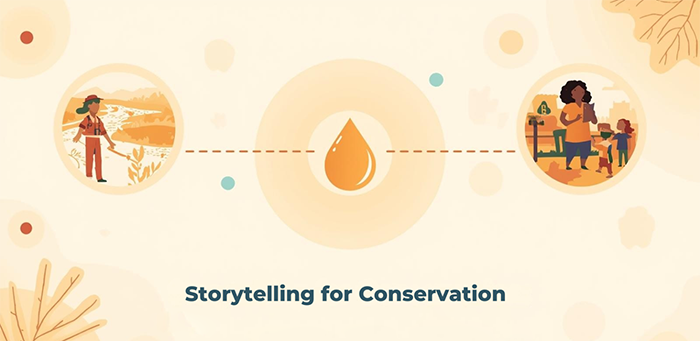
Storytelling for Conservation: Putting Faces to Water Challenges
Water scarcity affects communities, landscapes, and ecosystems in ways that data alone cannot fully communicate. Water conservation districts increasingly rely on storytelling to make water challenges feel personal, relatable, and urgent. People connect more deeply with narratives than with charts or technical updates. A story about a household adjusting to new outdoor watering routines, a field technician documenting stressed riparian conditions, or a local grower navigating drought decisions often carries more emotional power than a reservoir chart on its own. When water conservation districts use storytelling strategically, they humanize conservation and help residents understand why stewardship matters.
Storytelling also strengthens trust. Community members frequently encounter restrictions, scheduling changes, and drought stage updates without fully understanding the reasoning behind them. When a water conservation district shares real voices, real experiences, and real consequences, it offers transparency in a different form. This kind of transparency shows how drought pressures ripple across neighborhoods, local economies, and the natural systems that communities depend on. It becomes easier for people to empathize with difficult decisions, even when those decisions disrupt routines or require new habits.
As water pressures intensify across many regions, storytelling helps water conservation districts move from information distribution to shared understanding. Stories create a bridge between technical realities and public emotion, turning conservation from a rule based exercise into a community effort grounded in collective experience. When residents recognize themselves in the narrative, they are more likely to see conservation as practical, necessary, and achievable.
Why Storytelling Works as a Conservation Tool
 Stories influence behavior because they speak to emotion before logic. Many residents do not engage deeply with hydrologic terminology, but they often respond strongly to a narrative about how drought changes a familiar creek, a community reservoir, or a neighborhood’s summer landscape. Water conservation districts use stories to show how restrictions protect essential supply, stabilize local systems, and reduce long term risk. They can also use stories to explain why timing matters, why certain rules apply during specific weeks, and how small choices accumulate into measurable outcomes. When the narrative connects action to impact, guidance feels less abstract and more doable.
Humans are wired to seek meaning in stories. When people hear a narrative, they begin imagining themselves in the situation, identifying with the characters, and feeling emotionally connected. This emotional engagement makes them more receptive to conservation guidance. A drop in reservoir storage becomes more than a percentage. It becomes a story about what that change means for community reliability, seasonal preparedness, and local environmental resilience. When residents can picture consequences, they become more willing to participate in solutions.
Storytelling also helps simplify complex topics without stripping away accuracy. Water systems include seasonal variability, infrastructure constraints, and competing demands that can be difficult to explain in a short update. A well chosen story can translate complexity into a relatable moment, such as a crew responding to unusual conditions, a resident learning how to reduce outdoor irrigation, or a community adapting to drought staging. Stories make environmental realities visible, and they help audiences remember the “why” long after the announcement has scrolled past.
Using Personal Narratives to Build Empathy
Personal narratives help residents understand that water challenges affect real people and real places. Water conservation districts often highlight stories from field staff who monitor conditions, coordinate with local partners, and support drought response planning. They also share insights from customer service teams who hear community concerns directly and translate rules into practical guidance. When appropriate, districts can elevate stories from residents who made changes, businesses that adjusted practices, or community leaders who helped normalize conservation behaviors. These stories show that progress is possible and that participation is already happening.
These narratives build empathy because they show the human side of conservation. Restrictions can feel inconvenient until people see the tradeoffs and responsibilities behind them. A personal account can illustrate how a decision protects critical storage, prevents avoidable losses, or reduces strain during peak demand. When stories center on specific individuals and specific moments, the issue becomes less abstract. People identify more easily with a person than with a system. Empathy supports cooperation, and cooperation strengthens conservation outcomes over time.
Personal narratives also remind communities that drought response is shared work. When residents hear multiple voices describing their experiences, they begin to see conservation as a collective effort rather than a top down directive. This broadens buy in and reduces the sense that any one group is carrying the burden alone. A strong storytelling approach weaves individual perspectives into a common message. Everyone has a role, and everyone benefits when the system holds.
From Scarcity to Sustainability: Effective Communication Strategies for Water Conservation Agencies
This article is part of our series on strategic communication for Water conservation agencies. To learn more and to see the parent article, which links to other content just like this, click the button below.
Highlighting Watershed and Habitat Stories to Deepen Ecological Awareness
Some of the most powerful conservation stories come from the watershed itself. Water conservation districts can use storytelling to illustrate how drought affects streamflow, groundwater recharge, riparian corridors, and the stability of local landscapes. A narrative about a drying wetland, a stressed tributary, or a reduced recharge season creates emotional resonance because it connects water conditions to visible change. Districts can also embed watershed storytelling into signage at demonstration gardens, public outreach materials, and digital explainers, helping community members learn how reduced availability stresses plant communities, affects soil health, and increases fire risk during hot, dry periods.
These stories help people see water as more than a utility line item. They reveal water as a foundation for life and community stability, shaping the health of landscapes and the resilience of local systems. When people understand that scarcity affects the watershed they live in and depend on, they become more willing to change behaviors in support of conservation goals. Ecological narratives transform conservation from a rules-only message into an act of care for the place people call home.
Storytelling also makes invisible impacts more visible. Many people do not notice gradual changes in stream health or groundwater levels, but a story from a field monitor or watershed coordinator highlights the significance of those shifts. By bringing ecological change into focus, districts deepen public understanding of how drought and water scarcity affect the entire system.
Connecting Conservation Stories to Community Identity
 Communities respond strongly to narratives that reflect their shared identity, history, and relationship with local water. Water conservation districts can root storytelling in the cultural significance of rivers, lakes, and reservoirs, drawing connections between community traditions and responsible water use. Districts can amplify stories from long-time residents who have witnessed how water conditions shift over decades, helping others appreciate both the beauty and fragility of local water sources. They can also share neighborhood stories that highlight community groups working together to reduce water use, framing conservation not as an individual task but as a shared achievement.
When conservation stories reflect community identity, they encourage collective action. People feel more motivated when they see themselves as part of a shared narrative rather than isolated participants. These stories reinforce the idea that water challenges impact everyone and that community values such as resilience, stewardship, and cooperation remain central to the region’s response. By linking conservation to a sense of belonging, districts build deeper emotional engagement and promote sustainable behaviors across seasons.
Narratives that reflect community identity also help bridge divisions. Residential customers, commercial operators, and agricultural partners may have different perspectives on water use, but storytelling can reveal shared priorities such as wanting reliable service, healthy landscapes, and stable local economies. When districts elevate stories that surface common ground, communication becomes more inclusive and less polarizing. This strengthens public trust and reduces resistance to conservation messaging.
Framing Conservation Stories Around Hope, Not Fear
Fear-based messaging often backfires in conservation communication. While drought and water scarcity are serious issues, messages that rely heavily on fear can cause people to disengage or feel helpless. Water conservation districts increasingly shift toward narratives that emphasize resilience, adaptation, and community success. Districts can spotlight stories of neighborhoods achieving measurable reductions, businesses improving efficiency without sacrificing operations, and demonstration sites showing that attractive landscapes can thrive with less water.
Hope-based storytelling encourages participation rather than resignation. When people see that conservation can produce visible results, they feel empowered to take action. Stories of positive change give people a sense of agency and reinforce the idea that individual choices contribute to community-wide outcomes. This emotional framing is especially important during prolonged drought periods when fatigue sets in and pessimism may increase.
Hope does not mean ignoring challenges. It balances honesty with optimism by acknowledging the seriousness of water issues while showing that progress is possible. This kind of narrative inspires long-term engagement because it presents conservation as an ongoing journey rather than an inevitable loss. When districts communicate water challenges through a hopeful lens, they maintain public motivation and deepen trust.
Choosing the Right Voices to Tell the Story
The effectiveness of conservation storytelling often depends on who delivers the message. Water conservation districts can feature water efficiency specialists, customer program staff, field technicians, and operations professionals who have direct experience navigating water stress conditions. Their voices carry authenticity because the community recognizes they are close to the work. Districts can also elevate credible community partners such as facility managers, landscapers, HOA leaders, educators, and community volunteers who can speak to practical change in ways that feel relatable.
Choosing diverse voices ensures that stories resonate broadly. A resident who may not connect with a technical explanation might connect deeply with a parent describing how water-wise habits improved their household routine. Someone uninterested in numbers might respond strongly to a field technician sharing a moment of documenting a dry reach that used to flow year-round. Districts build trust by giving space to multiple perspectives, each offering a unique window into the shared challenge.
Authenticity matters. The most impactful conservation stories come from people who have lived the experience, not from scripted statements. Districts benefit from coaching storytellers while still allowing their natural voice to shine. This combination of authenticity and narrative structure helps convey both emotional truth and clear conservation guidance.
Integrating Storytelling Into In-Person Community Communication
Storytelling becomes even more powerful when integrated directly into community touchpoints. Water conservation districts can incorporate short narratives into workshop materials, demonstration garden signage, rebate program communications, and public meeting presentations. Districts can add field stories to watershed education events, helping residents connect the information they are hearing with the work happening behind the scenes. They can also weave community stories into conservation challenges, school events, and seasonal outreach campaigns so that water messaging feels human and locally grounded.
In-person storytelling brings conservation to life in real time. People can stand beside a water-wise demonstration landscape while reading a short account of how similar conversions reduced peak demand. They can view a panel about local watershed conditions while learning how drought alters recharge patterns and summer reliability. This physical connection enhances emotional impact and makes conservation feel immediate rather than abstract.
Integrating storytelling across in-person and digital channels also reinforces communication consistency. When narratives appear across bill inserts, websites, social media, and community events, people encounter a unified message no matter where they engage. This strengthens trust and helps the public internalize conservation concepts more effectively. Stories become part of community culture, shaping how people perceive and value water resources.
Designing Outreach Materials That Blend Narrative and Function
Public-facing materials can do more than provide rules or instructions. When designed thoughtfully, they become a storytelling platform that brings conservation messages to life. Water conservation districts can integrate short narrative frames into mailers, posters, and web graphics, giving community members a glimpse of how drought or water scarcity has shaped local conditions. Districts can include stories that highlight watershed vulnerability, infrastructure stress, or the practical realities of meeting demand during heat waves. They can also use narrative-driven program spotlights to show how real participants used rebates, audits, or irrigation upgrades to achieve meaningful reductions.
Effective materials weave story and function together. They give people the information they need while grounding that information in meaningful context. A restriction notice feels different when paired with a short reflection about what the district is seeing in source supplies, or a reminder of how quickly conditions can shift. These narrative enhancements deepen understanding and strengthen respect for district decisions.
Creating Story “Stops” Across a Seasonal Conservation Journey
Story stops are intentional moments in a campaign where districts share narratives tied to seasonal water realities. Water conservation districts can use these stops to highlight changes in demand, supply conditions, and landscape stress, often featuring reflections from staff who have monitored patterns over years. Districts can create story stops around key seasonal milestones, such as the onset of irrigation season, the first major heat wave, mid-summer peak demand, and the transition into fall recovery. These moments help people connect changing conditions with concrete actions.
These stops enrich public understanding because they transform a series of updates into an interpretive journey. Instead of passively receiving notices, people connect specific moments with meaningful stories that shape how they view water conservation. Story stops also reinforce key messages without overwhelming communication channels. By spacing narratives across the season, districts offer learning moments that unfold naturally as conditions evolve.
Using Staff and Community Encounters to Share Meaningful Narratives
Frontline staff and community partners hold some of the most compelling conservation stories, and everyday interactions offer opportunities to share them authentically. Water conservation districts can encourage staff to integrate short narratives into workshops, hotline conversations, audit appointments, and community presentations, turning routine guidance into teachable moments. Districts can equip staff and partners with talking points that translate field observations into relatable stories, without drifting into jargon or speculation.
These interactions shape public perception because they feel personal and immediate. A brief story shared during an irrigation audit or a community Q and A often resonates more deeply than a generic graphic. Staff and partners become storytellers who animate conservation work in ways that feel conversational and grounded in lived experience. When districts support communicators with clear internal alignment and narrative guidance, these encounters become powerful tools for building trust.
Using Digital Platforms to Amplify Conservation Stories
Digital platforms allow districts to share conservation stories with audiences far beyond a single event or program. Water conservation districts often feature short staff interviews, before-and-after landscape photos, or narrated updates on social media. Districts can highlight watershed monitoring efforts, seasonal demand patterns, and rebate outcomes through videos, interactive explainers, and simple story posts. They can also publish community spotlights, seasonal water updates, and profiles of residents and businesses who model water-wise behaviors.
Digital storytelling works because it meets people where they already spend time. Community members encounter emotional narratives during their daily routines, which increases awareness even when they are not actively searching for water information. Districts can tailor content by platform. A short caption may work on social media, while a longer narrative fits better on websites or newsletters. By diversifying formats, districts ensure that stories resonate with both quick-scrolling audiences and those who want deeper engagement.
Digital platforms also make it easier to humanize complex issues. A thirty-second clip of a district staff member explaining how drought affects supply planning, or a short interview about why restrictions shift by season, communicates emotional nuance that written updates alone cannot capture. These digital stories strengthen trust because they show the real people behind conservation efforts. When the public sees faces and hears voices, district decisions feel less bureaucratic and more relational.
Creating Stories That Reflect Seasonal Water Realities
Seasonal changes profoundly shape water conditions, and storytelling helps people understand why conservation expectations shift throughout the year. Water conservation districts can explain how snowpack, rainfall timing, temperature changes, and irrigation season combine to influence storage, demand, and system strain. Districts can share stories about early snowmelt, long heat waves, and peak outdoor watering periods to help the public understand why conservation messaging intensifies at specific times.
Seasonal storytelling strengthens transparency because it shows that conservation is not static. People may become frustrated when restrictions shift from one month to the next, but storytelling clarifies the reasoning behind those transitions. When residents hear how early melt reduces late-summer reliability, or how prolonged heat increases both plant stress and system demand, they gain a clearer understanding of why conservation behaviors must adapt.
Stories grounded in seasonal patterns also help people anticipate change. Rather than reacting to updates with surprise, they begin to internalize the rhythm of water availability. They understand that conservation is not only a drought response but an ongoing practice shaped by environmental cycles. This awareness builds long-term stewardship and reduces resistance when conservation messaging becomes more urgent during dry seasons.
Bringing Forward Underrepresented Voices in Water Challenges
Water challenges impact some communities more directly than others, yet their stories often go unheard. Water conservation districts can amplify voices from communities that depend heavily on public cooling spaces, those living in multi-family housing with limited control over irrigation systems, and those navigating affordability constraints. Districts can also elevate local knowledge holders who understand watershed rhythms and indicators, as well as small business owners and property managers who experience restrictions through operational and customer expectations.
Bringing forward underrepresented voices widens public understanding of water challenges. People may not realize how drought affects those with limited access to private green space, those in hotter neighborhoods with fewer shade assets, or those whose work depends on predictable water availability. Storytelling brings these experiences into view, creating empathy and a more complete picture of community impact.
This inclusivity also strengthens trust. When districts demonstrate that they are listening to a broad range of perspectives, the public interprets communication as more representative and more equitable. People respond better when they see that conservation is not imposed from the top down but reflects real experiences across the community. Inclusivity also inspires broader participation because it shows that every voice matters in the shared work of water stewardship.
Avoiding Story Fatigue Through Varied Formats and Voices
Storytelling can lose impact if it becomes repetitive or if the same voices dominate communication. Water conservation districts avoid story fatigue by mixing short anecdotes, staff interviews, customer spotlights, and larger narrative pieces. Districts can rotate among watershed stories, seasonal updates, program success narratives, and practical “day in the life” perspectives that show how conservation happens in real settings.
Variety keeps stories fresh and emotionally engaging. When people encounter different voices and formats, they stay curious and continue paying attention to conservation messaging. This matters especially during long drought cycles when the public may feel overwhelmed or tired of hearing about water shortages. Changing narrative styles helps maintain engagement without diluting the seriousness of the issue.
Varied storytelling also shows that conservation affects everyone. When districts rotate voices, they reveal the multifaceted nature of water challenges. A technician’s story highlights field reality, a family’s story highlights daily adaptation, and a facility manager’s story highlights operational change. Together, these stories create a layered narrative that deepens understanding and strengthens alignment with district goals.
Embedding Storytelling Into School and Youth Programs
Youth programs offer powerful opportunities to link conservation messages with memorable stories. Water conservation districts can work with teachers and community partners to integrate storytelling into school visits, classroom materials, and youth workshops. Districts can share stories from staff who monitor local water sources, from community members converting landscapes, and from programs that demonstrate how small choices add up to meaningful outcomes.
Stories resonate deeply with young audiences because they provide emotional hooks that make abstract environmental challenges easier to grasp. Children may not understand hydrologic cycles, but they can relate to a narrative about a stream that needs protection, a neighborhood that reduced watering together, or a landscape that thrived after switching to efficient irrigation. These early connections shape values that carry into adulthood. When young people understand conservation through relatable stories, they become more invested in protecting local resources.
Youth-centered storytelling also supports intergenerational communication. When children bring stories home, they influence family behavior in subtle but meaningful ways. Parents may become more attentive to guidance or more willing to adopt water-wise habits when their child shares a reflective story from a school program. By embedding storytelling into youth programs, districts create ripple effects that extend beyond classrooms and into entire households.
Using Storytelling to Reframe Expectations During Drought
During drought, districts must often introduce restrictions, adjust watering schedules, and expand enforcement while supporting the community through change. Storytelling helps set expectations by shifting the narrative from loss to shared responsibility. Water conservation districts can tell stories that explain why certain measures are necessary now, how early action prevents worse outcomes later, and what success looks like at the community scale. They can also share stories that normalize adaptation, showing how neighbors, businesses, and public facilities are making changes without losing quality of life.
These stories help people understand not just what is changing but why those changes matter. A factual update may inform people about a schedule shift, but a story helps them accept it emotionally. Stories create context that makes limitations feel purposeful rather than punitive. This shift reduces resistance and fosters cooperation because people see themselves as part of a conservation effort rather than as recipients of restrictive rules.
Storytelling also provides continuity during uncertain conditions. Even when restrictions tighten, stories allow districts to maintain a cultural connection with their communities. People may not like a new rule, but they can still follow stories from staff monitoring conditions, residents adapting, and partners supporting neighborhood-scale improvements. These narratives keep engagement alive even when conditions are challenging.
Choosing Moments and Events That Make Stories Memorable
Not every conservation moment becomes a story. Districts must select events that capture emotion, demonstrate significance, or reveal a turning point in local water conditions. Water conservation districts can highlight key moments such as the first week of peak demand, the day a drought stage changes, the rollout of a rebate surge, or the completion of a community-wide landscape conversion. They can also tell stories about milestones in supply reliability, such as a managed recharge season, a successful demand reduction target, or a reduction in emergency calls during a heat wave.
Memorable stories often center on moments of contrast. The difference between a thriving landscape and a stressed, low-water environment becomes more meaningful when framed in a narrative arc. People better understand the stakes when they see how rapidly conditions can change. These moments help anchor understanding and reinforce the idea that conservation is not theoretical but lived.
Districts also consider emotional resonance when choosing which stories to highlight. A resident describing the relief of lowering a bill after fixing an irrigation leak, or an efficiency specialist recounting a neighborhood workshop where people left feeling hopeful, creates a relatable entry point. When stories highlight moments that feel universal, such as frustration, adaptation, and pride in progress, they become emotionally memorable and more effective at shaping long-term attitudes.
Aligning Storytelling With Broader Communication Systems
For storytelling to influence conservation behavior, it must align with the district’s overall communication strategy. Water conservation districts can integrate stories into drought updates, watering schedules, rebate promotions, and pre-season campaigns so narratives reinforce factual guidance. Districts can embed storytelling into efficiency program pages and community outreach so the emotional and practical dimensions remain connected. When storytelling supports the same themes and calls to action across channels, it becomes a consistent driver of understanding rather than a disconnected content stream.
Narrative alignment increases clarity because people encounter a connected message rather than scattered or contradictory stories. When storytelling complements maps, data, rules, and guidance, the public receives a fuller understanding of the issue. This integrated approach builds trust, as people see that stories are grounded in real conditions and district action.
Aligning storytelling across platforms also amplifies impact. A story introduced on social media can be expanded in a bill insert, deepened in a community workshop, and revisited in a seasonal newsletter. This continuity strengthens memory and shapes perception. When districts manage storytelling as part of a communication ecosystem, narratives help people not only understand conservation challenges but feel emotionally connected to the work that supports long-term water resilience.
Strategic Communication Support for Your Water Conservation District
 Storytelling becomes far more powerful when districts have the internal systems and processes needed to deliver consistent, meaningful communication. Water conservation districts often find that while their teams have rich firsthand experiences and strong technical knowledge, they may not have the bandwidth to translate those experiences into polished, repeatable communication tools. Impactful storytelling requires coordination across staff, programs, and seasonal rhythms, plus a clear approach for aligning narratives with restrictions, rebates, enforcement, and customer support.
These realities are why many districts choose to partner with an external resource like Stegmeier Consulting Group (SCG). Water conservation districts often benefit from additional support when shaping narratives, developing communication workflows, or designing repeatable templates that allow staff to share stories confidently. SCG helps districts refine internal processes, identify the most strategic story themes, and align storytelling with broader conservation messaging so that each narrative contributes to a unified communication system.
When storytelling is supported by strong organizational structure, districts experience clearer messaging, more consistent community engagement, and greater public trust. SCG empowers teams by helping them turn everyday observations into communication assets that reinforce conservation goals. Through intentional system design, districts can sustain storytelling throughout drought cycles, seasonal shifts, and long-term planning needs. This structured approach ensures that stories remain authentic, unified across platforms, and aligned with the district’s mission.
Conclusion
Storytelling transforms conservation from a set of instructions into a shared human experience. Water conservation districts rely on compelling narratives to help community members understand the emotional, ecological, and neighborhood-level impacts of water challenges. When districts share stories of people adapting to drought, landscapes changing, and communities collaborating to conserve resources, they humanize what might otherwise feel like distant or technical issues. Stories create empathy, motivation, and connection, all of which are essential for long-term water stewardship.
A storytelling-centered approach builds trust by showing the public not only what is happening but why it matters. Data may explain the severity of drought, but stories reveal its meaning. Narratives of resilience, adaptation, and cooperation remind community members that conservation is a collective effort shaped by real lives and real places. As water pressures grow and conditions shift, storytelling helps districts maintain relevance, sustain engagement, and foster deeper commitment to shared responsibility.
When stories accompany clear guidance and transparent communication, they become catalysts for meaningful conservation action. They help people see themselves as part of the solution and inspire communities to work together toward healthier, more resilient water systems.
SCG’s Strategic Approach to Communication Systems
Align your district’s messaging, processes, and public engagement strategies
Agencies that communicate effectively build stronger trust with staff, stakeholders, and the public. Whether you are implementing QR code systems, improving internal communication workflows, or strengthening agency-wide alignment, SCG can help you develop a communication system that supports consistent decision-making and long-term organizational success. Use the form below to connect with our team and explore how a strategic communication framework can elevate your agency’s impact.