
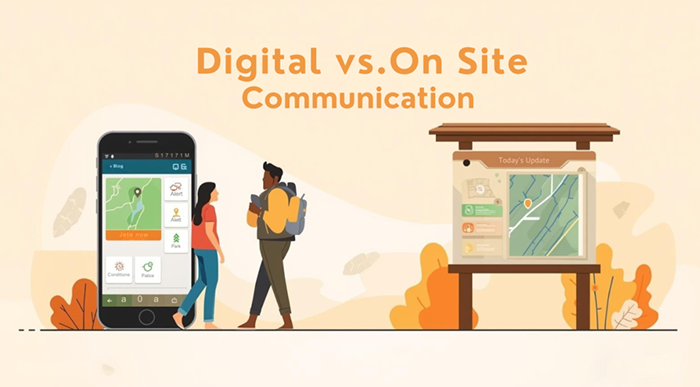
Digital vs. On Site Communication: Finding the Right Balance for Park Visitors
Visitors today enter outdoor spaces with a blend of expectations shaped by both technology and tradition. They plan trips using mobile apps, follow weather alerts on their phones, and search for real time updates before arriving. Yet once they step into the landscape, many still rely on trail signs, maps, kiosks, and conversations with staff to feel oriented and confident. Parks and recreation agencies see this hybrid behavior every day, as do wildlife agencies, outdoor recreation departments, and park districts that serve diverse groups of visitors with different levels of digital comfort. This creates a communication environment where neither digital tools nor on site methods can stand alone.
The shift toward blended communication raises an important question for agencies: how do you decide which messages belong on screens and which require physical presence or signage? Digital tools support rapid updates, broad reach, and pre visit preparation, but they cannot replace the contextual cues and emotional reassurance visitors experience through in person communication. On site communication excels at telling people what they need to know at the moment they need to know it, yet it cannot always reach visitors before they begin their journey. Finding the right balance requires understanding when each mode is most effective and how visitors transition between them.
Agencies that design communication as an integrated system rather than a set of isolated tools create more seamless visitor experiences. Digital platforms help visitors anticipate what to expect, while on site communication helps them interpret the environment in real time. Together, these channels support safer navigation, clearer expectations, and stronger trust in the agency’s ability to guide visitors through dynamic outdoor conditions.
Understanding the Role of Digital Communication in Visitor Experience
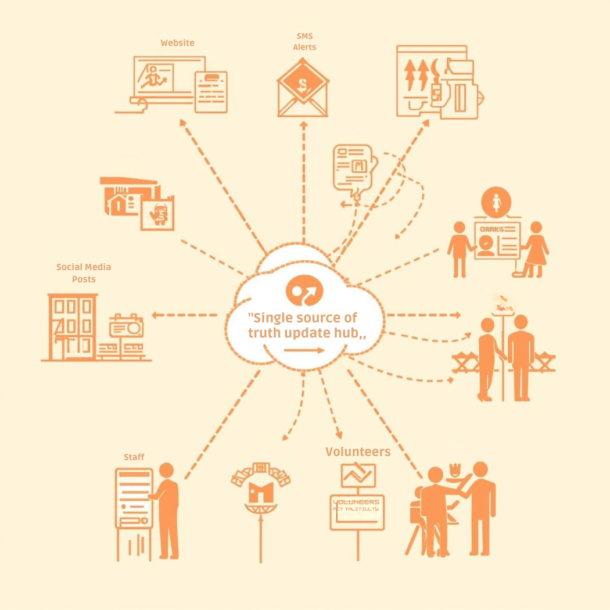 Digital communication shapes the visitor journey long before anyone sets foot on a trail, arrives at a wildlife viewing area, or joins a program at a park district facility. Parks and recreation agencies rely heavily on digital platforms to reduce uncertainty, support planning, and prepare visitors for seasonal conditions or operational changes. Wildlife agencies use digital tools to share safety guidance, migration timing, or sensitive habitat closures. Outdoor recreation departments depend on mobile maps and condition alerts that give visitors critical context for decision making. Park districts help families prepare for programs through digital calendars, registration systems, and event updates. The subsections below break down how these digital elements function across the full visitor lifecycle.
Digital Communication During Trip Planning
Trip planning is often where digital communication has the most influence. Before arrival, visitors search for trail difficulty, operating hours, parking conditions, weather, and rules they may need to know. Parks and recreation agencies benefit when this information is structured in a way that is simple, consistent, and easy to find. Wildlife agencies also rely on digital planning tools to help visitors understand species sensitivities, seasonal advisories, or temporary closures. When planning information is transparent and up to date, visitors arrive better prepared and more aligned with agency expectations.
Digital planning tools also set the tone for safety and stewardship. Outdoor recreation departments use condition reports, avalanche forecasts, or water level alerts to communicate risk proactively. Park districts may use digital notifications to remind families about equipment, arrival times, or accessibility accommodations. These tools help reduce confusion and build visitor confidence before the experience begins. They also reinforce your agency’s communication identity, establishing trust before guests ever step on site.
Real Time Alerts and Dynamic Updates
Many agencies rely on digital alerts to communicate rapidly evolving conditions. Parks and recreation agencies may use text alerts or app notifications to announce sudden closures, crowding levels, or weather shifts. Wildlife agencies use digital channels to warn visitors about heightened animal activity or sensitive habitat areas. Outdoor recreation departments provide real time terrain updates when snow, flooding, or trail washouts require immediate attention. Park districts also use quick digital messages to modify program schedules or facility availability.
Real time updates help reduce risk and prevent visitor frustration, but only when the alerts are concise, clear, and well timed. Visitors often skim messages, so agencies must prioritize critical information and minimize unnecessary detail. Digital alerts also work best when reinforced by on site communication. A digital closure notice should match what visitors see at the trailhead, and an advisory message should be reflected in volunteer guidance or staff instructions. When the digital and physical worlds align, visitors make safer and more informed decisions.
Enhancing Visitor Learning Through Digital Interpretation
Digital interpretation enriches the visitor experience by providing depth that signage alone cannot offer. Parks and recreation agencies often deploy QR codes, app based guides, or multimedia stories to explain natural features or cultural history. Wildlife agencies provide interpretive content that helps visitors understand animal behavior, ecological relationships, or conservation goals. Outdoor recreation departments use digital interpretation to explain geological formations, trail construction, or seasonal changes. Park districts may create digital learning tools for families participating in educational programs.
These tools help visitors engage on their own terms. Some may prefer audio descriptions, others may enjoy reading interpretive blurbs, and some may prefer short videos. Digital interpretation also avoids overcrowding signage with text, keeping the physical environment less cluttered while still offering rich educational experiences. When visitors feel curious, informed, and emotionally connected to the space, they make more thoughtful decisions and develop a stronger connection to stewardship values.
Reducing Visitor Friction Through Digital Convenience Tools
Digital convenience tools reduce barriers and make outdoor recreation more accessible for a wider audience. Parks and recreation agencies commonly use online reservation systems, parking availability dashboards, and virtual line tools during peak seasons. Wildlife agencies may use digital permits or timing systems to manage access to sensitive areas. Outdoor recreation departments rely on mobile friendly maps that allow visitors to download routes for offline use. Park districts integrate digital check in systems or reminders that streamline participation in community programs.
These systems help reduce stress for visitors, many of whom feel anxious about logistics rather than the outdoor experience itself. Digital convenience reduces friction by simplifying tasks such as finding parking, verifying a reservation, or understanding where to go next. Agencies that invest in these tools help visitors feel more confident, supported, and prepared. When logistics become easier, visitors have more mental space for enjoyment, safety, and stewardship.
From Trails to Tweets: Effective Communication Strategies for Parks, Recreation, Outdoors, and Wildlife Agencies
This article is part of our series on strategic communication for Parks, Recreation, Outdoors, and Wildlife agencies. To learn more and to see the parent article, which links to other content just like this, click the button below.
Why On Site Communication Remains Essential
Once visitors enter the landscape, their communication needs to shift. Digital preparedness may guide the beginning of their visit, but on site communication shapes the majority of their real time decisions. Clear signage, well placed maps, staff interaction, and volunteer guidance help visitors interpret conditions as they encounter them. Parks and recreation agencies rely on trailhead signage and wayfinding to orient visitors quickly. Wildlife agencies depend on physical signs to reinforce viewing distance, safety precautions, and conservation messages. Outdoor recreation departments use kiosks, markers, and gate notices to clarify hazards or reroute visitors. Park districts depend on on site communication to guide participants through programs, facilities, and events.
On site communication also addresses emotional needs. Many visitors feel more confident when they can visually confirm trail directions or speak with someone who understands the environment. Physical markers reduce uncertainty and help visitors reconnect with their surroundings after moments of confusion. Staff and volunteers provide reassurance, context, and nuances that signage alone cannot deliver.
Because on site communication is experienced in real time, it must be designed with clarity and simplicity. Visitors often make decisions while moving, and they rely on signage to anchor their understanding of where they are and what actions are expected. On site communication, therefore, remains a foundation of safe visitor navigation and a necessary partner to digital tools.
The Challenges of Over Reliance on Digital Tools
Although digital communication is powerful, over reliance on it can create vulnerabilities. Visitors may expect connectivity where none exists, which can lead to frustration or unsafe decision making. Parks and recreation agencies must anticipate these gaps and help visitors understand the limitations of digital navigation. Wildlife agencies face similar challenges when visitors assume they will receive alerts about animals in real time. Outdoor recreation departments often see visitors rely too heavily on app based maps that do not accurately reflect changing conditions. Park districts experience confusion when website updates are not reflected on physical signage at facilities.
Digital overload is another challenge. Too many alerts, too many platforms, or too many icons on a map can dilute important messages. Agencies benefit from simplifying digital content so that visitors can locate essential information quickly. Clear prioritization helps reduce confusion and ensures that critical updates stand out.
Perhaps the most significant concern is the loss of human connection. Digital tools cannot replicate the experience of speaking with a ranger, volunteer, or staff member who can answer questions, interpret nuance, and understand the visitor’s emotional state. Over reliance on digital systems can unintentionally detach visitors from the social fabric of outdoor spaces, which diminishes stewardship, trust, and long term engagement.
Designing On Site Signage That Complements Digital Messaging
Effective signage translates digital expectations into on the ground clarity. Visitors may arrive with a sense of where they are headed, but real environments rarely match the simplicity of a screen. Parks and recreation agencies often use trailhead boards, directional markers, and safety kiosks to confirm information visitors reviewed online. Wildlife agencies place signage in locations where behavior guidance becomes relevant, such as near nesting zones, riparian areas, or wildlife corridors. Outdoor recreation departments use on site communication to explain detours, trail closures, or seasonal hazards that may not have been updated in digital platforms. Park districts rely on facility signage to ensure visitors understand rules, hours, and program flow after they arrive.
On site signage is most effective when it reinforces, rather than duplicates, digital content. A map that matches the layout seen on a website builds trust and reduces cognitive friction. A closure described online feels legitimate when confirmed through a physical sign. Agencies must therefore align language, tone, symbols, and layout across channels. When digital and physical systems appear synchronized, visitors experience the park or natural area as coherent and well managed.
Signage must also adapt to the way visitors process information in motion. Unlike digital platforms, which are consumed before arrival or while stationary, on site signage competes with movement, distractions, and environmental conditions. Messages need adequate size, contrast, and placement to ensure readability. This is especially important for wildlife agencies and outdoor recreation departments, where safety information must be understood quickly. By approaching signage as part of an integrated communication ecosystem, agencies help visitors shift smoothly between digital instruction and real world navigation.
Where Digital Tools Excel and Where They Fall Short
 Digital tools are exceptionally strong at delivering information quickly, especially resources that change frequently. Parks and recreation agencies rely on apps, websites, and automated alerts to communicate parking congestion, weather impacts, trail availability, and event updates. Wildlife agencies use digital channels to broadcast sensitive habitat closures or migration activity that requires visitor awareness. Outdoor recreation departments depend on mobile maps and condition reports that can shift hourly based on snowpack, rainfall, or flood risk. Park districts use digital calendars to inform families about program adjustments, registration windows, or facility availability.
However, digital communication has inherent limitations. Connectivity gaps can disrupt even the most well designed systems, leaving visitors without critical information when they need it most. Some visitors may have older devices, limited data, or accessibility needs that make digital tools difficult to use. Others may arrive expecting real time updates but fail to read details closely, leading to incorrect assumptions or overconfidence. Agencies must anticipate these realities and design systems that work for the broadest possible audience.
The emotional dimension of communication also matters. A digital map may offer accurate information, but it cannot reassure a visitor who feels uncertain about whether they are on the right trail. A weather alert cannot replicate the calm confidence that comes from speaking with a trained volunteer or ranger. Digital tools excel in efficiency, but they cannot fully replace the interpretive, relational aspects of visitor support. Understanding these boundaries helps agencies strike a more thoughtful balance.
Ensuring Digital Accessibility and Equity Among Visitors
Digital communication is only effective when visitors can access and interpret it. Parks and recreation agencies often encounter visitors using older phones, limited data plans, or unfamiliar digital tools. Wildlife agencies serve audiences with diverse language needs that digital platforms must accommodate. Outdoor recreation departments also see gaps in digital literacy, especially among visitors who are new to outdoor activities or unfamiliar with mobile map systems. Park districts often host community members who rely on shared devices or public Wi Fi, which influences how readily they can use digital tools during their visit.
To reduce digital inequities, agencies must prioritize clarity, simplicity, and universal design. This includes using intuitive layouts, avoiding jargon, and ensuring that essential information loads quickly even with weak signals. Features such as offline downloadable maps, large text, audio descriptions, or multilingual options expand the accessibility of digital tools. These features support visitors who may not have reliable connectivity or who prefer visual or auditory communication styles. Accessibility strengthens safety, visitor autonomy, and overall satisfaction.
Digital equity also involves setting appropriate expectations. Agencies may need to communicate early that certain parks, refuges, or trail systems provide limited reception. Providing this information upfront helps visitors prepare accordingly and reduces the likelihood of over relying on digital tools. When agencies anticipate digital barriers and design inclusively, they build systems that welcome a wider range of visitors and demonstrate thoughtful stewardship of public resources.
Reducing Cognitive Load Through Communication Alignment
Cognitive load refers to the mental effort visitors must exert to understand their environment. When digital messages, maps, or alerts conflict with on site signage, visitors may experience confusion or doubt. Parks and recreation agencies frequently manage landscapes where multiple communication layers must work together. Wildlife agencies navigate environments where safety guidance depends on swift visitor comprehension. Outdoor recreation departments must ensure that trail maps, hazard notices, and condition updates match across platforms. Park districts depend on clear communication alignment during events where families must move quickly through busy spaces.
Reducing cognitive load begins with consistency. Visitors should see matching icons, terminology, and color schemes across digital and physical systems. When a trail is labeled as Moderate on an app, the signage should reflect the same category. When a wildlife closure appears on a website, the on site barrier should use identical language. This alignment helps visitors build mental models that remain coherent throughout their experience, which reduces hesitations and prevents decision making errors.
Agencies also reduce cognitive load by eliminating unnecessary noise. Too many signs, too many alerts, or overly detailed maps can overwhelm visitors, especially when they must make safety related decisions quickly. Clear hierarchy, restrained design, and focused messaging help visitors recognize what information requires immediate attention. By designing communication systems that reduce mental strain, agencies help visitors navigate confidently and safely.
When Digital Tools Should Lead and When On Site Messaging Should Lead
Digital and on site communication each serve essential but distinct purposes, and agencies must evaluate which one should guide visitors at different phases of their experience. Parks and recreation agencies often lean on digital platforms to handle pre visit planning, while on site messaging provides the real time direction needed for safe navigation. Wildlife agencies may rely on digital alerts during sensitive seasons but use physical signage to enforce on site expectations when proximity to animals creates immediate risks. Outdoor recreation departments depend on real time digital updates for weather and conditions, while park districts use digital systems to promote programs and on site communication to support participants during events.
The lead communication method should always reflect the degree of urgency, the complexity of the message, and how quickly conditions may shift. Digital channels excel at giving visitors context before arrival, while on site systems provide the final layer of confirmation that guides behavior. A thoughtful balance between the two ensures visitors remain informed, prepared, and safe throughout their experience.
Choosing the Right Level of Information for Each Channel
Digital channels are well suited for detailed, flexible, and optional information that visitors can review at their own pace. Parks and recreation agencies use websites and mobile tools to explain rules, planning steps, and interpretive content. Wildlife agencies share species information or conservation storytelling that benefits from longer explanations. Outdoor recreation departments rely on digital platforms to convey seasonal updates, equipment requirements, or detailed route descriptions. Park districts use digital communication to outline program expectations, registration instructions, and schedule adjustments.
On site communication, by contrast, must be concise because visitors often interpret it while moving or attending to their surroundings. Signs communicate only what visitors need to know in the moment, not the full narrative behind it. Staff and volunteers add another dimension by tailoring explanations to context, offering reassurance, and adjusting the level of detail based on visitor needs. Matching the depth of information to the channel prevents overload and strengthens comprehension.
Strategic Communication Support for Your Parks and Recreation Agency
 Stegmeier Consulting Group (SCG) supports agencies in building communication systems that integrate digital and on site elements into a cohesive, visitor centered approach. Many parks and recreation agencies rely on outdated or disconnected communication practices that leave visitors uncertain about where to go or what to expect. Wildlife agencies navigate complex messaging around safety and conservation, which requires consistent coordination between digital alerts and physical signage. Outdoor recreation departments face constantly shifting conditions where information must move quickly between platforms. Park districts manage high volume community programs where communication clarity directly affects participation and safety. People at these agencies often choose to partner with an external resource like SCG because a structured, objective perspective helps them strengthen communication systems that evolve as visitor needs change.
SCG works with agencies to assess current communication workflows, identify gaps, and establish practices that support consistency across all visitor touchpoints. This includes evaluating whether digital tools match on site realities, ensuring signage aligns with online language, and creating frameworks that help staff and volunteers deliver clear and reliable guidance. SCG also helps organizations develop cross channel strategies so digital expectations do not conflict with physical conditions. By grounding each recommendation in organizational realities and visitor behavior, SCG helps agencies improve preparedness, reduce confusion, and strengthen public trust.
Ultimately, SCG focuses on creating systems that last. Rather than offering one time fixes, SCG helps agencies design communication models that can adapt to new audiences, emerging technologies, and changing environmental conditions. When digital and on site tools work together seamlessly, agencies can communicate more effectively and support safer, more inclusive outdoor experiences.
Conclusion
Digital and on site communication each play essential roles in shaping visitor experience. Digital platforms set expectations, provide planning information, and deliver rapid updates, while on site communication helps visitors navigate real conditions, interpret complex environments, and feel supported throughout their visit. Across parks and recreation agencies, wildlife agencies, outdoor recreation departments, and park districts, the challenge is not choosing between digital and physical tools, but determining how to combine them in ways that reinforce clarity and confidence. Visitors rely on both systems at different moments, and each channel influences how they perceive safety, accessibility, and the overall quality of their experience.
A balanced communication system accounts for the limitations of each method. Digital tools may fail in areas with poor reception, while signage can become outdated or overlooked. Staff and volunteers fill essential gaps by providing human interpretation that bridges planning and real time decision making. When agencies view digital and physical communication as complementary rather than competing elements, they create a more resilient and adaptable information environment. This approach benefits both first time visitors and experienced users who depend on clear, reliable guidance.
By designing communication systems that align across platforms, agencies can reduce confusion, improve safety outcomes, and support a positive visitor journey from start to finish. As the needs of visitors evolve and technologies expand, maintaining this balance becomes even more important. Thoughtfully integrating digital and on site communication helps agencies uphold their mission while providing meaningful, accessible experiences for every visitor.
SCG’s Strategic Approach to Communication Systems
Align your agency’s messaging, processes, and public engagement strategies
Agencies that communicate effectively build stronger trust with staff, stakeholders, and the public. Whether you are implementing QR code systems, improving internal communication workflows, or strengthening agency wide alignment, SCG can help you develop a communication system that supports consistent decision making and long term organizational success. Use the form below to connect with our team and explore how a strategic communication framework can elevate your agency’s impact.