
Weathering the Storm: Communicating Park Closures and Emergency Alerts
Outdoor environments are dynamic spaces where weather, seasonal conditions, and unexpected events influence safety and access. Parks and recreation agencies, wildlife agencies, outdoor recreation departments, and park districts rely on clear and timely communication to protect visitors and staff during these moments. When storms develop quickly, when smoke drifts into a region, when flooding affects trails, or when severe winter conditions threaten safety, strong communication becomes just as important as strong infrastructure.
Visitors expect real time information that helps them make safe choices. They also expect communication that is accurate, calm, and coordinated across channels. When messages conflict or arrive too late, confusion spreads quickly. When messages are clear and consistent, agencies reinforce trust and demonstrate preparedness. Outdoor organizations operate in environments where uncertainty is unavoidable, so communication systems must be built to function under pressure.
The ability to communicate park closures and emergency alerts effectively is not only a logistical task. It is an essential part of public safety. It also shapes how communities perceive the professionalism, readiness, and responsiveness of the agencies that steward their parks and outdoor recreation spaces.
Understanding Visitor Behavior During Weather Events and Emergencies
 Visitors behave differently under stress, especially when time, visibility, or environmental cues create pressure. Agencies that understand these behavioral tendencies can design communication that aligns with how visitors actually respond in weather related situations.
Many visitors underestimate risk. A fast moving storm may feel less dangerous to someone who has only seen mild weather in the past. Wildlife agencies frequently observe this pattern during fire season when smoke seems distant but conditions can shift rapidly. Outdoor recreation departments see similar patterns during winter when visitors believe a familiar trail is safe even when ice has formed in shaded areas. Park districts also face situations where families continue outdoor activities even as winds increase or lightning strikes begin nearby.
Stress reduces comprehension. When visitors feel urgency, they may skim messages rather than read them carefully. They may overlook important qualifiers or ignore instructions that require extra effort. A message that is too complex at the wrong moment often leads to misinterpretation.
Visitors also look for social cues. If others remain in the area, they may assume the situation is not serious. If only one platform displays an alert, they may doubt its accuracy. Agencies must therefore provide clear, repeated, and consistent alerts across channels so visitors receive the same message regardless of how they access information.
Recognizing these tendencies helps agencies design emergency communication that is direct, visible, and easy to act on during stressful moments.
From Trails to Tweets: Effective Communication Strategies for Parks, Recreation, Outdoors, and Wildlife Agencies
This article is part of our series on strategic communication for Parks, Recreation, Outdoors, and Wildlife agencies. To learn more and to see the parent article, which links to other content just like this, click the button below.
Designing a Communication System That Withstands Pressure
Emergency communication requires systems that function even when conditions change rapidly. Parks and recreation agencies should have clear protocols for how alerts are issued, who approves them, where they are posted, and how updates are handled. Wildlife agencies often build layered communication systems so alerts reach visitors at entrances, trailheads, digital platforms, and staffed locations simultaneously. Outdoor recreation departments may adopt predetermined thresholds for when to issue closure notices, which helps reduce confusion during unpredictable storms or changing winter conditions. Park districts frequently prepare templates for emergency messages so staff can issue alerts quickly without having to create new language under pressure.
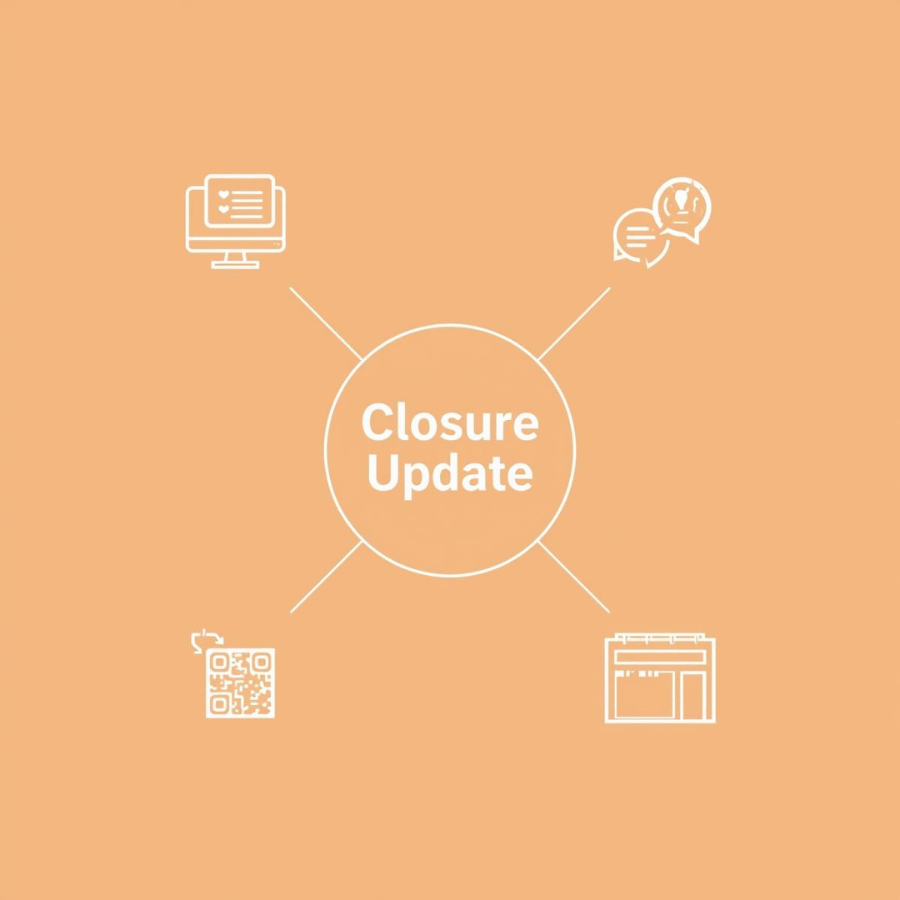
A resilient communication system includes redundancy. Digital platforms may go down during severe weather. Staff may be occupied with safety tasks. Roads may close, preventing sign updates. Agencies must therefore use multiple aligned channels, such as text alerts, physical signs, QR code updates, social media posts, radio messages, visitor center announcements, and automated website banners. A visitor who misses one channel should still receive the alert through another.
Communication systems must also support rapid escalation and de-escalation. Conditions evolve. A storm may intensify faster than expected or dissipate sooner than forecasted. A trail closure may be required immediately after a fallen tree blocks access. An avalanche advisory may downgrade within hours. Agencies must prepare clear wording for each phase so transitions feel smooth rather than abrupt.
When communication systems can withstand pressure, agencies protect both visitor safety and organizational credibility.
Why Clarity and Calm Tone Matter During Emergency Messaging
During emergencies, messaging must reduce anxiety rather than increase it. When alerts use urgent but grounded language, visitors understand the seriousness of the situation without feeling overwhelmed. Parks and recreation agencies often find that messages which sound overly alarming create confusion or distrust. Wildlife agencies sometimes encounter the opposite problem, where messages that sound too technical or understated fail to motivate visitors to leave an area quickly. Outdoor recreation departments need a tone that conveys authority without sounding punitive, since visitors may already feel uncertain or stressed. Park districts benefit from supportive language that acknowledges families and helps them understand what will happen next.
Clarity also prevents escalation. A message that simply states “Park closed” does not explain why, for how long, or what visitors should do instead. Without context, people may assume the agency is overreacting or being overly cautious. A message that explains “The park is closed due to lightning activity in the surrounding area. Staff will reassess conditions in thirty minutes and provide an update” sets expectations and reduces confusion.
The tone should remain calm. Emergency situations already carry emotional weight. Visitors respond better to messages that feel measured and well prepared. This calmness reassures the public that the agency is not panicked and that staff are handling the situation responsibly.
Strengthening Real Time Communication Across Digital Platforms
Digital communication plays a central role in emergency alerts. Visitors rely on mobile phones for real time updates whether they are at home planning a visit or already on the trail. Parks and recreation agencies must ensure that digital information is easy to find and updated quickly. Wildlife agencies often place alerts prominently on homepage banners so visitors cannot miss critical information. Outdoor recreation departments may use automated feeds to push updates to social media and websites simultaneously. Park districts frequently rely on email and SMS notifications during closures so families receive information immediately.
Real time digital communication also reduces the burden on staff. When accurate information is available online, fewer visitors call ranger stations or visitor centers for details. It also increases consistency. A well managed digital system ensures that the message a visitor sees on social media matches the one posted on the agency website, the one displayed at the park entrance, and the one staff communicate in person.
To function effectively, digital communication must be accessible and mobile friendly. Many visitors check updates on their phones during stressful situations, so alerts must be easy to read and free of unnecessary text. Links should go directly to the essential information rather than requiring multiple clicks. Agencies that prioritize digital clarity reduce the likelihood of misinterpretation during emergencies
Communicating the Rationale Behind Closures
When agencies announce closures without context, visitors often assume the decision is excessive or inconvenient rather than necessary. Parks and recreation agencies, wildlife agencies, outdoor recreation departments, and park districts reduce frustration significantly when they explain why closures occur and how those decisions protect visitors, wildlife, and staff.
Visitors want to understand the reasoning behind sudden changes. When storms approach, when ice forms unexpectedly, or when wildfire smoke drifts into the region, visitors may not see the full extent of the threat. Outdoor environments also contain risks that feel invisible to those unfamiliar with the terrain. A trail may look passable until rising water undermines its stability. Lightning may not appear close enough to concern families who are unfamiliar with local protocols. Wildlife agencies face this regularly during fire season or flood events when conditions can change within minutes, and visitors may misinterpret a temporary closure as overly cautious.
Explaining the rationale behind decisions gives visitors a clearer sense of what they cannot see. It also reinforces that the agency is acting responsibly. By articulating hazard thresholds, environmental indicators, or staffing constraints, agencies help visitors understand that closures are grounded in preparedness rather than arbitrary judgment.
When visitors understand why closures occur, they are more likely to accept them, trust the agency, and adjust their plans with less frustration.
Ensuring Physical Signage Supports Emergency Messaging
Physical signage remains one of the most critical tools during emergency closures because it reaches visitors who arrive after digital alerts have been issued. Parks and recreation agencies rely on visible, well placed signs to ensure visitors receive consistent guidance regardless of how they access information. Wildlife agencies often post hazard warnings, trail closure notices, and area restriction maps near entrances and decision points so visitors do not accidentally enter unsafe areas. Outdoor recreation departments use bold, simple signage during severe weather to capture attention in high stress environments. Park districts frequently revise their signage layouts seasonally to account for changing recreation patterns and facility hours.
Signage must be clear and readable under difficult conditions. Heavy rain, low visibility, strong winds, snow, or smoke can make signs harder to interpret. Agencies benefit from high contrast colors, large lettering, and straightforward phrases that deliver essential information quickly. Materials must also withstand extreme weather so signs remain intact and legible when visitors need them most.
Placement is equally important. Signs at entrances notify visitors early. Signs at junctions reinforce boundaries. Signs near facilities, campgrounds, or restrooms remind visitors who may not follow digital updates closely. Effective emergency signage works as a network rather than isolated pieces, offering repeated confirmation that the message is accurate and current.
When physical signs align with digital messaging, visitors experience clarity instead of contradiction.
Supporting Visitors Who Arrive After Alerts Are Issued
Not every visitor receives digital alerts before arriving at a site. Some may have limited connectivity, outdated smartphones, or no access to agency communication platforms. Others may have started their journey before conditions changed. Agencies therefore need communication plans tailored specifically for visitors who encounter closures unexpectedly.
Outdoor recreation departments often station staff at entrances during major weather events to provide real time guidance and suggest safe alternatives. Wildlife agencies sometimes post staffed checkpoints in sensitive areas during wildfire or flood activity so visitors can receive explanations directly. Park districts may position program staff or volunteers at building entrances during closures to help families understand next steps.
Tone matters. Visitors who arrive unaware of a closure may feel inconvenienced, disappointed, or upset. Clear, empathetic communication prevents tension from escalating. Providing simple explanations, offering alternative recreational options, or directing visitors to updated digital information helps them regain a sense of control.
Supporting these visitors also reduces misinformation. When people leave with accurate details rather than assumptions, they are less likely to spread confusion in their communities or on social media.
Managing Conflicting Information Across Channels
Conflicting information is one of the fastest ways to erode public trust during emergencies. When visitors see one message on social media, another on the website, and a third on signage, they begin to question the accuracy of all channels. Even minor inconsistencies can lead to confusion.
Parks and recreation agencies prevent this by coordinating updates through a single internal workflow. Wildlife agencies may designate one communication lead during emergencies to ensure all platforms match. Outdoor recreation departments may rely on automated systems that publish updates simultaneously across multiple channels. Park districts often establish tiered alert systems that define which information must appear on which platforms and at what speed.
Consistency should extend to tone, terminology, and time references. Messages that differ slightly in phrasing can appear contradictory. Visitors need to see identical information no matter where they look. When all communication channels reinforce the same message, confusion decreases and compliance increases.
Managing conflicting information is not only a logistical task. It is a strategic decision that shapes whether visitors trust the agency during stressful circumstances.
Supporting Multilingual and Multicultural Communities During Storm-Related Closures
 Outdoor spaces serve diverse communities with varying levels of English proficiency, cultural expectations, and familiarity with outdoor risk. Wildlife agencies often work with visitors who may be new to local fire conditions or weather patterns. Parks and recreation agencies welcome multilingual families who rely on visuals more than text. Park districts serve communities where emergency communication norms differ from those used in outdoor settings. Outdoor recreation departments often host international visitors during peak tourism seasons.
To ensure equitable safety outcomes, agencies must design emergency messaging that reaches all audiences. This includes using multilingual signage in high traffic areas, incorporating universal pictograms into closure notices, and simplifying digital alerts so translation tools can interpret them accurately. Some agencies partner with local community groups to translate emergency updates quickly or to distribute alerts through culturally relevant channels.
Equitable emergency communication signals respect. When visitors see that closure notices include their languages or cultural considerations, they interpret the agency as one that values inclusivity and safety for all. This strengthens community trust during challenging moments.
Communicating During Rapidly Changing Conditions
Weather shifts faster than most communication systems are naturally built to handle. Parks and recreation agencies, wildlife agencies, outdoor recreation departments, and park districts must prepare for scenarios where visibility drops in minutes, storm cells move unexpectedly, water levels rise faster than predicted, or freezing conditions develop during active visitation. Communicating effectively during these moments requires a system that is steady, flexible, and grounded in both clarity and composure. The public looks to agencies for direction when conditions are unstable, and communication must rise to meet that responsibility.
Agencies that excel during rapidly changing conditions combine real time monitoring, streamlined workflows, and transparent messaging. These elements help visitors make safe decisions even when the environment feels unpredictable.
Monitoring Tools That Support Real Time Decisions
Real time communication begins with real time awareness. Agencies cannot issue timely alerts if they are unaware of environmental changes until they become severe. Wildlife agencies often rely on wind models, satellite fire data, and lightning detection networks to predict shifts that could affect visitor safety. Parks and recreation agencies use weather radar and flood gauges to anticipate trail or facility impacts. Outdoor recreation departments monitor temperature, ice formation, avalanche forecasts, and trail moisture levels. Park districts frequently watch hyper local weather feeds so staff can prepare playgrounds, pools, or sports fields for fast changing conditions.
These monitoring tools not only inform agency staff. They support communication timing, tone, and frequency. When staff see conditions changing rapidly, they can begin pre alert communication so visitors are not caught off guard. Monitoring tools therefore become communication tools, guiding when to issue early warnings, when to escalate messaging, and when closures must occur.
Agencies that embed real time monitoring into their communication workflow respond faster and with greater accuracy.
Escalation and De Escalation Frameworks for Emergency Messaging
Rapidly changing conditions require a communication framework that makes escalation smooth rather than chaotic. Visitors must understand where conditions currently stand and what might occur next. Agencies benefit from creating clear stages of alerts that align with observable conditions. Wildlife agencies often follow tiered fire risk systems that move gradually from advisory to restriction. Parks and recreation agencies use color coded or numbered weather alert systems that visitors learn over time. Outdoor recreation departments apply step based winter protocols that define when trails become unsafe, when facilities must close, and when visitors should exit the area. Park districts may adapt these frameworks for community programs so families understand whether delays, cancellations, or evacuations are possible.
De escalation is just as important. Visitors want to know when it is safe to return to an area or when programs can resume. Without clear de escalation messages, visitors may assume conditions remain hazardous longer than necessary. Agencies can outline how they evaluate safety, what factors determine reopening, and how frequently updates will occur.
Consistent escalation and de-escalation structures help visitors interpret conditions accurately even during uncertainty.
Communicating Uncertainty Without Creating Panic
Conditions do not always move from safe to unsafe in a linear way. Storms stall, then intensify. Winds shift. Water levels rise unpredictably. Wildlife activity can change with little warning. Visitors want information, but not every update contains certainty.
Agencies must therefore learn to communicate uncertainty effectively. Parks and recreation organizations often see that transparency about unknowns increases trust. Phrases such as “Staff are monitoring conditions closely and will provide an update soon” offer clarity without overstating knowledge. Wildlife agencies may explain that smoke directions are difficult to forecast in the early stages of a fire event. Outdoor recreation departments might emphasize that ice conditions can evolve quickly and that teams are assessing the situation. Park districts may tell families that inspectors are evaluating storm impacts on playgrounds or sports fields.
This approach reduces panic. It replaces rumor with grounded information. Visitors appreciate honesty, especially when safety is involved. By acknowledging uncertainty while maintaining calm tone, agencies guide visitors through unstable conditions with confidence.
Synchronizing Staff Communication During Rapid Shifts
Internal communication becomes even more important during fast moving conditions. Staff must share the same information and convey the same instructions to visitors. When internal teams receive uneven updates, frontline staff may unintentionally communicate outdated guidance, which confuses visitors and increases risk.
Synchronization begins with predictable update intervals. Agencies can designate specific moments when internal teams receive briefings via radio, text, shared dashboards, or quick huddles. Wildlife agencies often coordinate field teams and visitor center staff simultaneously during weather related alerts. Outdoor recreation departments rely on unified updates so rangers, maintenance crews, and entrance staff communicate with one voice. Park districts frequently use centralized communication groups so all staff supporting families communicate the same timeline for closures or program shifts.
When internal communication is aligned, external communication becomes far more consistent and credible.
Designing Messages That Support Rapid Decision Making
During rapidly changing conditions, visitors do not have time to interpret long or complex messages. They need concise, actionable information that helps them understand what to do next. Parks and recreation agencies must prioritize clarity over detail during the earliest stages of an alert. Wildlife agencies refine their messages to highlight immediate behavior expectations. Outdoor recreation departments simplify instructions to key steps such as leave the area, avoid a specific route, or wait for updates. Park districts tailor instructions so families understand whether to seek shelter, leave a facility, or relocate to another location.
Supporting rapid decision making requires removing unnecessary language and focusing on the essential message. A visitor should understand the alert within seconds, even if they are distracted, stressed, or unfamiliar with the environment. When communication supports quick action, agencies reduce both risk and confusion.
Using Multiple Channels to Reinforce Fast Changing Information
Redundancy is critical when conditions evolve quickly. Visitors may miss alerts sent through one platform, especially during stressful situations. Parks and recreation agencies therefore use layered communication strategies that include digital tools, onsite signage, loudspeaker announcements, staff communication, and QR code updates. Wildlife agencies often rely on push notifications supported by large format warnings at trailheads. Outdoor recreation departments use radio communication in remote areas where cell reception drops. Park districts may combine SMS alerts with building signage, phone trees, or social media announcements.
Each channel reinforces the others. The more rapidly conditions shift, the more important it becomes that visitors encounter the same information repeatedly. Repetition helps prevent misinterpretation and ensures that visitors who enter the area late still receive timely guidance.
Using Pre-Season Education to Reduce Panic and Confusion
Many emergencies unfold more smoothly when visitors understand seasonal risks before they occur. Pre-season education builds familiarity with safety protocols so visitors feel more confident navigating unexpected closures. Parks and recreation agencies often release early-season guidance explaining what to expect during summer storms or wildfire season. Wildlife agencies may share educational materials about animal behavior during extreme heat or drought, helping visitors understand why areas might close temporarily. Outdoor recreation departments publish early winter safety reminders so trail users know what conditions to anticipate. Park districts share information ahead of severe weather months to help families make informed decisions about programs and outdoor activities.
Pre-season education reduces panic by creating a sense of preparedness. Visitors who understand risks take alerts more seriously. They also respond more calmly when closures occur because they have already been introduced to the logic behind agency decisions. Identifying hazards early helps first-time visitors feel more informed and removes the element of surprise that often fuels frustration.
Agencies can use multiple channels to share pre-season education, including social media posts, visitor center materials, email newsletters, and QR codes placed in high traffic areas. When visitors encounter consistent guidance across platforms, they internalize expectations more easily.
Education is not only about rules. It is about equipping the public with the knowledge that helps them remain safe and confident in outdoor settings.
Supporting Staff During High-Stress Situations
Staff are essential to emergency communication. Their interactions with visitors often determine whether a closure feels orderly or chaotic. Parks and recreation agencies rely on skilled staff during storms to redirect visitors, answer questions, and manage emotions. Wildlife agencies depend on field teams who must balance safety responsibilities with visitor reassurance. Outdoor recreation departments rely on maintenance crews and rangers who work outdoors in hazardous conditions. Park districts often depend on frontline employees supporting families during program disruptions.
Supporting staff begins with providing clear protocols. When team members understand their roles, responsibilities, and messaging expectations, they communicate with more confidence. Agencies benefit from training that emphasizes calm tone, de escalation techniques, and clarity in explaining the reasons behind closures. Staff who feel prepared are more effective and less overwhelmed when emergencies unfold.
Communication tools also support staff. Radios, mobile apps, shared digital dashboards, and prewritten scripts all reduce the burden placed on employees during high stress periods. Agencies should also ensure staff have access to real time updates so they are not improvising or relying on outdated information.
Staff morale plays a significant role in visitor perception. Visitors interpret confusion or stress from staff as a sign the agency is not managing the situation well. When staff communicate clearly and confidently, visitors feel reassured even during disruptive events.
Supporting staff is an essential part of supporting the public.
The Role of Visitor Preparedness in Emergency Response
Visitors contribute significantly to whether emergency response efforts run smoothly. Agencies cannot control visitor behavior entirely, but they can influence it through proactive communication. Wildlife agencies have long relied on visitor preparedness to reduce risk during fire season or wildlife activity peaks. Parks and recreation agencies encourage preparedness during monsoon season or when high winds threaten tree stability. Outdoor recreation departments promote preparedness during winter when storms can leave backcountry users stranded. Park districts support preparedness by informing families about what to bring, what to expect, and how to respond to changing conditions.
Visitor preparedness begins with clear expectations. If agencies explain which items visitors should carry, what conditions to anticipate, and how to interpret risk levels, visitors can make safer decisions. Agencies also benefit from communicating the limits of their response capabilities. For example, explaining that rescue operations may be delayed during storms encourages visitors to take warnings seriously.
Preparedness also reduces the emotional intensity of emergencies. Visitors who understand the steps they should take feel less helpless during closure situations. They know where to look for updates, how to adjust their plans, and when to leave an area safely.
Effective emergency response is a partnership between agencies and visitors. Communication makes that partnership possible.
How Agencies Can Communicate After the Storm Has Passed
Communication does not end when the weather clears. Parks and recreation agencies need strategies for reopening updates, damage assessments, and restoring public confidence. Wildlife agencies often need to announce ongoing risks such as unstable soil after floods or lingering smoke after wildfires. Outdoor recreation departments must determine which trails or facilities remain unsafe. Park districts communicate revised program schedules, cleanup timelines, and repair plans.
Post storm communication should focus on clarity, safety, and the steps involved in reopening. Visitors appreciate knowing why certain areas remain closed even when the weather appears calm. Agencies can also use this time to explain what staff accomplished during the closure period, such as debris removal, infrastructure inspection, or wildlife monitoring.
Providing realistic timelines prevents repeated inquiries and reduces frustration. When agencies explain that assessments take time or that crews must prioritize heavily damaged spaces, visitors understand that reopening is a process rather than an immediate switch back to normal operations.
Clear post storm communication strengthens the public’s trust and demonstrates that the agency is managing recovery thoughtfully.
Communicating With Vulnerable or Isolated Visitors
Certain visitors face greater risks during weather related emergencies, and agencies must design communication that acknowledges these vulnerabilities. Parks and recreation agencies often serve older adults, individuals with mobility challenges, or families with very young children who may have difficulty evacuating quickly or interpreting complex updates. Wildlife agencies may oversee remote areas where visitors lack cell reception and cannot receive real time alerts. Outdoor recreation departments frequently encounter hikers, anglers, or backcountry users who become isolated during storms. Park districts work with community members who may not have reliable access to digital communication tools.
Inclusive emergency communication begins with anticipating barriers. Agencies can help vulnerable visitors by simplifying critical messages, offering multiple communication formats, and ensuring that essential information appears at predictable intervals along trails, in parking lots, and at facility entrances. Physical warnings placed in remote or low connectivity areas ensure that isolated visitors receive timely updates even when digital tools fail.
Some agencies use color coded alert systems so visitors can interpret risk levels quickly. Others offer QR codes that store emergency procedures offline once scanned. Park districts may post protective shelter information or evacuation routes in family areas. Wildlife agencies sometimes add multilingual or symbol based signage for visitors who rely more on visuals than text.
Supporting vulnerable or isolated visitors demonstrates a commitment to equitable safety. When all visitors receive information they can understand and act on, the overall emergency response becomes stronger.
Coordinating Messaging Across Multiple Agencies
Weather related emergencies often involve more than one organization. Local governments, fire departments, wildlife agencies, county emergency operations centers, and volunteer rescue teams may all play roles in assessing conditions and communicating public safety information. When these groups send messages independently without coordination, the result is conflicting or confusing guidance.
Parks and recreation agencies benefit from establishing cross agency communication protocols long before emergencies occur. Shared terminology, consistent definitions of risk levels, and agreed upon thresholds for closures help ensure that the public receives unified messages. Wildlife agencies often participate in regional fire coordination meetings to synchronize alerts about smoke, animal movement, and habitat closures. Outdoor recreation departments work with highway authorities to align trail closures with road advisories, which prevents visitors from entering unsafe travel corridors. Park districts coordinate with municipal emergency teams to ensure that facility closures match city level safety directives.
Consistency strengthens credibility. When multiple agencies echo the same information, visitors trust it more readily. Unified communication also reduces the burden on each individual organization, since partners reinforce messages across their own channels.
Coordination is not only practical. It is an essential component of cohesive public safety communication.
Handling Social Media Dynamics During Emergencies
Social media can amplify clarity or confusion depending on how it is used during emergencies. Parks and recreation agencies see rapid engagement during storms, which can help spread essential updates. Wildlife agencies often encounter misinformation online, especially during fire season when speculation spreads faster than verified updates. Outdoor recreation departments observe how quickly trail closure posts get shared, but they also see outdated posts circulate long after conditions change. Park districts frequently deal with emotional reactions from families when programs are canceled suddenly.
To manage these dynamics, agencies must approach social media with strategy and structure. Information should be concise, verified, and repeated at scheduled intervals so outdated posts do not overshadow newer alerts. Staff should monitor comments for recurring questions or misunderstandings and respond with public clarifications when necessary. When misinformation begins circulating, a direct but calm post explaining the correct information helps prevent escalation.
Tone matters greatly on social platforms. Visitors interpret communication differently when messages appear in social feeds rather than on websites or signs. A supportive and steady tone reduces anxiety. Agencies should avoid humor, sarcasm, or overly casual phrasing during emergencies, as it may undermine the seriousness of the situation.
Clear, intentional social media communication turns a high risk channel into a high value one.
Maintaining Equity in Emergency Communication
Different communities interact with emergency communication systems in different ways. Some rely heavily on digital alerts. Others depend on physical signage. Some speak languages other than English. Others may mistrust government messaging due to past experiences. Parks and recreation agencies that prioritize equitable communication reduce gaps in who receives timely, accurate information.
Multilingual messaging is one form of equity, but it is not the only one. Wildlife agencies often consider cultural differences in how visitors interpret risk. Outdoor recreation departments may evaluate whether trail closures disproportionately affect certain user groups and adjust communication methods accordingly. Park districts may focus on accessibility, ensuring that emergency information reaches residents who do not use smartphones regularly.
Equity also involves timing. Digital alerts sent late at night may fail to reach individuals whose devices are set to quiet hours. Silence during culturally significant holidays may unintentionally exclude communities that rely on real time updates. Agencies should consider whether the timing of communication supports all visitors, not just those with standard schedules or high digital literacy.
An equitable approach ensures that all community members have the same opportunity to stay safe during emergencies.
Balancing Speed and Accuracy in Crisis Communication
Emergencies pressure agencies to act quickly, yet accuracy remains essential. Visitors depend on precise details to make safe decisions. Too little information creates confusion. Too much unverified detail creates panic or misinterpretation. Parks and recreation agencies must strike a balance between the urgency of fast alerts and the responsibility of communicating only what is confirmed. Wildlife agencies experience this tension during fire season when rumors of closures spread rapidly. Outdoor recreation departments face similar challenges when ice, flash floods, or falling trees create hazards that evolve faster than verification processes. Park districts experience pressure to communicate immediately during facility closures while still confirming the root cause.
A tiered communication strategy helps agencies manage this balance. Initial alerts can be brief, factual, and focused on immediate action. Subsequent updates can provide context, timelines, and reasoning once verification is complete. This approach keeps visitors informed without rushing incomplete information.
When agencies acknowledge uncertainty openly, they reinforce trust. Visitors appreciate statements like “Staff are assessing conditions and will provide an update shortly.” Silence or speculation increases confusion, while transparency strengthens credibility.
Strategic Communication Support for Your Parks and Recreation Agency
 Effective emergency communication requires structure, coordination, and a system that performs reliably under stress. Stegmeier Consulting Group (SCG) helps parks and recreation agencies, wildlife agencies, outdoor recreation departments, and park districts build communication systems that keep visitors informed, reduce confusion, and strengthen trust during storms, closures, and rapidly evolving situations. People at these agencies often choose to partner with an external resource like SCG when they want clearer workflows, more consistent messaging, or greater alignment across staff and digital platforms.
SCG supports agencies in evaluating their entire communication ecosystem, including signage, alerts, digital tools, and internal decision making processes. This comprehensive view helps identify where breakdowns occur and how messages can be clarified or streamlined. SCG also assists agencies in designing communication protocols that function even during high pressure moments, ensuring that alerts remain timely, accessible, and consistent across all channels.
By focusing on alignment and preparedness rather than quick fixes, SCG helps organizations strengthen both everyday communication and emergency response. Whether an agency is refining closure workflows, improving staff readiness, or enhancing public safety messaging, SCG provides strategic support that improves clarity and builds long term trust with the community.
Conclusion
Weather related closures and emergency alerts are unavoidable in outdoor environments, yet the public’s experience during these moments depends largely on how agencies communicate. Parks and recreation agencies, wildlife agencies, outdoor recreation departments, and park districts can reduce confusion and frustration when they design communication systems that anticipate visitor needs, operate consistently, and support rapid updates during fast changing events.
Visitors want information they can trust. They want messages that explain what is happening, why it matters, and what they should do next. When communication is clear, calm, visible, and aligned across platforms, agencies strengthen credibility even while closing facilities or restricting access. When communication falls short, small storms can create outsized frustration.
Emergency communication is not only about managing risk. It is about maintaining a positive relationship with the public during moments of uncertainty. Agencies that communicate effectively transform closures from disruptions into demonstrations of preparedness and professionalism. Over time, they build communities that understand agency decisions and feel confident navigating outdoor spaces safely, even when conditions shift without warning.
SCG’s Strategic Approach to Communication Systems
Align your agency’s messaging, processes, and public engagement strategies
Agencies that communicate effectively build stronger trust with staff, stakeholders, and the public. Whether you are implementing QR code systems, improving internal communication workflows, or strengthening agency wide alignment, SCG can help you develop a communication system that supports consistent decision making and long term organizational success. Use the form below to connect with our team and explore how a strategic communication framework can elevate your agency’s impact.