
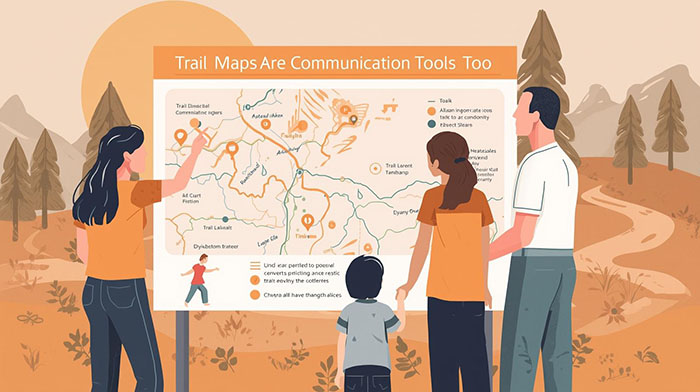
Trail Maps Are Communication Tools Too: Designing Navigation That Reduces Confusion and Risk
Trail maps often appear simple at first glance. They show paths, distances, elevation, landmarks, access points, and surrounding geography. But beneath the surface, a trail map is one of the most influential communication tools available to parks and recreation agencies, wildlife agencies, outdoor recreation departments, and park districts. These maps guide movement, influence decision making, shape expectations, and help visitors understand their own abilities in relation to a physical landscape.
Yet many organizations treat trail maps as logistical resources rather than communication systems. When maps are unclear, outdated, or visually overwhelming, visitors become confused. Confusion in outdoor settings leads to poor route choices, avoidable risk, and unnecessary strain on agency staff. Conversely, when a map is intuitive and thoughtfully designed, visitors navigate with confidence, interpret trail difficulty accurately, and make safer choices. They also experience more enjoyment, which strengthens overall satisfaction with the site.
The purpose of this article is to demonstrate how trail map design is inseparable from communication strategy. Maps are not only navigation tools. They teach visitors how to move across the environment, how to interpret terrain, and how to anticipate risk. They also reveal how agencies prioritize safety, equity, stewardship, and accessibility. By approaching trail maps as active communication tools rather than static images, agencies can reduce confusion, improve safety outcomes, and cultivate trust with the public.
Navigation as a Form of Communication
 Navigation is fundamentally a communication exercise. Visitors interpret symbols, colors, distances, and directional cues to form an understanding of the landscape. They then use that understanding to plan routes, respond to unexpected encounters, and adjust their pace. If a map communicates poorly, visitors receive an inaccurate or incomplete mental model of the environment. That misunderstanding can result in off-trail wandering, unintended entry into sensitive habitat, prolonged exposure to extreme conditions, or reliance on rescue resources.
Parks and recreation agencies often observe that navigation breakdowns stem from assumptions about what visitors already know. Frequent trail users may immediately recognize contour lines, gradient changes, mileage clusters, or emergency markers. First time visitors, families, and tourists may not. Wildlife agencies note that even experienced hikers sometimes misinterpret distances when the map scale is unclear or when terrain complexities are understated. Small oversights in map design can create large consequences in the field.
Outdoor recreation departments also recognize that visitors increasingly rely on digital navigation. However, digital tools cannot replace physical communication. Cell coverage may fail. Batteries die. Apps use outdated data. When agencies design maps that function cohesively across printed signs, brochures, and digital platforms, they create a system that supports consistency regardless of circumstance.
Trail maps also shape emotional responses. A visitor who feels oriented and confident tends to explore calmly and responsibly. A visitor who feels uncertain or overwhelmed may make quicker decisions with less situational awareness. Communication through maps is therefore not only informational but psychological. The tone, clarity, and structure of the map influence how safe visitors feel.
From Trails to Tweets: Effective Communication Strategies for Parks, Recreation, Outdoors, and Wildlife Agencies
This article is part of our series on strategic communication for Parks, Recreation, Outdoors, and Wildlife agencies. To learn more and to see the parent article, which links to other content just like this, click the button below.
Why Map Misinterpretation Happens More Often Than Agencies Realize
Map misinterpretation is more common than most organizations recognize. Visitors may never report these confusion points directly, yet agencies often see evidence of misunderstanding through patterns in lost hiker reports, trail overuse in unintended areas, or recurring requests for clarification at visitor centers.
Misinterpretation occurs for several reasons:
Visitors interpret visual information differently.
Some rely on color cues, others prioritize labels, and others focus on landmarks. When maps overload any one type of visual information, visitors with different processing styles may struggle.
Spatial reasoning varies widely among visitors.
Maps assume an ability to convert two dimensional illustrations into three dimensional terrain awareness. Many visitors lack this skill, especially when unfamiliar with outdoor recreation settings.
Language barriers complicate navigation.
In multilingual regions, wildlife agencies often see visitors misread distance indicators or misunderstand risk classifications because translations are incomplete or missing entirely.
Visitors overestimate or underestimate trail difficulty.
This is one of the most common problems. A trail that appears short on a map may involve significant elevation gain. Without clear elevation indicators, visitors make decisions based on inaccurate expectations.
Cognitive overload occurs during movement.
Parents supervising children, older adults monitoring footing, and groups attempting to stay together all experience divided attention. Maps that require sustained concentration or high interpretive effort create confusion.
Park districts and outdoor recreation departments increasingly view these misinterpretations not as visitor shortcomings but as communication issues. When maps are treated as active tools, agencies can redesign them to meet visitors where they are, reduce cognitive burden, and support safer decisions.
How Trail Maps Affect Safety and Risk Perception
Trail maps are among the most critical factors shaping how visitors assess risk. Agencies often focus on signage and staff intervention to improve safety, but the map is the first moment when visitors envision their route, anticipate hazards, and form expectations.
A clear map reduces risk by:
Giving visitors an accurate sense of time and distance.
Many injuries occur because individuals underestimate how long a trail will take. Accurate distance and elevation clues help visitors prepare.
Clarifying which trails are appropriate for families or beginners.
Parks and recreation agencies often color code difficulty ratings, but the clarity of those ratings can vary dramatically. When difficulty cues are vague, families may select trails beyond their comfort level, leading to stress, fatigue, or unsafe shortcuts.
Preventing off-trail exploration in sensitive or dangerous areas.
Maps that visually emphasize boundaries and restoration zones support habitat protection. Wildlife agencies note that clear cartographic boundaries significantly reduce off-trail trespass.
Helping visitors anticipate environmental transitions.
Terrain shifts such as rocky areas, steep inclines, creek crossings, or exposed ridges should be mapped clearly. Visitors who know what to expect behave more cautiously.
Outdoor recreation departments also emphasize that maps influence group cohesion. Large families or social groups often split unintentionally when trail intersections appear suddenly or when navigation cues are inconsistent. A well designed map prepares them for decision points and reduces the likelihood of separation.
Risk perception is not only about actual danger. It is also about how safe visitors feel. When maps communicate effectively, visitors feel competent, grounded, and aware. This emotional confidence reduces panic in unexpected situations and supports more deliberate decision making.
The Role of Design Clarity in Visitor Experience
Clarity is the foundation of map design. When maps are cluttered, poorly labeled, or visually inconsistent, visitors become overwhelmed. Parks and recreation agencies have found that even small design errors can have large consequences.
Good design clarity supports:
Legibility.
Text must be readable for adults, children, and older adults, including people with visual impairments. Small typefaces or low contrast colors create unnecessary frustration.
Interpretation speed.
Visitors should be able to understand a map quickly without stopping for long periods. Families especially benefit from maps that can be interpreted at a glance.
Color logic.
Colors should be consistent across difficulty categories, habitat zones, emergency markers, and water features. Wildlife agencies often report visitor confusion when colors repeat in unrelated categories.
Predictability.
Icons, boundaries, labels, and directional arrows must follow a consistent logic across all maps within a system. Predictability reduces cognitive load.
Design clarity is not about making maps simplistic. It is about making them human centered. People navigate through a combination of intuition, pattern recognition, and emotional cues. When maps support these processes, navigation becomes more enjoyable and less stressful.
Designing Maps That Support Multigenerational Use
Trail maps must work for everyone who steps onto the trail. Families arriving with young children, older adults seeking manageable routes, and visitors from diverse cultural or linguistic backgrounds all rely on maps to make safe and satisfying choices. Parks and recreation agencies and outdoor recreation departments often see the consequences when maps are designed with only one type of visitor in mind. Inclusive design allows more people to enjoy natural spaces confidently and reduces preventable incidents.
Children interpret maps differently than adults. They rely on visual cues, familiar symbols, and simple patterns rather than text heavy explanations. Families benefit from maps that highlight kid friendly loops, interpretive paths, or wildlife viewing areas with icons and bright colors that help children participate in decision making. When children feel included in navigation, they stay more engaged and families move more cohesively.
Older adults interpret maps with another set of needs. Wildlife agencies frequently observe that elevation gain and descents are major determinants of safety for older visitors. Maps that minimize elevation details, hide slope intensity, or rely solely on color gradients can lead to misjudgment. Clear elevation markers, easy to read contour patterns, and prominent indicators of steep or uneven terrain support safer route selection. These tools help older adults feel confident enough to explore without fear of overexertion or misinterpreting trail difficulty.
Multigenerational groups face unique navigational challenges. Parents often balance their own physical capacity with the abilities of children or grandparents. Trail maps that clearly indicate rest areas, water access, shaded zones, and estimated route times help groups stay together. When agencies intentionally design maps to support different mobility levels, visitors enjoy smoother, less stressful experiences.
Cultural diversity plays a role as well. Park districts that serve multilingual communities often learn that standard cartographic symbols are not universally understood. Some symbols that seem intuitive to experienced hikers may not be familiar to international visitors or to people new to outdoor recreation. Adding short explanations near key icons, offering multilingual map legends, or providing QR based translations helps broaden access.
Maps that support multigenerational use make outdoor spaces more welcoming, equitable, and safe. They create an atmosphere where everyone feels included in the shared experience of exploration.
Creating Navigation Systems That Are Inclusive for All Visitors
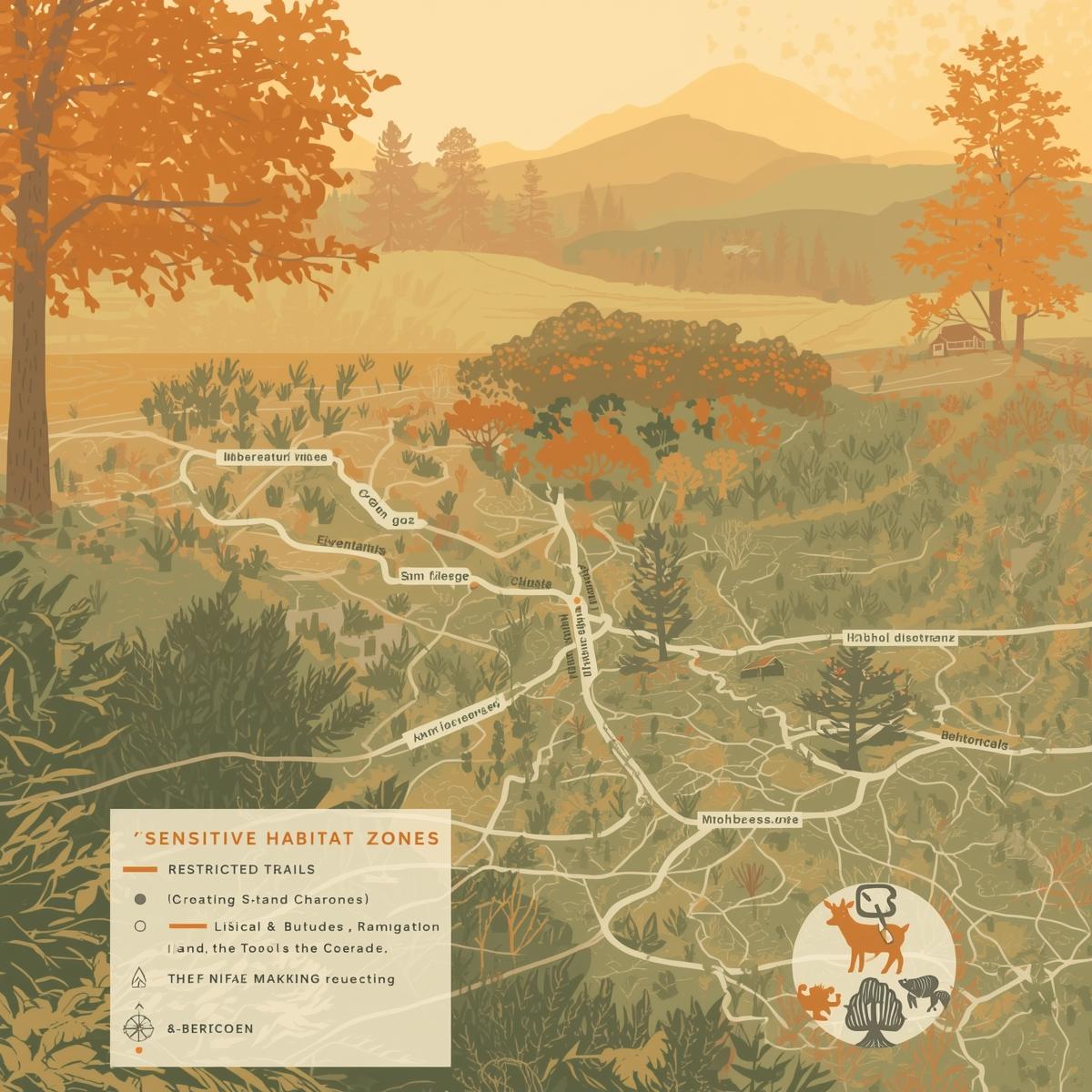 Inclusive navigation goes beyond good design. It reflects an agency’s commitment to accessibility, equity, and visitor centered communication. Parks and recreation agencies increasingly recognize that navigation barriers often correlate with exclusion. When maps assume literacy in English, familiarity with specific symbols, or strong spatial reasoning skills, many visitors become marginalized through design rather than intent.
Outdoor recreation departments that prioritize inclusion begin by identifying the needs of visitors who may have difficulty interpreting traditional maps. These include individuals with visual impairments, cognitive differences, limited map reading experience, or limited English proficiency. Solutions vary widely but share a common principle. Information should meet visitors where they are rather than requiring visitors to adapt to a rigid system.
For individuals with visual impairments, agencies may provide tactile maps at visitor centers. Raised contours, textured surfaces, and simplified layouts allow visitors to understand trail routes through touch. Park districts in high visitation areas sometimes pair tactile maps with audio descriptions offered through QR codes or mobile apps.
For visitors with limited English proficiency, wildlife agencies may include simple icon based legends, multilingual labels, or color coded categories that minimize reliance on text. Many organizations also create versions of the map with reduced complexity for visitors who are new to outdoor recreation or who arrive without prior knowledge of local geography.
Inclusive maps also consider cognitive processing differences. Some visitors interpret information more slowly, require more time to relate symbols to physical features, or become overwhelmed by dense visuals. Maps designed with spacious layouts, clear zone separation, and predictable patterns support these visitors effectively. By reducing visual clutter, agencies create maps that feel calm and approachable.
Another inclusion strategy involves recognizing technological inequities. While digital navigation tools offer advanced features, not every visitor owns a smartphone or has reliable connectivity. Printed maps must remain highly functional on their own. Wildlife agencies sometimes provide mobile friendly versions of maps that visitors can screenshot before losing service, but these tools supplement, not replace, clear physical communication.
Inclusive navigation systems communicate something deeper than direction. They demonstrate that every visitor belongs in the landscape, regardless of experience or ability. When maps reflect that value, visitors navigate with confidence and dignity.
Elevation, Scale, and Spatial Accuracy as Communication Elements
Trail maps are not simply visual representations. They are interpretive tools that help visitors understand how space, distance, and elevation interact with personal ability. When elevation and scale are inaccurate or unclear, visitors make decisions that lead to physical strain, emotional stress, or safety hazards. Parks and recreation agencies and outdoor recreation departments often see injuries rise when visitors underestimate slope difficulty or overestimate their capacity for steep terrain.
Elevation deserves careful attention. Many maps rely on contour lines, but contour lines only work effectively for visitors who understand how to interpret them. Wildlife agencies often incorporate shaded relief or simplified gradient zones to make elevation changes more intuitive. These visual cues help visitors anticipate the physical effort required and choose trails that match their comfort levels.
Scale also affects safety. If the map scale is too condensed or if spacing between features seems uniform despite varied terrain, visitors struggle to judge distance. Families with young children may choose trails that appear short but involve long, exposed sections. Older adults may embark on loops that feel manageable on paper but exceed safe endurance levels in practice. Clear scale bars, paired with estimated hiking times that account for elevation change, reduce these misjudgments.
Spatial accuracy matters for more than safety. It also shapes visitor satisfaction. When a map exaggerates the length of a scenic viewpoint or hides a major incline, visitors interpret the experience as misleading. This erodes trust and increases the likelihood that visitors will ignore future warnings or guidance.
Outdoor recreation departments sometimes include benchmark references, such as “Trail tends to feel longer than its mapped distance due to steep ascent,” or, “Expect slower movement between miles two and three due to rocky conditions.” These small cues prepare visitors for the emotional reality of the hike, not just the technical one.
Clear communication about elevation, scale, and spatial accuracy turns trail maps into tools that support well informed decision making. Trusted maps reduce frustration, prevent avoidable rescues, and help visitors understand the relationship between the terrain and their physical capacity.
Why Visitors Rarely Admit When a Map Confuses Them
Confusion is common, but direct feedback is rare. Parks and recreation agencies and park districts often assume that their maps are functioning adequately because few visitors report problems. Yet navigation errors, lost hiker incidents, and patterns of off trail movement suggest otherwise.
Visitors rarely admit confusion for several reasons:
Pride and self perception.
Many visitors, especially adults, hesitate to acknowledge difficulty with a map because they associate navigation with basic competence. Admitting confusion feels like admitting inexperience.
Group dynamics.
Families or friend groups often rely on a single person to interpret the map. That individual may be reluctant to voice uncertainty, fearing it will undermine their perceived role.
Cognitive load.
Visitors already managing children, gear, or the stress of unfamiliar terrain often push through confusion rather than pause to understand the map fully.
Time pressure.
During peak visitation, visitors may rush decisions rather than seek clarification.
Assumption of personal fault.
Many visitors assume the map is correct and that misreading it reflects a personal mistake. As a result, they do not report the problem.
Wildlife agencies and outdoor recreation departments have learned that map confusion often surfaces indirectly. Visitors ask repetitive questions at trailheads. They cluster around decision points. They follow well worn but unintended paths created by earlier misunderstandings. These patterns reflect communication gaps that can be addressed only when agencies evaluate how their maps guide, misguide, or overwhelm visitors.
Good navigation design anticipates confusion rather than waiting for feedback. It treats silence not as success but as an opportunity to improve.
The Emotional Dimensions of Map Reading
Navigation is not merely a cognitive exercise. It is also emotional. Visitors interpret maps while experiencing excitement, curiosity, uncertainty, or stress. These emotional states significantly influence how well visitors understand the information provided. Parks and recreation agencies and wildlife agencies often observe that navigational errors emerge most commonly in moments when visitors feel overwhelmed, pressured, or distracted.
Excitement, for instance, can pull attention away from careful reading. When a visitor arrives at a trailhead eager to begin exploring, they may skim the map quickly and overlook crucial details such as trail intersections, elevation changes, or seasonal hazards. Outdoor recreation departments find that visitors who feel eager and energized tend to interpret maps optimistically. They see shorter distances, gentler slopes, and more manageable terrain than the map actually communicates. Emotional enthusiasm distorts judgment, even before the hike begins.
Stress produces the opposite effect. Visitors who feel rushed, fatigued, or uneasy may interpret maps as more complicated than they truly are. Families with young children often experience such stress. Parents may skim the map while managing snacks, strollers, or sunscreen. Little attention remains for interpreting contour lines or understanding branching trail networks. Park districts frequently see confusion arise in these moments not because the map is poorly designed but because emotional load interferes with comprehension.
Confidence also shapes map use. Visitors who believe themselves to be skilled navigators may misinterpret maps because they assume understanding without fully reviewing details. Conversely, visitors who feel inexperienced or uncertain may hesitate to make decisions even when maps are clear. Wildlife agencies often encounter novice hikers who linger at trailheads for long periods, unsure how to interpret distances or difficulty markers. These emotional states influence the entire outdoor experience.
Good map design acknowledges these emotional realities. Clear hierarchy, predictable structure, and simplified decision points reduce emotional strain. Maps that integrate calming visual elements, such as soft color gradients or consistent icon patterns, help reduce cognitive anxiety. Gentle wording, such as “You are here” or “This route includes steep sections,” provides reassurance rather than pressure. Agencies that design maps with emotional experience in mind help visitors feel supported, steady, and ready to explore.
How Trail Maps Influence Family Decision Making
Families interact with trail maps as collaborative units rather than as individuals. Parents scan maps to assess safety and logistics. Children interpret the map visually and emotionally. Older adults evaluate the map based on physical ability and perceived risk. Outdoor recreation departments often note that trail decisions made by families reflect the combined needs of all members, not just the preferences of one individual.
Parents often interpret trail maps as a planning tool. They use the map to estimate duration, identify landmarks, and anticipate rest stops. Safety becomes central. Maps that clearly indicate trail difficulty, elevation change, and potential hazards allow parents to make choices confidently. If information is ambiguous, families tend to choose shorter routes or avoid certain trails altogether. Parks and recreation agencies that include estimated hiking times, accessible features, and alternative return routes help parents guide the group more effectively.
Children engage differently. They gravitate toward color, icons, animals, or symbols that make the landscape feel alive. Wildlife agencies often include wildlife illustrations or habitat indicators on maps because children respond with interest. When kids feel engaged, they participate actively in the decision making process. Families move more cohesively when children feel excited about the route and understand the landmarks they will encounter.
Grandparents and older adults focus on predictability and physical impact. Clear indicators of steep slopes, narrow passes, rocky terrain, or extended climbs allow them to self assess. Many park districts observe that older adults appreciate maps showing benches, shade, and viewpoints where rest is comfortable and safe. These cues allow family groups to identify routes that match the abilities of all members.
Intergenerational decision making becomes smoother when trail maps support each group’s needs without overwhelming them. A well designed map helps families negotiate options, balance expectations, and select routes that produce positive shared experiences. When agencies understand how families interpret navigation information, they create tools that reduce conflict, prevent overexertion, and support enjoyable outings.
Reducing Cognitive Load Through Map Design
Cognitive load refers to the amount of mental effort required to understand information. When trail maps demand too much concentration, visitors experience confusion or frustration. When cognitive load is moderate or low, visitors interpret the map quickly and with confidence. Wildlife agencies, parks and recreation agencies, and outdoor recreation departments can significantly improve visitor outcomes by designing maps that reduce cognitive burden.
One of the most effective strategies for reducing cognitive load is establishing visual hierarchy. Visitors must immediately recognize where to begin reading. A clearly marked “You are here” indicator provides instant orientation. If visitors cannot identify starting points quickly, they become disoriented before they even begin navigating. Prominent trail names, intuitive color coding, and simple directional arrows help visitors locate themselves in relation to the broader landscape.
Another strategy is simplifying decision points. Many maps overwhelm visitors with parallel lines, small junctions, or tiny icons grouped too closely together. Cognitive overload often occurs not because the map is inaccurate but because the visual density is too high. A map with clear separation between trail segments, spacious labeling, and gentle alignment between related features reduces interpretive effort.
Wildlife agencies also use framing techniques to reduce cognitive burden. By grouping related features such as restrooms, camp areas, or habitat zones, visitors process categories rather than isolated details. This categorical thinking aligns better with how people naturally organize spatial information. Outdoor recreation departments sometimes include subtle shading around zones of interest, making it easier for visitors to distinguish between recreational areas, wildlife sensitive regions, and trail networks.
Maps that anticipate common errors reduce cognitive load even further. For example, if two trails intersect in a way that frequently confuses visitors, agencies can add visual emphasis, such as a bold color shift or an explanatory label. When visitors see the clarification, they feel guided rather than corrected.
Cognitive load also decreases when maps use consistent patterns across platforms. If print maps, digital maps, and trailhead maps all share the same colors, symbols, and difficulty ratings, visitors require less effort to switch between formats. Consistency reduces the need to relearn information at each stage of the visit.
By minimizing cognitive strain, agencies help visitors conserve mental energy for the physical and emotional demands of outdoor exploration. This not only improves safety but enhances enjoyment.
Why Mapping Errors Lead to Outsized Safety Problems
Mapping errors, even minor ones, can produce disproportionately large consequences. Outdoor recreation departments often observe that small inaccuracies trigger cascading confusion. For example, if a junction is mislabeled or omitted, visitors may take the wrong route and then make increasingly risky decisions to correct their mistake. A detour of only a few hundred yards can lead to fatigue, dehydration, or off trail shortcuts that damage habitat and place wildlife at risk.
Parks and recreation agencies have learned that inaccurate elevation indicators lead to some of the most serious incidents. A map that seems to show a gentle incline may actually represent a strenuous climb. Visitors who begin a hike with incorrect expectations may run out of daylight, strain muscles, or become overwhelmed halfway through the route. Wildlife agencies sometimes respond to increased rescue calls that trace back to these misunderstandings.
Perceived errors also matter. Even if the map is accurate, visitors may believe it is flawed if it does not reflect their internal expectations. For instance, a visitor may assume a loop is shorter because the map layout compresses certain segments. If their experience contradicts what they imagined, they lose trust in the map and rely instead on guesswork.
Mapping errors also affect ecological protection. Sensitive habitats often rely on clear mapping to prevent accidental intrusion. When boundaries are understated or hard to read, visitors venture into closed or restoration zones unintentionally. Repeated missteps can disrupt wildlife cycles and damage fragile vegetation. Wildlife agencies emphasize that boundary clarity is a stewardship necessity, not an aesthetic detail.
Even visual errors, such as slight misalignments or inconsistent color shading, cause visitors to doubt the map. Once doubt sets in, navigation becomes improvisational and risk increases. Agencies can prevent these problems by reviewing maps annually, ensuring versions match across platforms, and involving staff familiar with the terrain in the review process.
Good maps prevent countless small and large problems. Poor maps invite them.
Trail Maps as Storytelling Tools
Trail maps do more than provide direction. They tell the story of a landscape, reveal its character, and communicate the history and ecology embedded within it. Parks and recreation agencies and wildlife agencies increasingly use maps not only for wayfinding but also to enhance the emotional and educational dimensions of the outdoor experience. When visitors understand the story behind the land, they navigate with more intention and more respect.
Storytelling in maps is subtle. It emerges through the choice of symbols, the placement of landmarks, and the visual hierarchy that draws a visitor’s eye toward meaningful features. A map that highlights rivers, rock formations, or wildlife corridors invites visitors to imagine how the land formed and how animals move across it. Outdoor recreation departments sometimes integrate short interpretive phrases into maps, such as “Seasonal wetlands form here each spring” or “Look for migrating birds along this ridge.” These small storytelling cues transform a utilitarian navigation tool into something more immersive.
Storytelling also supports stewardship. When visitors understand that certain meadows serve as nesting habitats or that specific corridors support seasonal migration, they are more likely to stay on designated trails. Wildlife agencies find that visitors respond positively when maps reveal ecological relationships. A visitor who sees a map indicating that their route intersects a historic wildlife path understands immediately why noise reduction matters in that zone. The map becomes a quiet teacher, offering insight rather than enforcement.
Families in particular benefit from narrative rich map design. Parents use maps to spark curiosity in children, pointing out features they will encounter along the way. Children who notice illustrated animals, historical icons, or named landmarks feel more connected to the journey and better understand why trails follow particular routes. Grandparents sometimes share stories of their own past experiences with nature, turning map reading into a multigenerational bonding activity.
When a map communicates a story, visitors experience the trail not just as a path but as a living environment. This depth of understanding supports both safe navigation and meaningful engagement.
How Design Influences Perception of Trail Difficulty
Trail difficulty ratings are one of the most influential components of map design. Visitors rely heavily on difficulty indicators when choosing routes, but these indicators are meaningful only when paired with clear visual communication. Parks and recreation agencies often encounter situations where visitors misjudge trail difficulty because the map does not communicate it strongly enough.
Design choices significantly affect perception. If color categories for difficulty are too similar, visitors may confuse an intermediate trail with an advanced one. If the scale compresses steep terrain into small portions, visitors may miss important elevation cues. Wildlife agencies find that simple color systems sometimes fail to convey the full experience of a trail. Some trails classified as “moderate” require sustained climbing or difficult footing, yet the map gives no visual indication beyond the color assignment.
Outdoor recreation departments can strengthen difficulty perception through visual layering. For example, contour shading, slope arrows, or textured patterns can highlight sections where visitors should expect increased effort. These design elements communicate not only technical difficulty but also the physical and emotional experience of moving through the terrain. Visitors rely on these cues to determine whether they should attempt a route, adjust their pace, or turn around before committing too deeply.
Families and mixed ability groups rely even more heavily on difficulty design cues. Parents may choose trails that seem appropriate for children based on a quick glance at the map, only to encounter steep sections that exceed their expectations. Older adults similarly need accurate indicators to avoid overexertion. When agencies design difficult communication with clarity and empathy, visitors make safer and more satisfying choices.
Perception is shaped by more than color and symbols. Placement matters too. Difficulty indicators that appear near trail names, at decision points, and alongside elevation information reinforce understanding. Visitors who encounter difficulty reminders at multiple points are less likely to misjudge conditions. Good design communicates difficult terrain not as a surprise but as an expectation.
Encouraging Responsible Recreation Through Smart Map Communication
Trail maps can shape behavior long before visitors step onto the trail. They guide movement patterns, influence environmental choices, and support responsible recreation when designed thoughtfully. Parks and recreation agencies increasingly use map design as a stewardship tool because maps reach visitors at the moment when decisions are made.
Responsible recreation begins with clarity. Clearly mapped boundaries, restoration zones, and restricted areas reduce the likelihood of accidental trespass. Wildlife agencies rely on visual boundary communication to protect sensitive habitats such as nesting sites, wetland buffers, or migration corridors. When boundaries are subtle or appear as faint lines, visitors unintentionally cross into prohibited zones. Strong boundary communication helps prevent habitat disruption while minimizing enforcement demands.
Map design also nudges behavior through visual emphasis. Trails intended for high capacity use can be made visually prominent, while low capacity or sensitive trails appear more understated. This helps distribute visitors across the landscape without explicit directives. Outdoor recreation departments sometimes widen the visual representation of primary trails so that inexperienced visitors gravitate toward routes that offer safer footing and more predictable navigation.
Responsible recreation includes emergency preparedness. When maps clearly indicate emergency markers, exit routes, and distance to trailheads, visitors make more prudent decisions. Agencies that highlight water sources, shaded rest areas, and exposure zones encourage visitors to pace themselves and manage physical exertion appropriately.
Multigenerational visitors also benefit from responsible recreation cues. Families navigating with small children appreciate maps that highlight safe play areas, gentle loops, or places where wildlife sightings are common. Grandparents prefer maps that clarify which routes offer predictable footing or reliable resting points. Each of these design choices encourages behavior that aligns with the abilities and needs of diverse visitor groups.
Responsible recreation emerges naturally when maps help visitors understand the landscape, anticipate challenges, and respect ecological limits. Agencies that use maps strategically cultivate safer, more sustainable recreation without relying solely on enforcement.
Common Pitfalls in Trail Map Communication
Even well intentioned maps sometimes include design flaws that confuse visitors or unintentionally introduce risk. Parks and recreation agencies, wildlife agencies, and outdoor recreation departments often encounter recurring communication pitfalls that undermine the clarity and effectiveness of their trail maps.
One common pitfall is overly detailed design. When maps attempt to show every contour line, vegetation type, and micro feature, they overwhelm visitors. Too much information cancels itself out. Visitors become unable to distinguish essential navigation cues from decorative details. Families and new hikers are especially vulnerable to this issue because they interpret maps more literally and with less tolerance for clutter.
Another pitfall is inconsistent color use. When colors repeat across unrelated categories such as water features, difficulty ratings, or roadways, visitors misinterpret meaning. Wildlife agencies sometimes discover that color inconsistencies lead to accidental entry into regulated areas or misjudgment of trail conditions.
A third pitfall is lack of contrast. Older adults or visitors with low vision may struggle to read maps where text blends into the background. When visitors cannot interpret labels or symbols easily, they may rely on memory or guesswork rather than clear communication.
Some agencies inadvertently create confusion by using technical terminology without explanation. Phrases such as “saddle,” “scree,” or “glacial moraine” may be meaningful to experienced hikers but unfamiliar to families or tourists. When maps assume prior knowledge, visitors feel excluded or embarrassed to seek clarification.
Another frequent issue is lack of scale clarity. Maps that fail to communicate true distances leave visitors guessing how far they must travel. When visitors misjudge distance, they make choices that lead to fatigue, dehydration, or accidental exposure to dangerous conditions.
Finally, many maps fail because they do not reflect on the ground reality. Trails evolve, storms reshape terrain, and vegetation changes sightlines. Maps that remain static while landscapes shift become unreliable. Park districts that update maps infrequently risk undermining visitor trust and safety.
Recognizing these pitfalls helps agencies design communication systems that are accurate, intuitive, and supportive of visitor well being.
Integrating Trail Maps Into a Comprehensive Communication Ecosystem
Trail maps work best when they operate as part of a unified communication system rather than as isolated navigation tools. Parks and recreation agencies, wildlife agencies, and outdoor recreation departments increasingly recognize that maps gain power when reinforced through other channels. Visitors interpret information more consistently when messaging appears across trailheads, kiosks, digital platforms, interpretive signs, and staff interaction.
Effective integration begins with consistency. When the map at the trailhead uses the same iconography, terminology, and color system as the folded map at the visitor center, visitors expend less cognitive effort bridging the two. Agencies that maintain consistent formatting across platforms reduce errors and increase user confidence. Even small inconsistencies, such as different colors for difficulty ratings, can confuse visitors during critical decision making moments.
Digital integration expands map impact. Many agencies now offer mobile friendly map versions that allow visitors to zoom in, view terrain shading, or access real time alerts. Wildlife agencies often connect maps to QR codes placed at trail junctions, giving visitors access to supplemental information, closures, or safety guidance. This blending of physical and digital communication allows maps to evolve as conditions change and provides visitors with flexible, layered information.
Interpretive communication reinforces navigation. When maps include storytelling elements about geology, wildlife, or cultural history, interpretive panels on the trail can echo those themes. Park districts sometimes connect mapped icons to specific educational stops along the trail. Visitors then experience a coherent narrative that improves comprehension and encourages deeper engagement with the landscape.
Staff communication further supports integration. When rangers, volunteers, or visitor center staff use the same language and difficulty descriptions found on the map, visitors interpret information more uniformly. This cohesion reduces the likelihood that a visitor misunderstands the trail’s challenges or chooses a route that exceeds their ability.
Integrated systems also help families navigate more smoothly. Parents rely on verbal and digital reminders. Children respond to symbols and colors. Older adults often appreciate repeated cues across multiple formats. A communication system that reinforces itself across touchpoints strengthens understanding for all visitors.
When agencies integrate maps into a broader communication ecosystem, navigation becomes more intuitive, expectations become clearer, and visitor behavior becomes more responsible. The landscape feels more welcoming because the information feels coherent.
Strategic Communication Support for Your Parks and Recreation Agency
 Developing effective trail maps requires more than graphic design. It demands systems thinking, audience awareness, and coordinated communication across platforms. Trail maps must align with agency goals, visitor needs, and operational realities. This alignment helps agencies reduce risk, improve visitor satisfaction, and strengthen stewardship behaviors.
People at these agencies often choose to partner with an external resource like Stegmeier Consulting Group (SCG) when they want to improve communication systems without overwhelming internal teams. SCG supports this work by bringing strategic structure, clarity, and long term communication planning to map development and the broader navigation experience.
SCG helps agencies reexamine how information flows across the visitor journey. Maps are evaluated not only for accuracy and aesthetics but also for their ability to reduce cognitive load, support decision making, and build trust. SCG works with agencies to identify the communication gaps that lead to misinterpretation, frustration, or unsafe behaviors. These insights become the basis for stronger communication frameworks that guide consistent messaging across signage, staff interactions, and digital tools.
SCG also supports agencies in developing sustainable systems for updating maps as landscapes evolve. Trails shift, facilities expand, and weather patterns reshape access. A well designed communication system anticipates these changes and incorporates processes for keeping navigation information accurate, timely, and aligned with visitor expectations.
SCG’s work emphasizes partnership rather than prescription. Agencies retain ownership of their mission and identity. SCG simply helps create structures that make communication more effective, more inclusive, and more dependable for diverse audiences.
Conclusion
Trail maps are among the most important communication tools in outdoor recreation. They influence safety, guide behavior, shape visitor experience, and anchor stewardship. Parks and recreation agencies, wildlife agencies, outdoor recreation departments, and park districts all rely on maps to convey information that protects visitors and natural landscapes. Yet maps succeed only when designed with clarity, emotional awareness, inclusivity, and real world usability in mind.
Visitors interpret maps through a complex mix of anticipation, stress, excitement, and uncertainty. Families use maps collaboratively, with each member relying on different visual or textual cues. Older adults depend on predictable indicators of safety and difficulty. Children respond to symbols, illustrations, and simple narratives. When maps support these diverse needs, they cultivate confidence and encourage responsible recreation.
Thoughtful design reduces cognitive load and prevents small errors from cascading into major safety issues. Strong communication ecosystems reinforce map content across trailheads, digital platforms, and staff guidance. When all pieces work together, visitors navigate landscapes more comfortably and behave more safely.
Maps are not static documents. They evolve as terrain shifts, visitor expectations change, and communication technologies advance. Agencies that review and refine their maps regularly demonstrate commitment to visitor well being and ecological stewardship.
In the end, well designed maps do much more than show the way. They communicate identity, reflect values, and make natural spaces more accessible to everyone. When agencies treat maps as strategic communication tools, they strengthen both visitor safety and connection to the land.
SCG’s Strategic Approach to Communication Systems
Align your agency’s messaging, processes, and public engagement strategies
Agencies that communicate effectively build stronger trust with staff, stakeholders, and the public. Whether you are implementing QR code systems, improving internal communication workflows, or strengthening agency wide alignment, SCG can help you develop a communication system that supports consistent decision making and long term organizational success. Use the form below to connect with our team and explore how a strategic communication framework can elevate your agency’s impact.