
The Psychology of Park Signage: Why Words, Colors, and Placement Matter
 Public spaces rely on a delicate balance of design, communication, and psychology. In parks, recreation areas, wildlife preserves, and trail systems, signage is often the quiet and unobtrusive element that shapes a visitor’s entire experience without drawing attention to itself. Although many people walk past a trail marker without a second thought, that small sign is performing a vital function. It helps visitors understand where they are, what responsibilities they share, and how they can move safely through the landscape. It also reflects the agency’s values and priorities, whether intentionally or not.
Outdoor environments differ from built environments in one important way. Visitors typically enter them without a clear mental map. They must navigate unfamiliar terrain, unpredictable conditions, and natural elements that do not always provide obvious guidance. In this context, signage becomes a psychological anchor. It stabilizes expectations, reduces anxiety, and helps visitors develop confidence that they can explore without becoming lost or unsafe. Agencies rely on signage to communicate rules, protect sensitive habitats, prevent accidents, and encourage stewardship, all without direct staff supervision.
What makes signage especially powerful is its ability to shape emotional reactions as well as behaviors. The wording, color, spacing, and placement of a sign influence how people interpret their surroundings and how they feel as they move through them. A well-designed sign can convey reassurance and competence. A confusing sign can introduce hesitation or frustration. A missing sign can produce a chain of decisions that leads to risk or environmental damage.
These interdependent factors illustrate why signage is more than a practical necessity. It is a psychological tool that influences how visitors perceive, understand, and interact with public land.
Emotional Foundations of Signage
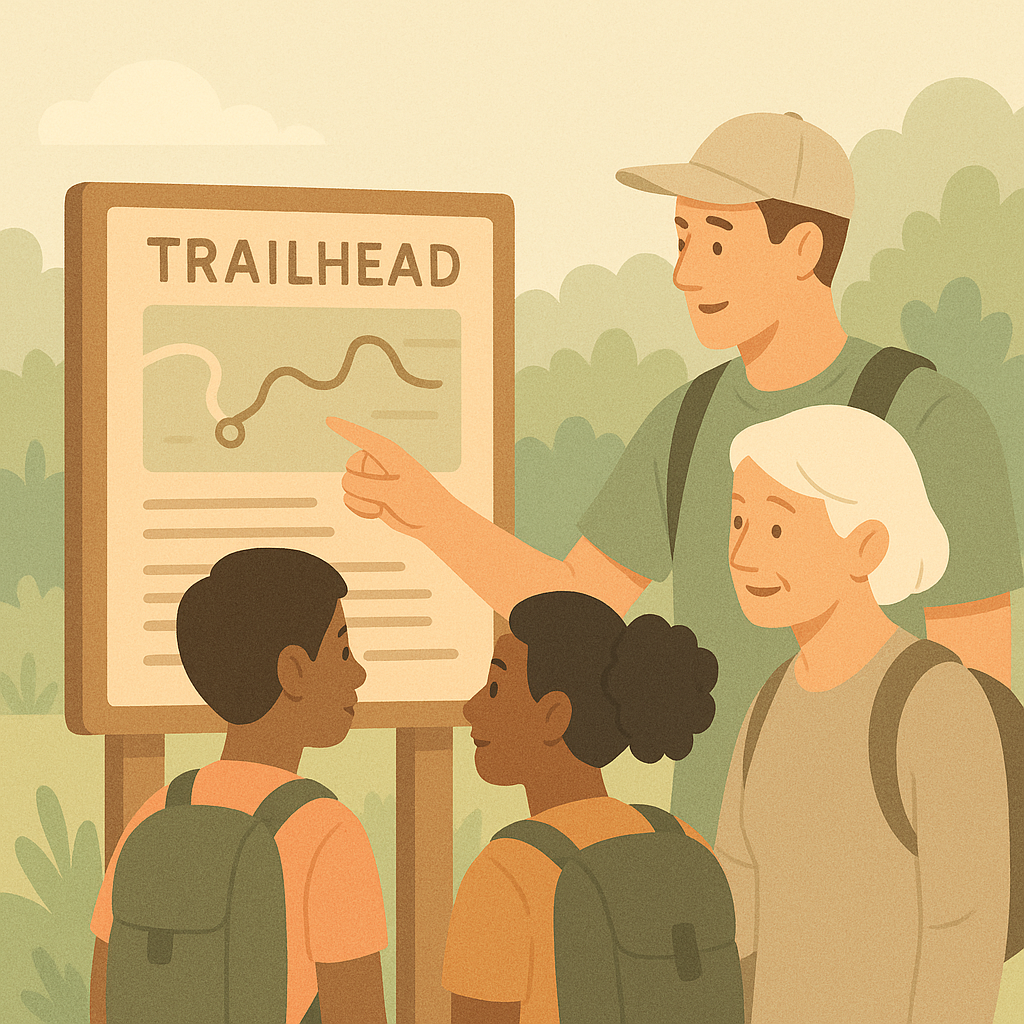 The psychology of signage begins with emotion. Visitors arrive at parks, wildlife areas, and outdoor recreation sites with a wide range of motivations, expectations, and past experiences. Some seek relaxation. Others seek challenges. Some feel deeply comfortable in natural settings, while others feel slightly apprehensive or unsure. Signage subtly shapes all of these emotional states without requiring visitors to consciously examine it.
Clear and consistent signage creates a sense of stability. When people encounter well designed signs placed at logical intervals, they feel that the parks and recreation agency or outdoor recreation department has anticipated their needs. This builds trust. In this context, trust refers not only to trust in the managing organization but trust in one’s own ability to navigate the environment successfully. When visitors trust the signage, they also trust themselves.
The National Park Service offers a strong example of how emotional reassurance can be built into signage systems. Across landscapes ranging from deserts to forests to wetlands, NPS maintains a familiar design language. Visitors traveling from one park to another often recognize the same color palettes, shapes, and typography. This familiarity comforts visitors because it reduces the cognitive effort required to understand a new environment.
In contrast, signage that is inconsistent or visually cluttered can create subtle emotional friction. Visitors may hesitate at trail junctions, ask more questions at visitor centers, or worry about getting lost. Even if they complete the visit without issue, these small emotional disruptions influence how the experience is remembered.
California State Parks demonstrates another dimension of emotional signage design. Their locations attract multilingual and multicultural visitors who may not share the same outdoor traditions or communication norms. To support this diversity, the agency uses signage that avoids technical language and emphasizes a calm, supportive tone. Universal icons and multilingual explanations appear in high traffic areas to ensure clarity. The goal is emotional comfort, not just informational accuracy.
Visitors also experience emotional cues from what signage chooses not to display. When a visitor reaches a fork in the trail and finds no directional marker, they may assume they made a mistake earlier or that the wildlife agency responsible for the area overlooked a critical need. These moments of uncertainty add up. They can cause unnecessary caution or worry about becoming lost. Even if visitors ultimately reach the correct destination, the emotional impact of uncertainty often overshadows otherwise joyful moments.
Some outdoor recreation departments have begun studying how subtle emotional states influence overall visitor satisfaction. Early findings suggest that even brief moments of disorientation decrease enjoyment, even when all other factors remain positive. By contrast, consistent reassurance through signage increases feelings of competence and reduces vulnerability. This is especially important for visitors who are new to outdoor recreation or navigating unfamiliar terrain.
Agencies that treat signage as part of the emotional architecture of public spaces tend to build stronger visitor trust. When visitors feel supported, they explore more confidently, pay closer attention to their surroundings, and develop a stronger sense of connection to the land. In this way, signage becomes a quiet but powerful contributor to psychological well-being in natural environments. Signage that anticipates emotional needs creates a sense of partnership between the visitor and the managing organization. Signage that ignores emotion may still convey information, but it rarely builds connection.
From Trails to Tweets: Effective Communication Strategies for Parks, Recreation, Outdoors, and Wildlife Agencies
This article is part of our series on strategic communication for Parks, Recreation, Outdoors, and Wildlife agencies. To learn more and to see the parent article, which links to other content just like this, click the button below.
How Language Shapes Behavior
 Language is one of the most powerful tools available to public organizations. In many cases, signage represents the most condensed form of that language. A sign may contain only a few words, yet those words influence whether visitors comply with rules, engage in stewardship, or disregard the message entirely.
Behavioral psychology has shown for decades that the framing of rules affects how people respond. Language that presents guidance as a shared goal tends to foster cooperation. Language that issues commands may achieve compliance but can also provoke resistance, especially in recreational settings where visitors expect autonomy and enjoyment.
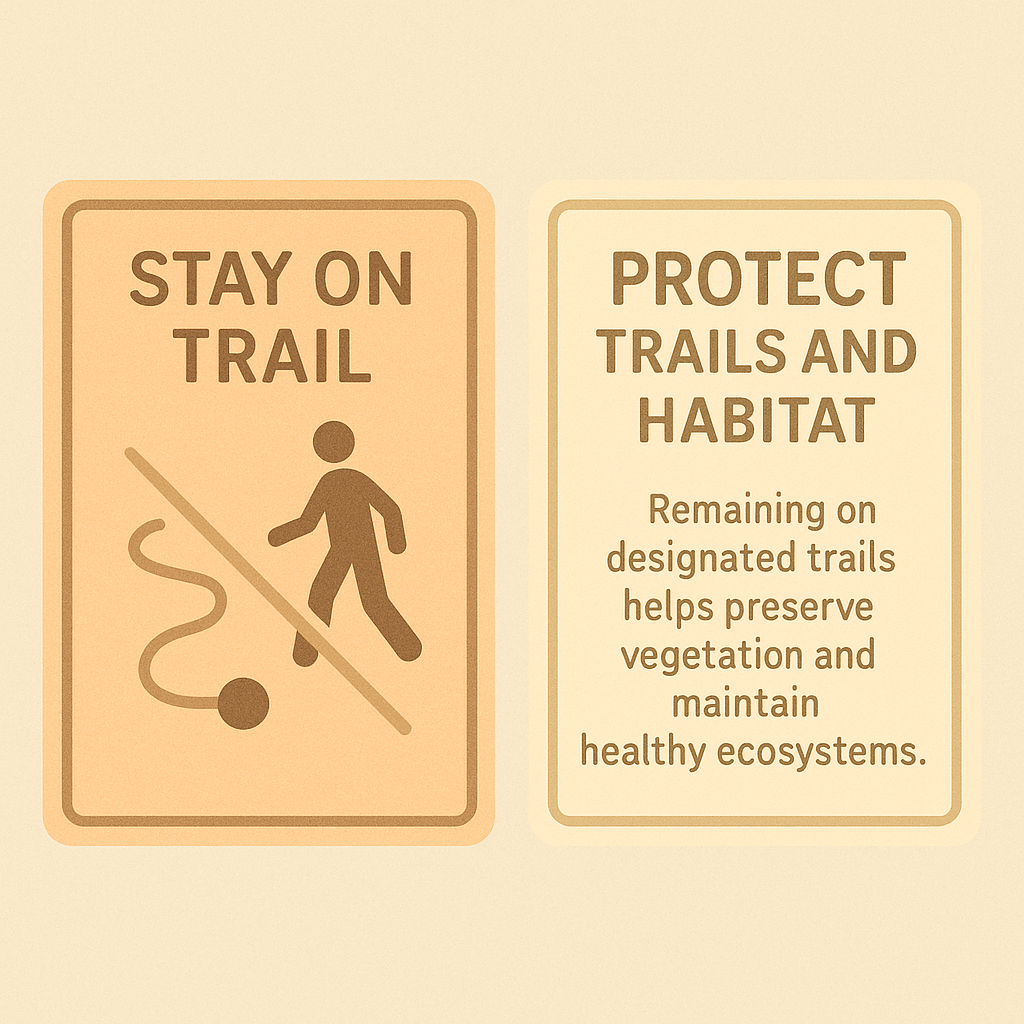
Consider the contrast between two familiar messages. One sign reads, “Stay on the trail.” The other reads, “Help protect fragile vegetation by staying on the trail.” The first is clear but authoritative. The second contextualizes the behavior, inviting the visitor to participate in preservation. Studies consistently show visitors are more likely to follow the second version because it connects personal behavior to collective benefit.
Minnesota’s Department of Natural Resources applies this principle effectively in several wildlife management areas. Earlier signage focused heavily on warnings. Visitors tended to treat the signs as isolated or situational. When the agency shifted to messaging that explained why certain behaviors matter, such as how disturbing wildlife creates stress or safety risks, visitor engagement increased. The signage acknowledged visitors as capable decision makers rather than passive rule followers.
Language also shapes memory. Purpose-based phrasing tends to remain in the mind longer because it activates both cognitive and emotional processing. Rules expressed without context may prompt temporary compliance but often fail to create lasting understanding.
Tone matters as much as structure. Outdoor recreation is closely associated with leisure and freedom. When park districts or wildlife agencies adopt a tone that respects that mindset and invites cooperation, visitors internalize the message more deeply. When signage relies on punitive, bureaucratic, or overly technical language, visitors may comply in the moment but rarely connect that compliance to long-term stewardship.
This relationship between language, psychology, and behavior forms the foundation of effective communication in parks, wildlife areas, and recreation settings.
The Influence of Color on Visitor Perception
 Before visitors read any words, color communicates meaning. Color psychology is deeply ingrained in how people interpret visual information, and signage uses these associations to guide behavior intuitively.
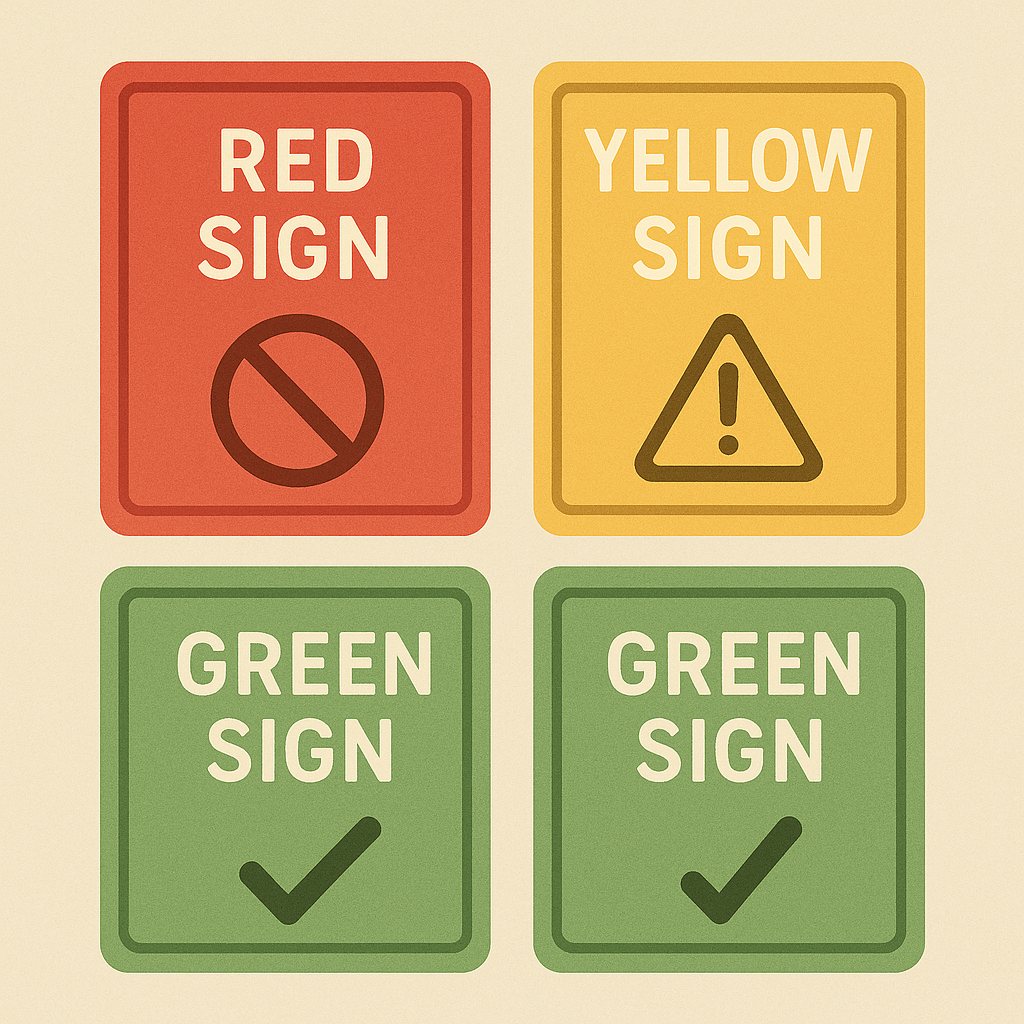
Red communicates urgency or danger. Because of this, many parks and recreation agencies use red sparingly. Excessive use creates unnecessary stress in environments designed for enjoyment. When used strategically for wildfire alerts or life-threatening hazards, red becomes far more effective because visitors recognize its purpose immediately.
Green conveys calm, safety, and connection to nature. Wildlife agencies and outdoor recreation departments often use green for directional or interpretive signage because it blends naturally with the landscape and reduces visual tension.
Yellow is attention-grabbing without signaling immediate danger. It serves well for cautionary messaging, trail difficulty ratings, or wildlife advisories that require awareness rather than alarm.
California State Parks frequently incorporate color to support communication with multilingual visitors. When language barriers exist, color becomes a universal cue. At beaches, for example, bright yellow backgrounds may help signal shifting surf conditions even to those unfamiliar with the written text.
Color also influences memory. Research shows that visitors remember warnings more clearly when color aligns with widely held expectations. However, color alone is not enough. It must pair with clear wording and thoughtful placement to achieve full effectiveness.
Agencies that recognize color as a psychological tool communicate more effectively while reducing reliance on long textual explanations. When used intentionally, color becomes part of a holistic signage system that supports clarity, safety, and emotional comfort.
Placement as a Behavioral Cue
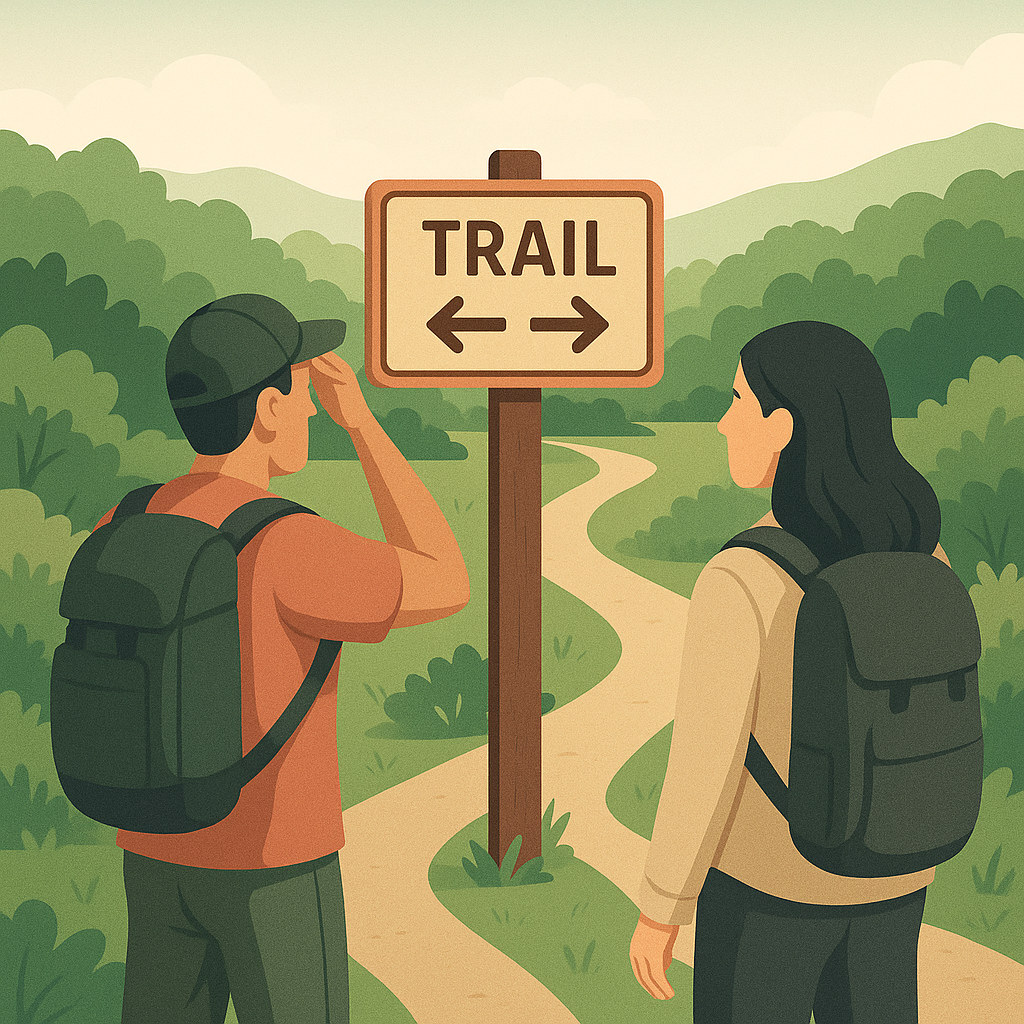 Placement is one of the most important and least visible aspects of effective signage. Most visitors do not consciously reflect on the placement of a sign, yet placement dictates whether they notice, understand, and follow its message.
A sign positioned too early may seem irrelevant by the time visitors reach the point where the instruction matters. A sign positioned too late may force visitors to backtrack or confront a hazard they could have avoided. A sign positioned at the wrong height can be missed entirely. Placement affects not only visibility but credibility. Visitors assume that well-placed signs reflect thoughtful management. Poor placement can suggest disorganization or a lack of understanding of visitor needs.
The National Park Service uses behavioral research to determine optimal sign placement. They study where visitors naturally pause, where sightlines open or close, and where decision-making moments occur. These locations, often called decision points, are ideal for signage because people are already scanning their surroundings for guidance. A trail junction, a change in terrain, or the transition from forest to open meadow are all examples of natural decision points.
Placement also interacts with environmental conditions. Sun glare, vegetation density, snow cover, or shifting sand can make signs less visible. Agencies must revisit placement regularly to ensure year-round effectiveness. This ongoing monitoring adds complexity to signage management, but it also demonstrates a commitment to visitor safety and experience.
Furthermore, placement can influence emotional response. A sign positioned abruptly or as a surprise may evoke fear or frustration. A sign that gradually prepares visitors for an upcoming condition, such as steep terrain or wildlife presence, supports emotional regulation and confidence.
Placement is therefore not only logistical but psychological. It shapes how information is received and how behavior unfolds.
The Cognitive Load of Outdoor Decision-Making
Navigating natural environments requires visitors to process multiple streams of information simultaneously. They must interpret terrain, estimate physical effort, monitor weather, track distance, and remain aware of potential hazards. This mental effort, known as cognitive load, varies depending on experience, confidence, and environmental conditions.
When signage is designed poorly or placed inconsistently, cognitive load increases. Visitors expend unnecessary mental energy on tasks that should be simple, such as determining whether they are still on the correct trail. This can lead to fatigue, frustration, or mistakes that compromise safety.
Effective signage reduces cognitive load by answering questions before visitors must ask them. A well-placed sign at a trail junction prevents doubt. Clear distance markers help visitors manage energy levels. Hazard signs placed in advance provide time for mental preparation.
The National Park Service recognizes the importance of minimizing cognitive load. Their signage guidelines emphasize short, direct messages and consistent design across all parks. This reduces the need for visitors to learn new visual languages in each location.
When cognitive load is managed effectively, visitors experience less stress and more enjoyment. They feel capable, informed, and supported by the agency’s communication system.
How Visitors Interpret Risk in Natural Environments
Risk during outdoor recreation is perceived subjectively. Some visitors underestimate risk because the environment feels peaceful. Others overestimate risk because they are unfamiliar with natural settings. Signage must balance these perspectives by providing accurate, context-rich information.
Minnesota’s Department of Natural Resources has found that risk messaging is most effective when it explains cause and effect. A sign reading, “Bears may be present in this area” is less helpful than one that explains, “Deer carcasses in this region attract bears. Stay alert and make noise while hiking.” The latter not only informs but teaches visitors how to respond.
Visitors also interpret risk through social cues. If they see others ignoring a sign, they may conclude the risk is minor. If they encounter signage that appears outdated or damaged, they may question its credibility.
Effective risk communication requires signs that are clear, timely, and contextualized. Visitors should understand what the risk is, why it exists, and what specific action they should take.
Cultural Interpretation and Inclusivity in Signage
Visitors come from diverse cultural backgrounds that influence how they interpret authority, warnings, and instructions. Tone that feels neutral to one group may feel overly stern to another. Visual symbols that are intuitive in one culture may be unfamiliar in another.
California State Parks confronts this challenge daily. Many beach and coastal locations attract international visitors who may not speak English or share common safety expectations. The agency uses universal pictograms, simple phrases, and color cues to compensate for linguistic differences. They also consider cultural sensitivity in tone. Friendly, neutral language helps ensure visitors do not feel intimidated by warnings.
Inclusivity is not only about language. It includes design considerations for visitors with low literacy levels, limited mobility, visual impairments, or different learning styles. Signage that relies solely on dense text may exclude entire groups of visitors. Signage that incorporates imagery, spacing, and clear organization is more universally accessible.
Inclusive signage communicates the message that public spaces belong to everyone. It enhances trust and ensures that safety information reaches the widest audience possible.
The Social Dynamics of Group Decision-Making
 Visitors rarely experience parks as individuals. Couples, families, school groups, hiking clubs, tourists, and friends often navigate natural environments together. This dynamic fundamentally changes how signage is perceived and how decisions are made. Individuals may defer to the most confident member of the group. They may follow someone who appears experienced, even if that person misreads a sign or assumes knowledge they do not have. Social behavior can override individual judgment, especially when time, attention, or confidence is limited.
Groups tend to compress decision-making. A sign read aloud by one member may serve as the sole interpretation for everyone present. If that interpretation is incorrect, the group may move together down the wrong path. In other cases, individuals may feel reluctant to question another’s reading of a sign, especially if they want to avoid appearing uninformed or hesitant. Social pressure, even when subtle, can overshadow personal instincts.
Effective signage accounts for these dynamics by being visible at moments when groups naturally gather. Trailheads, scenic overlooks, rest areas, parking lots, and junction points are all locations where group behavior tends to consolidate. A clear, concise sign in these areas supports collective understanding. It reduces the likelihood that one person’s quick glance becomes the entire group’s interpretation.
Agencies that understand group dynamics often design signage that encourages brief discussion. For example, directional signs with simple maps or distance markers prompt conversation about difficulty and time. Hazard signs that explain why a risk exists help groups calibrate decisions more effectively. When signage anticipates how groups interpret information, it becomes a tool not only for individuals but for social coordination.
Children and teenagers add complexity to group dynamics. Parents must balance their own understanding with the need to protect younger visitors. Teenagers often seek autonomy, which can lead them to take risks or ignore signage if it feels overly restrictive. A well-placed, clearly written sign can help parents set boundaries without feeling confrontational. It can also help teenagers understand that rules reflect environmental realities rather than arbitrary limitations.
Signage that supports group-based decision-making ultimately contributes to smoother movement, safer behavior, and reduced conflict in shared spaces.
How Signage Influences Novice Visitors and Families
Many visitors to parks and recreation areas are novices. They may have limited experience with hiking, wildlife, weather patterns, or terrain evaluation. Novice visitors rely heavily on signage because they cannot draw on internal cues or prior knowledge. Without clear guidance, they may feel overwhelmed or uncertain.
Families, in particular, look for reassurance. Parents need to know whether a trail is appropriate for children, whether hazards might arise unexpectedly, and whether restroom access or safe turning points exist. Signage that communicates distance, difficulty, and expected conditions helps parents make informed choices. When signage anticipates family needs, visitors trust the agency more deeply and feel safer exploring.
Novice visitors often benefit from interpretive signage that explains natural features, trail etiquette, or wildlife behavior. Such signage not only builds knowledge but creates a sense of belonging. When visitors understand the environment, they feel more confident navigating it.
California State Parks uses this approach in coastal regions. Their signage often includes diagrams, icons, or short explanations that help families and first-time visitors understand ocean conditions, tide patterns, or rip currents. These visual tools reduce cognitive load and make decision-making more accessible.
Agencies that design signage with novice visitors in mind help democratize access to nature. They ensure that public spaces are welcoming not only to experienced outdoor enthusiasts but to anyone seeking a meaningful connection with the natural world.
Environmental Psychology and Place Attachment
 People form emotional bonds with landscapes that feel coherent, safe, and welcoming. This concept, known as place attachment, influences how visitors remember their experiences and whether they return. Effective signage supports place attachment by creating an environment that feels navigable and trustworthy.
Visitors who feel lost or confused are less likely to develop strong emotional connections to a place. They may remember the stress rather than the beauty. Signage that reduces uncertainty helps visitors feel more present, allowing them to engage fully with their surroundings.
Environmental psychology also highlights the importance of legibility, which refers to how easily a person can form a mental map of a space. Legibility increases when signage reinforces the structure of the environment. A network of trails, for example, becomes more legible when each junction includes directional markers, distances, and clear indicators of difficulty.
Informational signage, such as panels describing flora, fauna, or local history, also contributes to place attachment. When visitors understand the significance of the environment, they develop a deeper connection and a greater willingness to protect it.
The National Park Service excels in this area. Interpretive signs throughout NPS properties help visitors make sense of landscapes that may otherwise seem abstract or unfamiliar. This educational component strengthens the relationship between people and place, turning a simple hike into a meaningful experience.
Signage that fosters place attachment ultimately supports preservation. Visitors who value a place are more likely to follow rules, volunteer, donate, or advocate for its protection.
One additional element of place attachment that agencies sometimes overlook is the role of predictability. Visitors feel more at ease in environments where the communication system behaves consistently. When signs follow a predictable pattern in placement, tone, and design, visitors develop a rhythm of navigation that reinforces comfort and familiarity. If this pattern breaks unexpectedly, such as through an abrupt change in sign style or a sudden absence of guidance in a previously well-marked area, it can disrupt that sense of attachment. Predictability, therefore, becomes an emotional anchor. By offering a communication system that feels steady and dependable, agencies help visitors build positive memories and stronger bonds with the landscape, ultimately encouraging return visits and long-term stewardship.
Visitor Motivation and Decision Psychology
Visitors arrive at parks with varied motivations. Some seek solitude. Others seek adventure. Many arrive hoping to disconnect from daily stress, connect with family, or experience something new. These motivations influence how they interpret signage and how they make decisions.
A visitor seeking a challenge may interpret caution signs differently from someone seeking relaxation. A visitor unfamiliar with natural hazards may underestimate risk if signage does not provide enough context. Motivations shape perception, and signage must account for this diversity.
Decision psychology teaches that people rely on heuristics, or mental shortcuts, especially in unfamiliar environments. For example, if a trail appears well-worn, a visitor may assume it is safe even if signage indicates otherwise. If other people are taking risks, individuals may follow suit. Signage helps disrupt unhelpful heuristics by presenting clear, timely information that replaces guesswork with understanding.
Agencies that acknowledge visitor motivation can design signage that resonates more effectively. Trail difficulty ratings, for example, help visitors match their expectations to reality. Interpretive signage helps transform curiosity into knowledge. Hazard signage transforms uncertainty into informed caution.
By aligning signage with diverse motivations, agencies support a broader range of visitor experiences while maintaining safety and environmental protection.
Another important factor in decision psychology is how visitors manage uncertainty. People tend to avoid choices that feel ambiguous, even if the ambiguous option is objectively safe. In parks, this can lead visitors to choose familiar-looking paths even when those paths are incorrect or environmentally sensitive. Signage that reduces ambiguity helps visitors feel confident taking the correct route, even when it appears less obvious. For example, a narrow but official trail may appear less inviting than a wider social trail formed by repeated misuse. Without clear signage, visitors may choose the social trail, unintentionally contributing to erosion or habitat damage.
Visitors also interpret signage based on their mental state upon arrival. Someone who feels stressed, rushed, or fatigued is less able to process complex information. Clear, supportive signage can mitigate this cognitive strain by simplifying choices. Visitors who feel welcomed and guided tend to make safer and more responsible decisions because they do not perceive the environment as overwhelming.
The role of curiosity should also be acknowledged. Many visitors seek novelty and exploration. Signage that frames guidelines as ways to protect unique features can transform curiosity into stewardship. Instead of viewing rules as restrictions, visitors come to understand them as part of what makes the experience meaningful. When signage connects motivation to responsibility, it helps create a more collaborative relationship between people and the landscape.
Spatial Memory and Environmental Cues
Spatial memory plays a significant role in how visitors navigate natural environments. People form mental maps based on landmarks, terrain shape, trail textures, and visual cues. However, natural environments can be deceptive. A clearing may look similar to another clearing. A fork in the trail may appear unremarkable. Vegetation may obscure familiar features between seasons.
Spatial memory is also influenced by environmental monotony. Trails that wind through dense forests or expanses of similar vegetation may cause visitors to feel as though they are looping back on themselves, even when they are progressing correctly. Without distinctive landmarks, the visitor’s internal sense of direction weakens. This phenomenon is well documented in environmental psychology, where researchers note that humans use visual anchors to orient themselves. When those anchors are absent, signage becomes a critical external cue that compensates for the lack of variation in the environment.
Weather conditions can exacerbate these challenges. Fog, snow, heavy rain, or shifting light can distort depth perception and color contrast, making it difficult for visitors to rely on natural sensory cues. In such conditions, even experienced hikers may struggle to maintain spatial orientation. Well-designed signage that anticipates seasonal changes serves as a stabilizing force. Larger text, reflective materials, and consistent placement height help ensure visibility even when visibility is compromised.
Moreover, spatial memory can fail during moments of distraction. Families managing children, groups engaged in conversation, or individuals taking photos may momentarily lose track of where they are. A simple marker that reaffirms direction or distance can prevent small lapses in attention from escalating into confusion. Agencies that understand these nuances design signage that supports visitors not only when they are attentive, but also when attention naturally drifts.
Signage supplements spatial memory by providing fixed points of reference. A well-placed marker helps visitors confirm that their mental map aligns with the actual landscape. These confirmations reduce anxiety and help visitors feel oriented even when the environment looks repetitive.
Errors in spatial memory can compound quickly. A visitor who believes they are on the correct trail may continue along an unintended route for miles before realizing the mistake. This increases risk, especially in remote areas. Signage that reinforces orientation at regular intervals helps prevent such errors.
Some agencies incorporate spatial redundancy into trail systems. Trail markers may appear at predictable distances or in consistent locations relative to trail features. This predictability supports memory and reduces cognitive burden.
When visitors can rely on a combination of natural cues and signage, they feel more confident navigating the environment.
The Ethics of Visitor Communication
Signage is not just a logistical tool. It is an ethical responsibility. Public agencies must consider how communication affects visitor safety, environmental protection, equity, and trust. Ethical communication requires honesty, clarity, consistency, and respect.
Honesty means acknowledging risks without exaggeration or avoidance. A sign that understates danger may lead visitors into harm. A sign that overstates danger may discourage appropriate use or foster skepticism. Ethical communication presents the truth in a way that supports informed decision-making.
Clarity prevents misunderstanding. Complex or technical language can exclude visitors who lack outdoor experience or literacy. Ethical signage uses accessible language and universal visual cues.
Consistency prevents confusion. A rule stated one way on one sign and differently on another can undermine credibility. Ethical signage aligns with agency messaging across platforms.
Respect acknowledges visitors as capable individuals. It avoids patronizing language and instead invites collaboration. This includes culturally inclusive messaging, acknowledgment of diverse experiences, and awareness of how different groups interpret authority.
Agencies that embrace ethical communication strengthen their relationships with the public. Signage becomes a tool of trust, not merely instruction.
Balancing Enforcement With Persuasion
Outdoor agencies must balance safety and stewardship with visitor autonomy. Signage that relies solely on commands may feel authoritarian. Signage that relies solely on persuasion may fail to convey the seriousness of certain risks. Effective communication balances both.
Persuasive signage explains the why behind a rule. It appeals to shared values such as community safety or ecological protection. Enforced signage conveys non-negotiable boundaries. It communicates consequences clearly.
Minnesota’s Department of Natural Resources uses persuasive messaging when addressing wildlife behavior. They explain why visitors should maintain distance or secure food. However, when risks become immediate or life-threatening, signage shifts to direct rules.
Agencies benefit from designing a communication hierarchy. Interpretive signs teach, persuasive signs encourage, and enforcement signs protect. The key is using each tone appropriately.
This balanced approach respects visitor autonomy while ensuring safety and stewardship remain priorities.
Designing Signage for High-Stress Situations
 Some environments require signage that performs effectively under stress. Steep terrain, rapidly shifting weather, wildlife encounters, flash floods, or wildfire conditions can heighten stress and reduce a visitor’s ability to process information.
High-stress environments demand signage that is:
- Clear
- Short
- Visible
- Action-oriented
During stressful situations, visitors may experience tunnel vision, reduced comprehension, and impaired memory. Signs in these areas must minimize cognitive load. They should present the essential action first, then context. For example, in avalanche-prone regions, parks and recreation agencies may prioritize simple directives such as “Do not proceed. Avalanche danger ahead.”
Color contrast, placement, and redundancy are especially important in high-stress zones. Signs must be visible from multiple angles and distances. They may need to be larger or more frequent. Wildlife agencies and outdoor recreation departments may also use symbols rather than text when reaction time is critical.
Designing signage for stress requires empathy. Visitors in dangerous situations are not functioning at peak cognitive performance. Agencies must anticipate how stress alters decision-making and design accordingly.
Lessons From Urban Wayfinding Systems
Although parks differ from urban environments, wayfinding principles developed in cities can inform outdoor signage design. Urban wayfinding systems rely on clarity, predictability, and consistency. These same principles apply to parks but require adaptation to natural contexts.
Cities use standardized icons, consistent color palettes, and predictable placement. Outdoor agencies can adopt similar strategies to help visitors build familiarity across locations. The National Park Service has done this with its unified visual identity.
Urban wayfinding also emphasizes multimodal information. Maps, directional arrows, distance markers, and neighborhood identifiers combine to support navigation. Parks can adapt this by integrating trail maps, route difficulty indicators, and environmental cues.
Another lesson involves accessibility. Urban wayfinding increasingly prioritizes accessibility for people with disabilities. Parks can follow this lead by ensuring signage is readable for visitors with visual or cognitive impairments. This includes considering text size, color contrast, tactile elements, and placement height.
Urban systems also rely on redundancy. Information appears in multiple formats and locations. Parks can benefit from similar redundancy, especially when environmental conditions change or when signs may be obstructed by weather or vegetation.
These lessons demonstrate that while parks and cities differ, both rely on human-centered communication systems that respect visitor needs and capabilities.
Visitor Engagement Through Interpretive Storytelling
Interpretive signage transforms a park from a simple walking space into a learning environment. It invites visitors to slow down, observe more carefully, and understand the significance of the land. Storytelling helps visitors connect emotionally with the environment, deepening their appreciation and fostering stewardship.
Interpretive panels that describe ecological relationships, cultural history, or geological features help visitors see the landscape with new eyes. A meadow becomes a habitat. A rock formation becomes a timeline. A forest becomes a living system shaped by centuries of change.
California State Parks frequently uses interpretive signage to communicate coastal processes. Rather than simply warning visitors of rip currents, interpretive signs explain how they form, why they matter, and what to do if caught in one. This builds knowledge and confidence.
Interpretive storytelling also contributes to place identity. Visitors come to associate certain narratives with the parks they visit. These narratives may influence their emotional attachment, their conversations with others, and their desire to return.
When interpretive signage is thoughtfully designed, it complements regulatory and directional signage, creating a complete communication ecosystem that informs, inspires, and protects.
Strategic Communication Support for Your Parks and Recreation Agency
 Many agencies recognize that signage is part of a larger communication framework rather than a standalone tool. Organizational alignment, internal clarity, and strategic planning all influence how signage is conceived, designed, and deployed. Because of these complexities, agencies often turn to external partners like Stegmeier Consulting Group (SCG) for support in bringing structure and consistency to their communication efforts. SCG supports agencies in developing these foundational elements so communication becomes more coherent and effective.
SCG helps agencies identify communication priorities and translate them into consistent public messaging. For signage, this includes clarifying tone, audience, purpose, and behavioral goals. When agencies articulate why signs exist and what outcomes they seek, the signage itself becomes more intentional and effective.
In many cases, signage challenges reflect internal misalignment. For example, operations teams may prioritize durability, communications teams may prioritize tone, and environmental teams may prioritize protection. Without coordination, signage becomes fragmented. SCG facilitates collaboration across departments so that messaging reflects unified organizational values.
SCG also supports agencies in developing communication schedules and thematic frameworks. A hazard message at a trailhead becomes more impactful when reinforced through digital alerts, ranger interactions, social media reminders, and seasonal campaigns. When communication channels work together, visitors internalize messages more deeply.
Another important area of SCG support is cultural alignment. Agencies must understand how their internal values shape external communication. Signage that reflects respect, transparency, and shared responsibility strengthens agency identity. SCG helps agencies articulate these values and embed them into all forms of communication, including signage systems.
Through this strategic approach, signage becomes more than a visual tool. It becomes a reflection of organizational clarity, visitor-centered thinking, and commitment to public service.
Future Trends in Park Signage
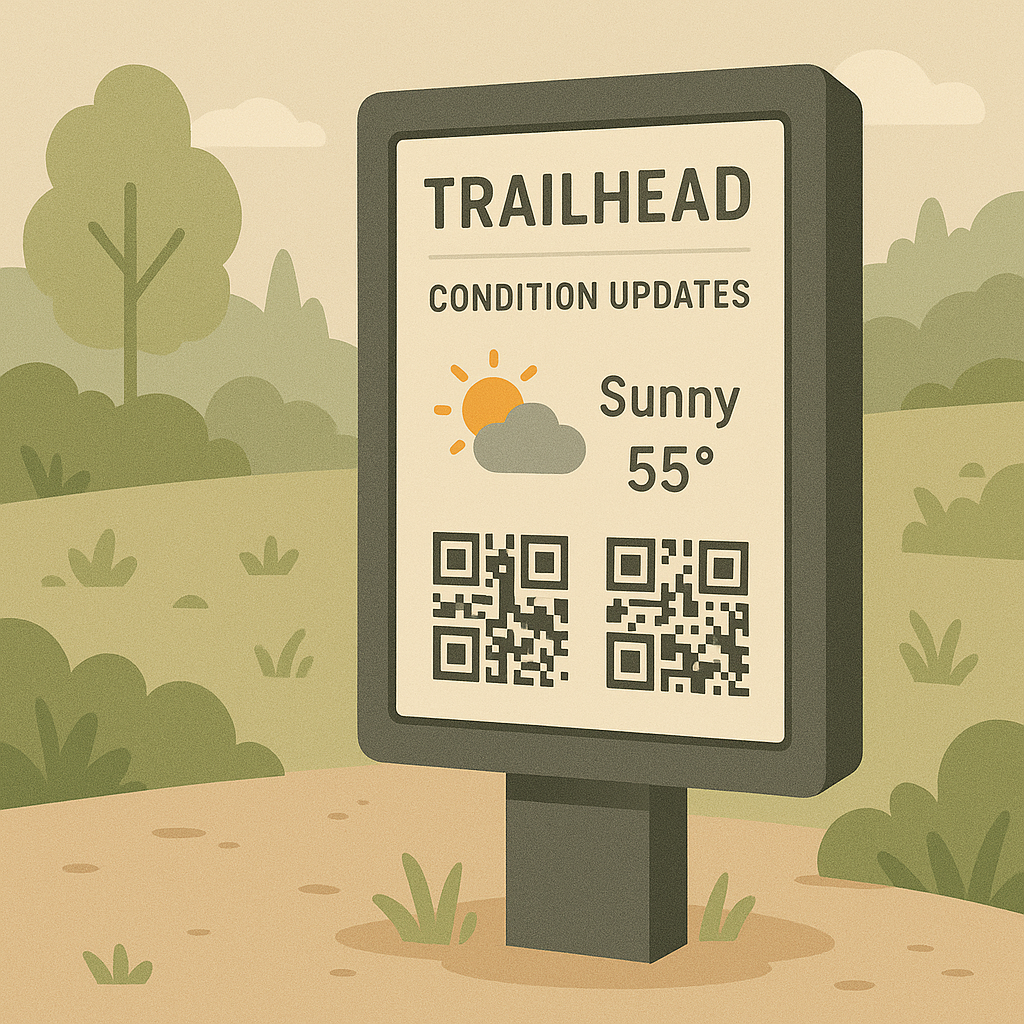 As technology evolves and visitor expectations shift, park signage is entering a period of change. Digital kiosks at trailheads provide real-time updates on trail conditions, wildlife activity, and weather changes. QR codes allow visitors to access maps and interpretive content on their phones. Some agencies are exploring dynamic signage that updates based on hazard levels or seasonal conditions.
Another trend involves the integration of predictive analytics into signage strategies. As agencies gather data on visitor flows, peak visitation times, wildlife movement patterns, and environmental conditions, signage can be adjusted more proactively. For instance, trailheads may display anticipated crowding levels or estimated completion times based on current visitor density. This information helps visitors make informed decisions about route choice and timing, reducing pressure on popular trails and dispersing traffic more evenly across the park.
Some agencies are experimenting with mobile-enabled emergency communication. Visitors can receive location-based alerts that correspond with physical signage, creating a dual-layer communication system that improves safety. While these technologies must be implemented carefully to avoid excluding visitors without smartphones, they represent promising tools for hazard management and visitor education.
Sustainability also influences the future of signage. Agencies are exploring biodegradable materials, modular components, and low-impact installation methods that reduce disturbance to soil and vegetation. These improvements not only align with environmental goals but also enhance public perception of agency stewardship. As climate and visitation patterns shift, signage systems that can be updated quickly and sustainably will become increasingly important.
At the same time, agencies recognize the importance of maintaining physical signage for accessibility and equity. Not all visitors have smartphones. Some prefer analog guidance. Balancing digital innovation with traditional signage ensures that communication remains inclusive.
Environmental sustainability is also shaping signage trends. Agencies are exploring recycled or low-impact materials, modular systems that reduce waste, and placement strategies that minimize visual intrusion into natural landscapes.
Another trend involves adaptive design. Signage that can be easily replaced or updated supports agencies facing rapidly changing conditions, such as climate-driven hazards or shifting visitation patterns. Temporary signage systems are becoming more sophisticated, with clearer visual cues and better durability.
These trends suggest that the future of park signage will integrate physical, digital, and interpretive communication into a cohesive ecosystem.
The Larger Significance of Signage
Signage is more than a tool for conveying information. It shapes how visitors understand and experience the environment. It influences their confidence, their curiosity, their safety, and their sense of belonging. It reflects the agency’s commitment to stewardship and its respect for the public.
Signage embodies the values of clarity, transparency, and care. Agencies that invest in thoughtful signage demonstrate an understanding that communication is a core component of public service. They recognize that visitors rely on signage not only to navigate but to feel welcomed and supported.
When signage is designed with psychological insight, it becomes an invisible partner in every visitor journey. It guides without intruding. It instructs without commanding. It protects without restricting unnecessarily. It embodies a quiet leadership rooted in empathy and foresight.
The significance of signage extends beyond the physical markers themselves. It influences long-term visitor relationships, environmental behavior, and community trust. It shapes how visitors talk about their experiences and whether they choose to return.
In this sense, signage serves as a bridge between people and the natural world. It supports exploration while preserving landscapes. It empowers visitors while maintaining safety. It turns public spaces into shared spaces, experienced with confidence and respect.
Conclusion
When agencies recognize signage as both a communication tool and a psychological guide, they unlock its full potential. Words shape understanding. Colors influence emotion. Placement guides behavior. Interpretive storytelling deepens connection. Strategic alignment enhances clarity. Together, these elements create a communication system that is as essential to visitor experience as the landscape itself.
The most effective signage systems anticipate visitor needs and reduce uncertainty. They provide clear guidance without limiting exploration. They express agency values through tone, design, and presence. They transform public spaces into accessible, enjoyable, and meaningful environments.
Signage is not simply an operational detail. It is a form of public stewardship. It reflects the agency’s respect for visitors, commitment to safety, and dedication to preserving natural resources. When signage is crafted with intention and psychological insight, it becomes part of the landscape’s integrity and part of the visitor’s memory.
In the end, the success of a park’s signage system is measured not only by how well it informs but by how deeply it enhances the visitor’s relationship with the land. It invites people into a shared responsibility for stewardship. It helps them feel confident, curious, and connected. And it ensures that the story of each place is told clearly, respectfully, and with purpose.
SCG’s Strategic Approach to Communication Systems
Align your agency’s messaging, processes, and public engagement strategies. Agencies that communicate effectively build stronger trust with staff, stakeholders, and the public. Whether you are refining signage standards, improving internal communication workflows, or strengthening agency-wide alignment, SCG can help you create a communication system that supports consistent decision-making and long-term organizational success. Use the form below to connect with our team and explore how a strategic communication framework can elevate your agency’s impact.