
How Jefferson County Public Utility District Transformed Storm Communication for Remote and Island Communities in Washington State
 In the remote northwestern corner of Washington State, Jefferson County faces communication challenges that most urban and suburban utilities never encounter. Jefferson County Public Utility District (PUD) provides electric, water, septic, and wholesale telecom services to Jefferson County, WA, serving approximately 22,000 electric customers scattered across 1,805 square miles of rugged terrain that includes mainland communities, islands accessible only by ferry, and areas where cell phone coverage is spotty at best.
The county’s unique geography creates extraordinary communication challenges during power emergencies. When severe Pacific storms strike—bringing hurricane-force winds, falling trees, and widespread outages—traditional communication methods often fail just when residents need information most. Jefferson County Public Utility District reported that a power outage affected 17,500 customers, representing nearly 80% of their customer base, demonstrating the scale of outages the utility regularly faces.
The county’s traditional approach of basic phone messages and limited website updates proved inadequate during recent severe weather events. During a major outage, Jefferson Public Utility District would have a short outgoing message describing the outage and its location. Generally, they did not provide information regarding when power would be restored during major storm events, which left customers frustrated and anxious, particularly those in isolated areas who couldn’t easily travel to town for updates.
Jefferson County Public Utility District’s response was the “Island Strong, County Connected” initiative—a comprehensive communication strategy designed specifically for rural and island communities. This approach combines low-tech reliability with high-tech innovation, leveraging everything from ham radio networks to social media platforms to ensure that even the most remote residents receive critical safety and restoration information during power emergencies.
This case study examines how Jefferson County Public Utility District’s communication strategies, grounded in geographic realities, community networks, and technological diversity, have become a model for rural utility communication in challenging terrain and weather conditions.
From Pipelines to Public Trust: How Municipal Utilities Can Make Communication Central to Ratepayer Trust, Infrastructure Investment, and Long-Term Service Reliability
This article is part of our series on strategic communication for Public Utilities, Infrastructure Agencies, Municipal Utilities, and Public Works departments. To learn more and to see the parent article, which links to other content just like this, click the button below.
Communication Strategy
1. Geographic Reality-Based Messaging and Multi-Modal Approach
Jefferson County Public Utility District’s messaging strategy acknowledges the harsh realities of rural utility service: “Remote doesn’t mean forgotten. Every community matters. Every customer counts.” Rather than treating all customers the same regardless of location, the Public Utility District developed communication approaches specifically tailored to the different geographic and infrastructure realities of their diverse service territory.
The messaging strategy addresses the unique challenges of rural utility service:
- Island Communities: “Marrowstone Island customers: Restoration crews boarding 2 PM ferry. Expected completion by evening. Emergency generator available at fire station.”
- Remote Mainland Areas: “Discovery Bay area: Tree blocking main transmission line on Center Road. Crews accessing via logging road. Updates every 2 hours on KPTZ radio.”
- Town Centers: “Port Townsend downtown: Power restored to hospital and emergency services. Residential service resuming block by block. Check Public Utility District Facebook for your street.”
Why It Worked
Jefferson County Public Utility District’s location-specific messaging resonated with customers because it demonstrated that the utility understood their specific circumstances. Island residents knew that restoration might be delayed by ferry schedules, while remote area customers understood that access roads might affect crew deployment. This geographic honesty built trust rather than creating false expectations.
By acknowledging the realities of rural utility service—including longer restoration times and access challenges—the Public Utility District positioned itself as honest and reliable rather than making promises it couldn’t keep.
2. Redundant Low-Tech and High-Tech Communication Channels
Understanding that power outages often disable internet and cellular communication, Jefferson County Public Utility District built a deliberately redundant communication system that functions even when modern infrastructure fails.
Emergency-Resilient Channels:
- Battery-Powered Local Radio (KPTZ 91.9 FM): Primary communication channel that continues broadcasting during widespread outages.
- Ham Radio Network: Trained amateur radio operators relay information to remote areas and islands.
- Physical Message Boards: Posted at post offices, fire stations, and ferry terminals in each community.
- Door-to-Door Notification: Public Utility District vehicles equipped with loudspeakers for critical safety messages.
Digital Communication When Available:
- Social Media Priority: Check the homepage of the website or Facebook and Nextdoor for updates.
- Mobile-Optimized Website: Designed to load quickly on cellular connections with minimal data usage.
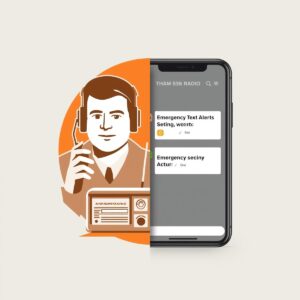
- Text Alert System: Battery-efficient SMS alerts for customers who opt in.
- Email Updates: Detailed technical information for businesses and facilities managers.
Community Network Integration:
- Ferry System Coordination: Messages posted at all ferry terminals and announced on ferry PA systems.
- School District Partnership: School closure and emergency shelter information coordinated through district communication systems.
- Business Network: Key businesses serve as information relay points for their surrounding communities.
- Emergency Services Coordination: Joint messaging with fire departments, sheriff’s office, and emergency management.
Why It Worked
The deliberately redundant approach ensured that information reached residents even when their preferred communication channels failed. The integration of traditional community networks proved especially valuable. When modern technology failed, people naturally gathered at post offices, fire stations, and ferry terminals—exactly where the Public Utility District posted physical updates. This approach leveraged existing community behavior patterns rather than trying to create new ones.
3. Community-Centered Geographic Segmentation
Jefferson County Public Utility District organized its communication around the natural communities and geographic regions that residents identify with, rather than electrical service territories.
Island Communities (served by submarine cables):
- Marrowstone/Indian Island: Messages address ferry access and marine emergency services.
- Port Ludlow: Communication through community association networks and marina facilities.
- Isolated Peninsula Areas: Information shared through rural fire departments and general stores.
Mainland Geographic Regions:
- Port Townsend Area: Urban-style digital communication with rapid updates and detailed maps.
- Quilcene Valley: Communication through agricultural networks, grange halls, and rural schools.
- Discovery Bay/Sequim Bay: Coordination with Clallam County services and shared emergency resources.
- Rural Forest Areas: Information shared through logging company networks and forest service coordination.
Special Population Segments:
- Marine Community: Coordination with Coast Guard, marinas, and marine radio networks.
- Agricultural Operations: Direct communication with dairy farms, nurseries, and processing facilities that require power for operations.
- Tourism Businesses: Specific communication about visitor safety and business impact during outages.
- Medical Needs Customers: Priority notification and resource coordination for home medical equipment users.
Why It Worked
By organizing communication around the communities where people actually live and identify, Jefferson County Public Utility District created more effective and trusted information channels. The community-centered segmentation also enabled the Public Utility District to leverage existing social networks and trusted relationships within each geographic area, making information sharing more effective and reducing the utility’s communication burden during emergencies.
4. Visual Communication for Low-Bandwidth and Multilingual Needs
Jefferson County Public Utility District developed visual communication systems designed to work effectively in low-technology environments and serve diverse communities.
Simple, High-Contrast Visual Design:
- Large, Bold Typography: Easy to read on small phone screens and posted signs.
- High-Contrast Colors: Black text on yellow backgrounds for maximum visibility in all lighting conditions.
- Universal Symbols: Icons that communicate key information without requiring text comprehension.
- Map-Based Information: Simple geographic representations that don’t require detailed technical knowledge.
Low-Bandwidth Design Standards:
- Text-Heavy Updates: Minimal graphics that load quickly on slow cellular connections.
- Single-Image Information Graphics: All key information contained in one simple visual that can be shared easily.
- Print-Friendly Formats: All digital materials designed to print clearly in black and white.
- Large-Font Options: Accessibility considerations for older residents and low-vision customers.
Multilingual Communication Approach:
- Spanish Translation Priority: Key safety messages translated for seasonal agricultural workers.
- Visual Safety Information: Picture-based instructions for staying safe around downed power lines.
- Community Interpreter Network: Trained volunteers who can explain utility information in multiple languages.
- Cultural Community Liaisons: Connections with immigrant community leaders for information sharing.
Why It Worked
The high-contrast, simple design approach ensured that critical information remained accessible even when people were viewing it on small screens, in poor lighting, or under stressful conditions. The multilingual and visual approach recognized that Jefferson County’s agricultural economy brings seasonal workers who may not be fluent in English but still need critical safety information during power emergencies.
 5. Proactive Weather-Based Communication and Community Preparedness
Jefferson County Public Utility District integrated its communication strategy with Pacific Northwest weather patterns and community preparedness efforts.
Weather-Predictive Communication:
- Storm Season Preparation: Annual “Storm Ready Jefferson” campaign before October–March severe weather season.
- 48-Hour Weather Warnings: Advance notification when National Weather Service forecasts conditions likely to cause outages.
- Real-Time Weather Integration: Updates that combine power grid status with current weather conditions and forecasts.
- Seasonal Safety Education: Different safety messages for winter storms, summer dry conditions, and spring flood risks.
Community Preparedness Integration:
- Emergency Supply Encouragement: Communication that helps residents understand what supplies they need for extended outages.
- Generator Safety Education: Annual campaigns about safe generator use, carbon monoxide prevention, and proper electrical connections.
- Community Resource Mapping: Information about where residents can access emergency services, charging stations, and warming centers during outages.
- Neighbor-to-Neighbor Networks: Training and support for informal community mutual aid during extended power outages.
Why It Worked
The weather-predictive approach helped residents prepare for likely outages rather than simply react to them. When customers received messages like “high winds expected tonight, charge devices and prepare for possible outages,” they could take proactive steps that reduced stress and improved safety. The long-term resilience approach built ongoing relationships with customers based on mutual preparation and shared responsibility, rather than just crisis-response communication.
Communication Lessons from Jefferson County Public Utility District
1. Design Communication Systems for Infrastructure Failure Scenarios
Rural utilities must plan for situations where the very infrastructure that enables modern communication—electricity and internet—is compromised. Jefferson County Public Utility District’s success comes from building communication redundancy that assumes primary systems will fail, rather than hoping they won’t.
2. Leverage Existing Community Networks Rather Than Creating New Ones
Rural communities often have strong existing social networks through churches, fire departments, schools, and local businesses. Rather than trying to build new communication channels, Jefferson County Public Utility District integrated its emergency communication into these established community networks.
3. Acknowledge Geographic Constraints Honestly
Rural residents understand that their remote location creates service challenges, but they expect honesty about those constraints rather than false promises. Jefferson County Public Utility District built trust by communicating realistic expectations based on geographic realities—ferry schedules, road access, and weather-dependent restoration timelines.
4. Integrate Weather Preparedness with Utility Communication
In rural areas, power outages are often weather-related and somewhat predictable based on seasonal patterns. By integrating weather forecasting with utility communication, Jefferson County Public Utility District helped customers prepare proactively rather than reactively.
5. Build Long-Term Community Resilience, Not Just Emergency Response
Jefferson County Public Utility District’s approach focuses on developing community capabilities that reduce the impact of power outages and improve emergency response effectiveness. Through strategic, community-integrated systems, the utility strengthened both preparedness and trust.
Conclusion: Rural Resilience Through Connected Communities
Jefferson County Public Utility District’s communication strategy demonstrates that rural utilities can overcome the unique challenges of remote service territories through communication systems designed for geographic and infrastructure realities. The Public Utility District’s success proves that effective rural utility communication requires more than adapting urban approaches—it requires understanding the fundamental differences of rural life, geography, and community structure.
Ready to Elevate Your Agency’s Public Communication?
We understand the unique challenges state and local government agencies face—from complex issues to diverse community needs. Our comprehensive approach can help you transform the way you connect with constituents, improve transparency, and highlight the valuable work your agency does every day.
Interested in learning more? Reach out to us today for a consultation. We’d love to discuss how our services can support your goals and help you build lasting trust with the communities you serve.