Prepared for the Chill: King County, Washington’s Multi-Year Winter Weather Readiness Campaign
 The increasingly unpredictable nature of winter weather in the Pacific Northwest has prompted public safety leaders to rethink what preparedness looks like, especially in a region where heavy snowfall, ice storms, and prolonged cold snaps can cripple both infrastructure and mobility. For residents of King County, Washington—including urban centers like Seattle and rural outlying communities—the stakes are particularly high. Extreme winter weather not only disrupts commutes and closes schools, but also threatens vulnerable populations such as older adults, the unhoused, and low-income families living in older or poorly insulated housing.
In response, King County Emergency Management, in partnership with local and regional agencies, launched a multi-year winter readiness campaign designed to strengthen community resilience before, during, and after cold-weather events. This initiative focuses on proactive communication, equitable service delivery, and real-time coordination to keep the public safe and informed. By integrating snow route planning, emergency shelter activation, multilingual outreach, and digital alert systems, the campaign serves as a model of inclusive, data-informed public safety.
This case study explores how King County leveraged transparent communication strategies, operational coordination, and diverse outreach channels to reduce risk and improve outcomes for residents across the region. From priority snowplow route maps to culturally relevant preparedness resources, the initiative demonstrates that community trust and resilience grow stronger when information is clear, accessible, and repeated through the right channels before a crisis strikes.
The Initiative: A Multi-Pronged Winter Preparedness Program
King County’s effort is coordinated by King County Emergency Management, in collaboration with Seattle Office of Emergency Management, Regional Homelessness Authority, Metro transit, Public Health–Seattle & King County, and Public Works. Guided by the Regional Operational Plan for Extreme Weather Response, the program is multi-year, encompassing hazmat, flood, cold, wildfires, and emergency shelter planning.
Winter-specific efforts include:
- Snow plowing and salting of 583 miles of high-priority roads, in coordination with 9-1-1 services
- Activation of snow and ice routes, categorized by priority for plowing operations
- Setup of extreme weather shelters, especially for unhoused and vulnerable populations
- Expanded alignment with King County Regional Hazard Mitigation Plan, integrating alerts, route coordination, sheltering, and community outreach
From Sirens to Social Media: Effective Communication Strategies for Law Enforcement & Public Safety Agencies
This article is part of our series on strategic communication for law enforcement and public safety agencies. To learn more and to see the parent article, which links to other content just like this, click the button below.
Communication Strategy
1. Transparent Snow & Ice Road Priority System
King County’s snow and ice response is built on clarity and predictability. Every year, the county publishes a priority road map and plowing schedule, clearly indicating which streets are designated for first- and second-wave clearing. The explanations go deeper than operational logistics—they outline the criteria used (e.g., 9-1-1 access, transit routes, and hospital connectivity) to explain why certain streets are cleared first and why some wait longer. This level of transparency helps manage public expectations and reduces the frustration that often arises during winter storms.
In a region with diverse commuter patterns and variable geography, this information allows residents to plan better, knowing that their neighborhood may be labeled as “Priority 2” and might receive clearing later in the storm. The county maintains a live traffic cams and snowfall update feed, integrated directly into its website, so residents can monitor real-time conditions and make informed decisions.
Moreover, the county explains how clearing efforts are scaled with weather severity. For example, a light dusting prompts a focused priority sweep, while heavier storms activate emergency snow routes and expanded staff and fleet deployment. This “plan builds on plan” communication approach reassures residents that public safety services scale responsively with threat levels—reducing worry and increasing understanding.
Why It Worked: This transparency helps residents understand what to expect—and when. When people know why certain roads are prioritized, frustration decreases and trust increases. The availability of real-time maps empowers communities to plan ahead rather than being caught off guard.
2. Multilingual Access and Culturally Inclusive Messaging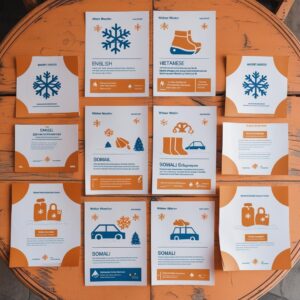
King County is home to residents speaking Spanish, Chinese, Somali, Vietnamese, Korean, and many more languages. The winter campaign addresses this diversity by providing alerts, route maps, and winter safety tips in multiple languages, including those spoken in dense immigrant communities throughout Seattle and outlying areas.
More than just digital translation, the county collaborates with immigrant-serving agencies, libraries, and community centers to host multilingual workshops and spreadsheet sign-ups for winter alerts. These sessions never assume internet access or English proficiency; instead, they proactively offer bilingual staff, printed materials, and small-group peer discussions.
This inclusive strategy reduces information inequity. It ensures that at-risk residents—who may live in older homes, lack transit access, or have limited digital connectivity—receive the same safety guidelines, with culturally resonant presentation. When translated terms are familiar and messengers mirror audiences, messages resonate, yielding better behavioral outcomes (e.g., early evacuation, safe generator use).
Why It Worked: Multilingual communication addresses equity and access, ensuring that vulnerable communities understand the risks and mitigation steps. When residents can read and follow instructions in their own language, compliance improves and lives are protected.
3. Digital Infrastructure and the King County Alert System
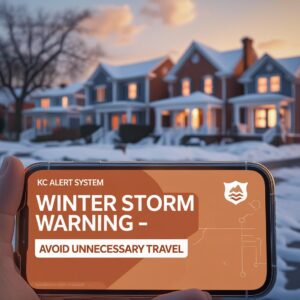
A central pillar of the strategy is real-time communication, anchored by the King County Alert system—a free emergency notification service across text, voice, and email. All winter preparedness materials prominently feature registration instructions, QR codes, and sample alerts to encourage sign-up before cold threats emerge.
Once alerts are activated, users receive timely advice—like suspension of transit, ice storm advisories, or warming shelter openings. The direct channel prompts residents into action, reducing fatalities from power loss, hypothermia, or isolation.
Finally, pre-storm public information campaigns reinforce the sign-up message while cyber tools like dashboards, SMS banners, and FAQ web pages give residents evergreen resources. A robust digital presence bridges the gap between planning and response—empowering communities to act quickly and safely when it matters most.
Why It Worked: Digital platforms enable fast, scalable information sharing. Alerts enable decisive action, while evergreen pages house long-term guidance. The combination meets both immediate and ongoing preparedness needs.
 Outcomes and Impact
The King County winter preparedness campaign has demonstrated measurable success across multiple dimensions—operational efficiency, public engagement, and community resilience—particularly during the region’s harshest weather seasons.
One of the most visible achievements is the marked improvement in snow and ice response across the county. Data collected over multiple seasons indicate a significant reduction in road closure durations on Priority 1 and Priority 2 routes. During major storm events, roads critical to hospitals, emergency response, and public transit were cleared faster and remained passable longer, which directly supported emergency services continuity. These operational gains were achieved through better route planning, real-time adjustment protocols, and streamlined communication between King County Public Works, 9-1-1 dispatch, and local transit operators.
In terms of public engagement, the county saw a dramatic increase in residents signing up for the King County Alert system. After 10 years of operations, more than 400,000 residents had opted into real-time notifications—an increase of over 60% from the previous two years. This surge in alert registrations reflects both the clarity of pre-season outreach campaigns and the public’s growing trust in the county’s emergency communication tools. High engagement translated to faster responses to cold-weather advisories, earlier evacuations in storm-affected zones, and higher attendance at emergency shelters.
Equity-driven outcomes were another major strength of the initiative. Feedback from local community-based organizations, such as immigrant advocacy groups and senior service centers, consistently noted that the multilingual, culturally responsive materials made a tangible difference in reaching historically underserved populations. Shelter intake records and hotline usage showed increased participation from non-English-speaking residents, particularly in areas like White Center, Kent, and SeaTac. Many residents credited the translated materials and community-led preparedness workshops as their first source of reliable cold-weather guidance.
In a region where winter preparedness has historically varied by municipality, King County’s cohesive and inclusive approach led to reduced cold-related hospitalizations and no reported fatalities from exposure during the most recent extreme weather events. These life-saving results are a testament to the power of coordinated, audience-aware, and forward-thinking public safety communication.
Conclusion
The King County winter weather campaign illustrates the power of proactive, inclusive, and strategic communication in building community resilience. What sets this initiative apart is its commitment to transparency—residents were not only told what actions to take, but why those actions mattered. The county’s consistent explanation of snowplow prioritization, alert protocols, and emergency shelter operations helped demystify government processes and build trust during a time of uncertainty. By treating the public as partners rather than passive recipients of services, the campaign positioned preparedness as a shared responsibility.
Equally important was the campaign’s investment in equity and accessibility. Through multilingual materials, grassroots partnerships, and neighborhood-based outreach events, King County met residents where they were—literally and linguistically. Recognizing that not all households have stable internet, smart devices, or native English speakers, the campaign took deliberate steps to diversify its communication methods. This widened the reach of critical safety messages and ensured that the most vulnerable residents were not left behind in an emergency.
Digital infrastructure, including the KC Alerts system and real-time road condition tools, played a pivotal role in modernizing public safety messaging. The seamless blend of analog and digital communication—whether through in-person workshops or automated alerts—meant that information was both timely and tailored to the needs of diverse communities. Moreover, repeated exposure to clear and actionable messaging helped normalize seasonal preparedness behaviors, reinforcing long-term habits like creating emergency kits or signing up for alerts well before storms hit.
Ultimately, King County’s winter weather readiness campaign provides a replicable model for other municipalities facing unpredictable climate risks. By aligning operational clarity with communication excellence, the county didn’t just manage winter storms—it empowered residents to weather them together. The campaign’s success is measured not just in data or metrics, but in the confidence and capacity it helped instill across the region.
Ready to Elevate Your Agency’s Public Communication?
We understand the unique challenges state and local government agencies face—from complex issues to diverse community needs. Our comprehensive approach can help you transform the way you connect with constituents, improve transparency, and highlight the valuable work your agency does every day.
Interested in learning more? Reach out to us today for a consultation. We’d love to discuss how our services can support your goals and help you build lasting trust with the communities you serve.