
Sound the Alarm, Save a Life: How Cook County, Illinois Fire Departments Teamed Up for the Weekend Fire Safety Campaign to Reach At-Risk Homes
 In communities disproportionately affected by residential fires, prevention cannot depend on awareness alone—it must be delivered directly, equitably, and consistently. That was the philosophy behind Sound the Alarm, a home fire safety campaign launched by the Chicago Fire Department (CFD) in Cook County in partnership with the American Red Cross of Illinois and suburban fire departments. Active from 2018 through 2022, the initiative brought free smoke alarm installation and education to thousands of residents across Chicago’s South and West Sides—zip codes identified as having the city’s highest fire fatality rates.
Held primarily on weekends, especially Saturdays, the program combined rapid deployment with neighborhood engagement. Firefighters, trained volunteers, and public safety educators visited homes block by block, not only installing alarms at no cost, but also taking time to discuss escape planning and fire prevention. This consistent, door-to-door outreach model transformed how the city approached community risk reduction—moving beyond static awareness to mobile, tangible, life-saving action.
This case study explores how Sound the Alarm combined operational excellence, community outreach, and effective communication strategies to improve fire preparedness across Cook County—and save lives in the process.
The Initiative: Direct Action in High-Risk Zip Codes
Program Structure and Oversight
Sound the Alarm was a deep collaboration between the Chicago Fire Department, American Red Cross of Illinois, and fire departments from neighboring municipalities in Cook County. The initiative focused on installing free smoke alarms directly into homes while educating residents on the importance of maintaining those devices and developing family escape plans.
Operations were strategically planned for weekend outreach, when families were most likely to be home. Each installation team typically included:
- One or more CFD firefighters or local fire personnel
- Red Cross-trained volunteers
- Fire safety educators or community liaisons
Homes in areas like Englewood, Roseland, Austin, and West Garfield Park were prioritized based on local fire fatality data, building age, and other social risk indicators. Events often centered around neighborhood churches, civic centers, and community gathering spots, providing both visibility and easy access.
From Sirens to Social Media: Effective Communication Strategies for Law Enforcement & Public Safety Agencies
This article is part of our series on strategic communication for law enforcement and public safety agencies. To learn more and to see the parent article, which links to other content just like this, click the button below.
Communication Strategy
1. In-Home Safety as a Communication Vehicle
The campaign’s defining feature was its doorstep delivery of fire prevention. Teams didn’t leave behind flyers or checklists—they physically installed smoke alarms using drills and ladders, and stayed to walk residents through fire escape protocols. Volunteers demonstrated how to test an alarm, discussed battery replacement intervals, and encouraged families to practice escape plans twice a year.
This high-touch engagement turned every installation into a mini safety seminar—one customized to the home’s floor plan, resident mobility, and household makeup (e.g., seniors, children, pets).
Why It Worked: This one-on-one approach bridged communication gaps often left by mass media or print campaigns. In-person walkthroughs allowed for dialogue, not just instruction—enabling teams to answer questions, reassure hesitant participants, and adapt recommendations to each family’s needs. The result: stronger behavioral retention and higher likelihood of alarm maintenance over time.
2. Targeted Geographic Deployment Based on Risk Data
Sound the Alarm prioritized neighborhoods with historic patterns of residential fires, injuries, and fatalities—using CFD and Red Cross data to identify where outreach would have the greatest impact. These zip codes, many located on Chicago’s South and West Sides, often contained aging multi-unit housing, limited home maintenance support, and lower access to existing fire safety resources.
By pairing analytics with on-the-ground knowledge from fire captains and community leaders, organizers could focus efforts without relying on self-referral or general public turnout.
Why It Worked: This strategy ensured the campaign reached the most vulnerable households, not just the most aware or engaged. Geographic targeting maximized equity and impact, and residents were more likely to participate knowing the program was designed for their neighborhood. It also demonstrated respect for data-informed governance—showing that safety wasn’t just about presence, but precision.
3. Community Partnerships and Event-Based Outreach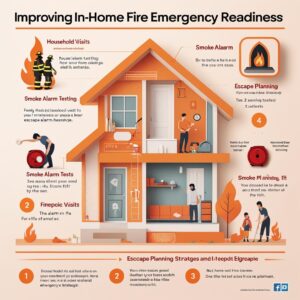
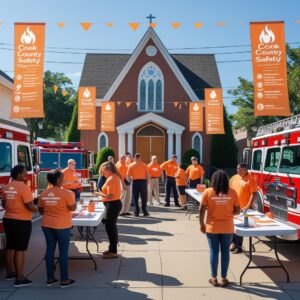
Installations were safety events, including resource fairs, school visits, and block party appearances. This made the campaign visible and relatable. Red Cross volunteers tabled outside churches or local stores, while fire trucks parked visibly near parks and civic buildings. Residents could sign up for same-day installation or refer neighbors, increasing outreach density.
Community-based organizations, aldermen, and clergy often co-hosted these events, lending credibility and reinforcing participation as a civic act rather than a charitable one.
Why It Worked: Rooting the campaign in trusted community infrastructure helped overcome skepticism and boosted turnout. Seeing fire officials side-by-side with familiar local leaders made residents more likely to open their doors. The visibility also created a cascade effect—residents who witnessed installations next door were more likely to say yes themselves.
4. Media Visibility and Social Reinforcement
Local news outlets like ABC-7 Chicago regularly covered Sound the Alarm events, spotlighting the initiative’s goal of “cutting home fire deaths in half.” Reporters joined installation crews in Roseland and Austin, highlighting the community service aspects of the campaign and profiling families whose homes now had working alarms for the first time.
CFD and Red Cross also promoted the events across Facebook, Twitter, and community newsletters, including reminders about fire safety during Fire Prevention Week each October. Photos of children practicing “stop, drop, and roll” or volunteers on ladders added emotional resonance to the message.
Why It Worked: Ongoing media coverage amplified the campaign’s credibility and expanded its reach. By showing real families benefiting from real help, these stories humanized the data and created emotional anchors for public memory. Social media also made participation shareable—turning fire safety into a community norm, not a bureaucratic service.
 Outcomes and Impact
By 2022, Sound the Alarm had helped install more than 5,500 smoke alarms in Cook County through its weekend canvassing efforts, reaching thousands of residents across dozens of blocks. Red Cross data reported a measurable decrease in home fire deaths nationally in areas with sustained participation, and CFD noted that several fire-related injury incidents in targeted zip codes occurred in homes with alarms installed during this campaign—often resulting in early detection and safe evacuation.
The campaign also deepened interagency coordination between CFD, Red Cross, and suburban departments, improving logistics for future public safety initiatives. For many residents, the installation team represented their first in-home contact with fire personnel outside of emergencies—building trust and familiarity that could carry into future prevention or response efforts.
Takeaway and Conclusion
Sound the Alarm proved that meaningful fire safety outreach isn’t about handing out brochures—it’s about climbing ladders, drilling devices, and sitting down with families to map out real escape plans. By transforming smoke alarm installation into a relationship-building moment, the Chicago Fire Department and Red Cross achieved more than compliance—they created a culture of preparedness.
The initiative’s power came from its simplicity: bring life-saving tools to the front door, install them with care, and take time to educate. That intimacy fostered trust in neighborhoods long underserved by municipal services, and in doing so, changed the trajectory of safety in those communities.
The campaign also set a replicable model: Use data to find risk. Use people to build trust. Use presence to deliver prevention. In a city of neighborhoods, the greatest fire protection came not from a central office—but from boots on the ground, every Saturday, one home at a time.
Ready to Elevate Your Agency’s Public Communication?
We understand the unique challenges state and local government agencies face—from complex issues to diverse community needs. Our comprehensive approach can help you transform the way you connect with constituents, improve transparency, and highlight the valuable work your agency does every day.
Interested in learning more? Reach out to us today for a consultation. We’d love to discuss how our services can support your goals and help you build lasting trust with the communities you serve.