

Securing the Vote, Informing the Public:The State of Missouri’s Communication Strategy for HB 1878
 In August 2022, Missouri enacted sweeping changes to its election law through House Bill 1878 (HB 1878), a measure aimed at tightening voter identification requirements and limiting third-party involvement in voter registration. The law introduced a mandatory photo ID requirement, prohibited compensation for voter registration drives, and restricted the solicitation and pre-filling of absentee ballot applications. Supporters argued the law was necessary to protect the integrity of elections, while opponents viewed it as a form of voter suppression, especially given its disproportionate impact on low-income, elderly, and minority voters.
In response to the law’s enactment—and the confusion and controversy it generated—the Missouri Secretary of State’s Office (SOS) launched a comprehensive public information campaign to ensure voters understood the new requirements. The campaign had to do more than simply inform; it needed to combat misinformation, restore public trust, and comply with court rulings that altered how the law could be implemented. This case study explores the state’s multifaceted communication strategy, its collaboration with local agencies and civic groups, and the adjustments made in response to ongoing legal challenges. It offers insight into how state election offices can deploy rapid-response public communication to guide voters through complex and controversial policy transitions.
The Policy Shift: Key Provisions of HB 1878
HB 1878 went into effect on August 28, 2022, and introduced several major changes to Missouri’s voting procedures:
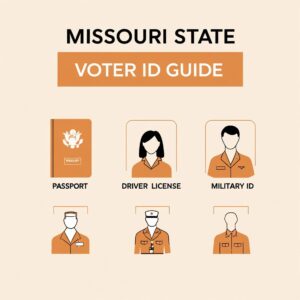
- Photo ID Requirement: Voters are now required to present a non-expired, government-issued photo ID such as a Missouri driver’s license, U.S. passport, or military ID. Student IDs and voter registration cards are no longer acceptable. Voters without an acceptable ID must vote using a provisional ballot and return with ID by the end of Election Day or have their vote verified through signature matching.
- Voter Registration Restrictions: The law prohibits paying individuals to engage in voter registration drives and requires unpaid volunteers registering more than ten voters to register with the state.
- Absentee Ballot Regulations: Organizations are banned from distributing pre-filled absentee ballot applications or actively soliciting voters to apply for absentee ballots.
- Technology Modernization: The bill also included the phase-out of Direct Recording Electronic (DRE) voting machines by 2024, requiring counties to transition to paper-based optical-scan systems.
The SOS was tasked with not only administering the changes but also ensuring that Missouri’s 4.3 million registered voters received accurate, accessible information amid growing legal and political scrutiny.
Beyond the Ballot: Election Office Communication Strategies for County Clerks, Secretaries of State, and Boards of Election
This article is part of our series on strategic communication for Election Offices, Election Administration Agencies, and Boards of Elections. To learn more and to see the parent article, which links to other content just like this, click the button below.
Communication Strategy
Narrative Framing and Public Positioning
The Missouri Secretary of State’s Office framed its public messaging around the principles of security, transparency, and voter confidence. Communications emphasized that the new laws were intended to modernize the state’s elections, reinforce voter ID security, and ensure uniform standards across counties. However, given the contentious nature of HB 1878, the SOS took care to maintain a tone of neutrality—focusing not on defending the policy, but on explaining how voters could comply. This approach reduced politicization and helped the state position itself as an informational authority rather than a partisan actor. The central message was practical and non-confrontational: “Know what ID you need to vote and how to get it.”
The communications team also anticipated that confusion could erode trust in the system. Accordingly, messaging focused on clarity and reassurance, highlighting that voters who lacked photo ID could still vote provisionally and receive assistance in acquiring acceptable identification. By centering the conversation on access—not exclusion—the SOS sought to reduce fear and disengagement among vulnerable populations.
Why It Worked: This narrative strategy depoliticized a contentious reform by focusing on the voter’s perspective rather than the legislature’s intent. Voters responded positively to messaging that focused on helping them navigate the system rather than persuading them of its merits. By positioning itself as a nonpartisan guide, the SOS preserved institutional trust and increased the likelihood that voters would engage with the materials provided.
Digital Tools and Web-Based Voter Education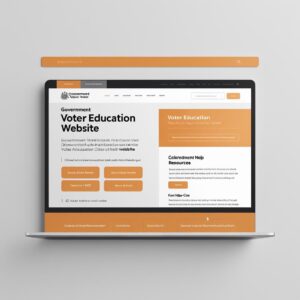
A major component of the outreach strategy was the use of digital infrastructure to guide voters through the new process. The SOS launched a dedicated Voter ID page on its website, featuring FAQs, an updated list of acceptable IDs, instructions for voting provisionally, and step-by-step guides on how to obtain a free nondriver license. The site also included details about changes to absentee ballot rules and machine upgrades.
To ensure accessibility, the web content was written in plain language and made available for download by local election authorities, public libraries, and civic groups. These materials were updated in real time as court rulings affected enforcement, helping voters distinguish between provisions that were active and those on hold. In addition, the SOS integrated interactive features such as polling place lookups, ID eligibility assessments, and provisional ballot instructions—allowing voters to personalize their experience and eliminate guesswork.
Why It Worked: The SOS recognized that voter confusion flourishes in information gaps—especially during election law changes. The centralized, real-time online platform addressed this by being both accessible and adaptive. It became the definitive source for accurate, updated information, giving voters and election officials alike a common reference point. The availability of plain-language materials and multilingual support (where applicable) further expanded the digital campaign’s inclusivity and reach.
Media Engagement and Press Strategy
Leading up to the law’s implementation, the Missouri Secretary of State’s Office executed a proactive media relations campaign to drive awareness. This included issuing press releases to regional news outlets across Missouri announcing the changes and their effective dates, highlighting deadlines for absentee voting, and clarifying the availability of free state-issued photo IDs. Media briefings were held with election officials and SOS spokespeople, many of whom conducted interviews on local television and radio stations to explain the rationale behind the law and address common voter questions.
The SOS also developed media kits that were distributed to local election authorities, containing talking points, flyers, and pre-approved graphics for use in earned and paid media. These kits ensured that county clerks and election boards presented a consistent message statewide. Importantly, the SOS remained visible and responsive throughout the rollout—updating the public as court cases progressed and ensuring that corrections and clarifications were issued quickly when legal provisions were delayed or blocked.
Why It Worked: This strategy worked because it leveraged trusted local news outlets—particularly important in Missouri, where voters often rely on regional broadcasters and newspapers for civic information. The proactive press approach built a bridge between the state’s institutional voice and the public’s daily information diet. It also allowed for message repetition in familiar formats, helping to reduce fear and uncertainty around ID requirements. The SOS’s ability to issue timely corrections showed a commitment to accuracy and responsiveness, bolstering its credibility.
Polling Place Signage and On-Site Communication
To reinforce digital and broadcast messaging, the SOS coordinated with county boards of elections to update signage at all polling locations. These signs displayed accepted photo ID types, explained the provisional ballot process, and clarified that ID was also required for absentee ballot submission. Additional signage at public libraries, county clerk offices, and community centers served to preempt confusion before voters arrived at the polls.
Election officials also received training on how to verbally explain the new rules to voters, especially for those arriving without ID. This human-to-human component helped mitigate potential conflict and supported voters in real time. By pairing clear signage with prepared staff, the state minimized friction at the polls and ensured the public’s experience aligned with the policy’s expectations.
Why It Worked: In-person signage and trained poll workers served as a critical last line of voter education. No matter what voters saw online or on TV, the polling place was where decisions were made—and confusion needed to be minimized. By embedding clear, physical reminders at the moment of action, the SOS reduced reliance on memory and ensured that voters had the information they needed, right when they needed it. This strategy helped to normalize the new rules through repetition and visibility, especially for voters less likely to engage with online content.
Community Partnerships and Voter Assistance
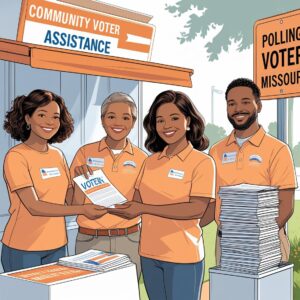
While HB 1878 placed new legal limits on third-party voter registration efforts, the SOS still recognized the importance of community-based education. To that end, the office collaborated with a range of civic organizations—including the League of Women Voters (LWV), NAACP chapters, and local disability rights groups—to share information and distribute SOS-approved materials. These materials outlined voter ID requirements, provisional ballot rights, and locations for obtaining free state-issued IDs.
Through a partnership with the Missouri Department of Revenue, the SOS also facilitated voter access to free nondriver photo IDs, launching an outreach campaign to let residents know how to apply. Information about this resource was shared at libraries, senior centers, and community colleges. Though legal injunctions prohibited some civic groups from fully engaging in voter registration efforts, the SOS worked within those constraints to ensure voters had clear access to essential services and information.
 Impact and Outcomes
Despite the controversy surrounding HB 1878, the state’s communication campaign succeeded in delivering timely, consistent, and accessible voter education to millions of residents. Surveys and media reports indicated that the majority of voters were aware of the photo ID requirement by Election Day, and incidents of confusion or noncompliance were relatively low. The availability of free state-issued IDs and well-publicized provisional voting procedures helped mitigate disenfranchisement risks, particularly among older voters and those in rural areas.
Additionally, election authorities across Missouri reported a smoother-than-expected transition at polling places, with minimal disruption attributed to the new rules. Legal observers and watchdog organizations noted the effectiveness of signage, digital education tools, and polling place preparation in guiding voters through the process. Perhaps most importantly, the SOS’s communication team demonstrated how a state agency can navigate a politically sensitive law while maintaining a voter-centric approach.
Why It Worked: Partnerships helped the campaign reach deeper into local communities—especially those with high concentrations of first-time voters, seniors, or economically disadvantaged residents. By working with trusted messengers, the SOS’s materials gained authenticity and cultural relevance. Crucially, even under new legal restrictions, these collaborations demonstrated the state’s commitment to voter access. The partnerships also made the campaign more human and relational, reminding voters that help was available and that the system was not intended to shut them out.
Lessons and Replicability
Missouri’s HB 1878 communication rollout offers several key takeaways for election officials and government communicators:
- Clarity beats persuasion. In politically divisive reforms, the goal is not to win arguments but to equip the public with facts. The SOS’s focus on procedural information rather than justification helped reduce politicization.
- Real-time updates are essential. Legal challenges can radically alter a campaign’s landscape. Missouri’s ability to pivot—updating websites, signage, and talking points within days—ensured voters stayed informed.
- Signage matters. Visual reminders at polling places often have more impact than digital outreach. Standardized, bold, and easily digestible signs played a pivotal role in Missouri’s success.
- Empower local officials. By equipping county clerks and local election authorities with consistent tools, the SOS ensured a unified message despite decentralized execution.
- Accessibility is a long game. Offering free photo IDs was not just a compliance mechanism—it was a crucial equity tool, especially when paired with strong outreach to vulnerable groups.
Why It Worked: The campaign succeeded in large part because it prioritized trusted relationships over top-down messaging. By partnering with community organizations that already had the confidence of their constituents, the outreach felt less like a government directive and more like a neighbor offering guidance. These local connections were especially effective in reaching populations often overlooked or underserved—such as first-time voters, low-income households, and older adults—ensuring the message landed where it was most needed.
What set this effort apart was its deliberate tone: clear, calm, and above all, neutral. In a politically charged environment, the campaign avoided framing the new voting laws as either a win or a loss. Instead, it focused squarely on helping people understand what had changed and what steps they needed to take. This educational approach helped lower defensiveness and distrust, particularly among those who might have been skeptical of state-driven initiatives.
By removing ideological baggage from the message, the campaign made space for practical questions and real solutions. It gave people room to breathe, to ask, and to prepare—without feeling pushed, judged, or overwhelmed. This approach reinforced the idea that the system still belonged to them, and that access to the ballot was not about politics, but about participation.
Ready to Elevate Your Agency’s Public Communication?
We understand the unique challenges state and local government agencies face—from complex issues to diverse community needs. Our comprehensive approach can help you transform the way you connect with constituents, improve transparency, and highlight the valuable work your agency does every day.
Interested in learning more? Reach out to us today for a consultation. We’d love to discuss how our services can support your goals and help you build lasting trust with the communities you serve.