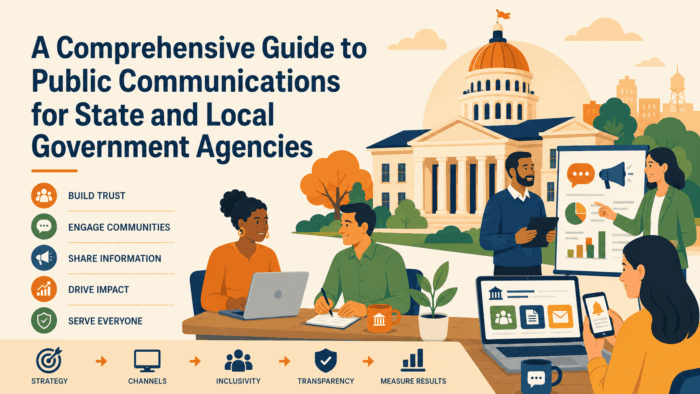
A Comprehensive Guide to Public Communications for State and Local Government Agencies
 In today’s connected world, effective public communication is critical for building trust, conveying important information, and highlighting community achievements. State and local government agencies often face unique challenges: multiple stakeholder groups with varying needs, complex policy changes, and tight budget constraints, to name just a few. With a clear, strategic approach, however, agencies can significantly enhance public awareness, engagement, and overall satisfaction.
Below is a comprehensive guide that walks through the key stages of developing a robust public communication strategy — one that connects with diverse audiences, keeps internal teams aligned, and uses metrics for continuous improvement.
1. Communication Strategy & Planning
Developing a strategic communication framework is crucial for state and local government agencies aiming to enhance public trust and understanding. Effective communication strategies hinge on clearly defined core messages, comprehensive stakeholder mapping, and selecting the appropriate mediums and channels to reach diverse audiences. These foundational elements ensure that all messaging is not only clear and consistent but also accessible and inclusive, resonating with every segment of the community.
Core Messaging
Clear, consistent messaging helps the public understand who you are, what you do, and why it matters. Identify two to three key messages — such as your agency’s mission or primary goals — that will resonate with residents and stakeholders. These messages should be woven into all communications.
Stakeholder Mapping
A comprehensive stakeholder map includes residents, local businesses, community leaders, nonprofits, partner agencies, and the media. Tailoring messaging to each group increases relevance and ensures you’re addressing unique needs and concerns.
Medium/Channel Selection
Different audience segments prefer different communication channels. By identifying where your target audiences consume information — such as social media, email newsletters, print mailers, or local press — you can choose the most effective channels to reach them. For instance, younger residents may prefer text alerts or Instagram, while seniors may rely more on printed newsletters or bulletin boards.
Inclusive & Equitable Communication
Government agencies serve constituents across varied backgrounds, languages, and abilities. An inclusive communication approach ensures equitable access to information and participation.
- Language Access: Identify the most common languages in your jurisdiction. Offer translations, interpretations, and culturally relevant materials to foster trust and remove barriers for non-English-speaking residents.
- Cultural Sensitivity: Reflect community diversity through visuals, stories, and language. Incorporate real testimonials and imagery that accurately represent your audience.
- Accessibility & Compliance: Follow WCAG standards for web accessibility and provide alternative formats such as large-print flyers, audio materials, or closed captions. Ensure that digital and physical environments are inclusive to all abilities.
Timing & Cadence
Determine an appropriate rhythm for communication. A consistent, planned cadence — such as a monthly newsletter or quarterly update — keeps residents informed without overwhelming them.
Internal vs. External Communications
Before external announcements, ensure that internal teams — especially frontline staff — are briefed. Consistency between internal and public messages builds confidence and trust in leadership.
Our Comprehensive Guide to Public Communications for State and Local Government Agencies
This article is part of our series on strategic communication for state and local government agencies. To learn more and to see the parent article, which links to other content just like this, click the button below.
2. Platform & Infrastructure Build-Out
Evaluating and optimizing your communication platforms ensures strategies are effectively executed and sustained. A strong infrastructure supports consistent branding, clear messaging, and ongoing engagement with evolving public expectations.
Assess Existing Channels
Review your current suite of platforms — websites, social media, newsletters, and community alerts. Identify what’s performing well and where gaps exist.
Identify Gaps or New Platforms
Analyze audience preferences to determine which additional platforms could enhance your outreach. Consider platforms like Nextdoor or local Facebook groups to connect with neighborhood-level audiences.
Consistency in Branding & Design
Maintain consistent branding across all communication touchpoints. Use unified color palettes, typography, and tone to strengthen recognition and trust.
Ongoing Review & Optimization
Regularly assess whether your platforms meet audience needs and adjust based on analytics, feedback, and emerging technologies.
3. Content Planning & Scheduling
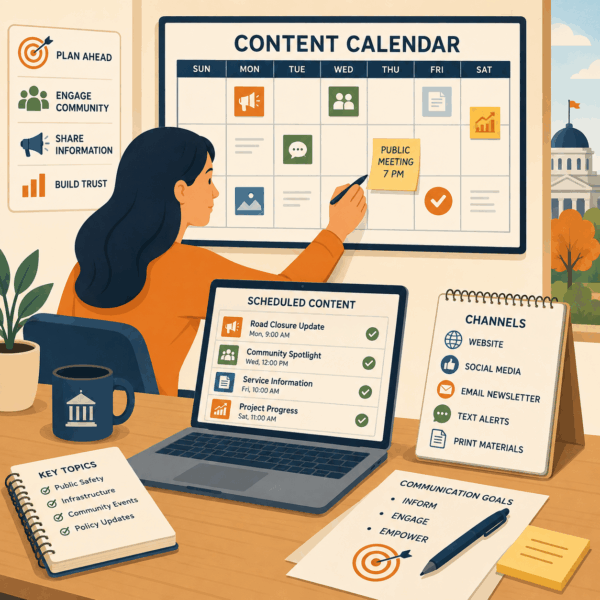
 A well-organized content schedule prevents last-minute rushes and ensures steady, proactive communication. An editorial calendar allows your agency to anticipate key events and share timely, relevant information with the community.
Regular Content Calendar
Create a monthly or quarterly editorial calendar to outline important announcements, policy rollouts, and events. Planning in advance helps your agency remain responsive rather than reactive.
Topic Prioritization
Differentiate between high-impact policy updates, community features, and evergreen content. Rank topics based on urgency and relevance to maintain engagement and balance.
Resource Allocation
Assign clear responsibilities for content creation, editing, and approvals to ensure timely and accurate publication.
Feedback & Community Engagement
Incorporate two-way communication through comment forms, surveys, and community forums. Responding to feedback demonstrates transparency and accountability.
4. Content Development & Delivery
Compelling public communication blends storytelling, data, and clarity. Focusing on real impacts and evergreen resources helps your agency maintain trust and relevance over time.
Gathering Information
Collaborate with department leaders and community partners to identify stories and data that highlight your agency’s progress and positive outcomes.
Evergreen Content
Develop enduring content — such as FAQs, “how-to” guides, and success stories — that remain useful throughout the year. Update periodically to ensure accuracy.
Key Questions to Guide Content
- What do we want people to know? Highlight service improvements, policy updates, or community partnerships.
- What do we want credit for? Showcase measurable results such as cost savings, environmental initiatives, or program outcomes.
- What deadlines or events should residents know? Promote key registration windows, town halls, or planned disruptions.
Showcasing Accomplishments
Quantify your impact with data points — number of residents served, funds allocated, or emissions reduced — to demonstrate value and progress.
Crisis Communication Plan
Establish clear crisis protocols: designate spokespeople, draft holding statements, and prioritize transparency. Quick, accurate updates preserve public trust during emergencies.
5. Internal Communication Alignment
Internal alignment ensures your staff communicates with the same clarity and confidence as your public messages. When teams are informed and consistent, external trust grows.
- Department Consistency: Coordinate messaging through interdepartmental briefings or shared calendars to avoid conflicting narratives.
- Training & Guidance: Provide talking points, brand guidelines, and message templates to ensure all representatives speak with one voice.
6. Metrics & Key Performance Indicators (KPIs)
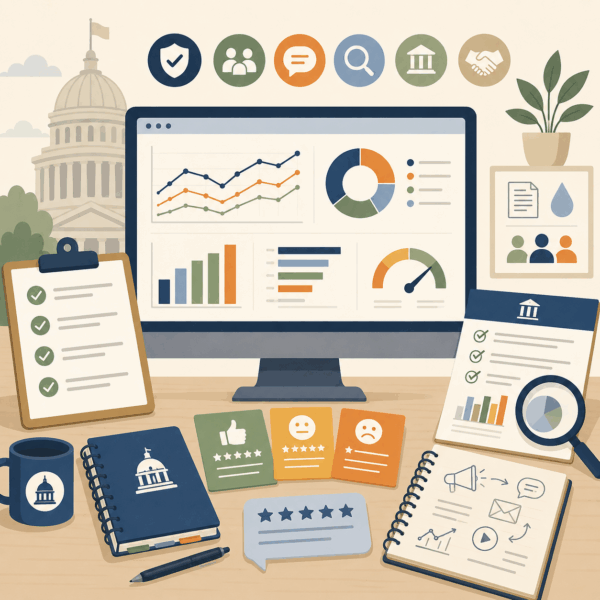
Tracking engagement through metrics provides the insight needed to refine communication strategies. Data analysis turns outreach efforts into measurable results.
- Define KPIs: Key performance indicators may include website traffic, email open rates, social media engagement, event attendance, or survey feedback.
- Data Collection & Analysis: Use analytics tools to monitor trends and identify which messages resonate most with the public.
- Refinement & Improvements: Use performance insights to adjust strategy, test new formats, and continuously improve engagement over time.
Working With a Professional Communications Partner
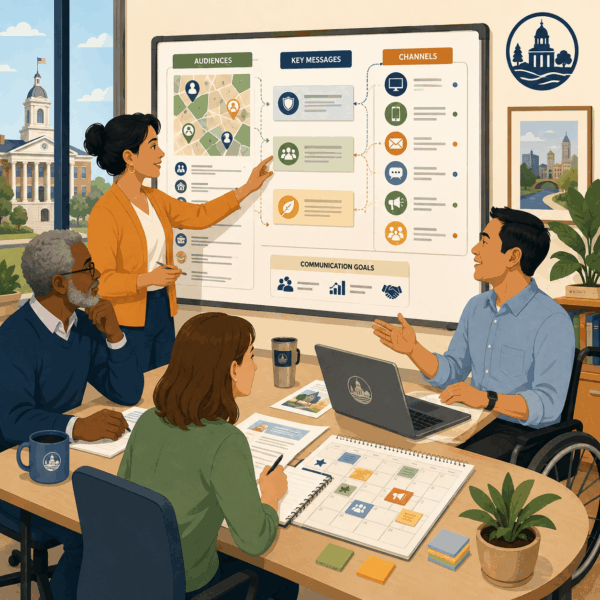 Implementing a comprehensive communications plan — spanning strategy, content creation, and analytics — can be resource-intensive. That’s where Stegmeier Consulting Group (SCG) can help. We specialize in helping government agencies strengthen public communication through:
- Developing Custom Communication Strategies: We’ll map your audiences, refine key messages, and design a cadence that aligns with your agency’s goals.
- Platform Set-Up & Management: From optimizing websites to managing social media content, we ensure your digital presence is effective and on-brand.
- Content Creation & Scheduling: We develop crisis communication plans, evergreen materials, and campaign messaging that keep your constituents informed and engaged.
- Data-Driven Optimization: By tracking KPIs, we refine your communication strategy over time for continuous improvement.
Ready to Elevate Your Agency’s Public Communication?
We understand the unique challenges state and local government agencies face — from complex issues to diverse community needs. Our comprehensive approach can help you transform the way you connect with constituents, improve transparency, and highlight the valuable work your agency does every day.
Interested in learning more? Reach out to us today for a consultation. We’d love to discuss how our services can support your goals and help you build lasting trust with the communities you serve.