
Focus Group Facilitation
 A survey can show how frequently people report a concern. A focus group helps explore how they describe that concern, what experiences shape it, and how they respond to possible solutions. Stegmeier Consulting Group (SCG) plans and facilitates focus groups for government agencies and organizations seeking a deeper understanding of stakeholder perspectives.
SCG’s focus group moderation services include discussion guides tailored to the project, facilitated conversations, documentation of participant feedback, and analysis of the themes that emerge. Focus groups can support public programs, service changes, workplace initiatives, customer experience research, communication planning, and other decisions where understanding the reasons behind a response matters.
What a Focus Group Helps an Organization Learn
 Focus groups create a structured setting for participants to discuss an issue in their own words and respond to one another’s perspectives. That interaction can reveal differences in understanding, questions an organization has overlooked, and language that people find confusing or meaningful. It can also help a team examine how audiences interpret a proposed message, service, policy, or change.
The findings require careful interpretation. A focus group is designed to provide depth and explanation; it does not measure how common a view is across an entire population. SCG makes that distinction clear in its analysis and, when appropriate, connects focus group findings with survey research that can provide a broader view.
How SCG Plans and Facilitates Focus Groups
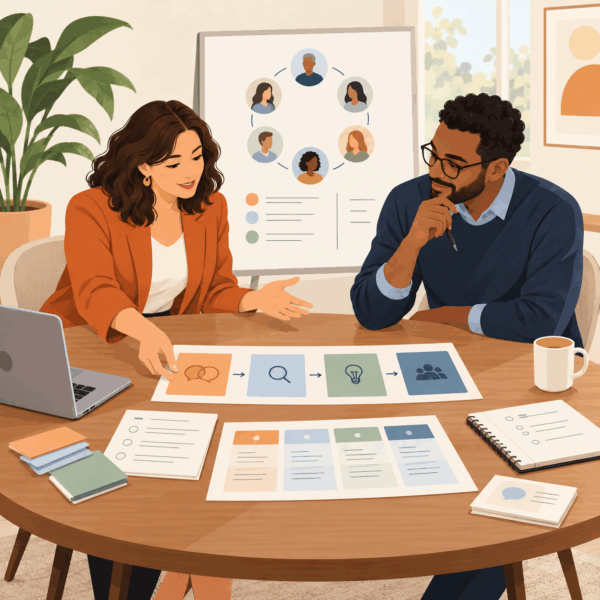 SCG starts by clarifying the client’s research questions and identifying the types of participants whose experiences are relevant. We develop a discussion guide that moves from accessible opening questions to the issues the organization most needs to explore. Questions are designed to encourage specific examples, follow-up, and discussion without assuming a particular answer.
During the session, an SCG facilitator keeps the conversation focused while making room for differing perspectives. An independent facilitator can help participants speak more openly about their experiences, particularly when the topic involves leadership decisions, organizational culture, or a sensitive change. SCG documents the discussion and examines both recurring themes and important differences among participants’ views.
Virtual Focus Groups Using Your Existing Video Platform
 SCG can conduct a focus group entirely online through a client’s existing Microsoft Teams, Google Meet, or comparable approved video platform. The client can retain its account, meeting settings, and familiar access process while SCG leads the research design and moderates the discussion. Before the session, we coordinate on invitations, host permissions, participant access, privacy expectations, and a technology check so the platform supports the conversation.
Virtual-only focus groups can bring together participants across offices, communities, work schedules, or geographic areas without requiring travel or a meeting room. Using a system participants already know can reduce the effort of joining and avoid introducing another tool for a short research project. We still consider whether participants have reliable access and a suitable place to speak; a virtual format is chosen because it serves the research and the people involved, not simply because it is convenient.
In our experience, virtual discussions work well when a survey has raised questions that need follow-up, when participants have useful but geographically dispersed perspectives, and when the moderator deliberately invites different voices into the conversation. SCG uses focused prompts, follow-up questions, and attentive facilitation to keep the group engaged. We document recurring themes and meaningful differences, then report what the discussion supports without treating a small group as a representative sample.
Turning Discussion Into Findings
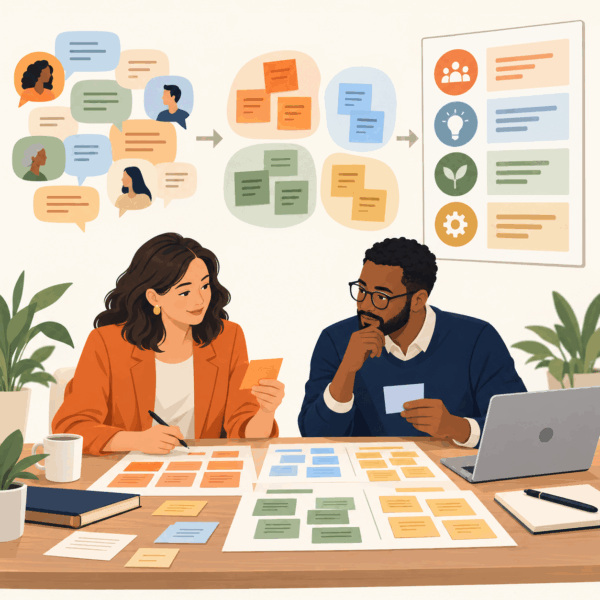 Following the sessions, SCG organizes what participants said into findings that a client can use. Depending on the project, reporting may identify common concerns, points of confusion, reactions to proposed approaches, differences in experience, and issues that require additional research. Recommendations are tied to the purpose of the study and the limits of the evidence collected.
Focus groups may be conducted as a stand-alone project or alongside stakeholder interviews and surveys. SCG helps determine the right combination through its broader stakeholder research services.
Frequently Asked Questions About Focus Groups
When should we use focus groups instead of a survey?
Use a focus group when the central need is to explore how people think about an issue, explain their experiences, or react to an idea in discussion. Use a survey when you need to gather comparable responses from a larger group. Some projects benefit from both methods.
Can focus groups be used to test communication?
Yes. A facilitated discussion can help an organization learn whether participants understand a message, what questions it raises, and where language or assumptions create confusion. Those findings can guide revisions before information is shared more broadly.
Can SCG moderate a virtual focus group using our Microsoft Teams or Google Meet account?
Yes. SCG can facilitate virtual-only focus groups using a client’s existing, approved video system when it supports the research and participant needs. We agree on meeting setup, invitations, moderator and host roles, access controls, and technical support before the session.
Who recruits participants and sends invitations?
SCG works with the client to identify whose perspectives are needed and how participants should be invited. The client may manage invitations through its existing employee, customer, resident, or stakeholder channels, or SCG may support recruitment and participant communication within the agreed scope. We clarify responsibilities before outreach begins.
How many people should participate in each focus group?
The group should be large enough to hear differing perspectives and small enough to give each participant room to contribute. The appropriate number depends on the topic, participants, sensitivity of the discussion, and virtual or in-person format. SCG recommends a group structure after understanding the research question and audience.
How many sessions will we need, and how long will they take?
That depends on the number of distinct audiences, the depth of discussion needed, and whether the project is exploring one issue or several. We define a practical session plan during scoping, including the discussion length, participant groups, and how findings from one session may inform later conversations.
Can our team observe or record the sessions?
Observation or recording can be considered when it serves the research and participants know what to expect. We agree on observer roles, consent, platform settings, access to any recording, and how notes or files will be handled before the session. In some circumstances, facilitator notes and a findings report are more appropriate than a recording.
How do you handle sensitive employee or stakeholder feedback?
SCG sets clear expectations about the purpose of the discussion, who will receive the findings, and how comments will be reported. A focus group cannot promise anonymity among participants because they hear one another speak, so we do not present it as an anonymous method. We can report themes without attributing individual comments and may recommend interviews or an anonymous survey when the topic calls for a different setting.
What will we receive after the focus groups?
Deliverables are agreed during scoping and may include the discussion guide, a summary of recurring themes and differing perspectives, relevant examples, research limitations, and recommendations connected to the client’s decision. SCG can also explain how the findings compare with survey results or interviews when the project uses more than one method.
Discuss a Focus Group Project
SCG helps clients define the questions, facilitate productive discussion, and translate participant feedback into clear findings. Use the form below to connect with SCG about focus group facilitation.


